

Selecting the Best Bariatric and Weight Loss Surgeons and Hospitals in India: A Guide for Patients from Iraq
A doctor’s honest, question-by-question guide for patients from Iraq on vetting a bariatric surgery hospital in India — procedure-specific outcomes, accreditation, revision-surgery realities, and the exact questions worth asking before you book anything.
Over the years, I have found that bariatric surgery is genuinely one of the safer major surgical categories in this entire series when performed at a properly accredited Indian centre, yet families researching it often carry an outsized fear based on outdated impressions of the procedure’s risk, while underestimating a different, more specific risk: that revision surgery after a previously failed weight-loss procedure carries meaningfully different odds than a first-time operation.
Healing Journeys of Iraqi Patients






Key Takeaways
- Bariatric surgery in India has strong safety data when performed in appropriately accredited centres, but choosing the right surgeon and hospital requires more than looking at a general success percentage. A multicentre Indian study covering 11,568 procedures across 24 centres reported an overall complication rate of 3.13% and mortality of 0.16%. The source also highlights that complication patterns differ according to the procedure, making procedure-specific experience particularly important for patients from Iraq.
- The choice between procedures such as sleeve gastrectomy and gastric bypass should therefore be based on the patient’s individual circumstances and the centre’s experience with that specific operation. The source reports that sleeve gastrectomy had 87.6% excess weight loss at one year and 71.8% at three years in one Indian follow-up study, while gastric bypass achieved 97.2% excess weight loss at one year, although the overall difference was not statistically significant. The reported complication profiles also differed, with leaks and gastro-oesophageal reflux occurring more often after sleeve surgery, while intestinal obstruction was more frequent after Roux-en-Y gastric bypass.
- For Iraqi patients evaluating an Indian hospital, verifiable accreditation is an important first filter. The guide specifically recommends checking for JCI and NABH accreditation rather than relying on promotional claims. NABH’s current directory allows patients to verify accredited healthcare organisations and filter them by location and speciality, providing a practical way to independently check hospital credentials.
- Procedure-specific outcome reporting is another important measure of hospital quality. Patients should ask which operation is being recommended, what the centre’s own complication and weight-loss data show for that procedure, how the hospital defines successful weight loss, and whether results are available at one, three and five years. The source particularly warns against accepting a single broad success percentage without knowing the definition behind it.
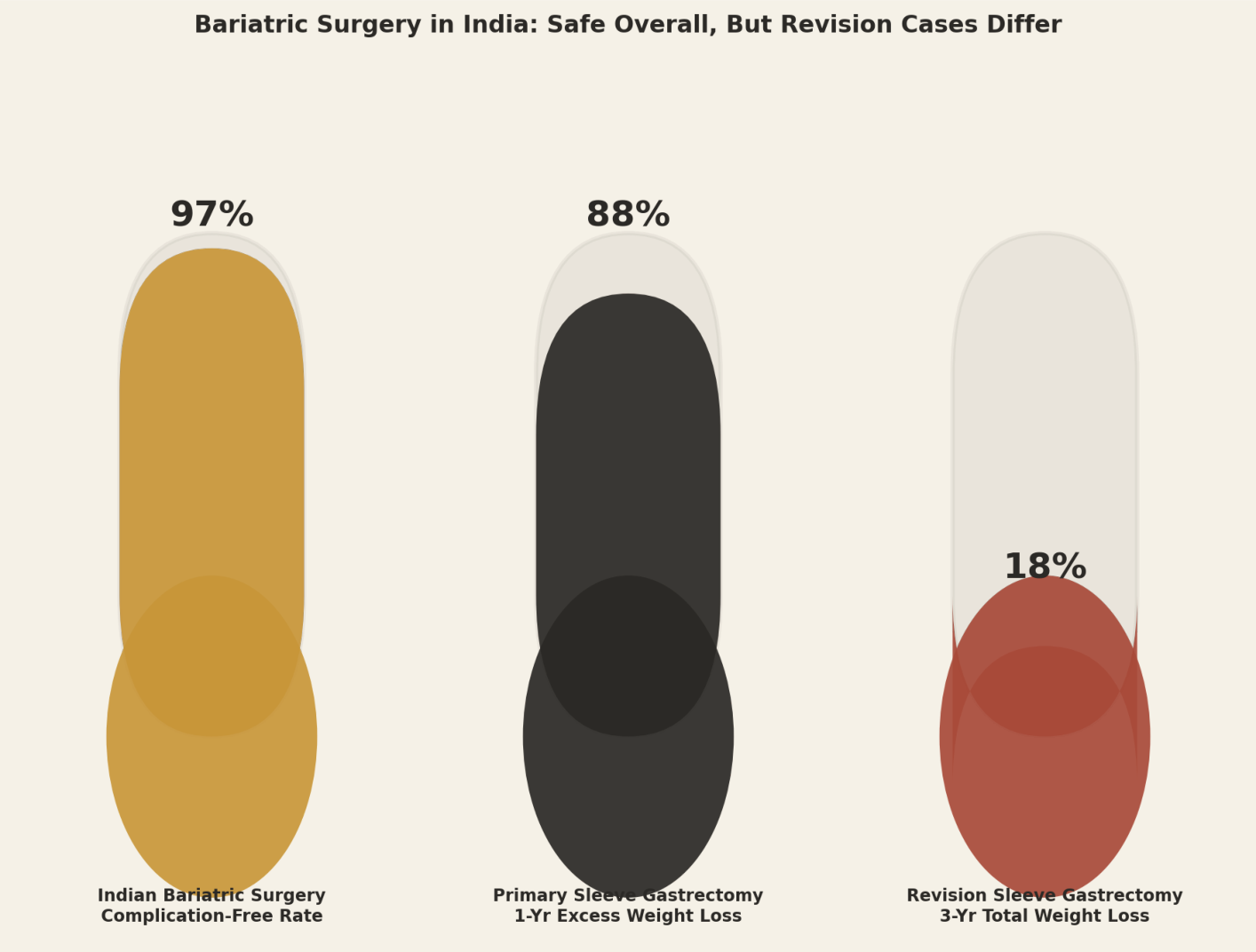
- Revision surgery requires especially careful assessment. Patients who have previously undergone a failed or complicated weight-loss procedure should ask for revision-specific outcomes rather than relying on results from first-time bariatric surgery. The source reports considerably poorer short-term outcomes for revision sleeve gastrectomy, with 17.9% total weight loss at three years compared with 27.4% after a first-time procedure, alongside a higher rate of late functional complications.
- A strong bariatric programme should provide multidisciplinary care rather than surgery alone. The guide recommends confirming the involvement of a bariatric surgeon, dietitian, psychologist or counsellor, endocrinologist where metabolic conditions such as diabetes require coordinated care, and a bariatric-trained anaesthesiologist. It also stresses that structured long-term nutritional and psychological follow-up should be planned from the beginning.
- Technology and post-operative systems also deserve attention. Patients from Iraq should ask whether laparoscopic surgery is routinely performed, whether staple-line reinforcement is used for sleeve gastrectomy, and whether the hospital has bariatric-specific intensive care and immediate post-operative monitoring protocols. The source identifies vague success claims, inadequate discussion of revision risks, and the absence of structured long-term nutritional and psychological support as important warning signs.
Quick Facts
- Treatment
- Bariatric and weight-loss surgery in India
- Primary Patients
- Patients from Iraq seeking bariatric treatment in India
- Main Speciality
- Bariatric and metabolic surgery
- Key Specialist
- Bariatric surgeon with procedure-specific experience
- Common Procedures
- Sleeve gastrectomy and gastric bypass
- Overall Study Data
- 11,568 procedures across 24 Indian centres
- Reported Complication Rate
- 3.13%
- Reported Mortality Rate
- 0.16%
- Primary Sleeve Outcome
- 87.6% excess weight loss at one year in the cited Indian study
- Gastric Bypass Outcome
- 97.2% excess weight loss at one year in the cited Indian study
- Revision Surgery
- Requires separate assessment because outcomes can differ substantially from first-time surgery
- Accreditation
- Verify NABH and, where applicable, JCI accreditation
- Surgical Approach
- Laparoscopic surgery is highlighted as an important technology standard
- Sleeve Safety Check
- Ask about staple-line reinforcement and leak prevention protocols
- Multidisciplinary Team
- Surgeon, dietitian, psychologist or counsellor, endocrinologist when required, and bariatric-trained anaesthesiologist
- Long-Term Care
- Nutritional and psychological follow-up should be structured from the beginning
- Outcome Verification
- Ask for procedure-specific data and the centre’s definition of treatment success
- Revision Check
- Request separate revision-surgery outcomes if previously operated
- Warning Sign
- A single unexplained success percentage without supporting criteria
- Follow-Up
- Confirm a written long-term follow-up and nutritional monitoring plan
- Author
- Dr. Dheeraj Bojwani
- Experience
- 24+ Years
In Brief
For patients from Iraq, selecting bariatric surgery in India should be treated as a structured evaluation rather than a search for the lowest-cost operation. The most useful questions concern the exact procedure recommended, the surgeon’s experience with that procedure, hospital accreditation, centre-specific complication and weight-loss data, the definition used for treatment success, revision-surgery experience where applicable, multidisciplinary support, surgical technology and long-term nutritional monitoring. The source’s central message is that strong overall safety data do not remove the need for individualised assessment. Patients should verify the surgeon, hospital and expected outcome for their specific situation before making a treatment decision.
Why the Choice of Bariatric Surgeon in India Matters as Much as the Choice of Procedure
Based on my interactions with international patients, a genuinely large-scale Indian study offers real reassurance on overall safety. The Indian Bariatric Surgery Outcomes Reporting Group collected data from twenty-four centres covering 11,568 procedures and found an overall complication rate of just 3.13 percent, with a mortality rate of 0.16 percent, figures the authors specifically noted are on par with published international data. However, the specific procedure chosen carries meaningfully different complication profiles: leaks and gastro-oesophageal reflux disease occurred significantly more often after sleeve gastrectomy, marginal ulcers were more common after one-anastomosis gastric bypass, and intestinal obstruction occurred more frequently after Roux-en-Y gastric bypass. A separate Indian three-year follow-up study of 178 patients found sleeve gastrectomy achieved 87.6 percent excess weight loss at one year, declining to 71.8 percent at three years, while gastric bypass achieved a somewhat higher 97.2 percent excess weight loss at one year, though the difference between the two procedures did not reach statistical significance overall. For patients specifically considering revision surgery after a previously failed weight-loss procedure, a matched study found considerably poorer short-term results, with revision sleeve gastrectomy achieving only 17.9 percent total weight loss at three years compared with 27.4 percent for a first-time procedure, alongside a higher rate of late functional complications. This tells a family something important: overall bariatric surgery safety in India is genuinely strong, but your specific procedure type and whether this is a first-time or revision operation both meaningfully shape the realistic outcome.
How Patients from Iraq Can Verify a Bariatric Surgery Hospital’s Accreditation in India
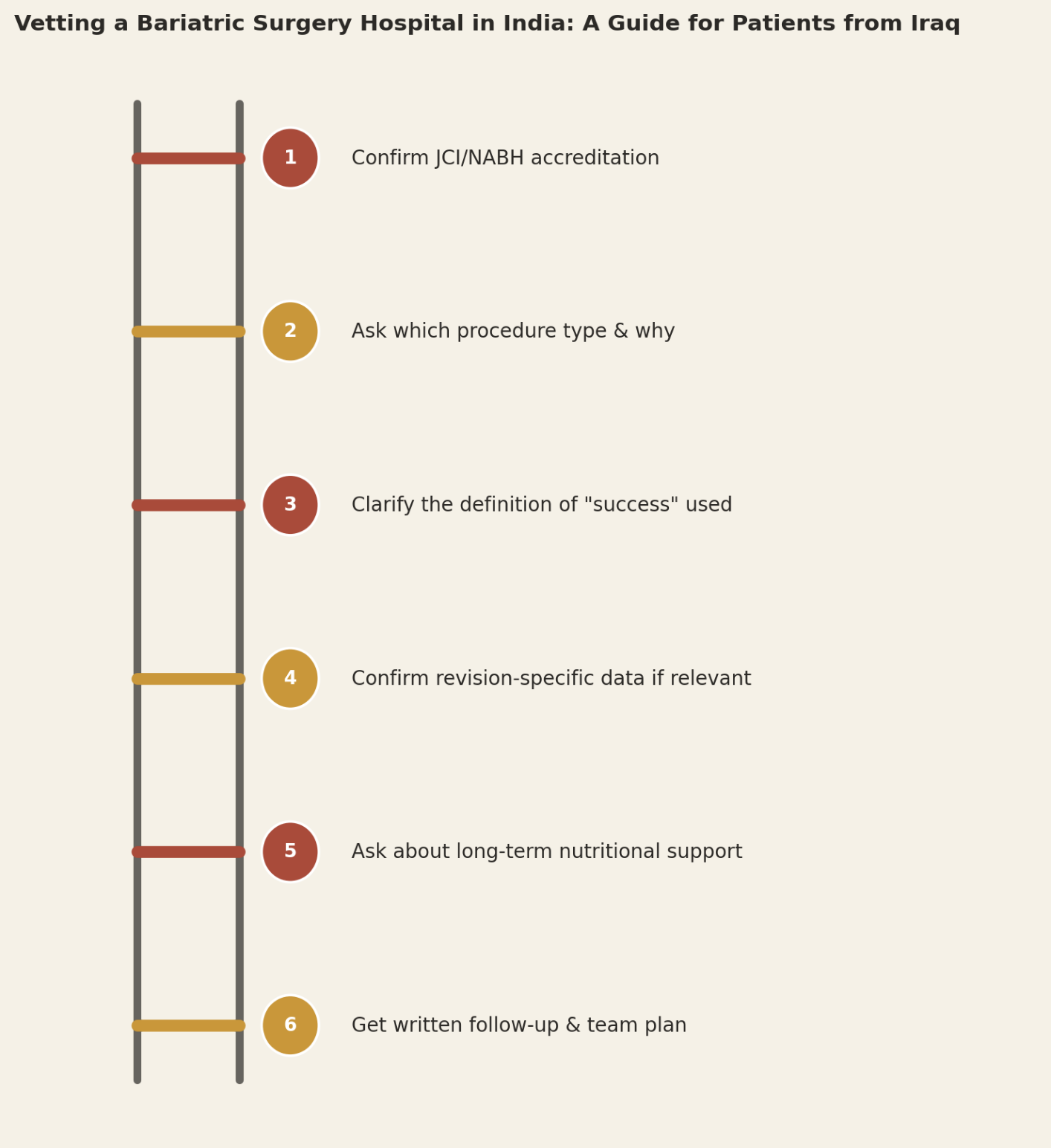
The fastest filter I recommend to every Iraqi patient calling about bariatric surgery is verifiable accreditation, not marketing language. Joint Commission International, JCI, audits a hospital’s overall clinical safety systems against the same standard used across the United States and Europe. The National Accreditation Board for Hospitals and Healthcare Providers, NABH, is India’s own domestic equivalent, and in my experience of 24 years advising patients on this exact decision, a centre holding both marks together is a meaningfully stronger signal than either alone. For bariatric surgery specifically, ask one further, very direct question: what specific criteria does this centre use to define a “successful” outcome, since published research has found that different definitions of success can produce dramatically different reported percentages for the exact same patient population.
Bariatric Surgery Volume and Procedure-Specific Criteria That Predict Outcomes in India
Based on my interactions with dozens of bariatric surgery programmes over the years, a centre’s specific complication data by procedure type, and their honest handling of revision cases, is one of the clearest signs of a trustworthy, evidence-based programme. In my experience of 24 years advising patients on exactly this kind of decision, the centres most worth trusting are the ones who volunteer their revision-specific outcomes candidly, rather than presenting every case as equally straightforward. Ask directly, in writing:
- Which specific procedure, sleeve gastrectomy, gastric bypass, or another option, is being recommended for my case, and what does this centre’s own data show for that exact procedure’s complication and weight-loss profile?
- If I have previously had a failed or complicated weight-loss procedure elsewhere, what is this centre’s own specific experience and realistic outcome data for revision surgery, distinct from first-time cases?
- What specific criteria does this centre use to define successful weight loss, and can they show me their own outcome data using that definition at one, three, and five years?
- What structured long-term follow-up and nutritional monitoring programme does the centre provide, given how much post-operative support affects durable weight-loss success?
A centre confident in its own outcomes will answer these specifically. A centre that quotes only a general success percentage without specifying the definition used, or without engaging with your specific procedure and revision status, deserves a second opinion before you commit.
Questions Patients from Iraq Should Ask About the Bariatric Surgery Team in India
Bariatric surgery benefits from more than the operating surgeon alone. In my experience of 24 years watching these programmes operate, the strongest units bring together a bariatric surgeon with specific fellowship training, a dietitian for structured pre- and post-operative nutritional counselling, a psychologist or counsellor to support the significant lifestyle adjustment this surgery requires, and an endocrinologist for patients with diabetes or other metabolic conditions needing coordinated management. A bariatric-trained anaesthesiologist is a further important role, since managing anaesthesia safely for patients with a higher body mass index carries specific considerations distinct from general surgical anaesthesia. Ask specifically who fills each of these roles for your case, and confirm that a genuine, structured long-term follow-up programme, not a single surgical appointment, has been outlined from the start.
Bariatric Surgery Technology Standards in India That Patients from Iraq Should Check
The specific technology and technique available change what a centre can safely offer. Ask whether the hospital performs the procedure laparoscopically as standard, since this minimally invasive approach has become the accepted standard for reducing recovery time and wound-related complications. Ask whether the centre uses staple-line reinforcement technique for sleeve gastrectomy specifically, since this has been associated with reduced leak risk in published research. Ask also whether the hospital has a dedicated bariatric-specific intensive care and monitoring protocol for the immediate post-operative period, given the specific complications, including leaks, that this surgery can involve. Ask directly which of these specific capabilities apply to your case, not simply whether the hospital performs bariatric surgery in general terms.
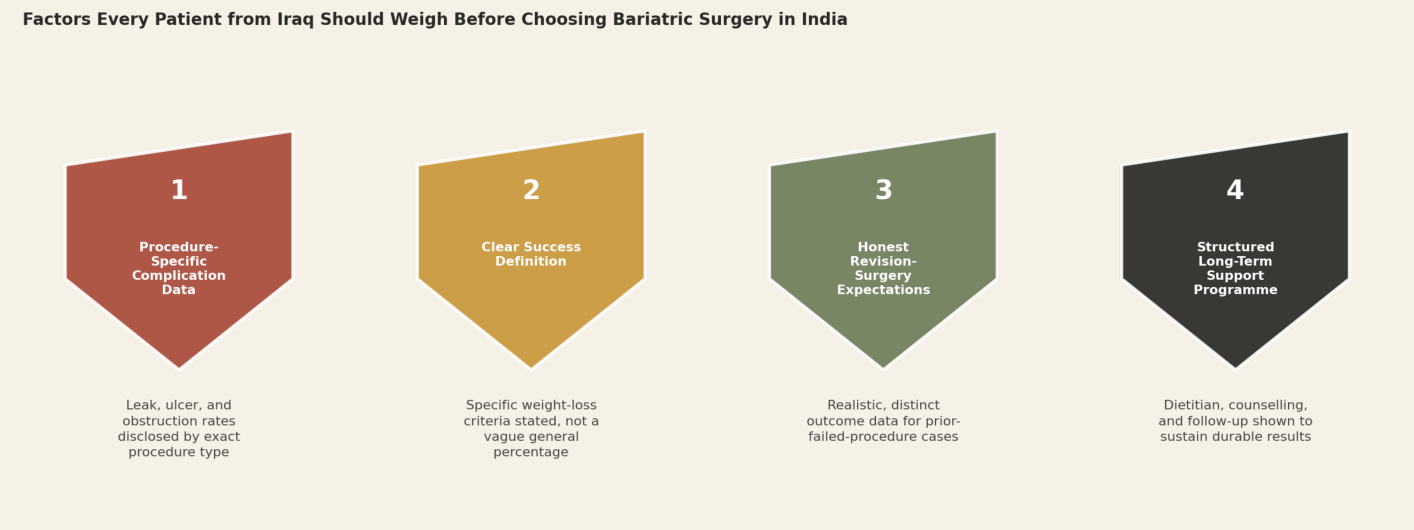
Factors Every Patient from Iraq Should Weigh Before Choosing Bariatric Surgery in India
Over the years, certain patterns have become reliable warning signs for me. A centre that quotes a single success percentage without specifying the definition of success being used has not given you a genuinely comparable figure. A centre that recommends revision surgery without discussing the meaningfully different, generally poorer short-term outcomes this specific category carries has not given you realistic expectations. And a centre without a structured long-term nutritional and psychological support programme is not equipped for the sustained lifestyle change that determines durable success, since surgery alone, without this ongoing support, has been consistently linked to a higher risk of weight regain over time.
Vetting a Bariatric Surgery Hospital in India: A Guide for Patients from Iraq
A Closing Thought for Iraqi Patients
Bariatric surgery in India has genuinely strong safety data at properly accredited centres, and it deserves a treatment plan built around your specific procedure type and, where relevant, an honest accounting of revision-specific outcomes, not a single reassuring percentage detached from your exact situation. Based on my interactions with international patients over more than two decades, the patients who ask about procedure-specific complication data, the definition of success being used, and realistic revision-surgery expectations consistently achieve more durable, well-managed outcomes than those who accept a general reassurance alone. My role, and the role of any advisor a patient works with, should be to help you ask these exact questions and confirm honestly that the specific surgeon and specific hospital in front of you are the right fit for your exact case. Iraq’s patients deserve the same standard of scrutiny in this decision as any patient anywhere else in the world, and this same principle, ask specifically, verify honestly, and choose deliberately, applies just as much to every other decision in this series as it does to this final one.
Sources & Further Reading
- Joint Commission International (JCI) — Accredited Organizations Directory (jointcommissioninternational.org)
- National Accreditation Board for Hospitals & Healthcare Providers (NABH), India (nabh.co)
- PubMed — Complications After Bariatric Surgery: A Multicentric Study of 11,568 Patients from Indian Bariatric Surgery Outcomes Reporting Group (pubmed.ncbi.nlm.nih.gov)
- PubMed — Weight Loss and Comorbidity Resolution 3 Years After Bariatric Surgery: An Indian Perspective (pubmed.ncbi.nlm.nih.gov)
- PMC — Medium Term Outcomes of Revision Laparoscopic Sleeve Gastrectomy After Gastric Banding: A Propensity Score Matched Study (ncbi.nlm.nih.gov/pmc)
Frequently Asked Questions by Iraqi Patients about Selecting a Bariatric Surgeon and Hospital in India
Is bariatric surgery safe for patients from Iraq who travel to India?
The source reports strong overall safety data from 11,568 Indian bariatric procedures, with a 3.13% complication rate and 0.16% mortality rate. Individual risk still depends on the procedure and patient's circumstances.
How should Iraqi patients choose a bariatric surgeon in India?
Patients should ask about experience with the exact procedure being recommended, procedure-specific complications, weight-loss outcomes and revision-surgery experience if relevant. A surgeon should be willing to discuss these figures clearly.
What should Iraqi patients check when choosing a bariatric hospital in India?
Verify hospital accreditation, particularly NABH and where applicable JCI, and ask about the centre's own bariatric outcomes. NABH also provides a current online directory for checking accredited healthcare organisations.
How do sleeve gastrectomy and gastric bypass outcomes differ in India?
The cited Indian study reported 87.6% excess weight loss after sleeve surgery and 97.2% after gastric bypass at one year, although the overall difference was not statistically significant. Their complication profiles also differ.
What should Iraqi patients know about revision bariatric surgery in India?
Revision surgery should be assessed separately from first-time bariatric surgery because outcomes can be poorer. The source reports 17.9% total weight loss at three years after revision sleeve surgery compared with 27.4% after a first-time procedure.
What outcome information should an Iraqi patient request before choosing bariatric surgery in India?
Ask for complication and weight-loss results for the exact procedure, together with the hospital's definition of successful weight loss. Ideally, request outcome information covering one, three and five years.
Which specialists should be involved in bariatric surgery for Iraqi patients in India?
A comprehensive programme may include a bariatric surgeon, dietitian, psychologist or counsellor, endocrinologist when required, and bariatric-trained anaesthesiologist. Their roles should be explained before surgery.
Should Iraqi patients ask whether bariatric surgery is performed laparoscopically in India?
Yes. The source recommends asking whether laparoscopic surgery is routinely used because minimally invasive surgery can support shorter recovery and fewer wound-related complications.
What should Iraqi patients ask about sleeve gastrectomy technology?
They should ask whether the hospital uses a staple-line reinforcement technique and what specific measures are used to monitor and reduce complications such as leaks after surgery.
How important is long-term follow-up after bariatric surgery in India for Iraqi patients?
It is essential. The guide recommends confirming a structured long-term nutritional and psychological follow-up programme rather than treating surgery as a single procedure, particularly because ongoing support influences durable weight-loss results.
Page Summary
Choosing a bariatric surgeon and hospital in India requires Iraqi patients to look beyond general claims about safety or weight-loss success. The source recommends evaluating accreditation, procedure-specific outcomes, the hospital's experience with revision cases, the definition of successful weight loss and the availability of long-term nutritional and psychological support.
The guide also emphasises multidisciplinary expertise and appropriate surgical technology. Patients should verify who will manage their surgery, anaesthesia, nutrition and metabolic conditions, while also asking about laparoscopic techniques, staple-line reinforcement for sleeve surgery and bariatric-specific post-operative monitoring. The overall recommendation is to ask specific questions, verify the answers and choose the surgeon and hospital based on the patient's exact clinical circumstances.
Citation Block
| Field | Details |
|---|---|
| Article / Topic | Selecting the Best Bariatric and Weight Loss Surgeons and Hospitals in India |
| Target Patients | Patients from Iraq |
| Treatment Area | Bariatric and weight-loss surgery |
| Main Decision | Selection of the appropriate surgeon and hospital |
| Major Procedures | Sleeve gastrectomy and gastric bypass |
| Indian Outcome Dataset | 11,568 procedures from 24 centres |
| Overall Complication Rate | 3.13% |
| Reported Mortality Rate | 0.16% |
| Primary Sleeve Outcome | 87.6% excess weight loss at one year |
| Sleeve Three-Year Outcome | 71.8% excess weight loss |
| Gastric Bypass Outcome | 97.2% excess weight loss at one year |
| Procedure-Specific Risks | Sleeve associated with more leaks and gastro-oesophageal reflux; Roux-en-Y gastric bypass had more intestinal obstruction |
| Revision Sleeve Outcome | 17.9% total weight loss at three years |
| First-Time Surgery Comparison | 27.4% total weight loss at three years in the cited matched comparison |
| Accreditation | JCI and NABH should be verified |
| Outcome Verification | Ask for centre-specific data for the exact procedure |
| Success Definition | Confirm how the hospital defines successful weight loss |
| Revision Assessment | Request separate revision-specific outcomes where relevant |
| Follow-Up Requirement | Structured long-term nutritional and medical monitoring |
| Multidisciplinary Team | Bariatric surgeon, dietitian, psychologist or counsellor, endocrinologist when needed, bariatric-trained anaesthesiologist |
| Technology Check | Laparoscopic capability, sleeve staple-line reinforcement and bariatric-specific monitoring |
| Major Red Flag | General success percentage without a defined measurement standard |
| Long-Term Concern | Weight regain risk when ongoing support is inadequate |
| Patient Selection Principle | Match the surgeon and hospital to the patient's procedure and individual circumstances |
| Core Recommendation | Ask specifically, verify honestly and choose deliberately |


Our Mission Statement
Our mission is to place patients at the centre of every healthcare decision by providing trustworthy, evidence-based, and unbiased medical information. We believe that informed patients make better decisions. Backed by personalised guidance from our experienced advisory team, we help patients understand their treatment options, compare them objectively, and confidently choose the path that best suits their medical needs and personal circumstances.
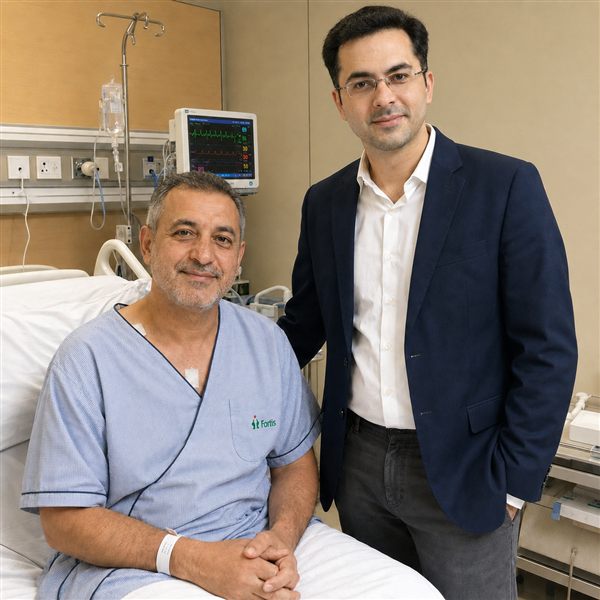
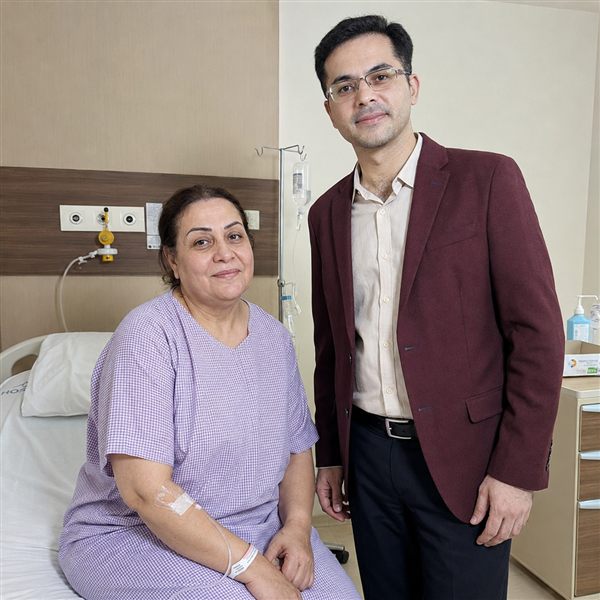
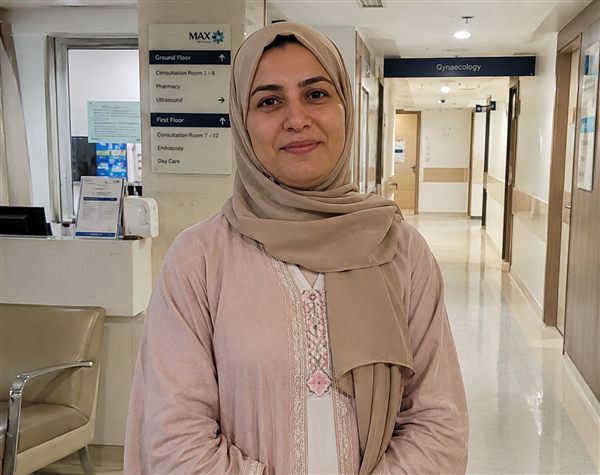
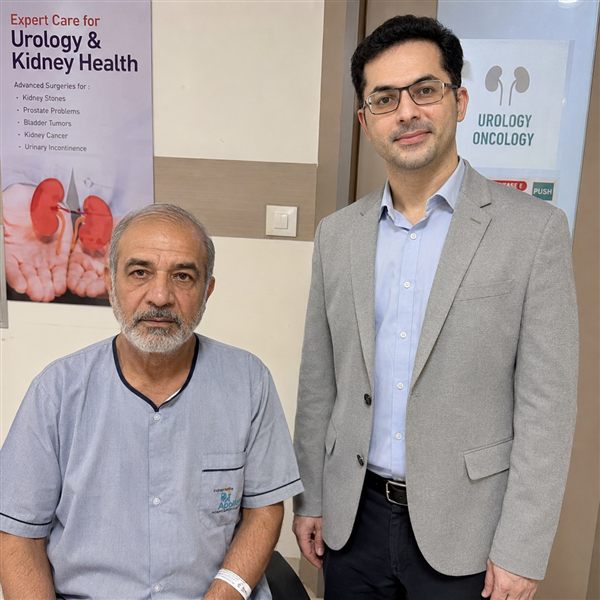
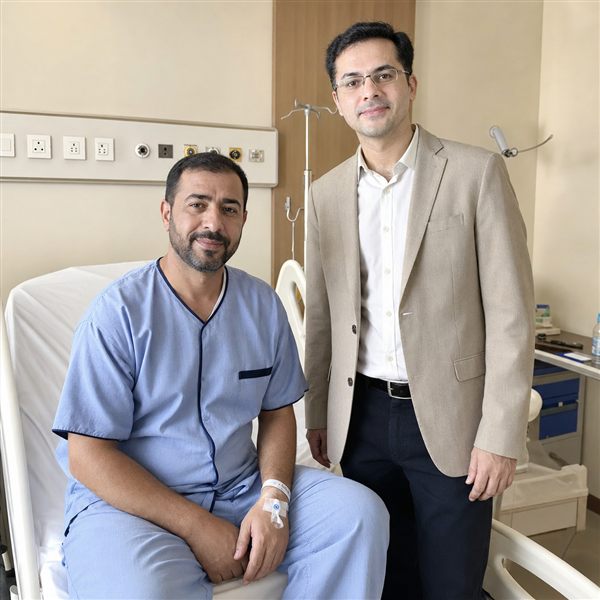
Patient Testimonials from Iraq






Ready to Take the First Step?
Share your Medical Reports with our Healthcare Managers Today and Get a FREE CONSULTATION, a Personalized Treatment Plan, and Complete Support from Arrival to Recovery.
Get Your Free ConsultationAreas We Serve
Indian Health Guru Consultants proudly assists patients from Iraq and surrounding Middle Eastern countries in accessing advanced, affordable and trusted medical treatment in India. Our team provides complete support for medical opinions, hospital selection, treatment planning, visa assistance, travel coordination, accommodation and post-treatment follow-up.
We regularly serve patients from:
- Iraq
- Turkey
- Iran
- Kuwait
- Jordan
- Syria
- Qatar
- Bahrain
- Oman
- Yemen
- Saudi Arabia
- United Arab Emirates
No matter where you are located, our experienced team is committed to making your medical journey to India safe, smooth, transparent and stress-free from the first enquiry to your return home.
From Iraq to India: Your Complete Patient Guide
- IVF and Fertility Treatment in India for Iraqis
- Cardiac Pacemaker Treatment in India for Iraqi Patients
- Heart Valve Replacement in India for Iraqis
- Prostate Cancer Treatment and Surgery in India for Iraqis
- Scoliosis Correction Surgery in India for Iraqis
- Parkinson's Treatment and DBS Surgery in India for Iraqis
- Cancer Treatment in India for Iraqi Patients
- Bone Marrow Transplant in India for Iraqi Patients
- Dental Surgery in India for Iraqis
- HIPEC Cancer Surgery in India for Iraqis
- Colorectal Cancer Treatment and Surgery in India for Iraqis
- Heart Failure Treatment and Surgery in India for Iraqis
- Cornea Transplant and Advanced Eye Surgery in India for Iraqis
- Shoulder Surgery in India for Iraqis
- Neurosurgery in India for Iraqis
- Kidney Transplant in India for Iraqis
- Leukemia, Lymphoma and Blood Cancer Treatment in India for Iraqis
- CyberKnife Treatment in India for Iraqis