

Leukemia, Lymphoma, and Blood Cancer Treatment in India for Iraqis: What You Need to Know Before You Travel
A doctor’s honest guide for Iraqi families facing a blood cancer diagnosis and weighing treatment abroad — costs, hospitals, the real treatment journey, and the questions worth asking before you book anything.
A diagnosis of leukemia or lymphoma changes overnight from an abstract fear into an urgent, detailed set of decisions: which subtype exactly, which risk category, which specific chemotherapy protocol, and whether newer targeted or immune-based therapies are genuinely an option for this particular patient. Blood cancers are unusual in how much the right answer depends on precise laboratory classification rather than a general diagnosis, and getting that classification right, then matching it to the correct modern protocol, is what actually determines survival. I have spent 24 years guiding patients from across the Middle East, Africa, and South Asia through exactly this decision, and Iraqi families are an increasingly regular part of that work. What I tell every family calling from Baghdad, Basra, Erbil, or Sulaimani is the same thing I would tell my own relative: leukemia and lymphoma are not single diseases, they are families of diseases that increasingly require genetic and molecular testing to treat correctly, and a hospital’s access to this diagnostic depth, and to the newer drugs that testing can unlock, matters as much as the chemotherapy itself. For a growing number of Iraqi families, once the options are compared honestly, that fuller diagnostic and treatment depth is found in India.
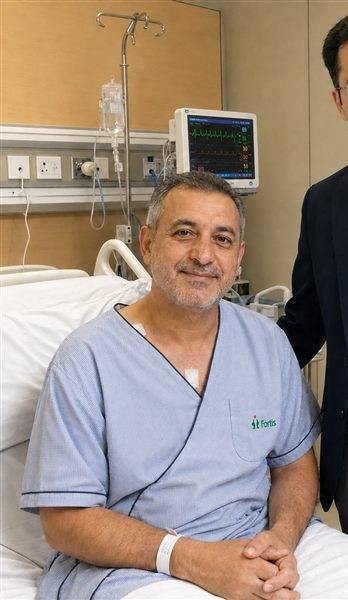
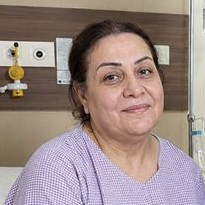
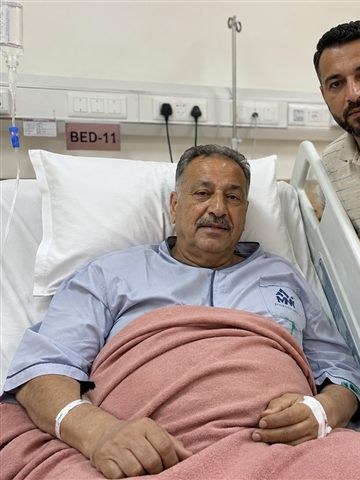
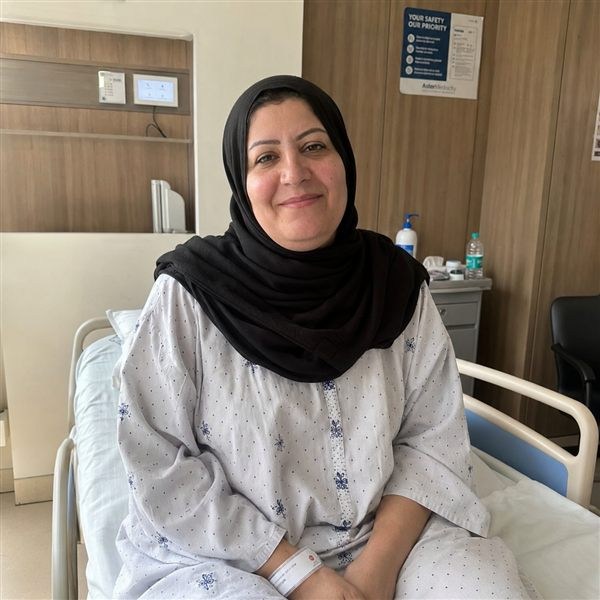
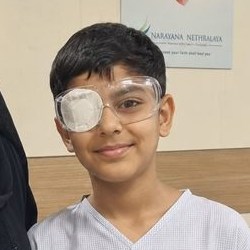
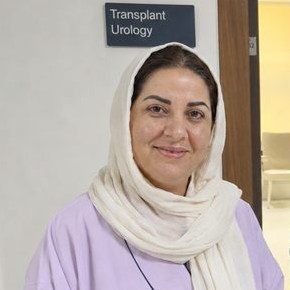
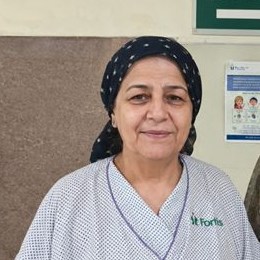
Healing Journeys of Iraqi Patients
Key Takeaways
- A diagnosis of leukemia or lymphoma requires much more than identifying the general disease category. The guide emphasises that the specific subtype, risk classification, genetic and molecular findings and corresponding treatment protocol can significantly influence treatment decisions. For Iraqi families, confirming this classification before starting treatment is therefore one of the most important steps in evaluating treatment options in India.
- The source recognises that Iraq has made important progress in blood cancer care, particularly in paediatric oncology. It cites improvements in outcomes at major Iraqi centres, including reductions in induction mortality for acute lymphoblastic leukemia and acute promyelocytic leukemia after treatment approaches were improved. Families should therefore investigate appropriate treatment options within Iraq before deciding whether international treatment is necessary.
- For patients who do travel, the guide identifies diagnostic depth as one of India's major strengths. Leading Indian haemato-oncology centres may offer flow cytometry, cytogenetic analysis and molecular testing to establish the specific leukemia or lymphoma subtype and risk category before treatment begins. This can help clinicians match the patient with a more specific treatment strategy rather than relying only on a broad diagnosis.
- India also provides access to several modern treatment categories. The source highlights tyrosine kinase inhibitors for chronic myeloid leukemia, rituximab-based treatment for B-cell lymphomas and CAR-T cell therapy at advanced centres for selected relapsed or treatment-resistant blood cancers. These treatments are not automatically appropriate for every patient, so the exact diagnosis and treatment history must be reviewed before selecting them.
- The cost comparison chart on page 2 shows an illustrative all-inclusive range of approximately USD 7,000–13,000 in India for an induction chemotherapy course. The corresponding ranges shown are approximately USD 25,000–42,000 in the United Kingdom, USD 22,000–35,000 in Germany and USD 50,000–130,000 in the United States. Targeted therapy, immunotherapy and subsequent bone marrow transplantation can cost substantially more, making an itemised quotation important after diagnostic classification.
- The treatment journey does not necessarily require an Iraqi patient to remain in India for the entire course. According to the journey diagram on page 3, diagnostic testing and risk classification may take approximately one week, followed by an initial induction chemotherapy cycle requiring roughly two to four weeks in hospital. Subsequent cycles may either continue in India or be transferred to a treating haematologist in Iraq under a clear written protocol.
- Before travelling, Iraqi families should confirm that genetic and molecular subtyping has been completed and that the haemato-oncologist has personally reviewed the relevant medical evidence. Blood tests, bone marrow biopsy results and pathology slides should be translated and shared digitally in advance. Families should also establish in writing whether subsequent chemotherapy can safely be administered in Iraq and what protocol the treating haematologist would follow.
- The page 4 checklist highlights six factors: molecular subtyping confirmed, hospital accreditation, access to targeted therapy, a written treatment plan, Arabic-language coordination, and an aftercare transfer plan for ongoing treatment in Iraq.
Quick Facts
- Treatment
- Leukemia, lymphoma and blood cancer treatment
- Primary Patients
- Iraqi patients and families seeking specialised haemato-oncology care in India
- Main Speciality
- Haemato-oncology
- Key Specialist
- Haemato-oncologist with experience in the patient's specific blood cancer subtype
- Diagnosis
- Precise subtype and risk classification are essential
- Diagnostic Tests
- Flow cytometry, cytogenetic and molecular testing may be required
- Treatment Options
- Chemotherapy, targeted therapy, immunotherapy and selected CAR-T treatment
- CML Treatment
- Tyrosine kinase inhibitors may be used when clinically appropriate
- B-Cell Lymphoma
- Rituximab-based regimens may be considered
- CAR-T Therapy
- Available at advanced centres for selected relapsed or resistant cases
- Illustrative India Cost
- Approximately USD 7,000–13,000 for an illustrative induction chemotherapy course
- Cost Variation
- Targeted therapy, immunotherapy and transplant can substantially increase costs
- Diagnostic Timeline
- Approximately one week for initial testing and risk classification
- Initial Treatment
- Induction chemotherapy may require approximately two to four weeks in hospital
- Further Cycles
- Some subsequent treatment may continue in Iraq
- Hospital Selection
- Consider JCI or NABH accreditation and dedicated haemato-oncology capability
- Pre-Travel
- Blood tests, bone marrow results and pathology should be reviewed before travel
- Language Support
- Arabic-speaking coordinators may be available
- Treatment Plan
- Obtain the diagnosis, protocol and expected number of cycles in writing
- Aftercare
- Confirm whether subsequent cycles can be safely transferred to a haematologist in Iraq
- Author
- Dr. Dheeraj Bojwani
- Experience
- 24+ Years
In Brief
For Iraqi patients considering leukemia, lymphoma or other blood cancer treatment in India, the most important starting point is precise diagnosis rather than simply choosing a hospital or chemotherapy package. Molecular and genetic testing, flow cytometry and cytogenetic assessment are important components of modern haemato-oncology evaluation. India is presented as an option because of access to advanced diagnostics, targeted and immune-based therapies and international-patient coordination. An illustrative induction chemotherapy cost of approximately USD 7,000–13,000 is shown in the source, while targeted therapy, immunotherapy and transplantation may require substantially higher budgets.
Why Iraqi Patients Are Looking Beyond Iraq for Blood Cancer Treatment
Iraq has made real, hard-won progress in treating blood cancers, particularly in children. Children’s Welfare Teaching Hospital at Medical City in Baghdad has long been the country’s main paediatric oncology centre, and Basra Children’s Hospital, opened in 2013 as Iraq’s first dedicated paediatric cancer facility, was built specifically because childhood cancer rates in southern Iraq have been documented as notably elevated. International collaboration since 2003 has driven genuine improvement: induction mortality in acute lymphoblastic leukemia fell from 24 percent to 10 percent between 2007 and 2010 after introducing pre-phase steroid treatment, and mortality in acute promyelocytic leukemia fell from 95 percent to 5 percent after introducing modern targeted treatment. This is real progress, and any family should first investigate treatment at these centres.
Where the picture becomes harder is access to the newest generation of precision and immune-based therapy: genomic and molecular testing to classify a specific leukemia or lymphoma subtype precisely, targeted drugs matched to that specific genetic profile, and newer immune therapies including CAR-T cell treatment for certain relapsed or resistant blood cancers. Iraqi oncologists themselves have flagged that infrastructure, diagnostic depth, and access to newer drug classes remain areas needing continued international partnership. This is why a growing number of Iraqi families now travel for blood cancer treatment specifically, and India has become one of the most trusted destinations, not simply the cheapest one.
Why India Specifically for Leukemia, Lymphoma, and Blood Cancer Treatment, Not Just Overseas
Iraqi families researching treatment abroad quickly discover several destinations: Turkey, Jordan, and India are all commonly mentioned in the same breath. It is worth being direct about why India stands apart for blood cancer treatment specifically.
The first reason is diagnostic depth. India’s leading haemato-oncology centres offer flow cytometry, cytogenetic analysis, and molecular testing on-site, allowing a specific leukemia or lymphoma subtype and risk category to be confirmed precisely before treatment begins, rather than treatment starting from a general diagnosis alone.
The second reason is access to modern targeted and immune therapy. Leading Indian centres offer tyrosine kinase inhibitors for chronic myeloid leukemia, rituximab-based regimens for B-cell lymphomas, and, at the most advanced centres, CAR-T cell therapy for specific relapsed or resistant cases, giving patients access to treatment options that go well beyond standard chemotherapy protocols alone.
The third reason is infrastructure built specifically for international patients, including Arabic-speaking coordinators and case managers who can review existing pathology and blood test results remotely before a family ever travels. Finally, there is regulatory credibility: a large share of India’s leading cancer hospitals hold JCI or NABH accreditation, many haemato-oncologists have trained or held fellowships in the UK, US, or Germany, and India’s government has built a dedicated medical visa category for foreign patients and one attendant.
Understanding the Cost Picture of Blood Cancer Treatment in India
Cost is a genuine concern for most Iraqi families facing this diagnosis, and it is where India’s advantage is hardest to ignore. The figures below reflect typical all-inclusive ranges for a standard course of induction chemotherapy for leukemia or lymphoma, covering diagnostic testing, the chemotherapy itself, and a standard hospital stay. Targeted therapy, immunotherapy, and any subsequent bone marrow transplant cost meaningfully more, so I always urge families to get a written, itemised estimate once diagnostic testing has confirmed the specific subtype.
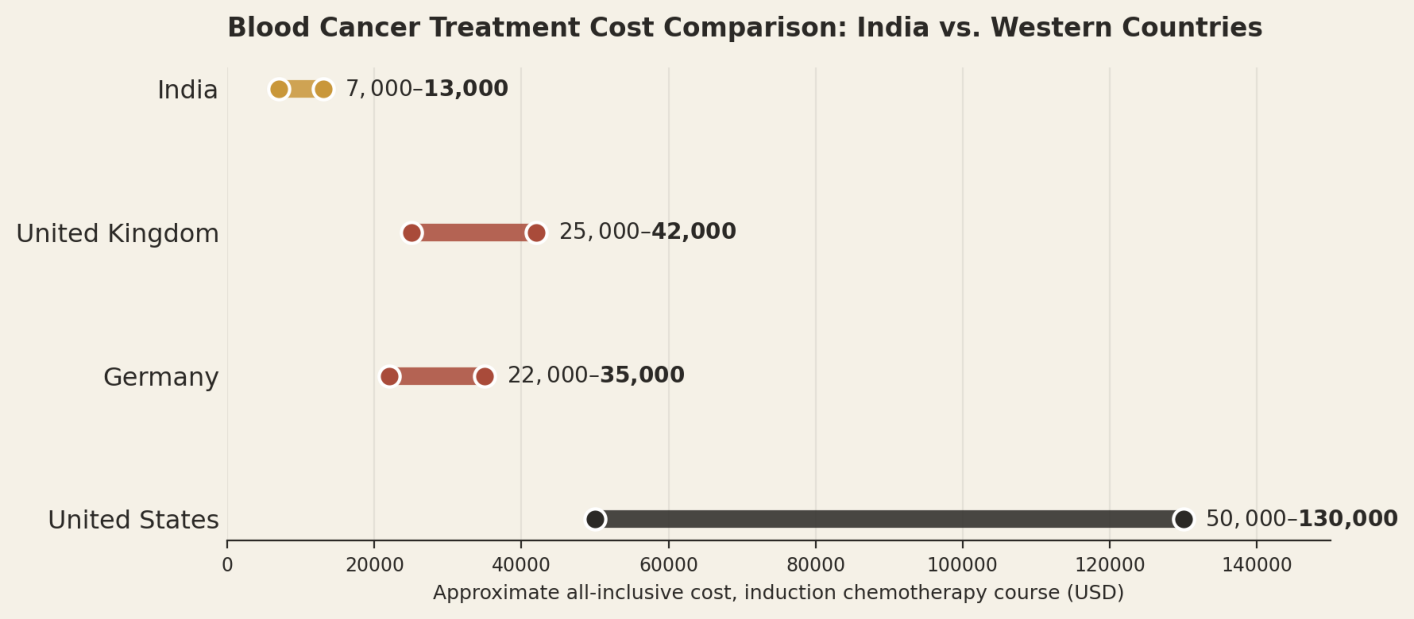
What stands out is not simply that India is cheaper than the United States, the United Kingdom, or Germany. It is that India offers the same diagnostic technology and drug classes at a fraction of Western prices, with transparent, package-based pricing that contrasts favourably with Western systems where a quoted “treatment cost” often excludes molecular testing, targeted therapy, or additional cycles until the final bill arrives. Many hospitals also accept a partial advance deposit rather than full upfront payment, which is worth raising directly in the first consultation since it can meaningfully ease the financial planning involved in arranging funds from Iraq.
What Blood Cancer Treatment in India Typically Looks Like
Families often worry most about how long treatment will take and whether it can continue safely once back in Iraq. Having coordinated this journey for many families, I find it helps enormously to see the process mapped out plainly before departure.
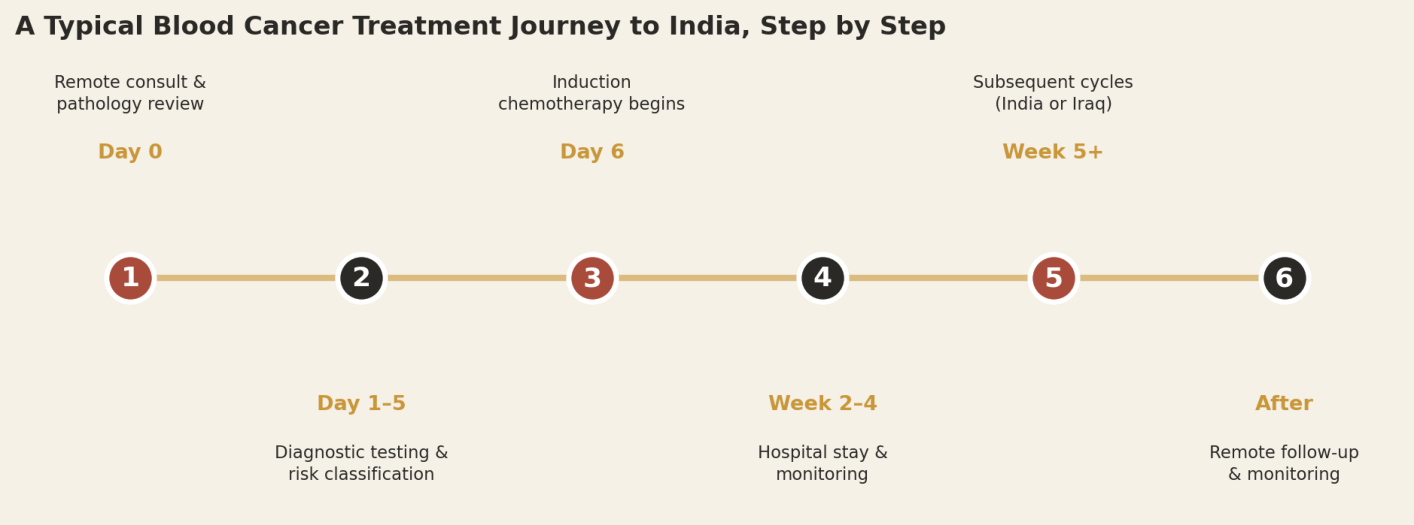
A typical patient can expect diagnostic testing and risk classification to take about a week, followed by an initial induction chemotherapy cycle requiring two to four weeks in hospital, with subsequent cycles either completed in India or handed over to a treating haematologist back in Iraq with a clear written protocol.
Factors Every Iraqi Patient Should Weigh Before Deciding Blood Cancer Treatment in India
Beyond cost and destination, the Iraqi families I have advised over these 24 years tend to make better decisions, and face fewer surprises, when they think through the following before booking anything.
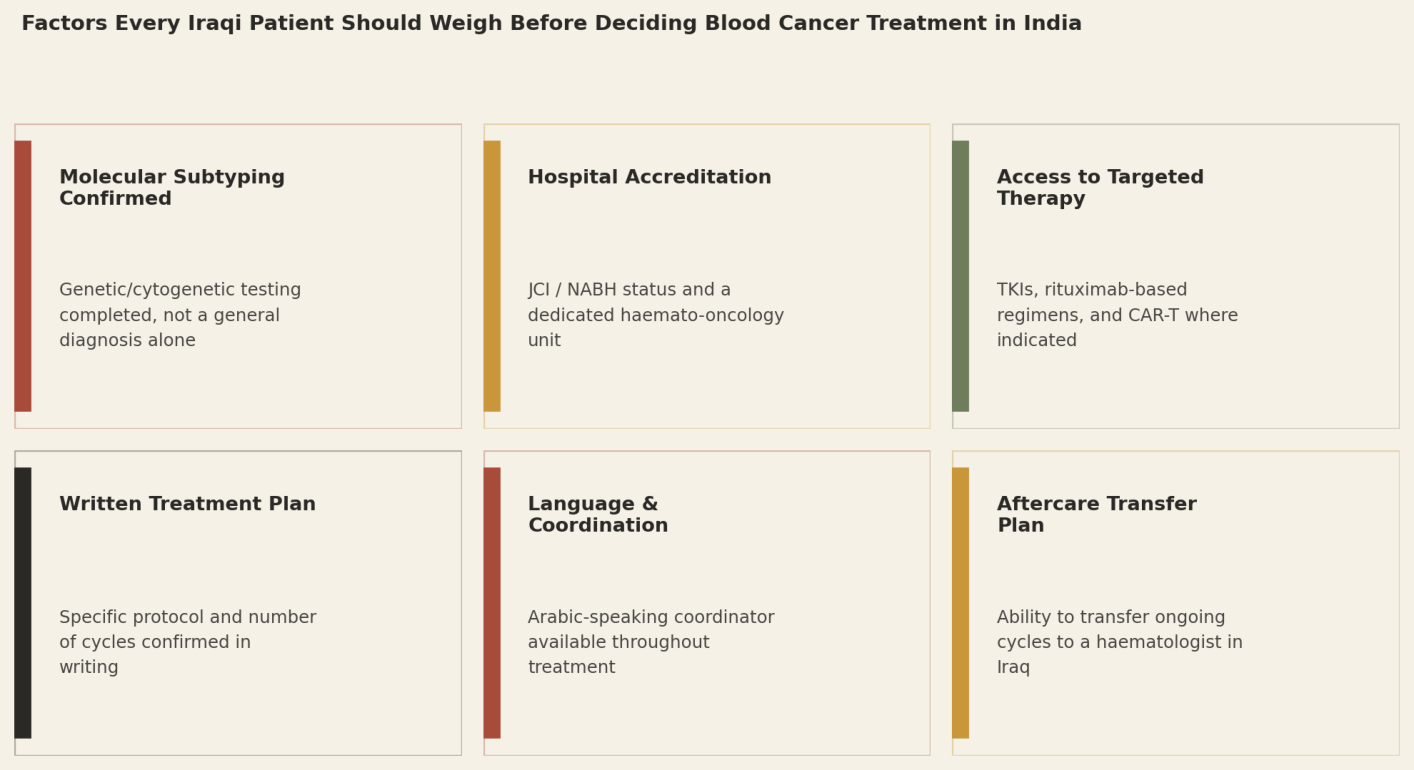
A few of these deserve a specific note. Ask directly whether genetic and molecular subtyping has been completed, since the specific subtype, not simply “leukemia” or “lymphoma” as a general label, determines the correct treatment protocol. Existing blood tests, bone marrow biopsy results, and pathology slides should be translated and shared digitally in advance, since a haemato-oncologist needs to review these personally before confirming the treatment plan. Families should also ask, in writing, whether ongoing chemotherapy cycles can be safely transferred to a treating haematologist in Iraq with a clear protocol, since not every patient needs to remain in India for the entire course of treatment.
A Closing Thought for Iraqi Families
A blood cancer diagnosis deserves precise classification and access to the specific modern treatment that classification calls for, not a marketing brochure or the lowest quoted price. What the evidence consistently shows is that for Iraqi families weighing where to go, India offers a genuinely rare combination: deep diagnostic capability, access to targeted and immune-based therapy, and meaningfully lower cost than the West. Few destinations available to an Iraqi family today can offer this depth of haemato-oncology diagnostic and treatment capability at once. My role, and the role of any advisor a family works with, should be to help confirm the exact diagnosis and treatment plan honestly and make sure it fits the patient’s specific subtype, budget, and timeline. Iraq’s families deserve the same standard of scrutiny and care in this decision as any family anywhere else in the world.
Sources & Further Reading
- World Health Organization — Iraq Health System Profile (who.int/countries/irq)
- National Institute for Health and Care Excellence (NICE, UK) — Leukaemia and Lymphoma Guidance (nice.org.uk)
- UK Government — List of English-Speaking Doctors and Medical Facilities in Iraq (gov.uk/government/publications/iraq-doctors-and-medical-facilities)
- Leukemia & Lymphoma Society (LLS, US) — Patient Information (lls.org)
- World Bank — Iraq Health Sector Reports (worldbank.org/en/country/iraq)
Frequently Asked Questions by Iraqi Patients about Leukemia, Lymphoma and Blood Cancer Treatment in India
Can Iraqi patients travel to India for leukemia treatment?
Yes, the guide specifically addresses Iraqi families travelling to India for blood cancer treatment. The treatment plan should first be based on precise subtype classification and review of the patient's existing medical records.
What tests should an Iraqi leukemia patient complete before travelling to India?
Existing blood tests, bone marrow biopsy results and pathology material should be collected and shared for review. Genetic and molecular subtyping should also be confirmed where clinically required.
How much does leukemia or lymphoma treatment cost in India for Iraqi patients?
The source's page 2 chart gives an illustrative all-inclusive range of approximately USD 7,000–13,000 for an induction chemotherapy course. Targeted therapy, immunotherapy and transplantation can increase the overall cost substantially.
How long does an Iraqi blood cancer patient need to stay in India?
Initial diagnostic testing and risk classification may take about one week, followed by an induction chemotherapy cycle requiring approximately two to four weeks in hospital. The source indicates that later cycles may sometimes continue in Iraq.
Can Iraqi patients continue chemotherapy in Iraq after starting treatment in India?
In some cases, subsequent cycles may be transferred to a treating haematologist in Iraq. The Indian treatment team should provide a clear written protocol and confirm that transfer of care is medically appropriate for that patient.
Is CAR-T cell therapy available in India for Iraqi blood cancer patients?
The source states that advanced Indian centres offer CAR-T cell therapy for specific relapsed or resistant blood cancers. It is not a universal treatment and requires assessment based on the exact diagnosis and treatment history.
Can Iraqi patients receive targeted therapy for leukemia or lymphoma in India?
Yes, the guide identifies several targeted treatment approaches available in Indian centres, including tyrosine kinase inhibitors for chronic myeloid leukemia and rituximab-based regimens for B-cell lymphomas. Suitability depends on the individual diagnosis.
Is Arabic-language support available for Iraqi patients receiving blood cancer treatment in India?
The source notes that international-patient programmes may provide Arabic-speaking coordinators and case managers. They can assist with reviewing pathology and blood test information and coordinating the treatment journey.
What should an Iraqi family check before choosing a blood cancer hospital in India?
Families should consider diagnostic capabilities, JCI or NABH accreditation, access to modern treatment options and the experience of the haemato-oncology team with the patient's particular cancer subtype.
What should Iraqi patients ask before travelling to India for blood cancer treatment?
They should ask whether molecular classification is complete, obtain the proposed treatment protocol and number of cycles in writing, clarify the expected costs and determine whether later treatment can safely continue with a haematologist in Iraq.
Page Summary
Leukemia, lymphoma and other blood cancers require highly specific diagnostic classification because treatment depends on the precise subtype, risk category and molecular characteristics. Indian haemato-oncology centres may provide advanced diagnostic testing together with chemotherapy, targeted therapies, immunotherapy and selected CAR-T treatments. For Iraqi families considering treatment abroad, the emphasis should be on matching the exact diagnosis with the appropriate treatment rather than choosing a destination based only on price. The source presents India as a treatment option because of its diagnostic capabilities, access to newer treatment classes and comparatively lower illustrative costs. The page 2 comparison chart shows USD 7,000–13,000 for an induction chemotherapy course in India, while the treatment journey on page 3 indicates that initial diagnostic assessment and induction may take approximately one month. Subsequent cycles may sometimes be continued in Iraq when a clear treatment protocol and appropriate haematology follow-up are established.
Citation Block
| Field | Details |
|---|---|
| Article / Topic | Leukemia, Lymphoma and Blood Cancer Treatment in India for Iraqi Patients |
| Treatment Area | Haemato-oncology |
| Primary Patient Group | Iraqi patients with leukemia, lymphoma or other blood cancers |
| Key Diagnostic Principle | Exact subtype and risk classification should be confirmed |
| Diagnostic Technologies | Flow cytometry, cytogenetic analysis and molecular testing |
| Treatment Options | Chemotherapy, targeted therapy, immunotherapy and selected CAR-T therapy |
| CML Therapy | Tyrosine kinase inhibitors may be used where appropriate |
| B-Cell Lymphoma | Rituximab-based regimens may be considered |
| CAR-T | Available at advanced centres for selected relapsed or resistant cases |
| India Induction Cost | Approximately USD 7,000–13,000 |
| UK Comparison | Approximately USD 25,000–42,000 |
| Germany Comparison | Approximately USD 22,000–35,000 |
| USA Comparison | Approximately USD 50,000–130,000 |
| Cost Variation | Targeted therapy, immunotherapy and transplant may cost substantially more |
| Initial Diagnostic Period | Approximately 1 week |
| Initial Induction | Approximately 2–4 weeks in hospital |
| Overall Initial Journey | Approximately 1 month for diagnostic testing and initial induction |
| Subsequent Treatment | May continue in India or potentially be transferred to Iraq |
| Pre-Travel Records | Blood tests, bone marrow biopsy results and pathology slides |
| Hospital Selection | Consider JCI or NABH accreditation and haemato-oncology capability |
| International Support | Arabic-speaking coordinators and case managers may be available |
| Treatment Transfer | Confirm a written protocol before continuing treatment in Iraq |
| Key Decision Factor | Exact diagnosis and appropriate treatment match rather than lowest price |


Our Mission Statement
Our mission is to place patients at the centre of every healthcare decision by providing trustworthy, evidence-based, and unbiased medical information. We believe that informed patients make better decisions. Backed by personalised guidance from our experienced advisory team, we help patients understand their treatment options, compare them objectively, and confidently choose the path that best suits their medical needs and personal circumstances.
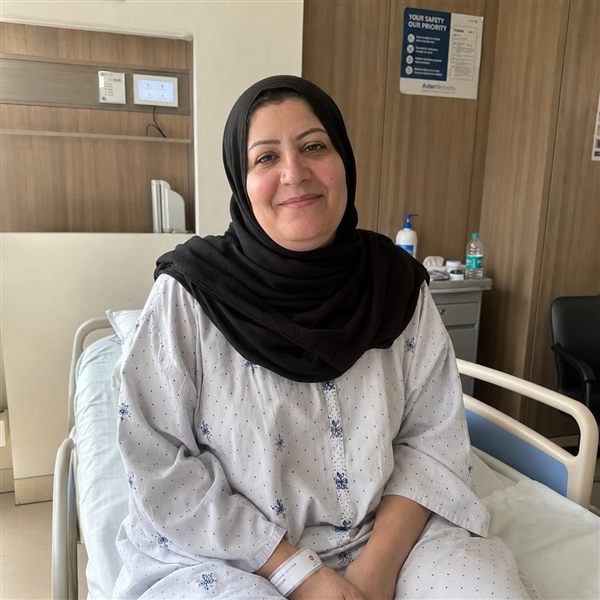
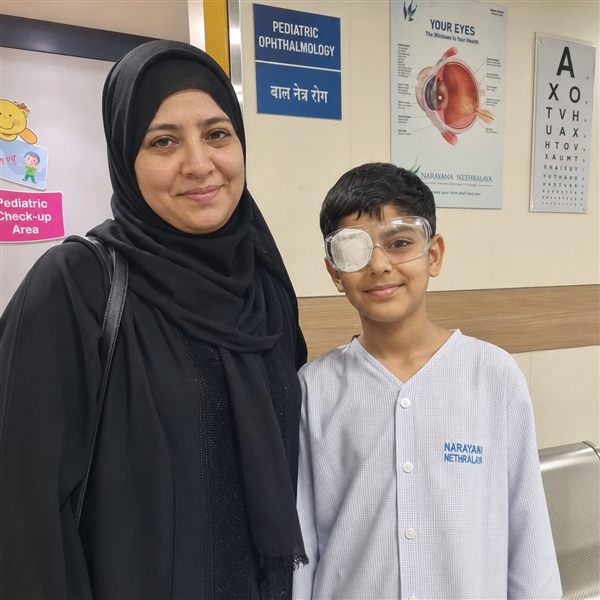
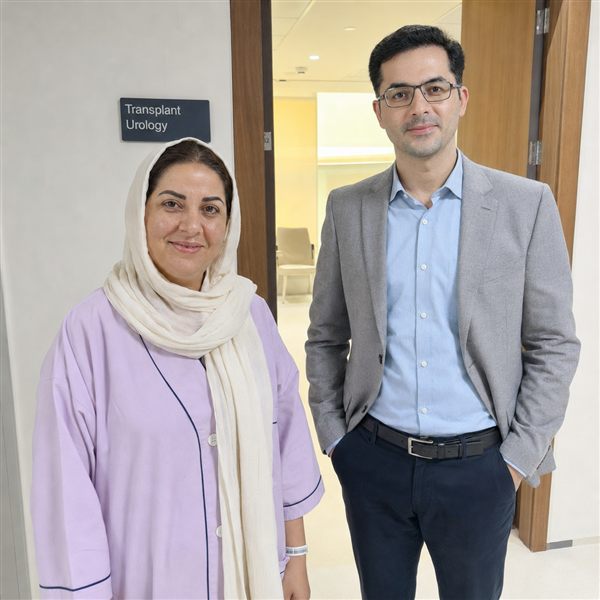
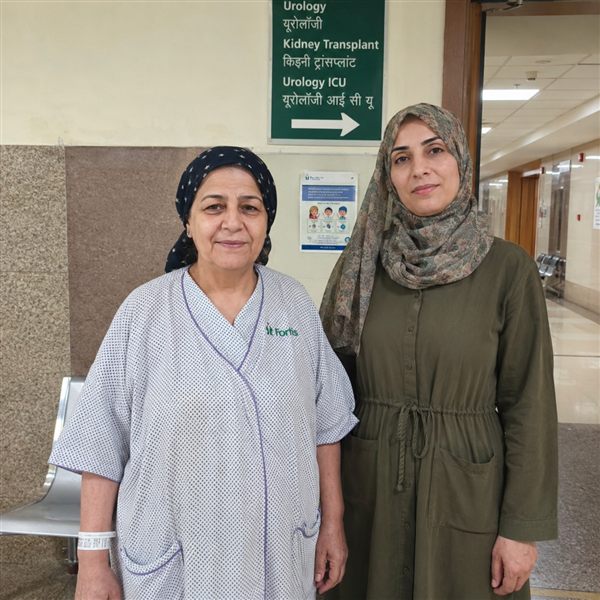
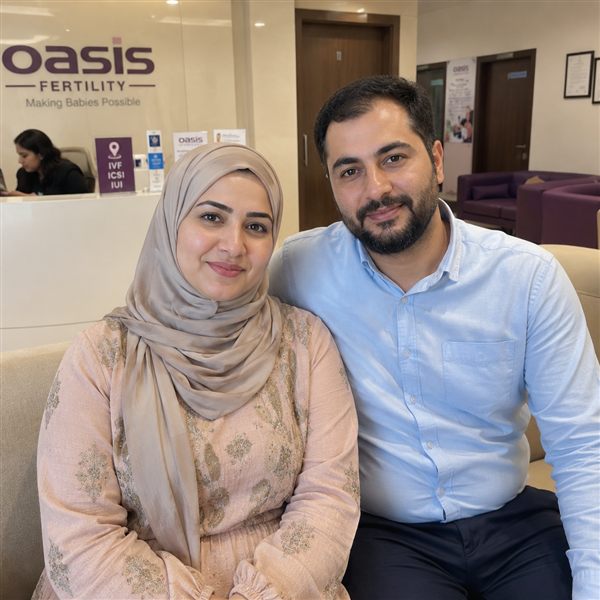
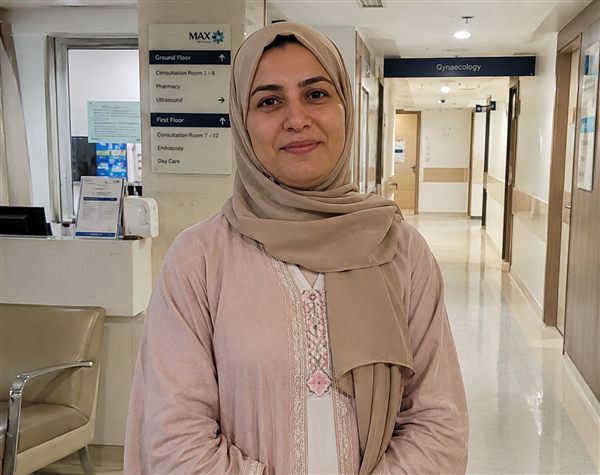
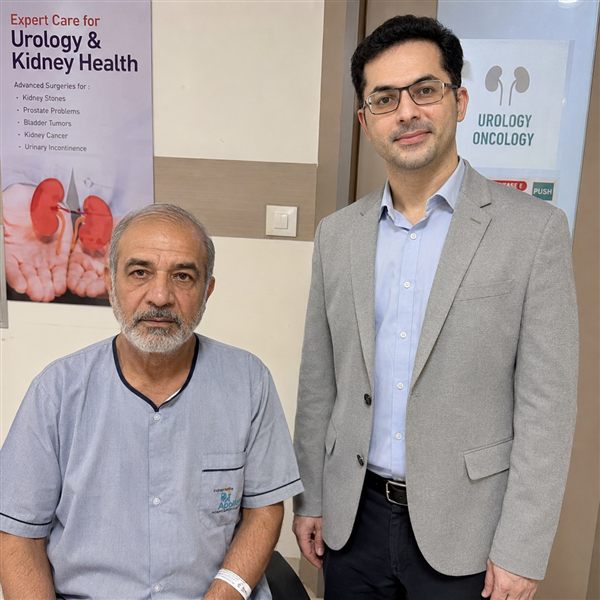
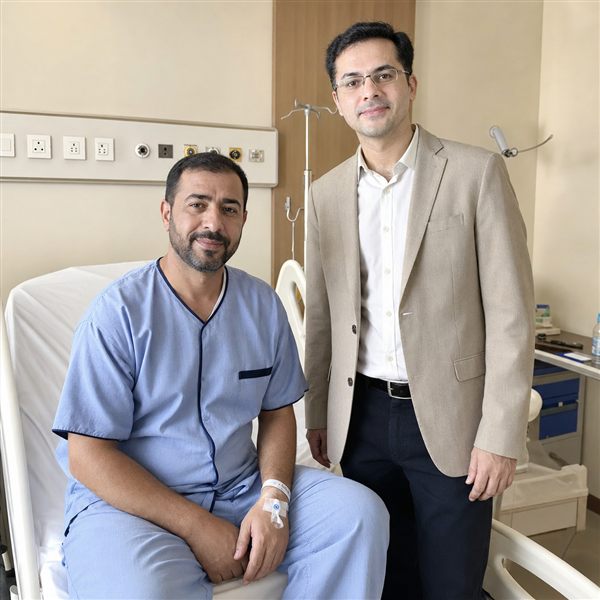
Patient Testimonials from Iraq
Ready to Take the First Step?
Share your Medical Reports with our Healthcare Managers Today and Get a FREE CONSULTATION, a Personalized Treatment Plan, and Complete Support from Arrival to Recovery.
Get Your Free ConsultationAreas We Serve
Indian Health Guru Consultants proudly assists patients from Iraq and surrounding Middle Eastern countries in accessing advanced, affordable and trusted medical treatment in India. Our team provides complete support for medical opinions, hospital selection, treatment planning, visa assistance, travel coordination, accommodation and post-treatment follow-up.
We regularly serve patients from:
- Iraq
- Turkey
- Iran
- Kuwait
- Jordan
- Syria
- Qatar
- Bahrain
- Oman
- Yemen
- Saudi Arabia
- United Arab Emirates
No matter where you are located, our experienced team is committed to making your medical journey to India safe, smooth, transparent and stress-free from the first enquiry to your return home.
From Iraq to India: Your Complete Patient Guide
- CyberKnife Treatment in India for Iraqis
- Paediatric Heart Surgery in India for Iraqis
- Shoulder Surgery in India for Iraqis
- Brain Tumour Surgery in India for Iraqi Patients
- Neurosurgery in India for Iraqis
- Weight Loss and Bariatric Surgery in India for Iraqis: Cost & Guide
- Complex Joint Revision Surgery in India for Iraqis
- Pancreatic Cancer Surgery in India for Iraqis
- Heart Failure Treatment and Surgery in India for Iraqis
- Neuronavigation and Advanced Brain Surgery in India for Iraqis
- Spine Surgery in India for Iraqis
- Colorectal Cancer Treatment and Surgery in India for Iraqis
- Breast Cancer Treatment in India for Iraqi Patients
- Kidney Transplant in India for Iraqis
- Oral and Maxillofacial Surgery in India for Iraqis
- Cosmetic and Aesthetic Surgery in India for Iraqis
- Heart Valve Replacement in India for Iraqis
- Hip Surgery in India for Iraqis