

Neuronavigation and Advanced Brain Surgery in India for Iraqis: What You Need to Know Before You Travel
A doctor’s honest guide for Iraqi families weighing image-guided brain surgery abroad — costs, hospitals, the real treatment journey, and the questions worth asking before you book anything.
Iraq has a genuinely proud neurosurgical history, home to pioneering surgeons and a teaching hospital tradition stretching back to the early 1970s. What has changed since then is the technology that separates good brain surgery from the safest possible brain surgery: real-time image guidance that lets a surgeon see exactly where their instruments are relative to a tumour, blood vessel, or critical brain structure throughout the operation, rather than relying primarily on pre-operative imaging and surgical experience alone. I have spent 24 years guiding patients from across the Middle East, Africa, and South Asia through exactly this decision, and Iraqi families are an increasingly regular part of that work. What I tell every family calling from Baghdad, Basra, Erbil, or Sulaimani is the same thing I would tell my own relative: for brain surgery near a critical structure, whether that is a tumour, an aneurysm, or an area controlling speech or movement, the specific navigation technology available in the operating room, not just the surgeon’s individual skill, meaningfully changes how much margin for error the team has. For a growing number of Iraqi families, once the options are compared honestly, that fuller technology is found in India.
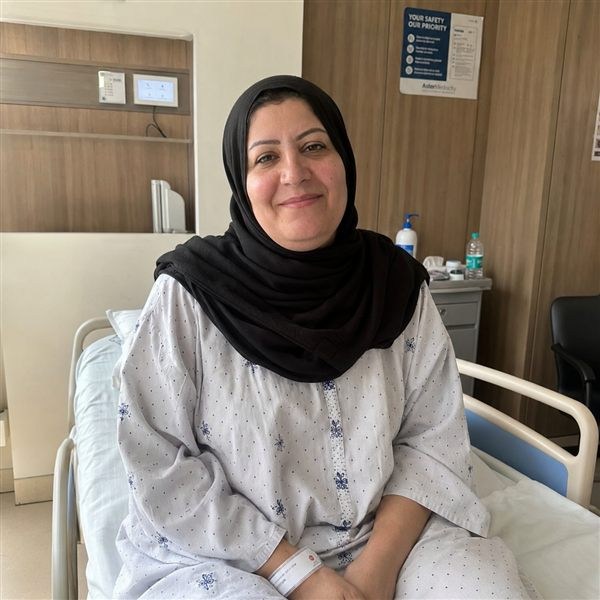
Healing Journeys of Iraqi Patients
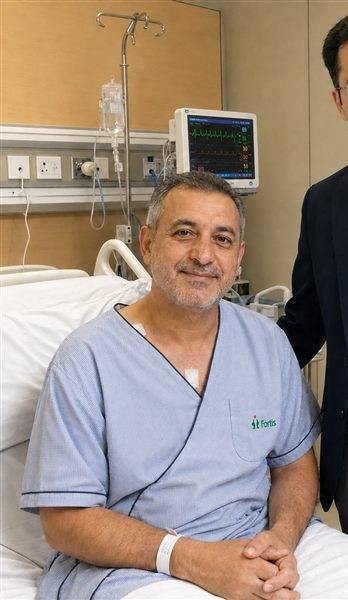
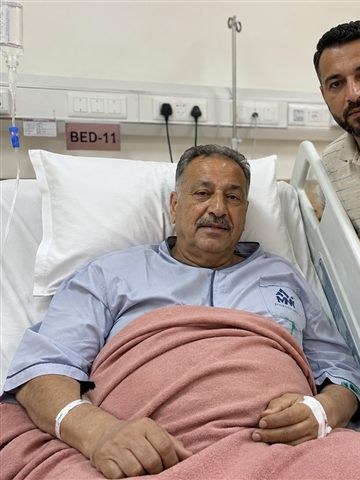
Key Takeaways
- Neuronavigation provides real-time image guidance during brain surgery, helping the surgical team understand the position of instruments in relation to a tumour, blood vessel or critical brain structure. The guide explains that for surgery near areas responsible for speech or movement, the technology available in the operating room can be an important consideration alongside the surgeon's experience.
- The source recognises Iraq's established neurosurgical tradition, including the Neurosurgery Teaching Hospital in Baghdad, now also known as Dr. Saad AlWitry Hospital for Neurosciences. Stereotactic systems were introduced to hospitals in Iraq through international support, allowing image guidance for certain tumours and functional disorders. However, the guide distinguishes this foundation from newer frameless, real-time navigation and intraoperative imaging technologies.
- India is presented as an option because leading neurosurgical centres use frameless neuronavigation and intraoperative imaging across a broad range of procedures. These include tumour resection, aneurysm clipping, arteriovenous malformation surgery and skull base approaches. The guide focuses on the breadth of technology available for different neurosurgical indications rather than treating neuronavigation as a single procedure.
- Awake craniotomy with functional mapping is another important technology discussed in the guide. For lesions close to speech, movement or other critical functional areas, the surgical team can use real-time functional testing while operating. This approach requires an experienced multidisciplinary team and should be considered according to the location and characteristics of the individual lesion.
- The cost comparison chart on page 2 shows an illustrative all-inclusive range of approximately USD 8,000–14,000 in India for standard neuronavigation-assisted brain surgery. The comparison ranges shown are approximately USD 32,000–50,000 in the United Kingdom, USD 24,000–38,000 in Germany and USD 60,000–120,000 in the United States. Awake mapping and additional intraoperative imaging can increase the final cost, so an itemised quotation should be obtained after the surgical plan is confirmed.
- The treatment journey diagram on page 3 describes a typical overall stay of approximately three weeks from consultation to flying home. It shows remote consultation and imaging review before travel, arrival and surgical planning during days 1–2, image-guided brain surgery around day 3, ICU and hospital recovery through approximately days 4–10, followed by a follow-up check before returning home. Structured remote follow-up should continue after returning to Iraq.
- Before travelling, Iraqi families should confirm exactly which neuronavigation system will be used and whether it is frameless or frame-based, with or without intraoperative imaging. Existing MRI or CT scans should be translated and shared digitally so that the neurosurgical team can plan the surgical approach. If the lesion is near an area controlling a critical function, families should also ask whether awake mapping is recommended and what experience the team has with the technique.
- The page 4 checklist highlights six factors: navigation technology confirmed, hospital accreditation, awake mapping capability, a written surgical plan, Arabic-language coordination, and a long-term follow-up plan. Technology selection should receive the same level of scrutiny as surgeon reputation, and the final decision should be based on the patient's specific condition, required technology, treatment plan, budget and timeline rather than simply the lowest quotation.
Quick Facts
- Treatment
- Neuronavigation and advanced brain surgery
- Primary Patients
- Iraqi patients requiring advanced image-guided neurosurgery in India
- Main Speciality
- Neurosurgery
- Key Specialist
- Neurosurgeon experienced in image-guided and advanced brain surgery
- Technology
- Frameless or frame-based neuronavigation, with or without intraoperative imaging
- Potential Procedures
- Brain tumour surgery, aneurysm clipping, AVM surgery and skull base approaches
- Awake Mapping
- May be considered for lesions near speech, movement or other critical functional areas
- Illustrative India Cost
- Approximately USD 8,000–14,000 for illustrative standard neuronavigation-assisted surgery
- Cost Factors
- Procedure complexity, awake mapping and additional imaging requirements
- Hospital Stay
- Approximately 7–10 days
- Total India Stay
- Approximately 3 weeks
- ICU Care
- Several days of intensive care may be required after surgery
- Pre-Travel
- MRI or CT imaging should be reviewed before travel
- Surgical Planning
- Exact navigation technology should be confirmed before treatment
- Hospital Selection
- Consider JCI or NABH accreditation and dedicated neurosurgical capability
- Technology Check
- Confirm whether intraoperative MRI or CT is available when clinically required
- Language Support
- Arabic-speaking coordination may be available
- Follow-Up
- Remote follow-up should be arranged after returning to Iraq
- Documentation
- Obtain the surgical plan and technology details in writing
- Author
- Dr. Dheeraj Bojwani
- Experience
- 24+ Years
In Brief
Neuronavigation and advanced brain surgery in India may be considered by Iraqi patients whose conditions require precise image-guided neurosurgery, particularly when a lesion is close to important brain structures. Frameless neuronavigation, intraoperative imaging and awake craniotomy with functional mapping are technologies available at leading Indian centres for appropriately selected cases. The illustrative cost for standard neuronavigation-assisted brain surgery is approximately USD 8,000–14,000, while a typical patient may need around three weeks in India, including hospital recovery and a follow-up assessment before returning to Iraq.
Why Iraqi Patients Are Looking Beyond Iraq for Advanced Brain Surgery
Iraq’s neurosurgical talent is real and has endured genuinely difficult decades. Neurosurgery Teaching Hospital in Baghdad, now also known as Dr. Saad AlWitry Hospital for Neurosciences, has trained generations of Iraqi neurosurgeons since 1972, and international support in the early 2000s brought stereotactic neurosurgical systems to hospitals across the country, providing frame-based image guidance for tumours and functional disorders. This is a genuine foundation, and many patients receive skilled surgical care without ever leaving the country.
Where the picture becomes harder is the newer generation of neuronavigation technology specifically: frameless, real-time image-guided systems integrated with intraoperative MRI or CT, awake craniotomy with functional mapping to protect speech and movement during surgery near eloquent brain areas, and the routine availability of this technology across the widest range of indications, vascular malformations, skull base tumours, and epilepsy surgery, not only the specific cases the original stereotactic systems were built for. This is why a growing number of Iraqi families now travel for advanced, image-guided brain surgery specifically, and India has become one of the most trusted destinations, not simply the cheapest one.
Why India Specifically for Neuronavigation and Advanced Brain Surgery, Not Just Overseas
Iraqi families researching treatment abroad quickly discover several destinations: Turkey, Jordan, and India are all commonly mentioned in the same breath. It is worth being direct about why India stands apart for advanced, image-guided brain surgery specifically.
The first reason is breadth of neuronavigation application. India’s leading neurosurgical centres use frameless neuronavigation and intraoperative imaging routinely across a wide range of procedures, tumour resection, aneurysm clipping, arteriovenous malformation surgery, and skull base approaches, rather than reserving this technology for a narrow set of cases.
The second reason is awake craniotomy and functional mapping capability. For tumours or lesions near areas controlling speech, movement, or other critical functions, leading Indian centres offer awake craniotomy with real-time functional mapping, allowing a surgeon to remove as much diseased tissue as safely possible while continuously testing that critical function is preserved, a technique that requires a specific, experienced team well beyond the surgeon alone.
The third reason is infrastructure built specifically for international patients, including Arabic-speaking coordinators who can review existing imaging remotely to confirm the surgical plan before a family ever travels. Finally, there is regulatory credibility: a large share of India’s leading neurosurgical hospitals hold JCI or NABH accreditation, many neurosurgeons have trained or held fellowships in the UK, US, or Germany, and India’s government has built a dedicated medical visa category for foreign patients and one attendant.
Understanding the Cost Picture of Neuronavigation and Advanced Brain Surgery in India
Cost is rarely the only reason a family chooses India, but it is almost always part of the conversation. The figures below reflect typical all-inclusive ranges for a standard image-guided brain surgery, such as neuronavigation-assisted tumour resection, covering surgery, ICU stay, and standard hospital admission. Costs vary considerably by the specific procedure and whether awake mapping or additional imaging is required, so I always urge families to get a written, itemised estimate once imaging has confirmed the surgical plan.
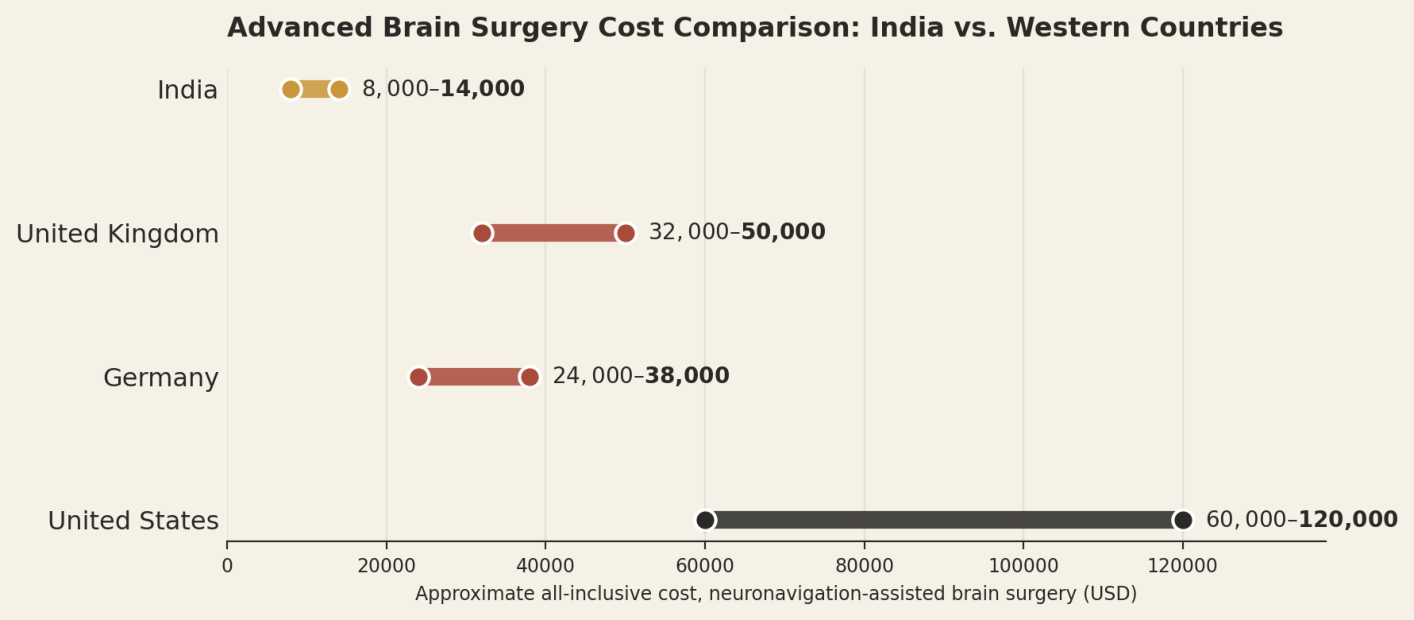
What stands out is not simply that India is cheaper than the United States, the United Kingdom, or Germany. It is that India offers the same neuronavigation platforms and internationally trained neurosurgical teams at a fraction of Western prices, with transparent, package-based pricing that contrasts favourably with Western systems where a quoted “surgery cost” often excludes intraoperative imaging or extended ICU stay until the final bill arrives. Many hospitals also accept a partial advance deposit rather than full upfront payment, which is worth raising directly in the first consultation since it can meaningfully ease the financial planning involved in arranging funds from Iraq.
What Neuronavigation and Advanced Brain Surgery in India Typically Looks Like
Families often worry most about the ICU stay and how quickly a patient can return home safely. Having coordinated this journey for many families, I find it helps enormously to see the process mapped out plainly before departure.
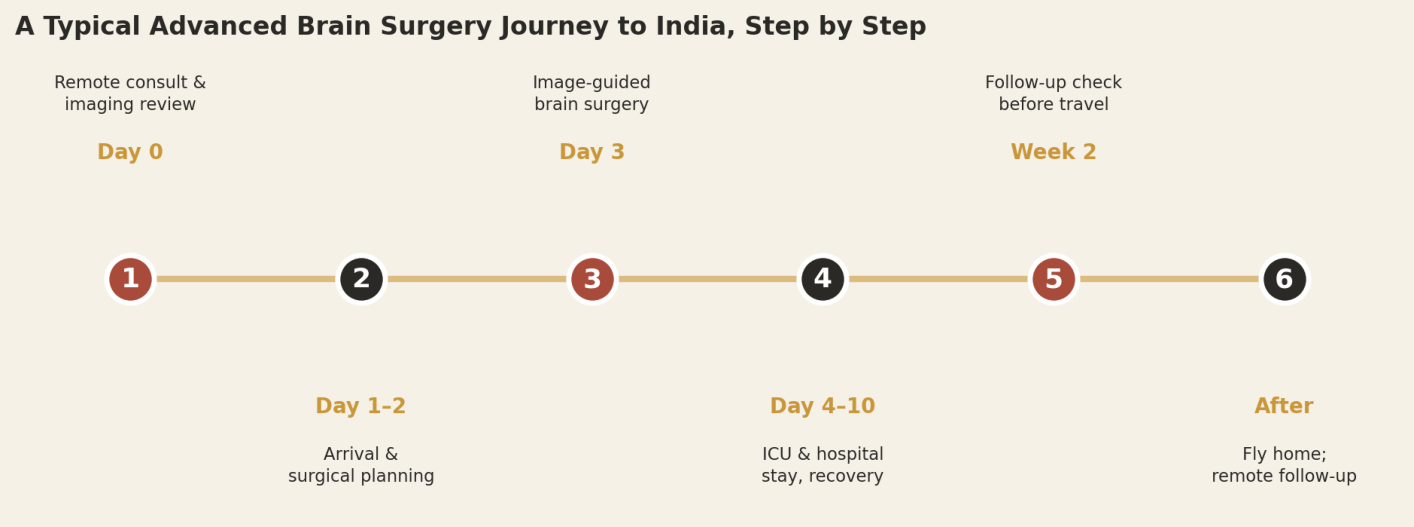
A typical image-guided brain surgery patient can expect seven to ten days in hospital, including several days in intensive care immediately after surgery, and a further one to two weeks in India for recovery and a follow-up check before flying home, with a structured remote follow-up plan continuing afterward.
Factors Every Iraqi Patient Should Weigh Before Deciding Neuronavigation and Advanced Brain Surgery in India
Beyond cost and destination, the Iraqi families I have advised over these 24 years tend to make better decisions, and face fewer complications, when they think through the following before booking anything.
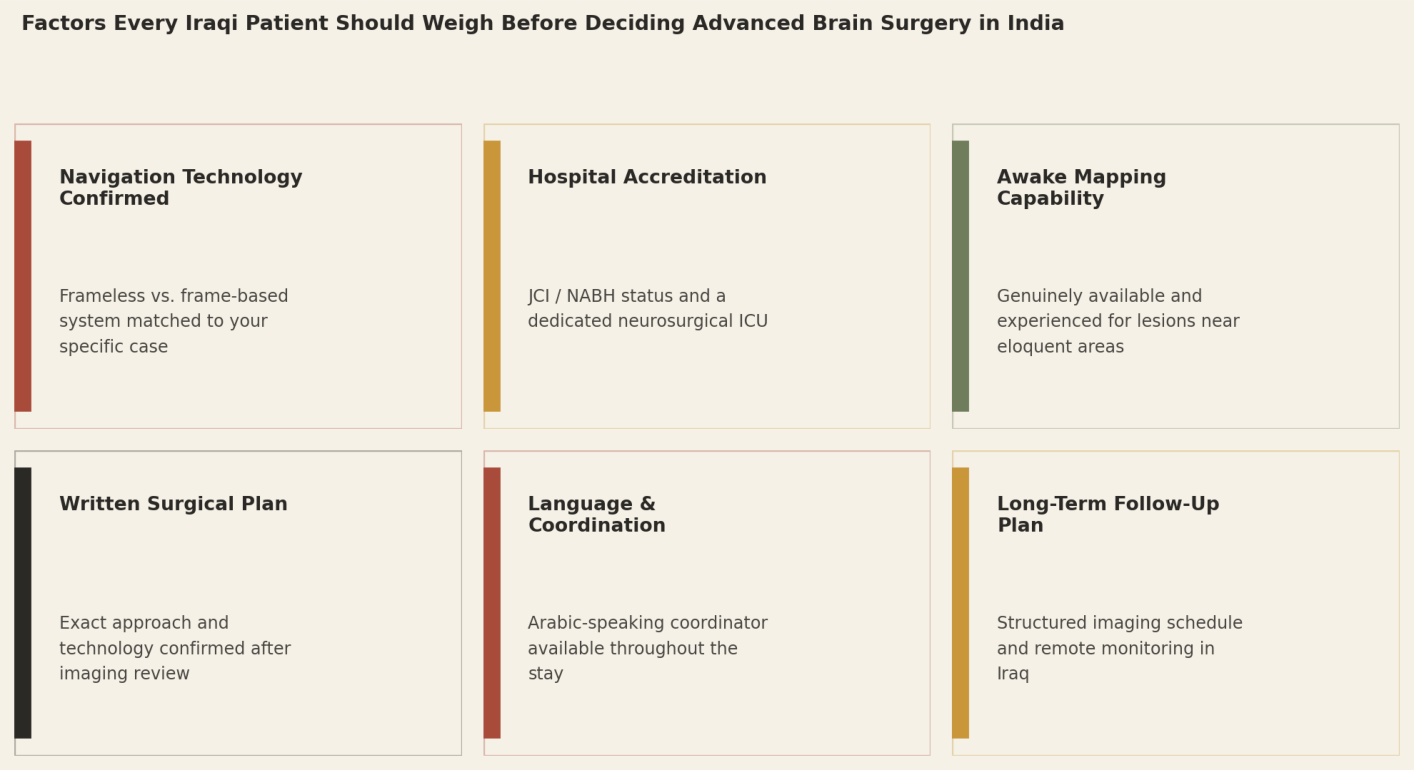
A few of these deserve a specific note. Ask directly which specific neuronavigation technology will be used for your procedure, frameless or frame-based, with or without intraoperative imaging, and whether this matches what your specific case actually needs. Existing MRI or CT imaging should be translated and shared digitally before travel, since a neurosurgeon needs this to plan the exact surgical approach. Families should also ask, in writing, whether awake mapping is recommended for a lesion near a critical function, and if so, what the team’s specific experience with this technique looks like.
A Closing Thought for Iraqi Families
Brain surgery near a critical structure leaves little margin for error, and the specific technology available in the operating room deserves the same scrutiny as the surgeon’s own reputation, not a marketing brochure or the lowest quoted price. What the evidence consistently shows is that for Iraqi families weighing where to go, India offers a genuinely rare combination: broad neuronavigation application across the full range of neurosurgical indications, awake mapping capability for the most delicate cases, and meaningfully lower cost than the West. Few destinations available to an Iraqi family today can offer this breadth of image-guided neurosurgical technology at once. My role, and the role of any advisor a family works with, should be to help confirm the right technology and team honestly and make sure the plan in front of them fits the patient’s specific condition, budget, and timeline. Iraq’s families deserve the same standard of scrutiny and care in this decision as any family anywhere else in the world.
Sources & Further Reading
- World Health Organization — Iraq Health System Profile (who.int/countries/irq)
- National Institute for Health and Care Excellence (NICE, UK) — Brain and Spine Tumours Guidance (nice.org.uk)
- UK Government — List of English-Speaking Doctors and Medical Facilities in Iraq (gov.uk/government/publications/iraq-doctors-and-medical-facilities)
- American Association of Neurological Surgeons (AANS) — Image-Guided Surgery Patient Information (aans.org)
- World Bank — Iraq Health Sector Reports (worldbank.org/en/country/iraq)
Frequently Asked Questions by Iraqi Patients about Neuronavigation and Advanced Brain Surgery in India
Can Iraqi patients receive neuronavigation brain surgery in India?
Yes. The guide specifically addresses Iraqi patients travelling to India for advanced image-guided brain surgery and describes neuronavigation as an important technology for selected complex cases.
How much does neuronavigation brain surgery cost in India for Iraqi patients?
The page 2 cost chart gives an illustrative all-inclusive range of approximately USD 8,000–14,000 for standard neuronavigation-assisted brain surgery. Awake mapping and additional imaging can increase the final cost.
How long does an Iraqi patient need to stay in India for advanced brain surgery?
The guide estimates approximately three weeks in India from consultation to flying home. Hospitalisation may last around seven to ten days, followed by additional recovery and a follow-up assessment.
What brain conditions can be treated using neuronavigation in India?
The guide describes its use across procedures including tumour resection, aneurysm clipping, arteriovenous malformation surgery and skull base approaches. The exact technology required depends on the patient's condition.
Is awake craniotomy available for Iraqi patients in India?
The guide states that leading Indian centres offer awake craniotomy with functional mapping for selected lesions close to speech, movement or other critical areas. The technique requires a specifically experienced team.
Should an Iraqi patient send MRI or CT scans before travelling to India?
Yes. Existing MRI or CT imaging should be translated and shared digitally before travel so that the neurosurgical team can assess the lesion and plan the surgical approach.
What neuronavigation technology should Iraqi patients ask about before surgery?
Patients should ask whether the procedure will use frameless or frame-based navigation and whether intraoperative MRI or CT will be used. The appropriate technology should match the patient's specific condition and surgical requirements.
Is Arabic-language support available for Iraqi neurosurgery patients in India?
The guide notes that international-patient programmes may have Arabic-speaking coordinators who can review existing imaging and help families coordinate the surgical journey before and during their stay.
What should Iraqi families check when choosing an Indian neurosurgery hospital?
They should assess the hospital's accreditation, the specific neuronavigation technology available, the team's experience with that technology and whether awake mapping is available when clinically required.
Can Iraqi patients continue follow-up after returning home from India?
Yes. The guide describes a structured remote follow-up plan after returning to Iraq. Patients should complete the recommended follow-up assessment before flying home and establish the ongoing monitoring plan with the treating team.
Page Summary
Neuronavigation provides image-guided assistance during brain surgery and can be particularly relevant when a tumour, aneurysm or other lesion is located close to critical structures. India's leading neurosurgical centres use frameless neuronavigation and intraoperative imaging for a broad range of procedures, while awake craniotomy with functional mapping may be used for selected lesions near speech or movement areas. For Iraqi patients considering treatment in India, the guide gives an illustrative cost range of approximately USD 8,000–14,000 for standard neuronavigation-assisted brain surgery. A typical journey may require around three weeks in India, including approximately seven to ten days of hospital care and additional recovery time before flying home. Patients should have their MRI or CT reviewed before travel and confirm the exact navigation technology, surgical plan and long-term follow-up arrangements.
Citation Block
| Field | Details |
|---|---|
| Article / Topic | Neuronavigation and Advanced Brain Surgery in India for Iraqi Patients |
| Treatment Area | Advanced neurosurgery |
| Primary Patient Group | Iraqi patients requiring image-guided brain surgery |
| Core Technology | Neuronavigation and intraoperative imaging |
| Navigation Types | Frameless or frame-based systems |
| Potential Procedures | Tumour resection, aneurysm clipping, AVM surgery and skull base approaches |
| Awake Craniotomy | May be used for selected lesions near critical functional areas |
| Functional Mapping | Real-time testing of speech, movement or other critical functions |
| India Cost | Approximately USD 8,000–14,000 illustrative range |
| UK Comparison | Approximately USD 32,000–50,000 |
| Germany Comparison | Approximately USD 24,000–38,000 |
| USA Comparison | Approximately USD 60,000–120,000 |
| Cost Variation | Awake mapping and additional imaging can increase costs |
| Typical Hospital Stay | Approximately 7–10 days |
| Typical Total India Stay | Approximately 3 weeks |
| ICU Care | Several days may be required immediately after surgery |
| Pre-Travel Imaging | MRI or CT should be reviewed before travel |
| Technology Confirmation | Confirm navigation type and intraoperative imaging availability |
| Hospital Selection | Consider JCI or NABH accreditation |
| International Support | Arabic-speaking coordinators may be available |
| Follow-Up | Structured remote follow-up after returning to Iraq |
| Key Decision Factor | Match the technology and neurosurgical team to the patient's specific condition |

Our Mission Statement
Our mission is to place patients at the centre of every healthcare decision by providing trustworthy, evidence-based, and unbiased medical information. We believe that informed patients make better decisions. Backed by personalised guidance from our experienced advisory team, we help patients understand their treatment options, compare them objectively, and confidently choose the path that best suits their medical needs and personal circumstances.
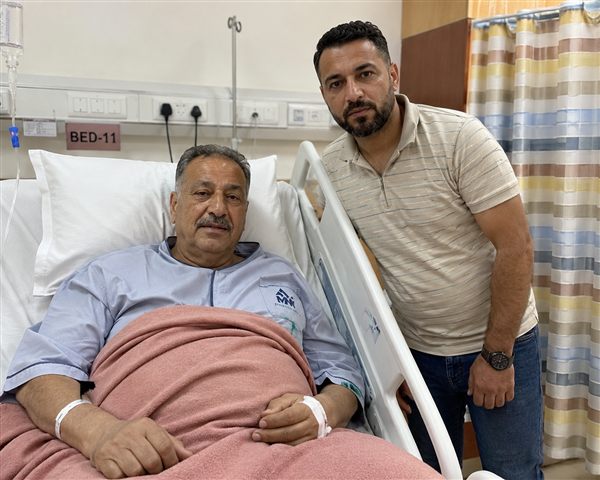
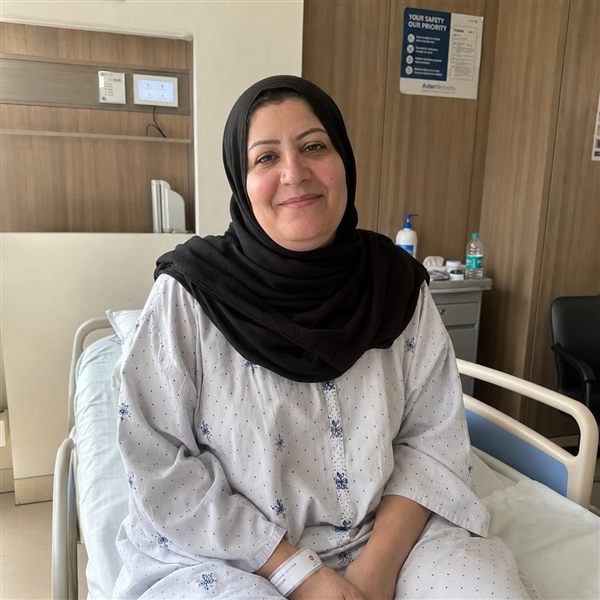
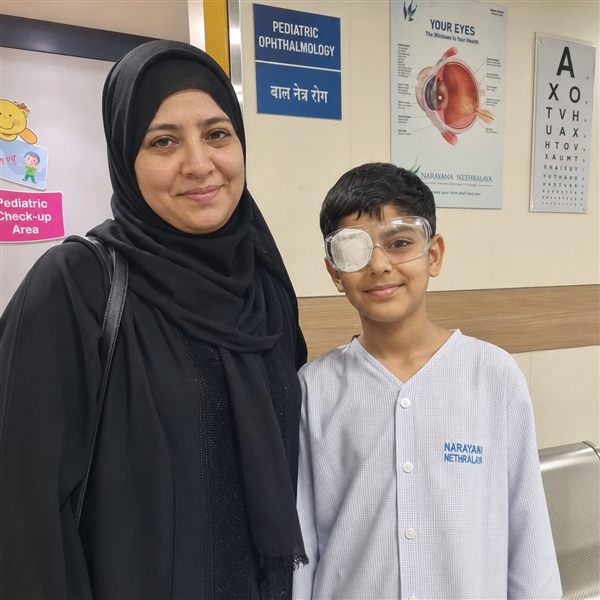
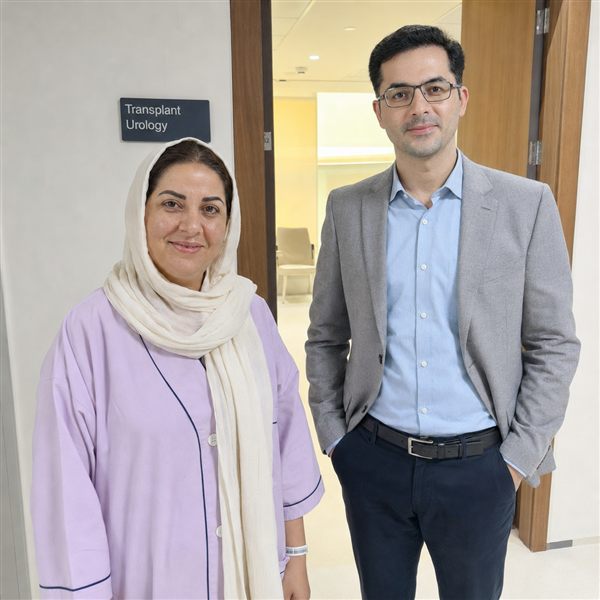
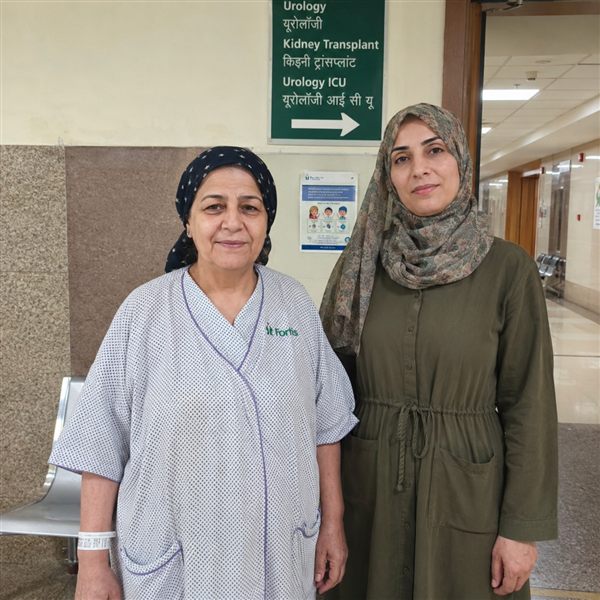
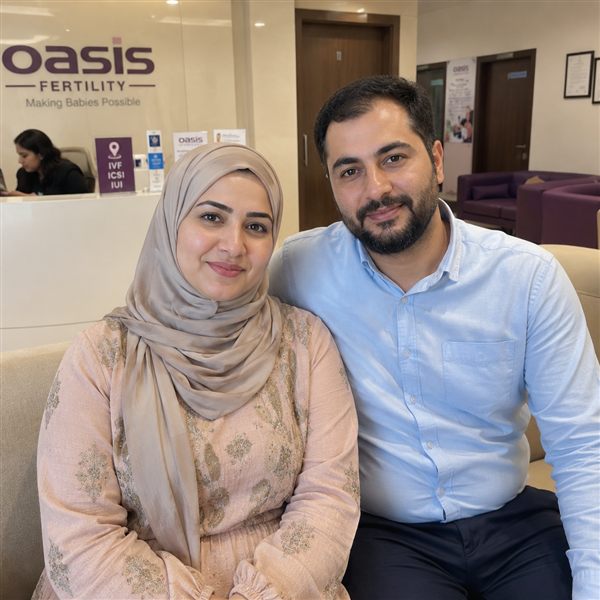
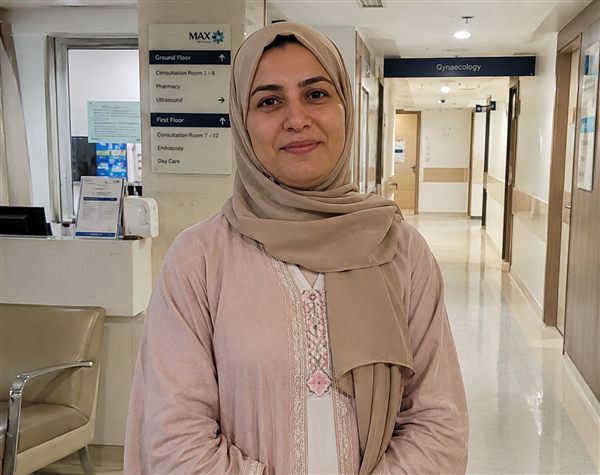
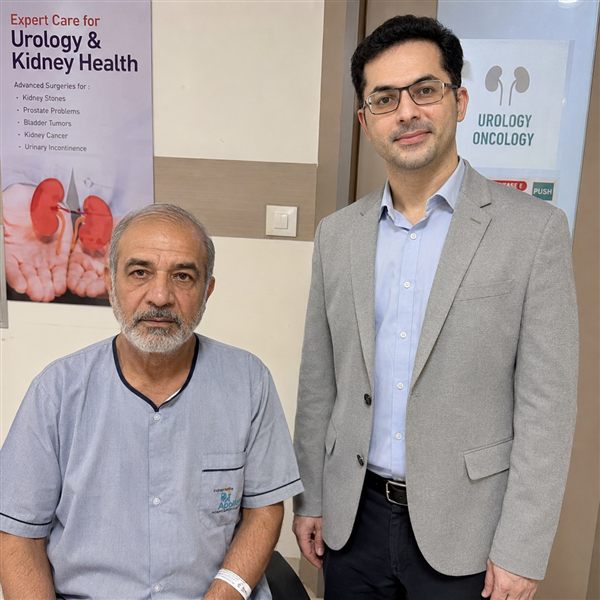
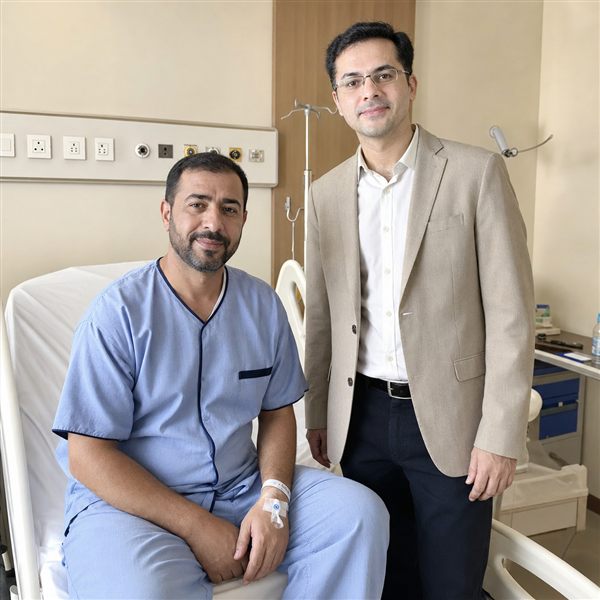
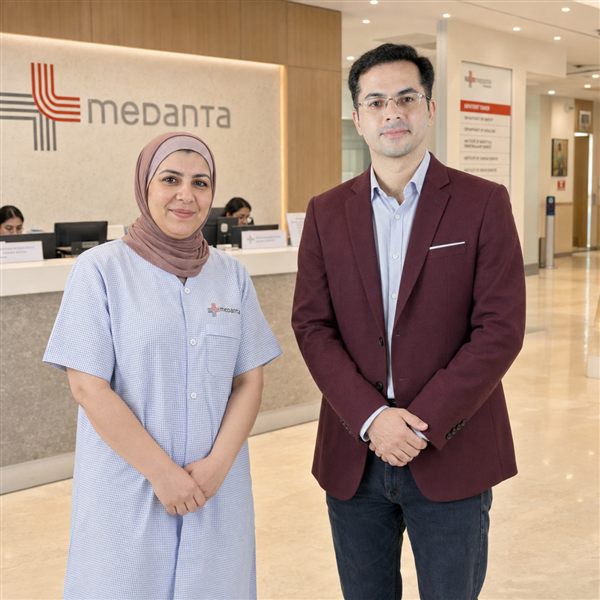
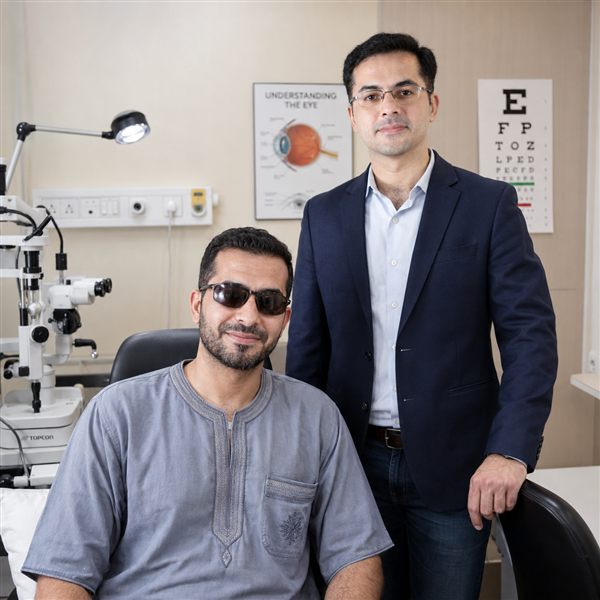
Patient Testimonials from Iraq
Ready to Take the First Step?
Share your Medical Reports with our Healthcare Managers Today and Get a FREE CONSULTATION, a Personalized Treatment Plan, and Complete Support from Arrival to Recovery.
Get Your Free ConsultationAreas We Serve
Indian Health Guru Consultants proudly assists patients from Iraq and surrounding Middle Eastern countries in accessing advanced, affordable and trusted medical treatment in India. Our team provides complete support for medical opinions, hospital selection, treatment planning, visa assistance, travel coordination, accommodation and post-treatment follow-up.
We regularly serve patients from:
- Iraq
- Turkey
- Iran
- Kuwait
- Jordan
- Syria
- Qatar
- Bahrain
- Oman
- Yemen
- Saudi Arabia
- United Arab Emirates
No matter where you are located, our experienced team is committed to making your medical journey to India safe, smooth, transparent and stress-free from the first enquiry to your return home.
From Iraq to India: Your Complete Patient Guide
- Brain Tumour Surgery in India for Iraqi Patients
- Hip Surgery in India for Iraqis
- Cancer Treatment in India for Iraqi Patients
- Neurosurgery in India for Iraqis
- Plastic and Reconstructive Surgery in India for Iraqis
- Paediatric Orthopaedic Surgery in India for Iraqis
- Radiotherapy and Modern Cancer Treatment in India for Iraqis
- Liver Transplant in India for Iraqis
- Cardiac Pacemaker Treatment in India for Iraqi Patients
- Cornea Transplant and Advanced Eye Surgery in India for Iraqis
- Proton Therapy in India for Iraqis
- Spine Surgery in India for Iraqis
- Oral and Maxillofacial Surgery in India for Iraqis
- HIPEC Cancer Surgery in India for Iraqis
- Knee Surgery in India for Iraqis
- Cervical and Lumbar Disc Replacement Surgery in India for Iraqis
- Breast Cancer Treatment in India for Iraqi Patients
- Robotic Cancer Surgery in India for Iraqis