

Bone Marrow Transplant Treatment in India for Iraqis: What You Need to Know Before You Travel
A doctor’s honest guide for Iraqi families facing thalassemia, leukemia, or another blood disorder and weighing bone marrow transplant abroad — costs, hospitals, the real treatment journey, and the questions worth asking before you book anything.
For many Iraqi families, a bone marrow transplant is not an elective decision weighed over months, it is the only cure on offer for a diagnosis that has often already followed a child or young adult for years. Thalassemia is markedly more common in Iraq than in most of the world, largely due to high rates of consanguineous marriage, and for many of these patients, along with those facing leukemia, lymphoma, or aplastic anaemia, transplant is the difference between a lifetime of transfusions and an actual cure. I have spent 24 years guiding patients from across the Middle East, Africa, and South Asia through exactly this decision, and Iraqi families are an increasingly regular part of that work. What I tell every family calling from Baghdad, Basra, Erbil, or Sulaimani is the same thing I would tell my own relative: a transplant is one of the most demanding treatments in modern medicine, and the hospital’s specific experience with your exact diagnosis and donor situation matters more here than in almost any other procedure. For a growing number of Iraqi families, once the options are compared honestly, that decision leads to India.
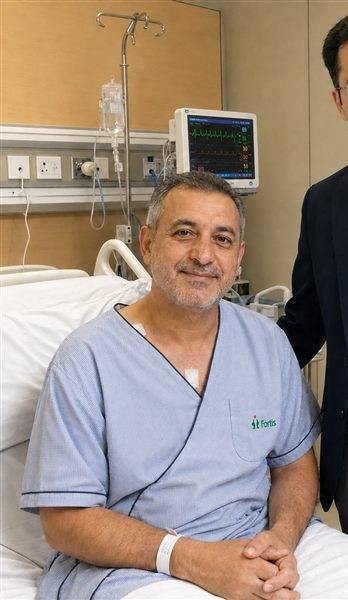
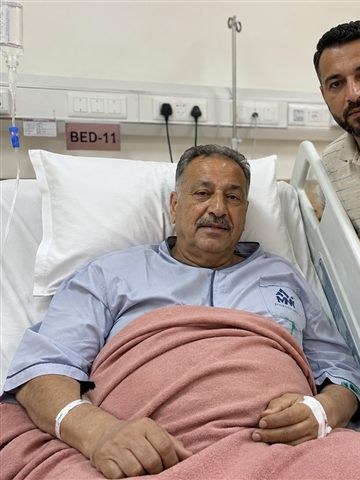
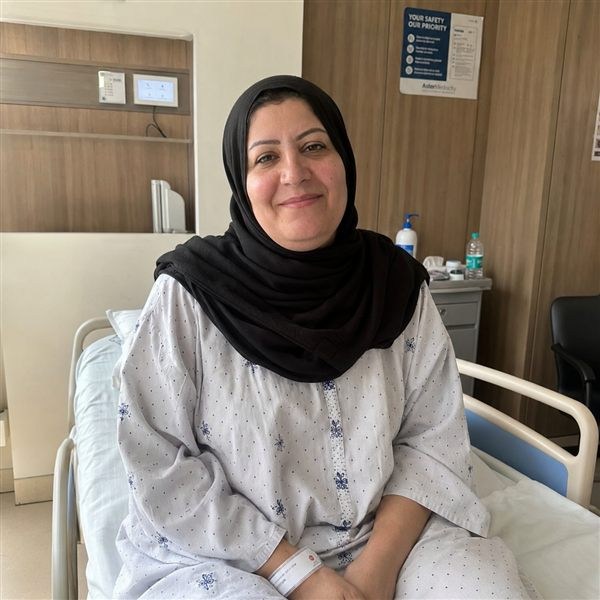
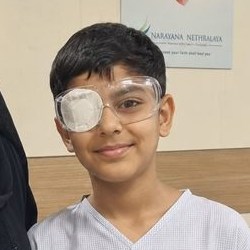
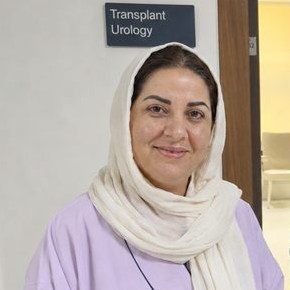
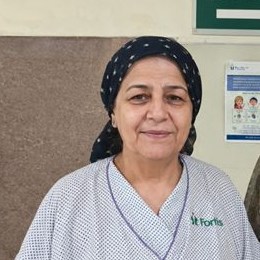
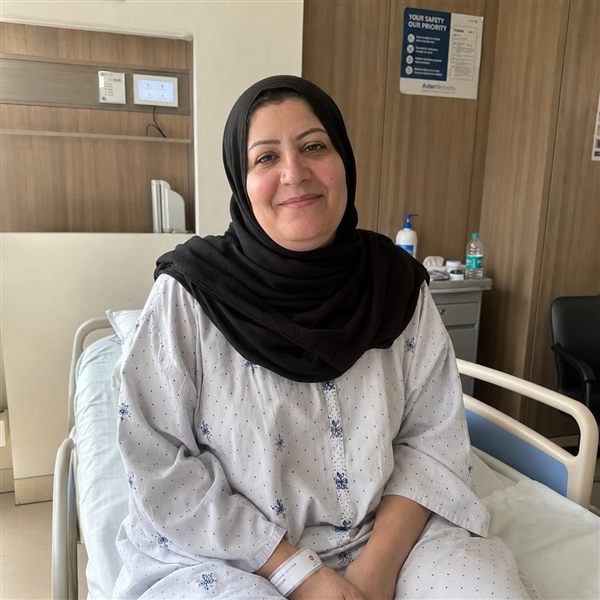
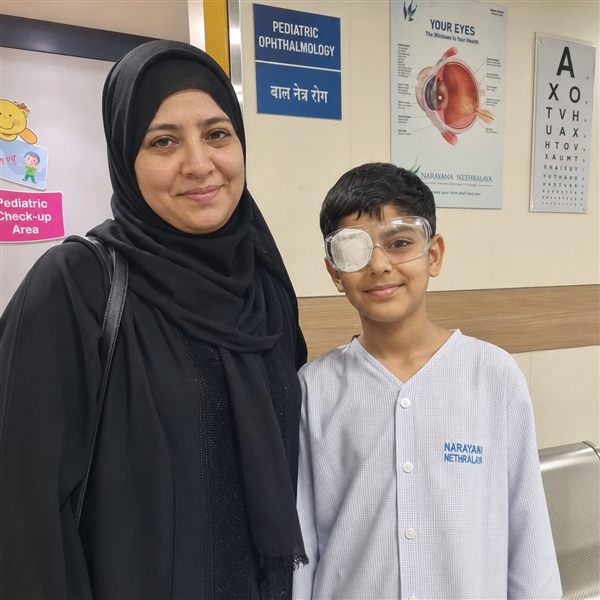
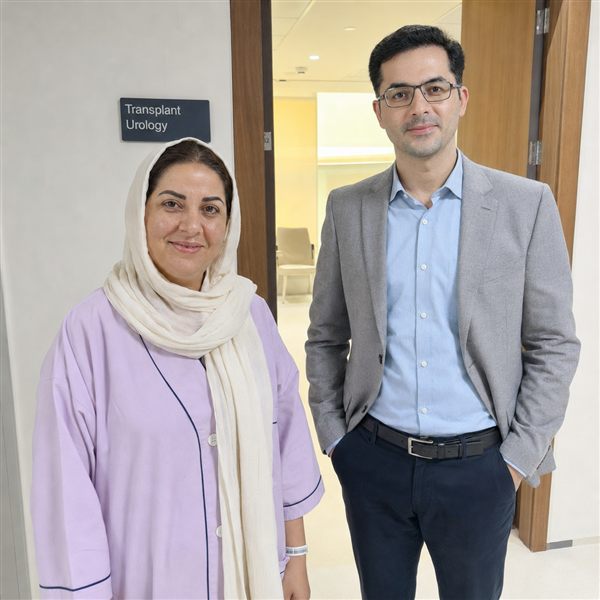
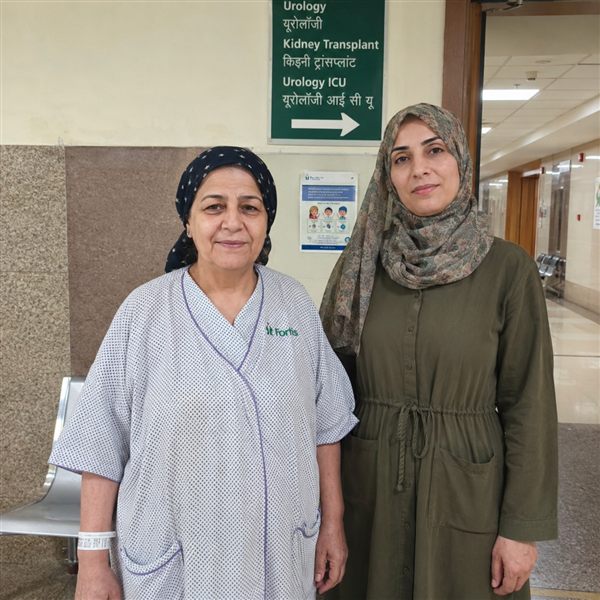
Healing Journeys of Iraqi Patients
Key Takeaways
- Bone marrow transplant can be a potentially curative treatment for conditions such as thalassemia, leukemia, lymphoma, and aplastic anaemia. The source particularly highlights thalassemia among Iraqi patients and explains that transplant may offer an alternative to lifelong transfusion dependence for appropriately selected patients. It also stresses that the hospital's experience with the patient's exact diagnosis and donor situation is especially important for such a demanding treatment.
- Iraq has developed genuine bone marrow transplant capacity, including the Bone Marrow Transplant Centre at Medical City in Baghdad, which has performed transplants since 2002, and Hiwa Cancer Hospital in Sulaymaniyah, which has completed several hundred procedures. Families are therefore encouraged to first establish whether their specific case can be treated appropriately within Iraq before deciding to travel abroad.
- The more challenging cases can require capabilities that are not available in every transplant centre. These include haploidentical transplantation using a half-matched family donor, unrelated donor searches through international registries, cord blood transplantation, and specialised conditioning protocols for rare or relapsed blood cancers. Such cases require strong transplant volume, tissue-typing infrastructure, and specialised isolation facilities.
- India is highlighted for its broad transplant experience, including autologous, matched-sibling, haploidentical, and unrelated-donor transplantation. The guide particularly emphasises India's experience with haploidentical transplantation, which can provide an alternative when a fully matched family donor is unavailable. International donor registries and cord blood banks can also provide additional pathways when appropriate.
- The cost comparison on page 3 illustrates an all-inclusive range of approximately USD 20,000–35,000 for an allogeneic bone marrow transplant in India, compared with approximately USD 130,000–190,000 in the UK, USD 95,000–145,000 in Germany, and USD 250,000–800,000 in the United States. These are illustrative ranges, and the source stresses that donor type, conditioning protocol, and complications can substantially change the final cost.
- The treatment journey is considerably longer than most surgical procedures. The page 3 timeline illustrates a process beginning with remote consultation and HLA typing, followed by arrival and conditioning, transplant around Week 2, isolation and early engraftment monitoring during Weeks 3–4, step-down monitoring during Weeks 5–6, and eventual return home around Week 7 or later. The source describes approximately six to seven weeks in total, with immunosuppression management and structured remote follow-up continuing afterward.
- Before travelling, Iraqi families should complete HLA tissue typing for potential family donors wherever possible and share the results digitally. They should also ask how many transplants of their specific type the centre performs each year, particularly haploidentical transplantation for thalassemia, and obtain a written package covering isolation, blood-product support, and management of graft-versus-host disease.
Quick Facts
- Treatment
- Bone marrow transplant / hematopoietic stem cell transplantation
- Primary Patients
- Iraqi patients and families seeking transplant treatment in India
- Main Speciality
- Hematology and bone marrow transplantation
- Key Conditions
- Thalassemia, leukemia, lymphoma, and aplastic anaemia
- Major Transplant Types
- Autologous, matched-sibling, haploidentical, and unrelated-donor transplantation
- Important Donor Option
- Haploidentical transplantation using a half-matched family donor
- Donor Assessment
- HLA tissue typing should be completed wherever possible before travel
- Complex Cases
- Haploidentical transplants, unrelated-donor searches, cord blood transplantation, and specialised conditioning protocols may require advanced transplant infrastructure
- Indian Experience
- Leading Indian centres perform high volumes across different transplant types
- Thalassemia Expertise
- Several Indian centres have substantial cumulative transplant experience in thalassemia
- Hospital Infrastructure
- Dedicated transplant units, tissue-typing laboratories, and specialised isolation facilities are important
- Hospital Accreditation
- NABH accreditation is highlighted as an important quality consideration
- International Support
- Arabic-speaking coordinators and case managers may assist Iraqi families
- Pre-Travel Planning
- Donor and HLA information can be reviewed before the family travels
- Illustrative India Cost
- USD 20,000–35,000 for an allogeneic bone marrow transplant
- UK Comparison
- USD 130,000–190,000
- Germany Comparison
- USD 95,000–145,000
- USA Comparison
- USD 250,000–800,000
- Cost Variables
- Donor type, conditioning protocol, and complications can significantly affect the final estimate
- Typical Total Journey
- Approximately six to seven weeks from consultation through return home
- Isolation Period
- Approximately three to four weeks from conditioning through early engraftment
- Post-Isolation Monitoring
- A further two to four weeks in India may be required before flying home
- Long-Term Follow-Up
- Immunosuppression management and remote follow-up continue after returning to Iraq
- Treatment Planning
- A written, itemised package should cover isolation, blood-product support, and graft-versus-host disease management
- Author
- Dr. Dheeraj Bojwani
- Experience
- 24+ Years
In Brief
For Iraqi families considering bone marrow transplant in India, donor suitability and transplant-specific hospital experience should be assessed before cost or travel arrangements. India offers experience across matched-sibling, haploidentical, unrelated-donor, and other transplant pathways, with the source particularly highlighting haploidentical transplantation for patients who do not have a fully matched family donor. A typical allogeneic transplant journey may require approximately six to seven weeks, including several weeks in an isolation ward and additional monitoring before flying home, followed by structured remote follow-up.
Why Iraqi Patients Are Looking Beyond Iraq for Bone Marrow Transplant Care
Iraq has made genuine progress in this field. The Bone Marrow Transplant Centre at Medical City in Baghdad has been performing transplants since 2002, and Hiwa Cancer Hospital in Sulaymaniyah, established with international support in 2016, has since completed several hundred procedures, alongside newer capacity such as Imam Al-Mujtaba Hospital for Hematology and Bone Marrow Transplantation. These centres represent real and hard-won progress, often built with the help of international partners and religious endowments determined to reduce how often Iraqi families had to travel abroad at all, and any family should first ask whether their specific case can be treated at one of them.
Where the picture becomes harder is in the cases that fall outside straightforward matched-sibling transplants: haploidentical transplants using a half-matched family donor, unrelated donor searches through international registries, cord blood transplants, and rare or relapsed blood cancers needing a specific conditioning protocol. These cases depend on a dedicated transplant unit with deep case volume, a well-resourced tissue-typing laboratory, and isolation facilities built specifically to protect a patient with a temporarily destroyed immune system. Waiting lists and donor-search timelines for these specific situations can be long in Iraq, which is why a growing number of Iraqi families now travel for transplant, and India has become one of the most trusted destinations, not simply the cheapest one.
Why India Specifically for Bone Marrow Transplant, Not Just Overseas
Iraqi families researching treatment abroad quickly discover several destinations: Turkey, Jordan, Germany, and India are all commonly mentioned in the same breath. It is worth being direct about why India stands apart for bone marrow transplant specifically. The first reason is volume and range of transplant types. India’s leading transplant centres perform a very high number of procedures every year, across autologous, matched-sibling, haploidentical, and unrelated-donor transplants, which gives their teams genuine depth of experience with the harder cases rather than only the most straightforward ones. For thalassemia specifically, several Indian centres have among the largest cumulative transplant experience anywhere in the world.
The second reason is donor-matching infrastructure. India has extensive haploidentical transplant experience, which matters enormously for Iraqi families since a half-matched parent or sibling is often available when a fully matched donor is not, avoiding the delay of an international unrelated-donor search that can take many months. This is combined with access to international donor registries and cord blood banks when a family donor genuinely is not suitable, giving a family more than one realistic pathway to treatment rather than a single option. The third reason is regulatory credibility and infrastructure built for international patients. India’s leading transplant units are typically NABH accredited with dedicated bone marrow transplant protocols, many hematologists have trained or held fellowships in the UK, US, or Germany, and hospitals maintain Arabic-speaking coordinators and case managers who can begin tissue-typing coordination before a family has even travelled. India’s government has also built a dedicated medical visa category for foreign patients and one attendant, which matters given how long a transplant admission runs.
Understanding the Cost Picture of Bone Marrow Transplant Treatment in India
Cost is a genuine barrier for most Iraqi families facing this diagnosis, and it is where India’s advantage is hardest to ignore. The figures below reflect typical all-inclusive ranges for an allogeneic bone marrow transplant, covering conditioning chemotherapy, the transplant itself, isolation-ward stay, and immediate post-transplant care. Costs vary considerably by donor type, conditioning protocol, and complications, so I always urge families to get a written, itemised estimate once a specific transplant plan has been confirmed.
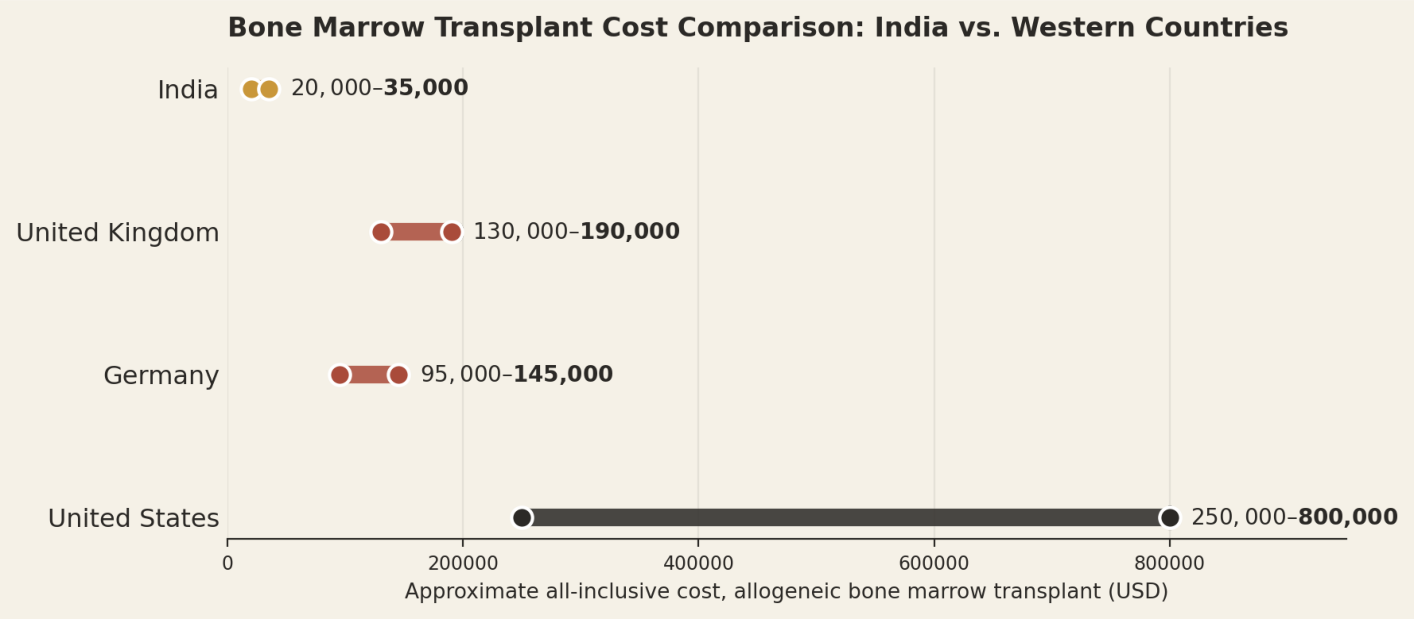
What stands out is not simply that India is cheaper than the United States, the United Kingdom, or Germany. It is that India offers the same conditioning protocols, the same supportive-care standards, and internationally trained transplant physicians at a fraction of Western prices, with transparent, package-based pricing that contrasts favourably with Western systems where a quoted “transplant cost” often excludes donor search fees, extended isolation days, or graft-versus-host disease management until the final bill arrives.
What Bone Marrow Transplant Treatment in India Typically Looks Like
Families facing a transplant decision often worry most about how long they will actually be away from home, since this is a longer and more carefully staged process than almost any other procedure in this series. Having coordinated this journey for many families, I find it helps enormously to see the process mapped out plainly before departure.
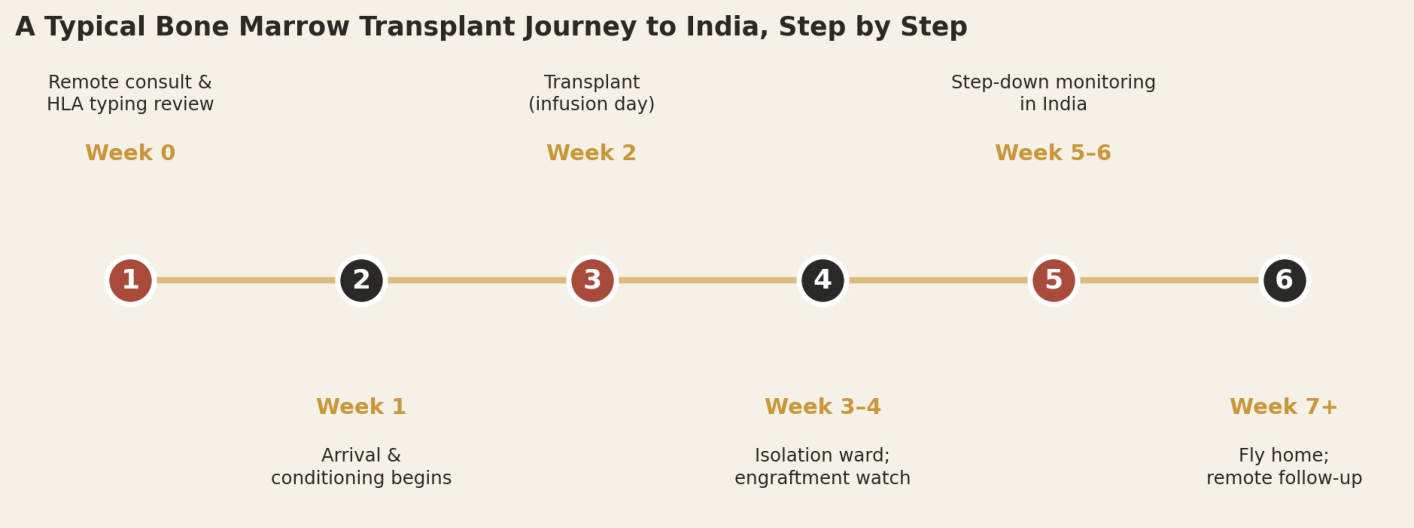
A typical allogeneic transplant patient can expect three to four weeks in an isolation ward from conditioning through early engraftment, and a further two to four weeks in India for monitoring before it is safe to fly home, with a structured remote follow-up plan, including immunosuppression management, continuing for months afterward.
Factors Every Iraqi Patient Should Weigh Before Deciding Bone Marrow Transplant Treatment in India
Beyond cost and destination, the Iraqi families I have advised over these 24 years tend to make better decisions, and face fewer complications, when they think through the following before booking anything.
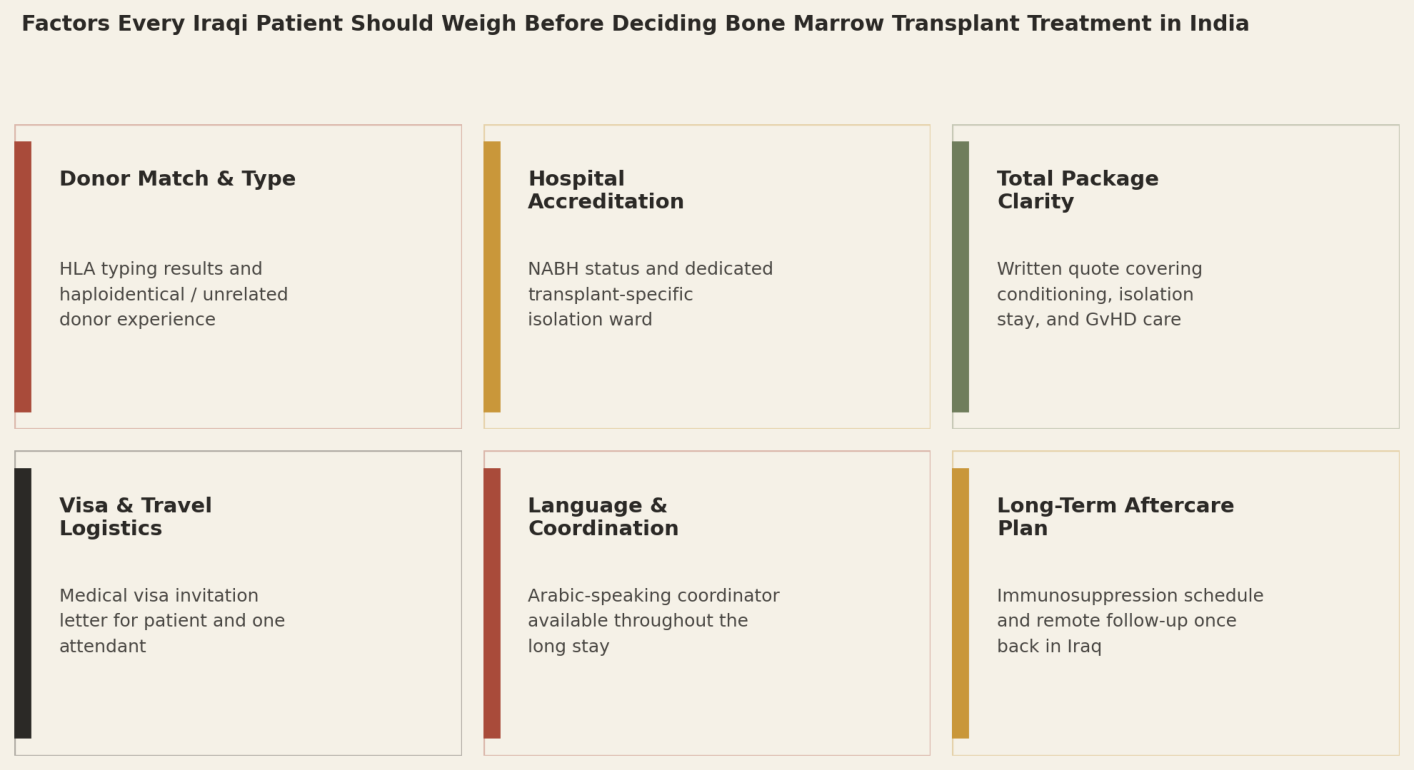
A few of these deserve a specific note. HLA tissue typing for potential family donors should be completed and shared digitally before travel wherever possible, since this can confirm the transplant type and timeline before a family ever leaves Iraq. Families should also ask directly how many transplants of their specific type, particularly haploidentical transplants for thalassemia, the unit performs each year, since this variation matters more here than case volume alone. As with any major treatment, ask for a written, itemised package covering the full isolation period, blood product support, and management of any graft-versus-host disease, since these are the areas most often underestimated in an initial quote.
A Closing Thought for Iraqi Families
A bone marrow transplant is one of the most demanding treatments a family will ever face, and it deserves a decision built on the hospital’s specific experience with your exact diagnosis and donor situation, not a marketing brochure or the lowest quoted price. What the evidence consistently shows is that for Iraqi families facing this diagnosis, India offers a genuinely rare combination: deep experience across the harder transplant types, particularly haploidentical transplant for thalassemia, globally recognised protocols and accreditation, meaningfully lower cost, and hospital systems built to support a family through a genuinely long stay. Few destinations available to an Iraqi family today can offer all of this at once, particularly the depth of haploidentical experience. My role, and the role of any advisor a family works with, should be to help confirm donor options honestly and make sure the plan in front of them fits their specific diagnosis, budget, and timeline. Iraq’s families deserve the same standard of scrutiny and care in this decision as any family anywhere else in the world.
Sources & Further Reading
- World Health Organization — Iraq Health System Profile (who.int/countries/irq)
- European Society for Blood and Marrow Transplantation (EBMT) — Patient Information (ebmt.org)
- UK Government — List of English-Speaking Doctors and Medical Facilities in Iraq (gov.uk/government/publications/iraq-doctors-and-medical-facilities)
- National Marrow Donor Program (NMDP / Be The Match) — Transplant Basics (bethematch.org)
- World Bank — Iraq Health Sector Reports (worldbank.org/en/country/iraq)
Frequently Asked Questions by Iraqi Patients about Bone Marrow Transplant Treatment in India
Why do Iraqi patients consider bone marrow transplant in India?
India offers a broad range of transplant options and substantial experience with complex cases. The guide particularly highlights haploidentical transplantation and specialised transplant infrastructure.
Which conditions may require a bone marrow transplant?
The guide discusses thalassemia, leukemia, lymphoma, and aplastic anaemia among the conditions for which transplant may be considered.
What is a haploidentical bone marrow transplant?
It uses a partially matched family donor, such as a parent or sibling. This can provide an alternative when a fully matched family donor is unavailable.
Why is HLA tissue typing important for Iraqi families?
HLA typing helps assess potential donor compatibility and can clarify the possible transplant pathway before the family travels. The guide recommends completing and sharing available HLA results digitally before departure.
How much does a bone marrow transplant cost in India for Iraqi patients?
The source gives an illustrative all-inclusive range of USD 20,000–35,000 for an allogeneic transplant. The final quotation varies according to donor type, conditioning protocol, and complications.
How long does an Iraqi patient need to stay in India for a transplant?
An allogeneic transplant journey may take approximately six to seven weeks in total. This includes conditioning, transplant, isolation, early engraftment, and additional monitoring before returning home.
How long is the isolation period after bone marrow transplant?
The guide describes approximately three to four weeks in an isolation ward from conditioning through early engraftment, followed by additional monitoring in India.
What should Iraqi families ask a transplant hospital before travelling?
Families should ask about the centre's annual experience with their specific transplant type, donor options, HLA testing, isolation facilities, blood-product support, and management of graft-versus-host disease.
Can Iraqi patients receive follow-up care after returning home?
Yes. The guide describes structured remote follow-up, including immunosuppression management, continuing for months after the patient returns to Iraq.
What is more important than choosing the lowest transplant price?
The hospital's experience with the patient's exact diagnosis and donor situation should be prioritised. A clear transplant plan, appropriate donor pathway, specialised infrastructure, and comprehensive long-term support are critical considerations.
Page Summary
The guide explains the key considerations for Iraqi families exploring bone marrow transplant treatment in India. While Iraq has established transplant centres and genuine local experience, more complex cases may require specialised donor-matching options, advanced tissue typing, isolation infrastructure, and experience with haploidentical or unrelated-donor transplantation. India is presented as an option because of its broad transplant range, high-volume centres, international-patient infrastructure, and experience with difficult transplant cases. The financial and logistical aspects are also important. The source’s illustrative cost comparison places allogeneic transplantation in India at USD 20,000–35,000, while emphasising that donor type, conditioning, and complications affect the actual quotation. Families should plan for approximately six to seven weeks in India, complete HLA testing before travel where possible, and confirm a detailed long-term follow-up and immunosuppression plan before returning to Iraq.
Citation Block
| Field | Details |
|---|---|
| Article / Topic | Bone Marrow Transplant Treatment in India for Iraqi Patients |
| Primary Country | Iraq |
| Treatment Destination | India |
| Primary Speciality | Hematology and bone marrow transplantation |
| Key Conditions | Thalassemia, leukemia, lymphoma, and aplastic anaemia |
| Iraq Transplant Experience | Medical City Baghdad has performed transplants since 2002 |
| Other Iraqi Capacity | Hiwa Cancer Hospital in Sulaymaniyah has completed several hundred procedures |
| Complex Cases | Haploidentical, unrelated-donor, cord blood, and specialised conditioning cases |
| Major Transplant Types in India | Autologous, matched-sibling, haploidentical, and unrelated-donor |
| Important Indian Strength | Extensive haploidentical transplant experience |
| Donor Infrastructure | International donor registries and cord blood banks may provide additional options |
| Required Infrastructure | Dedicated transplant unit, tissue-typing laboratory, and specialised isolation facilities |
| Hospital Quality Factor | NABH accreditation highlighted in the source |
| International Patient Support | Arabic-speaking coordinators and case managers |
| Pre-Travel Test | HLA tissue typing for potential family donors |
| Pre-Travel Records | HLA results and relevant medical information should be shared digitally |
| Illustrative India Cost | USD 20,000–35,000 |
| UK Comparison | USD 130,000–190,000 |
| Germany Comparison | USD 95,000–145,000 |
| USA Comparison | USD 250,000–800,000 |
| Cost Variables | Donor type, conditioning protocol, and complications |
| Typical Total Stay | Approximately six to seven weeks |
| Isolation Period | Approximately three to four weeks |
| Additional Monitoring | Approximately two to four weeks before flying home |
| Long-Term Care | Remote follow-up and immunosuppression management |
| Package Requirement | Written estimate covering isolation, blood products, and graft-versus-host disease management |


Our Mission Statement
Our mission is to place patients at the centre of every healthcare decision by providing trustworthy, evidence-based, and unbiased medical information. We believe that informed patients make better decisions. Backed by personalised guidance from our experienced advisory team, we help patients understand their treatment options, compare them objectively, and confidently choose the path that best suits their medical needs and personal circumstances.
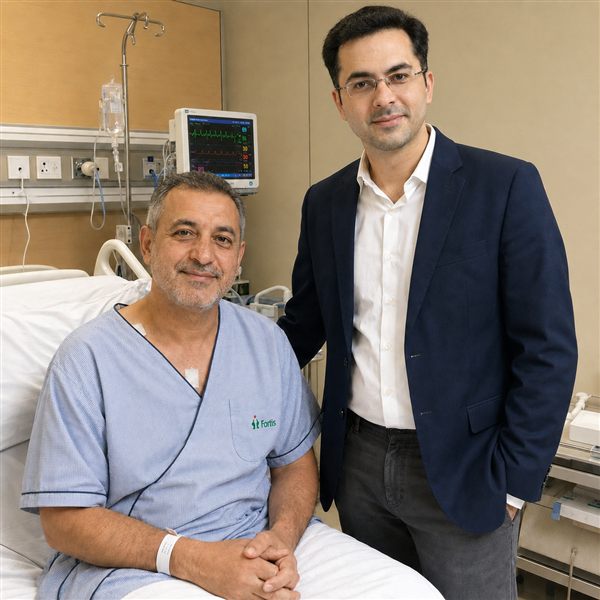
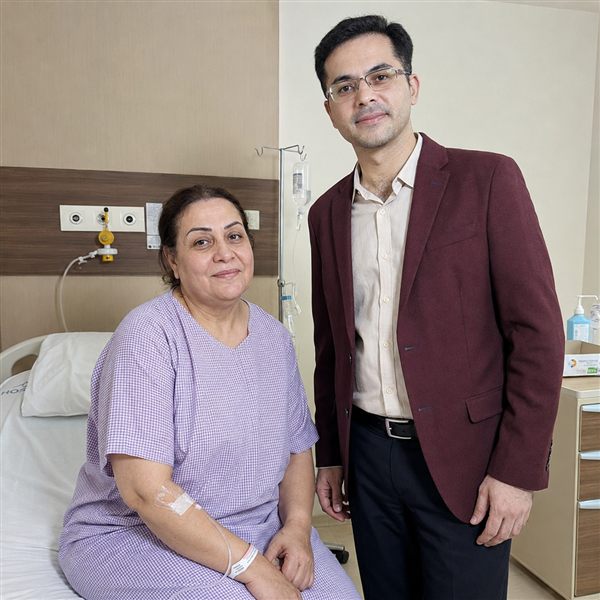
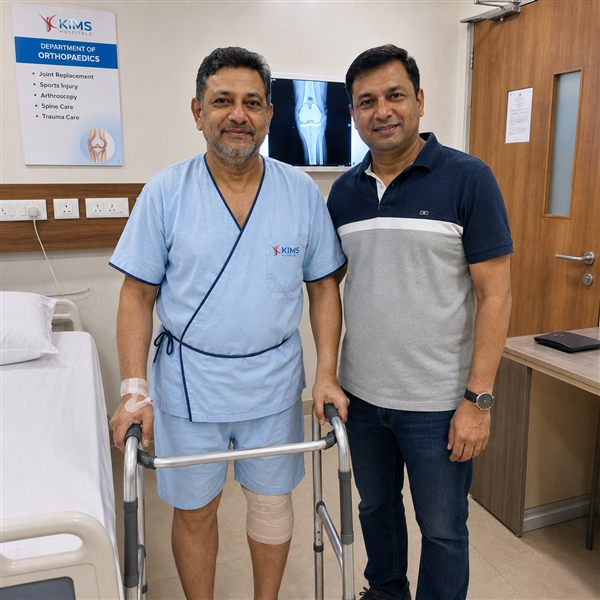
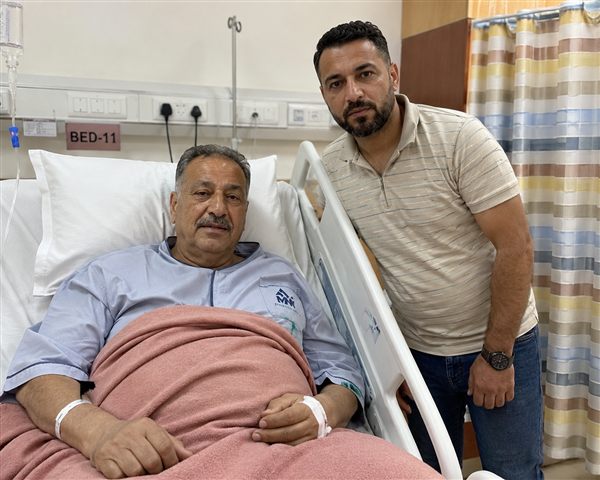
Patient Testimonials from Iraq
Ready to Take the First Step?
Share your Medical Reports with our Healthcare Managers Today and Get a FREE CONSULTATION, a Personalized Treatment Plan, and Complete Support from Arrival to Recovery.
Get Your Free ConsultationAreas We Serve
Indian Health Guru Consultants proudly assists patients from Iraq and surrounding Middle Eastern countries in accessing advanced, affordable and trusted medical treatment in India. Our team provides complete support for medical opinions, hospital selection, treatment planning, visa assistance, travel coordination, accommodation and post-treatment follow-up.
We regularly serve patients from:
- Iraq
- Turkey
- Iran
- Kuwait
- Jordan
- Syria
- Qatar
- Bahrain
- Oman
- Yemen
- Saudi Arabia
- United Arab Emirates
No matter where you are located, our experienced team is committed to making your medical journey to India safe, smooth, transparent and stress-free from the first enquiry to your return home.
From Iraq to India: Your Complete Patient Guide
- Complex Joint Revision Surgery in India for Iraqis
- Heart Valve Replacement in India for Iraqis
- Cardiac Pacemaker Treatment in India for Iraqi Patients
- CyberKnife Treatment in India for Iraqis
- Laparoscopic and Robotic Myomectomy in India for Iraqis
- Knee Surgery in India for Iraqis
- Prostate Cancer Treatment and Surgery in India for Iraqis
- Spine Surgery in India for Iraqis
- Weight Loss and Bariatric Surgery in India for Iraqis: Cost & Guide
- Cardiac Surgery in India for Iraqis
- Dental Implants and Smile Makeover in India for Iraqis
- Parkinson's Treatment and DBS Surgery in India for Iraqis
- Cornea Transplant and Advanced Eye Surgery in India for Iraqis
- Dental Surgery in India for Iraqis
- Radiotherapy and Modern Cancer Treatment in India for Iraqis
- Joint Arthroscopy and Sports Medicine in India for Iraqis
- Liver Transplant in India for Iraqis
- Hip Surgery in India for Iraqis