

Spine Surgery in India for Congolese Patients: What It Costs, and How to Decide Well
A practical guide for Congolese patients understanding spine surgery, implants, imaging, neuromonitoring, costs in India and Western countries, and follow-up planning.
Back and neck pain are common everywhere, but the line between "manage it" and "this needs surgery" is not always obvious, and crossing it in the DRC means confronting a level of scarcity that surprises many families. In 24 years of guiding patients through spine diagnoses, I have found that spine surgery specifically depends on equipment most patients never think to ask about — implants, imaging, and monitoring — not just a skilled pair of hands. This guide sets out plainly what that means for a Congolese patient, and what treatment in India costs against the Western alternatives some families consider. Understanding this equipment dependency matters as much as the diagnosis itself, because it explains why some cases genuinely cannot wait for infrastructure that is still years away.
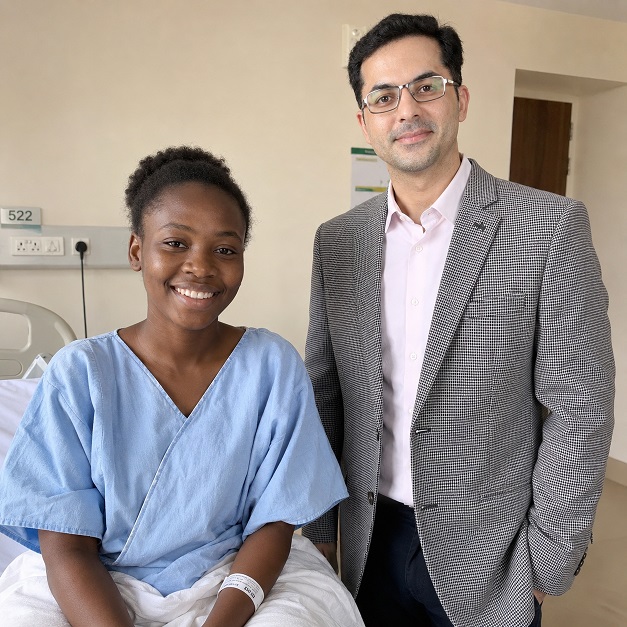
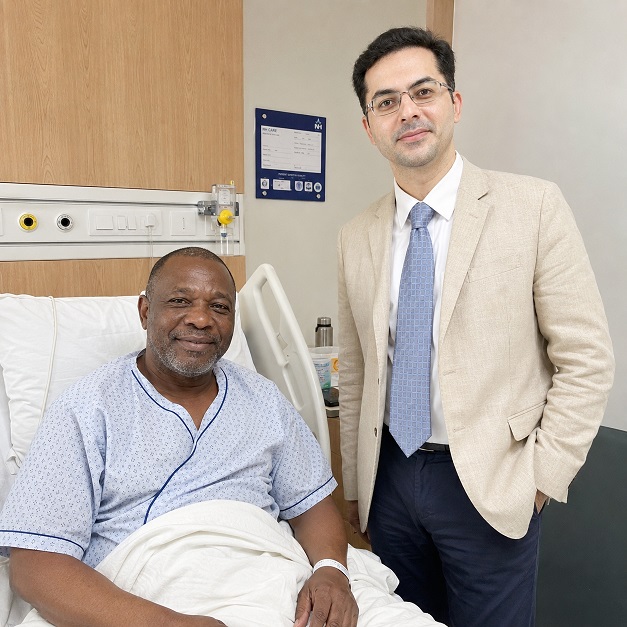
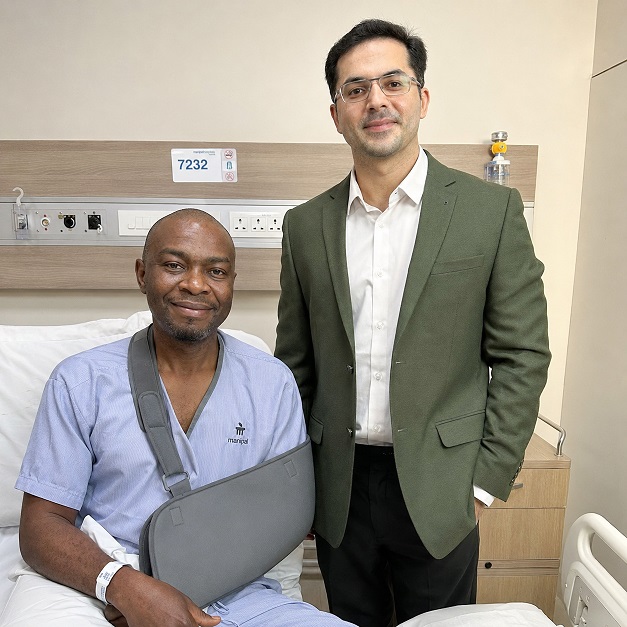
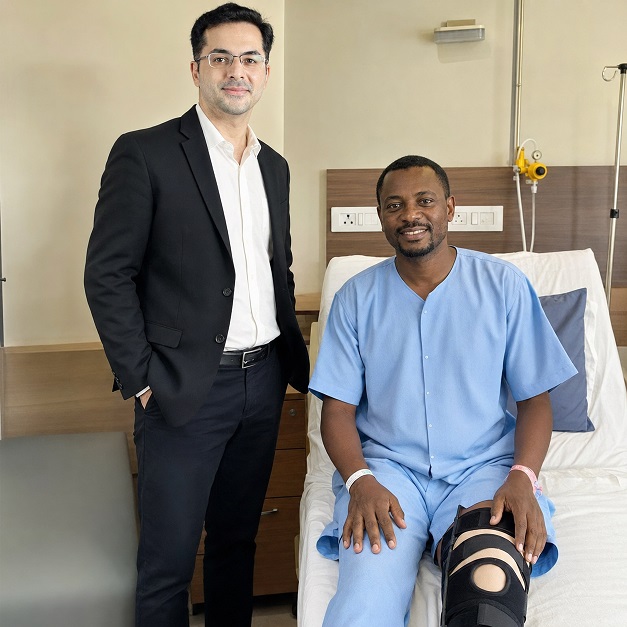
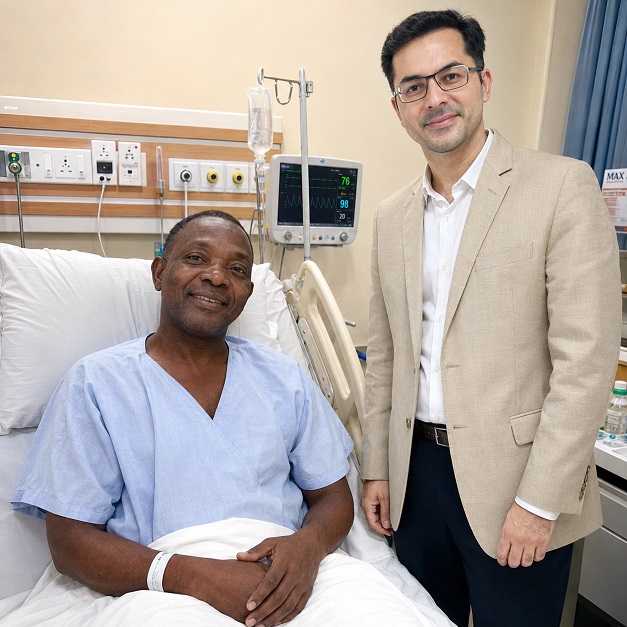
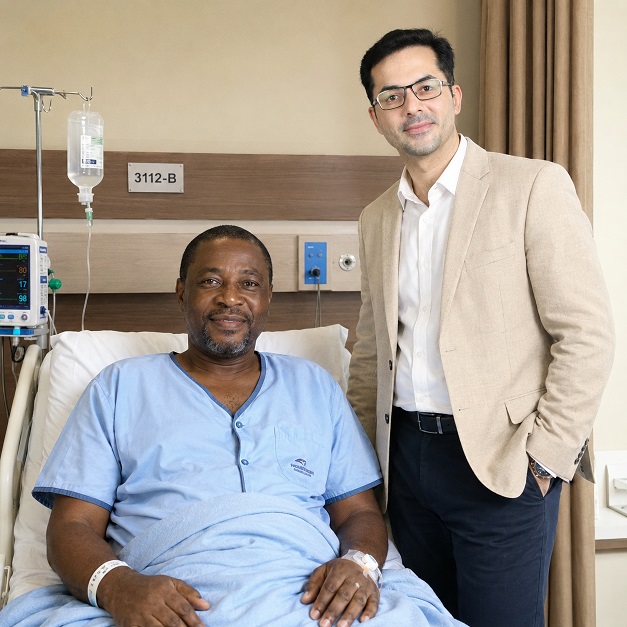
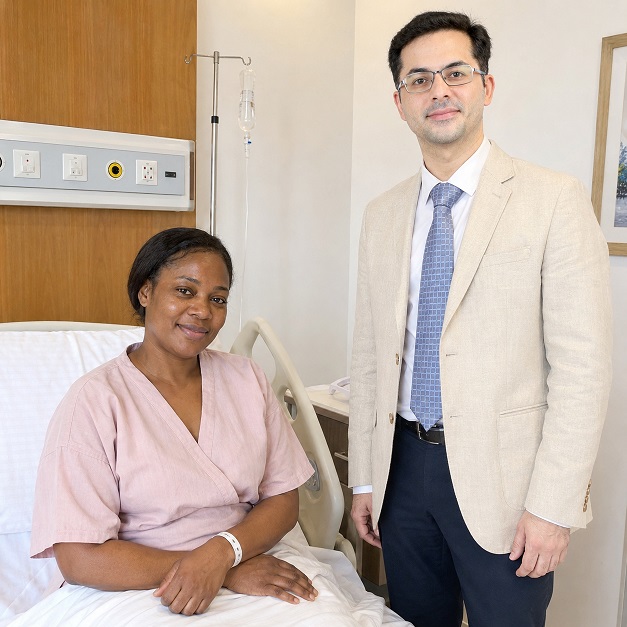
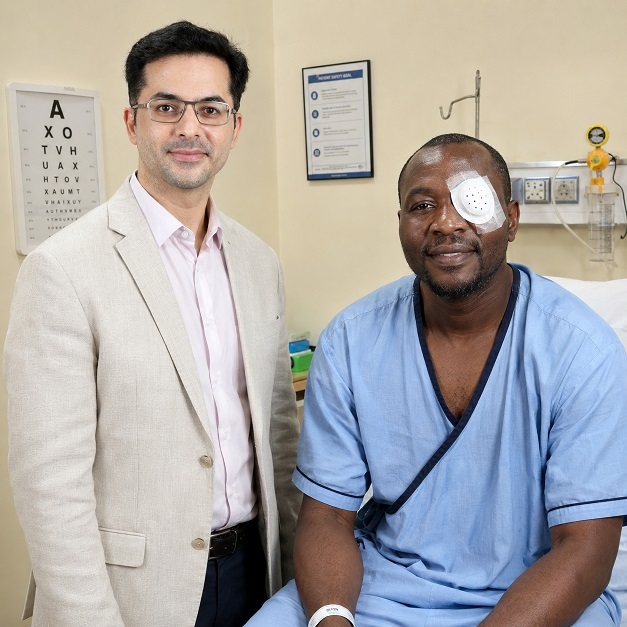
Healing Journeys of Congolese Patients
Key Takeaways
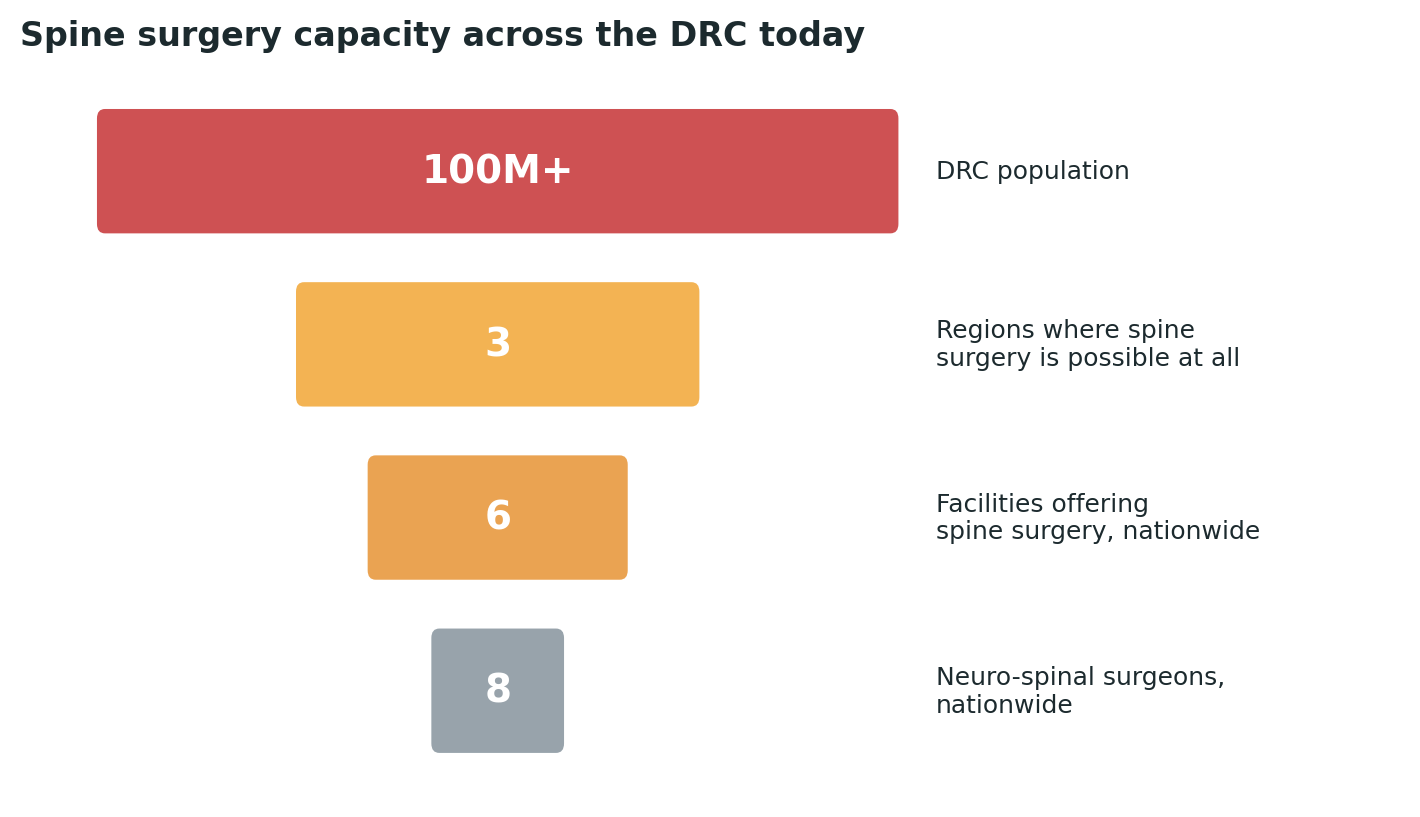
- The guide explains that spine surgery depends on more than the surgeon's skill. Implants, real-time imaging and, for complex cases, neuromonitoring are essential parts of safe spine surgery. The page 2 graphic highlights the infrastructure gap in the DRC, where spine surgery is available in only 3 regions and 6 facilities, with roughly 8 neuro-spinal surgeons nationwide for a population exceeding 100 million.
- The guide stresses that acute trauma and spinal cord injuries are emergencies and should receive immediate stabilisation at the nearest capable facility rather than travel planning. Planned cases such as degenerative disc disease, spinal stenosis, deformity and most tumour-or infection-related conditions generally allow more time to obtain scans, seek opinions and compare treatment centres.
- The page 3 referral chart shows degenerative disc disease and spinal stenosis as the largest category at 46%, followed by trauma and spinal cord injury at 28%, deformity at 15%, and tumour/infection-related cases at 11%. The guide uses these categories to explain why urgency and treatment planning differ between patients.
- The guide highlights the importance of implant transparency and equipment verification. Patients should confirm the exact implant brand and type, routine availability of image-guided confirmation of implant placement and neuromonitoring for complex cases. A skilled surgeon may still face genuine limitations if the required implants or equipment are unavailable.
- The page 4 cost chart gives an indicative range of US$4,500–14,000 in India, compared with approximately US$25,000–42,000 in France/Belgium, US$35,000–70,000 in the UK private sector and US$60,000–130,000 in the US. Costs vary according to procedure complexity and implants, so these figures should be treated as indicative package ranges rather than individual quotations.
- For Congolese patients, the guide recommends sending actual scan files, confirming the proposed implant brand and type, obtaining every major cost item in writing and maintaining a 15–20% financial buffer. Patients should also arrange the paper medical and attendant visas early and confirm that their yellow-fever certificate is current.
- The guide recommends planning the travel route and follow-up before leaving the DRC. There is no direct Kinshasa-to-India flight; the guide identifies Ethiopian Airlines via Addis Ababa as a frequent option, with Kenya Airways, Air France and Qatar Airways as alternatives. Patients should also identify a doctor in the DRC for rehabilitation and recovery monitoring and obtain a written handover plan from the Indian hospital.
Quick Facts
- Author
- Dr. Dheeraj Bojwani
- Experience
- 24+ Years
- Treatment
- Spine Surgery
- Patients
- Congolese Patients
- Key Specialist
- Spine Surgery Specialist
- First Step
- Confirm whether the case is urgent or suitable for planned treatment
- Key Conditions
- Degenerative disc disease, spinal stenosis, deformity and selected tumour/infection cases
- DRC Capacity
- 6 facilities and approximately 8 neuro-spinal surgeons nationwide
- Implant
- Brand and type disclosed in writing
- Imaging
- Real-time image-guided implant placement
- Neuromonitoring
- Important for complex cases
- India Cost
- US$4,500–14,000
- Financial Buffer
- 15–20% above written estimate
- Imaging Records
- Actual scan files
- Visa
- Paper medical and attendant visas
- Travel
- Connecting flights from Kinshasa to India
- Follow-Up
- Care arranged with a doctor in the DRC
- Key Warning
- Do not accept a quotation without implant details and scan review
- Decision Principle
- Choose a spine programme with the specialist, implants, imaging and monitoring required for the exact procedure.
In Brief
For Congolese patients considering planned spine surgery in India, the guide recommends evaluating the entire treatment system rather than the surgeon alone. Patients should verify the exact diagnosis, implant brand, image-guided equipment, neuromonitoring where required, rehabilitation, transparent costs and follow-up arrangements before travelling.
The Reality of Spine Surgery Capacity in the DRC
Published data from DRC neurosurgeons themselves gives a precise picture. Across the entire country, spine surgery is possible in only three regions, at six facilities in total, staffed by roughly eight neuro-spinal surgeons for a population exceeding 100 million. At the country's main teaching hospital in Kinshasa, only two neuro-spinal surgeons cover the caseload, sharing a single image intensifier — the fluoroscopy equipment that lets a surgeon see instrument and implant placement in real time during surgery.
This is not a story of skill missing — the surgeons working within this system have published their own honest account of these constraints, and continue to perform complex trauma and elective spine surgery under real pressure. It is a story of how far infrastructure lags behind need, and why so many spine cases that would be routine elsewhere become genuinely difficult to manage safely at home.
Why Spine Surgery Depends on More Than the Surgeon
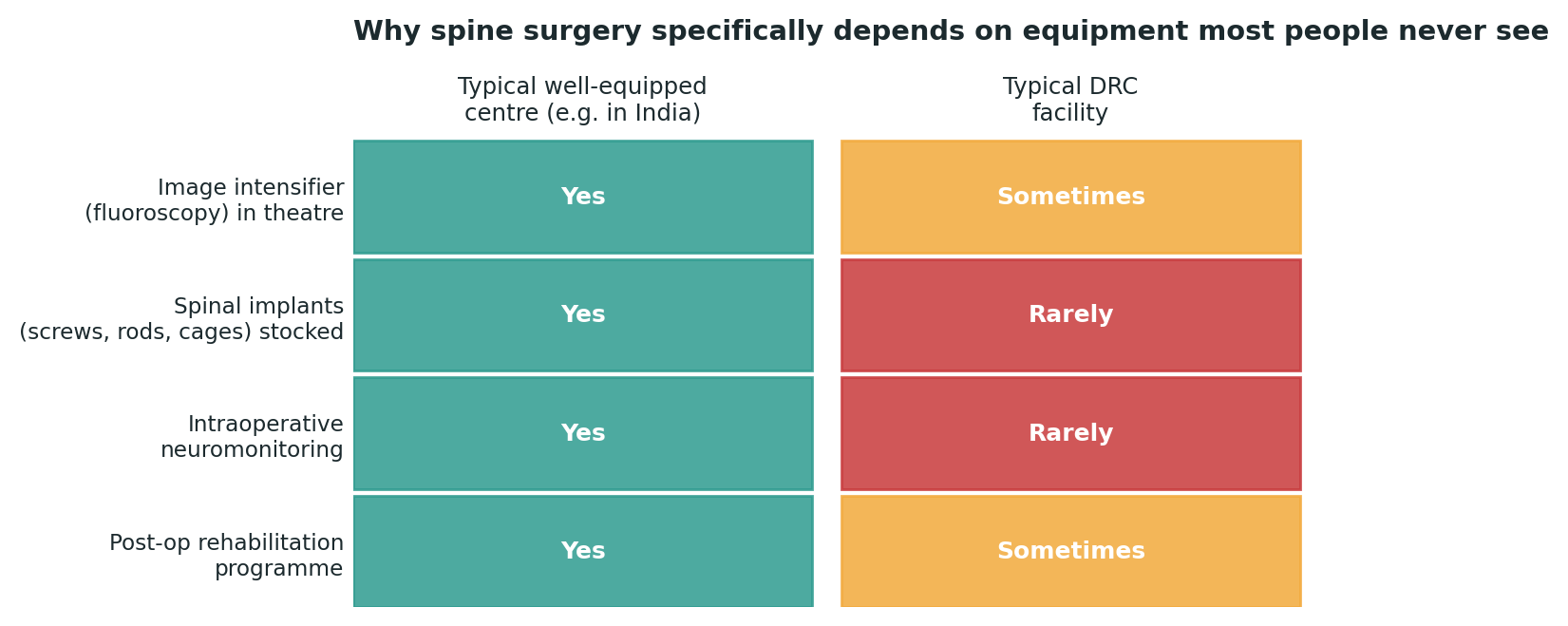
Spine surgery is unusually equipment-dependent compared with other neurosurgical work. A fusion procedure needs screws, rods, or cages, often imported and stocked in advance; real-time imaging to confirm implant placement; and, for many complex cases, neuromonitoring to protect the spinal cord and nerve roots during the operation itself. A shortage in any one of these can turn an otherwise straightforward operation into a genuinely risky one.
This is worth dwelling on, because it changes how a family should think about "finding a good surgeon." A talented pair of hands still needs the right tools in the room. An orthopaedic or neurosurgical spine specialist trained abroad, returning to practise in Kinshasa or Lubumbashi, can find themselves unable to perform procedures they are fully capable of, simply because the implant catalogue, the imaging equipment, or the monitoring technology is not consistently available. This is a systems problem, not an individual one, and it is exactly the kind of gap that a well-resourced hospital abroad closes immediately.
The one fact worth remembering
A skilled surgeon without the right implant on hand, or without real-time imaging to confirm placement, faces genuine limits regardless of their training. This is why spine cases that would be routine in a well-equipped centre sometimes cannot be safely attempted locally — not through any fault of the surgeon, but because the surrounding infrastructure is not there.
What Actually Brings a Patient to Spine Surgery
Spine conditions span a wide range, and understanding which category yours falls into shapes both urgency and the right treatment path.
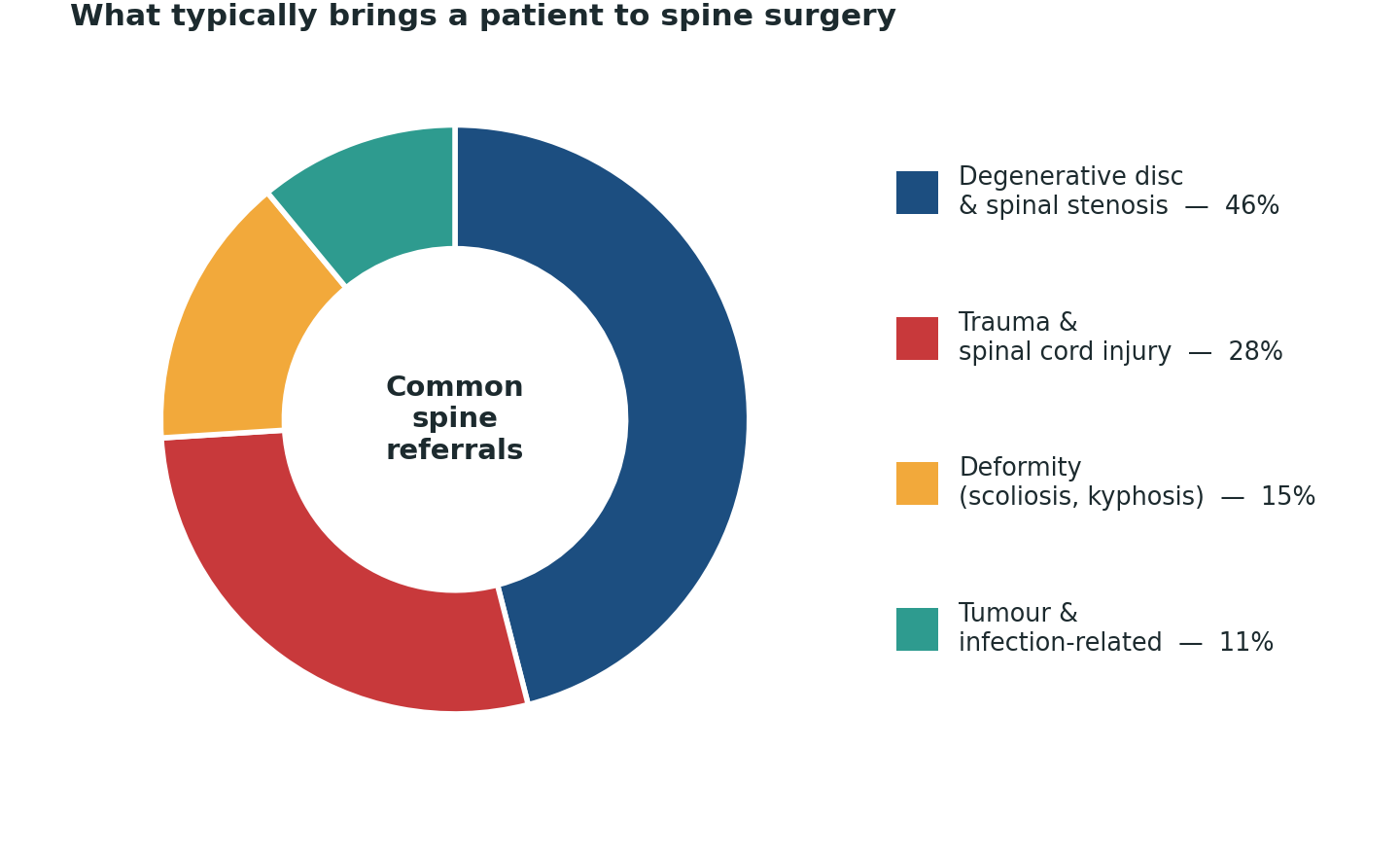
Trauma and spinal cord injury cases are true emergencies, needing the nearest capable stabilisation immediately — a flight to India is never the right first response to an acute spinal injury. Degenerative conditions, deformity, and most tumour or infection-related cases, by contrast, usually leave room to plan carefully and choose the right centre. Recognising which category applies to your case is the first, most important triage step, well before any conversation about surgeons or hospitals begins.
Degenerative disc disease and spinal stenosis, the largest single category, typically develop gradually over months or years, and while the pain can be severe, the underlying condition rarely worsens overnight. This gives most patients genuine time to gather scans, seek a considered opinion, and compare centres thoughtfully rather than rushing a decision under pressure.
What Spine Surgery Costs: DRC Reality vs India vs the West
Cost depends heavily on the specific procedure — a straightforward discectomy costs far less than a multi-level fusion with implants — but the relative gap between India and Western options holds fairly consistently.
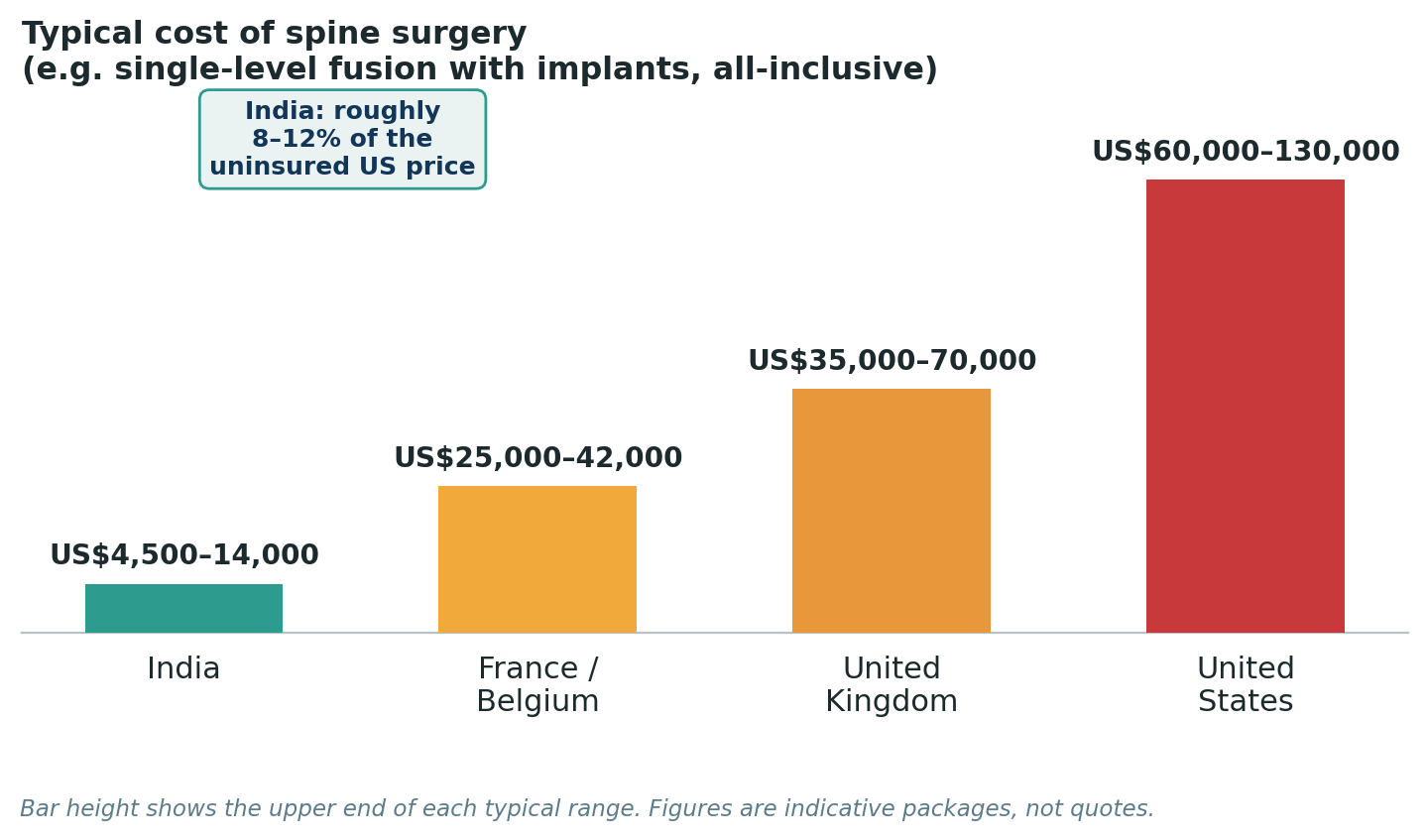
In India, spine surgery typically costs US$4,500 to US$14,000 depending on complexity and the implants required. In France or Belgium, private-sector costs typically run US$25,000 to US$42,000. In the UK's private sector, costs range roughly US$35,000 to US$70,000. In the US, the same procedures commonly cost US$60,000 to US$130,000. India's typical price sits at roughly a tenth of the uninsured US figure.
What the number on the quote does not always show
A written estimate should specify exactly which implants are included and their brand — Indian, Korean, European, and American implants vary meaningfully in price, and this single factor can shift a quote by thousands of dollars. In 24 years of reviewing these quotes, I have found disputes almost never concern the headline figure — they concern what it silently left out. Get every line item in writing, and never pay the full balance before surgery.
What a Congolese Patient Should Weigh, Specifically
Beyond the medical decision itself, a handful of practical realities deserve their own attention when planning treatment from the DRC.
- Confirm whether your case is degenerative or urgent — trauma and spinal cord injury need immediate local stabilisation, not travel planning.
- Send the actual scan files, not just the typed report, since surgical planning depends on precise imaging.
- Ask exactly which implants are proposed, and their brand, since this significantly affects both cost and, for some patients, long-term durability.
- Budget in US dollars, with margin. The Congolese franc has weakened considerably against the dollar (roughly CDF 2,300–2,350 per US$1 in mid-2026, and it moves); build in a 15–20% buffer above the initial estimate.
- Start the visa process early. DRC passport holders need a paper medical visa through the Embassy of India in Kinshasa (Avenue Batetela, Gombe), typically around two weeks once the hospital's invitation letter is ready; apply for an attendant visa at the same time.
- Confirm your yellow fever certificate is current — mandatory for entry into India, at least 10 days before travel.
- Plan the route realistically. There is no direct flight from Kinshasa to India; Ethiopian Airlines via Addis Ababa is the most frequent option, with Kenya Airways, Air France, and Qatar Airways as alternatives.
- Arrange follow-up care in the DRC before you fly — identify which doctor at home will manage physiotherapy and monitor recovery, and ask the Indian hospital for a written handover plan.
Four signals that should make you pause
- A quote given before anyone has reviewed your actual scans.
- No specific implant brand or type disclosed in the written estimate.
- No mention of image-guided confirmation of implant placement during surgery.
- Pressure to pay the full balance before a written surgical plan exists.
Why India Specifically for Spine Surgery for Congolese Patients?
India combines genuine surgical volume at its leading spine centres, where surgeons routinely perform hundreds of fusion and decompression procedures a year; consistent access to a wide range of implant brands, including cost-effective options without compromising quality; real-time imaging and neuromonitoring used as everyday equipment; English-language consultation throughout; and hospital accreditation (NABH domestically, JCI internationally) that mirrors the standards used to evaluate hospitals in the US and Europe. Weighed against the near-total absence of dedicated spine surgery infrastructure across most of the DRC, that combination of depth, equipment, and cost is a genuine and considered choice, not a compromise made under pressure.
A closing word
Spine surgery is one of the clearest examples in medicine of how much outcome depends on infrastructure, not talent alone. A well-chosen programme in India can offer both the equipment your specific case needs and a fraction of the cost of the Western alternatives most families consider first. If you are able to share your scans, I am glad to look them over and give a direct, honest view on what your case actually requires.
Sources
- 🌐 National Medical Commission of India — verify any surgeon's registration · nmc.org.in
- 🌐 National Accreditation Board for Hospitals & Healthcare Providers (NABH) · nabh.co
- 🌐 Embassy of India, Kinshasa — medical visa requirements · eoikinshasa.gov.in
- 🌐 Beltchika et al., "Challenges and strategies in the surgical management of traumatic spinal cord injuries in the DRC," Journal of Clinical Neuroscience (2024) · doi.org/10.1016/j.jocn.2024.05.013
- 🌐 World Health Organization — yellow fever vaccination requirements · who.int/health-topics/yellow-fever
Frequently Asked Questions by Congolese Patients about Spine Surgery in India
Should every spine patient from the DRC travel to India?
No. The guide distinguishes urgent trauma and spinal cord injuries, which require immediate local stabilisation, from planned conditions where there is time to compare centres and treatment options.
Why does spine surgery depend so much on equipment?
Fusion procedures may require screws, rods or cages, real-time imaging and neuromonitoring. A shortage of any of these can limit what can be safely performed.
What are the most common spine referral categories in the guide?
The page 3 chart shows degenerative disc disease and spinal stenosis at 46%, trauma and spinal cord injury at 28%, deformity at 15% and tumour/infection-related conditions at 11%.
How much does spine surgery cost in India?
The guide gives an indicative range of US$4,500–14,000, depending on the procedure's complexity and the implants required.
Why should the implant brand be disclosed?
Different implant brands and origins can change the treatment cost significantly, and for some patients may also affect long-term durability. The guide recommends getting the brand and type in writing.
What should Congolese patients send before travelling?
Send actual scan files rather than only the typed report, because surgical planning depends on precise imaging.
Why is neuromonitoring important?
For complex procedures, the guide recommends intraoperative neuromonitoring to help protect the spinal cord and nerve roots during surgery.
How much financial buffer should I keep?
The guide recommends maintaining a 15–20% buffer above the initial written estimate, particularly because implant selection and procedure complexity can affect the final cost.
How should I plan follow-up after returning to the DRC?
Identify a doctor who can manage physiotherapy and monitor recovery, and request a written handover plan from the Indian hospital before leaving India.
What are the main warning signs?
Pause if a quote is issued before the scans are reviewed, the implant brand/type is not disclosed, there is no mention of image-guided implant confirmation or you are pressured to pay the full balance before a written surgical plan exists.
Page Summary
This guide explains why spine surgery for Congolese patients requires careful assessment of infrastructure as well as surgical expertise. The page 2 graphic illustrates the limited DRC capacity, while the page 3 chart distinguishes urgent trauma from planned degenerative, deformity and tumour/infection-related cases. The page 4 chart provides indicative international costs, and the final page covers implants, visas, travel routes, rehabilitation and follow-up planning.
Citation Block
| Field | Information |
|---|---|
| Topic | Spine Surgery in India for Congolese Patients |
| Treatment | Spine Surgery |
| Patients | Congolese Patients |
| Key Specialist | Spine Surgery Specialist |
| DRC Capacity | 3 regions, 6 facilities and approximately 8 neuro-spinal surgeons |
| Key Conditions | Degenerative disc disease, spinal stenosis, deformity and selected tumour/infection cases |
| Urgent Cases | Trauma and spinal cord injury require immediate local stabilisation |
| Implant | Brand and type disclosed in writing |
| Imaging | Real-time image-guided confirmation |
| Neuromonitoring | For complex procedures |
| India Cost | US$4,500–14,000 |
| France/Belgium | US$25,000–42,000 |
| UK Private Sector | US$35,000–70,000 |
| US | US$60,000–130,000 |
| Financial Planning | 15–20% buffer above written estimate |
| Imaging Records | Actual scan files |
| Visa | Paper medical and attendant visas |
| Travel | Connecting flights from Kinshasa |
| Follow-Up | Doctor and rehabilitation plan in the DRC |
| Warning Signs | No scan review, no implant disclosure, no image-guided confirmation or advance-payment pressure |
| Key Decision | Match the surgeon, implants and equipment to the exact spinal procedure |


Our Mission Statement
Our mission is to place patients at the centre of every healthcare decision by providing trustworthy, evidence-based, and unbiased medical information. We believe that informed patients make better decisions. Backed by personalised guidance from our experienced advisory team, we help patients understand their treatment options, compare them objectively, and confidently choose the path that best suits their medical needs and personal circumstances.
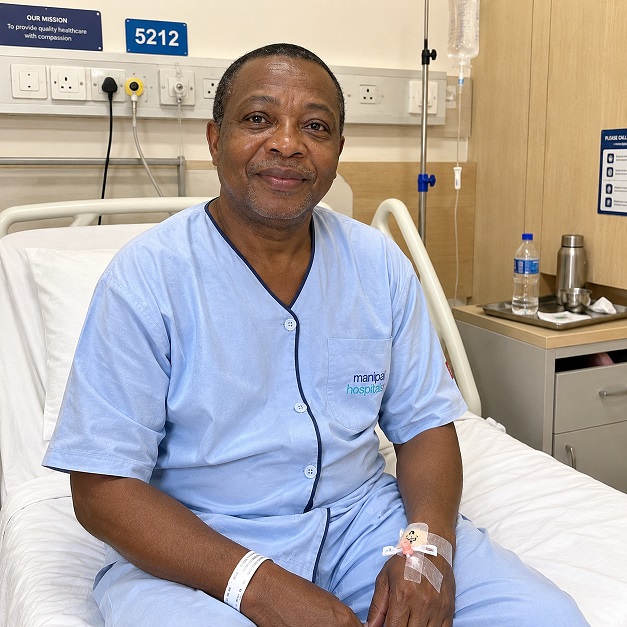
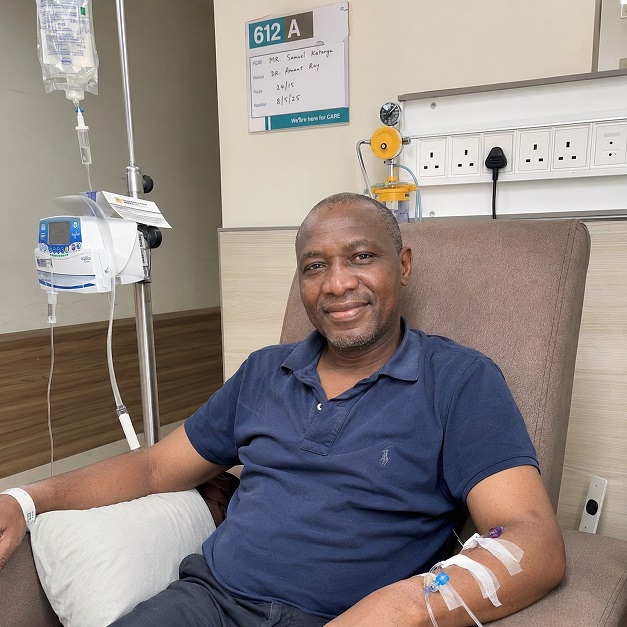
Patient Testimonials from Congo

Ready to Take the First Step?
Share your medical reports with our healthcare managers today and receive a FREE CONSULTATION, a personalized treatment plan and complete support from your arrival to your recovery.
Get Your Free ConsultationAreas We Serve
At Indian Health Guru Consultants, we proudly assist patients from Congo and neighboring countries across Central, East and Southern Africa who travel to India for advanced medical treatment. Our experienced international patient team provides end-to-end support, including medical opinions, hospital selection, Medical Visa assistance, travel planning, accommodation, interpreter services and post-treatment follow-up.
We regularly serve patients from:
- Gabon
- Cameroon
- Angola
- Uganda
- Rwanda
- Burundi
- Tanzania
- Zambia
- Djibouti
- Comoros
- Madagascar
- Seychelles
- South Sudan
- Central African Republic
- Republic of the Congo
- Democratic Republic of the Congo
No matter where you are located in the region, Indian Health Guru Consultants is committed to making your medical journey to India safe, affordable, seamless and completely patient-focused.
From Congo to India: Your Complete Patient Guide
- Brain Tumor Surgery in India for Congolese Patients
- Best Brain Tumour Surgeons & Hospitals in India for Congo Patients
- Knee Replacement in India for Congolese Patients
- Best Knee Replacement Surgeons & Hospitals in India for Congolese Patients
- Spine Surgery in India for Congolese Patients
- Best Spine Surgeons & Hospitals in India for Congolese Patients
- Liver Transplant in India for Congolese Patients: Cost & Guide
- Best Liver Transplant Centres and Hospitals in India for Congolese Patients
- Cardiac Surgery in India for Congolese Patients: Cost & Guide
- Best Cardiac Surgeons & Hospitals in India for Congolese Patients
- Bone Marrow Transplant in India for Congolese Patients: Cost & Guide
- Best Bone Marrow Transplant Centres and Hospitals in India for Congolese Patients
- Prostate Cancer Treatment in India for Congolese Patients: Cost & Guide
- Best Prostate Cancer Centres and Hospitals in India for Congolese Patients
- HIPEC in India for Congolese Patients: Cost & Treatment Guide
- Best HIPEC Centres and Hospitals in India for Congolese Patients
- Kidney Transplant in India for Congolese Patients: Cost & Guide
- Best Kidney Transplant Centres and Hospitals in India for Congolese Patients