

Brain Tumor Surgery in India for Congolese Patients: What It Costs, and How to Decide Well
A plain-language guide for families in Kinshasa, Lubumbashi and beyond navigating a brain tumour diagnosis— what it actually means, what treatment in India costs compared with the West, and the questions worth asking before any decision is made.
The word "tumour" lands hard, and it often arrives without much explanation — a radiologist's report, a doctor's cautious phrasing, a family suddenly searching for what comes next. In 24 years of guiding patients through exactly this moment, I have learned that the fear a diagnosis provokes is rarely matched by the amount of clear information families actually receive. This guide exists to close that gap for Congolese patients specifically: what a brain tumour diagnosis really means, what treatment in India costs against the Western alternatives many families consider, and how to think clearly at a moment that makes clear thinking hard. Not every mass found on a scan turns out to be cancer, and not every confirmed tumour needs the same treatment. Working through those distinctions calmly, with the right information, is what this guide is for.
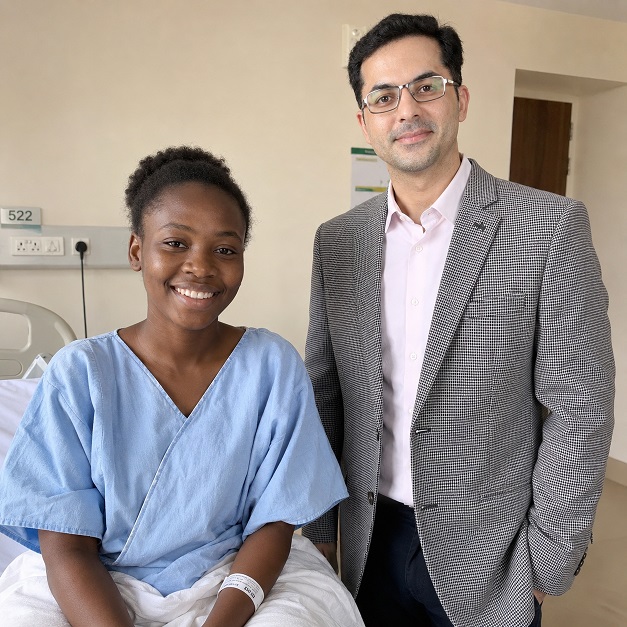
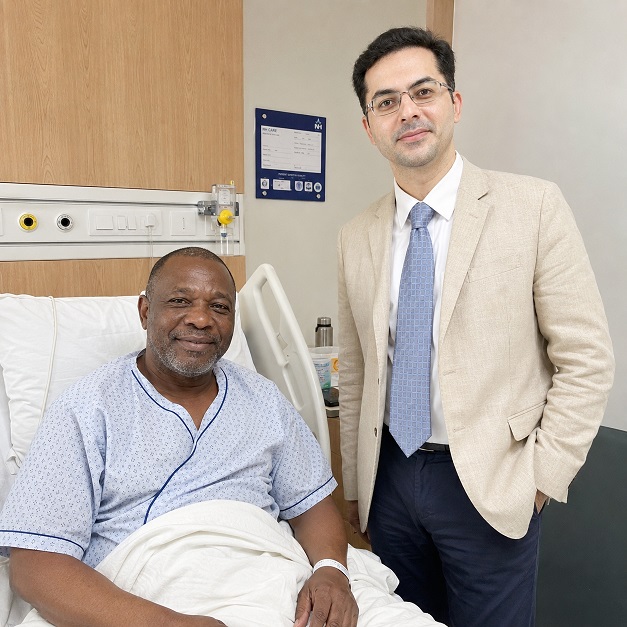
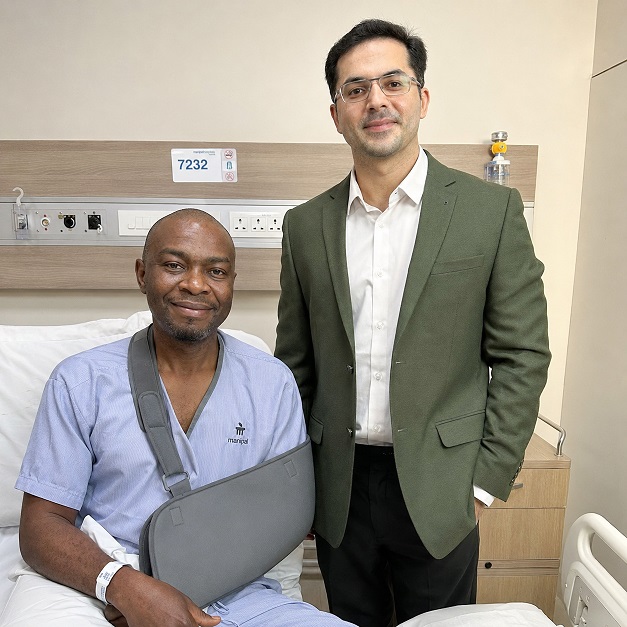
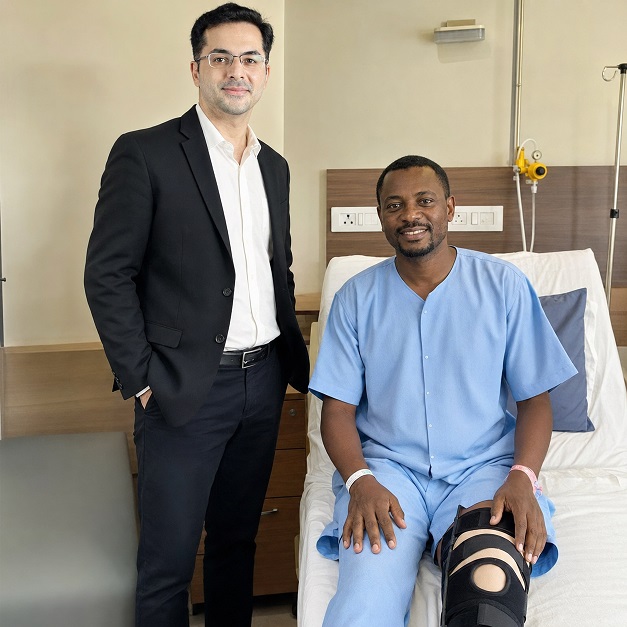
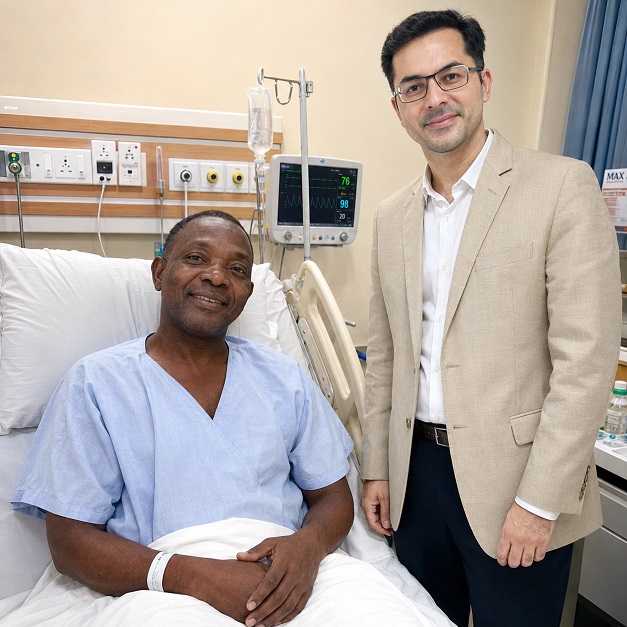
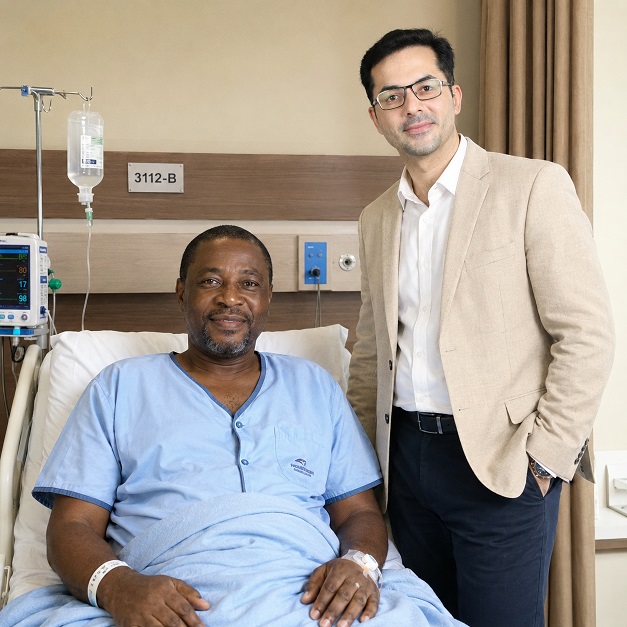
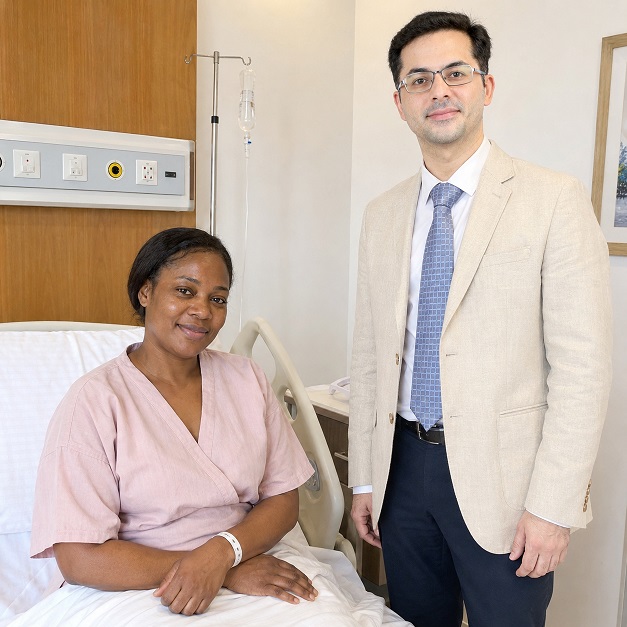
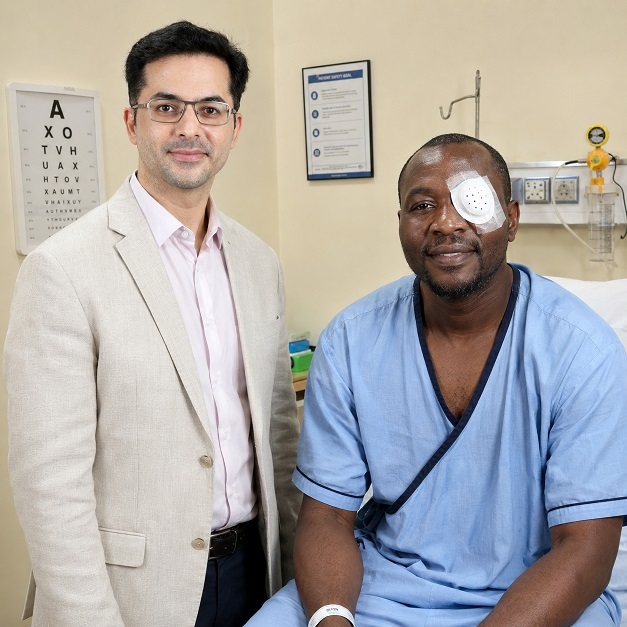
Healing Journeys of Congolese Patients
Key Takeaways
- A mass seen on a brain scan is not automatically a brain tumor. Depending on its appearance and location, further blood tests, specialist review and sometimes biopsy may be required to determine whether it is a benign or malignant tumor, cerebral tuberculoma, abscess or another inflammatory condition.
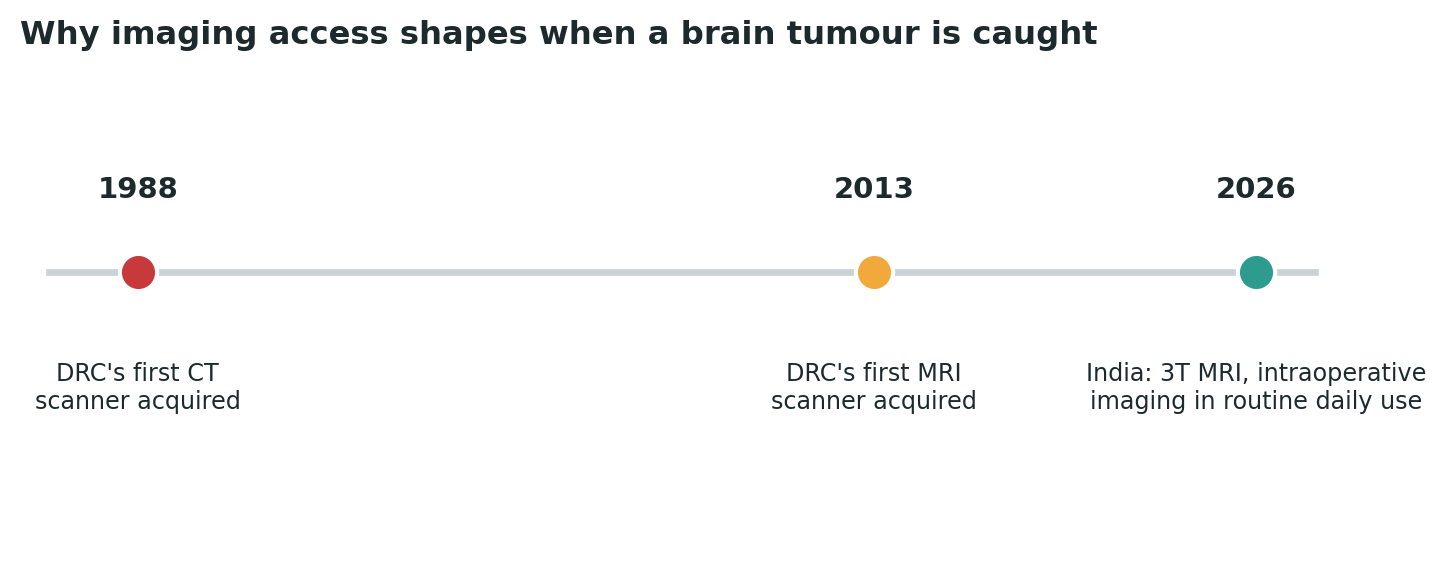
- Neuroimaging access in the DRC has been limited historically: the country's first CT scanner arrived in 1988 and its first MRI in 2013, against modern Indian facilities using 3T MRI and intraoperative imaging. A Kinshasa study found that 55% of patients waited more than six months from symptoms to diagnosis.
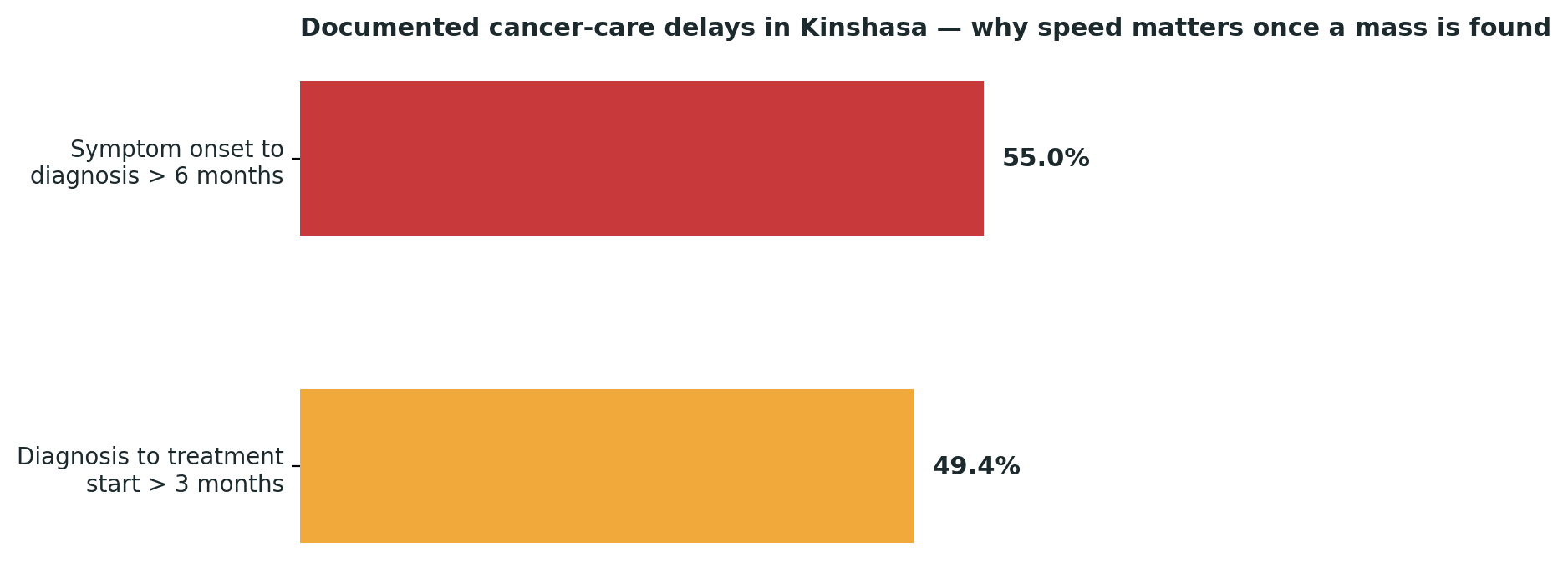
- 49.4% of patients experienced more than three months between diagnosis and treatment, which is why it matters to move efficiently once a genuine tumor has been confirmed — obtaining a second opinion where needed and selecting a centre able to proceed within weeks rather than allowing avoidable delays.
- For a standard craniotomy package, India is shown at approximately US$5,500–9,500, compared with US$28,000–41,000 in France/Belgium, US$32,000–102,000 in the UK private sector and US$70,000–150,000 in the US. More complex Indian procedures requiring neuronavigation, intraoperative MRI or awake-craniotomy mapping may cost approximately US$15,000–25,000.
- The headline surgical quote does not tell the whole financial story. Congolese patients should request written confirmation of pathology and biomarker testing, ICU days, surgeon fees and follow-up consultations, and should avoid paying the entire balance before receiving a clear written surgical plan.
- Send actual scan files rather than only the radiology report, confirm multidisciplinary tumour-board review, budget in US dollars with a 15–20% financial buffer, start the Indian medical visa process early and ensure the yellow-fever certificate is current. Arrange after-care in the DRC before travelling.
- Warning signs include surgery proposed before diagnosis is confirmed, no tumour-board review, pressure to pay the full amount before a written plan and no clear post-treatment care plan in the DRC. India is a competitive option because of its neuro-oncology surgical volume, modern technologies, pathology and molecular testing, English-language consultations and accredited hospitals.
Quick Facts
- Author
- Dr. Dheeraj Bojwani
- Experience
- 24+ Years
- Treatment
- Brain Tumor Surgery
- Patients
- Congolese Patients
- Primary Locations
- Kinshasa, Lubumbashi and other regions of the DRC
- Key Specialist
- Neurosurgeon / Neuro-Oncology Team
- First Principle
- Confirm the diagnosis before discussing surgery
- Diagnostic Possibilities
- Brain tumor, cerebral tuberculoma, abscess or inflammatory mass
- Imaging
- MRI, CT and advanced neuroimaging
- Advanced Technology
- Neuronavigation, intraoperative MRI and awake-craniotomy mapping where appropriate
- Second Opinion
- Multidisciplinary tumour-board review
- Indicative India Cost
- US$5,500–9,500 for standard craniotomy
- Complex India Cost
- Approximately US$15,000–25,000 for selected advanced cases
- Cost Check
- Pathology, biomarkers, ICU, surgeon fees and follow-up
- Travel Planning
- Medical visa and attendant visa
- Entry Requirement
- Current yellow-fever certificate
- Financial Buffer
- 15–20% above initial estimate
- Flight Planning
- No direct Kinshasa–India route; connecting options are required
- Follow-Up
- Named doctor and written handover plan in the DRC
- Key Warning
- Never accept surgery based only on a scan description
- Decision Principle
- Confirm the diagnosis, move efficiently once confirmed and choose a centre with genuine neuro-oncology depth.
In Brief
For Congolese patients considering brain tumor surgery in India, the guide recommends confirming the diagnosis before comparing surgical quotes, obtaining multidisciplinary review and sending actual imaging for specialist assessment. India offers a potentially strong combination of advanced neurosurgical technology, diagnostic capability and lower indicative costs, but patients should verify every treatment, cost and follow-up detail before travelling.
What Actually Happens After a "Mass" Is Found
A scan showing a mass is the start of the process, not the end of it. Depending on location and appearance, the next steps typically include blood tests, sometimes a biopsy, and specialist review to establish whether the mass is benign or malignant, and if malignant, its exact type and grade. This matters because treatment differs enormously by type: some tumours are removed surgically and need nothing further; others need surgery followed by radiotherapy or chemotherapy; some slow-growing benign tumours in delicate locations are sometimes simply monitored rather than operated on immediately. None of this can be decided from the scan image alone.
Why Brain Tumours Are Often Caught Late in the DRC
This is a story about access to imaging as much as it is about disease. The DRC's very first CT scanner arrived only in 1988; its first MRI machine followed in 2013. For most of the country's history, and for much of it today, the equipment needed to actually see a brain tumour on a scan has simply not been available outside a handful of Kinshasa and Lubumbashi facilities. A published study of cancer patients in Kinshasa found that over half waited more than six months between first symptoms and diagnosis, and nearly half again waited over three months between diagnosis and starting treatment. For a brain tumour, where growth over months can mean the difference between a straightforward operation and a far riskier one, that gap matters enormously.
A Mass on a Scan Is Not Automatically a Tumour
Before any conversation about surgery, one step matters more than it might seem: confirming what the mass actually is. The DRC carries one of the world's heaviest tuberculosis burdens — among the eight countries that together account for two-thirds of global TB cases — and cerebral tuberculoma, a TB infection forming a mass in the brain, can look strikingly similar to a tumour on imaging. Abscesses and other inflammatory masses can do the same. Treating an infection surgically as though it were cancer, or vice versa, is a genuine and avoidable error.

The one fact worth remembering
A responsible programme will want blood tests, sometimes a biopsy, and a review by a genuine multidisciplinary tumour board before committing to major surgery — not because of delay for its own sake, but because operating on the wrong diagnosis helps no one. Be cautious of any centre that proposes surgery from a scan alone, without this step.
Why Speed Still Matters, Once Confirmed
None of this is an argument for slowness. The same Kinshasa study that documented diagnostic delays found that most patients had already lost more than six months before diagnosis, and nearly half lost a further three months before treatment began — time that, for a growing tumour, is rarely neutral.
Once a genuine tumour is confirmed, the priority shifts from ruling things out to moving efficiently: getting a second opinion where the diagnosis is uncertain, and choosing a centre able to operate within weeks rather than months.
What Brain Tumour Surgery Costs: DRC Reality vs India vs the West
Cost varies with tumour size, location, and surgical technique, but the relative gap between India and Western options holds fairly consistently, using a standard craniotomy package as the anchor comparison.
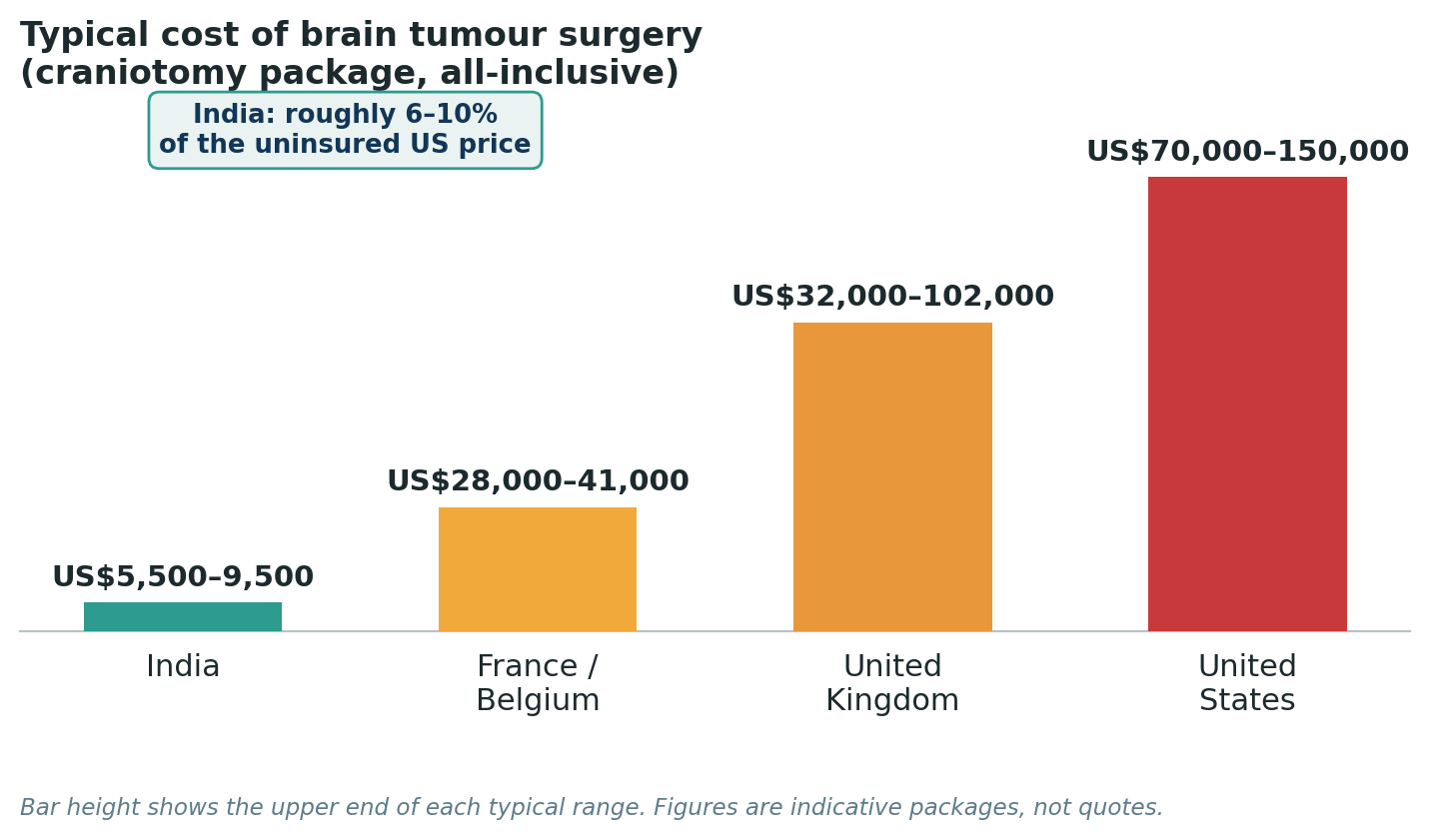
In India, a standard craniotomy for tumour removal typically costs US$5,500 to US$9,500, rising to US$15,000–US$25,000 for cases needing neuronavigation, intraoperative MRI, or awake-craniotomy mapping near critical brain regions. In France or Belgium — the destinations many Congolese families consider first — private-sector costs typically run US$28,000 to US$41,000. In the UK's private sector, costs range roughly US$32,000 to US$102,000, with NHS waits for non-urgent neurosurgery often six months or more. In the US, the same procedure commonly costs US$70,000 to US$150,000 for uninsured patients. India's typical price sits at roughly a tenth of the uninsured US figure.
What the number on the quote does not always show
A written estimate should specify what is included: pathology and biomarker testing, ICU days, the surgeon's fee, and a defined number of follow-up consultations. In 24 years of reviewing these quotes, I have found disputes almost never concern the headline figure — they concern what it silently left out. Get every line item in writing, and never pay the full balance before surgery.
What a Congolese Patient Should Weigh, Specifically
- Insist on a confirmed diagnosis before comparing surgery quotes — a quote based only on a scan description, without biopsy or specialist review, is not a real plan.
- Ask specifically whether a multidisciplinary tumour board reviewed your case, not just one surgeon's individual opinion.
- Send the actual scan files, not just the typed report, to any centre you are considering.
- Budget in US dollars, with margin. The Congolese franc has weakened considerably against the dollar (roughly CDF 2,300–2,350 per US$1 in mid-2026, and it moves); build in a 15–20% buffer above the initial estimate.
- Start the visa process early. DRC passport holders need a paper medical visa through the Embassy of India in Kinshasa (Avenue Batetela, Gombe), typically around two weeks once the hospital's invitation letter is ready; apply for an attendant visa for a companion at the same time.
- Confirm your yellow fever certificate is current — mandatory for entry into India, at least 10 days before travel.
- Plan the route realistically. There is no direct flight from Kinshasa to India; Ethiopian Airlines via Addis Ababa is the most frequent option, with Kenya Airways, Air France, and Qatar Airways as alternatives, at roughly 16 to 20 hours total.
- Arrange after-care in the DRC before you fly — identify which doctor at home will manage follow-up scans and medication, and ask the Indian hospital for a written handover plan.
Four signals that should make you pause
- A quote given, or surgery proposed, before a confirmed diagnosis exists.
- No mention of a tumour board or multidisciplinary review.
- Pressure to pay the full balance before a written surgical plan is provided.
- No clear plan for what happens medically once you are back in the DRC.
Why India Specifically for Brain Tumour Surgery for Congolese Patients?
India combines genuine surgical volume at its leading neuro-oncology centres, where individual surgeons routinely perform hundreds of tumour operations a year; modern technology — neuronavigation, intraoperative MRI, awake-craniotomy mapping — used as everyday equipment rather than a showcase; full pathology and molecular testing capability, so a tumour's exact type and grade can be confirmed rather than assumed; English-language consultation throughout; and hospital accreditation (NABH domestically, JCI internationally) that mirrors the standards used to evaluate hospitals in the US and Europe. Weighed against France, Belgium, or South Africa, that combination of depth, diagnostic capability, and cost is genuinely competitive, not a compromise for a family already carrying enough uncertainty.
A closing word
A brain tumour diagnosis is frightening precisely because it feels urgent and uncertain at once. The most useful thing a family can do is get a confirmed diagnosis first, then move decisively toward a centre with genuine sub-specialist depth and a real tumour board behind it. If you are able to share your scans and any reports you already have, I am glad to look them over and give a direct, honest view — including telling you if what you are facing is not the tumour it first appeared to be.
Sources
- 🌐 National Medical Commission of India — verify any surgeon's registration · nmc.org.in
- 🌐 National Accreditation Board for Hospitals & Healthcare Providers (NABH) · nabh.co
- 🌐 Embassy of India, Kinshasa — medical visa requirements · eoikinshasa.gov.in
- 🌐 World Health Organization — Global Tuberculosis Report, DRC country data · who.int/teams/global-tuberculosis-programme
- 🌐 Determinants of cancer care delays in Kinshasa, DRC — medRxiv (2026) · doi.org/10.64898/2026.05.19.26353550
- 🌐 World Health Organization — yellow fever vaccination requirements · who.int/health-topics/yellow-fever
Frequently Asked Questions by Congolese Patients about Brain Tumor Surgery in India
Does a mass on a brain scan always mean cancer?
No. A mass may represent a true brain tumor, cerebral tuberculoma, abscess or another inflammatory condition. Confirmation is important before treatment begins.
Why is diagnosis particularly important for Congolese patients?
The DRC has a significant tuberculosis burden, and cerebral tuberculoma can resemble a tumor on imaging. Treating an infection as cancer could lead to inappropriate treatment.
How much does standard brain tumor surgery cost in India?
The indicative range is US$5,500–9,500 for a standard craniotomy package including surgery, anaesthesia and a typical hospital stay.
How much can complex brain tumor surgery cost?
Cases requiring technologies such as neuronavigation, intraoperative MRI or awake-craniotomy mapping may cost approximately US$15,000–25,000 in India, depending on the individual case.
Should I send the radiology report or the actual scans?
Send the actual scan files, not only the typed report, when asking Indian centres to assess the case.
Should a tumour board review the case?
Yes. A genuine multidisciplinary tumour-board review is recommended before major surgery, particularly when diagnosis or treatment strategy requires further assessment.
What should the cost estimate include?
Ask for written details covering pathology and biomarker testing, ICU days, surgeon fees and follow-up consultations, along with any other exclusions.
How much financial buffer should Congolese patients keep?
Budget in US dollars and maintain a 15–20% buffer above the initial estimate, because exchange rates and individual treatment requirements can change.
What travel documents should I arrange?
DRC passport holders should begin the Indian medical visa and attendant visa process early and ensure their yellow-fever certificate is current before travel.
How should follow-up be arranged after returning to the DRC?
Before travelling, identify a doctor in the DRC who will manage follow-up scans and medication, and request a written medical handover from the Indian hospital.
Page Summary
This guide explains how Congolese patients can approach brain tumor diagnosis and surgery in India, with particular emphasis on confirming the diagnosis before treatment, avoiding delays after confirmation and understanding the true cost of care. The charts highlight diagnostic and treatment delays in Kinshasa, while the cost comparison shows India's substantially lower indicative pricing than Western private-sector alternatives. Travel documentation, financial planning, multidisciplinary review and post-treatment care in the DRC are also addressed.
Citation Block
| Field | Information |
|---|---|
| Topic Information | Brain Tumor Surgery in India for Congolese Patients |
| Treatment | Brain Tumor Surgery / Craniotomy |
| Patients | Congolese Patients |
| Key Specialist | Neurosurgeon / Neuro-Oncology Team |
| Diagnosis | Confirm mass before committing to surgery |
| Differential Diagnosis | Tumor, cerebral tuberculoma, abscess or inflammatory mass |
| Diagnostic Review | Blood tests, imaging, biopsy where required and tumour-board review |
| Imaging | MRI, CT and advanced neuroimaging |
| Advanced Technology | Neuronavigation, intraoperative MRI and awake-craniotomy mapping |
| India Cost | US$5,500–9,500 for standard craniotomy |
| Complex Cases | Approximately US$15,000–25,000 |
| Cost Transparency | Pathology, biomarker testing, ICU, surgeon fee and follow-up |
| Second Opinion | Multidisciplinary tumour-board review |
| Financial Planning | 15–20% buffer above initial estimate |
| Visa | Medical visa and attendant visa |
| Entry Requirement | Yellow-fever certificate |
| Travel Route | Connecting flights from Kinshasa to India |
| Follow-Up | Named doctor and written handover in the DRC |
| Warning Signs | Surgery before confirmed diagnosis, no tumour board, advance-payment pressure or no after-care plan |
| Key Decision | Confirm diagnosis first, then choose a capable centre and move efficiently |


Our Mission Statement
Our mission is to place patients at the centre of every healthcare decision by providing trustworthy, evidence-based, and unbiased medical information. We believe that informed patients make better decisions. Backed by personalised guidance from our experienced advisory team, we help patients understand their treatment options, compare them objectively, and confidently choose the path that best suits their medical needs and personal circumstances.
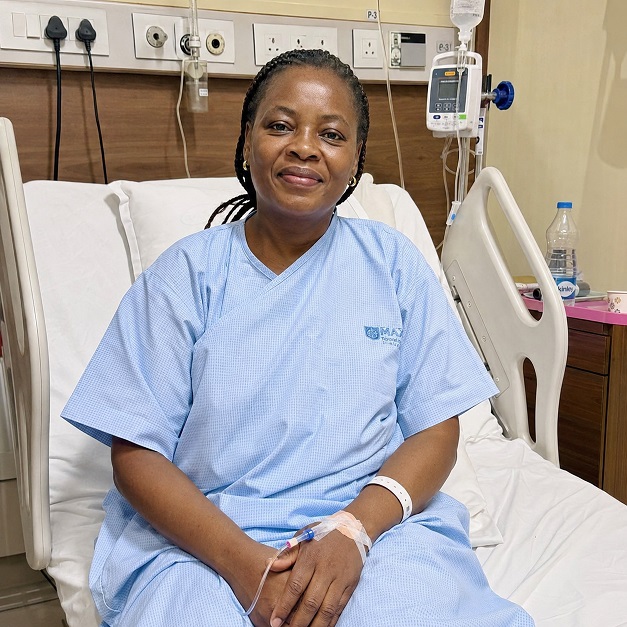
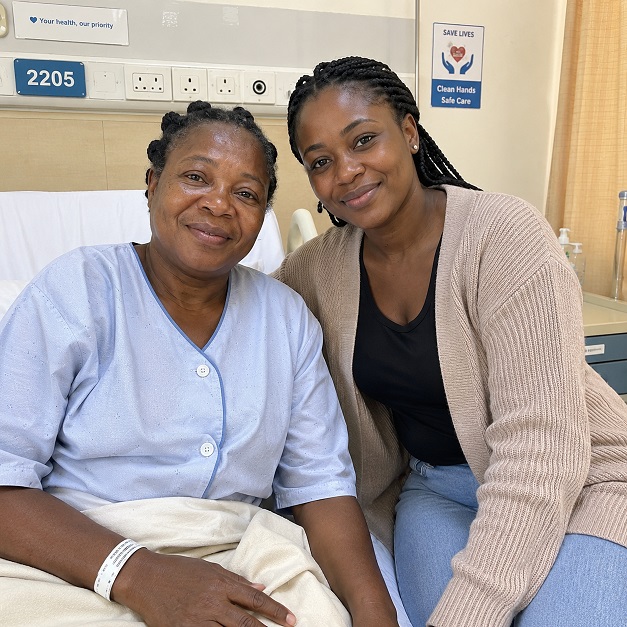
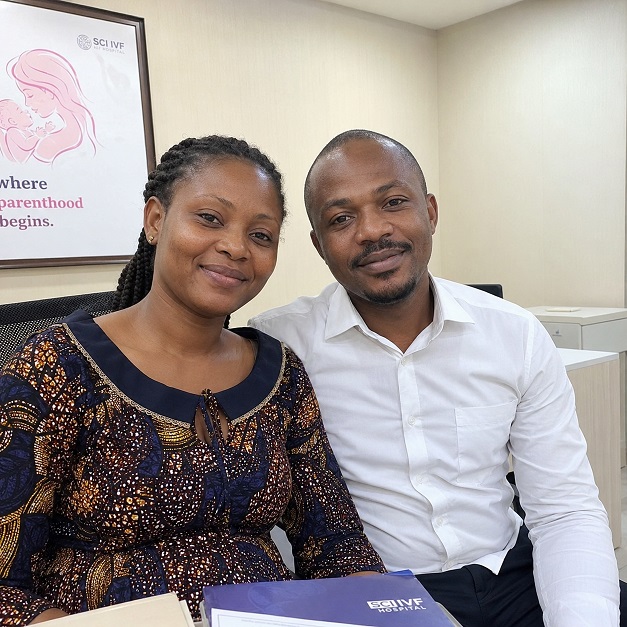
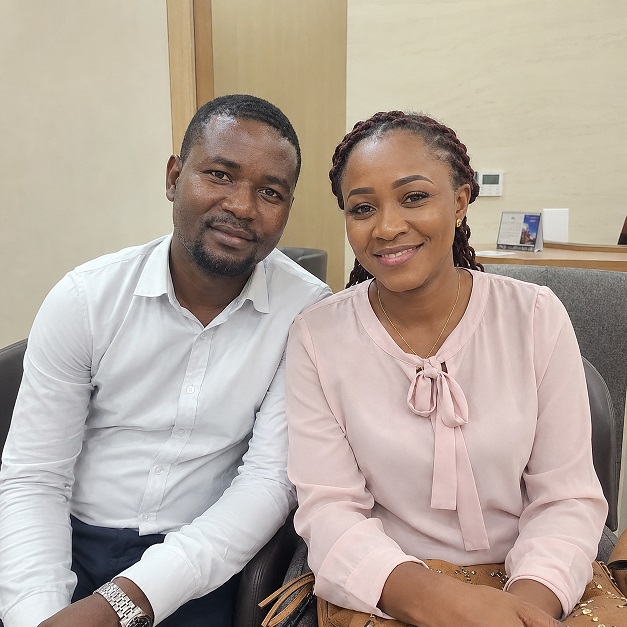
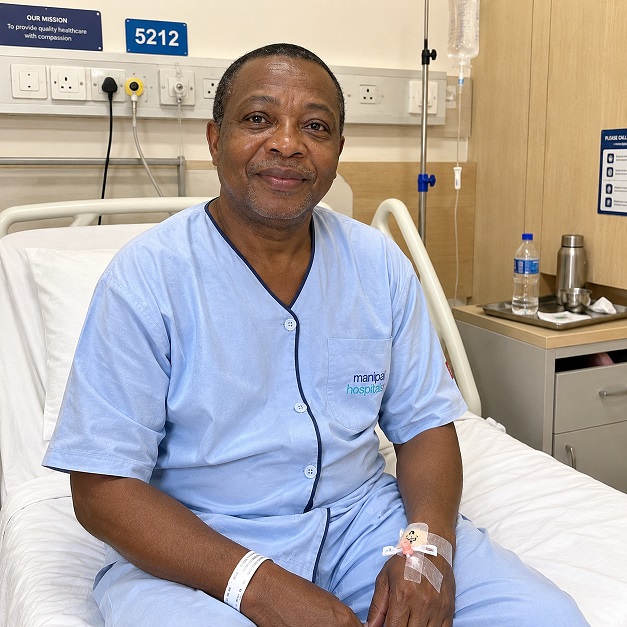
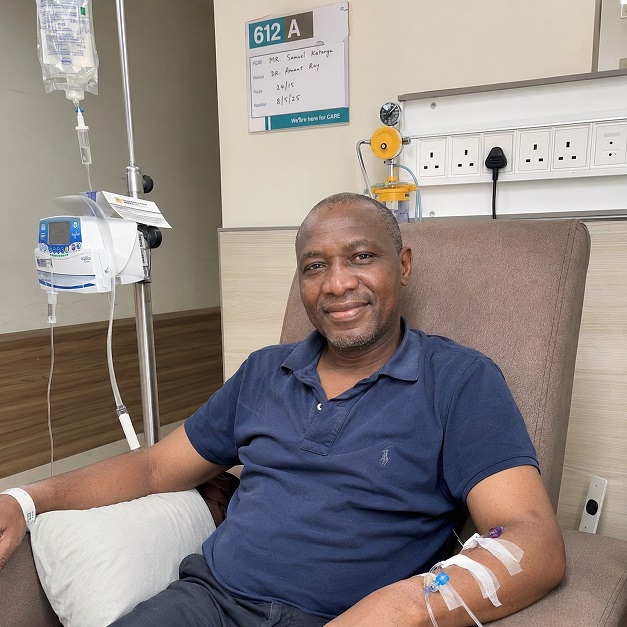
Patient Testimonials from Congo
Ready to Take the First Step?
Share your medical reports with our healthcare managers today and receive a FREE CONSULTATION, a personalized treatment plan and complete support from your arrival to your recovery.
Get Your Free ConsultationAreas We Serve
At Indian Health Guru Consultants, we proudly assist patients from Congo and neighboring countries across Central, East and Southern Africa who travel to India for advanced medical treatment. Our experienced international patient team provides end-to-end support, including medical opinions, hospital selection, Medical Visa assistance, travel planning, accommodation, interpreter services and post-treatment follow-up.
We regularly serve patients from:
- Gabon
- Cameroon
- Angola
- Uganda
- Rwanda
- Burundi
- Tanzania
- Zambia
- Djibouti
- Comoros
- Madagascar
- Seychelles
- South Sudan
- Central African Republic
- Republic of the Congo
- Democratic Republic of the Congo
No matter where you are located in the region, Indian Health Guru Consultants is committed to making your medical journey to India safe, affordable, seamless and completely patient-focused.
From Congo to India: Your Complete Patient Guide
- Brain Tumor Surgery in India for Congolese Patients
- Best Brain Tumour Surgeons & Hospitals in India for Congo Patients
- Knee Replacement in India for Congolese Patients
- Best Knee Replacement Surgeons & Hospitals in India for Congolese Patients
- Spine Surgery in India for Congolese Patients
- Best Spine Surgeons & Hospitals in India for Congolese Patients
- Liver Transplant in India for Congolese Patients: Cost & Guide
- Best Liver Transplant Centres and Hospitals in India for Congolese Patients
- Cardiac Surgery in India for Congolese Patients: Cost & Guide
- Best Cardiac Surgeons & Hospitals in India for Congolese Patients
- Bone Marrow Transplant in India for Congolese Patients: Cost & Guide
- Best Bone Marrow Transplant Centres and Hospitals in India for Congolese Patients
- Prostate Cancer Treatment in India for Congolese Patients: Cost & Guide
- Best Prostate Cancer Centres and Hospitals in India for Congolese Patients
- HIPEC in India for Congolese Patients: Cost & Treatment Guide
- Best HIPEC Centres and Hospitals in India for Congolese Patients
- Kidney Transplant in India for Congolese Patients: Cost & Guide
- Best Kidney Transplant Centres and Hospitals in India for Congolese Patients