

Selecting the Best Proton Therapy Centres and Hospitals in India — A Congolese Patient's Guide
A practical guide for Congolese patients comparing proton therapy centres in India, including proton-specific specialist expertise, centre track record, paediatric experience, treatment planning, costs and travel preparation.
Choosing a proton therapy centre requires a different kind of scrutiny than most other decisions in this series, simply because proton therapy remains a relatively new technology even in India, with a small number of centres and a limited but growing track record. In 24 years of guiding patients through advanced treatment decisions, I have found that for genuinely new technology like this, a centre's actual, demonstrated experience matters more than reputation or marketing. This guide sets out, plainly, how a Congolese patient should judge both the specialist and the centre behind them. Given how significant the cost difference is between proton therapy and conventional radiotherapy, getting an honest, independent answer about whether you need it at all matters just as much as choosing where to have it.
Healing Journeys of Congolese Patients
Key Takeaways
- The guide explains that proton therapy requires careful centre selection because it remains relatively new in India, with a smaller number of centres and a developing track record. The guide therefore places greater importance on demonstrated proton-specific experience than on general hospital reputation or marketing. It also recommends an independent opinion on whether proton therapy is genuinely necessary, as conventional radiotherapy may be equally appropriate for some cancers at a lower cost.
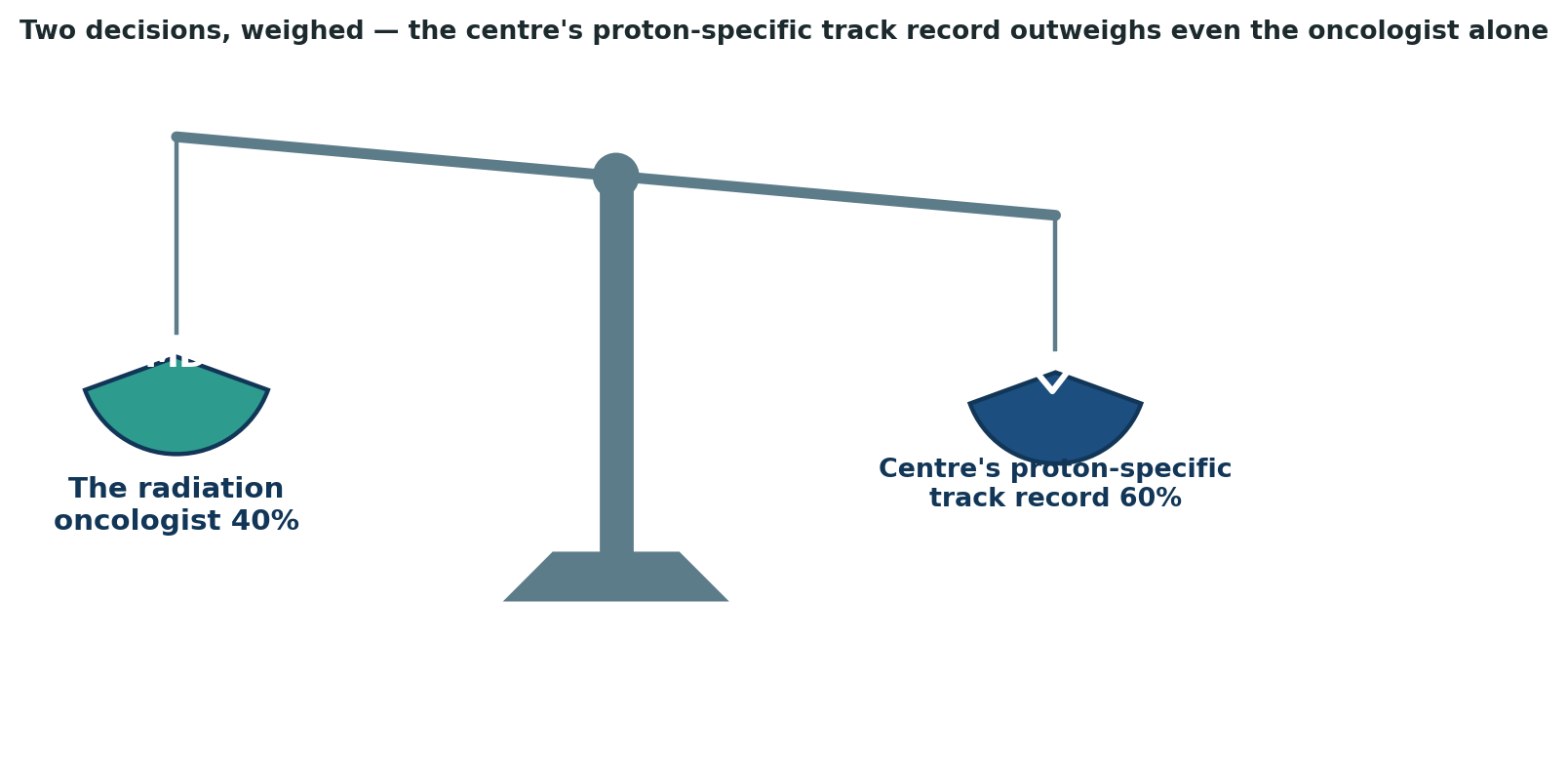
- The page 2 graphic gives 40% weight to the radiation oncologist and 60% to the centre's proton-specific track record. Patients should verify the oncologist's personal proton experience and exact cancer-type experience, while also checking the centre's total years and patient volume in proton therapy rather than relying only on its general radiation oncology reputation.
- For children, the guide recommends checking paediatric-specific proton experience, as these cases require particular planning expertise. It also advises confirming multi-room capability to reduce scheduling delays during treatment over several weeks, along with a clearly explained proton-specific treatment-planning verification process.
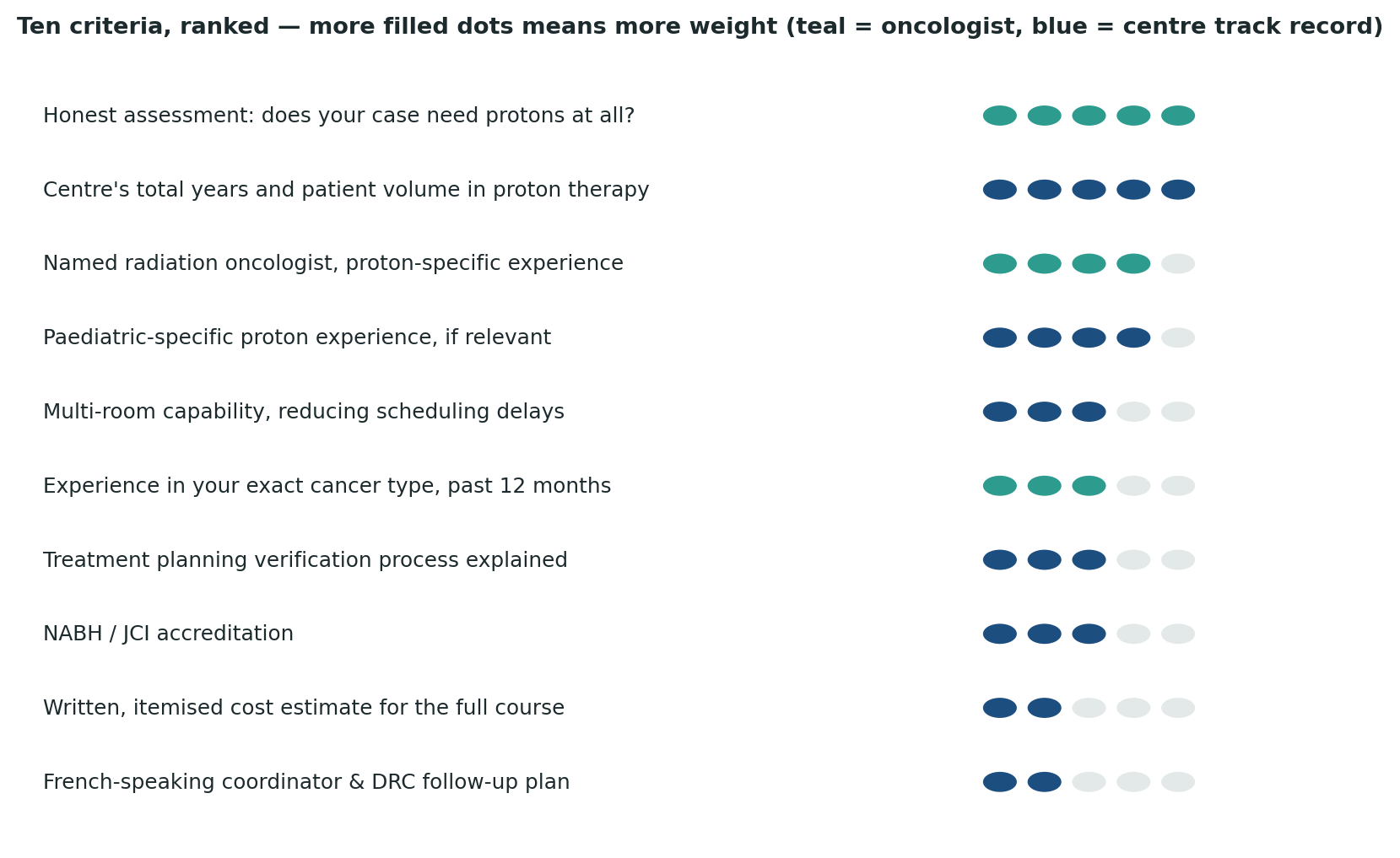
- The page 3 criteria chart ranks an honest proton-versus-conventional assessment and the centre's proton therapy track record highest. Other important factors include named proton-specific oncologist experience, paediatric experience where relevant, exact cancer-type experience, multi-room capability, treatment-planning verification, NABH/JCI accreditation, written full-course costs and a French-speaking coordinator with a DRC follow-up plan.
- The guide warns that headline quotations may not represent the complete treatment cost. Unclear session numbers and separately priced planning scans can lead to additional expenses. Patients should obtain every cost item in writing, confirm what happens if additional sessions or scans are required and never pay the full balance before treatment.
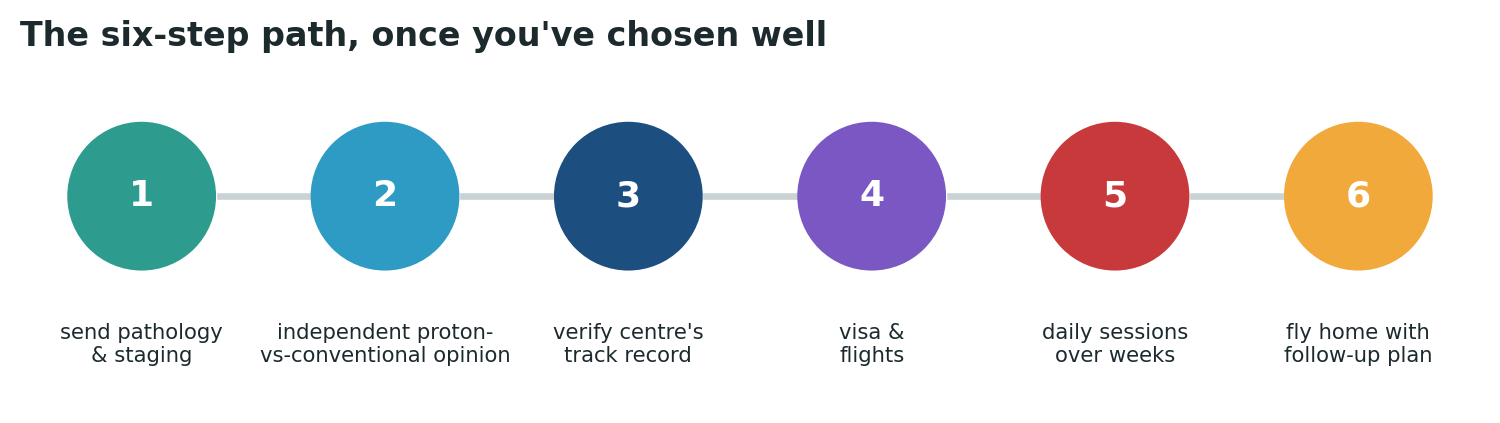
- For Congolese patients, the guide recommends sending pathology, staging and imaging results to each centre being compared and obtaining an independent second opinion about the need for proton therapy. Patients should budget with a 15–20% margin, arrange paper medical and attendant visas early, carry a current yellow-fever certificate dated at least 10 days before travel and plan for an extended stay because proton therapy usually involves daily sessions over several weeks.
Quick Facts
- Author
- Dr. Dheeraj Bojwani
- Experience
- 24+ Years
- Treatment
- Proton Therapy
- Patients
- Congolese Patients
- Key Specialist
- Radiation Oncologist with Proton-Specific Experience
- Decision Weighting
- Oncologist 40% / Centre Proton Track Record 60%
- First Step
- Obtain an independent opinion on whether proton therapy is genuinely needed
- Key Assessment
- Cancer type, tumour location, pathology, staging and imaging
- Specialist Check
- Personally treated proton therapy patients and experience with the exact cancer type
- Centre Check
- Total years and patient volume specifically in proton therapy
- Paediatric Check
- Paediatric-specific proton experience where relevant
- Facility Check
- Multi-room capability to reduce scheduling delays
- Planning Check
- Clearly explained proton-specific treatment-planning verification process
- Accreditation
- NABH or JCI
- Cost Check
- Written, itemised estimate for the full treatment course
- Cost Risk
- Confirm session numbers and whether planning scans are charged separately
- Financial Buffer
- 15–20%
- Medical Records
- Pathology, staging and imaging
- Visa
- Paper medical visa and attendant visa
- Entry Requirement
- Current yellow-fever certificate dated at least 10 days before travel
- Treatment Duration
- Daily sessions over several weeks
- Follow-Up
- DRC follow-up plan
- Coordinator
- French-speaking coordinator for ongoing communication
- Key Warning
- Avoid centres without a clear proton-specific track record
- Decision Principle
- Choose demonstrated proton therapy experience and honest treatment assessment rather than relying on general hospital reputation or marketing.
In Brief
For Congolese patients considering proton therapy in India, the guide recommends verifying the centre's demonstrated proton-specific track record before committing to treatment. Patients should independently confirm whether proton therapy is genuinely appropriate, verify the oncologist's personal proton experience and exact cancer-type expertise, check paediatric capability where relevant, understand the treatment-planning process and obtain a complete written quotation covering the full treatment course.
First, Get an Honest Answer to the Most Important Question
Before comparing centres, get a clear, independent answer to the question that matters most: does your specific cancer type genuinely benefit from proton therapy, or would conventional radiotherapy serve just as well at a fraction of the cost? Proton therapy is not universally superior — it offers a genuine advantage for specific tumour types and locations, particularly in children, but is not automatically the right choice for every cancer.
This question is worth asking of someone other than the centre offering to sell you the treatment. A centre with a significant financial interest in filling its proton therapy schedule has an understandable, if unintentional, bias toward recommending it. An independent opinion, even a brief one, is a reasonable safeguard before committing to a treatment this expensive.
Two Decisions, Weighed
Choosing well depends on two things: the radiation oncologist's own experience, and the centre's genuine, demonstrated track record specifically in proton therapy. For proton therapy specifically, the centre's track record carries more weight than for many other procedures in this series, because the technology's relative newness means institutional experience varies enormously between centres.
Part One: Choosing the Radiation Oncologist
These three points matter more than a hospital's overall reputation or general marketing claims.
- An honest, independent assessment of whether proton therapy genuinely suits your case, rather than a default recommendation toward the centre's most advanced offering.
- A named radiation oncologist with proton-specific experience — ask directly how many proton therapy patients they have personally treated, not just general radiation oncology numbers.
- Experience in your exact cancer type, since proton therapy's benefit varies considerably by tumour type and location.
An oncologist experienced mainly in conventional radiotherapy may have limited hands-on proton experience even at a centre that offers the technology. Ask for the specific personal case count, not the centre's overall volume, since these numbers can differ meaningfully.
Part Two: Verifying the Centre's Track Record
This is the part most families cannot judge from a brochure alone, which is exactly why it needs direct, specific questions rather than general reassurance.
- The centre's total years and patient volume in proton therapy, not just when it opened, since experience builds over years of actual patient treatment.
- Paediatric-specific proton experience, if relevant, since children's cases demand particular planning expertise.
- Multi-room capability, reducing scheduling delays for a treatment that requires daily sessions over several weeks.
- A clear treatment planning verification process, explained specifically for proton therapy's particular technical demands.
- NABH accreditation in India, or JCI internationally, auditing patient safety and clinical governance in depth.
What the quote doesn't always show
In 24 years of reviewing these estimates, I have found the disputes almost never concern the headline number — they concern what it silently left out: the number of sessions not clearly specified, or additional planning scans priced separately. Get every line item in writing before paying any deposit, and never pay the full balance before treatment.
Given the substantial cost of proton therapy relative to other treatments in this series, it is especially worth confirming in writing exactly what happens if additional sessions or scans turn out to be needed once treatment is underway, rather than discovering this partway through the course.
What a Congolese Patient Should Weigh in Particular
Beyond verifying the oncologist and the centre's track record, a handful of practical realities specific to travelling from the DRC deserve their own attention.
Send your pathology, staging, and imaging results, not just a description of your diagnosis, to every centre being compared.
Get a second opinion on whether proton therapy is genuinely needed, given the substantial cost difference against conventional radiotherapy.
Currency and budget. The Congolese franc has weakened considerably against the dollar (roughly CDF 2,300–2,350 per US$1 in mid-2026, and it moves); budget with a 15–20% margin above the written estimate.
Visa timing. DRC passport holders need a paper medical visa through the Embassy of India in Kinshasa (Avenue Batetela, Gombe), typically around two weeks once the hospital's invitation letter is ready; apply for the attendant visa in the same batch.
Yellow fever certificate, current and dated at least 10 days before travel.
Plan for an extended stay — a full proton therapy course typically involves daily sessions over several weeks.
Four signals that should make you pause
- Proton therapy recommended by the same centre that would financially benefit, without an independent second opinion offered.
- No clear track record or patient volume specific to proton therapy.
- No paediatric-specific experience discussed, for a child's case.
- Pressure to pay the full balance before a written, complete treatment plan exists.
| Ask the oncologist | Ask the hospital |
|---|---|
| Does my case genuinely need protons, or would conventional radiotherapy do? | How many years and patients in proton therapy? |
| How many proton patients have you personally treated? | Do you have paediatric-specific proton experience? |
| What's your experience with my exact cancer type? | Is this a multi-room facility? |
Send these two short lists in writing, by email, before agreeing to travel. A centre with genuine, demonstrated proton experience will answer both directly and specifically; one still building its track record may struggle to give the same clarity.
A closing word
Proton therapy is a genuine advance for the right cases, but it is new enough, and expensive enough, that verifying a centre's actual track record matters more here than almost anywhere else in this series. A named oncologist who gives you an honest answer about whether you need it at all, backed by a centre with real, demonstrated proton-specific experience, is the baseline worth insisting on before any deposit is paid, and no genuinely confident centre will be reluctant to share these specifics. If you can share your pathology and staging results, I am glad to review them honestly, including telling you plainly if conventional radiotherapy would serve you just as well, and save considerable cost in doing so.
Sources
- 🌐 National Medical Commission of India — verify any surgeon's registration · nmc.org.in
- 🌐 National Accreditation Board for Hospitals & Healthcare Providers (NABH) · nabh.co
- 🌐 Embassy of India, Kinshasa — medical visa requirements · eoikinshasa.gov.in
- 🌐 "Global democratisation of proton radiotherapy," The Lancet Oncology (2023) · sciencedirect.com
- 🌐 World Health Organization — yellow fever vaccination requirements · who.int/health-topics/yellow-fever
Frequently Asked Questions by Congolese Patients about Selecting the Best Proton Therapy Centres and Hospitals in India
Why does the guide place more importance on the centre than the individual oncologist?
The page 2 graphic gives 60% weight to the centre's proton-specific track record and 40% to the oncologist. The guide explains that proton therapy is relatively new, so institutional experience can vary significantly between centres.
Should patients get a second opinion before choosing proton therapy?
Yes. The guide strongly recommends an independent opinion on whether proton therapy is genuinely needed, because some cancers may be treated appropriately with conventional radiotherapy at a substantially lower cost.
What should patients ask the radiation oncologist?
They should ask how many proton therapy patients the oncologist has personally treated and what experience they have with the patient's exact cancer type. General radiation oncology experience is not enough to establish proton-specific expertise.
What should patients ask about the centre's experience?
The guide recommends asking how many years the centre has provided proton therapy and how many patients it has treated, rather than relying only on the centre's opening date or marketing claims.
Why is paediatric proton experience important?
Children's cases can require particular treatment-planning expertise, so parents should specifically verify paediatric proton experience when considering treatment for a child.
Why does multi-room capability matter?
A proton therapy course commonly involves daily sessions over several weeks. Multi-room capability may help reduce scheduling delays and provide greater treatment flexibility.
What should patients check about treatment planning?
The centre should be able to explain its proton-specific treatment-planning verification process clearly. Patients should not accept vague assurances about planning accuracy.
What can cause unexpected proton therapy costs?
The guide identifies unclear session numbers and separately charged planning scans as common areas where the initial quotation may not show the full cost. Patients should clarify these items in writing before paying a deposit.
How much financial buffer should Congolese patients keep?
The guide recommends maintaining a 15–20% margin above the written estimate, particularly because additional sessions or scans may sometimes become necessary.
What are the biggest warning signs when choosing a proton therapy centre?
Patients should be cautious when proton therapy is recommended without an independent second opinion, the centre cannot demonstrate a clear proton-specific track record, paediatric experience is absent for a child's case, or the patient is pressured to pay the full balance before receiving a complete written treatment plan.
Page Summary
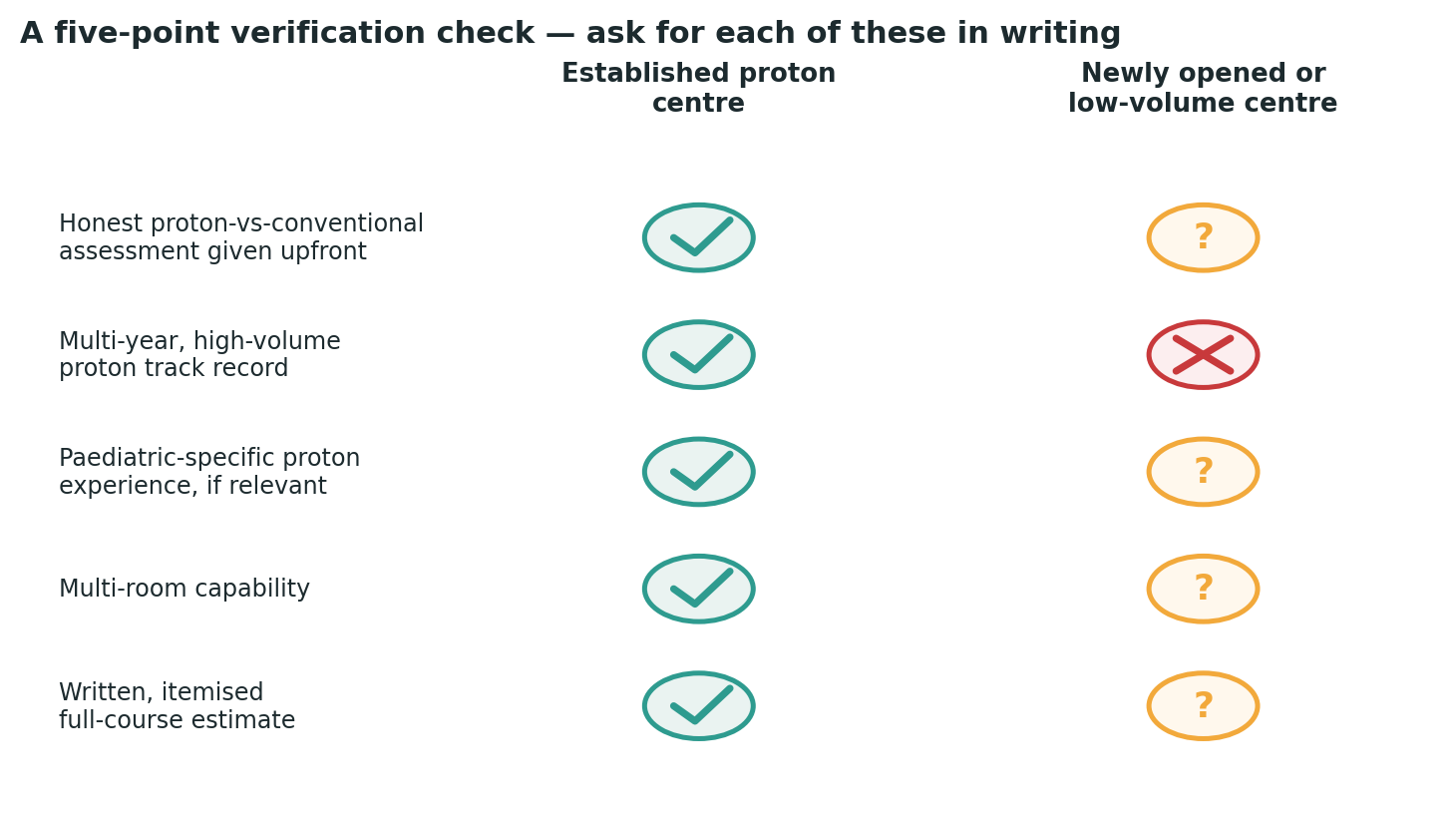
This five-page guide explains how Congolese patients should select proton therapy centres in India by examining demonstrated proton-specific experience rather than general hospital reputation. The page 2 graphic gives 60% weight to the centre's proton track record and 40% to the oncologist. Page 3 provides ten selection criteria and a five-point verification check for established versus newly opened or low-volume centres. Page 4 focuses on quotation transparency, medical records, second opinions, finances, visas and treatment duration, while page 5 provides warning signs and specific questions for both the oncologist and hospital.
Citation Block
| Field | Information |
|---|---|
| Topic | Selecting the Best Proton Therapy Centres and Hospitals in India for Congolese Patients |
| Treatment | Proton Therapy / Proton Beam Therapy |
| Patients | Congolese Patients |
| Key Specialist | Radiation Oncologist with Proton-Specific Experience |
| Decision Weighting | Oncologist 40% / Centre Track Record 60% |
| First Assessment | Independent opinion on whether proton therapy is genuinely required |
| Treatment Comparison | Compare proton therapy with conventional radiotherapy |
| Specialist Check | Personal proton experience and exact cancer-type expertise |
| Centre Check | Years and patient volume specifically in proton therapy |
| Paediatric Check | Paediatric proton experience where relevant |
| Planning Check | Proton-specific treatment-planning verification |
| Facility Check | Multi-room capability |
| Accreditation | NABH or JCI |
| Cost Check | Written full-course quotation with exact session numbers |
| Additional Costs | Confirm planning scans and additional sessions |
| Medical Records | Pathology, staging and imaging |
| Financial Buffer | 15–20% |
| Visa | Paper medical and attendant visas |
| Yellow Fever | Current certificate dated at least 10 days before travel |
| Treatment Duration | Daily sessions over several weeks |
| Follow-Up | DRC follow-up plan with French-speaking support |
| Warning Signs | No independent assessment, unclear proton track record, no paediatric expertise where needed or pressure for full payment |
| Key Questions | Oncologist's personal proton volume, exact cancer experience and centre's proton experience |
| Key Decision | Choose demonstrated proton-specific expertise, transparent planning and complete treatment costs |


Our Mission Statement
Our mission is to place patients at the centre of every healthcare decision by providing trustworthy, evidence-based, and unbiased medical information. We believe that informed patients make better decisions. Backed by personalised guidance from our experienced advisory team, we help patients understand their treatment options, compare them objectively, and confidently choose the path that best suits their medical needs and personal circumstances.
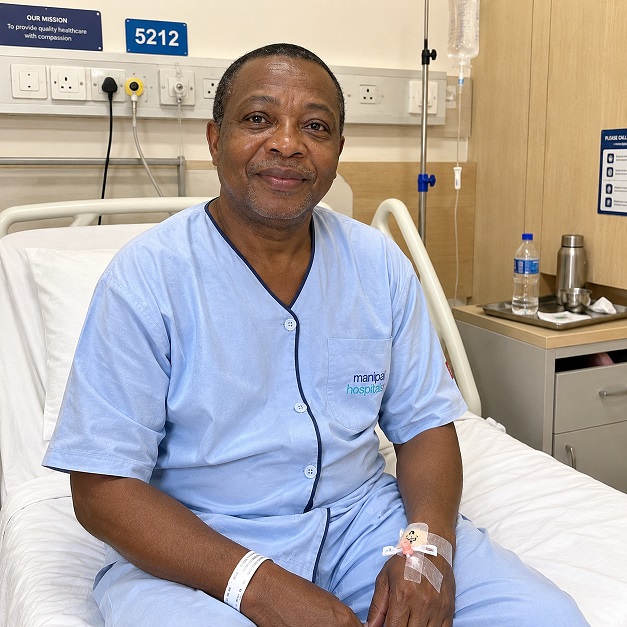
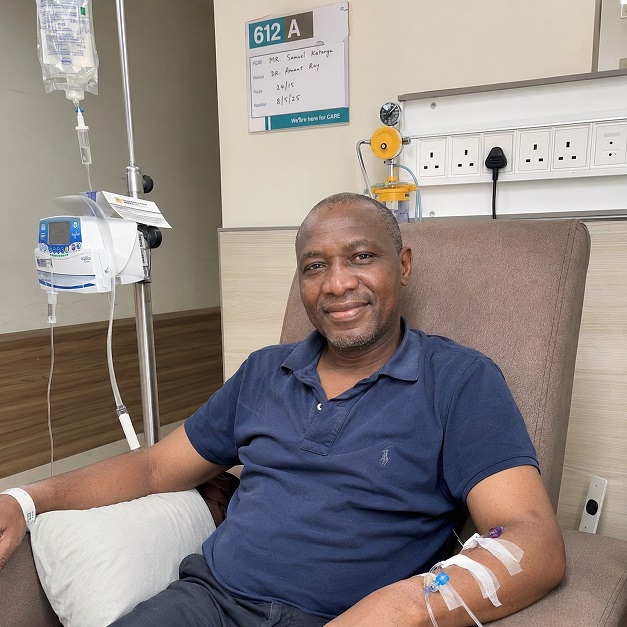
Patient Testimonials from Congo

Ready to Take the First Step?
Share your medical reports with our healthcare managers today and receive a FREE CONSULTATION, a personalized treatment plan and complete support from your arrival to your recovery.
Get Your Free ConsultationAreas We Serve
At Indian Health Guru Consultants, we proudly assist patients from Congo and neighboring countries across Central, East and Southern Africa who travel to India for advanced medical treatment. Our experienced international patient team provides end-to-end support, including medical opinions, hospital selection, Medical Visa assistance, travel planning, accommodation, interpreter services and post-treatment follow-up.
We regularly serve patients from:
- Gabon
- Cameroon
- Angola
- Uganda
- Rwanda
- Burundi
- Tanzania
- Zambia
- Djibouti
- Comoros
- Madagascar
- Seychelles
- South Sudan
- Central African Republic
- Republic of the Congo
- Democratic Republic of the Congo
No matter where you are located in the region, Indian Health Guru Consultants is committed to making your medical journey to India safe, affordable, seamless and completely patient-focused.
From Congo to India: Your Complete Patient Guide
- Brain Tumor Surgery in India for Congolese Patients
- Best Brain Tumour Surgeons & Hospitals in India for Congo Patients
- Knee Replacement in India for Congolese Patients
- Best Knee Replacement Surgeons & Hospitals in India for Congolese Patients
- Spine Surgery in India for Congolese Patients
- Best Spine Surgeons & Hospitals in India for Congolese Patients
- Liver Transplant in India for Congolese Patients: Cost & Guide
- Best Liver Transplant Centres and Hospitals in India for Congolese Patients
- Cardiac Surgery in India for Congolese Patients: Cost & Guide
- Best Cardiac Surgeons & Hospitals in India for Congolese Patients
- Bone Marrow Transplant in India for Congolese Patients: Cost & Guide
- Best Bone Marrow Transplant Centres and Hospitals in India for Congolese Patients
- Prostate Cancer Treatment in India for Congolese Patients: Cost & Guide
- Best Prostate Cancer Centres and Hospitals in India for Congolese Patients
- HIPEC in India for Congolese Patients: Cost & Treatment Guide
- Best HIPEC Centres and Hospitals in India for Congolese Patients
- Kidney Transplant in India for Congolese Patients: Cost & Guide
- Best Kidney Transplant Centres and Hospitals in India for Congolese Patients