

Radiotherapy and Modern Cancer Treatment in India for Congolese Patients: What It Costs, and How to Decide Well
A practical guide for Congolese patients seeking radiotherapy in India, covering modern radiation techniques, brachytherapy, treatment costs, sessions and travel planning.
Radiotherapy is one of the three foundational pillars of modern cancer treatment, alongside surgery and chemotherapy — and, across much of Africa, it is consistently the hardest of the three to access. In 24 years of advising cancer patients, I have found that radiotherapy's particular combination of expensive equipment, specialised physics staff, and ongoing maintenance needs makes it the pillar most likely to be missing entirely, even in settings where surgery and some chemotherapy are available. This guide sets out plainly why that gap exists, what a complete radiotherapy course in India costs against the Western alternatives some patients consider, and what to weigh before deciding. Understanding exactly what your specific cancer needs, technically, makes it far easier to recognise when a proposed treatment plan is genuinely complete.
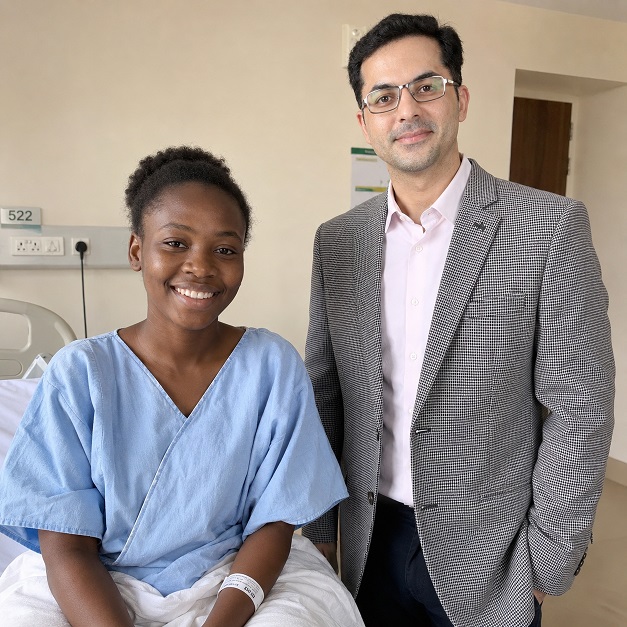
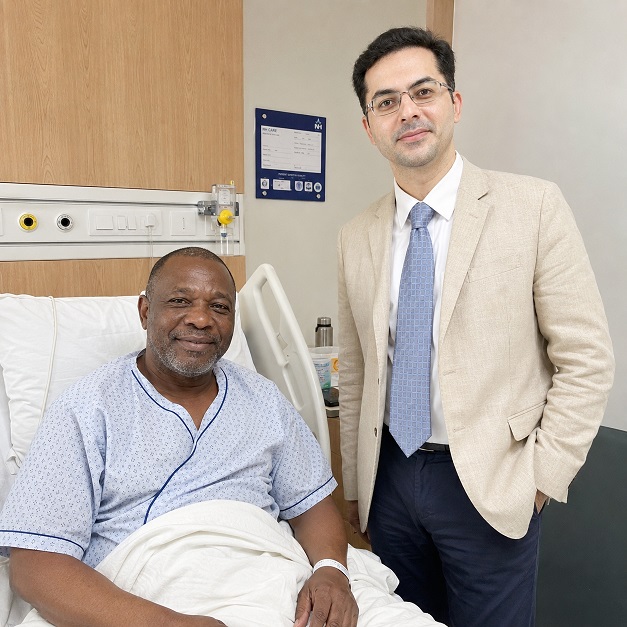
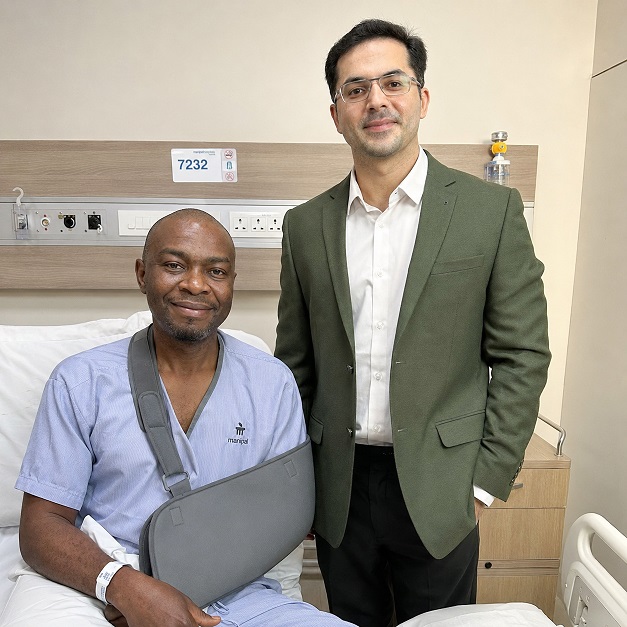
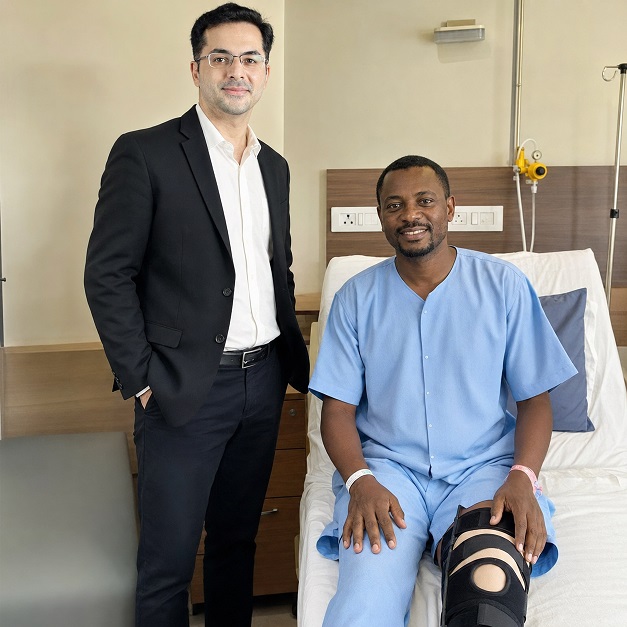
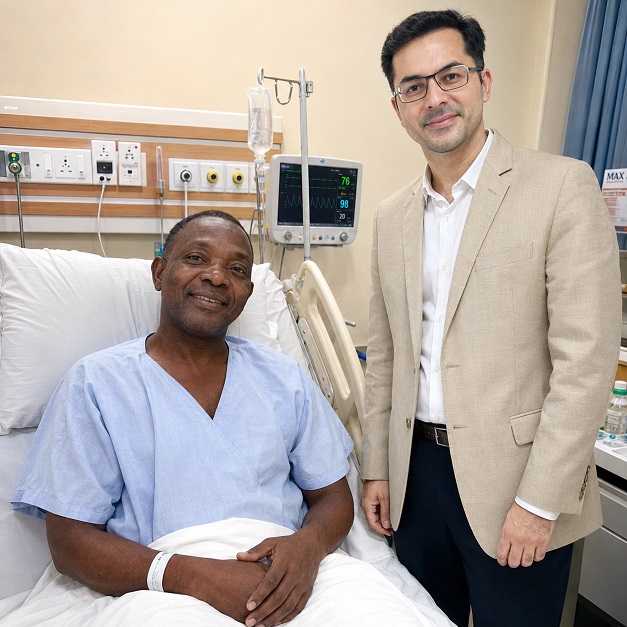
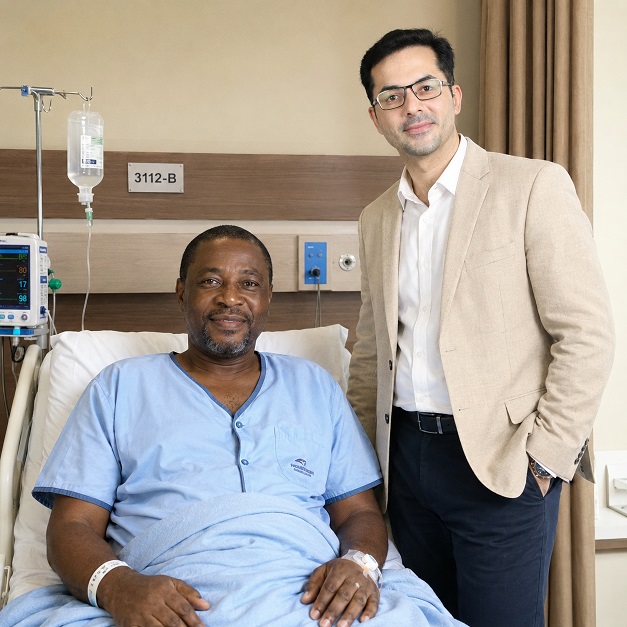
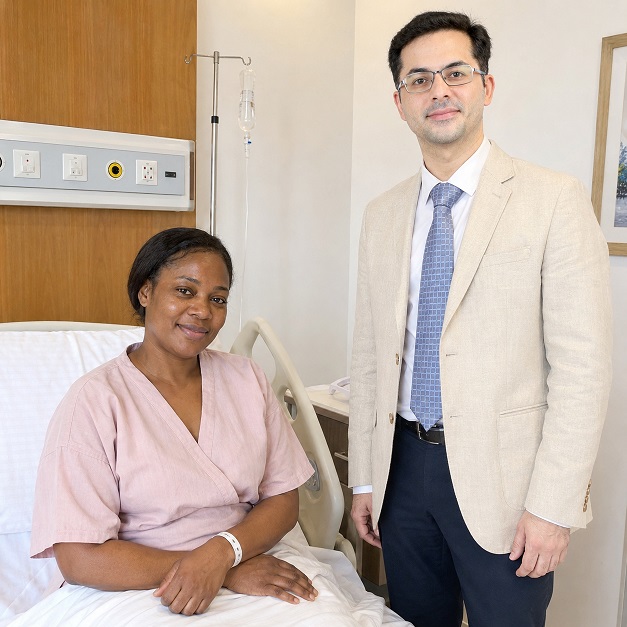
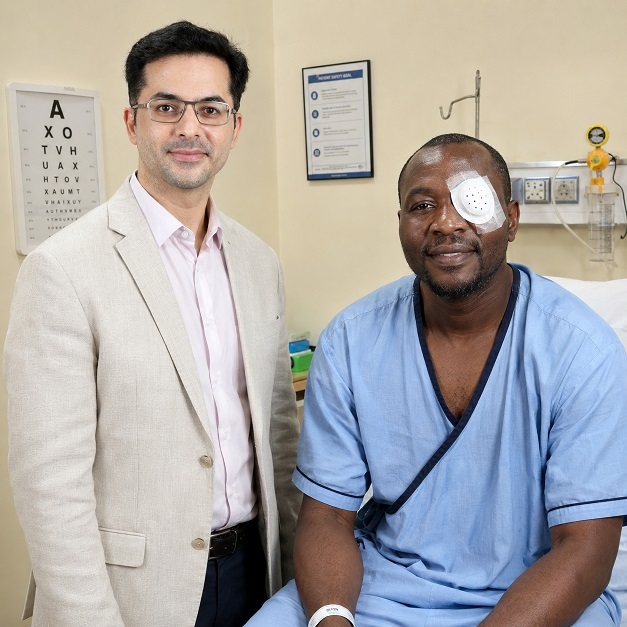
Healing Journeys of Congolese Patients
Key Takeaways
- The guide explains that radiotherapy is one of the three foundational pillars of modern cancer treatment, alongside surgery and chemotherapy, but remains particularly difficult to access across Africa. The guide notes that the entire continent has only around 400 radiotherapy machines for more than one billion people, while more than 20 African countries have no radiotherapy access at all.
- The page 2 graphic illustrates the major machine-density gap, comparing approximately one radiotherapy machine per 150,000 people in the United States with roughly 400 machines serving the whole African continent. The guide also notes that around half of older cobalt-60 machines still operating in Africa are more than 20 years old.
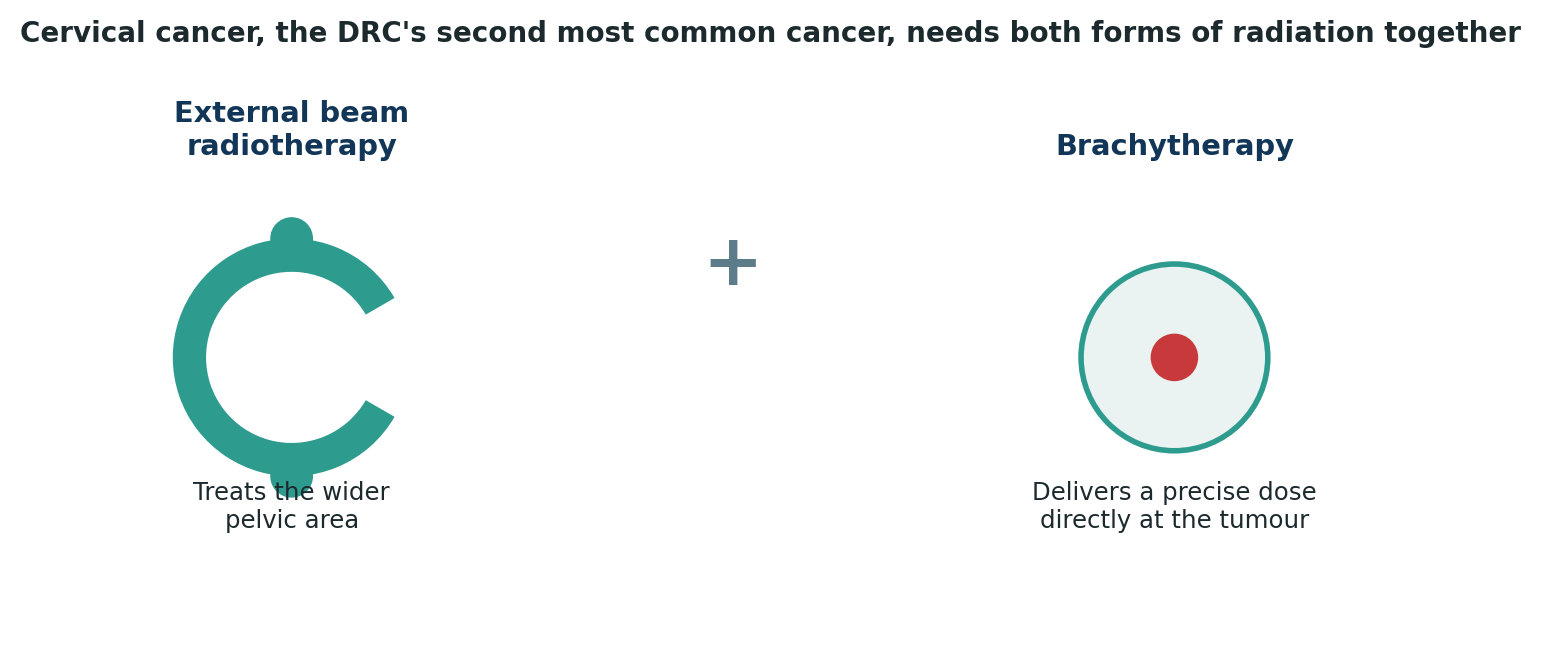
- The guide gives particular attention to cervical cancer, described as the DRC's second most common cancer. Complete curative treatment generally requires external beam radiotherapy together with brachytherapy, rather than external radiation alone. The page 3 diagram clearly shows external beam therapy treating the wider pelvic area while brachytherapy delivers a focused dose directly to the tumour.
- The guide also explains the difference between older cobalt-60 or basic 3D techniques and modern IMRT or VMAT. The page 4 graphic illustrates how modern techniques can shape radiation more precisely around the tumour, potentially sparing nearby healthy tissue and reducing treatment effects on organs such as the bladder and bowel.
- The page 4 cost chart gives an indicative complete radiotherapy-course cost of US$3,000–9,000 in India, compared with US$16,000–33,000 in France/Belgium, US$19,000–44,000 in the UK private sector and US$50,000–120,000 in the US. The guide stresses that costs depend on the technique and number of sessions and should not be treated as fixed quotations.
- For Congolese patients, the guide recommends sending actual pathology, staging and imaging results, confirming the exact radiation technique, asking whether brachytherapy is required, and confirming the total number of sessions. Patients should maintain a 15–20% financial buffer, start the paper medical and attendant visa process early, ensure their yellow-fever certificate is current and plan for an extended stay because treatment often runs daily over several weeks.
Quick Facts
- Author
- Dr. Dheeraj Bojwani
- Experience
- 24+ Years
- Treatment
- Radiotherapy & Modern Cancer Treatment
- Patients
- Congolese Patients
- Key Specialist
- Radiation Oncologist
- First Step
- Review pathology, staging and imaging
- Key Cancer
- Cervical cancer
- Radiotherapy Options
- 3D, IMRT, VMAT and brachytherapy
- Cervical Cancer Check
- Confirm whether brachytherapy is required
- Modern Techniques
- IMRT and VMAT can provide more precise dose delivery
- India Cost
- US$3,000–9,000 indicative complete-course range
- Cost Check
- Technique, sessions and brachytherapy where required
- Financial Buffer
- 15–20%
- Sessions
- Often daily over several weeks
- Medical Records
- Actual pathology, staging and imaging
- Visa
- Paper medical visa and attendant visa
- Entry Requirement
- Current yellow-fever certificate
- Travel
- Plan for an extended stay in India
- Key Warning
- Do not accept a radiotherapy plan without knowing the exact technique and complete treatment requirements
- Decision Principle
- Choose a complete, technically appropriate radiotherapy plan rather than focusing only on machine availability or price.
In Brief
For Congolese patients considering radiotherapy in India, the guide recommends confirming the complete treatment plan rather than focusing only on the radiation machine or headline cost. Patients should verify the specific technique, session count and need for brachytherapy, send complete pathology and imaging, obtain an itemised quotation and plan for several weeks of treatment and follow-up.
A Machine Density Gap Measured in Orders of Magnitude
In the United States, there is roughly one radiotherapy machine for every 150,000 people. Across the entire African continent, there are estimated to be only around 400 such machines serving a population of well over one billion — and more than twenty African countries have no radiotherapy access at all.
This gap is not simply a matter of buying more machines. A functioning radiotherapy service requires ongoing, highly specialised staffing — medical physicists to calibrate and maintain the equipment, radiation therapists to deliver treatment safely day after day, and radiation oncologists to plan each patient's course. Even a well-funded new facility takes years to build this workforce, which is part of why the gap has persisted despite real international investment.
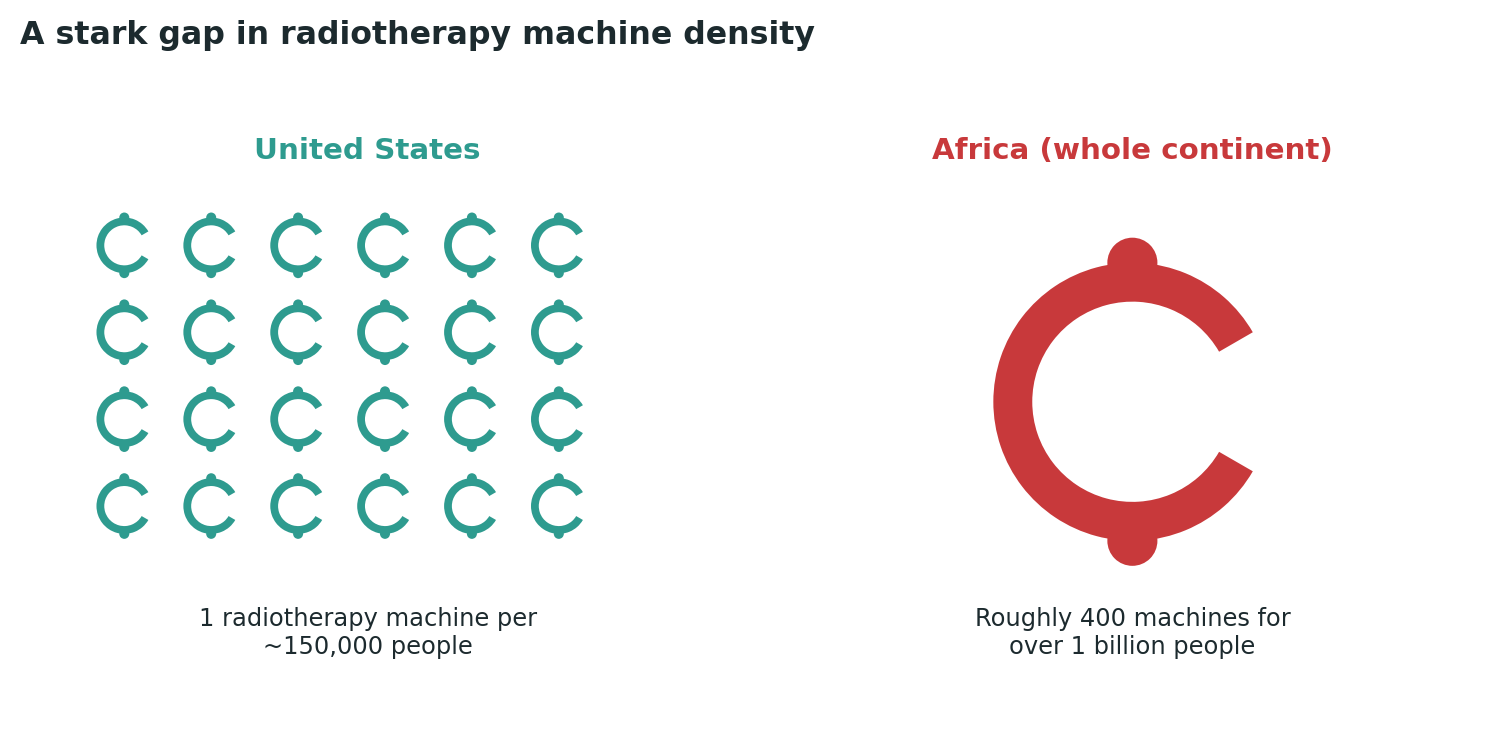
Even where machines exist, roughly half of the older cobalt-60 units still in use across Africa are more than twenty years old, raising real concerns about breakdown, radioactive source security, and disposal costs on top of the underlying capacity shortage.
Why Cervical Cancer Specifically Needs Two Forms of Radiation Together
The DRC's second most common cancer, cervical cancer, illustrates this gap with particular clarity. The internationally recognised standard of curative treatment combines external beam radiotherapy, which treats the wider pelvic area, with brachytherapy, which places a radiation source directly inside the body at the tumour itself. Both are typically required together for the treatment to be genuinely curative, not just one or the other.
Research on outcomes across the region has found that where brachytherapy is unavailable, patients who receive external beam radiotherapy alone see meaningfully lower cure rates than those who receive the complete combination. This is not a marginal difference between two adequate options — it reflects a real gap in what "complete treatment" actually requires for this specific cancer.
The one fact worth remembering
Brachytherapy specifically is even scarcer than general radiotherapy access, since it requires specialised equipment beyond a standard external beam machine. If your cervical cancer treatment plan includes external beam radiotherapy but no mention of brachytherapy, it is worth asking directly whether brachytherapy is part of the recommended complete treatment for your specific case.
Not Just Access — the Technology Itself Has Genuinely Improved
Beyond simple availability, there is a real quality difference between radiotherapy technologies. Older cobalt-60 machines and basic three-dimensional techniques deliver a comparatively wide radiation beam, exposing more surrounding healthy tissue. Modern techniques such as intensity-modulated radiotherapy (IMRT) and volumetric-modulated arc therapy (VMAT) shape the radiation dose far more precisely around the tumour, sparing nearby healthy structures more effectively.
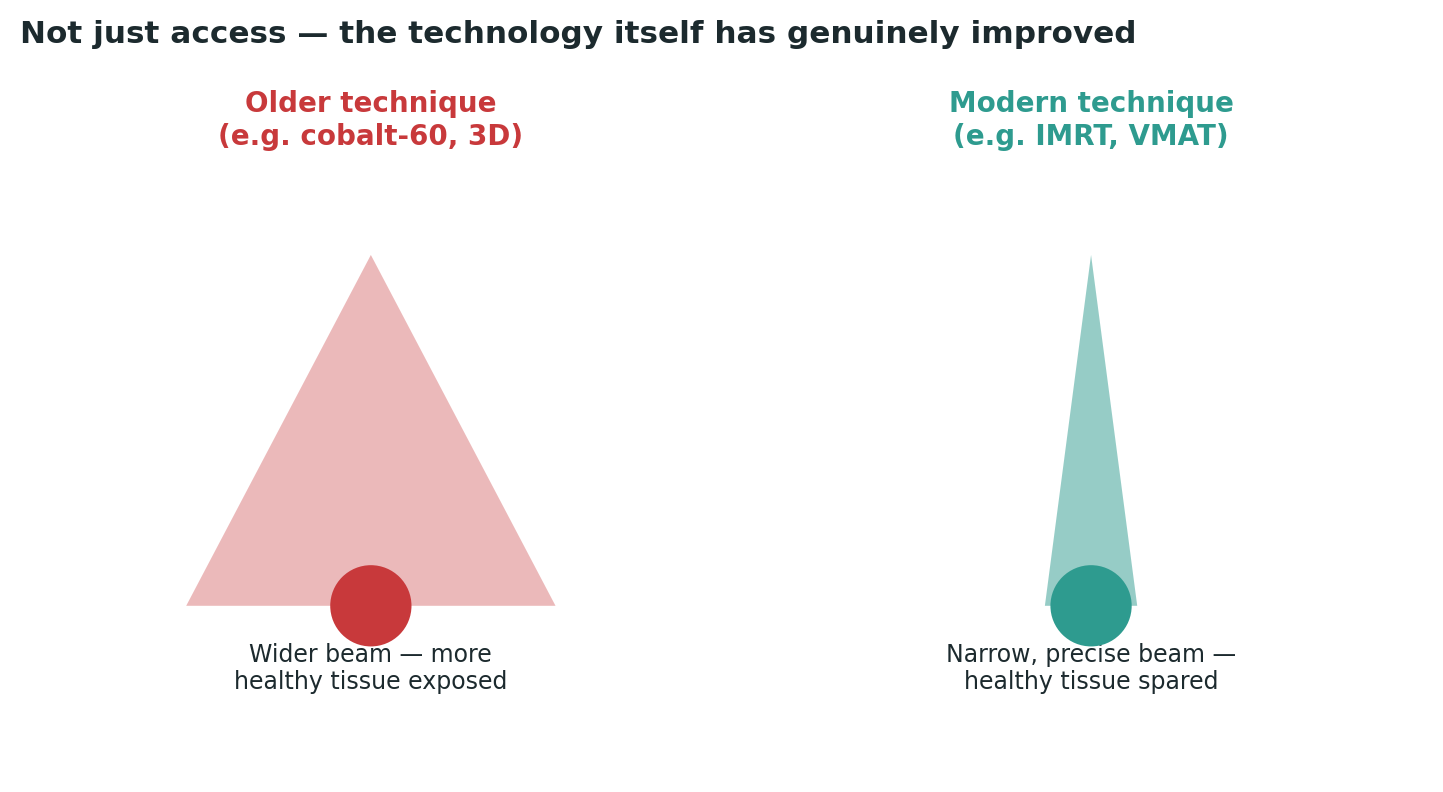
This distinction matters practically for side effects and long-term quality of life, not only for cure rates. A more precisely targeted treatment generally means less damage to nearby organs, which for pelvic cancers like cervical cancer can mean meaningfully less impact on bladder and bowel function afterward.
What a Complete Radiotherapy Course Costs: DRC Reality vs India vs the West
Cost depends on the specific technique and number of treatment sessions required, but the relative gap between India and Western options holds fairly consistently.
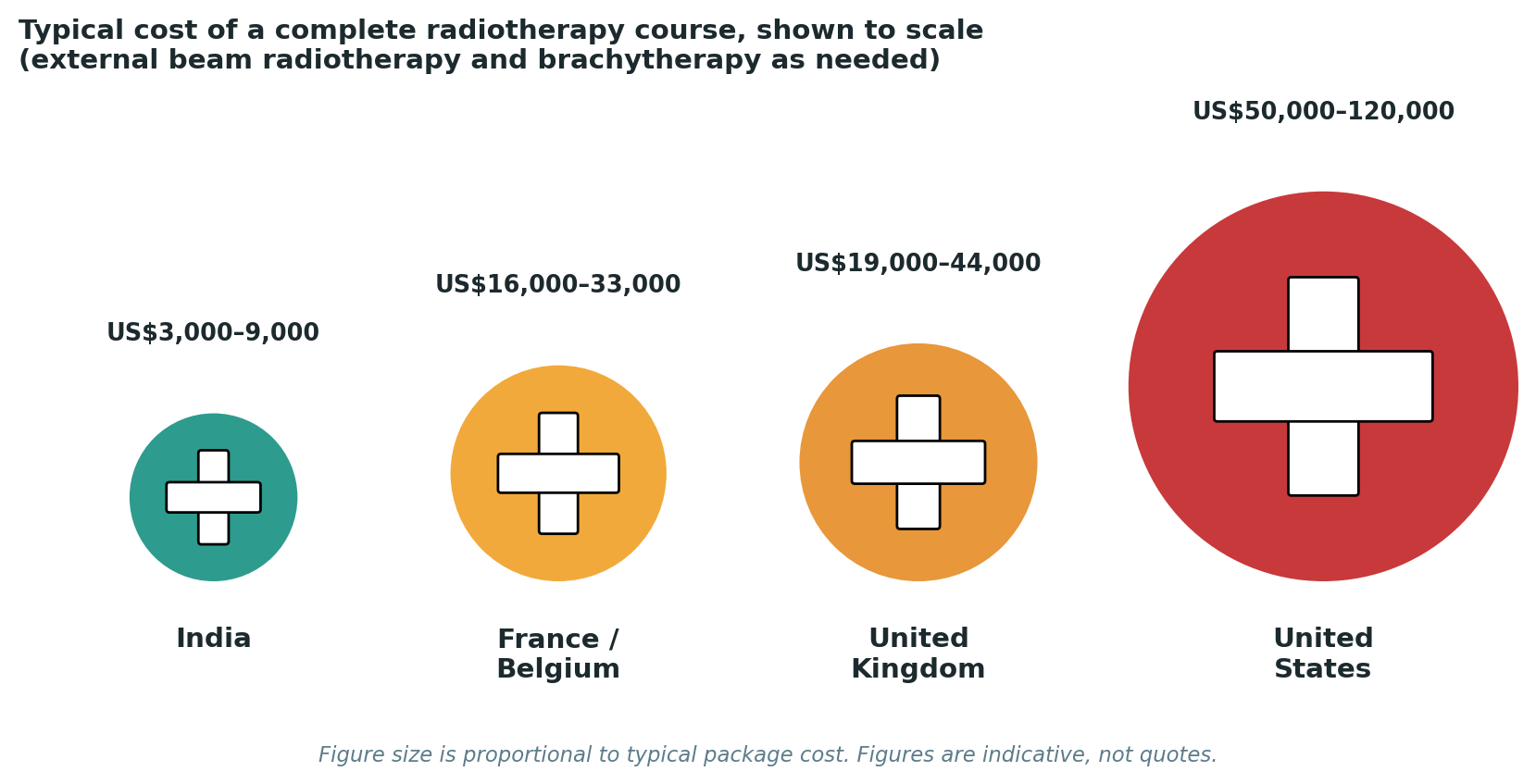
In India, a complete radiotherapy course typically costs US$3,000 to US$9,000, depending on the technique and number of sessions. In France or Belgium, private-sector costs typically run US$16,000 to US$33,000. In the UK's private sector, costs range roughly US$19,000 to US$44,000. In the US, the same course of treatment commonly costs US$50,000 to US$120,000. India's typical price sits at roughly a tenth of the uninsured US figure.
What the number on the quote does not always show
A written estimate should specify the exact technique (3D, IMRT, VMAT, or brachytherapy), the number of sessions included, and whether brachytherapy is part of the plan if your cancer type requires it. In 24 years of reviewing these quotes, I have found disputes almost never concern the headline figure — they concern what it silently left out. Get every line item in writing, and never pay the full balance before treatment begins.
What a Congolese Patient Should Weigh, Specifically
- Ask explicitly whether your cancer type requires brachytherapy alongside external beam radiotherapy, particularly for cervical cancer.
- Ask which technique is being used — 3D, IMRT, or VMAT — and why it suits your specific case.
- Send the actual pathology, staging, and imaging results, not just a description of your diagnosis, since radiotherapy planning depends on precise information.
- Confirm the total number of sessions planned, since radiotherapy courses often run daily over several weeks.
- Budget in US dollars, with margin. The Congolese franc has weakened considerably against the dollar (roughly CDF 2,300–2,350 per US$1 in mid-2026, and it moves); build in a 15–20% buffer above the initial estimate.
- Start the visa process early. DRC passport holders need a paper medical visa through the Embassy of India in Kinshasa (Avenue Batetela, Gombe), typically around two weeks once the hospital's invitation letter is ready; apply for an attendant visa at the same time.
- Confirm your yellow fever certificate is current — mandatory for entry into India, at least 10 days before travel.
- Plan for an extended stay — a full course of daily radiotherapy sessions typically spans several weeks.
Four signals that should make you pause
- No discussion of brachytherapy for a cancer type that typically requires it.
- No clear explanation of which specific technique is being used and why.
- No staging or pathology results behind the treatment plan.
- Pressure to pay the full balance before a written, complete treatment plan exists.
Why India Specifically for Radiotherapy and Modern Cancer Treatment for Congolese Patients?
India operates high-volume radiotherapy centres equipped with modern linear accelerators and dedicated brachytherapy units, offering the complete combination of techniques that international treatment guidelines call for — precisely the combination that remains genuinely scarce across much of Africa. Combined with English-language consultation throughout and hospital accreditation (NABH domestically, JCI internationally) that mirrors the standards used to evaluate hospitals in the US and Europe, India offers both modern technology and the affordability that make complete, guideline-based radiotherapy realistically achievable, for exactly the cancers most commonly diagnosed among Congolese patients.
A closing word
Radiotherapy's scarcity across much of Africa is a genuine, well-documented infrastructure gap, not a reflection of whether the treatment works or whether your specific cancer would benefit from it. What matters most is understanding your complete recommended treatment, including whether radiotherapy and brachytherapy together form part of it, and finding a realistic path to access all of it. If you are able to share your pathology and staging results, I am glad to give a direct, honest view on what complete treatment would involve, and what timeline to realistically plan around.
Sources
- 🌐 National Medical Commission of India — verify any surgeon's registration · nmc.org.in
- 🌐 National Accreditation Board for Hospitals & Healthcare Providers (NABH) · nabh.co
- 🌐 Embassy of India, Kinshasa — medical visa requirements · eoikinshasa.gov.in
- 🌐 "Advancing Access to Radiotherapy in Low-and Middle-Income Countries" · vcdnp.org/advancing-access-to-radiotherapy
- 🌐 IAEA, "Strengthening Cancer Care in Democratic Republic of the Congo" (2025) · iaea.org/newscenter/news
- 🌐 World Health Organization — yellow fever vaccination requirements · who.int/health-topics/yellow-fever
Frequently Asked Questions by Congolese Patients about Radiotherapy and Modern Cancer Treatment in India
Why is radiotherapy difficult to access in Africa?
The guide highlights the shortage of radiotherapy machines and specialised staff across the continent, with more than 20 African countries having no radiotherapy access.
How many radiotherapy machines are available across Africa?
The guide estimates approximately 400 machines serving a population of more than one billion people.
Why is brachytherapy important for cervical cancer?
For appropriate cervical cancer cases, the guide explains that curative treatment generally requires both external beam radiotherapy and brachytherapy.
What does brachytherapy do?
Brachytherapy places a radiation source directly inside or close to the tumour, allowing a concentrated dose to the treatment area.
What are IMRT and VMAT?
IMRT and VMAT are modern radiotherapy techniques that shape and deliver radiation more precisely around the tumour, helping spare nearby healthy structures.
How much does a complete radiotherapy course cost in India?
The guide gives an indicative range of US$3,000–9,000, depending on the technique and number of treatment sessions.
What should the treatment quotation specify?
It should clearly identify the exact technique, number of sessions and whether brachytherapy is included when required.
What medical documents should Congolese patients send?
Patients should send their actual pathology, staging and imaging results, because precise information is required for radiotherapy planning.
How long should patients expect to stay in India?
A complete radiotherapy course often involves daily sessions over several weeks, so patients should plan accommodation and travel for an extended stay.
What are the main warning signs?
Patients should be cautious if there is no discussion of brachytherapy where relevant, no explanation of the radiation technique, no pathology or staging behind the plan, or pressure to pay the full balance before receiving a complete written treatment plan.
Page Summary
This six-page guide explains the radiotherapy access gap across Africa, the importance of complete treatment for cancers such as cervical cancer and the advantages of modern radiation techniques. The page 2 graphic demonstrates the machine-density gap, page 3 explains the need for both external beam radiotherapy and brachytherapy for appropriate cervical cancer cases, and page 4 compares older and modern techniques and international treatment costs. Page 5 provides practical planning advice for Congolese patients, including treatment sessions, finances, visas and warning signs.
Citation Block
| Field | Information |
|---|---|
| Topic | Radiotherapy & Modern Cancer Treatment in India for Congolese Patients |
| Treatment | Radiotherapy / Modern Radiation Treatment |
| Patients | Congolese Patients |
| Key Specialist | Radiation Oncologist |
| First Assessment | Pathology, staging and imaging review |
| African Capacity | Around 400 radiotherapy machines for more than one billion people |
| Access Gap | More than 20 African countries have no radiotherapy access |
| US Machine Density | Approximately 1 machine per 150,000 people |
| Key Cancer | Cervical cancer |
| Cervical Treatment | External beam radiotherapy plus brachytherapy where clinically required |
| Brachytherapy Role | Delivers a precise radiation dose directly at the tumour |
| Modern Techniques | IMRT and VMAT |
| Technology Benefit | More precise dose shaping and greater healthy-tissue sparing |
| Indicative India Cost | US$3,000–9,000 |
| France/Belgium Cost | US$16,000–33,000 |
| UK Cost | US$19,000–44,000 |
| US Cost | US$50,000–120,000 |
| Cost Transparency | Technique, number of sessions and brachytherapy where required |
| Medical Records | Actual pathology, staging and imaging |
| Treatment Duration | Daily sessions commonly extending over several weeks |
| Financial Buffer | 15–20% |
| Visa | Paper medical visa and attendant visa |
| Entry Requirement | Current yellow-fever certificate |
| Warning Signs | No brachytherapy discussion where relevant, unclear technique, missing staging/pathology or early full-payment pressure |
| Key Decision | Confirm the complete, clinically appropriate radiotherapy plan before travelling |


Our Mission Statement
Our mission is to place patients at the centre of every healthcare decision by providing trustworthy, evidence-based, and unbiased medical information. We believe that informed patients make better decisions. Backed by personalised guidance from our experienced advisory team, we help patients understand their treatment options, compare them objectively, and confidently choose the path that best suits their medical needs and personal circumstances.
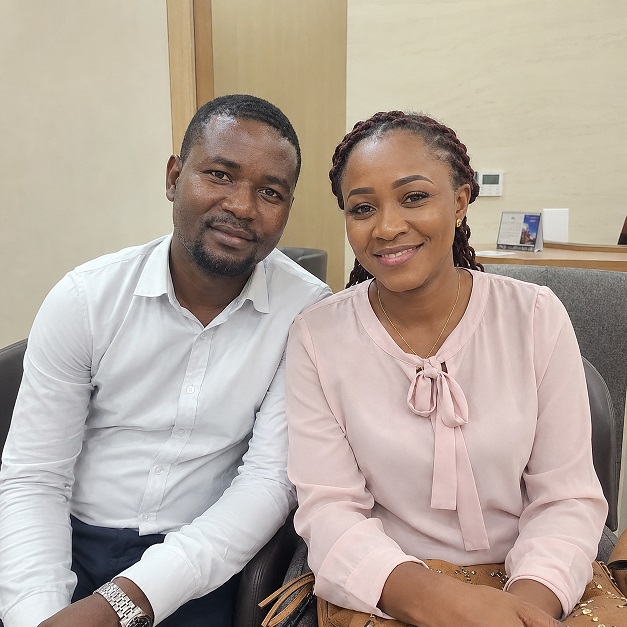
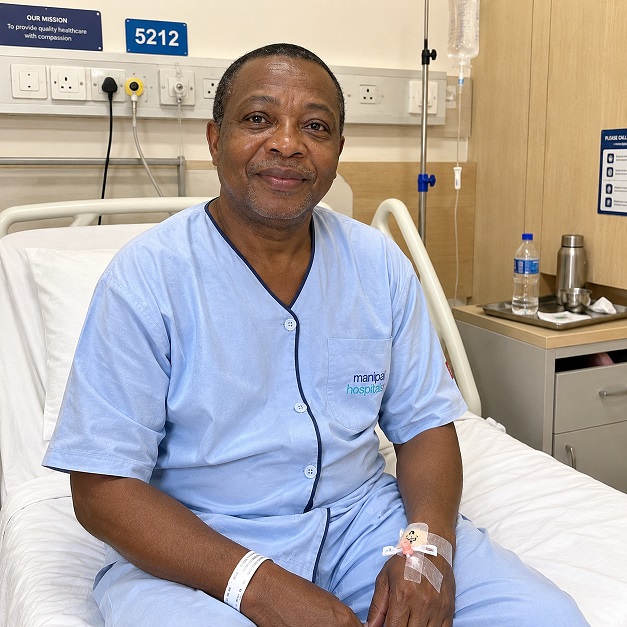
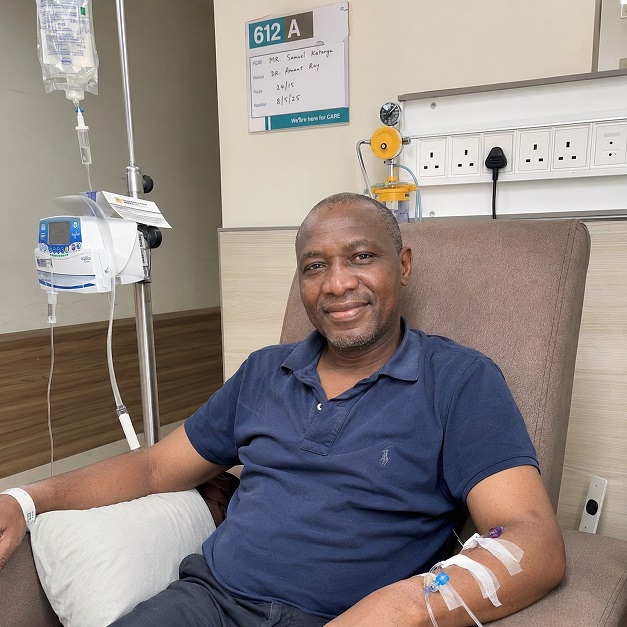
Patient Testimonials from Congo
Ready to Take the First Step?
Share your medical reports with our healthcare managers today and receive a FREE CONSULTATION, a personalized treatment plan and complete support from your arrival to your recovery.
Get Your Free ConsultationAreas We Serve
At Indian Health Guru Consultants, we proudly assist patients from Congo and neighboring countries across Central, East and Southern Africa who travel to India for advanced medical treatment. Our experienced international patient team provides end-to-end support, including medical opinions, hospital selection, Medical Visa assistance, travel planning, accommodation, interpreter services and post-treatment follow-up.
We regularly serve patients from:
- Gabon
- Cameroon
- Angola
- Uganda
- Rwanda
- Burundi
- Tanzania
- Zambia
- Djibouti
- Comoros
- Madagascar
- Seychelles
- South Sudan
- Central African Republic
- Republic of the Congo
- Democratic Republic of the Congo
No matter where you are located in the region, Indian Health Guru Consultants is committed to making your medical journey to India safe, affordable, seamless and completely patient-focused.
From Congo to India: Your Complete Patient Guide
- Brain Tumor Surgery in India for Congolese Patients
- Best Brain Tumour Surgeons & Hospitals in India for Congo Patients
- Knee Replacement in India for Congolese Patients
- Best Knee Replacement Surgeons & Hospitals in India for Congolese Patients
- Spine Surgery in India for Congolese Patients
- Best Spine Surgeons & Hospitals in India for Congolese Patients
- Liver Transplant in India for Congolese Patients: Cost & Guide
- Best Liver Transplant Centres and Hospitals in India for Congolese Patients
- Cardiac Surgery in India for Congolese Patients: Cost & Guide
- Best Cardiac Surgeons & Hospitals in India for Congolese Patients
- Bone Marrow Transplant in India for Congolese Patients: Cost & Guide
- Best Bone Marrow Transplant Centres and Hospitals in India for Congolese Patients
- Prostate Cancer Treatment in India for Congolese Patients: Cost & Guide
- Best Prostate Cancer Centres and Hospitals in India for Congolese Patients
- HIPEC in India for Congolese Patients: Cost & Treatment Guide
- Best HIPEC Centres and Hospitals in India for Congolese Patients
- Kidney Transplant in India for Congolese Patients: Cost & Guide
- Best Kidney Transplant Centres and Hospitals in India for Congolese Patients