

Parkinson's Treatment and DBS Surgery in India for Congolese Patients: What It Costs, and How to Decide Well
A practical guide for Congolese patients and families covering DBS eligibility, treatment costs in India, programming requirements, travel and long-term follow-up.
Parkinson's disease rarely announces itself all at once — it is usually years of gradually worsening tremor, stiffness, and slowness, met with medication that works well at first and less well over time. In 24 years of advising patients through this exact progression, I have found that most Congolese families reach the point where medication alone is no longer enough long before anyone mentions that another option exists. This guide sets out plainly what deep brain stimulation is, what it costs in India against the Western alternatives some families consider, and the honest reality of accessing it from the DRC. For many families, simply knowing this treatment exists is the first real step, since it rarely comes up in routine local care.
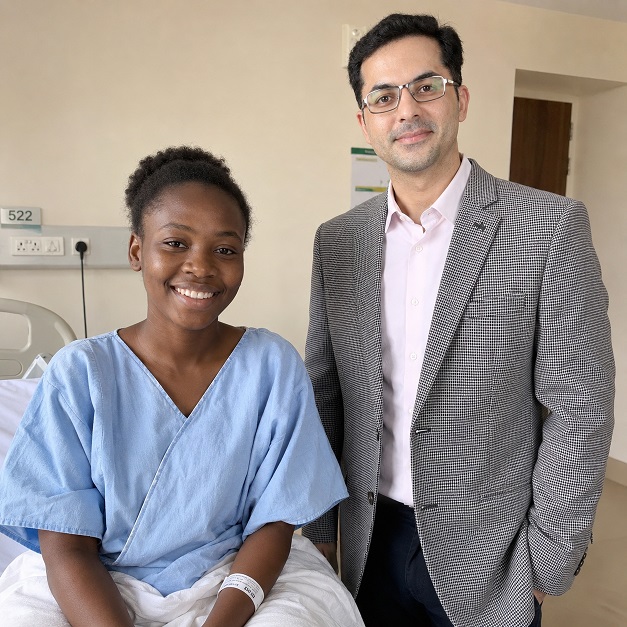
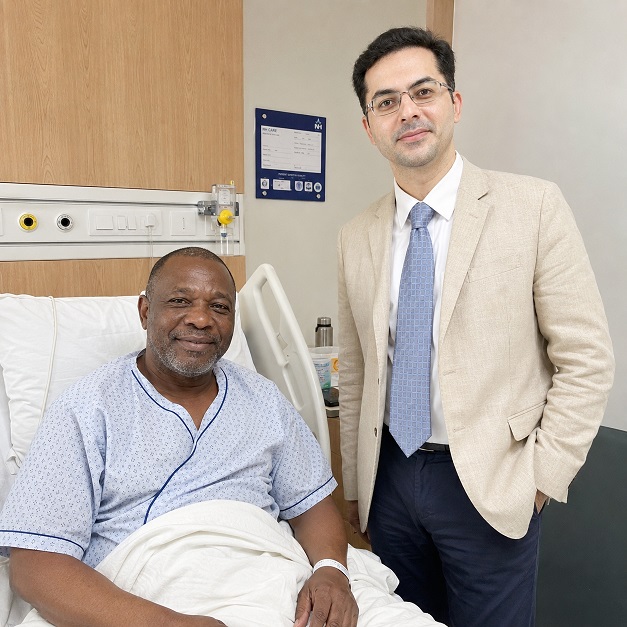
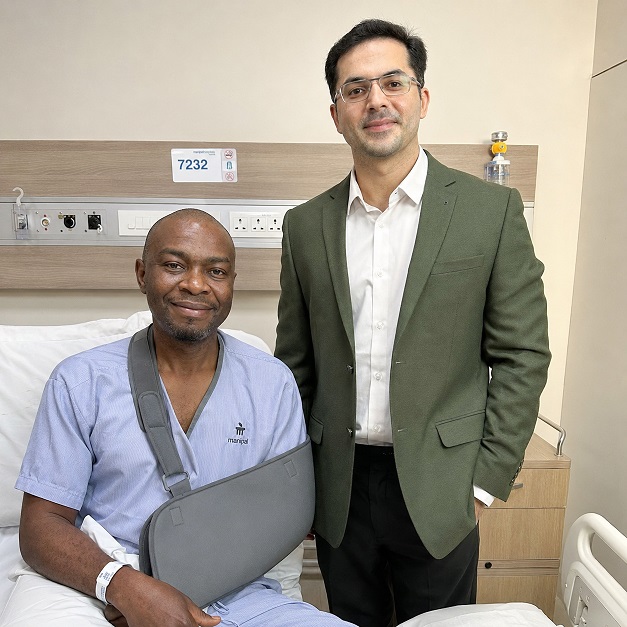
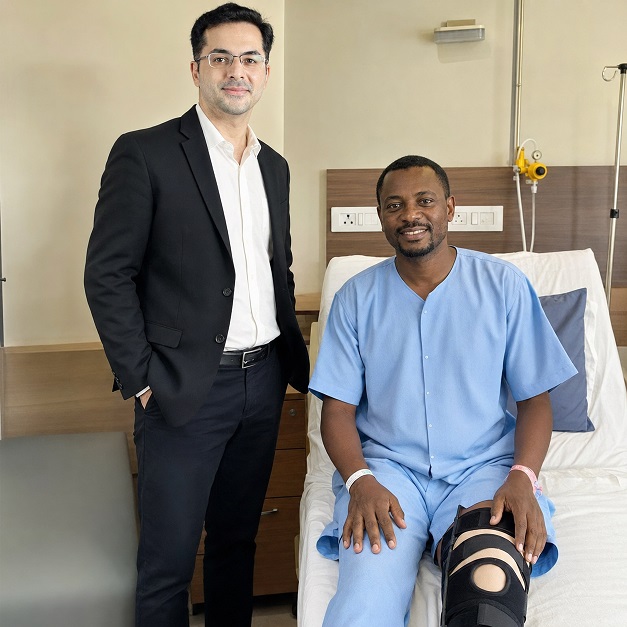
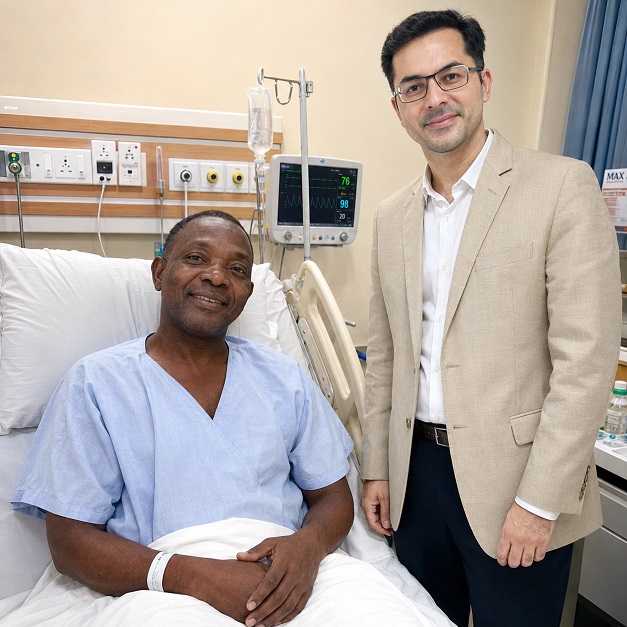
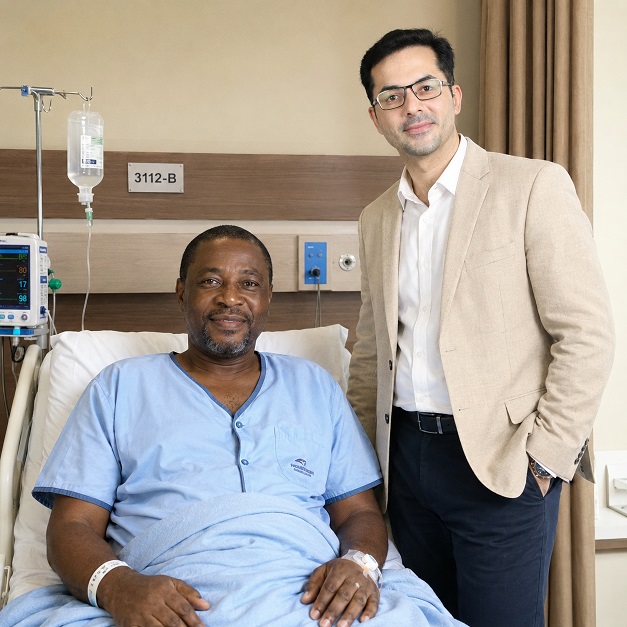
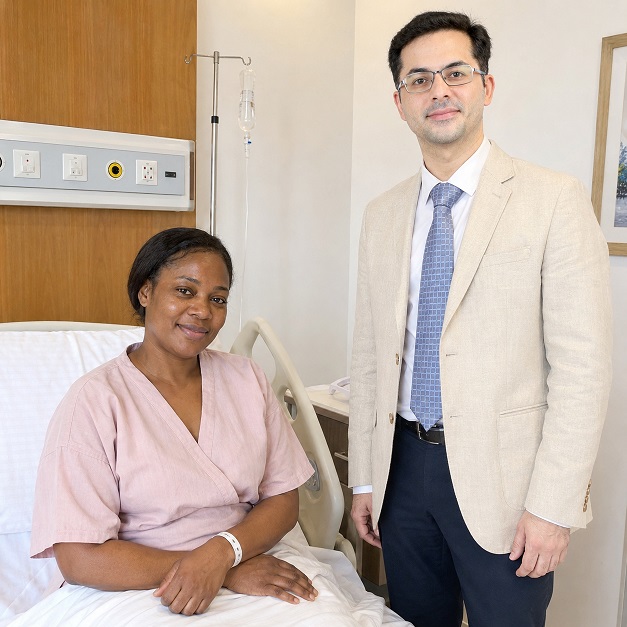
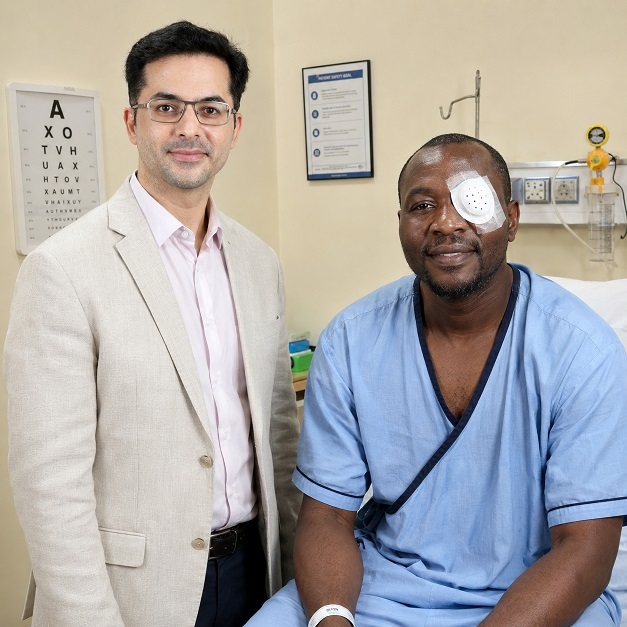
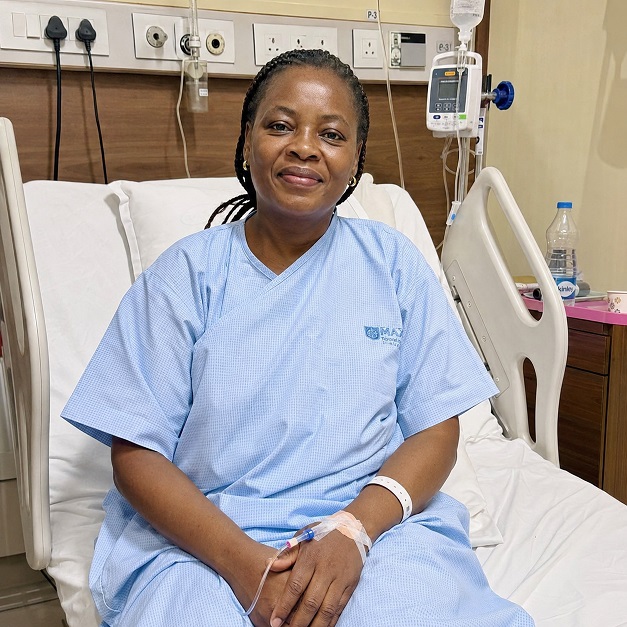
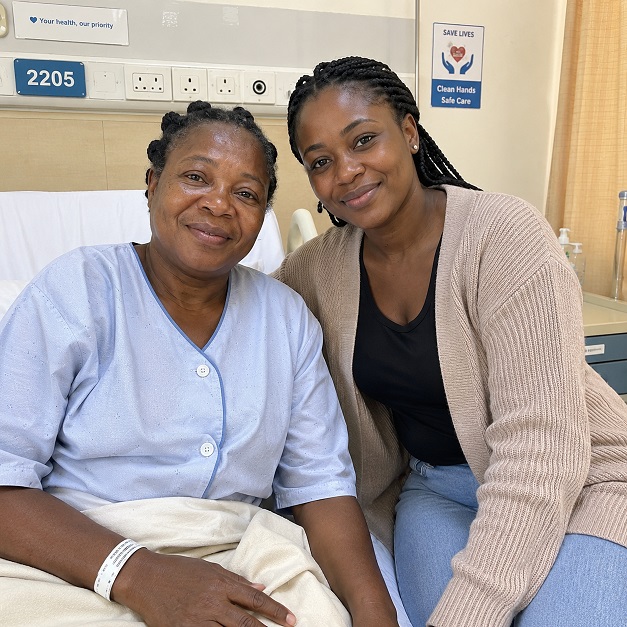
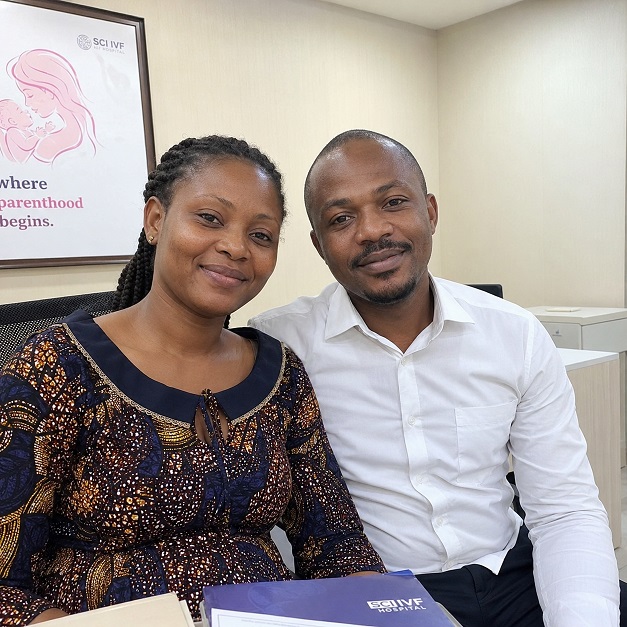
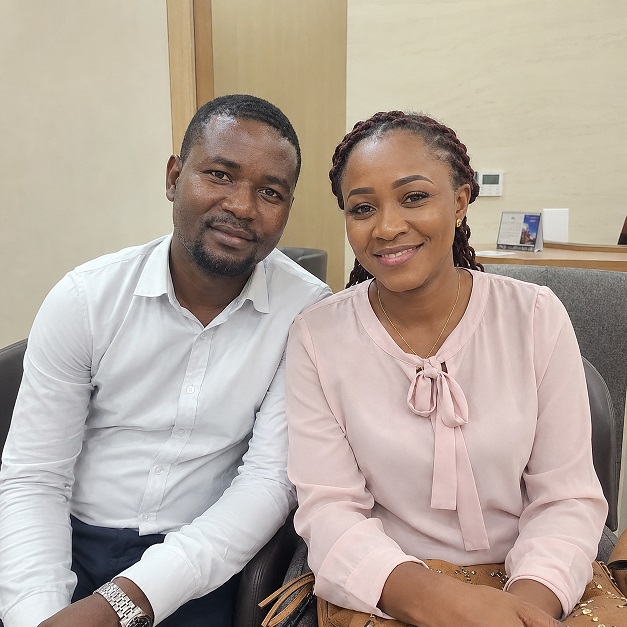
Healing Journeys of Congolese Patients
Key Takeaways
- The guide explains that deep brain stimulation (DBS) is not a cure for Parkinson’s disease, but it can significantly reduce motor symptoms such as tremor, stiffness and slowness in carefully selected patients whose medication is no longer providing adequate control. DBS involves implanting electrodes into specific brain regions connected to a pulse generator placed under the skin near the collarbone.
- The page 2 graphic highlights the major DBS access gap in Africa: only 5 of 54 African Union member states have documented DBS programmes, all in North or Southern Africa, with none in Central Africa. The guide explains that DBS requires a specialised ecosystem involving stereotactic neurosurgery, intraoperative neurophysiological monitoring and ongoing programming expertise.
- The guide stresses that DBS is not appropriate for every Parkinson’s patient. Candidates generally have motor symptoms that still respond to levodopa but experience significant fluctuations or dyskinesias. A levodopa response test and neuropsychological assessment are important before surgery is considered, while significant cognitive decline, psychiatric instability or certain forms of atypical parkinsonism may make DBS unsuitable.
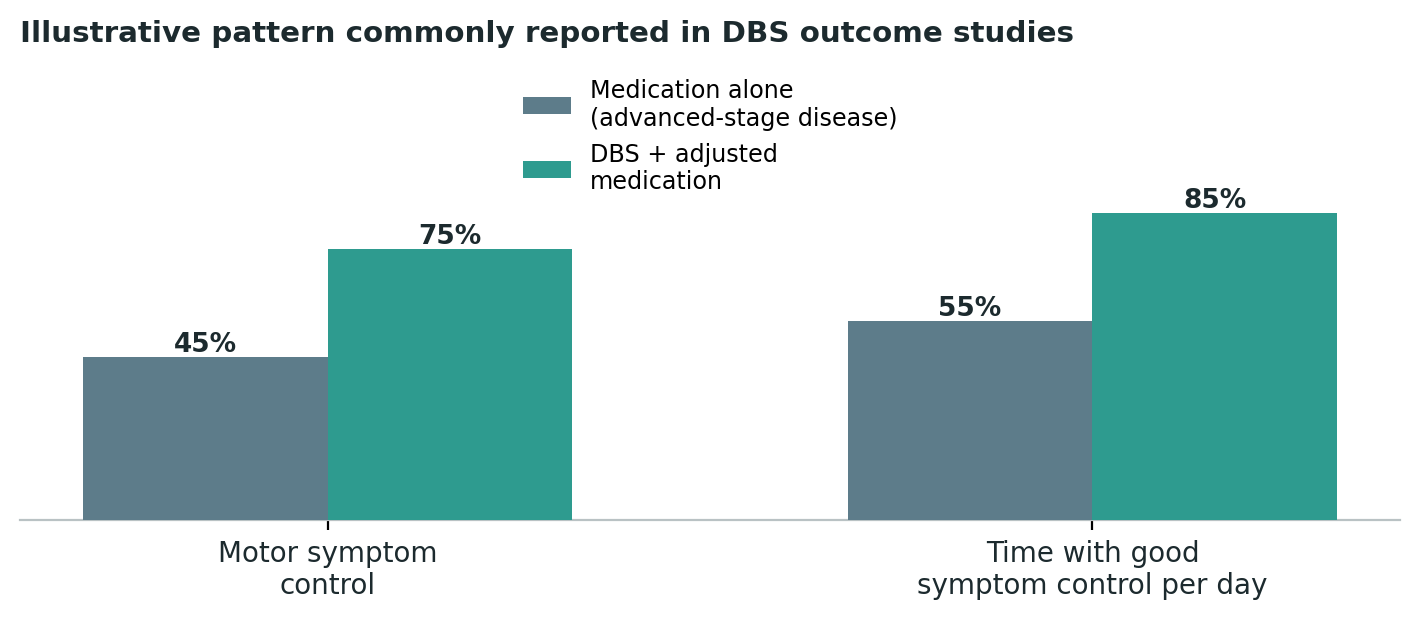
- The page 2 outcome chart presents an illustrative pattern from DBS outcome studies: motor symptom control is shown at 45% with medication alone versus 75% with DBS plus adjusted medication, while time with good symptom control is shown at 55% versus 85%. The guide clearly notes that these are commonly reported patterns for well-selected advanced-stage patients and that individual results vary.
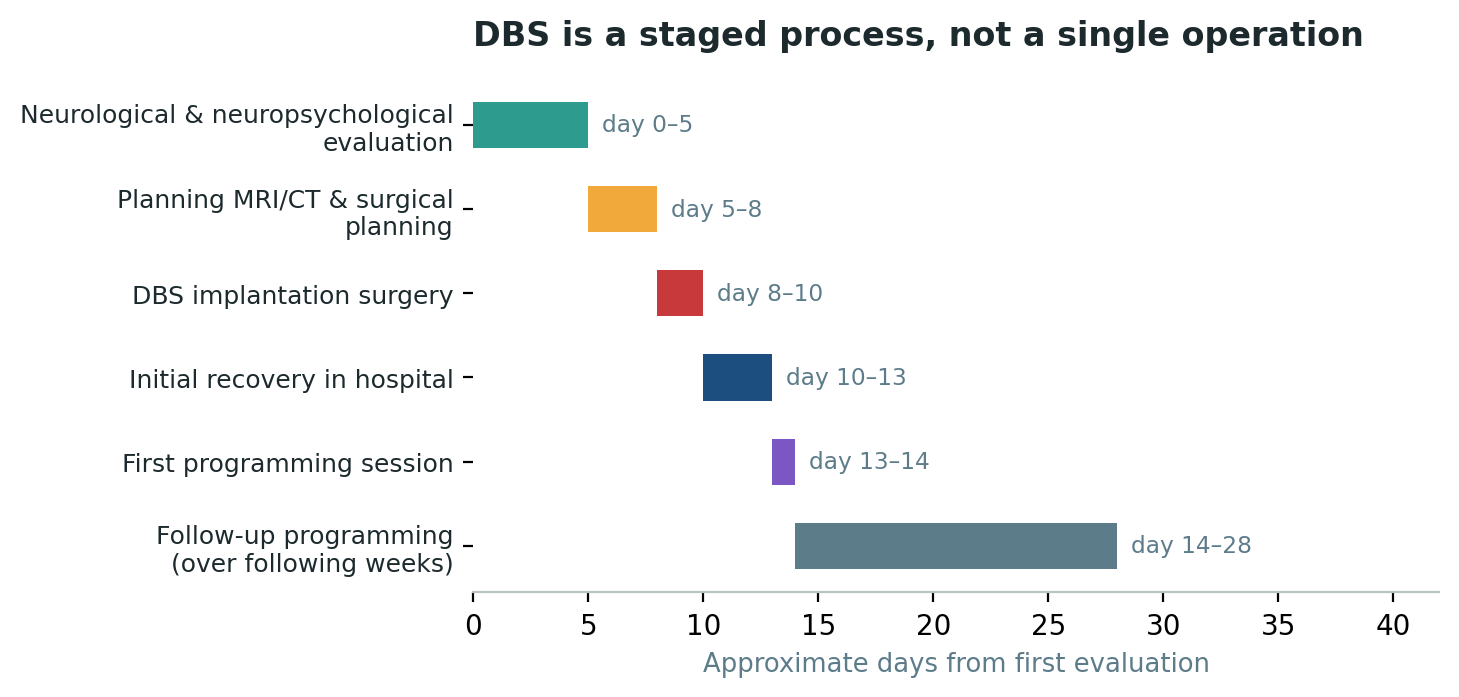
- The page 3 timeline shows why DBS requires an extended stay rather than a single surgical visit. Evaluation and neuropsychological assessment occur first, followed by MRI/CT and surgical planning, implantation, initial recovery and programming. The illustrated pathway extends to approximately 28 days, with follow-up programming continuing over subsequent weeks. The page 3 cost chart gives an indicative India range of US$18,000–30,000, compared with US$28,000–42,000 in France/Belgium, US$32,000–77,000 in the UK private sector and US$60,000–90,000 in the US.
- For Congolese patients, the guide recommends confirming genuine DBS candidacy before travelling, sending medication and symptom history rather than relying on imaging alone, clarifying whether the device is rechargeable or non-rechargeable, confirming the number of included programming sessions and budgeting with a 15–20% financial buffer. It also recommends starting the medical and attendant visa process early, maintaining current yellow-fever documentation and arranging long-term programming support in the DRC or planning future visits to India.
Quick Facts
- Author
- Dr. Dheeraj Bojwani
- Experience
- 24+ Years
- Treatment
- Parkinson’s Disease Treatment and Deep Brain Stimulation
- Patients
- Congolese Patients
- Key Specialists
- Movement Disorder Neurologist and Functional Neurosurgeon
- Treatment Purpose
- Control disabling motor symptoms in selected advanced Parkinson’s patients
- DBS Status
- Does not cure Parkinson’s or stop disease progression
- African Access
- 5 of 54 African Union states have documented DBS programmes
- Central Africa
- No documented DBS programme
- Candidate Profile
- Levodopa-responsive motor fluctuations or dyskinesias
- Assessment
- Levodopa response test and neuropsychological evaluation
- India Cost
- US$18,000–30,000
- Device Check
- Rechargeable versus non-rechargeable
- Programming
- Multiple sessions required after implantation
- Typical Stay
- Several weeks rather than a short surgical visit
- Financial Buffer
- 15–20% above initial estimate
- Visa
- Paper medical visa and attendant visa
- Entry Requirement
- Current yellow-fever certificate
- Follow-Up
- Long-term programming support in the DRC or planned return visits to India
- Key Warning
- Do not proceed with DBS without formal candidacy assessment
- Decision Principle
- Confirm suitability first, then choose a high-volume DBS team capable of surgery, programming and long-term follow-up.
In Brief
For Congolese patients with advanced Parkinson’s disease, the guide recommends thorough candidacy assessment before considering DBS, including levodopa response and neuropsychological evaluation. Because DBS requires surgery followed by repeated programming and long-term device management, patients should confirm the device type, programming plan, total cost, length of stay and arrangements for future programming before travelling to India.
What Deep Brain Stimulation Actually Is
Deep brain stimulation, or DBS, involves implanting thin electrodes into specific, carefully targeted areas deep inside the brain, connected to a small pulse generator placed under the skin near the collarbone, similar in concept to a pacemaker. The device delivers continuous, mild electrical stimulation that helps regulate the abnormal brain activity behind Parkinson's motor symptoms — tremor, stiffness, and slowness — often significantly reducing them in patients who no longer respond well enough to medication alone. DBS does not cure Parkinson's disease and does not stop it progressing, but for the right patient, it can restore meaningful function and independence for years.
The Reality of DBS Access in Africa
This is where the picture becomes stark for a Congolese patient. Published research on DBS access across the African continent found established programmes in only three countries — Egypt, Morocco, and South Africa — with occasional availability in Algeria and Tunisia. Outside these five, DBS is not currently offered anywhere on the continent, including nowhere in Central Africa.
This gap exists even though Parkinson's disease itself is not rare in the DRC or the wider region — the barrier is not the disease's prevalence, but the extraordinarily specialised infrastructure DBS requires, which very few health systems in Africa have been able to build.

The one fact worth remembering
This is not a reflection of any individual DRC clinician's skill — DBS requires an entire specialised ecosystem: stereotactic neurosurgery, intraoperative neurophysiological monitoring, and ongoing programming expertise, none of which currently exists as a coordinated service anywhere in Central Africa. A Congolese patient whose neurologist suggests DBS is, by definition, being pointed toward treatment abroad.
Who DBS Actually Helps
DBS is not right for every Parkinson's patient. It is generally considered for people whose motor symptoms still respond to levodopa medication but who experience significant fluctuations — good periods and bad periods within the same day — or dyskinesias, the involuntary movements that can accompany long-term medication use. A thorough evaluation, including a levodopa response test and neuropsychological assessment, determines candidacy before surgery is ever discussed as a real option. Patients with certain forms of atypical parkinsonism, significant cognitive decline, or psychiatric instability are generally not good candidates, regardless of how disabling their motor symptoms have become.
Why DBS Takes Weeks, Not a Single Day
Unlike a single operation with a defined recovery period, DBS unfolds in stages: evaluation, surgical planning, implantation, and then a series of programming visits over the following weeks to fine-tune the stimulation settings for each patient's specific symptoms.
What DBS Costs: DRC Reality vs India vs the West
Cost includes the device itself, the surgery, and initial programming, and this represents a real share of the total price given the specialised hardware involved.
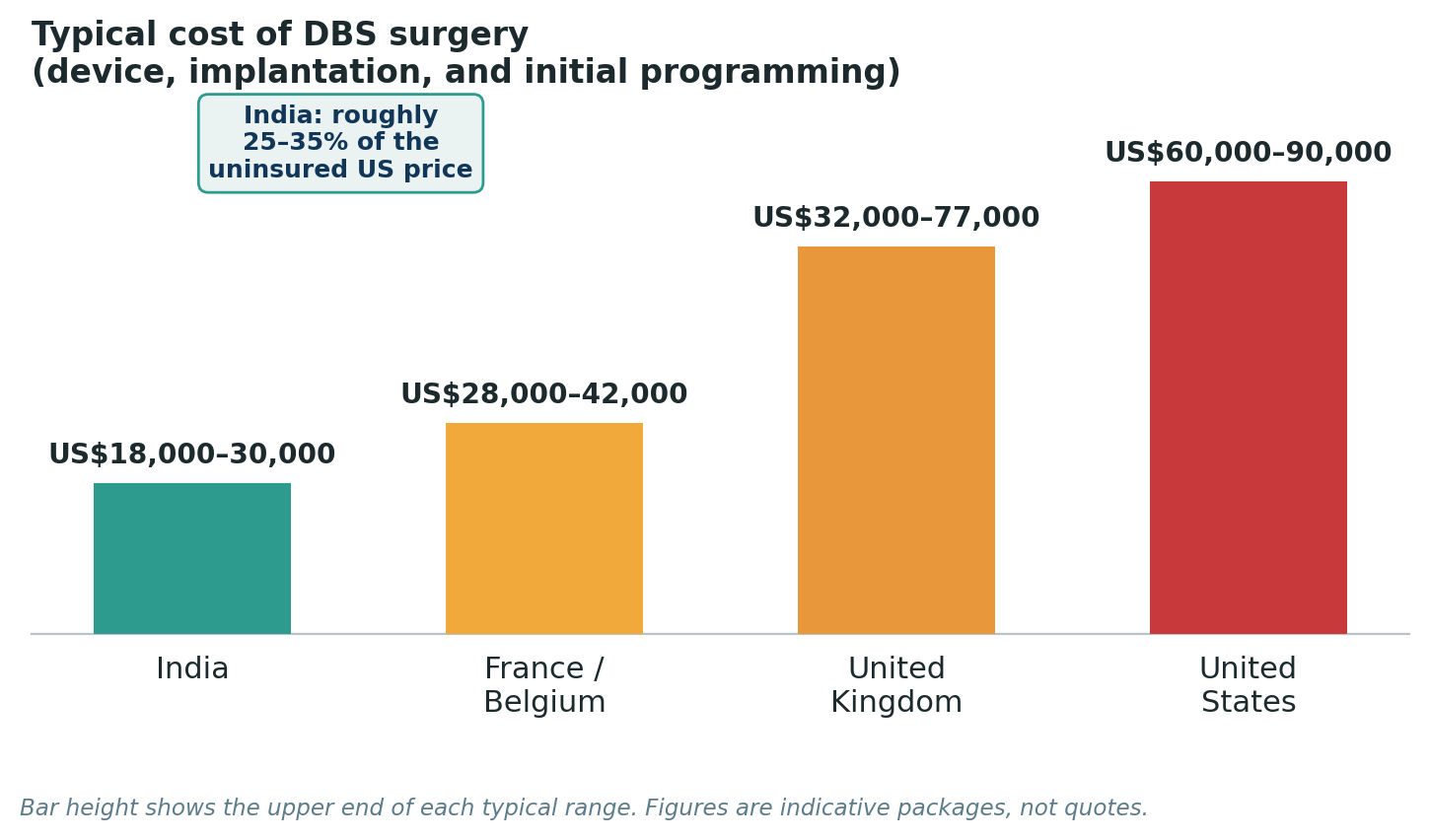
In India, DBS surgery typically costs US$18,000 to US$30,000, depending on the specific device chosen (rechargeable devices generally cost more than non-rechargeable ones). In France or Belgium, private-sector costs typically run US$28,000 to US$42,000. In the UK's private sector, costs range roughly US$32,000 to US$77,000. In the US, the same procedure commonly costs US$60,000 to US$90,000. India's typical price sits at roughly a quarter to a third of the uninsured US figure.
What the number on the quote does not always show
A written estimate should specify exactly which device is included, whether it is rechargeable or non-rechargeable (rechargeable devices need fewer replacement surgeries over a patient's lifetime but cost more upfront), and how many programming sessions are included in the price. In 24 years of reviewing these quotes, I have found disputes almost never concern the headline figure — they concern what it silently left out. Get every line item in writing, and never pay the full balance before surgery.
What a Congolese Patient Should Weigh, Specifically
- Confirm you are a genuine DBS candidate first — a proper evaluation, including a levodopa response test, should happen before surgery is discussed as a real plan.
- Send your medication and symptom history, not just a scan, since candidacy depends heavily on how you respond to levodopa, not imaging alone.
- Ask how many programming visits are included, and what happens if more are needed after you return home.
- Budget in US dollars, with margin. The Congolese franc has weakened considerably against the dollar (roughly CDF 2,300–2,350 per US$1 in mid-2026, and it moves); build in a 15–20% buffer above the initial estimate.
- Start the visa process early. DRC passport holders need a paper medical visa through the Embassy of India in Kinshasa (Avenue Batetela, Gombe), typically around two weeks once the hospital's invitation letter is ready; apply for an attendant visa at the same time.
- Confirm your yellow fever certificate is current — mandatory for entry into India, at least 10 days before travel.
- Plan for an extended stay, not a quick visit — the staged nature of DBS means several weeks in India is typical, not days.
- Arrange long-term programming support back home — identify, before you travel, whether any DRC or regional facility can adjust your device settings periodically, or whether return visits to India will be needed.
Four signals that should make you pause
- DBS proposed without a proper candidacy evaluation, including a levodopa response test.
- No clear explanation of which device is included and why.
- No defined programming schedule, either during your stay or for long-term follow-up.
- Pressure to pay the full balance before a written surgical plan exists.
Why India Specifically for Parkinson's Treatment and DBS Surgery for Congolese Patients?
India operates some of the world's highest-volume DBS centres, with movement-disorder neurologists and functional neurosurgeons working together to assess candidacy honestly rather than defaulting every advanced Parkinson's patient toward surgery. Combined with English-language consultation throughout and hospital accreditation (NABH domestically, JCI internationally) that mirrors the standards used to evaluate hospitals in the US and Europe, India offers a combination of genuine expertise and lower cost that stands in stark contrast to the complete absence of this technology anywhere in Central Africa.
A closing word
Living with advanced Parkinson's disease is exhausting in ways that are hard to convey to anyone who has not experienced the daily unpredictability of "on" and "off" periods. DBS will not be right for every patient, but for the right candidate, it can offer years of restored function. What matters most is an honest, thorough evaluation before any decision is made. If you are able to share your medication history and recent evaluations, I am glad to give a direct, honest view on whether DBS is a path worth exploring for your specific situation.
Sources
- 🌐 National Medical Commission of India — verify any surgeon's registration · nmc.org.in
- 🌐 National Accreditation Board for Hospitals & Healthcare Providers (NABH) · nabh.co
- 🌐 Embassy of India, Kinshasa — medical visa requirements · eoikinshasa.gov.in
- 🌐 "Deep brain stimulation for movement disorders treatment in Africa," Parkinsonism & Related Disorders (2020) · sciencedirect.com/science/article/abs/pii/S0303846723005292
- 🌐 "A systematic review of health disparities research in DBS surgery for Parkinson's disease" · pmc.ncbi.nlm.nih.gov/articles/PMC10641459
- 🌐 World Health Organization — yellow fever vaccination requirements · who.int/health-topics/yellow-fever
Frequently Asked Questions by Congolese Patients about Parkinson's Treatment and DBS Surgery in India
What is deep brain stimulation?
DBS involves implanting thin electrodes into specific areas of the brain, connected to a pulse generator under the skin near the collarbone. The device delivers continuous electrical stimulation to help regulate abnormal brain activity.
Does DBS cure Parkinson’s disease?
No. The guide explains that DBS does not cure Parkinson’s or stop its progression, but it can provide meaningful improvement in motor symptoms for appropriately selected patients.
Who may be a candidate for DBS?
DBS is generally considered for patients whose symptoms still respond to levodopa but who experience significant motor fluctuations or dyskinesias. Formal evaluation is required before surgery.
What tests are needed before DBS?
The guide recommends a levodopa response test and neuropsychological assessment, along with the broader neurological and surgical evaluation needed to determine suitability.
Is DBS available in the DRC?
The guide states that there is no documented DBS programme anywhere in Central Africa, meaning Congolese patients requiring DBS need to seek treatment abroad.
How much does DBS cost in India?
The guide gives an indicative range of US$18,000–30,000, including the device, implantation and initial programming. The exact amount depends partly on the device selected.
What is the difference between rechargeable and non-rechargeable DBS devices?
The guide explains that rechargeable devices generally cost more initially but require fewer replacement surgeries over a patient's lifetime, while non-rechargeable devices have a lower upfront cost.
How long should Congolese patients stay in India?
DBS is a staged process spanning several weeks, including evaluation, surgical planning, implantation, recovery and programming. The illustrated page 3 pathway extends to approximately 28 days.
What should I check in the DBS quotation?
Confirm which device is included, whether it is rechargeable, how many programming sessions are covered and what happens if additional programming is required after returning to the DRC.
How should DBS programming be managed after returning home?
Before travelling, identify whether a DRC or regional facility can adjust the device settings periodically. If local programming is unavailable, the guide recommends planning for future return visits to India.
Page Summary
This guide helps Congolese patients understand Parkinson’s treatment and DBS surgery in India, particularly why DBS is considered only for carefully selected patients and why treatment involves weeks of evaluation, surgery and programming rather than a single operation. The page 2 graphic highlights the absence of documented DBS programmes in Central Africa, while the page 3 timeline and cost chart illustrate the staged treatment pathway and India's indicative US$18,000–30,000 cost. Device selection, programming support and long-term follow-up are central to the decision.
Citation Block
| Field | Information |
|---|---|
| Topic | Parkinson’s Treatment and DBS Surgery in India for Congolese Patients |
| Treatment | Deep Brain Stimulation |
| Patients | Congolese Patients |
| Key Specialists | Movement Disorder Neurologist / Functional Neurosurgeon |
| Purpose | Motor symptom control in selected advanced Parkinson’s disease |
| Disease Effect | DBS does not cure Parkinson’s or stop progression |
| African Access | 5 of 54 African Union states have documented DBS programmes |
| Central Africa | No documented DBS programme |
| Candidate Profile | Levodopa-responsive fluctuations or dyskinesias |
| Candidacy Assessment | Levodopa response test and neuropsychological evaluation |
| India Cost | US$18,000–30,000 |
| Device Selection | Rechargeable versus non-rechargeable |
| Treatment Process | Evaluation, planning, implantation, recovery and programming |
| Programming | Multiple sessions over subsequent weeks |
| Stay | Several weeks rather than a short visit |
| Cost Transparency | Device, implantation, initial programming and additional programming |
| Financial Planning | 15–20% buffer above initial estimate |
| Visa | Medical visa and attendant visa |
| Entry Requirement | Yellow-fever certificate |
| Follow-Up | Long-term programming support in the DRC or return visits to India |
| Warning Signs | No candidacy evaluation, unclear device, undefined programming schedule or advance-payment pressure |
| Key Decision | Confirm candidacy and long-term programming access before choosing surgery |


Our Mission Statement
Our mission is to place patients at the centre of every healthcare decision by providing trustworthy, evidence-based, and unbiased medical information. We believe that informed patients make better decisions. Backed by personalised guidance from our experienced advisory team, we help patients understand their treatment options, compare them objectively, and confidently choose the path that best suits their medical needs and personal circumstances.
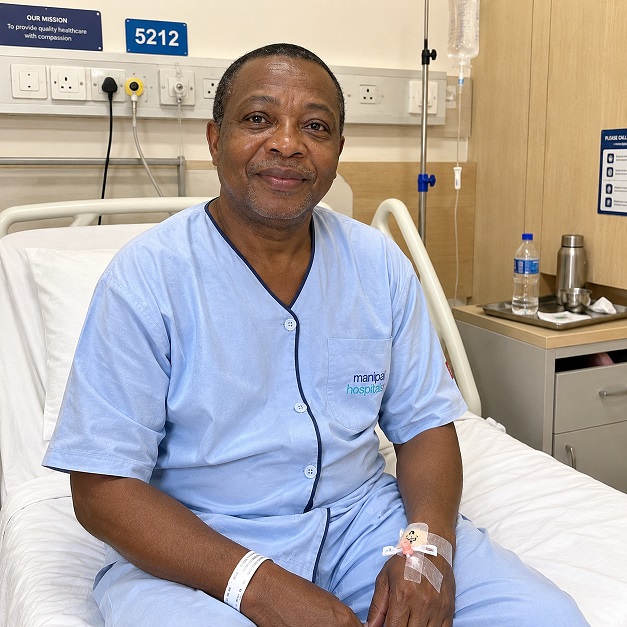
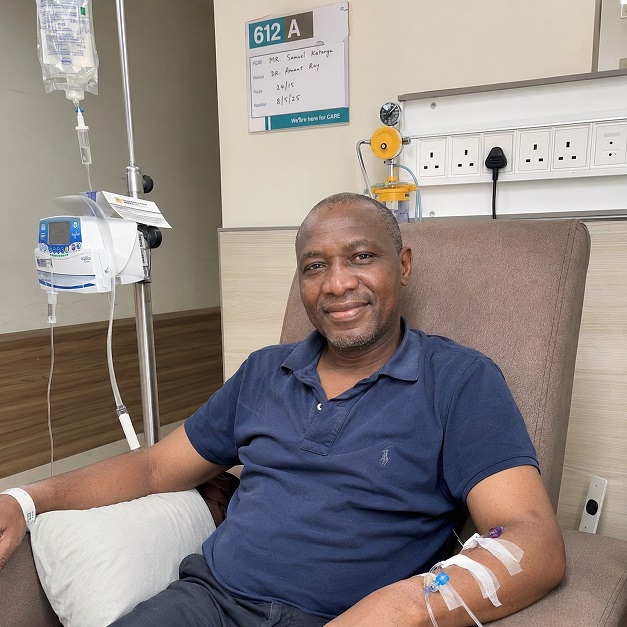
Patient Testimonials from Congo
Ready to Take the First Step?
Share your medical reports with our healthcare managers today and receive a FREE CONSULTATION, a personalized treatment plan and complete support from your arrival to your recovery.
Get Your Free ConsultationAreas We Serve
At Indian Health Guru Consultants, we proudly assist patients from Congo and neighboring countries across Central, East and Southern Africa who travel to India for advanced medical treatment. Our experienced international patient team provides end-to-end support, including medical opinions, hospital selection, Medical Visa assistance, travel planning, accommodation, interpreter services and post-treatment follow-up.
We regularly serve patients from:
- Gabon
- Cameroon
- Angola
- Uganda
- Rwanda
- Burundi
- Tanzania
- Zambia
- Djibouti
- Comoros
- Madagascar
- Seychelles
- South Sudan
- Central African Republic
- Republic of the Congo
- Democratic Republic of the Congo
No matter where you are located in the region, Indian Health Guru Consultants is committed to making your medical journey to India safe, affordable, seamless and completely patient-focused.
From Congo to India: Your Complete Patient Guide
- Brain Tumor Surgery in India for Congolese Patients
- Best Brain Tumour Surgeons & Hospitals in India for Congo Patients
- Knee Replacement in India for Congolese Patients
- Best Knee Replacement Surgeons & Hospitals in India for Congolese Patients
- Spine Surgery in India for Congolese Patients
- Best Spine Surgeons & Hospitals in India for Congolese Patients
- Liver Transplant in India for Congolese Patients: Cost & Guide
- Best Liver Transplant Centres and Hospitals in India for Congolese Patients
- Cardiac Surgery in India for Congolese Patients: Cost & Guide
- Best Cardiac Surgeons & Hospitals in India for Congolese Patients
- Bone Marrow Transplant in India for Congolese Patients: Cost & Guide
- Best Bone Marrow Transplant Centres and Hospitals in India for Congolese Patients
- Prostate Cancer Treatment in India for Congolese Patients: Cost & Guide
- Best Prostate Cancer Centres and Hospitals in India for Congolese Patients
- HIPEC in India for Congolese Patients: Cost & Treatment Guide
- Best HIPEC Centres and Hospitals in India for Congolese Patients
- Kidney Transplant in India for Congolese Patients: Cost & Guide
- Best Kidney Transplant Centres and Hospitals in India for Congolese Patients