

Paediatric Orthopaedic Surgery in India for Congolese Patients: What It Costs, and How to Decide Well
A practical guide for Congolese parents covering clubfoot, hip dysplasia and other paediatric orthopaedic conditions, with specialist selection, costs and follow-up planning.
Ababy born with a twisted foot, or a toddler whose hip does not sit quite right, presents parents with a condition that is, in principle, very treatable — if it reaches the right hands early. In 24 years of advising families on paediatric orthopaedic conditions, I have learned that "treatable" and "actually treated well" are not the same thing, and a recent study from the DRC itself shows exactly why. This guide sets out plainly what that research found, what paediatric orthopaedic care in India costs against the Western alternatives some families consider, and what to weigh before deciding. The good news, and it is genuine good news, is that most of these conditions respond very well to correct treatment, wherever it happens.
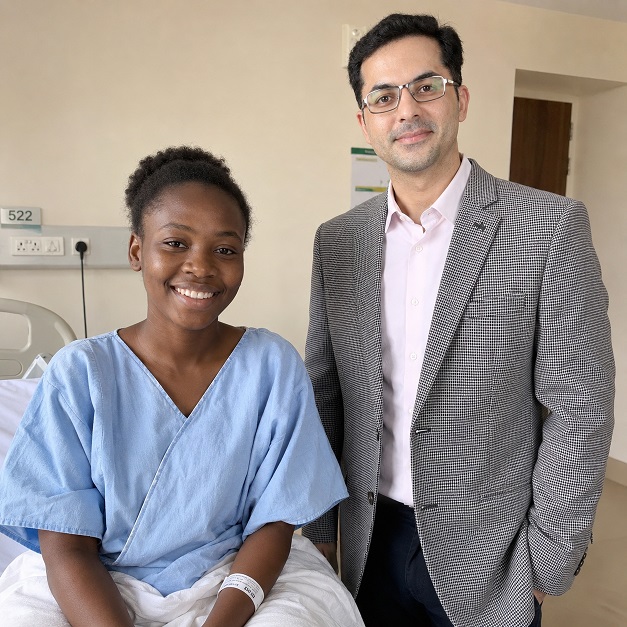
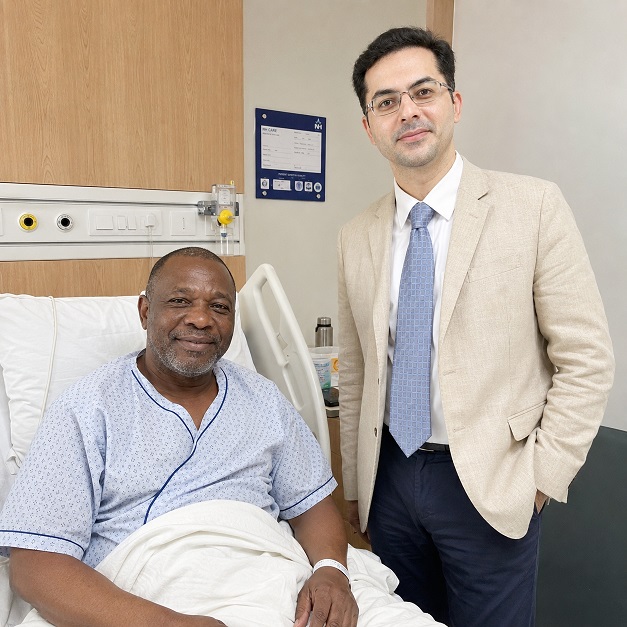
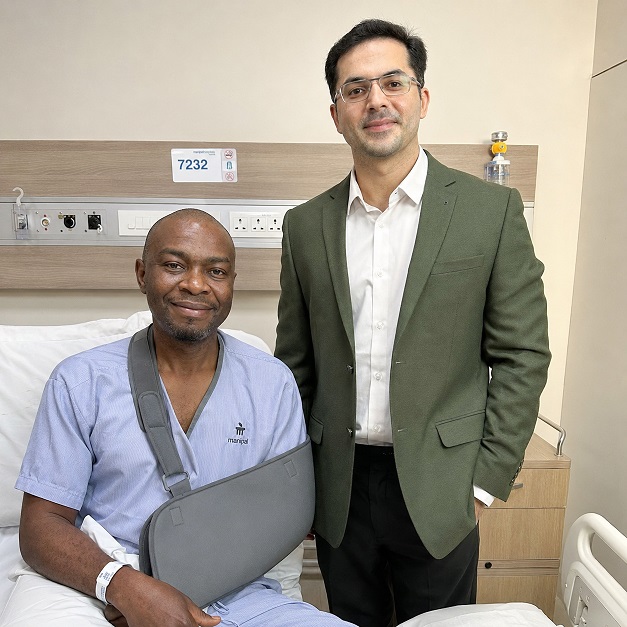
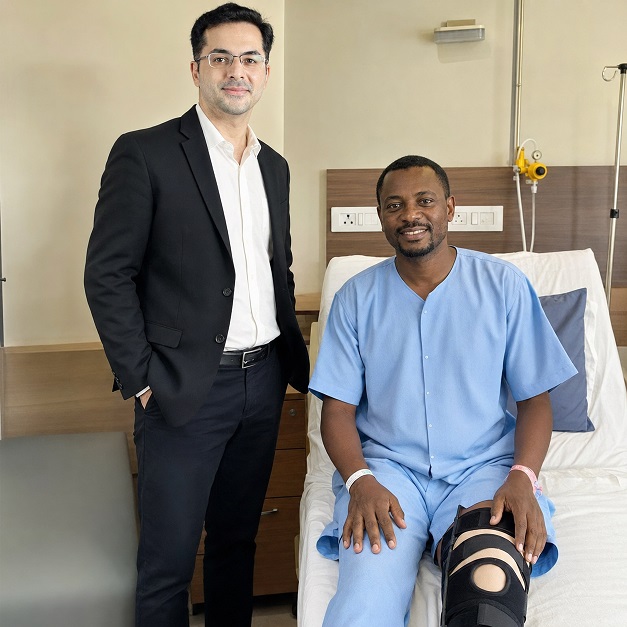
Healing Journeys of Congolese Patients
Key Takeaways
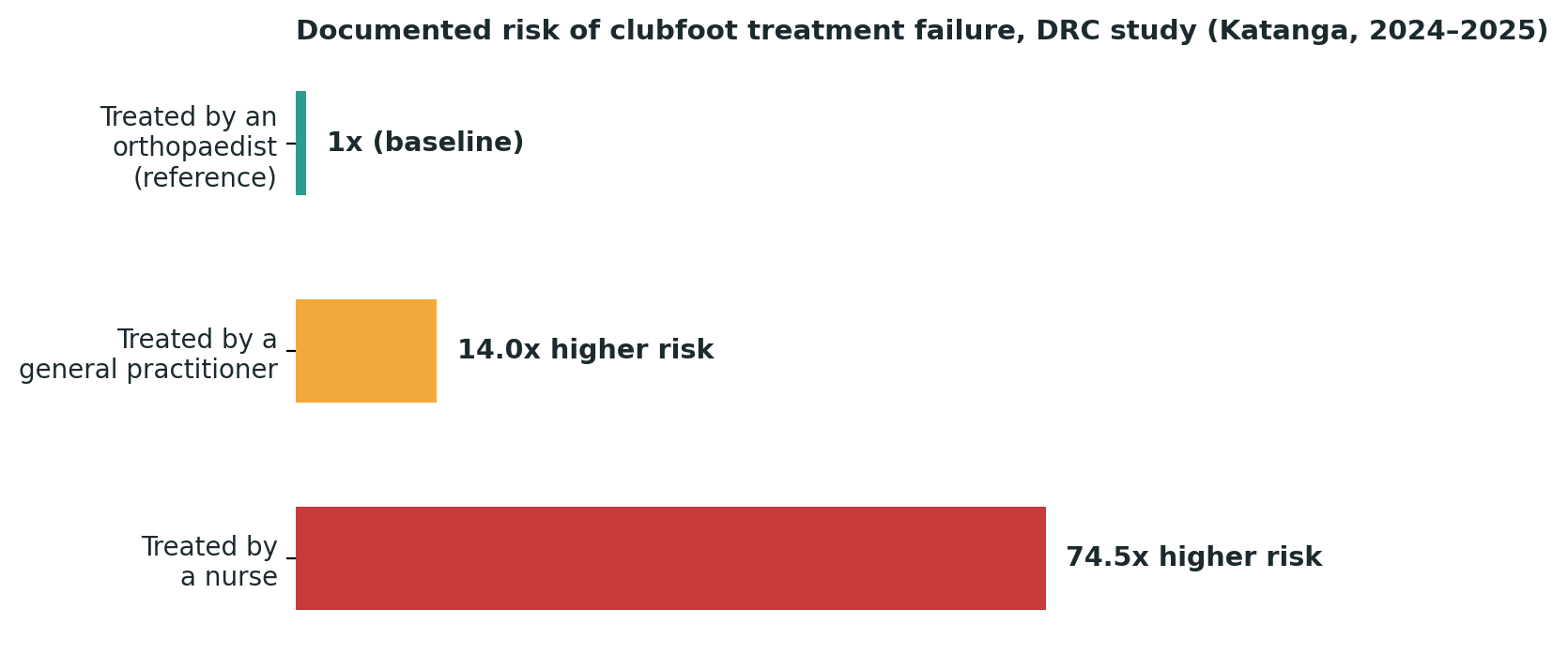
- The guide explains that paediatric orthopaedic care is highly dependent on specialist expertise, particularly for conditions such as clubfoot, hip dysplasia, congenital limb differences and growth-related deformities. A 2024–2025 multicentre DRC study of 129 children with clubfoot found that treatment by a general practitioner was associated with a 14-times higher risk of failure, while treatment by a nurse carried a 74.5-times higher risk compared with treatment by an orthopaedist.
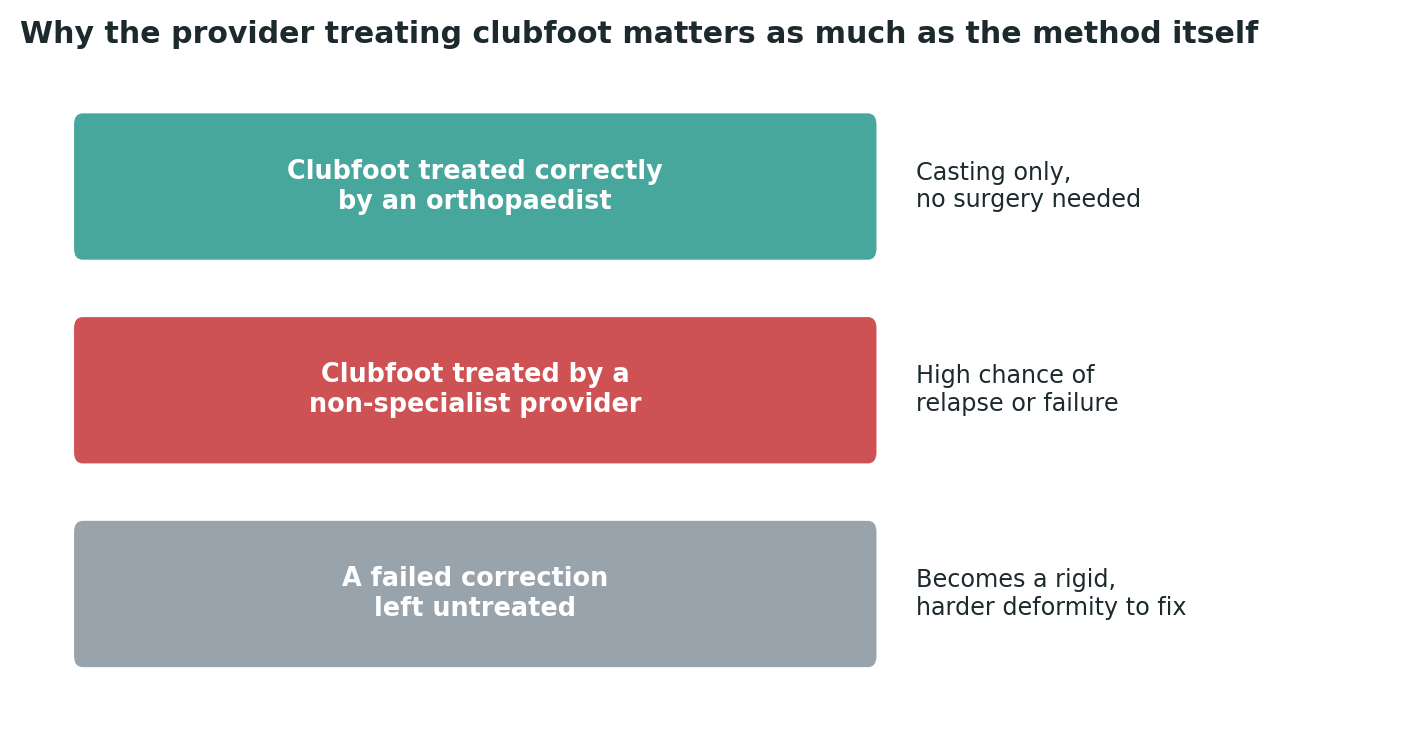
- The page 2 graphic illustrates why early specialist treatment matters. Properly treated clubfoot using the Ponseti method can often be corrected through casting and bracing without surgery, whereas failed or delayed correction can leave the deformity stiffer and more difficult to treat, potentially turning a condition manageable conservatively into a surgical problem. The guide also notes that financial barriers were the predominant reason families sought non-specialist care in the cited DRC study.
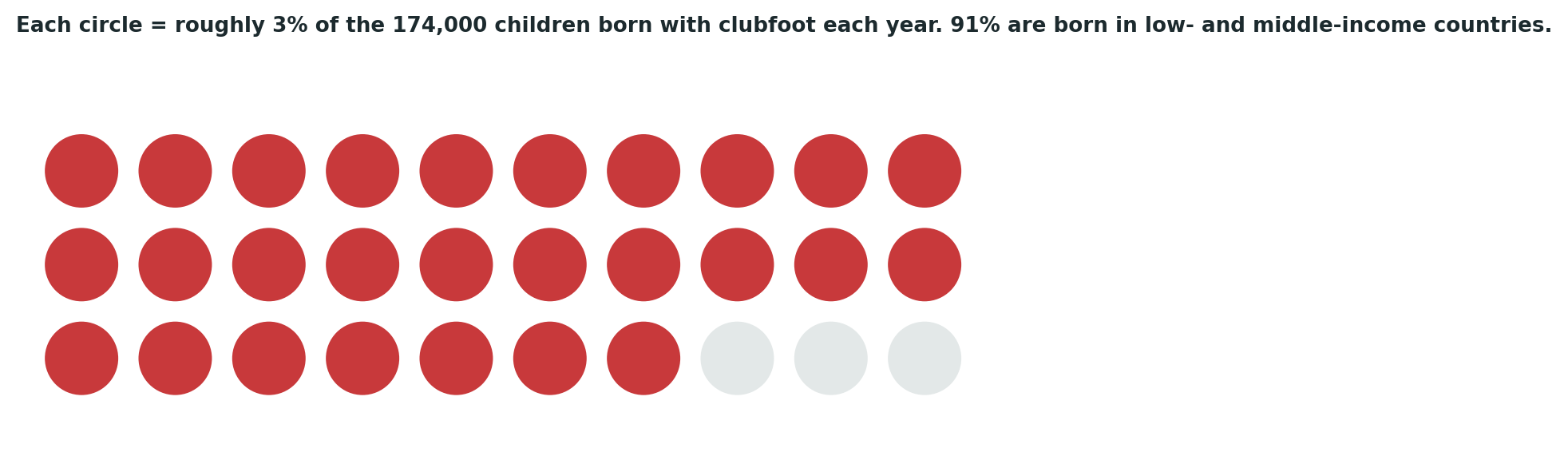
- The guide places clubfoot within a broader global paediatric orthopaedic problem. Approximately 174,000 children are born with clubfoot each year worldwide, with 91% born in low-and middle-income countries. The guide stresses that early, correctly delivered specialist treatment can change the long-term outcome and may help avoid surgery and years of preventable disability.
- The page 3 cost chart gives an indicative range of US$2,500–8,000 in India for paediatric orthopaedic surgical correction, such as clubfoot or hip dysplasia surgery, compared with US$10,000–18,000 in France/Belgium, US$12,000–20,000 in the UK private sector and US$20,000–40,000 in the US. The guide stresses that these are indicative package ranges and should be confirmed according to the child's condition and treatment complexity.
- For Congolese parents, the guide recommends confirming that a genuine paediatric orthopaedist is directing treatment, checking whether casting or bracing remains possible before accepting surgery, sending actual scans or clinical photographs and asking for the complete follow-up and bracing schedule. Parents should also obtain every cost item in writing, maintain a 15–20% financial buffer, and avoid paying the full balance before receiving a written treatment plan.
- The guide also recommends early visa preparation, current yellow-fever documentation and arranging genuine orthopaedic follow-up in the DRC before travel. It presents India as an option because of dedicated paediatric orthopaedic centres, specialist teams, paediatric-specific anaesthesia, structured follow-up, English-language consultations and hospital accreditation.
Quick Facts
- Author
- Dr. Dheeraj Bojwani
- Experience
- 24+ Years
- Treatment
- Paediatric Orthopaedic Surgery
- Patients
- Congolese Children
- Key Specialist
- Paediatric Orthopaedic Surgeon
- Common Conditions
- Clubfoot, hip dysplasia, congenital limb differences and growth-related deformities
- Clubfoot Study
- 129 children across three Katanga hospitals
- General Practitioner Risk
- 14× higher treatment-failure risk
- Nurse Risk
- 74.5× higher treatment-failure risk
- Preferred Clubfoot Method
- Ponseti method
- Conservative Treatment
- Casting followed by bracing
- Global Clubfoot Burden
- Approximately 174,000 births annually
- LMIC Share
- Approximately 91%
- India Cost
- US$2,500–8,000 for typical paediatric orthopaedic surgical correction
- Cost Check
- Surgery, casting, bracing and follow-up
- Imaging
- Actual scans or clinical photographs
- Financial Buffer
- 15–20% above initial estimate
- Visa
- Paper medical visa and attendant visa
- Entry Requirement
- Current yellow-fever certificate
- Follow-Up
- Genuine orthopaedist in the DRC
- Key Warning
- Do not accept surgery without confirming whether conservative treatment remains possible
- Decision Principle
- Early treatment by a genuine paediatric orthopaedic specialist can prevent avoidable progression and more complex surgery.
In Brief
For Congolese children with clubfoot, hip dysplasia or other orthopaedic deformities, the guide recommends confirming genuine paediatric orthopaedic specialist involvement before considering surgery. Conservative treatment such as casting and bracing may still be possible in some cases, while children requiring surgery should have a clear treatment plan, transparent quotation and long-term follow-up arrangement in the DRC.
Why Who Treats Your Child Matters So Much
A multicentre study conducted across three hospitals in Katanga province, DRC, between January 2024 and September 2025, followed 129 children with clubfoot being treated using the Ponseti method — the internationally recognised, largely non-surgical gold standard involving gentle weekly casting followed by bracing. The findings were stark: children treated by a general practitioner rather than an orthopaedist had a 14 times higher risk of treatment failure, and children treated by a nurse had a staggering 74.5 times higher risk.
This finding matters far beyond clubfoot specifically. It illustrates something true across paediatric orthopaedic care broadly: many of these conditions are genuinely treatable with well-established, low-cost methods, but the outcome depends heavily on specialist-level expertise applying them correctly — expertise that, in much of the DRC, is not consistently available at the point where families first seek help. This is not a criticism of the general practitioners and nurses involved, who are often doing their best in the absence of any nearby specialist; it is a clear signal to families about how much verifying that specialist status matters.
The Cost of Getting It Wrong the First Time
Clubfoot, if corrected properly and early using the Ponseti method, typically needs no surgery at all — just casting and a bracing programme. If the initial treatment fails, however, the deformity does not simply wait patiently for a second attempt. It tends to become stiffer and more rigid the longer it goes uncorrected, often requiring surgical intervention that would have been entirely avoidable with the right care from the start.
The one fact worth remembering
The same DRC study found financial barriers remained the predominant driver behind families seeking non-specialist care in the first place — not a lack of awareness that orthopaedists exist. This is a genuinely difficult, systemic problem, not a simple matter of parents choosing incorrectly, and it deserves to be understood with sympathy rather than judgement.
A Global Problem, Concentrated Where Resources Are Thinnest
Clubfoot alone affects an estimated 174,000 children born each year worldwide, and 91% of them are born in low-and middle-income countries — exactly the settings where specialist paediatric orthopaedic care is scarcest.
Paediatric orthopaedic conditions extend well beyond clubfoot, of course — developmental hip dysplasia, congenital limb differences, and various growth-related deformities all fall under the same broad category, and all share the same underlying principle: early, correctly delivered treatment by a genuine specialist changes the entire trajectory, often avoiding surgery altogether and sparing a child years of preventable disability.
What Paediatric Orthopaedic Surgery Costs: DRC Reality vs India vs the West
When surgery is genuinely needed — either because a condition requires it from the outset, or because earlier conservative treatment did not succeed — cost varies with the specific procedure, but the relative gap between India and Western options holds fairly consistently.
It is worth noting that surgery is not always the more expensive path in the long run. A child whose clubfoot is corrected properly with casting alone, at a fraction of the cost of surgery, avoids not only an operation but also the additional years of monitoring, potential revision, and disability management that a failed initial correction often demands.
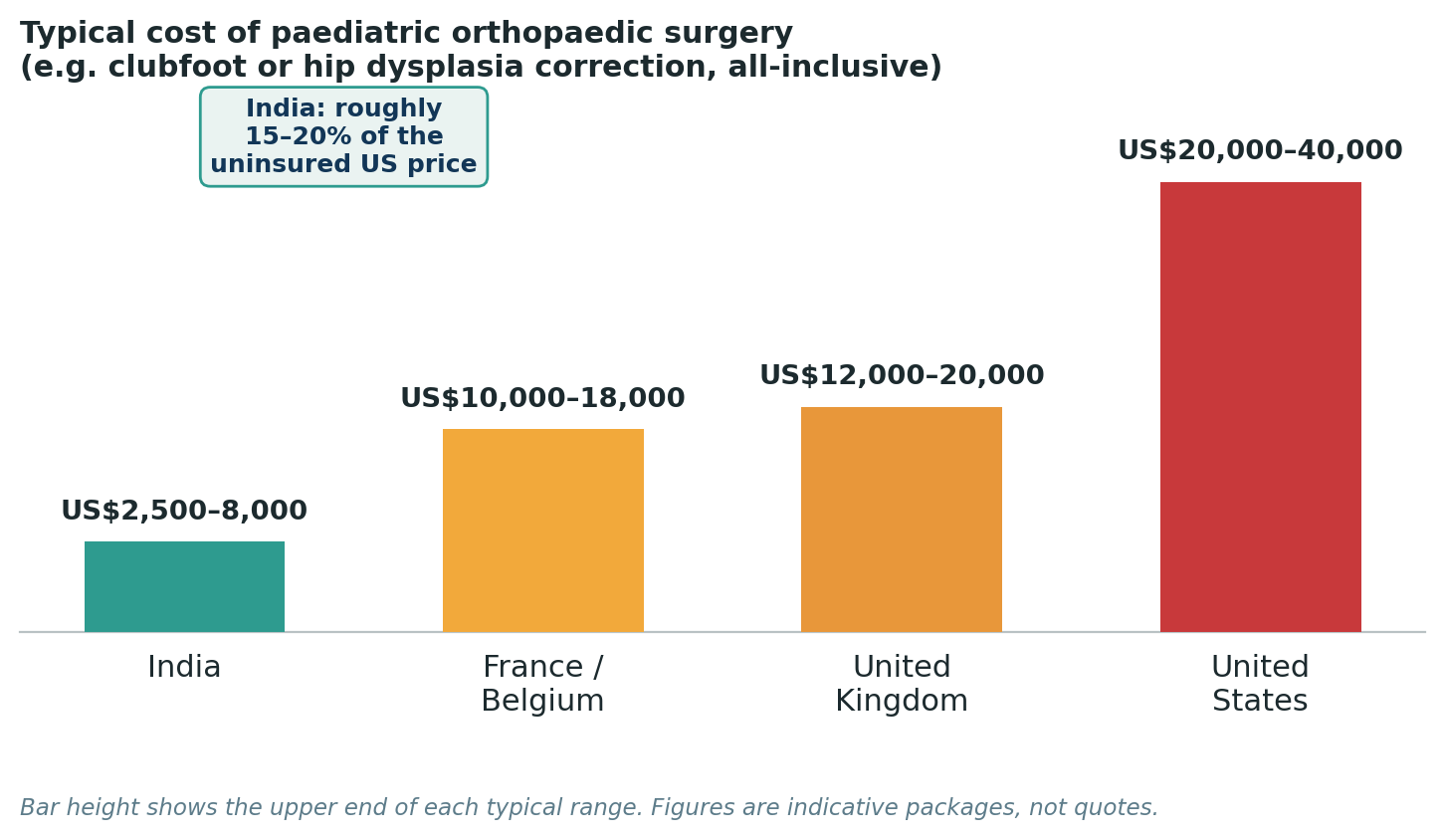
In India, paediatric orthopaedic surgery typically costs US$2,500 to US$8,000, depending on the specific condition and complexity. In France or Belgium, private-sector costs typically run US$10,000 to US$18,000. In the UK's private sector, costs range roughly US$12,000 to US$20,000. In the US, the same procedures commonly cost US$20,000 to US$40,000. India's typical price sits at roughly a sixth to an eighth of the uninsured US figure.
What the number on the quote does not always show
A written estimate should specify whether it covers surgery alone or includes the casting, bracing, and follow-up visits a child will need for months or years afterward. In 24 years of reviewing these quotes, I have found disputes almost never concern the headline figure — they concern what it silently left out. Get every line item in writing, and never pay the full balance before treatment.
What a Congolese Parent Should Weigh, Specifically
- Confirm the treating specialist is a genuine paediatric orthopaedist, not a general practitioner or nurse extending their practice, regardless of how confident the recommendation sounds.
- Ask whether conservative treatment (casting, bracing) is genuinely still possible, or whether previous non-specialist treatment has already made surgery necessary.
- Send the actual scan or clinical photographs, not just a description, since severity assessment depends on seeing the deformity directly.
- Ask about the full follow-up timeline, including bracing duration and monitoring visits, not just the immediate procedure.
- Budget in US dollars, with margin. The Congolese franc has weakened considerably against the dollar (roughly CDF 2,300–2,350 per US$1 in mid-2026, and it moves); build in a 15–20% buffer above the initial estimate.
- Start the visa process early. DRC passport holders need a paper medical visa through the Embassy of India in Kinshasa (Avenue Batetela, Gombe), typically around two weeks once the hospital's invitation letter is ready; apply for an attendant visa for the accompanying parent at the same time.
- Confirm your child's yellow fever certificate is current — mandatory for entry into India, at least 10 days before travel (check the minimum vaccination age with a paediatrician beforehand).
- Arrange follow-up care in the DRC before you fly — a genuine orthopaedist at home, not just any available provider, to continue monitoring your child's progress.
Four signals that should make you pause
- No confirmation that a genuine paediatric orthopaedist is directing treatment.
- Surgery proposed without first discussing whether conservative treatment remains possible.
- No structured follow-up or bracing plan explained clearly.
- Pressure to pay the full balance before a written treatment plan exists.
Why India Specifically for Paediatric Orthopaedic Surgery for Congolese Patients?
India operates dedicated paediatric orthopaedic centres staffed by genuine specialists trained specifically in conditions like clubfoot, hip dysplasia, and congenital limb differences — not general practitioners extending their scope under resource pressure. Combined with structured, correctly delivered conservative treatment where it remains possible, paediatric-specific anaesthesia and follow-up care, English-language consultation throughout, and hospital accreditation (NABH domestically, JCI internationally) that mirrors the standards used to evaluate hospitals in the US and Europe, India offers exactly the specialist-level care that the DRC's own research shows makes the difference between a simple correction and a lifetime of avoidable disability. For a family that has already experienced a failed treatment attempt at home, this level of genuine specialisation is often the single most important factor in finally getting a lasting result.
A closing word
The DRC's own research delivers a clear, important message: for conditions like clubfoot, the treatment exists and works well — what matters most is making sure a genuine specialist delivers it, not just any available provider. If you are able to share photographs or scans of your child's condition, I am glad to give a direct, honest view on what treatment would involve, and whether time remains to avoid surgery altogether.
Sources
- 🌐 National Medical Commission of India — verify any surgeon's registration · nmc.org.in
- 🌐 National Accreditation Board for Hospitals & Healthcare Providers (NABH) · nabh.co
- 🌐 Embassy of India, Kinshasa — medical visa requirements · eoikinshasa.gov.in
- 🌐 "Factors associated with failure of Ponseti treatment for congenital Clubfoot...Katanga (DRC)" (2026) · researchgate.net/publication/403676174
- 🌐 "Treatment outcome of the Ponseti method for clubfoot in Africa," Bone & Joint Open (2026) · boneandjoint.org.uk
- 🌐 World Health Organization — yellow fever vaccination requirements · who.int/health-topics/yellow-fever
Frequently Asked Questions by Congolese Patients about Paediatric Orthopaedic Surgery in India
Why is a paediatric orthopaedist important for clubfoot?
The cited DRC study found that children treated by a general practitioner had a 14-times higher risk of treatment failure, while those treated by a nurse had a 74.5-times higher risk compared with treatment by an orthopaedist.
Can clubfoot be treated without surgery?
Yes. The guide explains that properly treated clubfoot using the Ponseti method generally involves gentle casting followed by bracing and may not require surgery.
Why can failed clubfoot treatment become more difficult?
If correction fails or is delayed, the deformity can become stiffer and more rigid, potentially requiring surgery that might have been avoided with appropriate early treatment.
How common is clubfoot globally?
The guide estimates approximately 174,000 children are born with clubfoot each year, with around 91% born in low-and middle-income countries.
How much does paediatric orthopaedic surgery cost in India?
The guide gives an indicative range of US$2,500–8,000 for procedures such as clubfoot or hip dysplasia surgical correction, depending on complexity.
Should parents ask whether surgery can be avoided?
Yes. Parents should specifically ask whether casting or bracing remains possible before agreeing to surgical correction, particularly when dealing with clubfoot.
What should parents send to an Indian specialist?
Send the actual scan files or clear clinical photographs, rather than relying only on a written description of the child's deformity.
What should the quotation include?
The written estimate should clarify whether it covers surgery, casting, bracing and follow-up visits, because paediatric orthopaedic care may continue for months or years.
What travel preparations are required?
Congolese parents should begin the medical and attendant visa process early, ensure the child's yellow-fever certificate is current and arrange follow-up care in the DRC before travelling.
What is the most important decision for Congolese parents?
The guide's central message is to verify that a genuine paediatric orthopaedic specialist is directing treatment, because correct early treatment can sometimes prevent surgery and reduce the risk of long-term disability.
Page Summary
This guide helps Congolese parents understand paediatric orthopaedic treatment in India, particularly for clubfoot, hip dysplasia and congenital deformities. The page 1 graphic highlights the dramatically higher risk of clubfoot treatment failure when care is delivered by non-specialists, while the page 2 graphic explains how failed early correction can turn a potentially non-surgical problem into a more complex surgical one. The page 3 cost comparison and page 4 checklist focus on transparent pricing, specialist verification, conservative treatment, travel preparation and long-term follow-up.
Citation Block
| Field | Information |
|---|---|
| Topic | Paediatric Orthopaedic Surgery in India for Congolese Patients |
| Treatment | Paediatric Orthopaedic Surgery |
| Patients | Congolese Children |
| Key Specialist | Paediatric Orthopaedist |
| Conditions | Clubfoot, hip dysplasia, congenital limb differences and growth-related deformities |
| DRC Study | 129 children with clubfoot |
| General Practitioner Risk | 14× higher treatment-failure risk |
| Nurse Risk | 74.5× higher treatment-failure risk |
| Clubfoot Treatment | Ponseti method with casting and bracing |
| Global Clubfoot Burden | Approximately 174,000 children born annually |
| LMIC Share | Approximately 91% |
| India Cost | US$2,500–8,000 |
| Conservative Treatment Check | Confirm whether casting/bracing can still be used |
| Imaging | Actual scans or clinical photographs |
| Cost Transparency | Surgery, casting, bracing and follow-up |
| Second Opinion | Specialist assessment before irreversible treatment |
| Financial Planning | 15–20% buffer above initial estimate |
| Visa | Paper medical visa and attendant visa |
| Entry Requirement | Yellow-fever certificate |
| Follow-Up | Genuine orthopaedist in the DRC |
| Warning Signs | No paediatric specialist, surgery without conservative-treatment discussion, unclear follow-up or advance-payment pressure |
| Key Decision | Verify specialist expertise and whether surgery can genuinely be avoided |

Our Mission Statement
Our mission is to place patients at the centre of every healthcare decision by providing trustworthy, evidence-based, and unbiased medical information. We believe that informed patients make better decisions. Backed by personalised guidance from our experienced advisory team, we help patients understand their treatment options, compare them objectively, and confidently choose the path that best suits their medical needs and personal circumstances.
Patient Testimonials from Congo
Ready to Take the First Step?
Share your medical reports with our healthcare managers today and receive a FREE CONSULTATION, a personalized treatment plan and complete support from your arrival to your recovery.
Get Your Free ConsultationAreas We Serve
At Indian Health Guru Consultants, we proudly assist patients from Congo and neighboring countries across Central, East and Southern Africa who travel to India for advanced medical treatment. Our experienced international patient team provides end-to-end support, including medical opinions, hospital selection, Medical Visa assistance, travel planning, accommodation, interpreter services and post-treatment follow-up.
We regularly serve patients from:
- Gabon
- Cameroon
- Angola
- Uganda
- Rwanda
- Burundi
- Tanzania
- Zambia
- Djibouti
- Comoros
- Madagascar
- Seychelles
- South Sudan
- Central African Republic
- Republic of the Congo
- Democratic Republic of the Congo
No matter where you are located in the region, Indian Health Guru Consultants is committed to making your medical journey to India safe, affordable, seamless and completely patient-focused.
From Congo to India: Your Complete Patient Guide
- Brain Tumor Surgery in India for Congolese Patients
- Best Brain Tumour Surgeons & Hospitals in India for Congo Patients
- Knee Replacement in India for Congolese Patients
- Best Knee Replacement Surgeons & Hospitals in India for Congolese Patients
- Spine Surgery in India for Congolese Patients
- Best Spine Surgeons & Hospitals in India for Congolese Patients
- Liver Transplant in India for Congolese Patients: Cost & Guide
- Best Liver Transplant Centres and Hospitals in India for Congolese Patients
- Cardiac Surgery in India for Congolese Patients: Cost & Guide
- Best Cardiac Surgeons & Hospitals in India for Congolese Patients
- Bone Marrow Transplant in India for Congolese Patients: Cost & Guide
- Best Bone Marrow Transplant Centres and Hospitals in India for Congolese Patients
- Prostate Cancer Treatment in India for Congolese Patients: Cost & Guide
- Best Prostate Cancer Centres and Hospitals in India for Congolese Patients
- HIPEC in India for Congolese Patients: Cost & Treatment Guide
- Best HIPEC Centres and Hospitals in India for Congolese Patients
- Kidney Transplant in India for Congolese Patients: Cost & Guide
- Best Kidney Transplant Centres and Hospitals in India for Congolese Patients