

Paediatric Heart Surgery in India for Congolese Patients: What It Costs, and How to Decide Well
A practical guide for Congolese parents considering paediatric heart surgery in India, covering congenital heart disease, treatment timing, costs, specialist care and follow-up.
Somewhere between 8 and 12 of every 1,000 babies born in Africa arrive with some form of congenital heart disease — a hole in the heart, a malformed valve, or a more complex structural problem, present from birth. In 24 years of advising families facing this exact diagnosis, I have found that the condition itself is rarely the hardest part; the hardest part is how late it is usually found, and how little specialist capacity exists to treat it once it is. This guide sets out plainly why that gap is actually widening, what paediatric heart surgery in India costs against the Western alternatives some families consider, and what to weigh before deciding. None of this is meant to alarm parents unnecessarily — the great majority of congenital heart conditions, caught in time, are genuinely treatable.
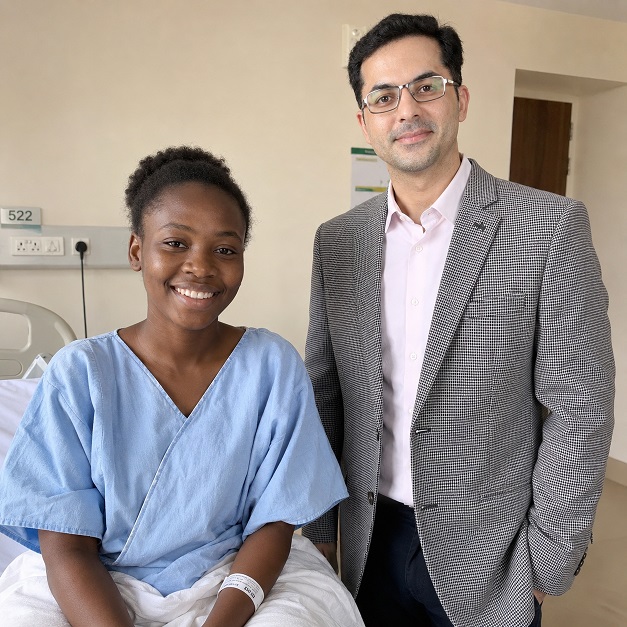
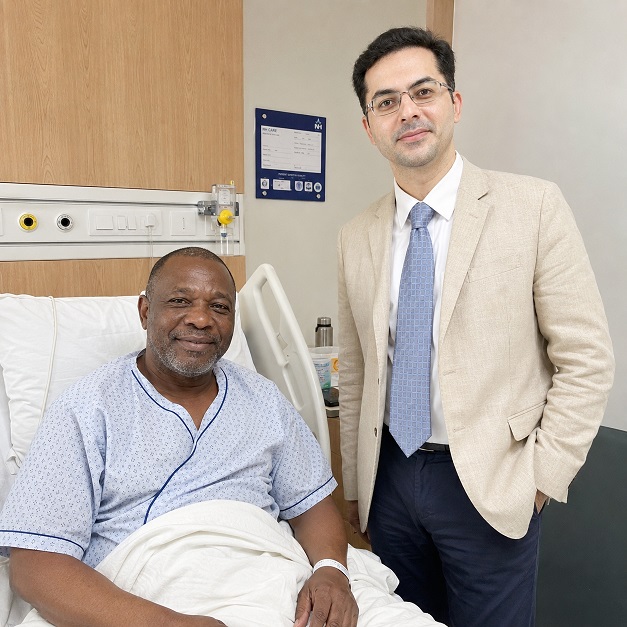
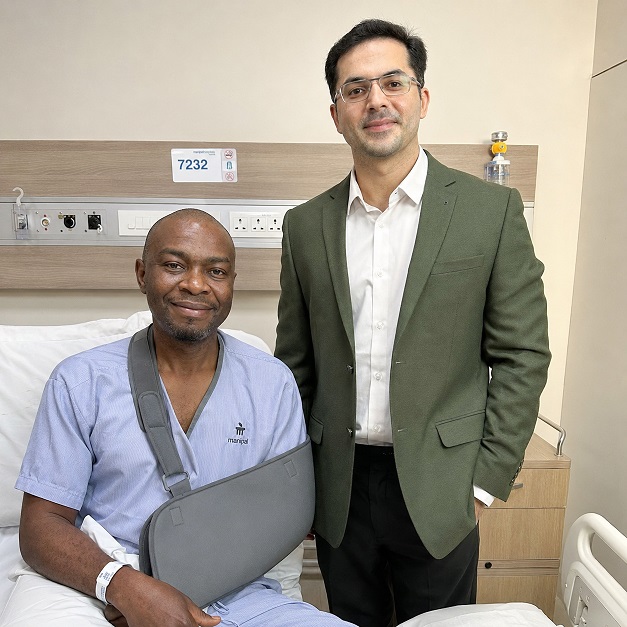
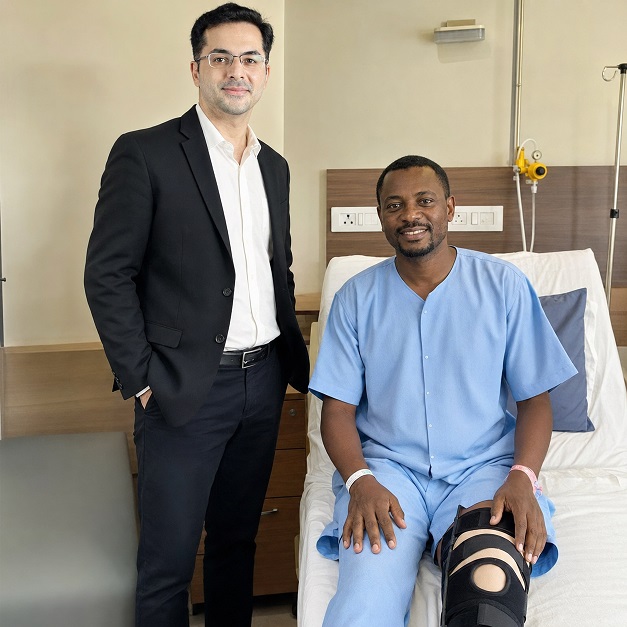
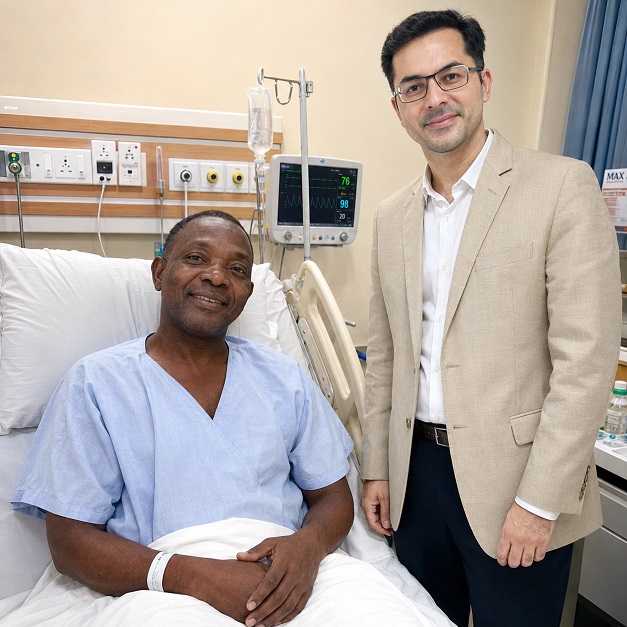
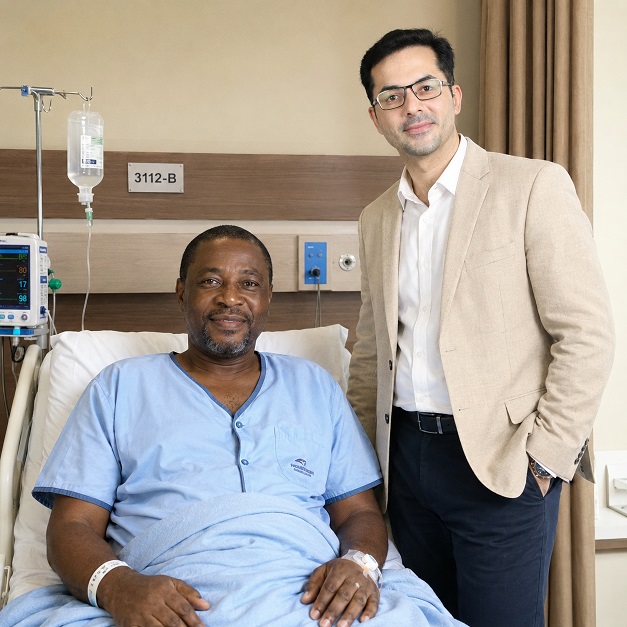
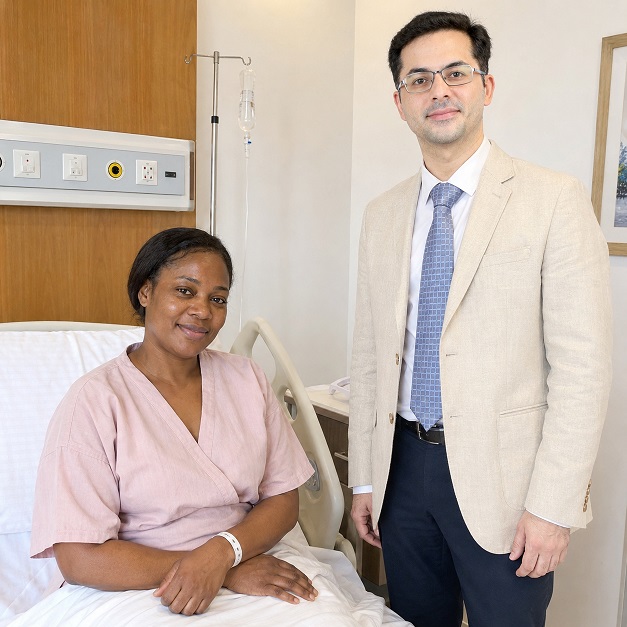
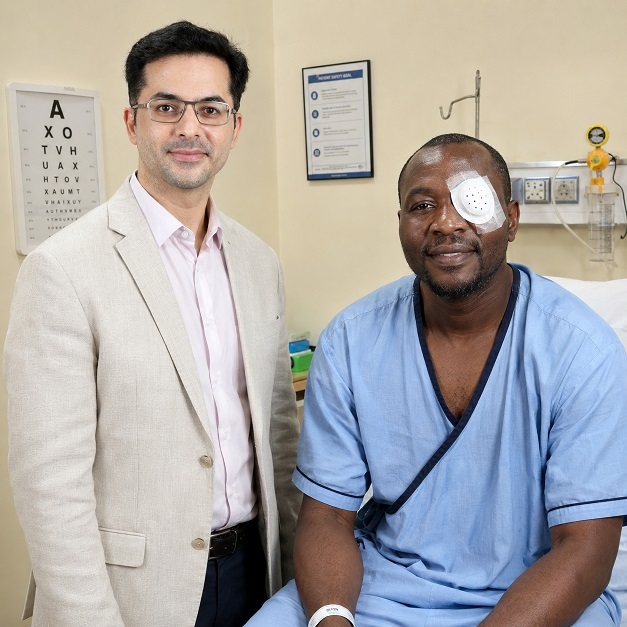
Healing Journeys of Congolese Patients
Key Takeaways
- The guide explains that congenital heart disease affects approximately 8–12 of every 1,000 babies born in Africa and that Central Sub-Saharan Africa has experienced a very different trend from the rest of the world. The page 2 graphic shows global congenital heart disease mortality falling by 34.5%, while mortality in Central Sub-Saharan Africa increased by 38.1%, highlighting the region's continuing treatment-access gap.
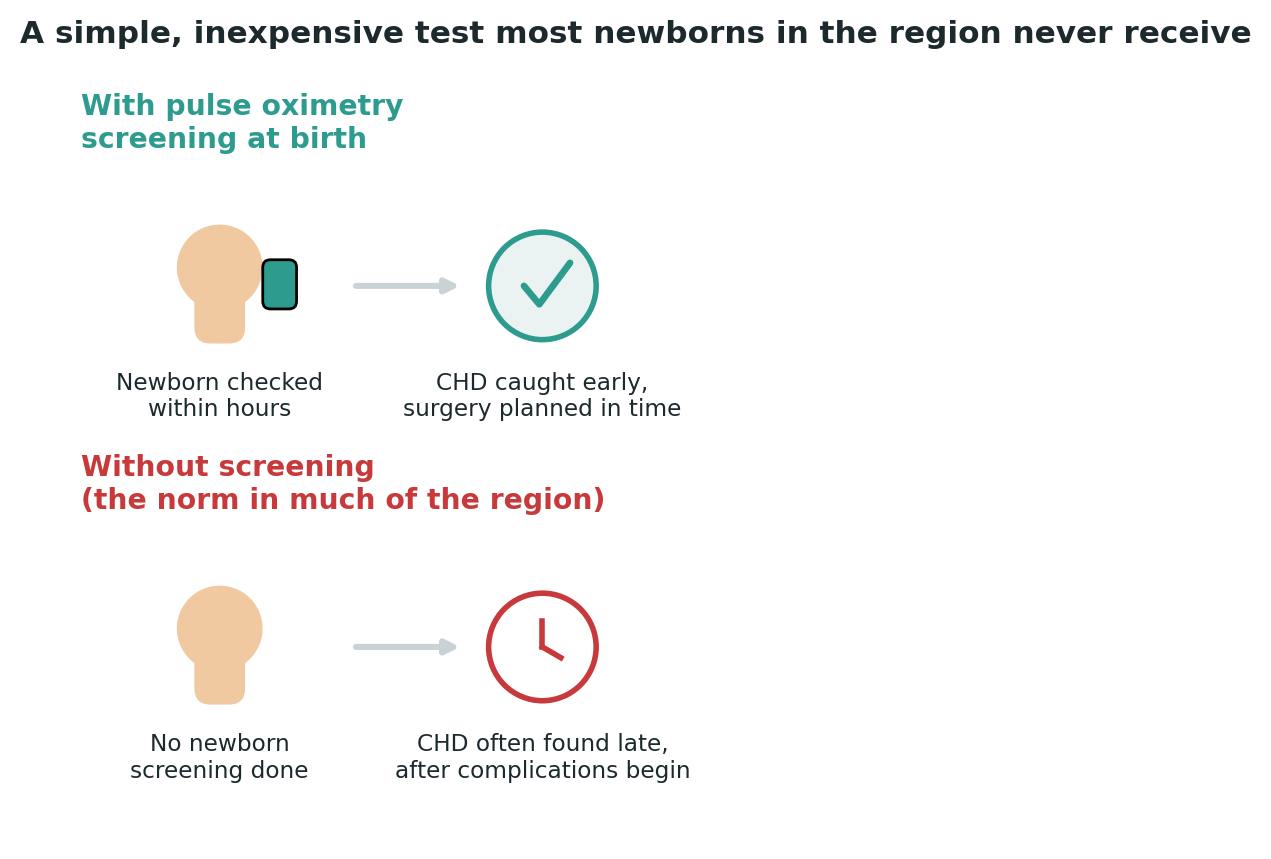
- The guide stresses that late diagnosis remains a major challenge. Pulse oximetry can identify many serious heart defects within hours of birth, but routine newborn screening remains limited across much of the region. Earlier diagnosis can allow simpler surgery, shorter recovery and better long-term outcomes.
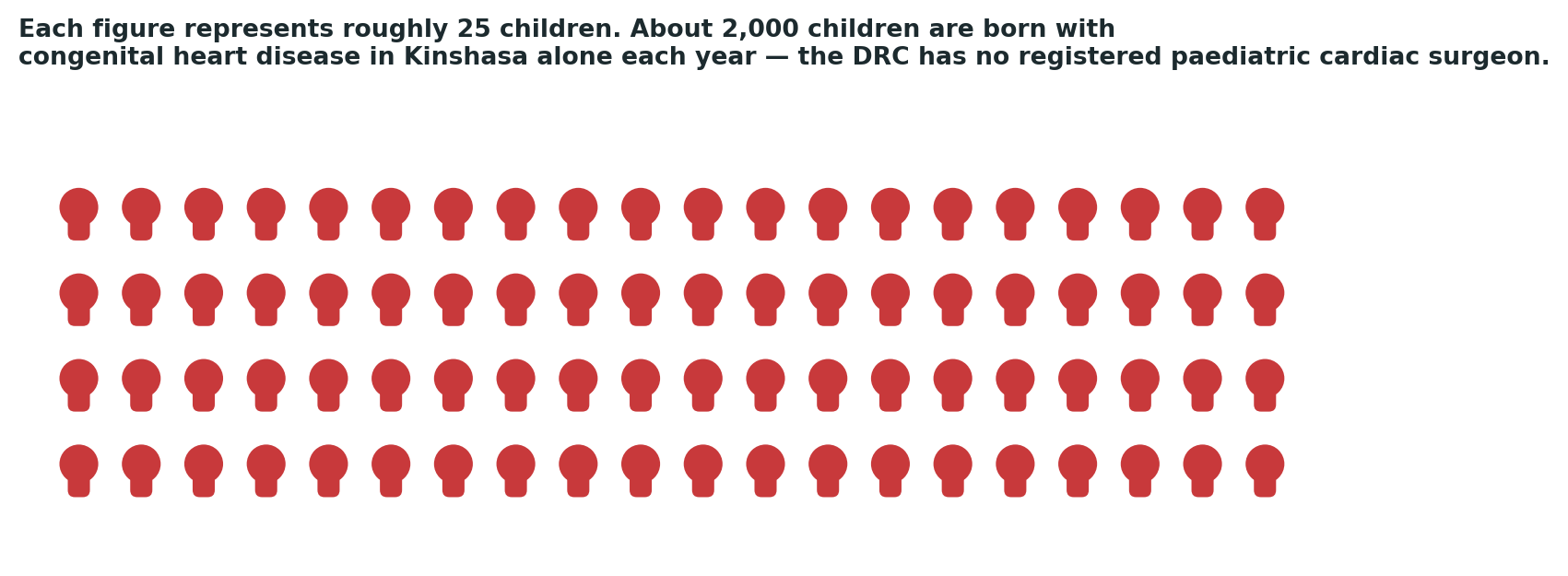
- The page 3 graphic highlights the scale of need in Kinshasa, where approximately 2,000 children are born with congenital heart disease each year. The guide also notes that the DRC currently has no registered paediatric cardiac surgeon in the global CTSNet registry, despite cardiac centres existing in Kinshasa.
- The page 4 cost comparison gives an indicative paediatric heart surgery range of US$3,000–12,000 in India, compared with US$27,000–55,000 in France/Belgium, US$38,000–89,000 in the UK private sector and US$60,000–150,000 in the US. Costs depend heavily on the child's defect and complexity, and quotations should clarify whether staged surgery and paediatric ICU care are included.
- The guide recommends that parents seek cardiac evaluation as soon as concerning symptoms appear, send the actual echocardiogram and imaging, and ask specifically about treatment timing. Some defects may require surgery within weeks, while others can safely wait months or years; complex conditions may also require planned staged procedures.
- For Congolese parents, the guide recommends maintaining a 15–20% financial buffer, starting the paper medical and attendant visa process early, confirming the child's yellow-fever documentation and arranging cardiac follow-up in the DRC before travelling. The written quotation should specify the exact defect, possible staged surgery and included paediatric ICU stay, and parents should not pay the full balance before receiving a written surgical plan.
- The guide explains that India offers specialist paediatric cardiac care across a wide range of congenital conditions, from straightforward defect repairs to complex staged reconstructions, supported by dedicated paediatric cardiac ICU teams and paediatric-specific anaesthesia. It also highlights English-language consultation and hospital accreditation such as NABH and JCI as additional factors when comparing treatment options.
Quick Facts
- Author
- Dr. Dheeraj Bojwani
- Experience
- 24+ Years
- Treatment
- Paediatric Heart Surgery
- Patients
- Congolese Children and Families
- Key Specialist
- Paediatric Cardiac Surgeon
- First Step
- Cardiac evaluation and echocardiography
- Key Condition
- Congenital Heart Disease
- Kinshasa Need
- Approximately 2,000 children born with CHD annually
- Treatment Timing
- Depends on the child's specific heart defect
- Surgery
- Single or staged procedures depending on complexity
- India Cost
- US$3,000–12,000 indicative range
- Cost Check
- Surgery, paediatric ICU and possible staged procedures
- Financial Buffer
- 15–20%
- Imaging
- Actual echocardiogram and cardiac imaging
- Visa
- Paper medical visa and attendant visa
- Entry Requirement
- Current yellow-fever documentation
- Follow-Up
- Cardiac care arranged in the DRC
- Key Warning
- Do not accept a surgical plan without genuine cardiac imaging
- Decision Principle
- Choose paediatric-specific cardiac expertise with a clear treatment and follow-up plan.
In Brief
For Congolese children requiring congenital heart surgery, the guide recommends early specialist evaluation and a clearly defined treatment pathway. Parents should confirm the exact defect, urgency, possibility of staged surgery, paediatric ICU requirements and complete treatment costs, while arranging appropriate follow-up in the DRC before travelling to India.
A Region Moving in the Wrong Direction
This is worth stating clearly, because it runs against what most people would assume. Global mortality from congenital heart disease fell by roughly a third over the past decade, reflecting real medical progress worldwide. Over that same period, mortality from congenital heart disease in Central Sub-Saharan Africa, the region that includes the DRC, rose by more than a third.
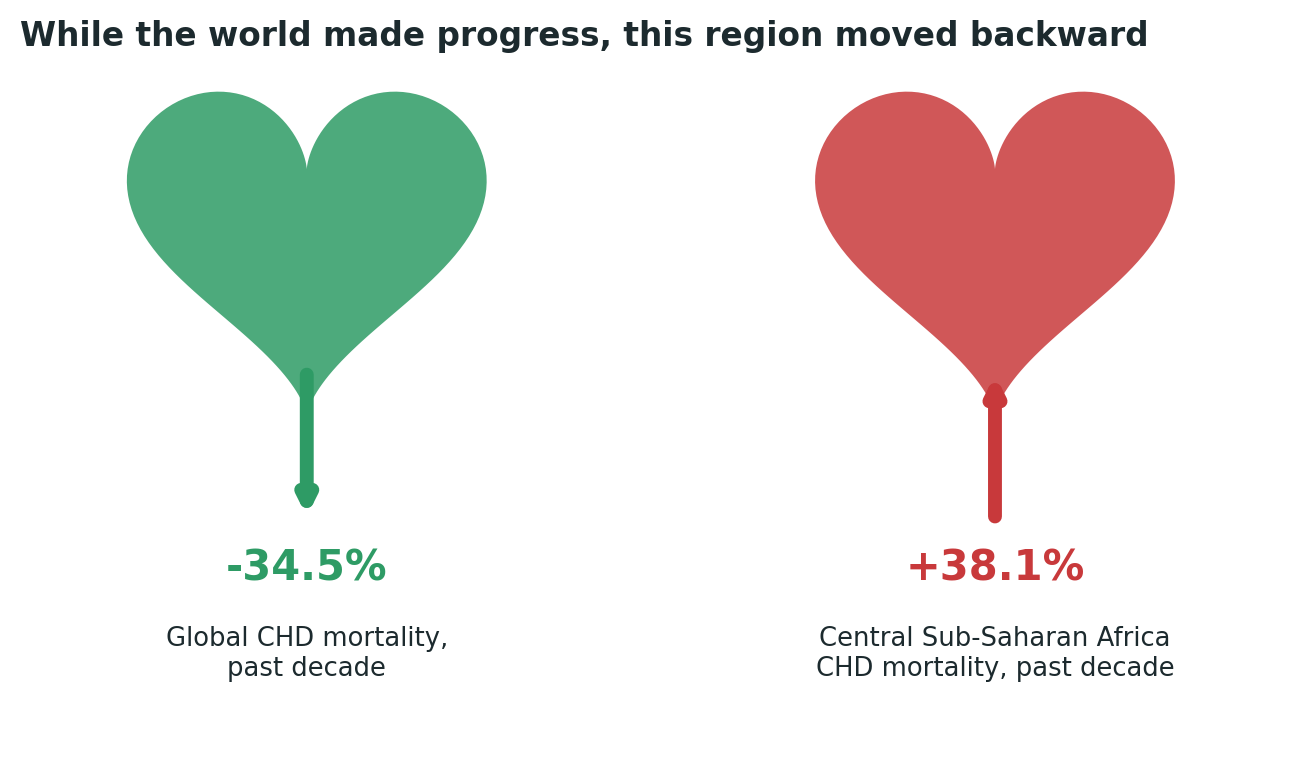
This divergence is linked directly to poverty and limited access to appropriate treatment, not to any change in how common the condition itself is. As more children survive infancy generally, thanks to progress against infectious disease, more of them are living long enough to be affected by heart conditions that were previously masked by higher overall child mortality — and the specialist capacity to treat those heart conditions has not kept pace with this shift.
Why Late Diagnosis Is the Norm, Not the Exception
Across Africa, late presentation of congenital heart disease is described in the medical literature as simply "the norm." A simple, inexpensive screening tool exists that could change this: pulse oximetry, a small sensor clipped painlessly to a newborn's finger or foot, measuring oxygen levels in the blood and flagging many serious heart defects within hours of birth. Despite costing very little and requiring minimal training, it is not yet routinely used across much of the region.
The consequence of late diagnosis is not simply anxiety for parents — it changes the medical picture itself. A baby who presents at three weeks old with a straightforward, well-tolerated defect is a very different case from one who presents at six months with the same defect, having already developed complications from months of unrecognised strain on the heart and lungs. Earlier diagnosis generally means a simpler operation, a shorter recovery, and better long-term outcomes.
The one fact worth remembering
A baby who seems healthy at birth can still have a serious heart defect — many congenital heart conditions produce no visible signs in the first days or weeks of life. If your child's newborn screening did not include a pulse oximetry check, and any concerning symptoms develop later (poor feeding, unusual tiredness, a bluish tinge to lips or fingertips, rapid breathing), a cardiac evaluation is worth pursuing directly, regardless of how the child looked at birth.
The Scale of the Need in Kinshasa Alone
Data from Kinshasa University Clinic estimated that roughly 2,000 children are born with congenital heart disease in the capital city alone each year. As established elsewhere in this series, the DRC currently has no registered paediatric cardiac surgeon in the global CTSNet registry, despite cardiac centres existing in Kinshasa.
This is not a story confined to the capital, either — Kinshasa's numbers simply happen to be the most precisely documented. Extrapolated across a country of over 100 million people, the true national scale of unmet paediatric cardiac surgical need is almost certainly many times larger than the Kinshasa figure alone suggests.
What Paediatric Heart Surgery Costs: DRC Reality vs India vs the West
Cost depends heavily on the specific defect and its complexity — a straightforward hole repair costs far less than a complex, staged congenital reconstruction — but the relative gap between India and Western options holds fairly consistently.
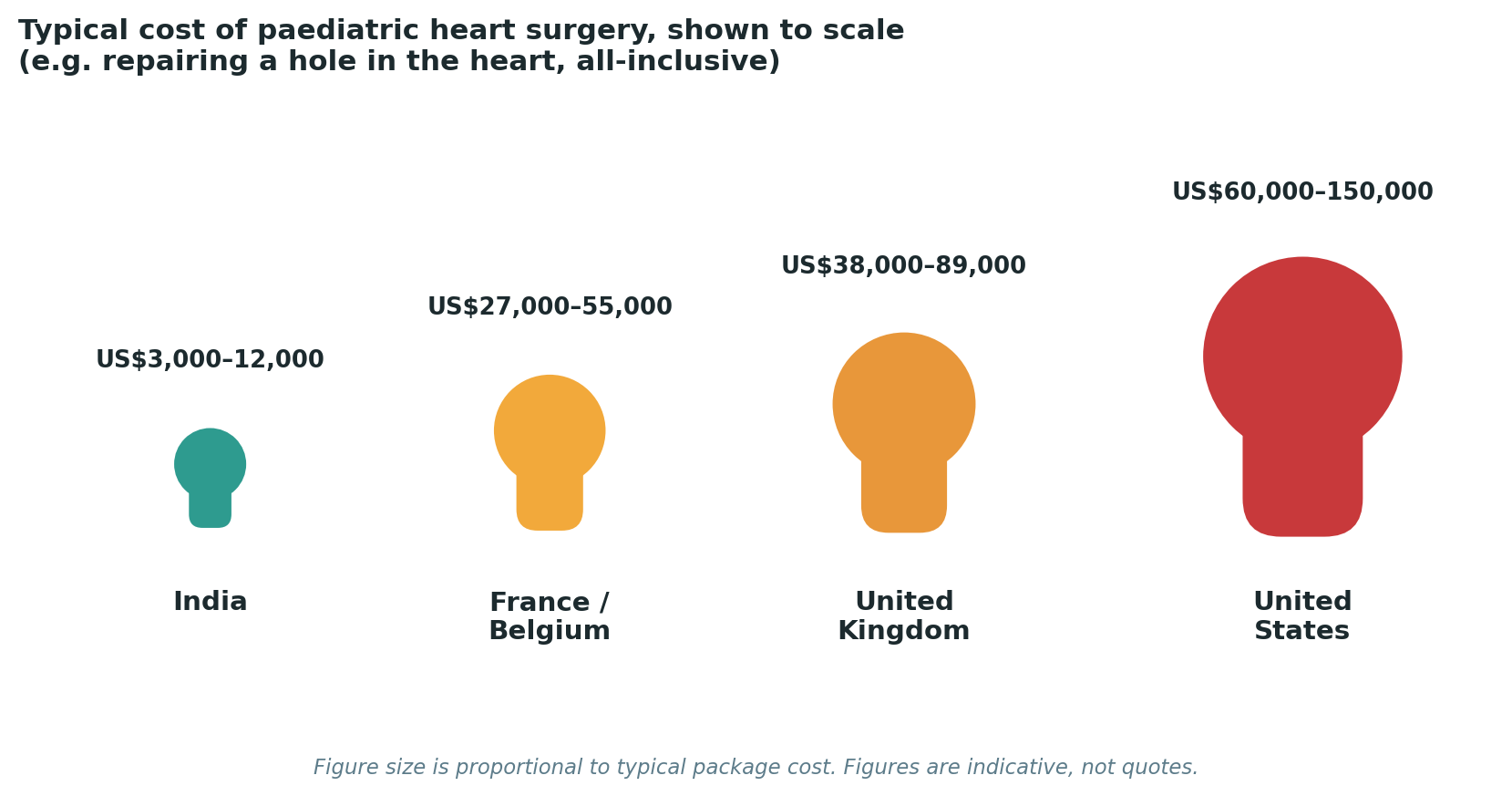
In India, paediatric heart surgery typically costs US$3,000 to US$12,000, depending on the defect's complexity. In France or Belgium, private-sector costs typically run US$27,000 to US$55,000. In the UK's private sector, costs range roughly US$38,000 to US$89,000. In the US, the same surgery commonly costs US$60,000 to US$150,000. India's typical price sits at roughly a tenth of the uninsured US figure.
What the number on the quote does not always show
A written estimate should specify the exact defect being treated, whether the case might require staged surgery over more than one procedure, and what paediatric ICU stay is included. In 24 years of reviewing these quotes, I have found disputes almost never concern the headline figure — they concern what it silently left out. Get every line item in writing, and never pay the full balance before surgery.
What a Congolese Parent Should Weigh, Specifically
- Seek a cardiac evaluation as soon as any concerning symptoms appear, even if your child seemed healthy at birth — many congenital defects are not visible in the first days of life.
- Ask specifically about timing — some defects need surgery within weeks of birth, others can safely wait months or years, and a good specialist will explain this clearly for your child's specific condition.
- Send the actual echocardiogram and imaging, not just a description of symptoms, since surgical planning depends on precise cardiac assessment.
- Ask whether the case might require more than one surgery, since some complex congenital conditions are treated in planned stages over months or years.
- Budget in US dollars, with margin. The Congolese franc has weakened considerably against the dollar (roughly CDF 2,300–2,350 per US$1 in mid-2026, and it moves); build in a 15–20% buffer above the initial estimate.
- Start the visa process early. DRC passport holders need a paper medical visa through the Embassy of India in Kinshasa (Avenue Batetela, Gombe), typically around two weeks once the hospital's invitation letter is ready; apply for an attendant visa for the accompanying parent at the same time.
- Confirm your child's yellow fever certificate is current — mandatory for entry into India, at least 10 days before travel (check the minimum vaccination age with a paediatrician beforehand).
- Arrange cardiac follow-up care in the DRC before you fly — ongoing monitoring matters for years after paediatric heart surgery, and identifying local support in advance is essential.
Four signals that should make you pause
- No genuine echocardiogram behind the surgical recommendation.
- No clear explanation of how urgent your child's specific condition is.
- No discussion of whether staged surgery might be needed.
- Pressure to pay the full balance before a written surgical plan exists.
Why India Specifically for Paediatric Heart Surgery for Congolese Patients?
India operates some of the world's highest-volume paediatric cardiac surgery centres, treating congenital heart disease across the full range of complexity, from straightforward defect repairs to complex staged reconstructions, with dedicated paediatric cardiac ICU teams and paediatric-specific anaesthesia as standard practice. Combined with English-language consultation throughout and hospital accreditation (NABH domestically, JCI internationally) that mirrors the standards used to evaluate hospitals in the US and Europe, India offers exactly the specialist-level, paediatric-specific cardiac care that is currently absent within the DRC, at a fraction of the Western cost. For a family confronting this diagnosis for the first time, that combination of genuine expertise and accessible cost is often what makes treatment possible at all.
A closing word
A child's heart condition, diagnosed early or late, remains treatable in the great majority of cases — the greatest risk is not the condition itself but the time lost before it is properly identified and addressed. If you are able to share your child's echocardiogram or describe the symptoms you have noticed, I am glad to give a direct, honest view on what treatment would involve, and what a realistic timeline looks like from here.
Sources
- 🌐 National Medical Commission of India — verify any surgeon's registration · nmc.org.in
- 🌐 National Accreditation Board for Hospitals & Healthcare Providers (NABH) · nabh.co
- 🌐 Embassy of India, Kinshasa — medical visa requirements · eoikinshasa.gov.in
- 🌐 "Congenital heart disease in Africa threatens Sustainable Development Goals" · pmc.ncbi.nlm.nih.gov/articles/PMC9045496
- 🌐 "Surgical outcomes of congenital heart disease in African pediatric populations," Egyptian Pediatric Association Gazette (2026) · link.springer.com
- 🌐 World Health Organization — yellow fever vaccination requirements · who.int/health-topics/yellow-fever
Frequently Asked Questions by Congolese Patients about Paediatric Heart Surgery in India
How common is congenital heart disease in Africa?
The guide states that approximately 8–12 of every 1,000 babies born in Africa have some form of congenital heart disease.
What has happened to congenital heart disease mortality in Central Sub-Saharan Africa?
The page 2 graphic shows global mortality falling 34.5%, while Central Sub-Saharan African mortality increased by 38.1% over the past decade.
How many children with congenital heart disease are born in Kinshasa?
The guide cites approximately 2,000 children born with congenital heart disease in Kinshasa each year.
Why can congenital heart disease be diagnosed late?
Many defects may produce no obvious signs immediately after birth, while routine pulse-oximetry screening remains limited across much of the region.
What tests should Congolese parents send before travelling?
Parents should provide the child's actual echocardiogram and available cardiac imaging, rather than relying only on a description of symptoms.
Does every child need surgery immediately?
No. The guide explains that some defects require surgery within weeks, while others can safely wait months or years, depending on the specific condition.
Can congenital heart surgery require more than one operation?
Yes. Some complex congenital heart conditions may require planned staged procedures over months or years, so parents should clarify this before travelling.
How much does paediatric heart surgery cost in India?
The guide gives an indicative range of US$3,000–12,000, depending on the complexity of the child's heart defect.
What should the quotation include?
The quotation should clearly state the exact defect being treated, whether staged surgery may be required and what paediatric ICU stay is included.
What should Congolese parents arrange after surgery?
Parents should arrange ongoing cardiac follow-up in the DRC before travelling, because children may require monitoring for years after paediatric heart surgery.
Page Summary
This guide explains the paediatric congenital heart disease treatment gap affecting Congolese families, particularly the challenges of late diagnosis and limited specialist capacity. The page 2 graphic compares global and Central Sub-Saharan African mortality trends, while page 3 highlights the estimated congenital heart disease burden in Kinshasa. Page 4 compares indicative surgery costs, and page 5 focuses on treatment timing, staged surgery, paediatric ICU costs, visas and long-term follow-up.
Citation Block
| Field | Information |
|---|---|
| Topic | Paediatric Heart Surgery in India for Congolese Patients |
| Treatment | Paediatric Cardiac Surgery |
| Patients | Congolese Children and Families |
| Key Specialist | Paediatric Cardiac Surgeon |
| Key Condition | Congenital Heart Disease |
| Regional Burden | 8–12 cases per 1,000 African births |
| Mortality Trend | Global CHD mortality −34.5%; Central Sub-Saharan Africa +38.1% |
| Kinshasa Burden | Approximately 2,000 children born with CHD annually |
| DRC Specialist Capacity | No registered paediatric cardiac surgeon listed in the cited CTSNet registry |
| Diagnosis | Echocardiography and actual cardiac imaging |
| Screening | Pulse oximetry can identify many serious defects early |
| Treatment Timing | Depends on the child's specific defect |
| Surgical Planning | Confirm whether single or staged surgery is required |
| Paediatric ICU | Confirm the number of included ICU days |
| Indicative India Cost | US$3,000–12,000 |
| Cost Transparency | Exact defect, surgery, ICU and staged procedures |
| Financial Buffer | 15–20% |
| Medical Records | Actual echocardiogram and imaging files |
| Travel Documents | Paper medical and attendant visas |
| Entry Requirement | Current yellow-fever documentation |
| Follow-Up | Cardiac care arranged in the DRC |
| Warning Signs | No genuine echocardiogram, unclear urgency or no staged-surgery discussion |
| Payment Warning | Avoid paying the full balance before a written surgical plan |
| Key Decision | Select paediatric-specific cardiac expertise with a complete treatment and follow-up pathway |


Our Mission Statement
Our mission is to place patients at the centre of every healthcare decision by providing trustworthy, evidence-based, and unbiased medical information. We believe that informed patients make better decisions. Backed by personalised guidance from our experienced advisory team, we help patients understand their treatment options, compare them objectively, and confidently choose the path that best suits their medical needs and personal circumstances.
Patient Testimonials from Congo
Ready to Take the First Step?
Share your medical reports with our healthcare managers today and receive a FREE CONSULTATION, a personalized treatment plan and complete support from your arrival to your recovery.
Get Your Free ConsultationAreas We Serve
At Indian Health Guru Consultants, we proudly assist patients from Congo and neighboring countries across Central, East and Southern Africa who travel to India for advanced medical treatment. Our experienced international patient team provides end-to-end support, including medical opinions, hospital selection, Medical Visa assistance, travel planning, accommodation, interpreter services and post-treatment follow-up.
We regularly serve patients from:
- Gabon
- Cameroon
- Angola
- Uganda
- Rwanda
- Burundi
- Tanzania
- Zambia
- Djibouti
- Comoros
- Madagascar
- Seychelles
- South Sudan
- Central African Republic
- Republic of the Congo
- Democratic Republic of the Congo
No matter where you are located in the region, Indian Health Guru Consultants is committed to making your medical journey to India safe, affordable, seamless and completely patient-focused.
From Congo to India: Your Complete Patient Guide
- Brain Tumor Surgery in India for Congolese Patients
- Best Brain Tumour Surgeons & Hospitals in India for Congo Patients
- Knee Replacement in India for Congolese Patients
- Best Knee Replacement Surgeons & Hospitals in India for Congolese Patients
- Spine Surgery in India for Congolese Patients
- Best Spine Surgeons & Hospitals in India for Congolese Patients
- Liver Transplant in India for Congolese Patients: Cost & Guide
- Best Liver Transplant Centres and Hospitals in India for Congolese Patients
- Cardiac Surgery in India for Congolese Patients: Cost & Guide
- Best Cardiac Surgeons & Hospitals in India for Congolese Patients
- Bone Marrow Transplant in India for Congolese Patients: Cost & Guide
- Best Bone Marrow Transplant Centres and Hospitals in India for Congolese Patients
- Prostate Cancer Treatment in India for Congolese Patients: Cost & Guide
- Best Prostate Cancer Centres and Hospitals in India for Congolese Patients
- HIPEC in India for Congolese Patients: Cost & Treatment Guide
- Best HIPEC Centres and Hospitals in India for Congolese Patients
- Kidney Transplant in India for Congolese Patients: Cost & Guide
- Best Kidney Transplant Centres and Hospitals in India for Congolese Patients