

Neurosurgery in India for Congolese Patients: What It Costs, and How to Decide Well
A practical guide for Congolese patients comparing neurosurgical options in India, including specialist selection, costs, emergency considerations, travel and follow-up.
Aneurosurgical diagnosis rarely arrives quietly. It usually follows weeks of headaches dismissed as malaria, a seizure that finally sends the family to hospital, or a scan a doctor in Kinshasa reviews with a long pause before speaking. In 24 years of advising patients on where to get complex surgery done safely, I have learned that the diagnosis itself is only the first shock — the second is realising how few options exist close to home. This guide is written for that moment: for a patient or family in the Democratic Republic of Congo told that a brain, spine, or nerve condition needs a neurosurgeon, now trying to work out, with real numbers, what treatment in India would actually involve.
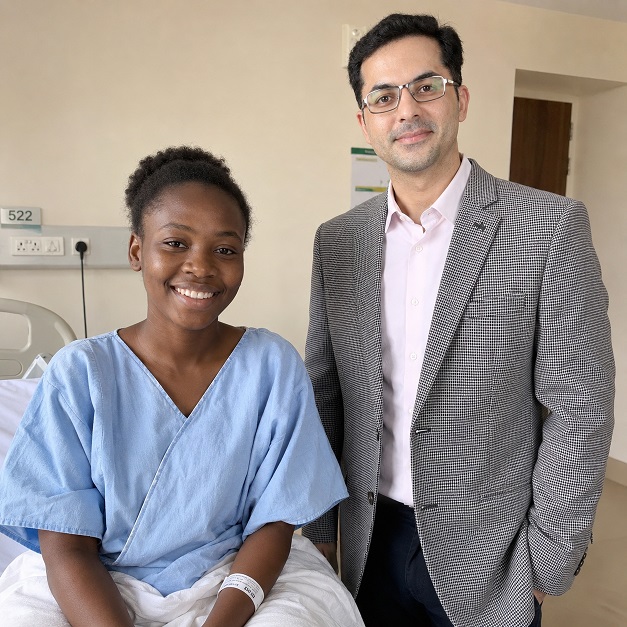
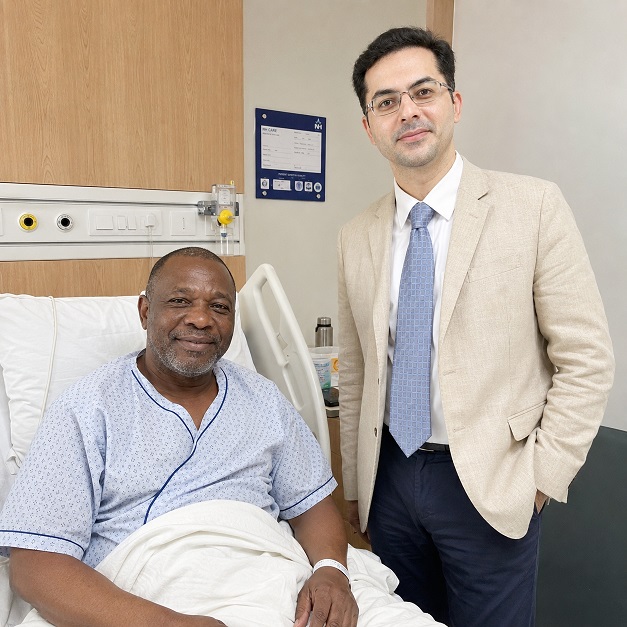
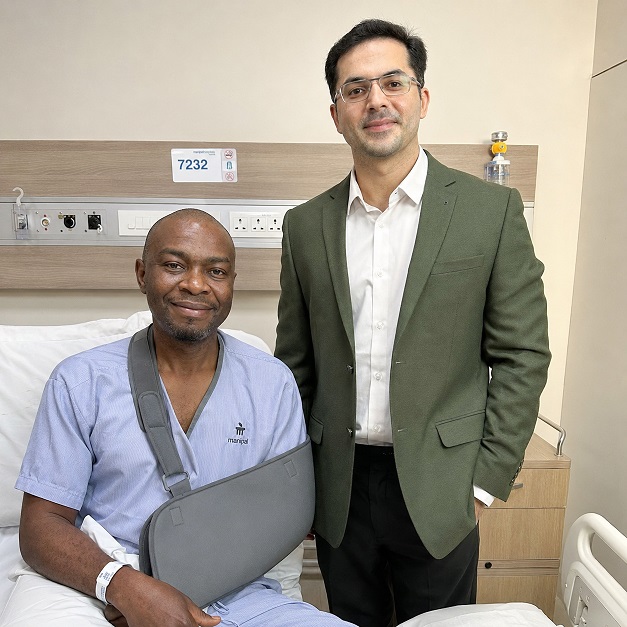
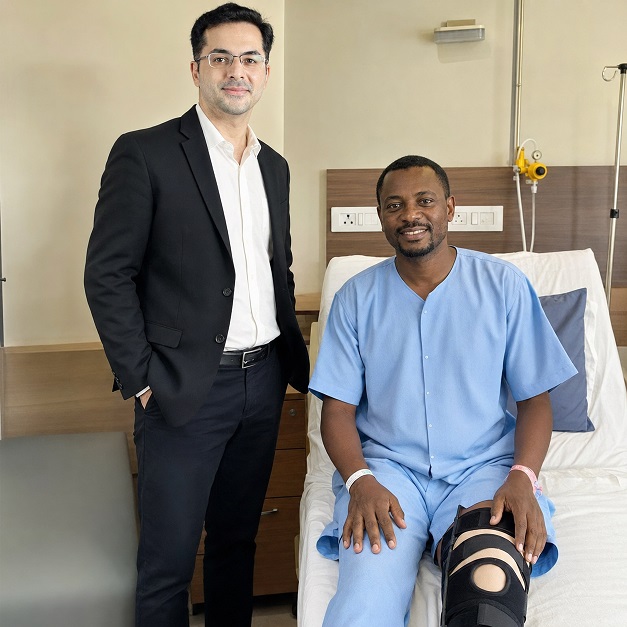
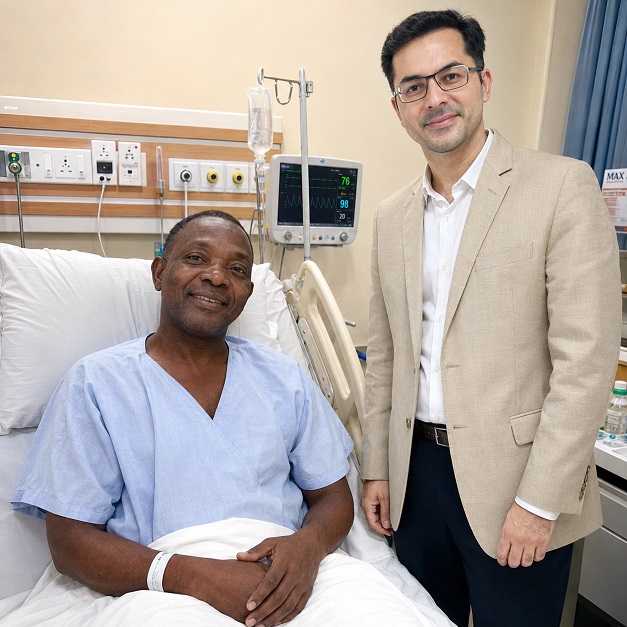
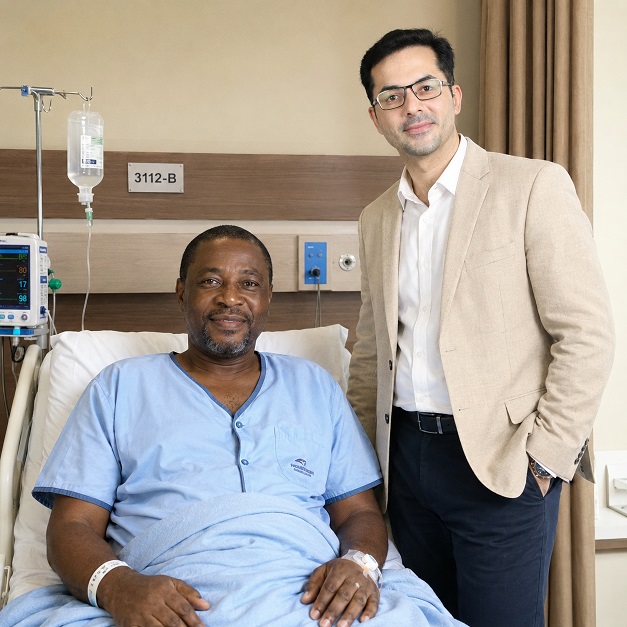
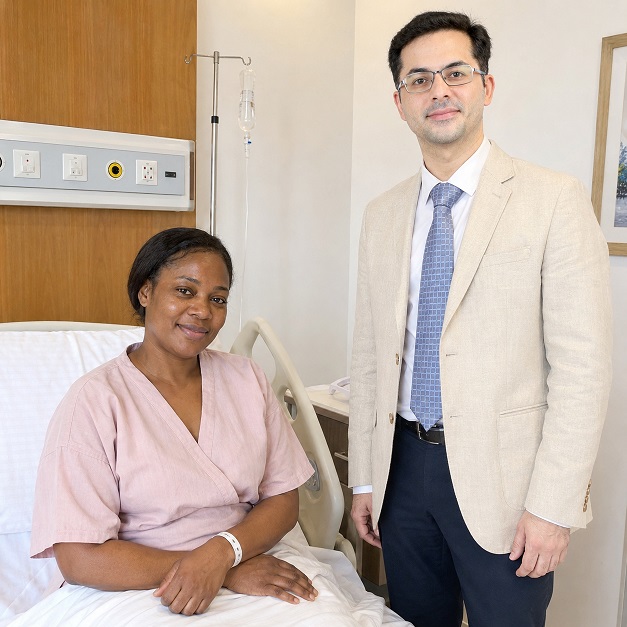
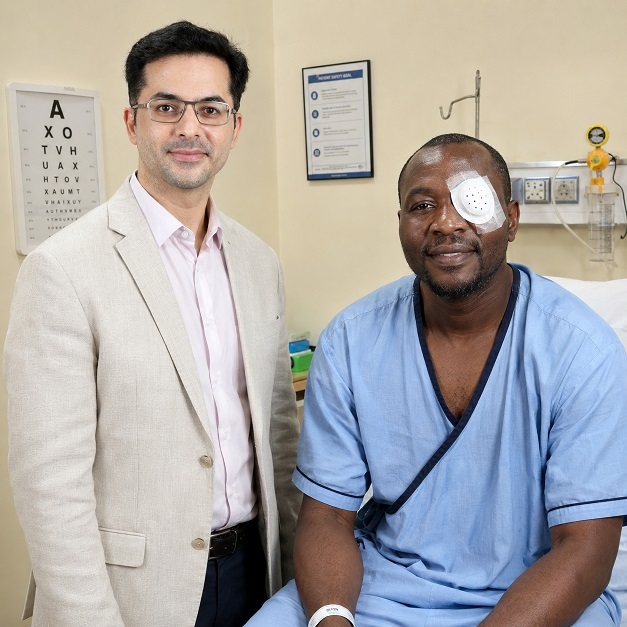
Healing Journeys of Congolese Patients
Key Takeaways
- The guide explains that neurosurgery covers a wide range of conditions, including brain tumours, cerebral aneurysms and haemorrhage, hydrocephalus, degenerative and deformity spine conditions, traumatic injuries and movement disorders. Each condition requires a different sub-specialist, equipment profile and level of urgency.
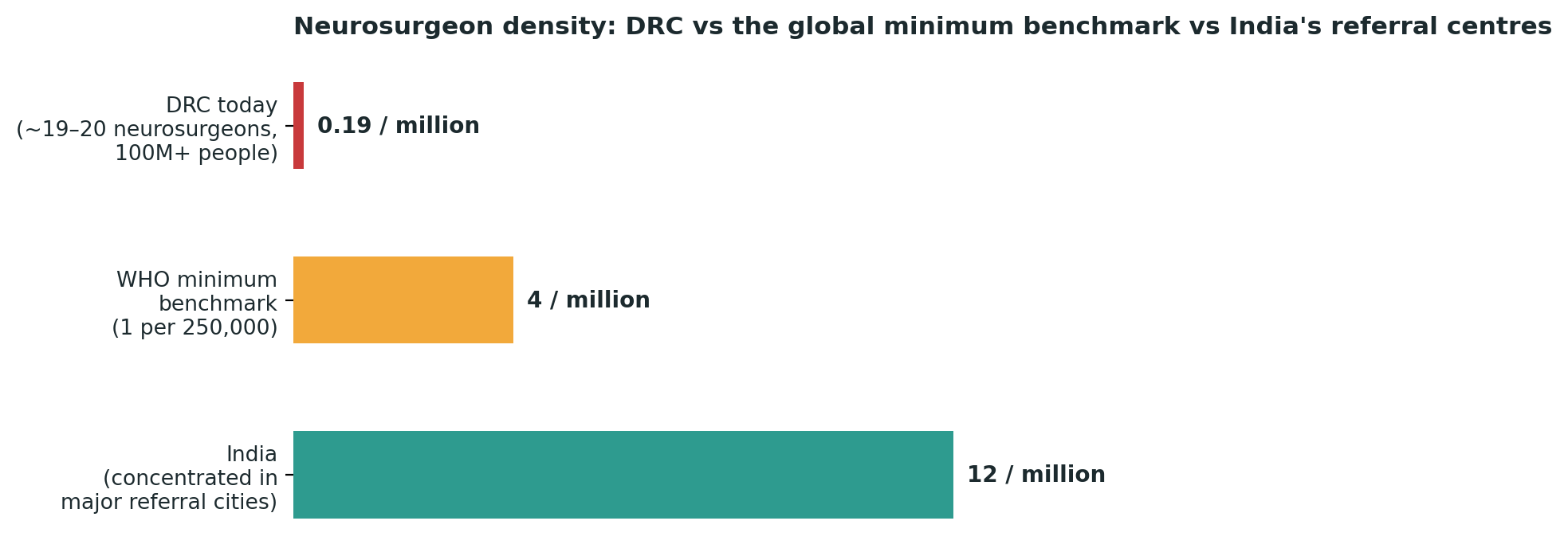
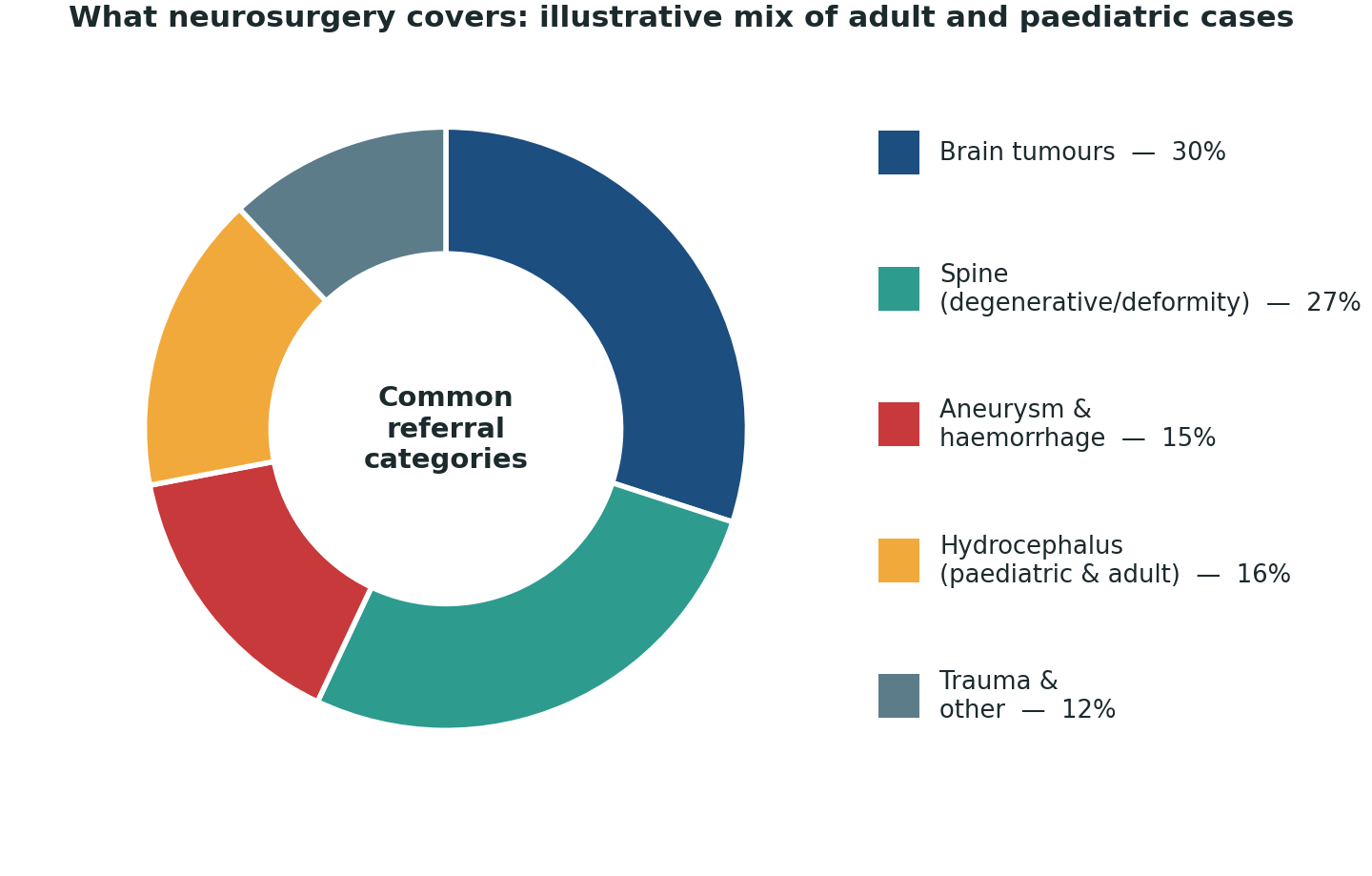
- The page 2 chart compares neurosurgeon density, showing approximately 0.19 neurosurgeons per million people in the DRC, compared with a WHO minimum benchmark of 4 per million and approximately 12 per million in India's major referral cities. The accompanying graphic illustrates an indicative referral mix of 30% brain tumours, 27% spine conditions, 15% aneurysm/haemorrhage, 16% hydrocephalus and 12% trauma/other cases.
- The guide stresses that the exact procedure and surgeon matter more than the general title "neurosurgeon." Families should ask how many times the specific procedure has been performed at the chosen centre during the previous year, rather than relying only on the surgeon's total years of experience or the hospital's general reputation.
- The first decision should be whether the case is an emergency or a planned procedure. Rapidly worsening head injury, intracranial bleeding with declining consciousness or sudden loss of movement or bladder control requires immediate stabilisation at the nearest capable Congolese hospital rather than arranging international travel. Slower-growing tumours, degenerative spine conditions, movement disorders and monitored hydrocephalus may allow time for specialist comparison and planned treatment.
- The page 3 cost chart gives an indicative standard craniotomy range of US$5,500–9,500 in India, compared with US$28,000–41,000 in France/Belgium, US$32,000–102,000 in the UK private sector and US$70,000–150,000 in the US. Cases requiring neuronavigation, intraoperative imaging or awake-craniotomy techniques may cost approximately US$15,000–25,000 in India.
- The guide recommends obtaining a complete written estimate covering imaging, ICU days, surgeon fees, implants where relevant and a defined number of follow-up consultations. Congolese patients should send actual MRI or CT files before comparing quotations, match the sub-specialist to the exact condition, budget with a 15–20% financial buffer and obtain a second opinion before irreversible treatment.
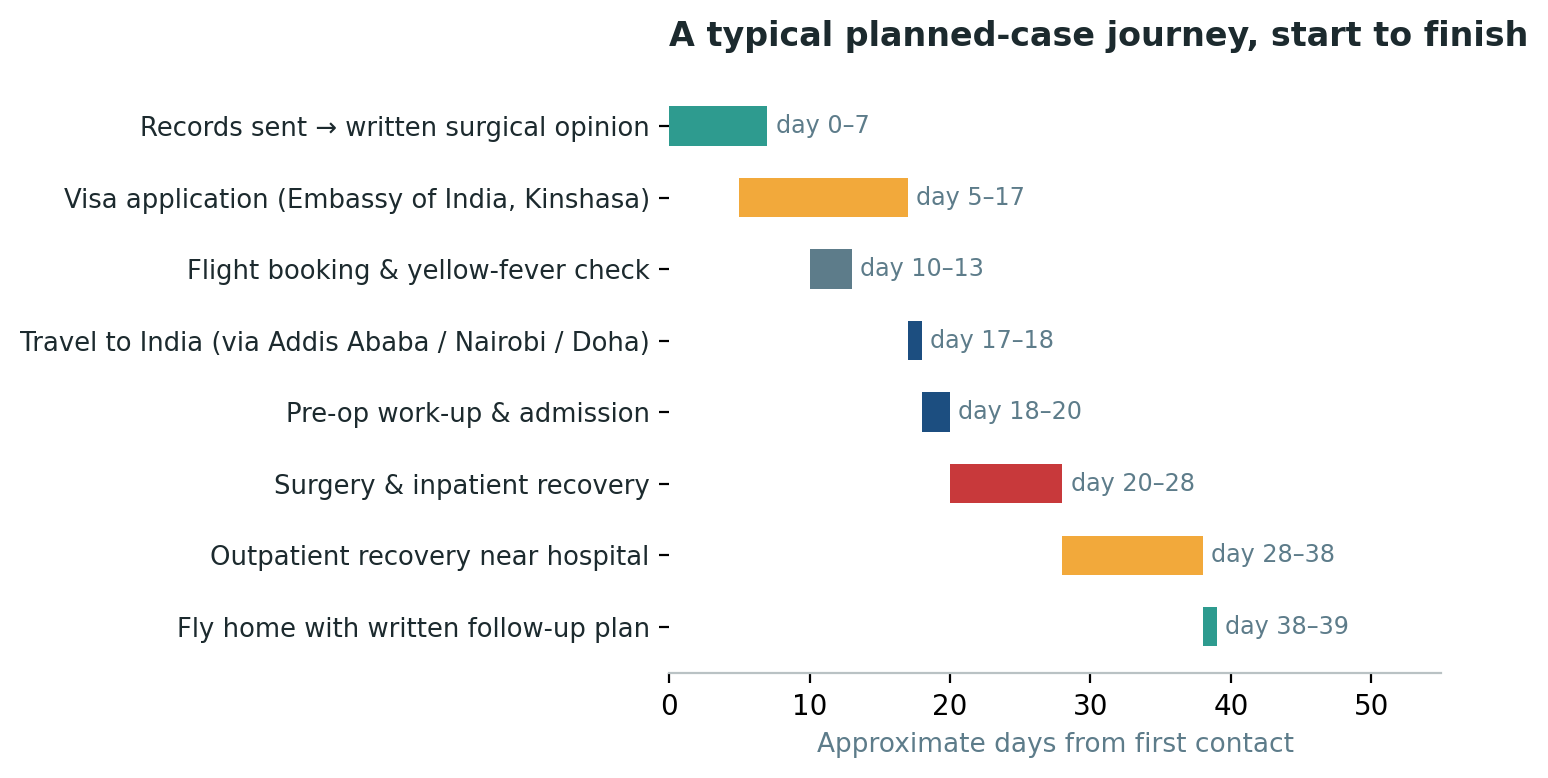
- The page 5 timeline illustrates a planned treatment journey of roughly six to seven weeks, from sending records and receiving a surgical opinion through visa processing, travel, pre-operative work-up, surgery, recovery and returning home with a written follow-up plan. The guide also highlights French-speaking coordination, current yellow-fever documentation, realistic connecting flights from Kinshasa and a named doctor in the DRC for after-care.
Quick Facts
- Author
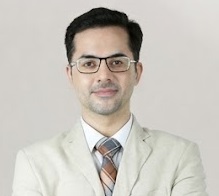
- Dr. Dheeraj Bojwani
- Experience
- 24+ Years
- Treatment
- Neurosurgery
- Patients
- Congolese Patients
- Key Specialist
- Condition-specific Neurosurgeon / Sub-Specialist
- DRC Neurosurgeon Density
- Approximately 0.19 per million
- WHO Benchmark
- 4 neurosurgeons per million
- India Referral Centres
- Approximately 12 per million
- Major Referral Categories
- Brain tumours, spine conditions, aneurysm/haemorrhage, hydrocephalus and trauma
- Emergency Cases
- Immediate stabilisation in the DRC
- Planned Cases
- Specialist and hospital comparison before travel
- India Standard Craniotomy Cost
- US$5,500–9,500
- Advanced Brain Surgery Cost
- US$15,000–25,000
- Imaging
- Actual MRI or CT scan files
- Specialist Check
- Exact procedure volume at the chosen centre
- Financial Buffer
- 15–20% above initial estimate
- Visa
- Paper medical visa and attendant visa
- Entry Requirement
- Current yellow-fever certificate
- Travel Route
- Connecting flights from Kinshasa to India
- Journey Duration
- Approximately six to seven weeks for a planned case
- Language Support
- French-speaking coordination recommended
- Follow-Up
- Named doctor and written handover plan in the DRC
- Key Warning
- Never compare neurosurgery quotations without actual scan review
- Decision Principle
- Match the exact condition with the right sub-specialist, technology and surgical centre.
In Brief
For Congolese patients considering neurosurgery in India, the guide recommends first identifying the exact condition and urgency, then matching the patient with the appropriate sub-specialist and high-volume centre. Actual scans should be reviewed before quotations are compared, while cost, visa requirements, travel, French-language coordination and post-treatment care in the DRC should all be planned before departure.
Why So Many Congolese Families Look Beyond the DRC
This is not a criticism of Congolese medicine — it is an honest statement of scale. The DRC's neurosurgical workforce has grown meaningfully, from a handful of pioneers to a documented community of roughly 19 to 20 practising neurosurgeons, supported by a residency programme at the University of Kinshasa. That growth is real. But set against a population of more than 100 million, spread across a country four times the size of France, the arithmetic is unforgiving: roughly one neurosurgeon for every 5 to 6 million Congolese, almost all practising in Kinshasa or Lubumbashi.
Genuinely capable centres do exist — Clinique Ngaliema in Kinshasa has published its own outcomes data on operated brain haemorrhage cases, and Cliniques Universitaires de Kinshasa handles a real caseload of trauma and straightforward procedures. For an uncomplicated case with a clear diagnosis, staying in Kinshasa can be entirely reasonable. Where the gap shows is sub-specialisation and the case volume that keeps a team sharp for the harder conditions — deep-seated tumours, complex aneurysms, paediatric hydrocephalus, movement-disorder surgery. That is the gap this guide addresses.
What "Neurosurgery" Actually Covers
Families are often told simply that a "neurosurgeon" is needed, without being told which of several very different specialties that implies. Neurosurgery spans brain tumours, cerebral aneurysms and haemorrhage, hydrocephalus in children and adults, degenerative and deformity spine conditions, traumatic injury, and movement-disorder surgery. Each has its own sub-specialist, equipment needs, and urgency profile.
The one fact worth remembering
A surgeon excellent at spine work is not automatically right for a brain tumour, and a general neurosurgeon may not have done the specific operation your scan calls for more than a handful of times. Ask how many times this exact procedure has been done at this exact centre in the past year — not how many years the surgeon has practised overall.
The First Real Decision: Emergency, or Room to Plan?
Before any conversation about India happens, one question needs an honest answer: is this an emergency? A rapidly worsening head injury, a bleed with declining consciousness, or sudden loss of movement or bladder control needs stabilisation at the nearest capable Congolese hospital immediately — a flight to India is not a treatment plan for a deteriorating patient.
Most of what brings families to this guide sits in the other category: a slow-growing tumour, a degenerative spine problem, a movement disorder, a monitored hydrocephalus case. These planned conditions still deserve urgency in decision-making, but leave real room to choose the right surgeon, hospital, and timing.
What Neurosurgery Costs: DRC Reality vs India vs the West
Out-of-pocket cost is usually the deciding factor, so it deserves straight numbers rather than vague reassurance. There is no single "neurosurgery price" — cost depends on the exact procedure, complexity, and length of stay — but the relative gap between India and Western options holds fairly consistently across most standard neurosurgical procedures, using a typical craniotomy package as the anchor comparison.
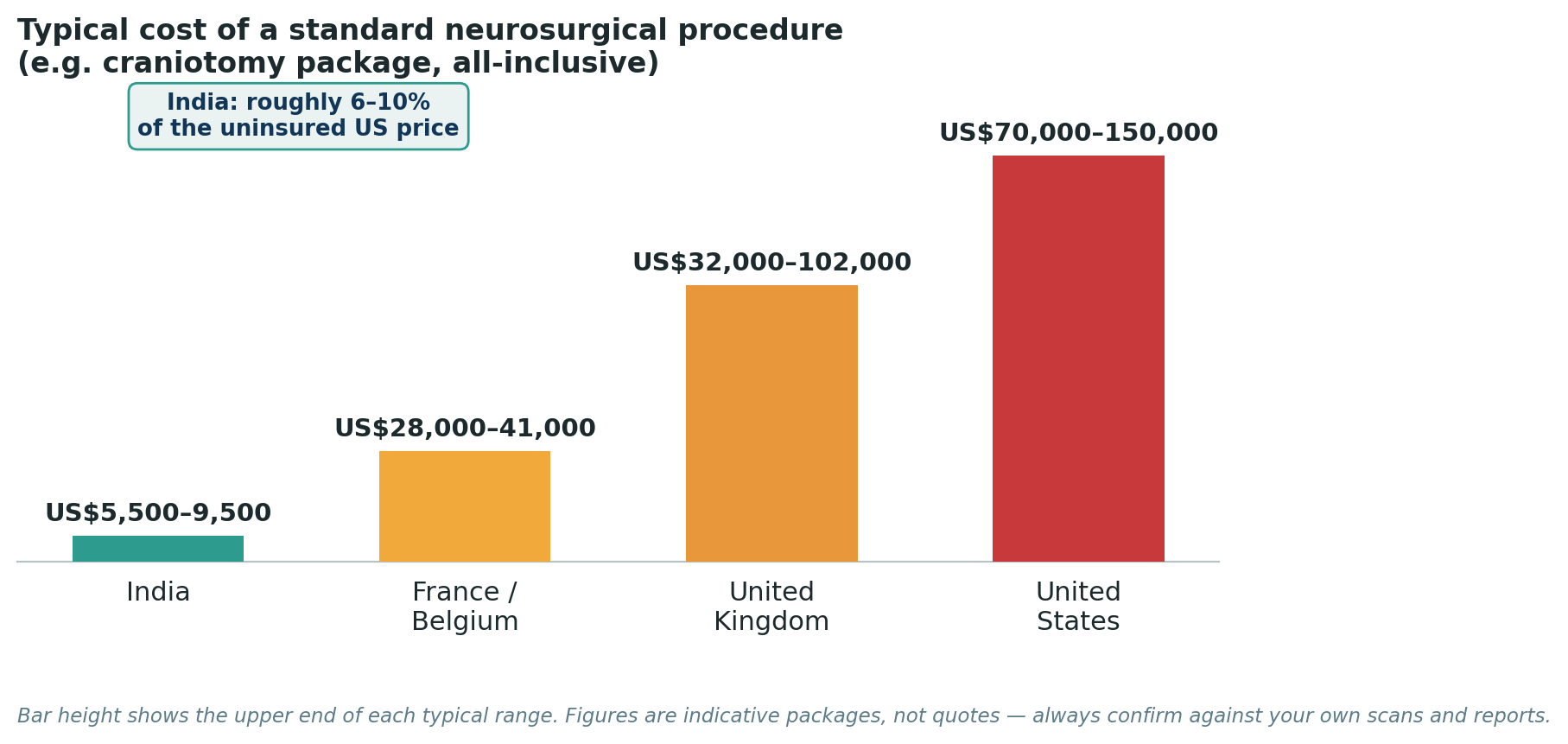
In India, a standard craniotomy package at an accredited hospital typically runs US$5,500 to US$9,500, rising to US$15,000–US$25,000 for cases needing neuronavigation, intraoperative imaging, or awake-craniotomy technique. In France or Belgium — the destinations many Congolese families consider first, given language and historical ties — private-sector costs typically run US$28,000 to US$41,000. In the UK's private sector, costs range roughly US$32,000 to US$102,000, with NHS waits for non-urgent neurosurgery often six months or more. In the United States, the same procedure commonly costs US$70,000 to US$150,000 for uninsured patients, with complex cases exceeding
US$200,000. India's typical price sits at roughly a tenth of the uninsured US figure, and meaningfully below the European private-sector alternatives most DRC families would otherwise compare against.
What the number on the quote does not always show
A written estimate should specify exactly what is included: imaging, ICU days, the surgeon's fee, implants if relevant, and a set number of follow-up consultations. In 24 years of reviewing these quotes, I have found disputes almost never concern the headline figure — they concern what it silently left out. Get every line item in writing, and never pay the full balance before surgery; a deposit against a written estimate is standard, a demand for full payment up front is not.
What a Congolese Patient Should Weigh, Specifically
- Get the imaging right before comparing quotes. A cost estimate given without your actual MRI or CT scan is a guess. Send the scan files themselves, not just the typed report.
- Match the sub-specialist to the exact condition — ask for the name and case volume of the specific surgeon who will operate, not just the department's reputation.
- Budget in US dollars, with margin. The Congolese franc has weakened considerably against the dollar (roughly CDF 2,300–2,350 per US$1 in mid-2026, and it moves), and Indian hospitals quote in dollars. Build in a 15–20% buffer above the initial estimate.
- Start the visa process early. DRC passport holders need a paper medical visa, not an e-visa, through the Embassy of India in Kinshasa (Avenue Batetela, Gombe). Processing takes roughly two weeks once the hospital's invitation letter is ready; apply for a matching attendant visa for a companion at the same time.
- Confirm your yellow fever certificate is current — the DRC is yellow fever-endemic, and proof of vaccination is required for entry into India, at least 10 days before travel.
- Plan the route realistically. There is no direct flight from Kinshasa to India. Ethiopian Airlines via Addis Ababa is the most frequent option; Kenya Airways, Air France, and Qatar Airways offer alternatives — total journey time typically 16 to 20 hours. A changeable return ticket is worth the cost.
- Ask about French-speaking coordination — a good programme provides a coordinator comfortable in French, not only English.
- Arrange after-care in the DRC before you fly. Identify which doctor at home will monitor recovery and read follow-up scans, and ask the Indian hospital for a written handover plan.
- Get a second opinion before anything irreversible — a delay of a few days for an independent read of the scans is almost always worth it.
The Journey, Start to Finish
For a planned (non-emergency) case, the realistic timeline from first contact to returning home runs roughly six to seven weeks, though it varies by procedure and recovery needs.
Four signals that should make you pause
- A quote given before anyone has actually reviewed your scans.
- Pressure to pay the full balance, or book flights, before a written surgical opinion exists.
- No named sub-specialist — only a general promise of "our neurosurgery team".
- No clear plan for what happens medically once you are back in the DRC.
Why India Specifically for Neurosurgery for Congolese Patients?
India combines four things that matter together: genuine surgical volume at its leading neuroscience centres, where surgeons routinely perform hundreds of cranial and spinal procedures a year; modern technology — neuronavigation, intraoperative MRI, awake-craniotomy mapping — used as everyday equipment, not a showcase; English-language consultation throughout, with no interpreter needed for the medical conversation; and hospital accreditation (NABH domestically, JCI internationally) that mirrors the standards used to evaluate hospitals in the US and Europe. Weighed against France, Belgium, or South Africa, that combination of depth, technology, and cost is genuinely competitive, not a compromise.
A closing word
Not every Congolese patient told they need a "neurosurgeon" needs to board a plane. Some cases are handled perfectly well in Kinshasa, and I will say so honestly if that is what your scans show. But where the condition is complex, rare, or needs equipment and sub-specialist volume that simply is not available at home, a well-chosen programme in India can offer both a safer outcome and a fraction of the cost of the Western alternatives most families consider first. If you are able to share your scans and reports, I am glad to look them over and give a direct, honest view — including telling you if travel is not what your case needs.
Sources
- 🌐 National Medical Commission of India — verify any surgeon's registration · nmc.org.in
- 🌐 National Accreditation Board for Hospitals & Healthcare Providers (NABH) · nabh.co
- 🌐 Embassy of India, Kinshasa — medical visa requirements · eoikinshasa.gov.in
- 🌐 Kabulo et al., "Neurosurgery in the Democratic Republic of Congo," Egyptian Journal of Neurosurgery (2024) · doi.org/10.1186/s41984-024-00352-2
- 🌐 Ngalula et al., "Epidural and Subdural Hematomas in the DRC," Cureus (2025) · doi: 10.7759/cureus.92619
- 🌐 World Health Organization — yellow fever vaccination requirements · who.int/health-topics/yellow-fever
Frequently Asked Questions by Congolese Patients about Neurosurgery in India
What conditions does neurosurgery cover?
Neurosurgery covers brain tumours, aneurysms and haemorrhage, hydrocephalus, spine conditions, traumatic injuries and movement disorders, among other conditions.
Why do some Congolese patients seek neurosurgery in India?
The guide highlights the low neurosurgeon density and limited access to specialist equipment in the DRC, particularly for complex or highly specialised cases.
Does every patient needing a neurosurgeon need to travel to India?
No. The guide specifically states that some straightforward cases can be managed well in Kinshasa. International treatment becomes more relevant when the condition is complex, rare or requires sub-specialist volume or technology not readily available locally.
How much does standard neurosurgery cost in India?
A standard craniotomy package is indicated at approximately US$5,500–9,500 at an accredited Indian hospital.
How much can advanced brain surgery cost?
Cases requiring neuronavigation, intraoperative imaging or awake-craniotomy techniques may cost approximately US$15,000–25,000 in India.
Should I send my scans before requesting a quotation?
Yes. The guide recommends sending the actual MRI or CT scan files, because a quotation provided without reviewing the patient's imaging is essentially an estimate without the necessary clinical information.
How should I choose the neurosurgeon?
Ask for the specific sub-specialist who will perform the procedure and how many times that exact operation has been performed at the centre during the past year.
What should the neurosurgery quotation include?
The written estimate should identify imaging, ICU days, surgeon fees, implants where relevant and a defined number of follow-up consultations.
How long does a planned treatment journey take?
The guide gives a typical planned-case journey of approximately six to seven weeks, although the actual duration depends on the procedure, recovery and individual circumstances.
What should Congolese patients arrange before returning home?
Arrange a named doctor in the DRC to monitor recovery and review follow-up scans, and request a written medical handover from the Indian hospital before returning home.
Page Summary
This guide helps Congolese patients understand neurosurgical treatment in India, covering brain, spine, aneurysm, hydrocephalus and other neurological conditions. The page 2 graphic highlights the major difference in neurosurgeon density between the DRC, the WHO benchmark and India's referral centres, while the page 3 chart compares standard neurosurgery costs across India and Western countries. The page 5 journey timeline adds practical guidance on records, visas, travel, surgery, recovery and returning to the DRC with a follow-up plan.
Citation Block
| Field | Information |
|---|---|
| Topic | Neurosurgery in India for Congolese Patients |
| Treatment | Neurosurgery |
| Patients | Congolese Patients |
| Key Specialist | Condition-specific Neurosurgeon / Sub-Specialist |
| Conditions Covered | Brain tumours, aneurysms, haemorrhage, hydrocephalus, spine disorders, trauma and movement disorders |
| DRC Neurosurgeon Density | Approximately 0.19 per million |
| WHO Benchmark | 4 per million |
| India Referral Centres | Approximately 12 per million |
| Standard India Cost | US$5,500–9,500 for standard craniotomy |
| Advanced India Cost | US$15,000–25,000 |
| Advanced Technology | Neuronavigation, intraoperative imaging and awake-craniotomy techniques |
| Emergency Principle | Stabilise immediately at the nearest capable hospital |
| Imaging Requirement | Actual MRI/CT files before comparing quotes |
| Surgeon Assessment | Exact procedure volume and relevant sub-specialisation |
| Cost Transparency | Imaging, ICU, surgeon fees, implants and follow-up |
| Second Opinion | Recommended before irreversible treatment |
| Financial Planning | 15–20% buffer above initial estimate |
| Visa | Paper medical visa and attendant visa |
| Entry Requirement | Yellow-fever certificate |
| Travel | Connecting route from Kinshasa to India |
| Planned Journey | Approximately six to seven weeks |
| Follow-Up | Named doctor and written handover in the DRC |
| Warning Signs | Quote without scan review, no named sub-specialist, advance-payment pressure or no after-care plan |
| Key Decision | Match the patient's exact condition with the appropriate specialist and centre |

Our Mission Statement
Our mission is to place patients at the centre of every healthcare decision by providing trustworthy, evidence-based, and unbiased medical information. We believe that informed patients make better decisions. Backed by personalised guidance from our experienced advisory team, we help patients understand their treatment options, compare them objectively, and confidently choose the path that best suits their medical needs and personal circumstances.
Patient Testimonials from Congo
Ready to Take the First Step?
Share your medical reports with our healthcare managers today and receive a FREE CONSULTATION, a personalized treatment plan and complete support from your arrival to your recovery.
Get Your Free ConsultationAreas We Serve
At Indian Health Guru Consultants, we proudly assist patients from Congo and neighboring countries across Central, East and Southern Africa who travel to India for advanced medical treatment. Our experienced international patient team provides end-to-end support, including medical opinions, hospital selection, Medical Visa assistance, travel planning, accommodation, interpreter services and post-treatment follow-up.
We regularly serve patients from:
- Gabon
- Cameroon
- Angola
- Uganda
- Rwanda
- Burundi
- Tanzania
- Zambia
- Djibouti
- Comoros
- Madagascar
- Seychelles
- South Sudan
- Central African Republic
- Republic of the Congo
- Democratic Republic of the Congo
No matter where you are located in the region, Indian Health Guru Consultants is committed to making your medical journey to India safe, affordable, seamless and completely patient-focused.
From Congo to India: Your Complete Patient Guide
- Brain Tumor Surgery in India for Congolese Patients
- Best Brain Tumour Surgeons & Hospitals in India for Congo Patients
- Knee Replacement in India for Congolese Patients
- Best Knee Replacement Surgeons & Hospitals in India for Congolese Patients
- Spine Surgery in India for Congolese Patients
- Best Spine Surgeons & Hospitals in India for Congolese Patients
- Liver Transplant in India for Congolese Patients: Cost & Guide
- Best Liver Transplant Centres and Hospitals in India for Congolese Patients
- Cardiac Surgery in India for Congolese Patients: Cost & Guide
- Best Cardiac Surgeons & Hospitals in India for Congolese Patients
- Bone Marrow Transplant in India for Congolese Patients: Cost & Guide
- Best Bone Marrow Transplant Centres and Hospitals in India for Congolese Patients
- Prostate Cancer Treatment in India for Congolese Patients: Cost & Guide
- Best Prostate Cancer Centres and Hospitals in India for Congolese Patients
- HIPEC in India for Congolese Patients: Cost & Treatment Guide
- Best HIPEC Centres and Hospitals in India for Congolese Patients
- Kidney Transplant in India for Congolese Patients: Cost & Guide
- Best Kidney Transplant Centres and Hospitals in India for Congolese Patients