

Complex Orthopaedic and Joint Revision Surgery in India for Congolese Patients: What It Costs, and How to Decide Well
A practical guide for Congolese patients considering complex orthopaedic and joint revision surgery in India, covering specialist experience, implants, infection management, costs and recovery.
Ajoint replacement that has loosened, dislocated, or become infected years after the original surgery presents a genuinely different problem from the first operation — and, in the DRC specifically, one with essentially nowhere local to turn. In 24 years of advising patients on complex orthopaedic cases, I have found that revision surgery is consistently underestimated, both in how different it is from primary surgery and in how much scarcer the expertise to perform it well remains, even where primary joint replacement has begun to take hold. This guide sets out plainly what that means, and what treatment in India costs against the Western alternatives some patients consider. None of this is meant to discourage anyone from having their original surgery locally where that was the right choice — it is meant to prepare families honestly for what comes next if a complication does arise.
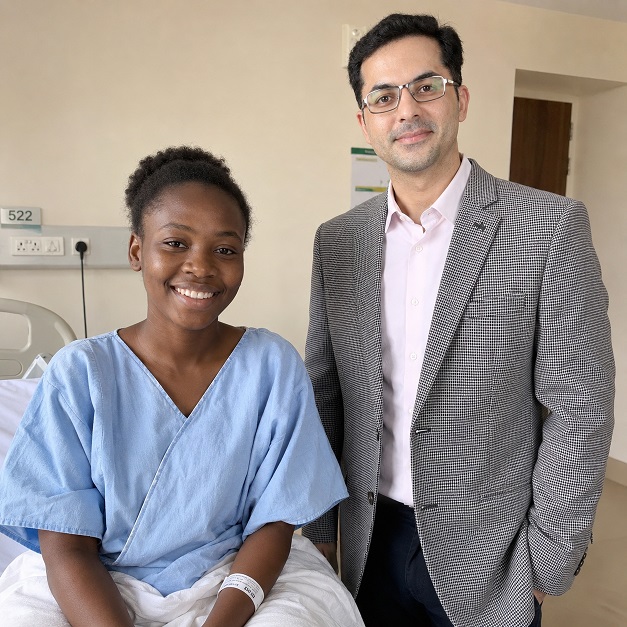
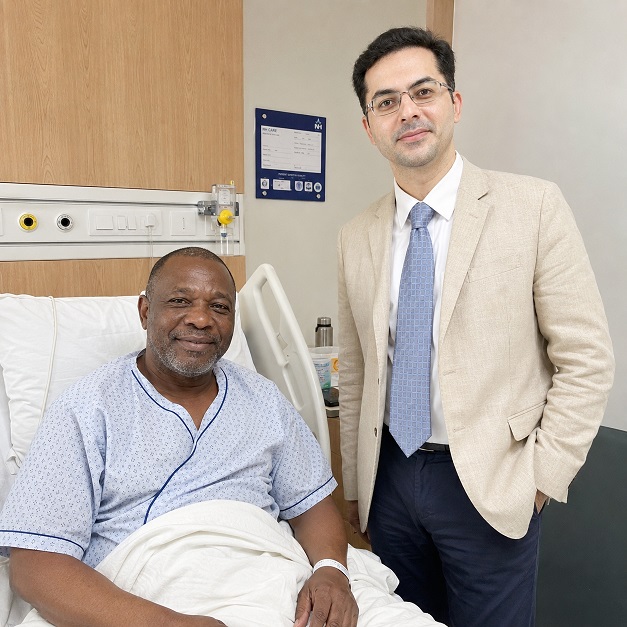
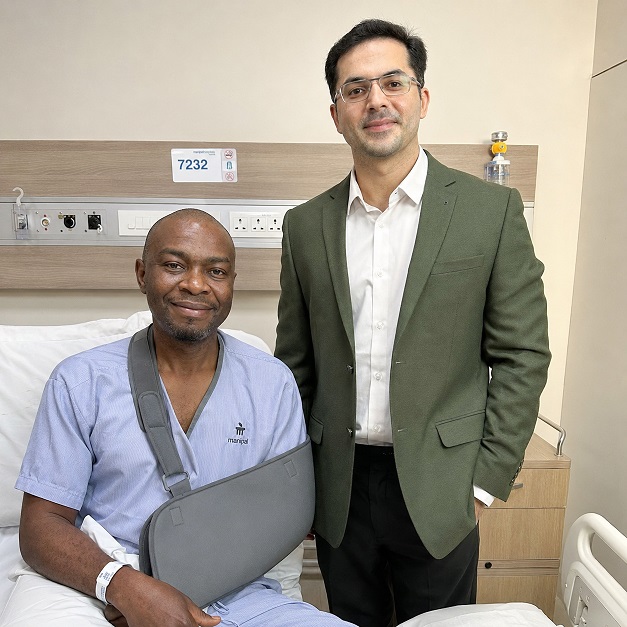
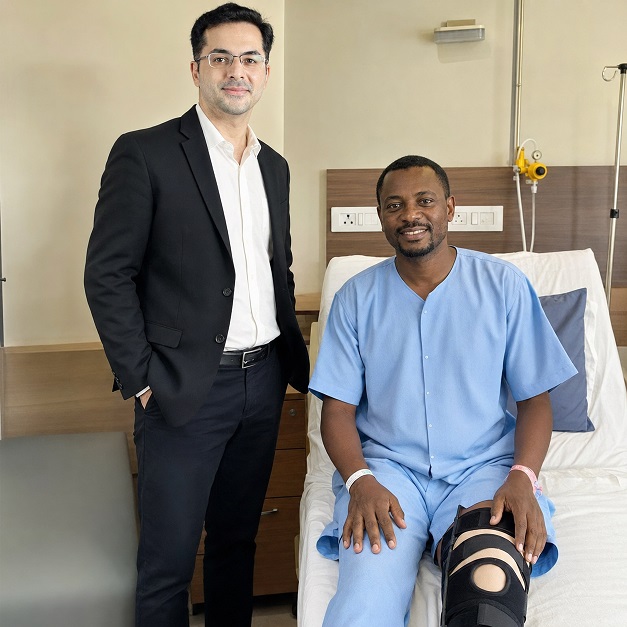
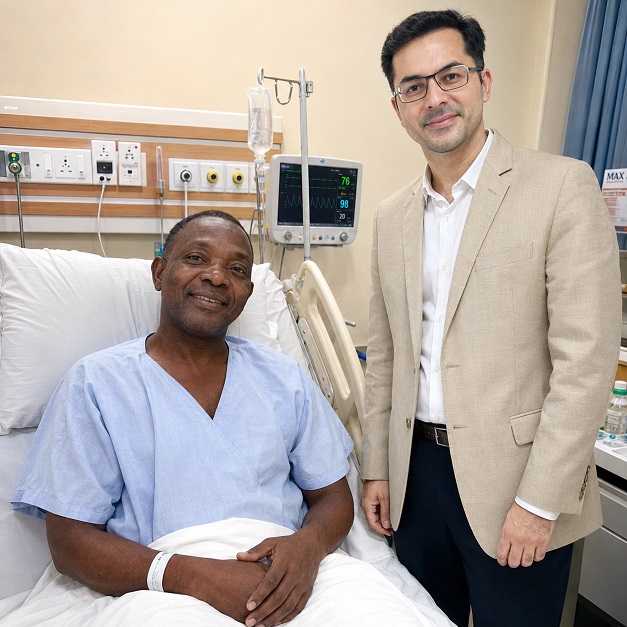
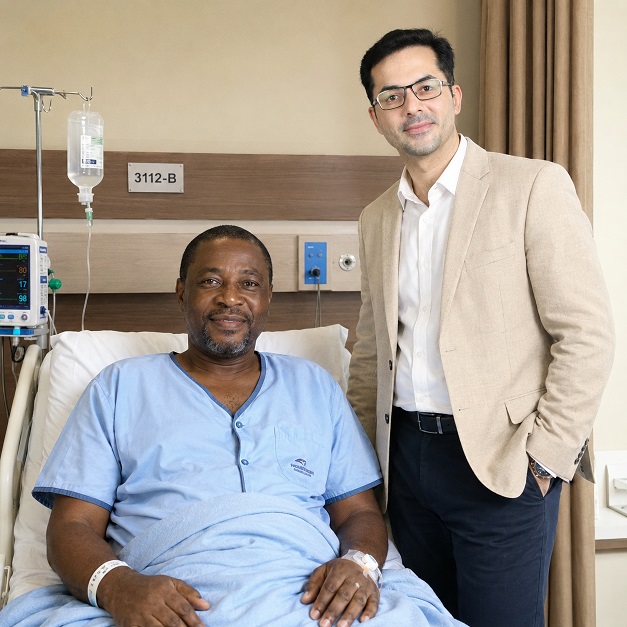
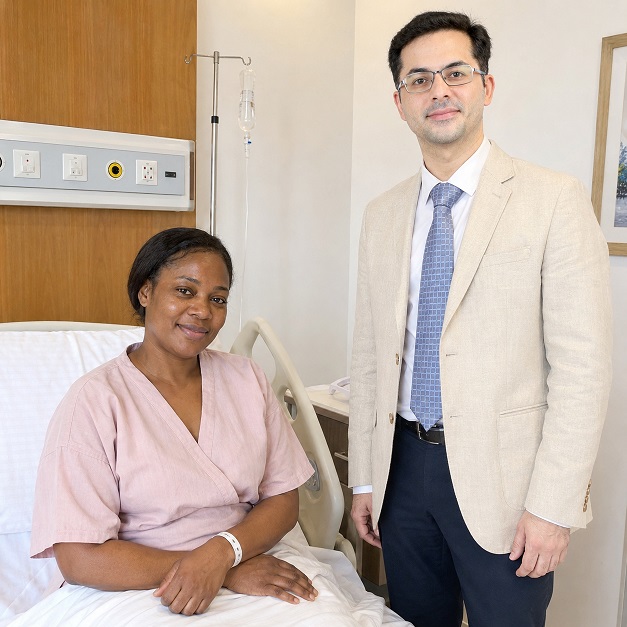
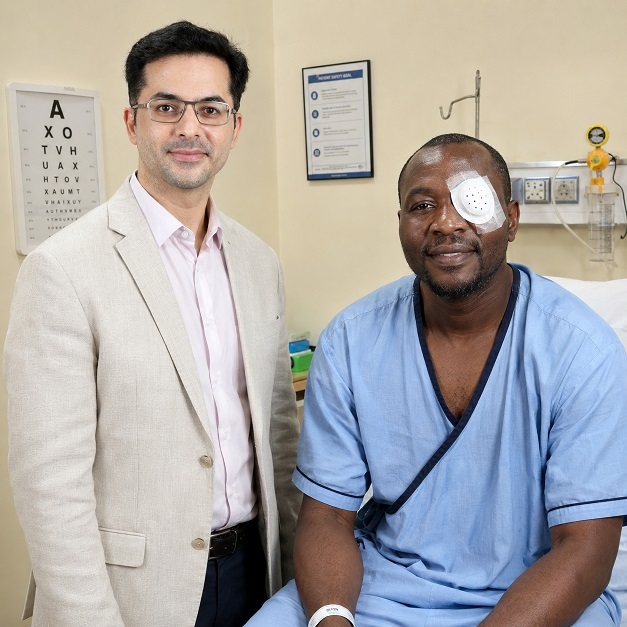
Healing Journeys of Congolese Patients
Key Takeaways
- The guide explains that failed joint replacement is not simply the same operation repeated. Revision surgery can involve reduced bone stock, specialised or augmented implants, longer operating times and higher infection risk. A hospital experienced in primary joint replacement is therefore not automatically equipped for complex revision surgery.
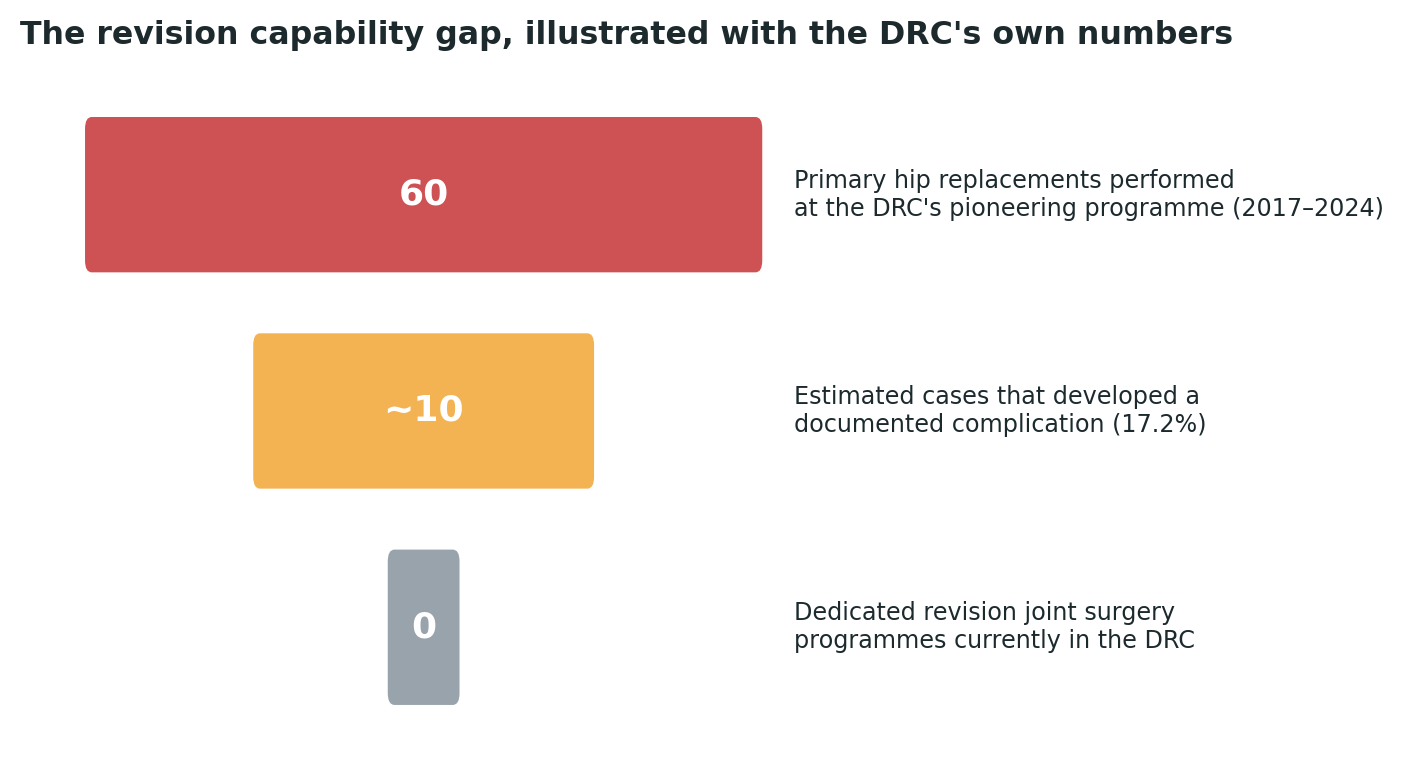
- The page 2 graphic uses the DRC's documented hip replacement experience to illustrate the revision-capability gap. Of 60 hip replacements performed between 2017 and 2024, 17.2% experienced a documented complication, including dislocation, infection, fracture or loosening, while the guide notes that there is currently no dedicated local revision joint surgery programme.
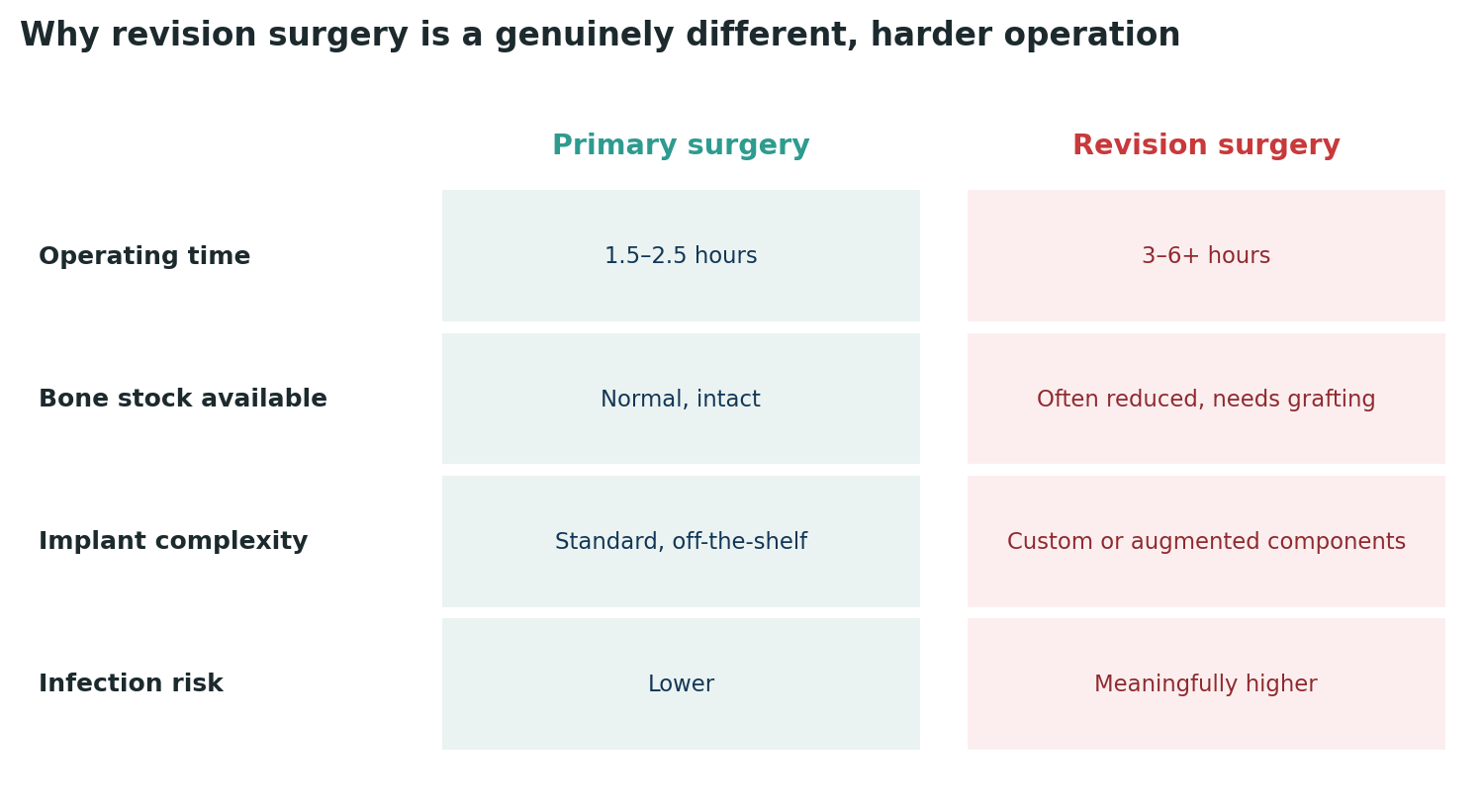
- The page 3 comparison shows why revision surgery is more demanding: primary surgery is illustrated at 1.5–2.5 hours, compared with 3–6+ hours for revision; bone stock may be reduced, implants may require customised or augmented components, and infection risk is meaningfully higher. The guide also extends this specialist requirement to limb salvage, fracture nonunion and complex trauma reconstruction.
- The page 4 cost chart gives an indicative range of US$6,000–15,000 in India, compared with US$30,000–55,000 in France/Belgium, US$35,000–70,000 in the UK private sector and US$60,000–100,000 in the US. The guide stresses that the quotation should state whether it accounts for unexpected bone loss, specialised implants and changes in surgical technique.
- For Congolese patients, the guide recommends sending actual imaging of the failed implant, confirming revision-specific case volume, asking about contingency planning for unexpected bone loss and understanding the infection-management strategy. Patients should budget in US dollars with a 20–25% financial buffer, begin the medical and attendant visa process early, carry a current yellow-fever certificate and plan for a longer recovery stay.
- The guide identifies four warning signs: no disclosed revision-specific case volume, no bone-stock or contingency discussion, no clear infection-management plan and pressure to pay the full balance before a written surgical plan exists. It emphasises that patients should choose a centre for genuine revision expertise rather than relying only on its reputation for primary joint replacement.
Quick Facts
- Author
- Dr. Dheeraj Bojwani
- Experience
- 24+ Years
- Treatment
- Complex Orthopaedic & Joint Revision Surgery
- Patients
- Congolese Patients
- Key Specialist
- Revision Joint / Complex Orthopaedic Surgeon
- First Step
- Confirm the exact cause of joint failure or complexity
- Key Check
- Revision-specific surgical experience
- Assessment
- Actual imaging of the failed implant
- Bone Stock
- Assess need for grafting or augmented components
- Infection
- Confirm management and staged-surgery plan where required
- India Cost
- US$6,000–15,000 indicative range
- Cost Check
- Specialised implants, surgery and possible additional requirements
- Financial Buffer
- 20–25% above initial estimate
- Second Opinion
- Recommended before revision surgery
- Visa
- Paper medical and attendant visas
- Entry Requirement
- Current yellow-fever certificate
- Follow-Up
- Plan for extended recovery and care after returning to the DRC
- Key Warning
- Do not choose a centre based only on primary joint replacement volume
- Decision Principle
- Choose genuine revision-specific expertise, appropriate implants and a clear contingency plan.
In Brief
For Congolese patients with a failed joint replacement or unusually complex orthopaedic condition, the guide recommends choosing a centre with genuine revision-specific expertise rather than general joint replacement experience alone. Patients should verify case volume, review actual imaging, understand implant and infection-management plans, obtain transparent costs and arrange adequate recovery and follow-up time.
Why the DRC's Own Numbers Illustrate the Gap
The DRC's own pioneering hip replacement programme, discussed in more detail in this series' guide to hip replacement, has honestly documented its complication rate: 17.2% of the 60 hip replacements performed between 2017 and 2024 experienced dislocation, infection, periprosthetic fracture, or aseptic loosening.
It is worth stating clearly that this transparency itself is a genuine strength of the programme — many centres in far more resourced settings do not publish their complication rates this openly. But transparency about a problem is not the same as having a solution for it close at hand.
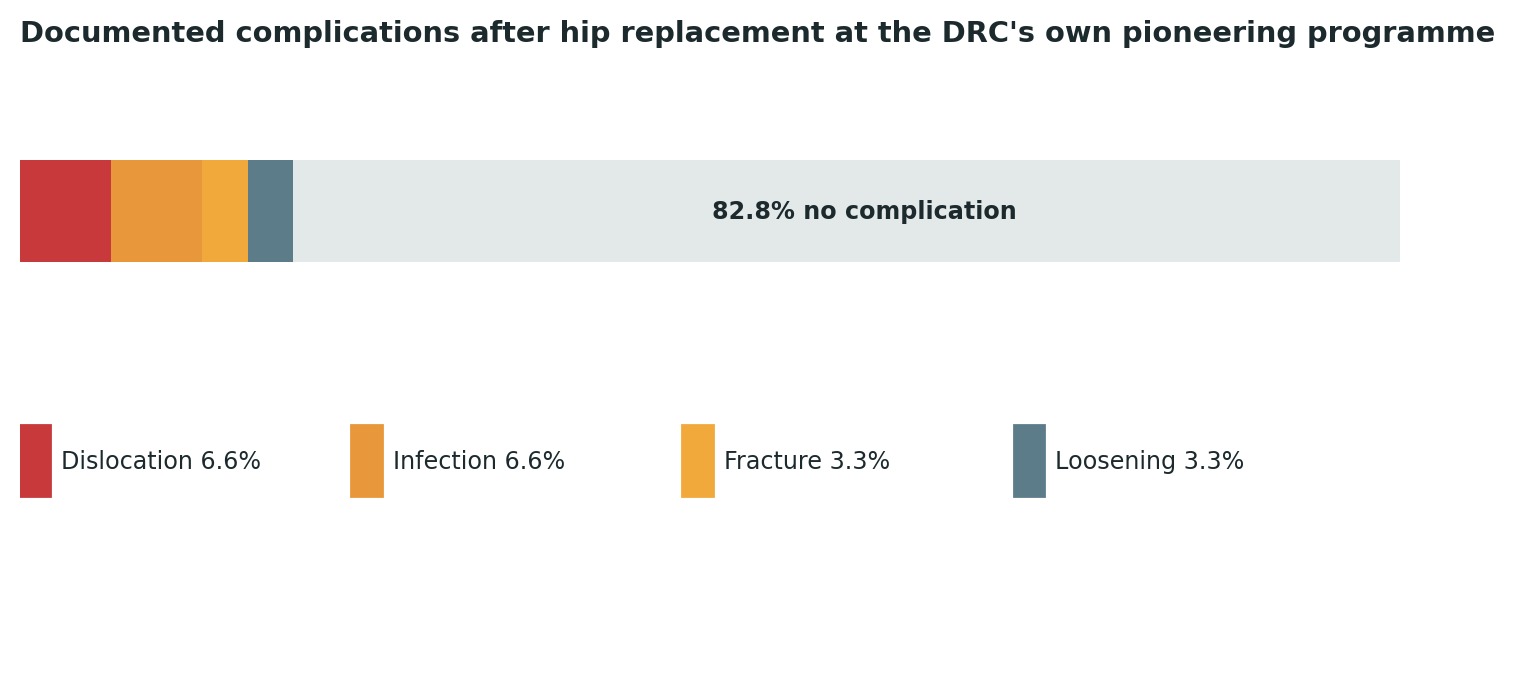
Every one of these complication types is, in principle, a candidate for revision surgery. The honest question this raises is not about the quality of the original programme — complication rates in this range are broadly comparable to other resource-limited settings globally — but about what happens next for a patient whose hip does develop one of these problems.
The one fact worth remembering
A failed joint replacement is not simply "the same surgery again." It is a genuinely more complex operation, and a centre capable of excellent primary joint replacement is not automatically equipped for revision work, which demands different implants, different surgical technique, and often a longer, more carefully staged recovery.
Why Revision Surgery Is a Different, Harder Operation
Revision surgery is more demanding than primary surgery in several concrete ways: the bone stock around a failed implant is often reduced or damaged, requiring grafting or specialised augmented components; operating time runs substantially longer; and infection risk is meaningfully higher, particularly when the original failure was itself infection-related.
Complex orthopaedic surgery extends beyond joint revision specifically — it also covers limb salvage, complex fracture nonunion, and reconstruction after inadequately treated trauma, all conditions where the DRC's documented road traffic injury burden plays a role, and all requiring the same depth of specialised experience that revision cases demand.
What This Surgery Costs: DRC Reality vs India vs the West
Cost runs meaningfully higher than primary surgery, reflecting the added complexity, implant cost, and operating time, but the relative gap between India and Western options holds fairly consistently.
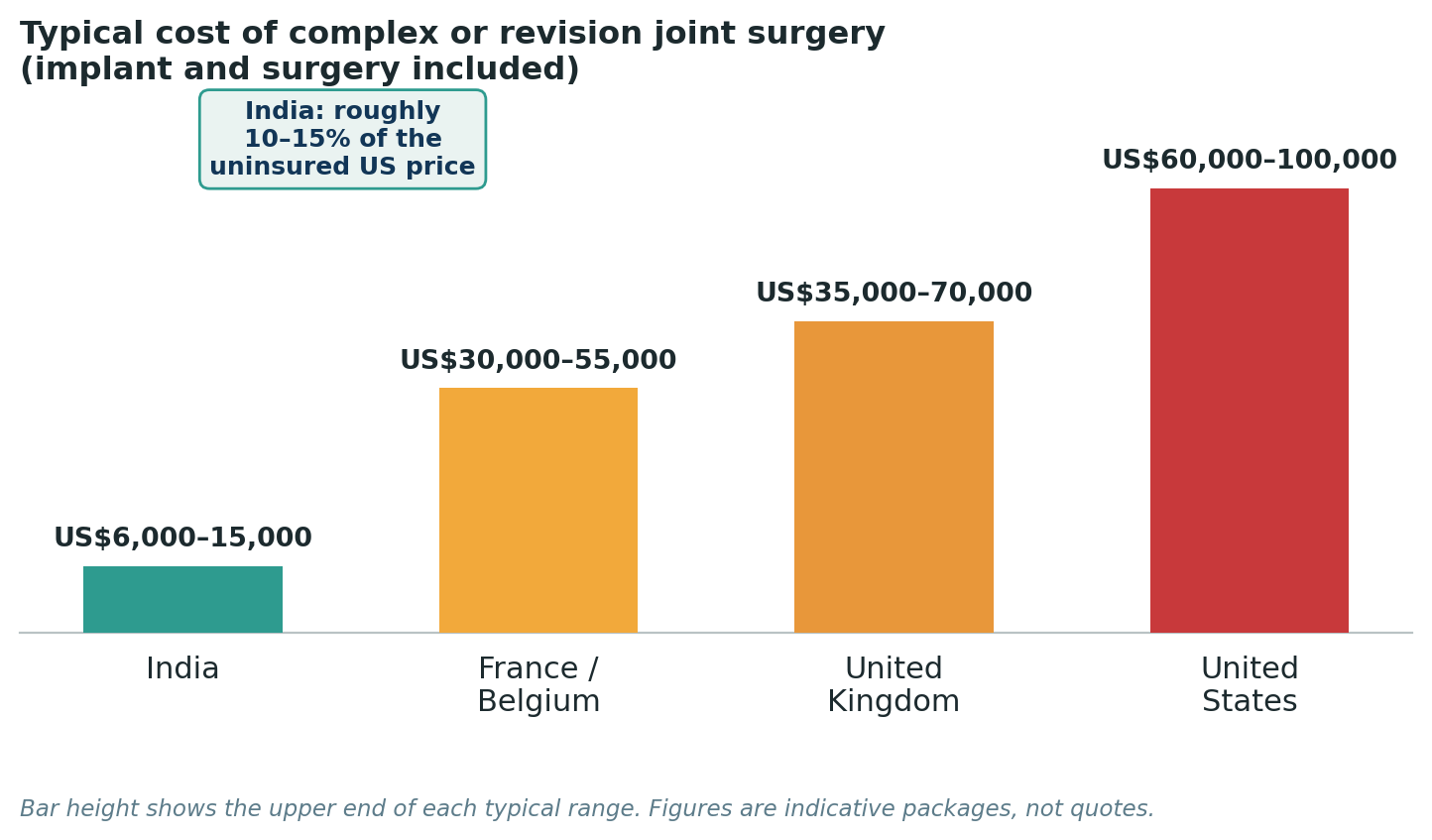
In India, complex or revision joint surgery typically costs US$6,000 to US$15,000, reflecting the more demanding implants and longer procedure involved. In France or Belgium, private-sector costs typically run US$30,000 to US$55,000. In the UK's private sector, costs range roughly US$35,000 to US$70,000. In the US, the same procedures commonly cost US$60,000 to US$100,000. India's typical price sits at roughly a tenth to an eighth of the uninsured US figure.
What the number on the quote does not always show
A written estimate should specify whether it assumes a straightforward revision or accounts for the possibility of more extensive bone loss discovered during surgery, which can meaningfully change the implants and technique required. In 24 years of reviewing these quotes, I have found disputes almost never concern the headline figure — they concern what it silently left out. Get every line item in writing, and never pay the full balance before surgery.
What a Congolese Patient Should Weigh, Specifically
- Confirm the centre has genuine revision-specific experience, not just a strong general joint replacement volume — ask directly for a revision case count.
- Send the actual imaging of your original implant, not just a description of the problem, since revision planning depends on seeing exactly what is happening around the failed component.
- Ask what the plan is if bone loss is more extensive than expected once surgery begins.
- If infection is suspected, ask specifically how it will be managed, since infected revisions often require a staged approach over multiple procedures.
- Budget in US dollars, with margin. The Congolese franc has weakened considerably against the dollar (roughly CDF 2,300–2,350 per US$1 in mid-2026, and it moves); build in a 20–25% buffer above the initial estimate, given how often revision cases prove more complex than initially assessed.
- Start the visa process early. DRC passport holders need a paper medical visa through the Embassy of India in Kinshasa (Avenue Batetela, Gombe), typically around two weeks once the hospital's invitation letter is ready; apply for an attendant visa at the same time.
- Confirm your yellow fever certificate is current — mandatory for entry into India, at least 10 days before travel.
- Plan for a longer stay than your original surgery required, given the more demanding recovery revision cases typically involve.
Four signals that should make you pause
- No specific revision case volume disclosed, only general joint replacement numbers.
- No discussion of bone stock or a contingency plan if it proves worse than expected.
- No clear infection management plan, if infection is part of your case.
- Pressure to pay the full balance before a written surgical plan exists.
Why India Specifically for Complex Orthopaedic and Joint Revision Surgery for Congolese Patients?
India operates dedicated revision joint surgery programmes with genuine, documented experience in the bone grafting, augmented implants, and staged infection management that revision cases specifically require — capability that remains essentially unavailable within the DRC given how recently primary joint replacement itself began there. Combined with English-language consultation throughout and hospital accreditation (NABH domestically, JCI internationally) that mirrors the standards used to evaluate hospitals in the US and Europe, India offers exactly the depth of specialised experience that a failed joint replacement or complex orthopaedic case genuinely requires, at a fraction of the Western cost. For a patient whose first operation did not go as hoped, that depth of experience is often the single factor that most determines whether a second attempt succeeds.
A closing word
A failed joint replacement is not a dead end, even though it can feel that way when the local options seem to run out. What matters most is finding a centre with genuine, specific revision experience, not simply a good reputation for primary surgery. If you are able to share your original surgical records and current imaging, I am glad to look them over and give a direct, honest view on what your case would involve.
Sources
- 🌐 National Medical Commission of India — verify any surgeon's registration · nmc.org.in
- 🌐 National Accreditation Board for Hospitals & Healthcare Providers (NABH) · nabh.co
- 🌐 Embassy of India, Kinshasa — medical visa requirements · eoikinshasa.gov.in
- 🌐 "Total Hip Arthroplasty in Lubumbashi (DR Congo), Outcomes in a Resource-Limited Setting" · jocr.co.in/wp/2026/03
- 🌐 World Health Organization — yellow fever vaccination requirements · who.int/health-topics/yellow-fever
Frequently Asked Questions by Congolese Patients about Complex Orthopaedic and Joint Revision Surgery in India
Why is revision joint surgery different from primary replacement?
Revision surgery may involve damaged bone stock, specialised implants, longer operating times and higher infection risk, making it substantially more demanding than the original replacement.
How significant is the documented complication burden in the DRC programme?
The guide reports 17.2% documented complications among 60 hip replacements performed between 2017 and 2024, including dislocation, infection, fracture and loosening.
Does the DRC currently have a dedicated revision joint surgery programme?
The guide states that no dedicated local revision joint surgery programme currently exists, despite documented complications that can potentially require revision.
How should patients assess a revision surgeon?
Patients should ask specifically about the surgeon's revision case volume, rather than relying on general hip or knee replacement numbers.
Why should I send actual implant imaging?
Revision planning depends on understanding exactly what is happening around the failed component, including bone loss and implant condition. Typed descriptions alone may not provide enough information.
What happens if more bone loss is found during surgery?
Patients should ask beforehand about the contingency plan, including whether bone grafting or specialised augmented components may be required and how this could affect the procedure and cost.
How is an infected joint replacement managed?
The guide stresses that infected revisions may require a staged approach involving multiple procedures, so patients should understand the proposed infection-management strategy before travelling.
How much does complex revision surgery cost in India?
The guide gives an indicative range of US$6,000–15,000, including specialised implants and surgery. Actual costs depend on the diagnosis and complexity.
How much financial buffer should Congolese patients maintain?
The guide recommends maintaining a 20–25% buffer above the initial estimate, as revision cases can prove more complex than initially assessed.
What are the main warning signs when choosing a revision centre?
Patients should pause if the centre does not disclose revision-specific case volume, cannot explain its bone-loss contingency plan, has no clear infection strategy or pressures the patient to pay the full balance before a written surgical plan exists.
Page Summary
This guide explains why complex orthopaedic and joint revision surgery requires specialised expertise beyond primary joint replacement. The page 2 graphic highlights the DRC's documented complication burden and absence of a dedicated revision programme, while page 3 compares the technical demands of primary and revision surgery. Page 4 provides international cost comparisons and patient-specific planning guidance, while page 5 outlines visa preparation, warning signs and the importance of genuine revision experience.
Citation Block
| Field | Information |
|---|---|
| Topic | Complex Orthopaedic & Joint Revision Surgery in India for Congolese Patients |
| Treatment | Joint Revision & Complex Orthopaedic Surgery |
| Patients | Congolese Patients |
| Key Specialist | Revision Joint / Complex Orthopaedic Surgeon |
| Key Difference | Revision surgery is more complex than primary joint replacement |
| Revision Assessment | Cause of failure, implant condition and bone stock |
| Surgeon Criteria | Genuine revision-specific experience and disclosed case volume |
| Imaging | Actual imaging of the original implant and current condition |
| Bone Management | Bone grafting or specialised augmented components where required |
| Implant Planning | Custom or augmented revision implants where appropriate |
| Infection Management | Clear infection assessment and staged approach where required |
| Operating Time | Illustrative revision duration of 3–6+ hours |
| DRC Context | 17.2% documented complications among 60 hip replacements in the cited programme |
| Local Revision Capacity | No dedicated revision joint surgery programme currently identified in the guide |
| Indicative India Cost | US$6,000–15,000 |
| Cost Transparency | Account for possible bone loss, specialised implants and additional procedures |
| Financial Buffer | 20–25% |
| Second Opinion | Recommended before treatment |
| Recovery | Plan for a longer stay than primary surgery |
| Travel Documents | Paper medical and attendant visas |
| Entry Requirement | Current yellow-fever certificate |
| Warning Signs | No revision volume, no contingency plan, unclear infection management or early full-payment pressure |
| Follow-Up | Plan continued orthopaedic care after returning to the DRC |
| Key Decision | Select a centre with genuine revision-specific expertise, not simply strong primary joint replacement volume |


Our Mission Statement
Our mission is to place patients at the centre of every healthcare decision by providing trustworthy, evidence-based, and unbiased medical information. We believe that informed patients make better decisions. Backed by personalised guidance from our experienced advisory team, we help patients understand their treatment options, compare them objectively, and confidently choose the path that best suits their medical needs and personal circumstances.
Patient Testimonials from Congo
Ready to Take the First Step?
Share your medical reports with our healthcare managers today and receive a FREE CONSULTATION, a personalized treatment plan and complete support from your arrival to your recovery.
Get Your Free ConsultationAreas We Serve
At Indian Health Guru Consultants, we proudly assist patients from Congo and neighboring countries across Central, East and Southern Africa who travel to India for advanced medical treatment. Our experienced international patient team provides end-to-end support, including medical opinions, hospital selection, Medical Visa assistance, travel planning, accommodation, interpreter services and post-treatment follow-up.
We regularly serve patients from:
- Gabon
- Cameroon
- Angola
- Uganda
- Rwanda
- Burundi
- Tanzania
- Zambia
- Djibouti
- Comoros
- Madagascar
- Seychelles
- South Sudan
- Central African Republic
- Republic of the Congo
- Democratic Republic of the Congo
No matter where you are located in the region, Indian Health Guru Consultants is committed to making your medical journey to India safe, affordable, seamless and completely patient-focused.
From Congo to India: Your Complete Patient Guide
- Brain Tumor Surgery in India for Congolese Patients
- Best Brain Tumour Surgeons & Hospitals in India for Congo Patients
- Knee Replacement in India for Congolese Patients
- Best Knee Replacement Surgeons & Hospitals in India for Congolese Patients
- Spine Surgery in India for Congolese Patients
- Best Spine Surgeons & Hospitals in India for Congolese Patients
- Liver Transplant in India for Congolese Patients: Cost & Guide
- Best Liver Transplant Centres and Hospitals in India for Congolese Patients
- Cardiac Surgery in India for Congolese Patients: Cost & Guide
- Best Cardiac Surgeons & Hospitals in India for Congolese Patients
- Bone Marrow Transplant in India for Congolese Patients: Cost & Guide
- Best Bone Marrow Transplant Centres and Hospitals in India for Congolese Patients
- Prostate Cancer Treatment in India for Congolese Patients: Cost & Guide
- Best Prostate Cancer Centres and Hospitals in India for Congolese Patients
- HIPEC in India for Congolese Patients: Cost & Treatment Guide
- Best HIPEC Centres and Hospitals in India for Congolese Patients
- Kidney Transplant in India for Congolese Patients: Cost & Guide
- Best Kidney Transplant Centres and Hospitals in India for Congolese Patients