

Selecting the Best Noma Reconstructive Surgery Centres in India — A Congolese Family's Guide
A practical guide to comparing noma reconstruction centres in India based on specialist experience, staged surgical planning, functional restoration, nutrition, costs and follow-up.
Choosing a noma reconstructive surgery centre means verifying both the surgeon's genuine experience with this exact, unusually complex kind of facial reconstruction, and the hospital's ability to plan and deliver a full multi-stage programme over time, not just a single operation. In 24 years of guiding families through this decision, I have found that noma reconstruction is genuinely different from most procedures in this series: it demands both individual surgical skill and sustained institutional planning in roughly equal measure. This guide sets out, plainly, how to judge both. Given how rare genuine experience with this specific condition remains worldwide, this decision deserves particularly careful attention.
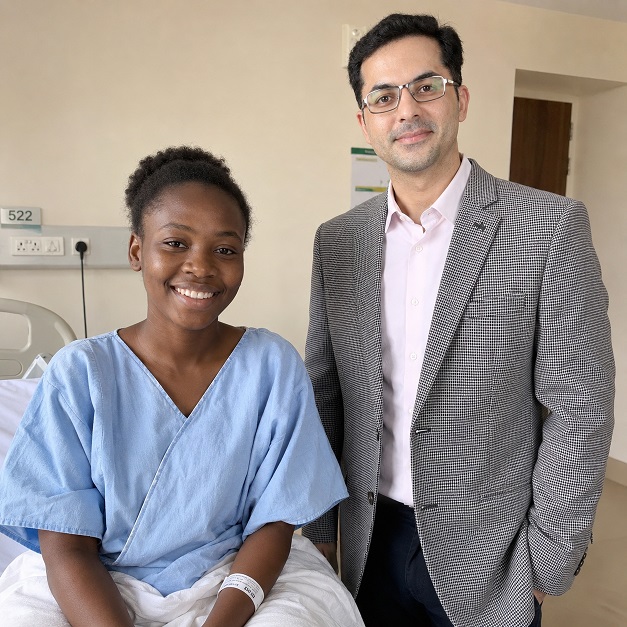
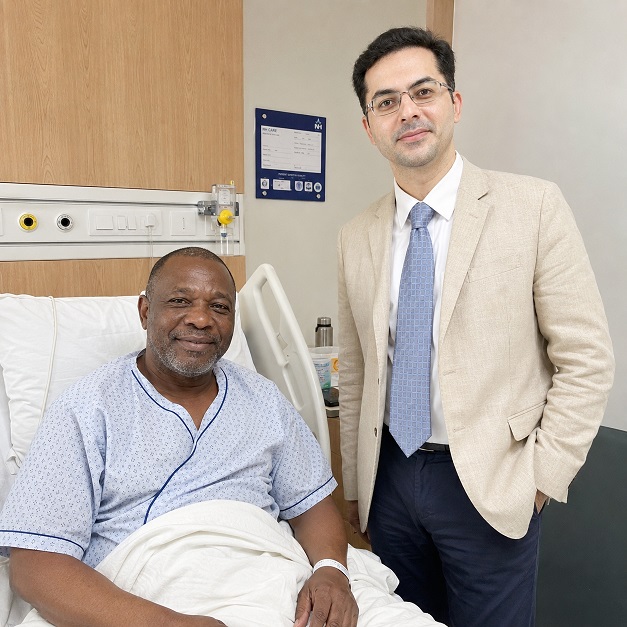
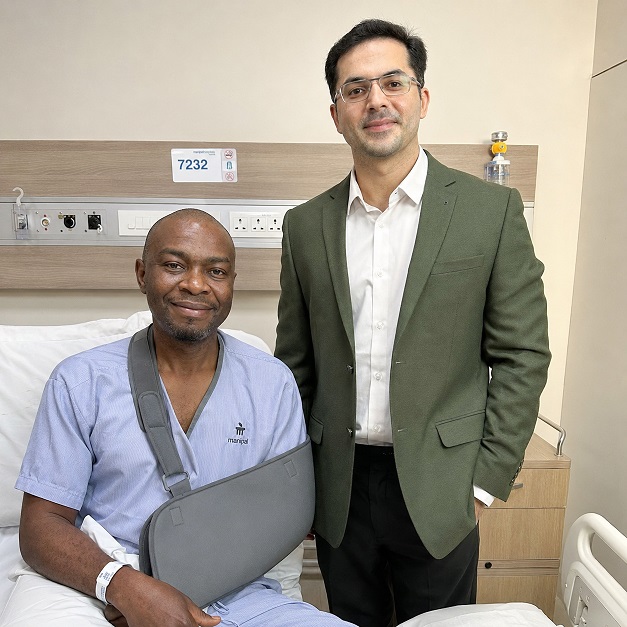
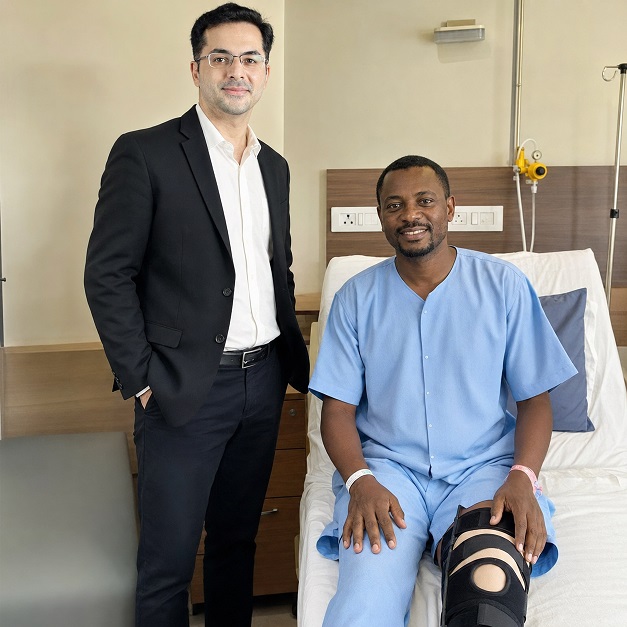
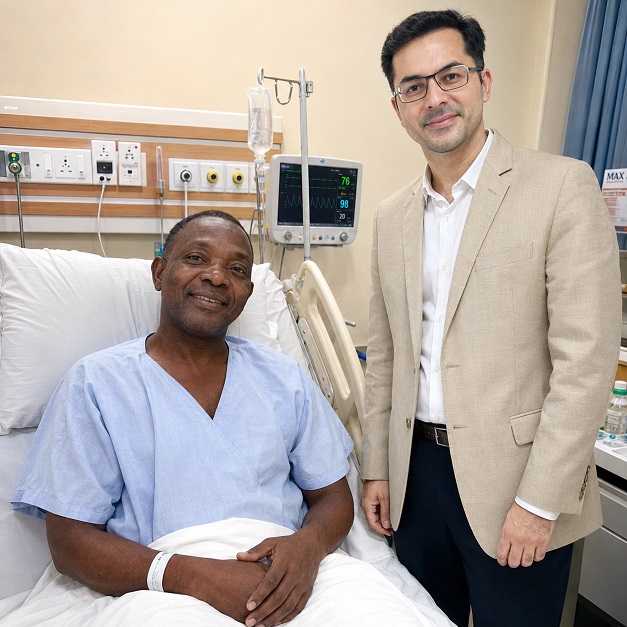
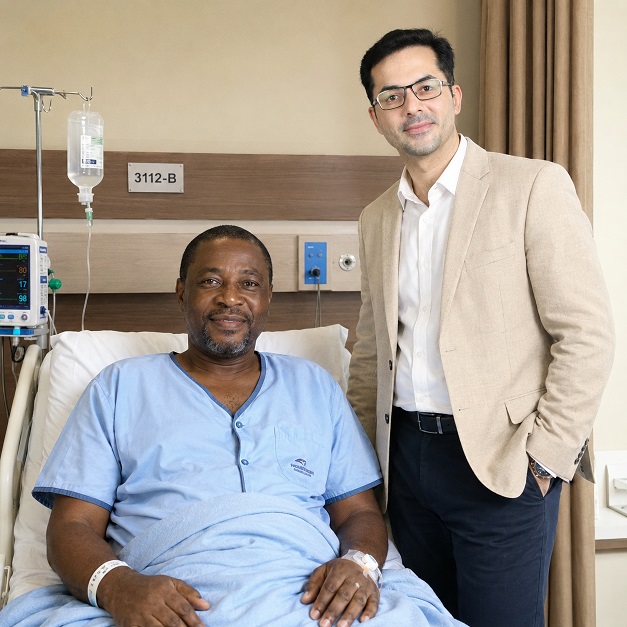
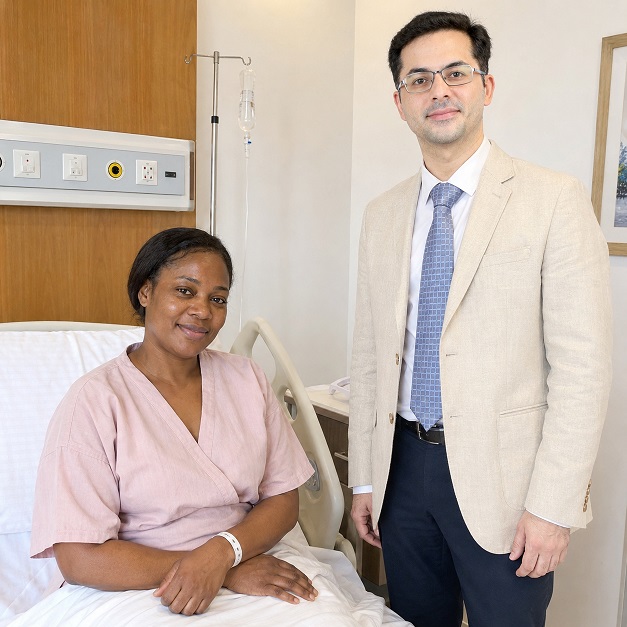
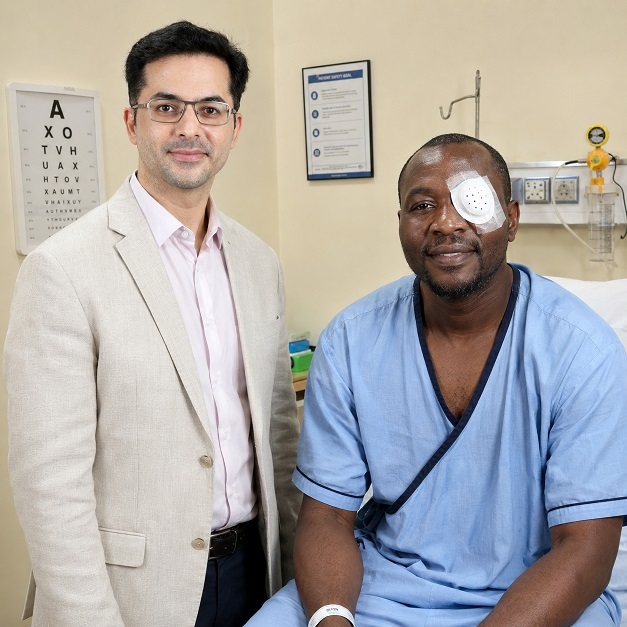
Healing Journeys of Congolese Patients
Key Takeaways
- The guide explains that noma reconstruction is unusually complex and should not be treated as a routine facial reconstruction procedure. The extent of tissue and bone destruction can vary considerably, so a genuine assessment must be completed before the centre proposes the number of operations, treatment timeline or final cost.
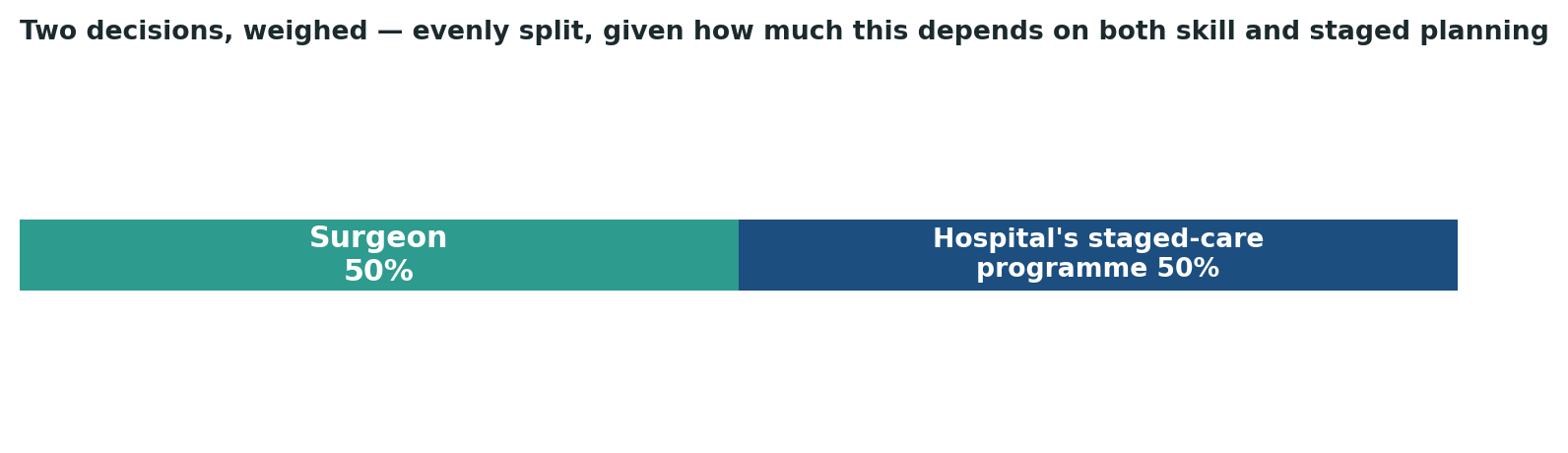
- Unlike many procedures in the series, the guide gives equal importance to the surgeon and the hospital's staged-care programme: 50% each. This reflects the fact that noma reconstruction may require several operations over an extended period, making sustained institutional coordination as important as the individual surgeon's technical expertise.
- The guide prioritises a named surgeon with genuine noma or comparable complex facial-reconstruction experience, rather than relying on general plastic or maxillofacial experience alone. Families should ask specifically about cases involving similar patterns of tissue loss.
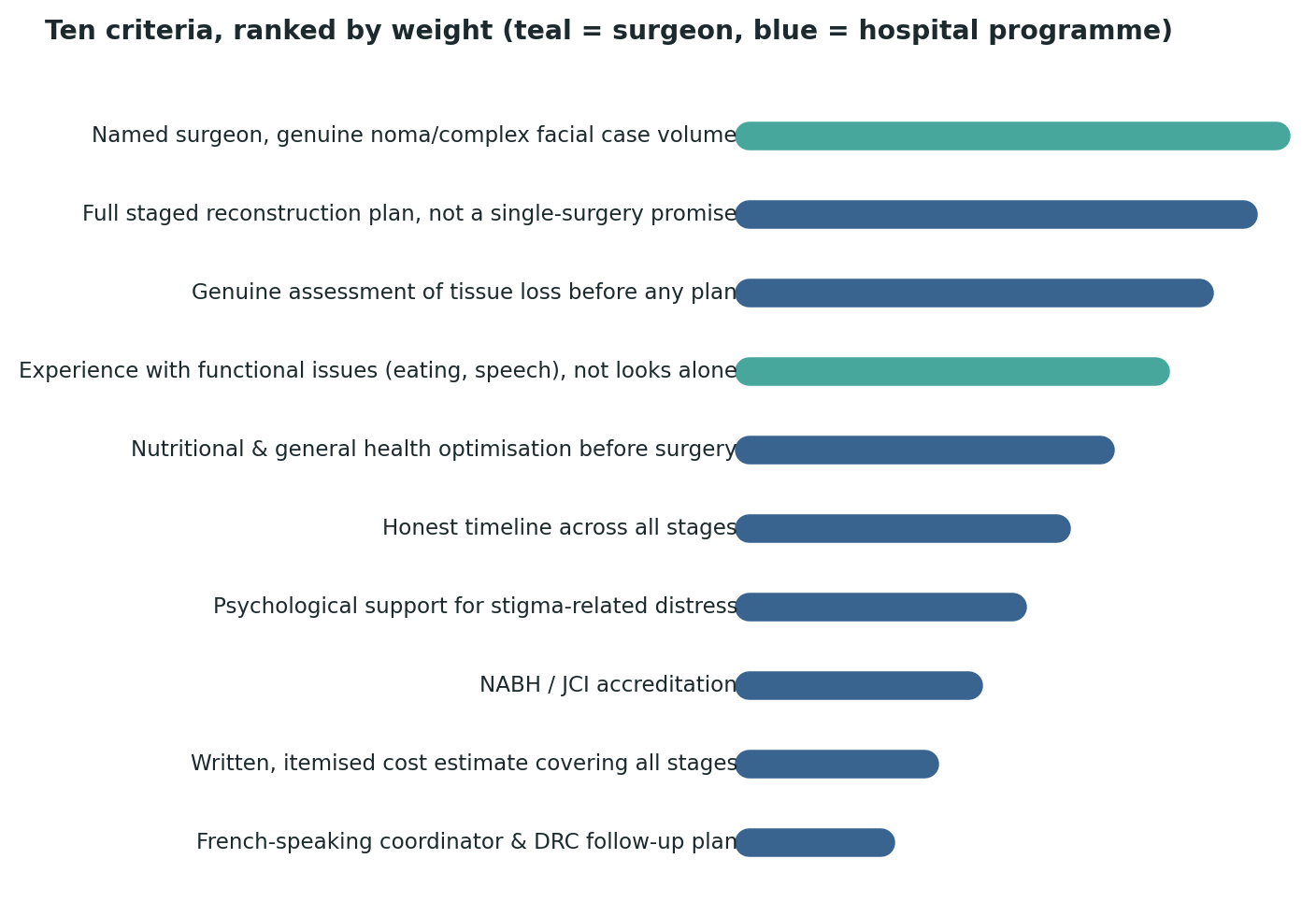
- The page 2 ranking chart places genuine complex facial case volume and a complete staged reconstruction plan at the top. It also highlights functional restoration involving eating and speech, nutritional and general health optimisation before surgery, realistic timelines, psychological support, accreditation, complete costing and a DRC follow-up plan.
- The guide strongly warns against single-surgery promises for extensive noma-related tissue loss. Families should ask the hospital to provide a stage-by-stage plan and cost estimate because presenting the price of one operation as the total reconstruction cost can create significant financial and planning problems later.
- For Congolese families, the guide recommends sending clear photographs and the complete medical history to each centre being compared. They should ask how many stages are anticipated, how long the full process may take and maintain a 15–20% financial margin across the complete multi-stage programme.
- The guide also highlights nutritional optimisation before surgery, as general health can materially affect surgical outcomes. Functional recovery should be assessed alongside facial appearance, particularly where noma has affected eating, speech or other important facial functions.
- For travel from the DRC, passport holders require a paper Indian medical visa through the Embassy of India in Kinshasa, with the guide noting that this may need to be repeated for multiple surgical trips. A current yellow fever certificate dated at least 10 days before each trip is also highlighted.
Quick Facts
- Author
- Dr. Dheeraj Bojwani
- Experience
- 24+ Years
- Treatment
- Noma Reconstructive Surgery
- Patients
- Congolese Patients
- First Assessment
- Full assessment of tissue and bone loss
- Key Specialist
- Complex Facial / Maxillofacial Reconstructive Surgeon
- Decision Weighting
- Surgeon 50% / Hospital Staged-Care Programme 50%
- Case Volume
- Specific noma or comparable complex facial cases
- Treatment Plan
- Complete multi-stage reconstruction
- Functional Check
- Eating and speech
- Health Check
- Nutritional and general health optimisation
- Timeline
- Realistic timeframe across all stages
- Hospital Check
- NABH / JCI accreditation
- Cost Check
- Written estimate covering all anticipated stages
- Medical Records
- Clear photographs and complete medical history
- Visa
- Paper medical visa through Kinshasa
- Budget
- 15–20% financial margin
- Travel
- Multiple trips may be required
- Entry Requirement
- Current yellow fever certificate
- Follow-Up
- DRC follow-up plan
- Key Warning
- Single surgery presented as the complete solution
- Decision Principle
- Verify specific surgeon expertise and the hospital's complete staged-care programme.
In Brief
For Congolese families seeking noma reconstruction in India, the most important checks are specific complex facial-reconstruction experience, a complete multi-stage treatment plan, functional restoration of eating and speech, nutritional optimisation and transparent stage-by-stage costing. Families should verify these before committing to travel or paying a deposit.
First, Get a Genuine Assessment of the Full Extent
Before comparing centres, make sure the evaluation includes a full, honest assessment of the tissue and bone loss involved, since this determines the entire scope and number of stages your case will require.
A centre that offers a treatment plan and price before this assessment is working from an incomplete picture. Given how variable noma's tissue destruction can be from one child to the next, a generic plan applied without this specific evaluation cannot genuinely reflect what your case actually needs.
Two Decisions, Weighed Evenly
Choosing well depends on two things in roughly equal measure: the surgeon's own personal skill and experience, and the hospital's genuine staged-care programme. Noma reconstruction sits apart from most procedures in this series in this respect, demanding both individual expertise and sustained institutional coordination across what is often a multi-year process.
What to Verify, in Order
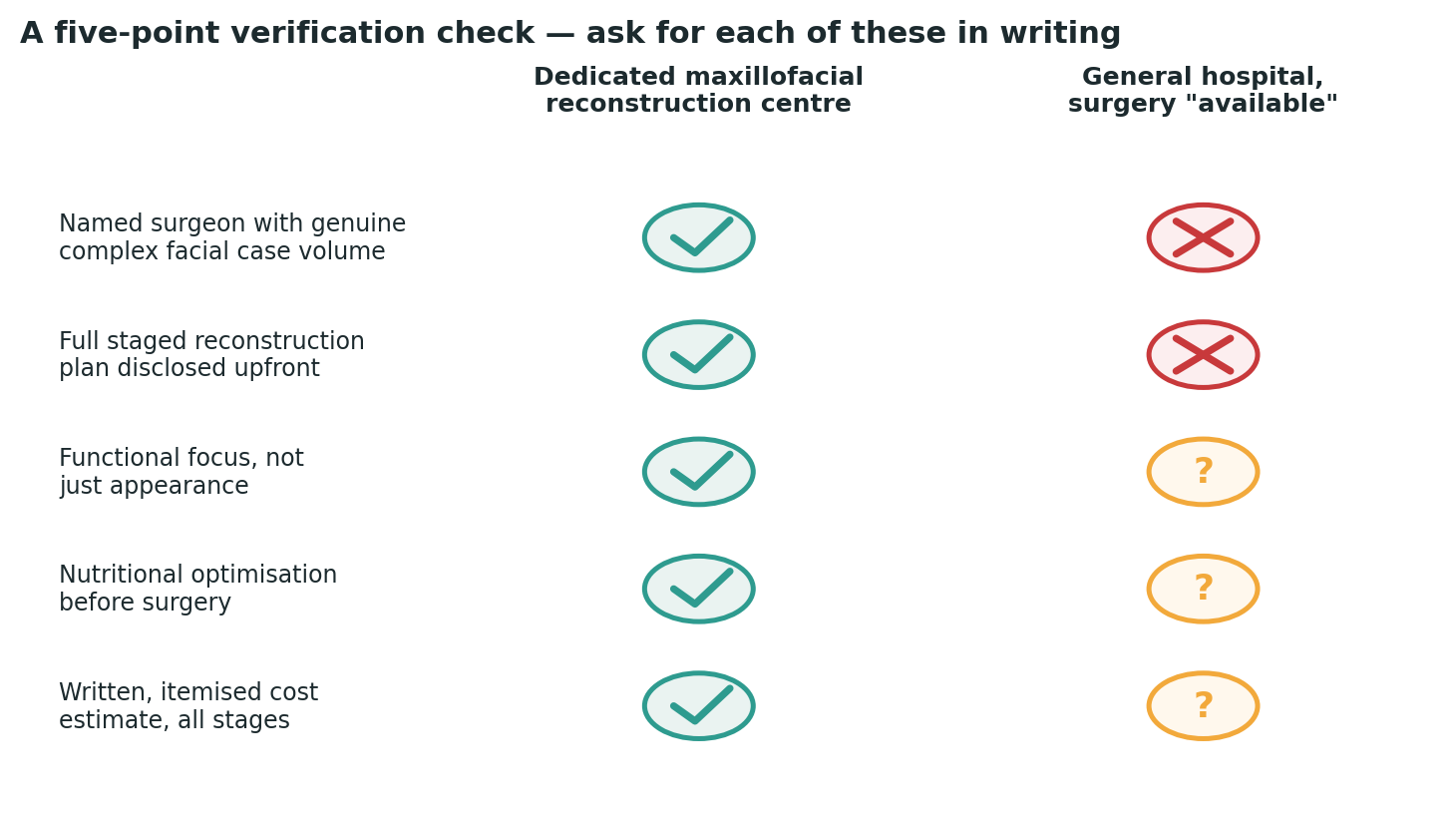
- A named surgeon with genuine complex facial reconstruction case volume — ask directly about their specific noma or comparable case experience.
- A full staged reconstruction plan disclosed upfront, not a single-surgery promise that understates the actual scope.
- A genuine assessment of tissue loss before any plan is proposed, shaping the entire treatment approach.
- Experience addressing functional issues, eating and speech, not appearance alone.
- Nutritional and general health optimisation before surgery, since this materially affects surgical outcomes.
Very few surgeons anywhere in the world treat noma cases regularly enough to build genuine specific expertise, so broader plastic or maxillofacial surgery experience is not automatically a substitute. Ask directly whether the surgeon has handled cases involving this specific pattern of tissue loss, not simply facial reconstruction in general.
What the quote doesn't always show
In 24 years of reviewing these estimates, I have found the disputes almost never concern the headline number — they concern what it silently left out: a quote for one stage presented as if it covers the entire reconstruction. Get every line item in writing, covering every anticipated stage, before paying any deposit.
Given how many stages a full reconstruction can genuinely involve, ask the centre to lay out costs stage by stage, so you can plan realistically for the full process rather than being surprised by additional costs partway through.
What a Congolese Family Should Weigh in Particular
Beyond verifying the surgeon and the hospital's programme, a handful of practical realities specific to travelling from the DRC deserve their own attention.
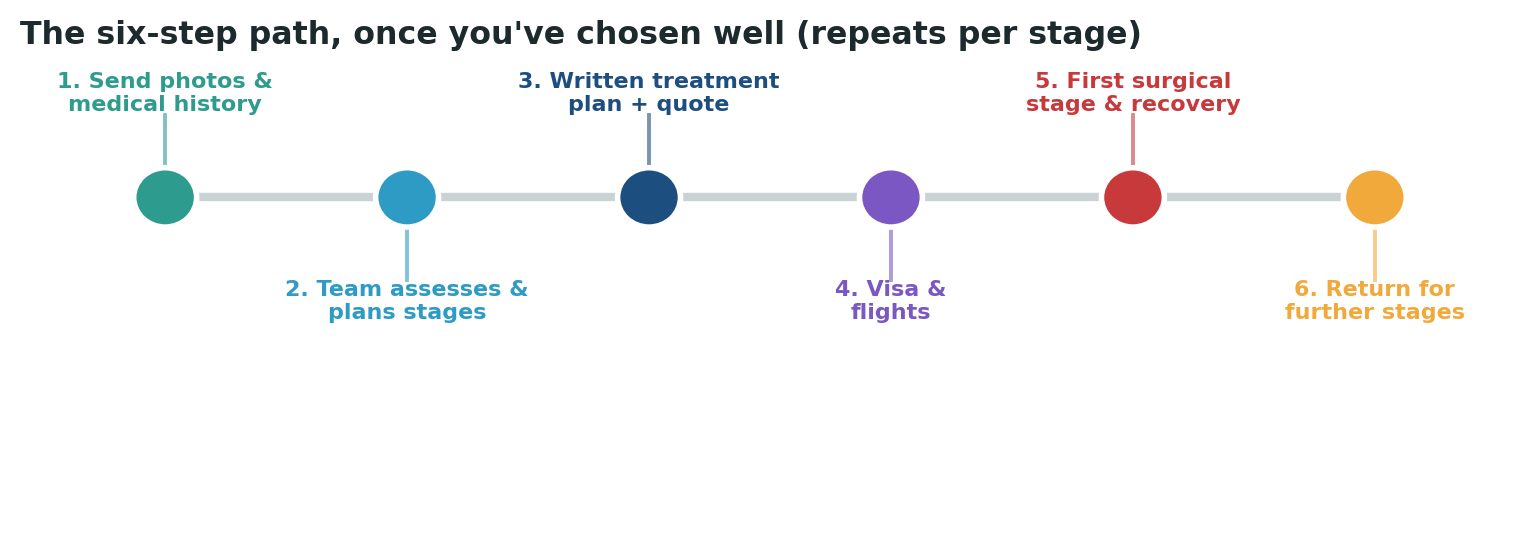
Send clear photographs and a full medical history to every centre being compared, not just a brief description.
Ask directly how many total stages are anticipated, and over what realistic timeframe, in writing.
Currency and budget. The Congolese franc has weakened considerably against the dollar (roughly CDF 2,300–2,350 per US$1 in mid-2026); budget with a 15–20% margin across the full multi-stage process.
Visa timing, likely repeated across multiple trips. DRC passport holders need a paper medical visa through the Embassy of India in Kinshasa, typically around two weeks each time.
Yellow fever certificate, current and dated at least 10 days before each trip.
Three signals that should make you pause
- A single surgery presented as a complete solution for extensive tissue loss.
- No genuine assessment of functional issues like eating and speech.
- Pressure to pay the full balance before a written, complete multi-stage plan exists.
- The first signal deserves particular weight, since noma's tissue loss is rarely correctable in one operation, and a centre promising otherwise may be underselling the genuine complexity of your case.
| Ask the surgeon | Ask the hospital |
|---|---|
| What's your experience with cases like this specifically? | What's your full staged-care programme? |
| How many stages will this realistically take? | Is nutritional support part of pre-surgical care? |
| Will function, not just appearance, be addressed? | What's the total, all-stages cost estimate? |
Send these two short lists in writing, by email, before agreeing to travel. A genuinely experienced centre will answer both directly and specifically; one without real noma or comparable case experience may struggle to give the same clarity.
A closing word
Noma reconstruction succeeds on both the surgeon's specific expertise and the hospital's genuine capacity to plan and deliver a full, multi-stage programme, a rare case in this series where both matter equally. A named surgeon with real complex facial case volume, backed by a hospital offering an honest, complete staged plan, is the baseline worth insisting on before any deposit is paid. If you can share photographs and medical history, I am glad to review them honestly, including telling you what a realistic path forward would involve.
Sources
- 🌐 National Medical Commission of India — verify any surgeon's registration · nmc.org.in
- 🌐 National Accreditation Board for Hospitals & Healthcare Providers (NABH) · nabh.co
- 🌐 Embassy of India, Kinshasa — medical visa requirements · eoikinshasa.gov.in
- 🌐 "WHO finally recognizes noma as a neglected tropical disease," STAT · statnews.com
- 🌐 World Health Organization — yellow fever vaccination requirements · who.int/health-topics/yellow-fever
Frequently Asked Questions by Congolese Patients about Selecting the Best Noma Reconstructive Surgery Centres in India
Why should a Congolese family look for a surgeon with specific noma experience?
Noma reconstruction involves unusual patterns of facial tissue and bone loss. The guide warns that general plastic or maxillofacial experience is not automatically equivalent to experience with noma or comparable complex reconstruction.
Why is noma reconstruction in India usually planned as a staged process?
Extensive tissue loss may not be realistically corrected in one operation. The guide therefore recommends asking for a complete multi-stage plan upfront, including the anticipated number and sequence of procedures.
Why should Congolese families ask about eating and speech, not only facial appearance?
Noma can cause significant functional problems. The guide specifically recommends choosing a centre experienced in restoring function such as eating and speech, rather than focusing only on cosmetic appearance.
Why is nutritional optimisation important before noma reconstruction?
The guide includes nutritional and general health optimisation among its highest-priority criteria because overall health can materially influence surgical outcomes. Families should ask whether this assessment and support are part of the programme.
What should a Congolese family send to an Indian noma reconstruction centre before travelling?
Send clear photographs and the complete medical history to every centre being considered. This allows the team to understand the extent of the problem before proposing a treatment pathway.
How should a Congolese family compare the costs of different noma reconstruction centres?
Ask for a stage-by-stage written estimate covering the complete anticipated reconstruction, rather than comparing the price of only the first operation. The guide recommends keeping a 15–20% financial margin.
Why should families be cautious if an Indian centre promises to correct extensive noma damage in one surgery?
The guide identifies a single surgery presented as a complete solution for extensive tissue loss as a major warning sign. Such an approach may underestimate the actual complexity of reconstruction.
How many trips to India might a Congolese noma patient need?
The guide does not give a fixed number because the number of stages varies by case. However, it specifically notes that multiple trips may be required, with visa planning potentially needed for each trip.
What should a Congolese family ask the hospital before agreeing to treatment?
Ask about the full staged-care programme, nutritional support before surgery and the total all-stages cost estimate. These questions help determine whether the hospital can support the complete reconstruction rather than only one procedure.
What are the biggest warning signs when choosing a noma reconstruction centre in India?
The guide identifies three major warning signs: a single surgery presented as the complete solution, no genuine assessment of functional problems such as eating and speech, and pressure to pay the full balance before receiving a complete written multi-stage plan.
Page Summary
This five-page guide focuses on how Congolese families should evaluate noma reconstructive surgery centres in India. Page 1 gives equal 50% weighting to the surgeon and hospital staged-care programme. Page 2 ranks specific complex facial case experience and a complete staged plan highest. Page 3 highlights stage-by-stage costing, photographs, medical history, nutrition and DRC travel requirements. Page 4 provides the treatment pathway, warning signs and specialist/hospital questions, while the closing section reinforces the need for both surgical expertise and sustained institutional care.
Citation Block
| Field | Information |
|---|---|
| Topic | Selecting the Best Noma Reconstructive Surgery Centres & Hospitals in India for Congolese Patients |
| Treatment | Noma Reconstructive Surgery |
| Patients | Congolese Patients |
| First Assessment | Full assessment of tissue and bone loss |
| Key Specialist | Complex Facial / Maxillofacial Reconstructive Surgeon |
| Decision Weighting | Surgeon 50% / Hospital Staged-Care Programme 50% |
| Case Volume | Specific noma or comparable complex facial cases |
| Treatment Plan | Complete multi-stage reconstruction |
| Functional Check | Eating and speech |
| Health Check | Nutritional and general health optimisation |
| Timeline Check | Realistic timeframe across all stages |
| Hospital Check | NABH / JCI accreditation |
| Cost Check | Written estimate covering all stages |
| Medical Records | Clear photographs and complete medical history |
| Visa | Paper medical visa through Kinshasa |
| Budget | 15–20% financial margin |
| Travel | Multiple trips may be required |
| Entry Requirement | Current yellow fever certificate |
| Specialist Question | What is your experience with noma or similar complex facial reconstruction? |
| Stage Question | How many stages will this realistically require? |
| Functional Question | Will eating and speech be addressed along with appearance? |
| Hospital Question | What is your complete staged-care programme? |
| Nutrition Question | Is nutritional support included before surgery? |
| Cost Question | What is the total cost across all anticipated stages? |
| Warning Signs | Single surgery presented as the complete solution |
| Payment Warning | Full balance requested before a complete multi-stage plan |
| Key Decision | Verify specific surgeon expertise and complete staged-care capacity |

Our Mission Statement
Our mission is to place patients at the centre of every healthcare decision by providing trustworthy, evidence-based, and unbiased medical information. We believe that informed patients make better decisions. Backed by personalised guidance from our experienced advisory team, we help patients understand their treatment options, compare them objectively, and confidently choose the path that best suits their medical needs and personal circumstances.
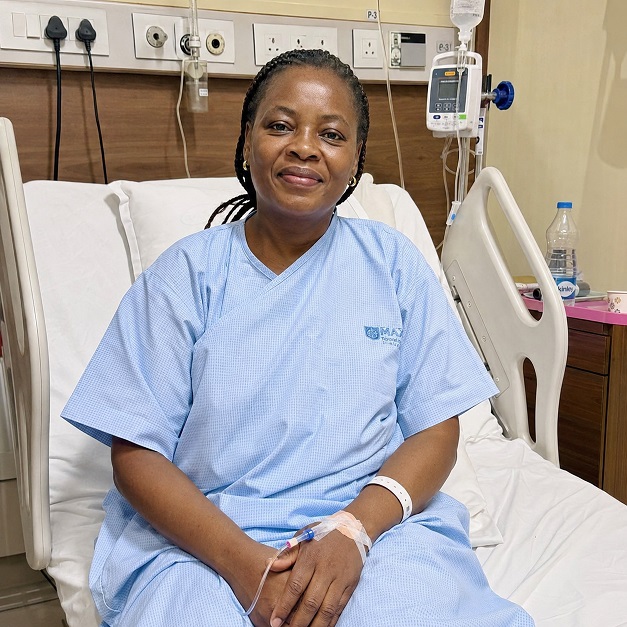
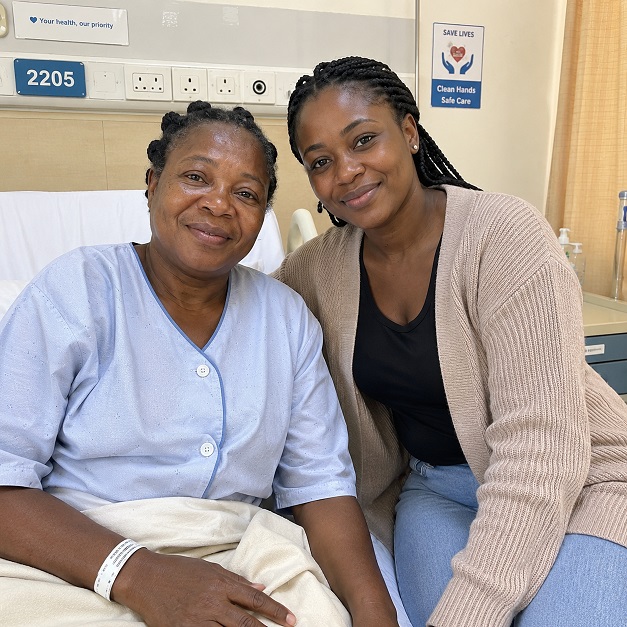
Patient Testimonials from Congo
Ready to Take the First Step?
Share your medical reports with our healthcare managers today and receive a FREE CONSULTATION, a personalized treatment plan and complete support from your arrival to your recovery.
Get Your Free ConsultationAreas We Serve
At Indian Health Guru Consultants, we proudly assist patients from Congo and neighboring countries across Central, East and Southern Africa who travel to India for advanced medical treatment. Our experienced international patient team provides end-to-end support, including medical opinions, hospital selection, Medical Visa assistance, travel planning, accommodation, interpreter services and post-treatment follow-up.
We regularly serve patients from:
- Gabon
- Cameroon
- Angola
- Uganda
- Rwanda
- Burundi
- Tanzania
- Zambia
- Djibouti
- Comoros
- Madagascar
- Seychelles
- South Sudan
- Central African Republic
- Republic of the Congo
- Democratic Republic of the Congo
No matter where you are located in the region, Indian Health Guru Consultants is committed to making your medical journey to India safe, affordable, seamless and completely patient-focused.
From Congo to India: Your Complete Patient Guide
- Brain Tumor Surgery in India for Congolese Patients
- Best Brain Tumour Surgeons & Hospitals in India for Congo Patients
- Knee Replacement in India for Congolese Patients
- Best Knee Replacement Surgeons & Hospitals in India for Congolese Patients
- Spine Surgery in India for Congolese Patients
- Best Spine Surgeons & Hospitals in India for Congolese Patients
- Liver Transplant in India for Congolese Patients: Cost & Guide
- Best Liver Transplant Centres and Hospitals in India for Congolese Patients
- Cardiac Surgery in India for Congolese Patients: Cost & Guide
- Best Cardiac Surgeons & Hospitals in India for Congolese Patients
- Bone Marrow Transplant in India for Congolese Patients: Cost & Guide
- Best Bone Marrow Transplant Centres and Hospitals in India for Congolese Patients
- Prostate Cancer Treatment in India for Congolese Patients: Cost & Guide
- Best Prostate Cancer Centres and Hospitals in India for Congolese Patients
- HIPEC in India for Congolese Patients: Cost & Treatment Guide
- Best HIPEC Centres and Hospitals in India for Congolese Patients
- Kidney Transplant in India for Congolese Patients: Cost & Guide
- Best Kidney Transplant Centres and Hospitals in India for Congolese Patients