

Selecting the Best Paediatric Orthopaedic Surgeons and Hospitals in India: A Guide for Patients from Iraq
A doctor’s honest, question-by-question guide for patients from Iraq on vetting a paediatric orthopaedic hospital in India — long-term relapse data, accreditation, bracing support, and the exact questions worth asking before you book anything.
Over the years, I have found that clubfoot correction is one of the paediatric orthopaedic conditions most frequently misunderstood by families, since the initial casting result almost always looks excellent, yet the long-term outcome depends heavily on two factors a hospital’s marketing rarely discusses honestly: whether the clubfoot is idiopathic or linked to an underlying neurological condition, and how actively the clinic supports the months of bracing that follow the initial correction. Iraqi families researching this treatment deserve to understand both factors clearly before comparing hospitals on the strength of a single, impressive-sounding initial statistic.
Healing Journeys of Iraqi Patients
Key Takeaways
- For Iraqi families seeking paediatric orthopaedic treatment in India, the guide highlights clubfoot correction as an area where long-term care is as important as the initial treatment. The child's clubfoot should first be identified as idiopathic or associated with a neurological or syndromic condition, since this distinction significantly affects long-term results.
- The Ponseti method is presented as the recognised standard approach for most clubfoot cases, using serial casting rather than major surgery. An Indian study involving 331 patients and 550 affected feet reported 94.7% initial full correction for idiopathic clubfoot, achieved through weekly casting and Achilles tenotomy in more than three-quarters of the treated feet.
- Initial correction does not always mean permanent success. A 20-year follow-up study of 500 clubfeet found that 24% of children eventually required surgery because of relapse, with poor compliance with the foot-abduction brace identified as a leading factor.
- Outcomes can also differ when clubfoot is associated with a neurological condition. The cited systematic review reported 90% initial correction for neurogenic or myelodysplastic clubfoot, but final success declined to 63% at an average follow-up of nearly five years, with a 62% recurrence rate.
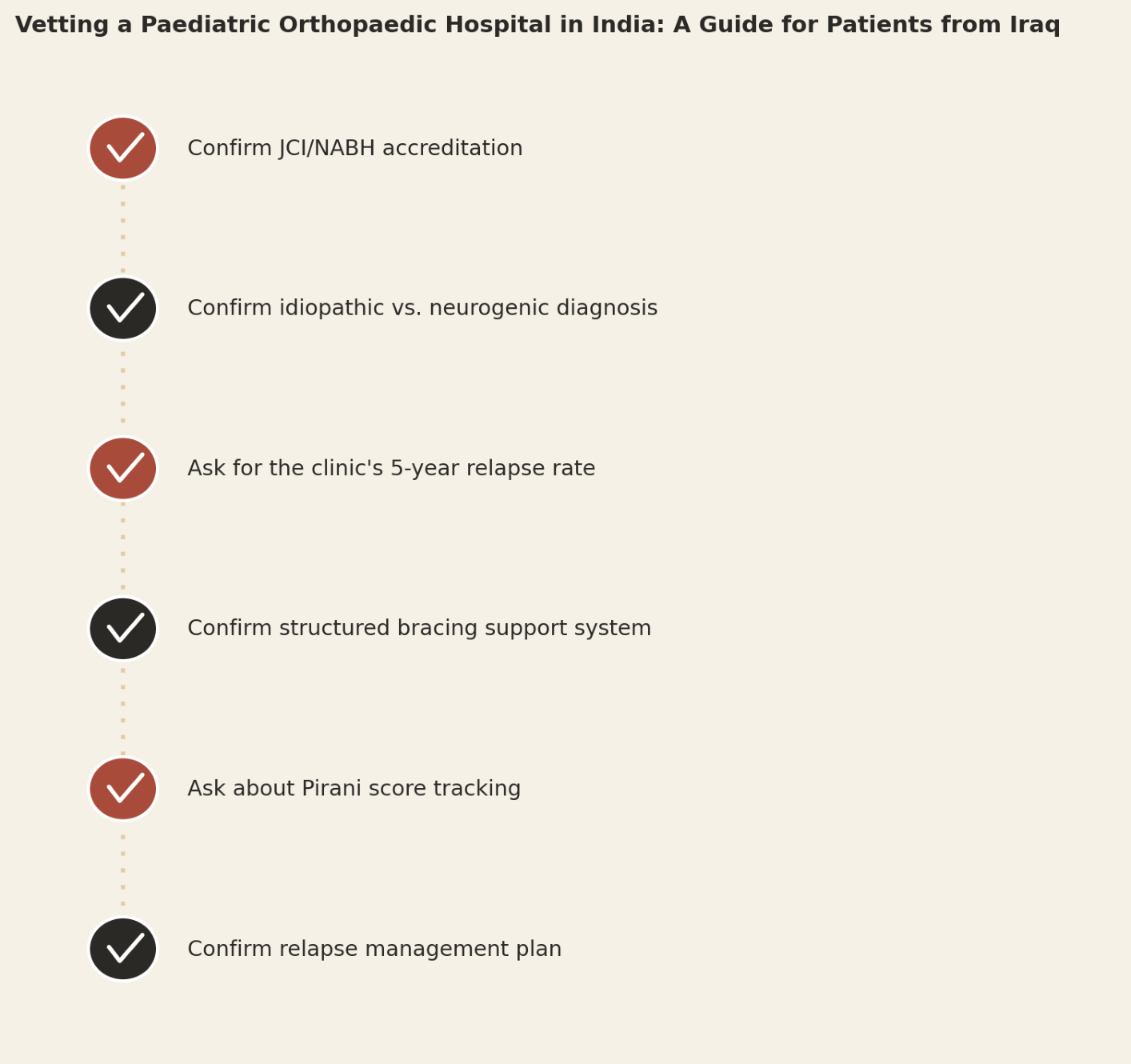
- Iraqi parents should verify JCI or NABH accreditation and ask whether the clinic has an active brace-compliance monitoring programme. They should also request the clinic's five-year or longer relapse rate and understand what treatment will be offered if the clubfoot returns.
- A strong paediatric orthopaedic team should include a paediatric orthopaedic surgeon trained in the Ponseti method and a dedicated clubfoot coordinator who follows bracing compliance. When clubfoot is associated with a neurological condition, involvement of a paediatric neurologist may also be appropriate.
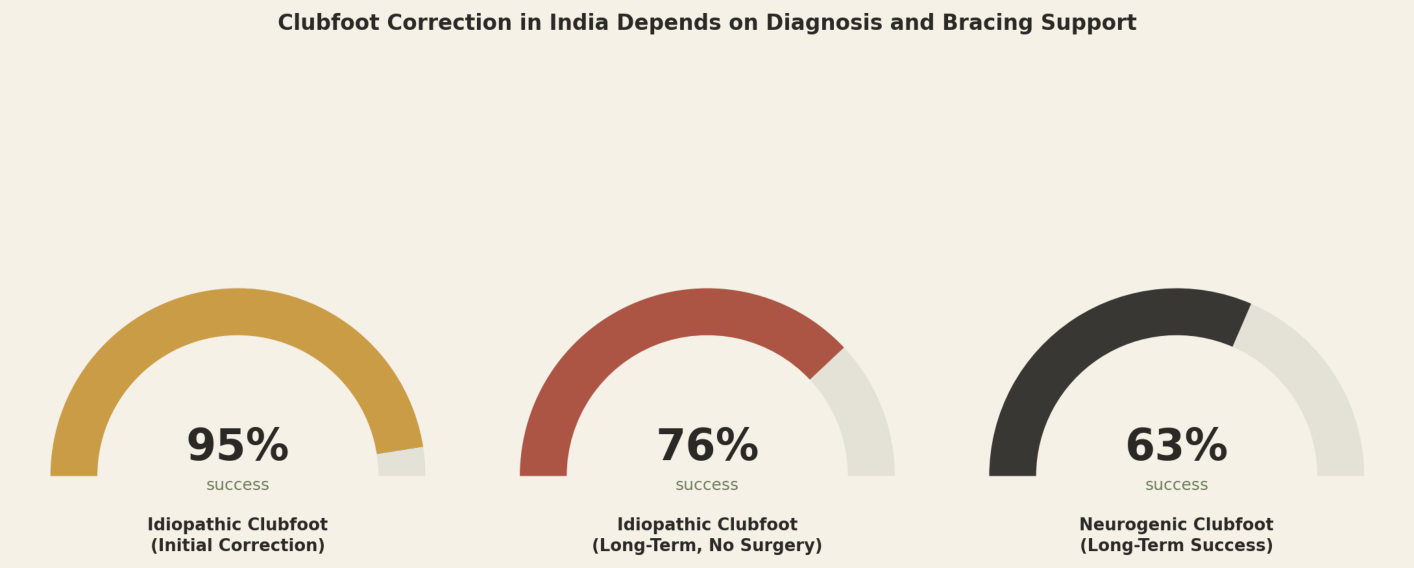
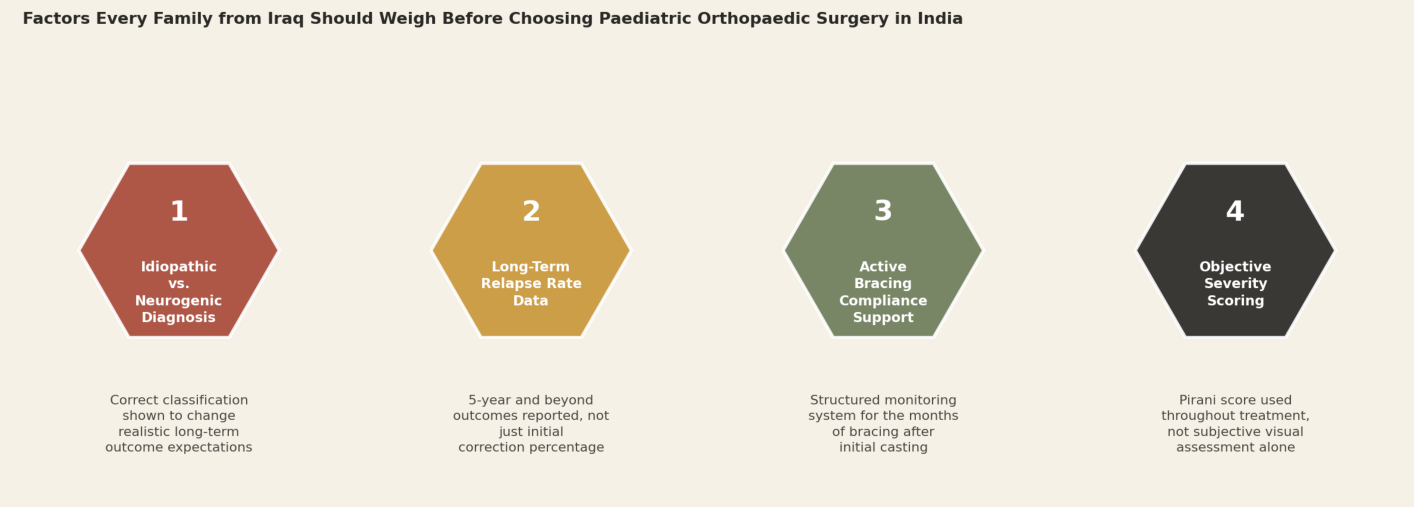
- The page 2 chart compares illustrative outcomes of approximately 95% initial idiopathic clubfoot correction, 76% long-term idiopathic success without surgery and 63% neurogenic clubfoot success. The page 4 checklist emphasises diagnosis clarity, long-term relapse data, active bracing support and objective severity scoring.
Quick Facts
- Treatment
- Paediatric orthopaedic treatment for clubfoot
- Primary Patients
- Children from Iraq requiring clubfoot correction
- Main Speciality
- Paediatric orthopaedics
- Key Specialist
- Paediatric orthopaedic surgeon trained in the Ponseti method
- Main Treatment
- Ponseti serial casting
- Important Diagnosis
- Idiopathic versus neurogenic or syndromic clubfoot
- Indian Study
- 331 patients and 550 affected feet
- Initial Idiopathic Correction
- 94.7%
- Long-Term Relapse
- 24% required surgery in a 20-year follow-up study
- Neurogenic Clubfoot
- 90% initial correction and 63% final success in the cited review
- Bracing
- Foot-abduction brace compliance is important after correction
- Assessment Tool
- Pirani score
- Possible Procedure
- Percutaneous Achilles tenotomy
- Relapse Treatment
- May include repeat casting, tendon transfer or further surgery
- Accreditation
- Verify JCI and/or NABH status
- Follow-Up
- Structured long-term monitoring is important
- Remote Support
- Photo-based brace-compliance monitoring may assist international families
- Team
- Paediatric orthopaedic surgeon, clubfoot coordinator and neurologist when required
- Pre-Treatment
- Confirm whether the clubfoot is idiopathic or associated with another condition
- Author
- Dr. Dheeraj Bojwani
- Experience
- 24+ Years
In Brief
For Iraqi children with clubfoot, families should evaluate the diagnosis, treatment approach and long-term support together. The Ponseti method is the main treatment approach discussed in the source, while successful long-term correction depends heavily on continued bracing and monitoring. Parents should ask for the clinic’s relapse data, confirm objective severity tracking such as the Pirani score, understand the plan for Achilles tenotomy when required and establish how relapse will be managed if it occurs.
Why the Choice of Paediatric Orthopaedic Team in India Matters as Much as the Choice of Technique
Based on my interactions with international families, published data on the Ponseti method, the internationally recognised gold-standard treatment for clubfoot involving serial casting rather than major surgery, illustrates this distinction clearly. A recent Indian tertiary care study of 331 patients and 550 affected feet found an initial full correction rate of 94.7 percent for idiopathic clubfoot, a genuinely excellent result consistent with the technique’s global reputation, achieved through weekly casting sessions and a percutaneous Achilles tenotomy in over three-quarters of feet treated. However, long-term data tells a more complex story: a twenty-year follow-up study of 500 clubfeet found that 24 percent of children eventually required surgery due to relapse, with poor compliance in wearing the foot abduction brace identified as a leading cause of this relapse. For clubfoot linked to an underlying neurological condition, called neurogenic or myelodysplastic clubfoot, a systematic review found initial correction of 90 percent, but final success declining considerably to 63 percent at an average follow-up of nearly five years, with a recurrence rate of 62 percent, figures meaningfully lower than idiopathic cases. This tells a family something important: the initial correction rate every clinic can show you is genuinely encouraging, but whether your child’s clubfoot is idiopathic or linked to a broader neurological condition, and how actively the clinic supports brace compliance afterward, are what actually determine whether your child avoids surgery in the years ahead.
How Patients from Iraq Can Verify a Paediatric Orthopaedic Hospital’s Accreditation in India
The fastest filter I recommend to every Iraqi family calling about paediatric orthopaedic conditions is verifiable accreditation, not marketing language. Joint Commission International, JCI, audits a hospital’s overall clinical safety systems against the same standard used across the United States and Europe. The National Accreditation Board for Hospitals and Healthcare Providers, NABH, is India’s own domestic equivalent, and in my experience of 24 years advising families on this exact decision, a centre holding both marks together is a meaningfully stronger signal than either alone. For clubfoot specifically, ask one further, very direct question: does this clinic have a structured, active brace compliance monitoring programme, since published data consistently identifies poor bracing compliance as the leading cause of relapse after an otherwise successful initial correction.
Paediatric Orthopaedic Volume and Cause-Specific Criteria That Predict Outcomes in India
Based on my interactions with dozens of paediatric orthopaedic programmes over the years, a centre’s specific long-term relapse rate and its approach to supporting bracing compliance, not simply its initial correction percentage, is one of the clearest predictors of a good outcome. In my experience of 24 years advising families on exactly this kind of decision, the clinics most worth trusting are the ones that volunteer their relapse data before you even ask, rather than requiring you to press for it. Ask directly, in writing:
- Is my child's clubfoot idiopathic, or is it associated with an underlying neurological or syndromic condition, and how does this specific distinction change the realistic long-term outcome?
- What is this clinic's own relapse rate at five years and beyond, not simply the initial correction rate immediately after casting?
- What specific system does the clinic use to support and monitor brace compliance during the months and years of bracing that follow initial correction?
- If relapse does occur, what is the clinic's specific plan, repeat casting, a tendon transfer procedure, or more extensive surgery, and how does this depend on my child's specific situation?
A clinic confident in its own long-term outcomes will answer these specifically. A clinic that quotes only an initial correction percentage without discussing relapse rates or bracing support deserves a second opinion before you commit.
Vetting a Paediatric Orthopaedic Hospital in India: A Guide for Patients from Iraq
Questions Patients from Iraq Should Ask About the Paediatric Orthopaedic Team in India
Clubfoot correction and other paediatric orthopaedic conditions benefit from more than the treating surgeon alone. In my experience of 24 years watching these programmes operate, the strongest units include a paediatric orthopaedic surgeon with specific Ponseti method training, a dedicated clubfoot clinic coordinator who actively follows up with families about bracing compliance, and, for cases linked to broader neurological conditions, a paediatric neurologist involved in the overall care plan. Ask specifically who fills each of these roles for your child’s case, and confirm that a structured follow-up schedule, not a one-time casting appointment, has been outlined from the start.
Paediatric Orthopaedic Technology Standards in India That Patients from Iraq Should Check
The specific technique and support infrastructure available change how durable the correction achieved is likely to be. Ask whether the clinic uses standardised severity scoring, such as the Pirani score, to track progress objectively throughout treatment rather than relying on subjective visual assessment alone. Ask whether the clinic provides remote check-in support, such as photo-based compliance monitoring, for families who cannot attend frequent in-person follow-up visits, a genuinely relevant consideration for a family travelling from Iraq for treatment. Ask also whether the clinic has a clear protocol for percutaneous Achilles tenotomy, the minor procedure to release the heel cord that a large majority of clubfoot cases require as part of Ponseti treatment, and how this is scheduled relative to the casting sequence. Ask directly which of these specific capabilities apply to your child’s case, not simply whether the clinic performs Ponseti casting in general terms.
Red Flags Patients from Iraq Should Watch For When Choosing a Paediatric Orthopaedic Hospital in India
Over the years, certain patterns have become reliable warning signs for me. A clinic that quotes only its initial correction percentage, without discussing relapse rates or long-term follow-up, has not given you the complete picture. A clinic without a structured, active brace compliance support system is missing the single factor most consistently linked to relapse in published research. A clinic that does not distinguish between idiopathic and neurogenic clubfoot when discussing expected outcomes has not properly assessed the specific complexity of your child’s case. And a clinic that recommends surgical correction as the first option, without first attempting the well-established Ponseti method, is offering a more invasive approach than current global standards support for the great majority of cases.
Factors Every Family from Iraq Should Weigh Before Choosing Paediatric Orthopaedic Treatment in India
A Closing Thought for Iraqi Families
Clubfoot correction is a genuinely well-established, highly effective treatment, but its long-term success depends on your child’s specific diagnosis and the clinic’s active support for the bracing period that follows initial casting, not simply an impressive initial correction percentage. Based on my interactions with international patients over more than two decades, the families who ask about relapse rates, bracing support systems, and idiopathic-versus-neurogenic distinction consistently achieve more durable, surgery-free outcomes than those who focus on initial correction alone. My role, and the role of any advisor a family works with, should be to help you ask these exact questions and confirm honestly that the specific clinic and specific team in front of you are the right fit for your child’s exact situation. Iraq’s children deserve the same standard of scrutiny in this decision as any child anywhere else in the world.
Sources & Further Reading
- Joint Commission International (JCI) — Accredited Organizations Directory (jointcommissioninternational.org)
- National Accreditation Board for Hospitals & Healthcare Providers (NABH), India (nabh.co)
- PMC — Evaluating the Effectiveness of the Ponseti Technique in Treating Idiopathic Clubfoot: Long-Term Outcomes from an Indian Tertiary Care Centre (ncbi.nlm.nih.gov/pmc)
- PMC — Ponseti Treated Idiopathic Clubfoot: Outcome Predictive Factors, Analysis of 500 Feet Followed 5–20 Years (pmc.ncbi.nlm.nih.gov)
- PMC — Effectiveness of Congenital Myelodysplastic Clubfoot Treatment by the Ponseti Method: Systematic Review (ncbi.nlm.nih.gov/pmc)
Frequently Asked Questions by Iraqi Patients about Selecting a Paediatric Orthopaedic Surgeon and Hospital in India
Is clubfoot treatment available in India for Iraqi children?
Yes. The guide specifically addresses paediatric orthopaedic care in India for Iraqi families and focuses on evaluating centres offering clubfoot treatment.
Is the Ponseti method used for clubfoot treatment in India?
Yes. The source describes the Ponseti method as the internationally recognised standard treatment for clubfoot, using serial casting and other treatment steps when required.
How successful is Ponseti treatment for idiopathic clubfoot?
The cited Indian study reported an initial full correction rate of 94.7% for idiopathic clubfoot among 331 patients and 550 affected feet.
Can clubfoot return after successful Ponseti treatment?
Yes. The source cites a 20-year follow-up in which 24% of children eventually required surgery because of relapse. Poor compliance with the foot-abduction brace was identified as an important factor.
Is treatment different for neurogenic clubfoot in Iraqi children?
It can be. Neurogenic or myelodysplastic clubfoot has lower long-term success and higher recurrence in the cited evidence, so the underlying neurological condition should be considered when planning treatment.
What is a Pirani score and why is it useful in clubfoot treatment?
The guide recommends standardised severity scoring such as the Pirani score to objectively monitor progress during treatment instead of relying only on visual assessment.
Will an Iraqi child need Achilles tenotomy during Ponseti treatment?
Many clubfoot cases require percutaneous Achilles tenotomy as part of Ponseti treatment. The source recommends asking the clinic about its tenotomy protocol and when the procedure is performed during casting.
What should Iraqi parents ask about bracing after clubfoot correction?
Parents should ask how the clinic monitors brace compliance during the months and years following correction. Structured support is important because poor bracing compliance is strongly associated with relapse.
What happens if clubfoot relapses after treatment in India?
Depending on the child's condition, management may include repeat casting, tendon transfer or more extensive surgery. Families should ask the hospital for its specific relapse-management pathway before treatment.
Should Iraqi families choose surgery first for clubfoot?
The source advises caution when surgery is recommended as the first treatment without first considering the Ponseti method. For the great majority of appropriate cases, Ponseti treatment is presented as the established initial approach.
Page Summary
For Iraqi families choosing paediatric orthopaedic care in India, the guide recommends looking beyond initial clubfoot correction rates. Diagnosis, long-term relapse data, bracing compliance and structured follow-up are central to achieving durable correction.
The Ponseti method should generally be considered before more invasive surgical correction for appropriate clubfoot cases. Families should also confirm Pirani score monitoring, Achilles tenotomy protocols and a clear plan for managing relapse if it occurs.
Citation Block
| Field | Details |
|---|---|
| Article / Topic | Selecting the Best Paediatric Orthopaedic Surgeons and Hospitals in India |
| Target Country | Iraq |
| Treatment Area | Paediatric orthopaedics |
| Primary Condition | Clubfoot |
| Main Treatment | Ponseti method |
| Key Selection Factor | Long-term correction and relapse prevention |
| Indian Study Size | 331 patients and 550 affected feet |
| Initial Idiopathic Correction | 94.7% |
| Long-Term Surgery Requirement | 24% in cited 20-year follow-up |
| Neurogenic Initial Correction | 90% |
| Neurogenic Final Success | 63% |
| Neurogenic Recurrence | 62% |
| Accreditation | JCI and NABH |
| Brace Support | Structured compliance monitoring |
| Outcome Data | Five-year and longer relapse rates |
| Severity Assessment | Pirani score |
| Common Procedure | Percutaneous Achilles tenotomy |
| Specialist Team | Paediatric orthopaedic surgeon and clubfoot coordinator |
| Additional Specialist | Paediatric neurologist for associated neurological conditions |
| Follow-Up | Structured long-term monitoring |

Our Mission Statement
Our mission is to place patients at the centre of every healthcare decision by providing trustworthy, evidence-based, and unbiased medical information. We believe that informed patients make better decisions. Backed by personalised guidance from our experienced advisory team, we help patients understand their treatment options, compare them objectively, and confidently choose the path that best suits their medical needs and personal circumstances.
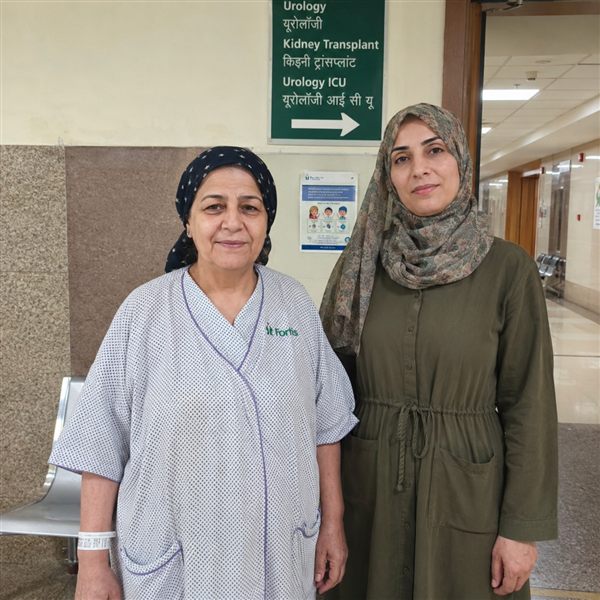
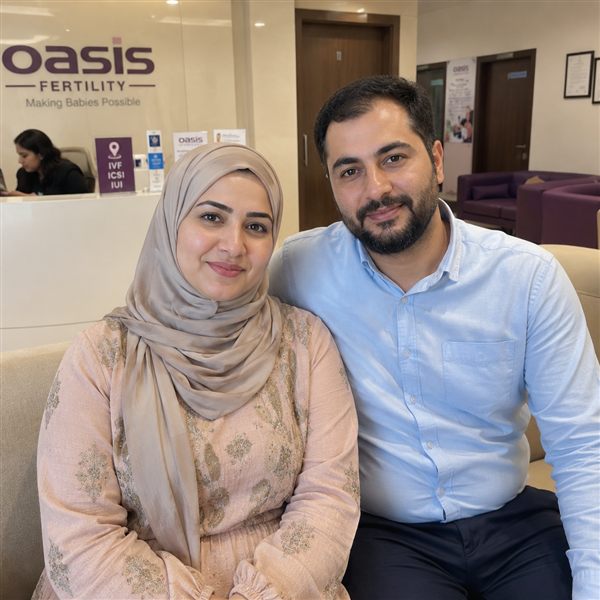
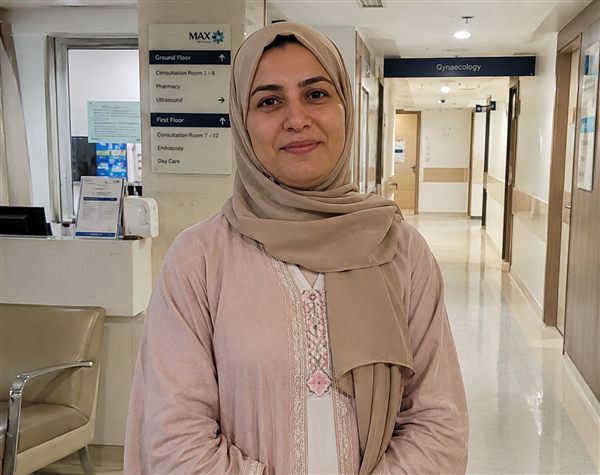
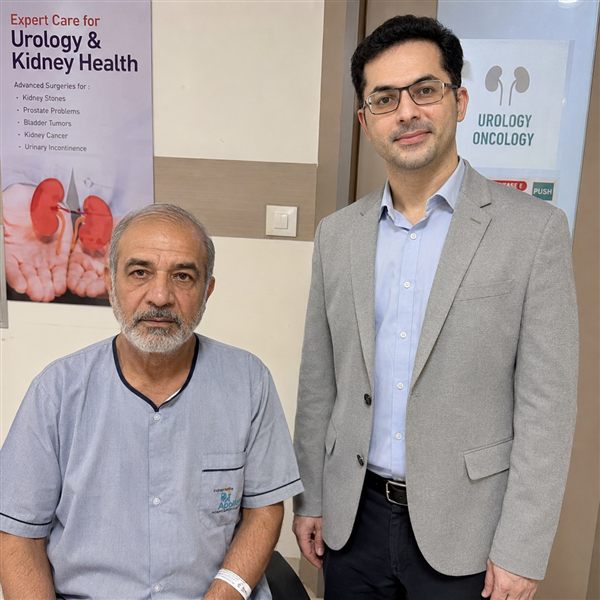
Patient Testimonials from Iraq
Ready to Take the First Step?
Share your Medical Reports with our Healthcare Managers Today and Get a FREE CONSULTATION, a Personalized Treatment Plan, and Complete Support from Arrival to Recovery.
Get Your Free ConsultationAreas We Serve
Indian Health Guru Consultants proudly assists patients from Iraq and surrounding Middle Eastern countries in accessing advanced, affordable and trusted medical treatment in India. Our team provides complete support for medical opinions, hospital selection, treatment planning, visa assistance, travel coordination, accommodation and post-treatment follow-up.
We regularly serve patients from:
- Iraq
- Turkey
- Iran
- Kuwait
- Jordan
- Syria
- Qatar
- Bahrain
- Oman
- Yemen
- Saudi Arabia
- United Arab Emirates
No matter where you are located, our experienced team is committed to making your medical journey to India safe, smooth, transparent and stress-free from the first enquiry to your return home.
From Iraq to India: Your Complete Patient Guide
- Penile Implant Surgery in India for Iraqis
- Pancreatic Cancer Surgery in India for Iraqis
- IVF and Fertility Treatment in India for Iraqis
- Spine Surgery in India for Iraqis
- Cancer Treatment in India for Iraqi Patients
- Cornea Transplant and Advanced Eye Surgery in India for Iraqis
- Scoliosis Correction Surgery in India for Iraqis
- Urosurgery and Reconstructive Urology in India for Iraqis
- Heart Valve Replacement in India for Iraqis
- Bone Marrow Transplant in India for Iraqi Patients
- Complex Joint Revision Surgery in India for Iraqis
- Cervical and Lumbar Disc Replacement Surgery in India for Iraqis
- Breast Cancer Treatment in India for Iraqi Patients
- Cardiac Surgery in India for Iraqis
- Brain Tumour Surgery in India for Iraqi Patients
- Parkinson's Treatment and DBS Surgery in India for Iraqis
- Heart Failure Treatment and Surgery in India for Iraqis
- Hip Surgery in India for Iraqis