

Selecting the Best Gamma Knife Surgeons and Hospitals in India: A Guide for Patients from Iraq
A doctor’s honest, question-by-question guide for patients from Iraq on vetting a Gamma Knife hospital in India — condition-specific outcomes, accreditation, team composition, and the exact questions worth asking before you book anything.
Over the years, I have noticed that Gamma Knife and CyberKnife are often confused by Iraqi families as interchangeable names for the same technology, when they are in fact genuinely different systems built around different physical principles, and the specific condition being treated, meningioma, trigeminal neuralgia, or a brain metastasis, has its own distinct outcome profile with Gamma Knife specifically. In my experience of 24 years advising families through exactly this decision, the single most useful thing I can do is help a family understand which of these categories their case actually falls into before they compare any hospital’s quoted success rate.
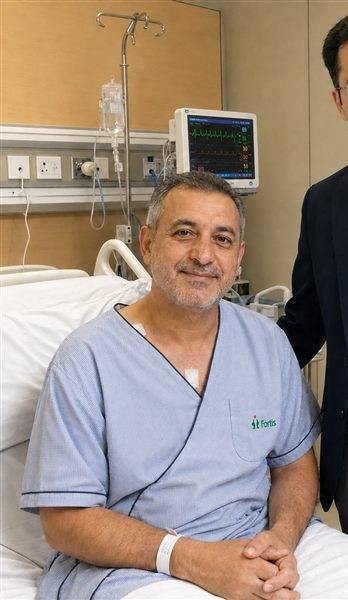
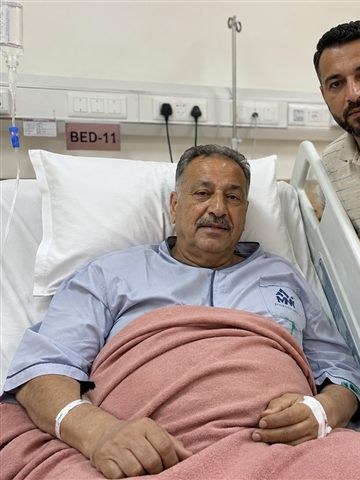
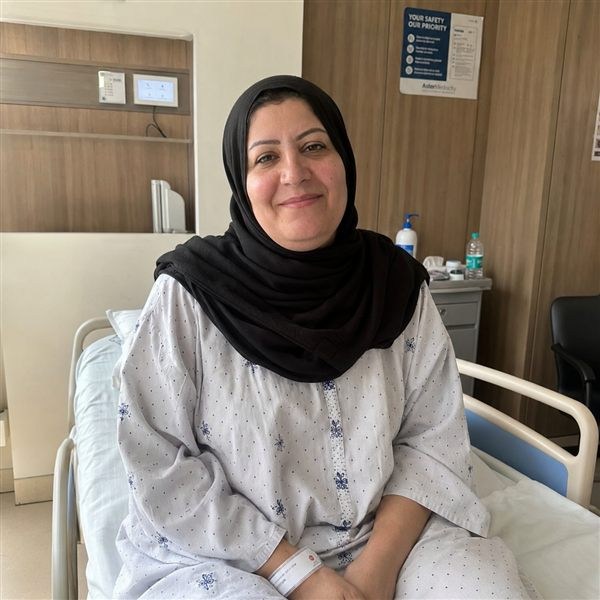
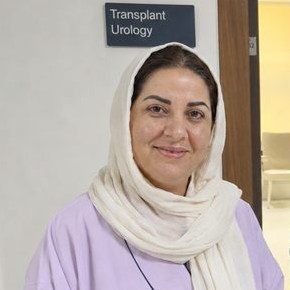
Healing Journeys of Iraqi Patients

Key Takeaways
- Gamma Knife and CyberKnife should not be treated as interchangeable names for the same technology. The source explains that they are different systems, while Gamma Knife outcomes also vary substantially according to the condition being treated. For Iraqi families, the first question should therefore be which diagnosis and treatment category applies to their individual case before comparing hospitals or accepting an advertised success percentage.
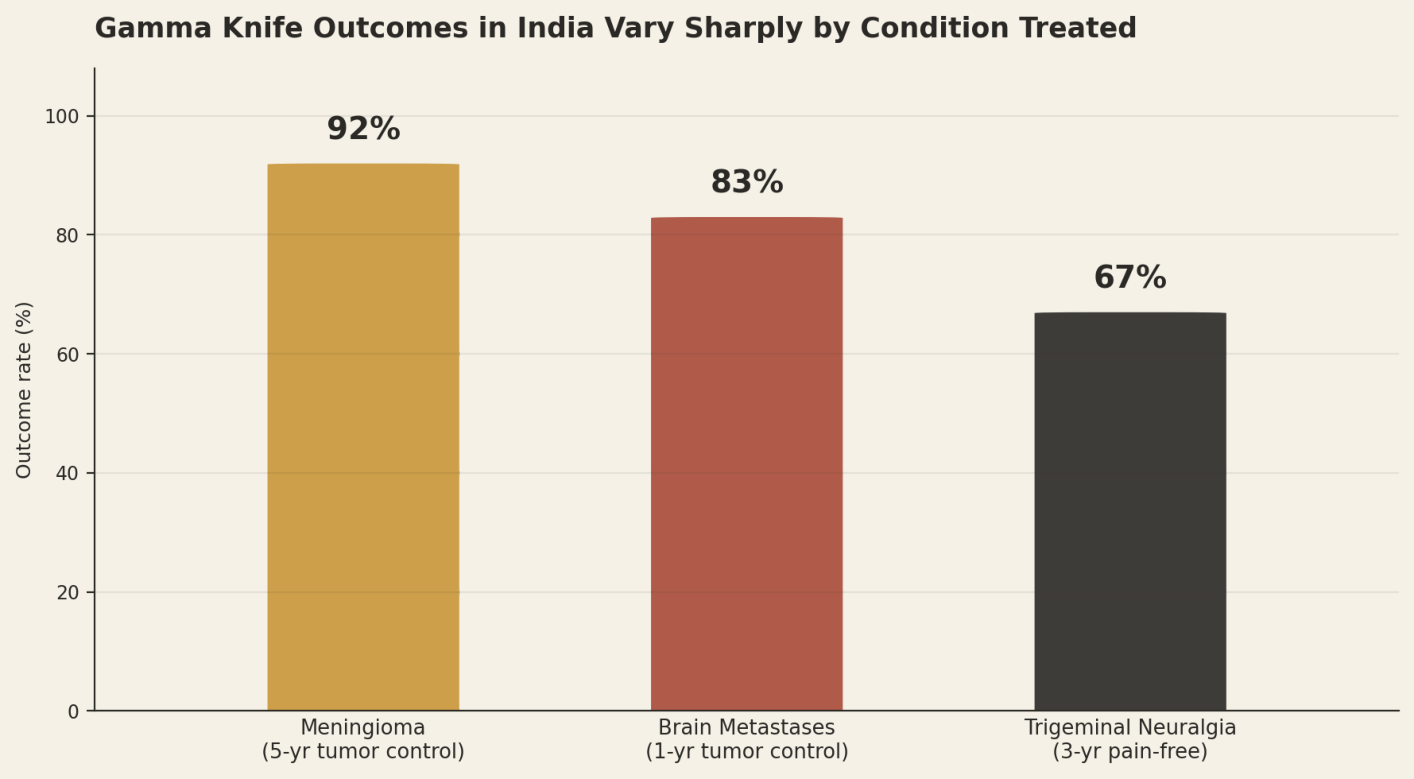
- Published Gamma Knife outcomes differ considerably between conditions. For meningiomas, a systematic review covering more than 2,250 patients across 18 studies reported five-year tumour control of 93.2% for infratentorial and 91.4% for supratentorial meningiomas. For brain metastases treated to the surgical cavity after resection, one cited series reported 75% overall tumour control and 83.1% control at 12 months. Trigeminal neuralgia has a different outcome pattern, with short-term pain relief around 70–90%, while longer-term pain-free rates can decline substantially.
- The chart on page 2 illustrates how strongly Gamma Knife outcomes depend on the condition and follow-up period. It shows approximately 92% five-year tumour control for meningioma, 83% one-year tumour control for brain metastases and 67% pain-free status at three years for trigeminal neuralgia. The guide stresses that these figures should not be compared without checking exactly which condition and follow-up interval each percentage represents.
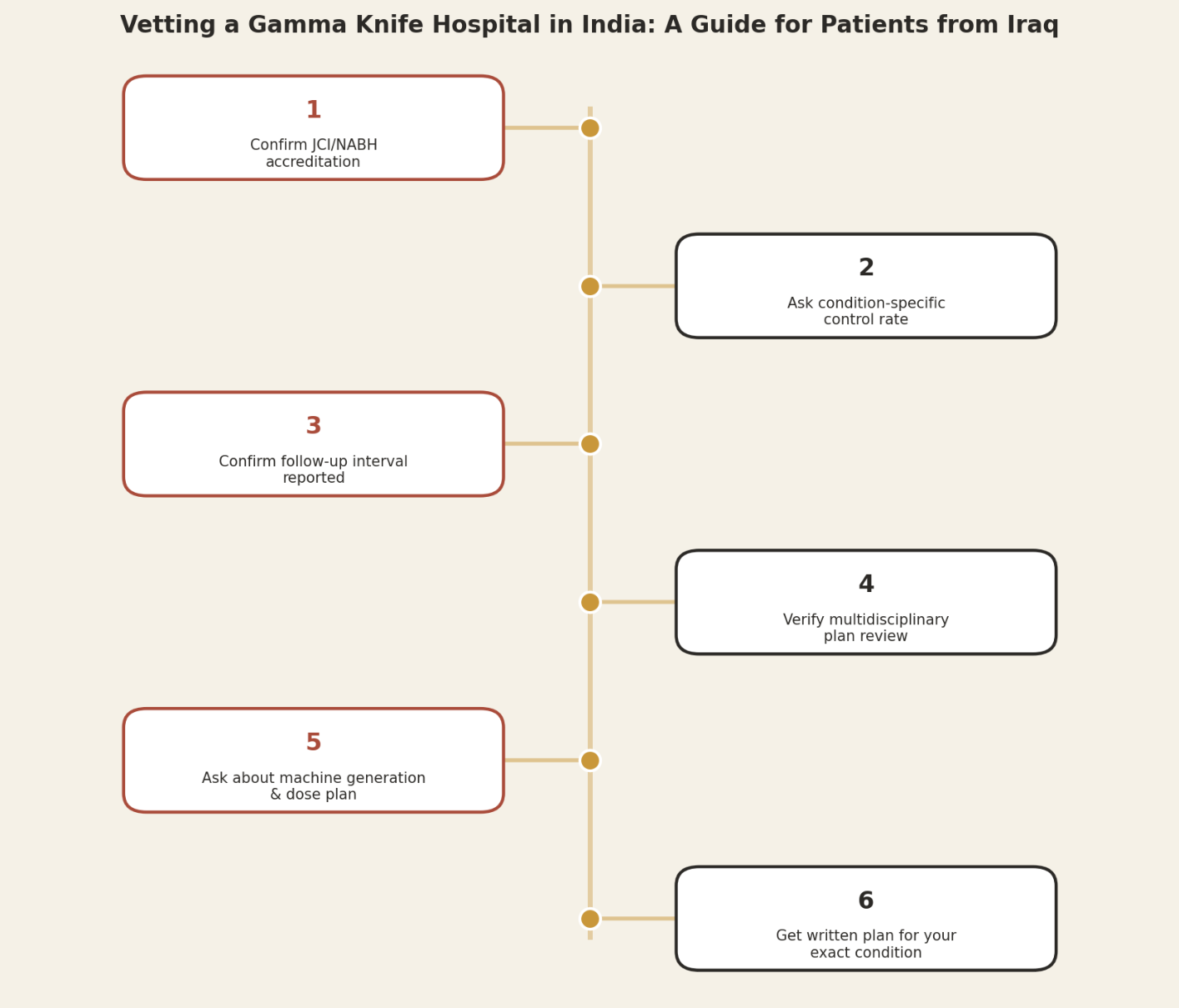
- Accreditation is recommended as an initial screening criterion for Iraqi families. The guide highlights JCI and NABH accreditation and recommends asking which generation of Gamma Knife equipment the hospital operates. According to the source, newer generations may provide more precise dose delivery and shorter treatment times, so patients should identify the actual system being used rather than simply accepting the statement that a hospital has Gamma Knife.
- Condition-specific experience is more meaningful than a hospital's combined Gamma Knife case count. Iraqi patients should ask how many cases the centre has treated for their exact diagnosis, such as meningioma, trigeminal neuralgia or brain metastasis. They should also request tumour-control or pain-relief outcomes for that condition together with the follow-up interval and ask how radiation exposure to nearby healthy structures was considered when the target was close to a critical structure.
- Gamma Knife treatment planning should involve several specialists. The source describes a team involving a neurosurgeon for the overall treatment strategy, a radiation oncologist for dose planning and a medical physicist for verification of dose distribution. A dedicated radiosurgery nurse or coordinator can also help manage the sequence of frame placement, imaging, planning and treatment.
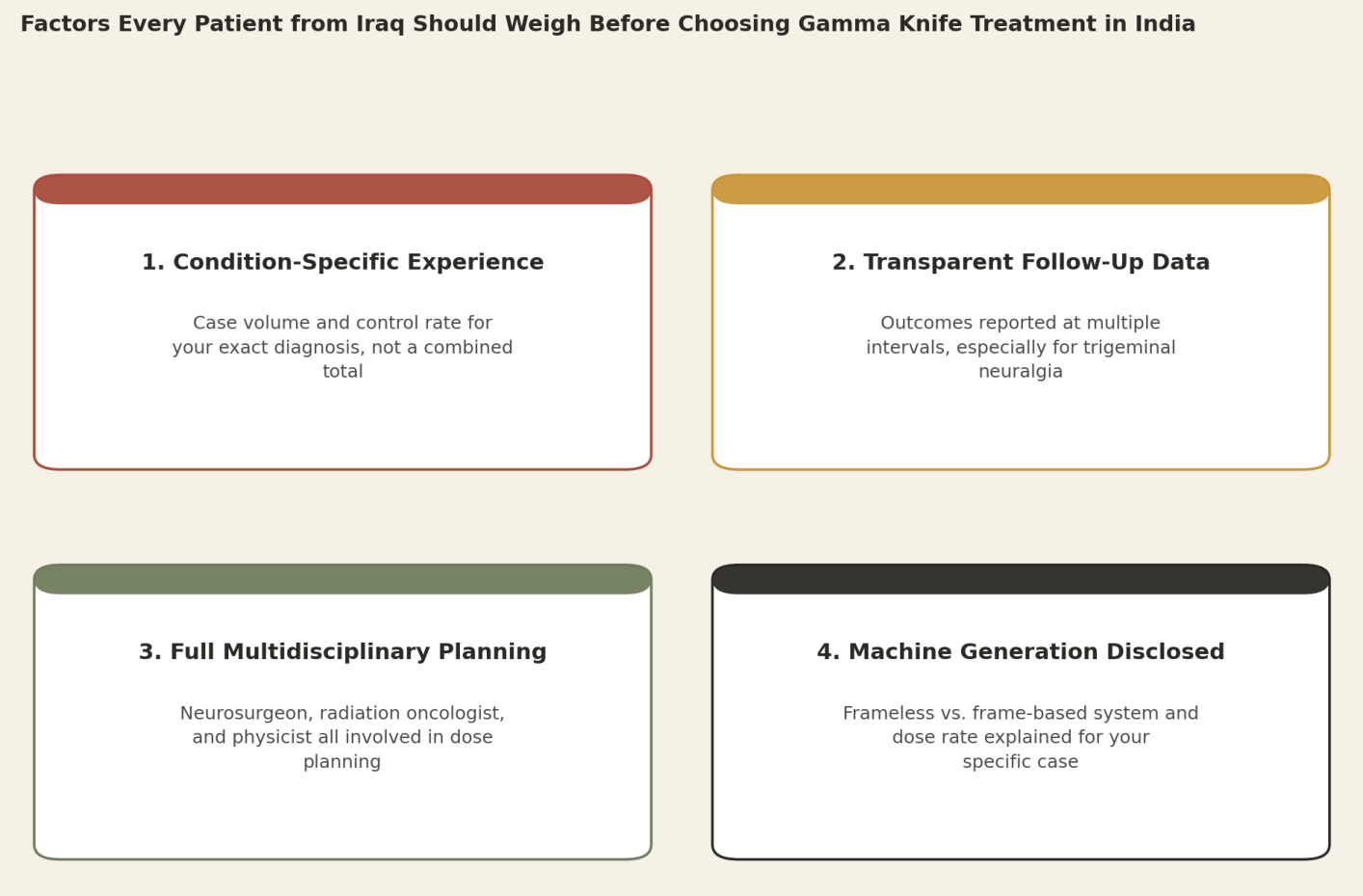
- The source identifies several warning signs: a hospital that quotes one success percentage without identifying the diagnosis and follow-up interval, a centre that cannot give condition-specific experience and relies only on its total Gamma Knife case count, and unclear long-term outcome data, especially for trigeminal neuralgia. The page 4 checklist highlights condition-specific experience, transparent follow-up data, full multidisciplinary treatment planning and disclosure of the Gamma Knife machine generation and dose-planning approach.
Quick Facts
- Treatment
- Gamma Knife radiosurgery
- Primary Patients
- Iraqi patients seeking radiosurgery in India
- Main Speciality
- Neurosurgery and radiation oncology
- Key Team
- Neurosurgeon, radiation oncologist and medical physicist
- Major Conditions
- Meningioma, trigeminal neuralgia and brain metastases
- Meningioma Control
- 91.4–93.2% five-year control in the cited systematic review
- Brain Metastases
- 83.1% tumour control at 12 months in the cited post-surgical series
- Trigeminal Neuralgia
- Short-term pain relief approximately 70–90%
- Long-Term TN Outcome
- Pain-free rates may decline with longer follow-up
- Accreditation
- Verify JCI and NABH accreditation
- Machine
- Ask which Gamma Knife generation is used
- Planning
- Condition-specific dose planning is essential
- Imaging
- Detailed imaging sequences should match the diagnosis
- Team Review
- More than one specialist should review imaging and planning
- Medical Physicist
- Verifies radiation dose distribution
- Radiosurgery Coordinator
- May coordinate the treatment process
- Technology
- Ask about frame-based versus frameless treatment
- Follow-Up
- Outcomes should be reported with the follow-up interval
- Critical Structures
- Dose planning should account for nearby healthy tissue
- Author
- Dr. Dheeraj Bojwani
- Experience
- 24+ Years
In Brief
For Iraqi patients considering Gamma Knife treatment in India, the most important comparison is not a single advertised success rate. The page 4 checklist highlights four factors: condition-specific experience, transparent follow-up data, full multidisciplinary treatment planning and disclosure of the Gamma Knife machine generation and dose-planning approach. These factors help patients understand whether the hospital’s expertise and reported outcomes genuinely match their diagnosis.
Why the Choice of Neurosurgical Team in India Matters as Much as the Choice of Technology
Based on my interactions with international patients, published Gamma Knife outcome data varies considerably by condition, and a hospital’s single headline success percentage very rarely reflects this honestly. For meningiomas, a systematic review covering over 2,250 patients across eighteen studies found five-year tumour control rates of 93.2 percent for infratentorial meningiomas and 91.4 percent for supratentorial meningiomas, genuinely strong and durable results for a benign tumour category. For brain metastases treated to the surgical cavity after resection, one published series reported an overall tumour control rate of 75 percent, with twelve-month control at 83.1 percent when radiosurgery followed surgery, figures that reflect the more aggressive biology of metastatic disease compared with a benign meningioma. Trigeminal neuralgia tells a third, more complex story: short-term pain relief is genuinely high, in the range of 70 to 90 percent, but published long-term follow-up data shows this declining over time, with one study reporting 67 percent of patients still pain-free at a minimum of three years, falling to 32 percent achieving the ideal outcome by a mean follow-up of sixty-nine months. None of these figures are more or less honest than the others; they simply describe entirely different conditions, and a family should know which one actually applies to their specific case before accepting any quoted number.
How Patients from Iraq Can Verify a Gamma Knife Hospital’s Accreditation in India
The fastest filter I recommend to every Iraqi family calling about Gamma Knife is verifiable accreditation, not marketing language. Joint Commission International, JCI, audits a hospital’s overall clinical safety systems against the same standard used across the United States and Europe. The National Accreditation Board for Hospitals and Healthcare Providers, NABH, is India’s own domestic equivalent, and in my experience of 24 years advising families on this exact decision, a centre holding both marks together is a meaningfully stronger signal than either alone. For Gamma Knife specifically, ask one further, very direct question: which generation of Gamma Knife machine does this hospital operate, since newer models offer more precise dose delivery and shorter treatment times than older generations, and the specific model in use directly affects both accuracy and patient comfort during a procedure that can otherwise take several hours.
Gamma Knife Volume and Condition-Specific Criteria That Predict Outcomes in India
Based on my interactions with dozens of radiosurgery programmes over the years, a centre’s specific experience with your exact condition, not simply its total Gamma Knife case count across every indication, is one of the clearest predictors of a good outcome. Ask directly, in writing:
- How many Gamma Knife cases has this centre treated specifically for my exact condition, meningioma, trigeminal neuralgia, brain metastasis, or another diagnosis, not simply a combined total across all indications?
- What tumour control or pain relief rate does the centre report for this specific condition, and at what follow-up interval, since outcomes for trigeminal neuralgia in particular decline meaningfully over years rather than months?
- For a tumour near a critical structure, has the team's dose planning specifically accounted for minimising radiation exposure to nearby healthy tissue, and can they explain this planning process to you directly?
- Who reviews the treatment plan before delivery, a single neurosurgeon or a full multidisciplinary team including a radiation oncologist and medical physicist?
A centre confident in its own outcomes will answer these specifically and promptly. A centre that responds only with a single blended success percentage regardless of your specific condition deserves a second opinion before you commit.
Vetting a Gamma Knife Hospital in India: A Guide for Patients from Iraq
Questions Patients from Iraq Should Ask About the Gamma Knife Team in India
Gamma Knife treatment planning is never genuinely the work of one person alone. In my experience of 24 years watching these programmes operate, the strongest units bring together a neurosurgeon to determine the overall treatment strategy, a radiation oncologist to help plan the radiation dose specifically, and a medical physicist to verify that dose distribution precisely before delivery. A dedicated radiosurgery nurse or coordinator is also worth confirming, since Gamma Knife day involves several distinct stages, frame placement, imaging, dose planning, and treatment delivery, and a patient benefits considerably from a single point of contact managing this sequence smoothly. For trigeminal neuralgia cases specifically, ask whether the team has experience targeting both the nerve and any underlying tumour in a single session where relevant, since published research has shown this combined approach can improve outcomes for tumour-related facial pain specifically. Ask specifically who fills each of these roles for your case, and confirm that your imaging has been reviewed by more than one specialist before the final treatment plan is set.
Gamma Knife Technology and Planning Standards in India That Patients from Iraq Should Check
The specific technology generation available changes both precision and patient experience. Ask whether the hospital’s Gamma Knife system uses a frameless or frame-based approach for immobilising the head during treatment, since newer frameless systems can improve comfort for patients needing multiple treatment sessions, while the traditional frame-based approach remains highly precise for single-session cases. Ask how the treatment dose was determined for your specific case, since published research on trigeminal neuralgia specifically has found that the precise dose rate used can meaningfully affect the likelihood of durable pain relief, with higher dose rates associated with better outcomes in some analyses. Ask also whether the centre’s imaging protocol includes the specific sequences needed to clearly visualise your condition, since trigeminal neuralgia and small skull base tumours in particular require imaging detailed enough to plan treatment accurately. Ask directly which of these specific capabilities apply to your case, not simply whether the hospital owns the equipment somewhere in the building.
Red Flags Patients from Iraq Should Watch For When Choosing a Gamma Knife Hospital in India
Over the years, certain patterns have become reliable warning signs for me. A hospital that quotes a single success percentage without specifying which condition and which follow-up interval it describes has given you a number without the context needed to interpret it honestly. A centre that cannot state its own specific experience with your exact condition, offering only a total case count across all indications, has not demonstrated the specific expertise your case actually needs. And a centre that does not clearly explain how long-term outcomes, particularly for trigeminal neuralgia, are expected to evolve over years rather than months has not given you a realistic picture of what to expect.
Factors Every Patient from Iraq Should Weigh Before Choosing Gamma Knife Treatment in India
A Closing Thought for Iraqi Families
Gamma Knife is a genuinely precise and valuable technology, and it deserves a treatment team that explains honestly which condition category your case falls into and what outcome data actually applies over what timeframe, rather than a single optimistic percentage detached from your specific situation. Based on my interactions with international patients over more than two decades, the families who ask about condition-specific control rates, follow-up intervals, and genuine multidisciplinary planning consistently arrive at treatment better informed than those who accept a general marketing claim at face value. My role, and the role of any advisor a family works with, should be to help you ask these exact questions and confirm honestly that the specific team and specific hospital in front of you are the right fit for your family’s exact diagnosis. Iraq’s families deserve the same standard of scrutiny in this decision as any family anywhere else in the world.
Sources & Further Reading
- Joint Commission International (JCI) — Accredited Organizations Directory (jointcommissioninternational.org)
- National Accreditation Board for Hospitals & Healthcare Providers (NABH), India (nabh.co)
- PubMed Central — Anatomical Insights into Gamma Knife Radiosurgery: Meningioma Outcomes by Location (ncbi.nlm.nih.gov/pmc)
- PubMed Central — Trigeminal Neuralgia Treatment Outcomes Following Gamma Knife Radiosurgery, Minimum 3-Year Follow-Up (ncbi.nlm.nih.gov/pmc)
- American Association of Neurological Surgeons (AANS) — Radiosurgery Patient Information (aans.org)
Frequently Asked Questions by Iraqi Patients about Selecting a Gamma Knife Surgeon and Hospital in India
Can Iraqi patients receive Gamma Knife treatment in India?
Yes. The source specifically presents Gamma Knife treatment in India as an option for Iraqi patients and focuses on how they can evaluate hospitals and treatment teams for different diagnoses.
Can Iraqi patients receive Gamma Knife treatment for meningioma in India?
Yes. Meningioma is one of the main conditions discussed in the guide. The cited systematic review reported five-year tumour control of 91.4–93.2%, depending on tumour location.
Can Iraqi patients receive Gamma Knife for trigeminal neuralgia in India?
Yes. The guide specifically discusses Gamma Knife for trigeminal neuralgia and notes that short-term pain relief can be high, while long-term pain-free outcomes may decline over several years.
Can Gamma Knife treat brain metastases for Iraqi patients in India?
The source includes brain metastases among the conditions evaluated for Gamma Knife treatment. One cited series reported 83.1% tumour control at 12 months after radiosurgery to the surgical cavity.
How should Iraqi patients compare Gamma Knife success rates in India?
They should first identify the exact diagnosis and then ask for the hospital's outcome rate for that condition together with the follow-up interval. A combined Gamma Knife success percentage is not sufficiently informative.
How many Gamma Knife cases should an Iraqi patient ask about?
Patients should ask how many cases the hospital has treated specifically for their diagnosis rather than accepting a total Gamma Knife case count covering unrelated conditions.
What specialists should be involved in Gamma Knife treatment for Iraqi patients?
The guide recommends a multidisciplinary team involving a neurosurgeon, radiation oncologist and medical physicist. A dedicated radiosurgery nurse or coordinator may also help manage the treatment process.
Does the Gamma Knife machine generation matter for Iraqi patients?
The source recommends asking which generation of Gamma Knife the hospital operates because newer systems may offer more precise dose delivery and shorter treatment times. Patients should ask about the actual system used for their treatment.
What should Iraqi patients ask about Gamma Knife treatment planning?
They should ask how the dose was selected, whether nearby critical structures were considered, which imaging sequences were used and whether more than one specialist reviewed the treatment plan before delivery.
What are the main warning signs when choosing a Gamma Knife hospital in India?
Warning signs include a generic success percentage without diagnosis or follow-up information, no condition-specific case experience, unclear long-term outcome data and failure to explain the treatment-planning process for the patient's exact condition.
Page Summary
Gamma Knife is a precise radiosurgery technology, but its outcomes vary substantially according to the condition being treated. The source compares meningioma, brain metastases and trigeminal neuralgia to demonstrate why patients should never interpret one general success percentage as representative of every Gamma Knife indication.
For Iraqi families travelling to India, hospital selection should focus on accreditation, condition-specific treatment experience, transparent follow-up data, multidisciplinary planning, appropriate imaging and disclosure of the Gamma Knife system being used. The final treatment recommendation should be linked to the patient's exact diagnosis rather than a general marketing claim.
Citation Block
| Field | Details |
|---|---|
| Article / Topic | Selecting the Best Gamma Knife Surgeons and Hospitals in India |
| Primary Patients | Patients from Iraq |
| Treatment | Gamma Knife radiosurgery |
| Main Specialities | Neurosurgery and radiation oncology |
| Key Conditions | Meningioma, brain metastases and trigeminal neuralgia |
| Meningioma Control | 93.2% infratentorial and 91.4% supratentorial five-year control |
| Meningioma Evidence | Systematic review of more than 2,250 patients across 18 studies |
| Brain Metastases Control | 75% overall and 83.1% at 12 months in cited series |
| Trigeminal Neuralgia Relief | Approximately 70–90% short-term pain relief |
| Long-Term TN Outcome | Pain-free rates decline with longer follow-up |
| Accreditation | JCI and NABH |
| Machine Assessment | Ask which Gamma Knife generation is used |
| Case Volume | Request experience for the exact diagnosis |
| Outcome Data | Ask for condition-specific control or pain-relief rates |
| Follow-Up | Confirm the interval attached to reported outcomes |
| Dose Planning | Should account for nearby healthy and critical structures |
| Neurosurgeon | Determines overall treatment strategy |
| Radiation Oncologist | Helps plan radiation dose |
| Medical Physicist | Verifies dose distribution |
| Radiosurgery Coordinator | May coordinate treatment stages |
| Imaging Review | More than one specialist should review relevant imaging |
| Treatment Positioning | Ask about frame-based or frameless approach |
| Imaging Protocol | Should provide adequate visualisation of the specific condition |


Our Mission Statement
Our mission is to place patients at the centre of every healthcare decision by providing trustworthy, evidence-based, and unbiased medical information. We believe that informed patients make better decisions. Backed by personalised guidance from our experienced advisory team, we help patients understand their treatment options, compare them objectively, and confidently choose the path that best suits their medical needs and personal circumstances.
Patient Testimonials from Iraq


Ready to Take the First Step?
Share your Medical Reports with our Healthcare Managers Today and Get a FREE CONSULTATION, a Personalized Treatment Plan, and Complete Support from Arrival to Recovery.
Get Your Free ConsultationAreas We Serve
Indian Health Guru Consultants proudly assists patients from Iraq and surrounding Middle Eastern countries in accessing advanced, affordable and trusted medical treatment in India. Our team provides complete support for medical opinions, hospital selection, treatment planning, visa assistance, travel coordination, accommodation and post-treatment follow-up.
We regularly serve patients from:
- Iraq
- Turkey
- Iran
- Kuwait
- Jordan
- Syria
- Qatar
- Bahrain
- Oman
- Yemen
- Saudi Arabia
- United Arab Emirates
No matter where you are located, our experienced team is committed to making your medical journey to India safe, smooth, transparent and stress-free from the first enquiry to your return home.
From Iraq to India: Your Complete Patient Guide
- Paediatric Heart Surgery in India for Iraqis
- Knee Surgery in India for Iraqis
- Cervical and Lumbar Disc Replacement Surgery in India for Iraqis
- Gamma Knife Treatment in India for Iraqis
- Weight Loss and Bariatric Surgery in India for Iraqis: Cost & Guide
- Heart Failure Treatment and Surgery in India for Iraqis
- Breast Cancer Treatment in India for Iraqi Patients
- Cardiac Surgery in India for Iraqis
- Kidney Transplant in India for Iraqis
- Scoliosis Correction Surgery in India for Iraqis
- Bone Marrow Transplant in India for Iraqi Patients
- Cancer Treatment in India for Iraqi Patients
- Robotic Cancer Surgery in India for Iraqis
- Hip Surgery in India for Iraqis
- Proton Therapy in India for Iraqis
- Spine Surgery in India for Iraqis
- Radiotherapy and Modern Cancer Treatment in India for Iraqis
- Paediatric Neurosurgery in India for Iraqis