

Selecting the Best Colorectal Cancer Surgeons and Hospitals in India: A Guide for Patients from Iraq
A doctor’s honest, question-by-question guide for patients from Iraq on vetting a colorectal cancer hospital in India — sphincter preservation, accreditation, surgeon volume, and the exact questions worth asking before you book anything.
Over the years, I have found that colorectal cancer surgery is one of the areas where the specific surgical technique used changes a patient’s daily life for decades afterward, not simply their cancer outcome. In my experience of 24 years advising patients through exactly this decision, the question that matters most for rectal cancer specifically is not simply whether the tumour can be removed, but whether it can be removed while preserving the sphincter and the nerves that control bladder and sexual function, since a permanent stoma or lasting urogenital dysfunction affects a patient every single day for the rest of their life.
Healing Journeys of Iraqi Patients




Key Takeaways
- For Iraqi patients with colorectal cancer, particularly rectal cancer, the choice of surgical technique can influence everyday quality of life for many years after treatment. The source emphasises that the goal is not simply to remove the tumour but, when oncologically appropriate, to preserve the anal sphincter and the nerves controlling bladder and sexual function. A permanent stoma or lasting urogenital dysfunction can have long-term effects, making the surgeon's specific experience in function-preserving surgery an important selection factor.
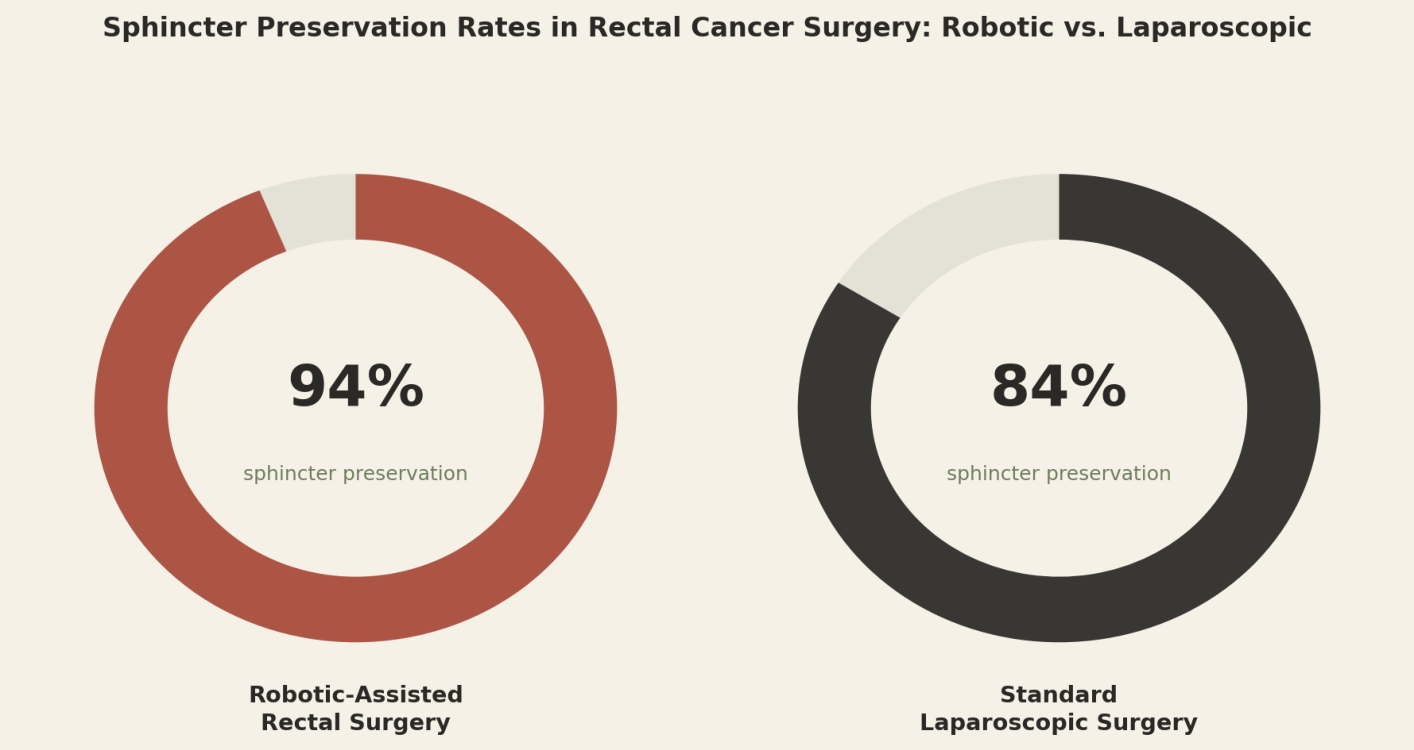
- Published comparative evidence cited in the guide suggests that surgical approach can affect sphincter preservation. Studies involving more than 1,300 patients reported approximately 94% sphincter preservation with robotic rectal surgery compared with approximately 84% with standard laparoscopic surgery, along with lower conversion to open surgery. The chart on page 2 visually presents these 94% and 84% figures and stresses that Iraqi patients should ask for the individual surgeon's preservation rate for the location of their tumour rather than assume that a published average applies to their case.
- The guide recommends verifying hospital accreditation before choosing a colorectal cancer centre in India. JCI and NABH are identified as useful accreditation checks, but the source also recommends asking a more specific clinical question: whether the surgical team routinely performs sphincter-preserving and nerve-sparing procedures for appropriately located tumours or tends to default to permanent stoma formation. NABH's current directory provides a mechanism to verify accredited healthcare organisations and can be filtered by specialties including oncology and surgery, supporting independent verification of hospital accreditation.
- Surgeon-specific experience should be evaluated according to the type and location of rectal cancer rather than general colorectal surgery volume. Iraqi patients should ask for the surgeon's own sphincter-preservation rate for tumours at the patient's location and stage, the number of robotic or laparoscopic resections performed for mid- to low-rectal tumours and the hospital's rates of bladder and sexual dysfunction following nerve-sparing surgery. If a stoma is required, patients should also ask whether it is expected to be temporary and reversible or permanent and why.
- Colorectal cancer treatment should involve a multidisciplinary team. The source recommends a colorectal surgical oncologist with specific sphincter-preservation training, a medical oncologist who can guide neoadjuvant chemoradiation, a radiation oncologist where pre-operative radiotherapy is required and a stoma-care nurse for patients who need a stoma. Iraqi patients should ask who will fulfil each role and whether neoadjuvant treatment has been considered before proceeding directly to surgery when tumour downstaging could potentially improve surgical options.
- Technology should be assessed according to the patient's actual tumour location and treatment plan. The source recommends asking whether robotic-assisted surgery is genuinely available for the specific tumour and whether the surgeon has experience with total mesorectal excision. Total mesorectal excision involves removing the rectal tumour together with surrounding lymphatic tissue as an intact unit, and the guide links completeness of this dissection with cancer control and functional preservation. Patients should therefore ask about the team's actual experience rather than simply whether robotic equipment exists somewhere in the hospital.
- The guide identifies several important warning signs for Iraqi patients. These include an early recommendation for permanent stoma without a thorough assessment of whether sphincter preservation is oncologically appropriate, inability to provide the surgeon's own sphincter-preservation rate, and lack of access to neoadjuvant chemoradiation when it could potentially improve function-preserving options. A surgeon who cannot clearly explain why preservation is not feasible should be questioned and may warrant a second opinion.
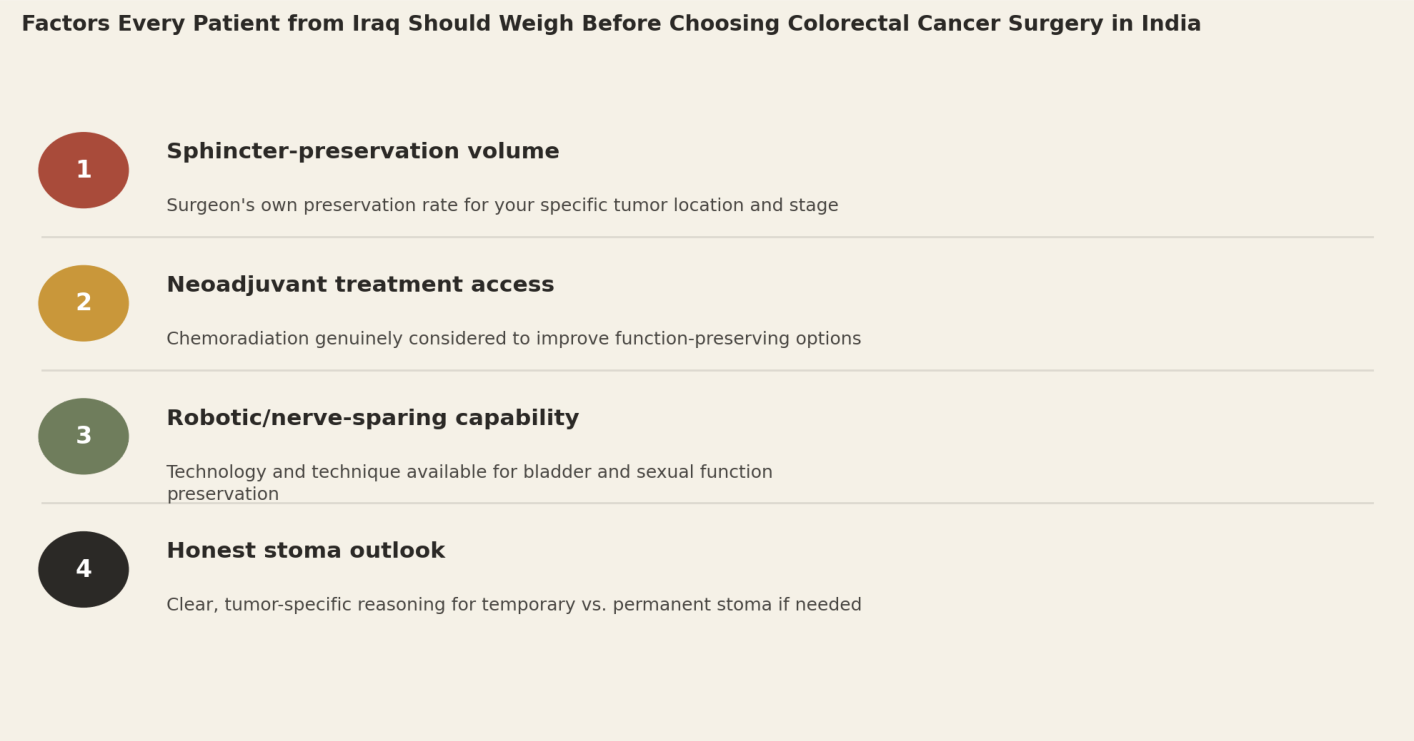
- The page 4 visual checklist summarises four factors Iraqi patients should weigh before choosing colorectal cancer surgery in India: sphincter-preservation volume, access to neoadjuvant treatment, robotic and nerve-sparing capability, and a clear explanation of whether a required stoma is likely to be temporary or permanent. The source's central message is that patients should choose a surgeon and hospital based on tumour-specific experience and functional outcomes rather than simply the lowest price or the simplest proposed operation.
Quick Facts
- Treatment
- Colorectal and rectal cancer surgery in India
- Primary Patients
- Iraqi patients seeking colorectal cancer treatment
- Main Speciality
- Colorectal surgical oncology
- Key Specialist
- Colorectal surgeon experienced in sphincter and nerve preservation
- Major Goal
- Cancer control while preserving function when clinically appropriate
- Sphincter Preservation
- Ask for the surgeon's rate for the specific tumour location and stage
- Robotic Surgery
- Approximately 94% sphincter preservation in the cited comparative studies
- Standard Laparoscopic Surgery
- Approximately 84% in the cited comparison
- Nerve-Sparing
- Important for bladder and sexual function in suitable rectal cancer cases
- Neoadjuvant Treatment
- Chemoradiation may be considered when tumour downstaging could improve surgical options
- Stoma
- Ask whether it is expected to be temporary or permanent
- Accreditation
- Verify JCI and/or NABH accreditation
- Surgical Volume
- Ask about robotic and laparoscopic mid- to low-rectal resections
- Total Mesorectal Excision
- Confirm surgeon-specific experience
- Medical Team
- Surgical, medical and radiation oncology support may be required
- Stoma Care
- Confirm access to specialist stoma-care support
- Technology
- Robotic-assisted surgery where appropriate for the tumour
- Functional Outcomes
- Ask about bladder and sexual dysfunction after nerve-sparing surgery
- Pre-Travel
- Provide biopsy, pathology, imaging and previous treatment records
- Written Plan
- Obtain a tumour-specific surgical and treatment plan
- Second Opinion
- Consider further review when permanent stoma is recommended without clear tumour-specific reasoning
- Author
- Dr. Dheeraj Bojwani
- Experience
- 24+ Years
In Brief
For Iraqi patients seeking colorectal cancer treatment in India, particularly rectal cancer surgery, surgeon-specific expertise in sphincter preservation and nerve-sparing techniques should be a major part of hospital selection. The source cites comparative studies showing approximately 94% sphincter preservation with robotic surgery versus approximately 84% with standard laparoscopic surgery, while also describing an Indian prospective study using the SSI Mantra robotic platform in which bladder dysfunction was reported in roughly 10% of patients and sexual dysfunction in roughly 20%. These figures are study-specific and should not be treated as guaranteed individual outcomes, so patients should ask the selected surgeon for their own results for the relevant tumour location and stage.
Why the Choice of Colorectal Surgeon in India Matters as Much as the Choice of Hospital
Based on my interactions with international patients, the published literature on this specific comparison is genuinely clear. Large comparative studies of robotic versus laparoscopic rectal cancer surgery, including one analysis of over 1,300 patients, have found sphincter preservation rates of roughly 94 percent with robotic technique compared with roughly 84 percent with standard laparoscopic surgery, alongside meaningfully lower conversion to open surgery. India has also developed its own domestic contribution to this field: a prospective single-institute study using the Indian-built SSI Mantra robotic platform for autonomic nerve-preserving rectal cancer surgery reported bladder dysfunction in roughly 10 percent of patients and sexual dysfunction in roughly 20 percent, outcomes the study's own authors found comparable to established international robotic systems. This is precisely the point: the specific technique and the specific surgeon's experience with nerve-sparing dissection, not simply the fact of having cancer surgery in a reputable country, is what determines whether a patient keeps normal bowel, bladder, and sexual function.
How Patients from Iraq Can Verify a Colorectal Cancer Hospital’s Accreditation in India
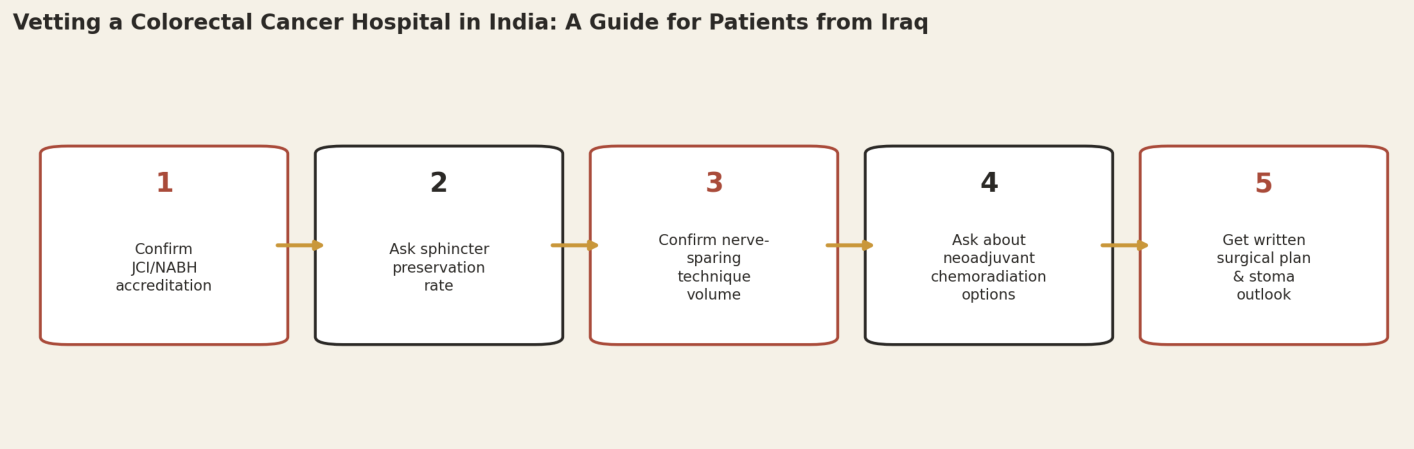
The fastest filter I recommend to every Iraqi patient calling about colorectal cancer is verifiable accreditation, not marketing language. Joint Commission International, JCI, audits a hospital’s overall clinical safety systems against the same standard used across the United States and Europe. The National Accreditation Board for Hospitals and Healthcare Providers, NABH, is India’s own domestic equivalent, and in my experience of 24 years advising patients on this exact decision, a centre holding both marks together is a meaningfully stronger signal than either alone. For colorectal cancer specifically, ask one further, very direct question: does the surgical team routinely perform sphincter-preserving and nerve-sparing technique for appropriately located tumours, or does the practice default to a permanent stoma more often than published literature would suggest is necessary.
Colorectal Surgery Volume Criteria That Predict Sphincter Preservation Outcomes in India
Based on my interactions with dozens of colorectal surgery programmes over the years, a surgeon’s specific volume in sphincter-preserving and nerve-sparing rectal cancer surgery, not simply general colorectal surgery experience, is one of the clearest predictors of whether your specific tumour can be treated while preserving function. Ask directly, in writing:
- What is this surgeon’s own sphincter preservation rate for tumours at my specific location and stage, not a general colorectal cancer statistic?
- How many robotic or laparoscopic rectal cancer resections, specifically for tumours in the mid to low rectum, has this surgeon performed?
- What is the hospital’s own reported rate of bladder and sexual dysfunction following nerve-sparing rectal surgery?
- If a stoma is genuinely necessary for my specific case, is it more likely to be temporary and reversible, or permanent, and what is the surgeon’s reasoning?
A surgeon confident in their own outcomes will answer these specifically. A surgeon who recommends a permanent stoma without a clear, tumour-specific explanation of why sphincter preservation was not possible deserves a second opinion.
Vetting a Colorectal Cancer Hospital in India: A Guide for Patients from Iraq
Questions Patients from Iraq Should Ask About the Colorectal Cancer Team in India
Colorectal cancer treatment is never genuinely the work of one surgeon alone. In my experience of 24 years watching these programmes operate, the strongest units bring together a colorectal surgical oncologist with specific sphincter-preservation training, a medical oncologist to guide neoadjuvant chemoradiation when tumour downstaging could improve the chance of sphincter preservation, a radiation oncologist for cases needing pre-operative radiotherapy, and a stoma care nurse for the minority of patients who do need one, temporarily or permanently. Ask specifically who fills each of these roles for your case, and confirm that neoadjuvant treatment has been genuinely considered where it could improve your surgical options, not skipped in favour of moving straight to surgery.
Colorectal Surgery Technology Standards in India That Patients from Iraq Should Check
The specific technology available changes what a surgical team can safely offer. Ask whether robotic-assisted surgery is genuinely available for your specific tumour location, since the enhanced precision and visualisation it offers has been associated with meaningfully higher sphincter preservation rates in published comparative studies. Ask whether the surgical team has specific experience with total mesorectal excision, the technique of removing the rectal tumour along with its surrounding lymphatic tissue as a single, intact unit, since the completeness of this dissection directly affects both cancer control and function preservation. Ask directly which of these specific capabilities apply to your case, not simply whether the hospital owns the equipment somewhere in the building.
Red Flags Patients from Iraq Should Watch For When Choosing a Colorectal Cancer Hospital in India
Over the years, certain patterns have become reliable warning signs for me. A surgeon who recommends a permanent stoma very early in the discussion, before a full evaluation of whether sphincter preservation is oncologically appropriate, deserves direct questioning. A hospital that cannot state its own sphincter preservation rate, offering only a general survival statistic instead, has not given you information you can actually use. And a hospital that does not offer neoadjuvant chemoradiation where it could genuinely improve the chance of preserving function is not offering the full range of modern colorectal cancer care.
Factors Every Patient from Iraq Should Weigh Before Choosing Colorectal Cancer Surgery in India
A Closing Thought for Iraqi Families
Colorectal cancer surgery affects a patient’s daily life for decades afterward, and it deserves a surgeon with genuine, specific experience in sphincter and nerve preservation, not a default recommendation for the simplest surgical option or the lowest quoted price. Based on my interactions with international patients over more than two decades, the patients who ask about sphincter preservation rates, nerve-sparing technique, and neoadjuvant treatment options consistently achieve better long-term quality of life than those who accept the first recommendation without question. My role, and the role of any advisor a patient works with, should be to help you ask these exact questions and confirm honestly that the specific surgeon and specific hospital in front of you are the right fit for your exact diagnosis. Iraq’s patients deserve the same standard of scrutiny in this decision as any patient anywhere else in the world.
Sources & Further Reading
- Joint Commission International (JCI) — Accredited Organizations Directory (jointcommissioninternational.org)
- National Accreditation Board for Hospitals & Healthcare Providers (NABH), India (nabh.co)
- PubMed — Robotic vs. Laparoscopic Rectal Cancer Surgery, Sphincter Preservation Comparative Study (pubmed.ncbi.nlm.nih.gov)
- PubMed — Autonomic Nerve Preserving Robotic Rectal Cancer Surgery Using Indian SSI Mantra Robot (pubmed.ncbi.nlm.nih.gov)
- American Society of Colon and Rectal Surgeons (ASCRS) — Patient Education (fascrs.org)
Frequently Asked Questions by Iraqi Patients about Selecting a Colorectal Cancer Surgeon and Hospital in India
Can Iraqi patients receive colorectal cancer treatment in India?
Yes. The guide is specifically designed to help patients from Iraq evaluate Indian colorectal cancer surgeons and hospitals before travelling for treatment.
What should Iraqi patients look for in a rectal cancer surgeon in India?
They should look for specific experience in sphincter-preserving and nerve-sparing rectal surgery. The surgeon's results for the patient's tumour location and stage are more useful than general colorectal surgery statistics.
What is sphincter-preserving surgery for rectal cancer?
It is surgery designed to remove the cancer while preserving the anal sphincter when this is oncologically appropriate. The goal is to avoid an unnecessary permanent stoma while maintaining bowel function.
Is robotic rectal cancer surgery available in India for Iraqi patients?
The source discusses robotic-assisted rectal surgery and cites comparative studies showing approximately 94% sphincter preservation versus approximately 84% with standard laparoscopic surgery. Suitability depends on the tumour and individual clinical circumstances.
What is nerve-sparing rectal cancer surgery?
Nerve-sparing surgery aims to protect nerves involved in bladder and sexual function while removing the cancer. Iraqi patients should ask about the surgeon's experience and hospital-specific rates of bladder and sexual dysfunction.
When might neoadjuvant treatment be used before rectal cancer surgery?
Neoadjuvant chemoradiation may be considered when reducing or downstaging the tumour could improve the possibility of sphincter preservation. The guide recommends confirming that this option has been properly evaluated before proceeding directly to surgery.
How should Iraqi patients assess the need for a stoma after colorectal cancer surgery?
Patients should ask whether a stoma is genuinely necessary for their tumour and whether it is expected to be temporary and reversible or permanent. The surgeon should clearly explain the tumour-specific reasoning.
What is total mesorectal excision in rectal cancer surgery?
Total mesorectal excision involves removing the rectal tumour together with its surrounding lymphatic tissue as an intact unit. The guide recommends asking about the surgeon's specific experience with this technique.
What colorectal cancer specialists should be involved in treatment in India?
Depending on the case, the team may include a colorectal surgical oncologist, medical oncologist, radiation oncologist and stoma-care nurse. Iraqi patients should confirm who will manage each part of their treatment.
What should Iraqi patients verify before travelling to India for colorectal cancer surgery?
They should verify accreditation, the surgeon's sphincter-preservation rate, experience with the relevant tumour location, nerve-sparing capability, neoadjuvant treatment options, robotic surgery where appropriate and the expected stoma outcome. A written treatment plan should be obtained before surgery.
Page Summary
Colorectal cancer surgery can affect bowel, bladder and sexual function long after the cancer operation itself. For Iraqi patients, the source therefore recommends selecting a colorectal surgeon based on specific experience with sphincter-preserving and nerve-sparing rectal surgery rather than general colorectal surgery volume. Published comparative evidence in the guide reports approximately 94% sphincter preservation with robotic surgery versus approximately 84% with standard laparoscopic surgery, while stressing that the surgeon's own tumour-specific outcomes are more useful when making an individual decision.
A strong colorectal cancer programme should combine appropriate accreditation with a multidisciplinary team, access to neoadjuvant treatment, robotic and nerve-sparing capabilities, total mesorectal excision expertise and specialist stoma care. Iraqi patients should obtain a written treatment plan and understand whether any proposed stoma is likely to be temporary or permanent. The source's closing recommendation is to prioritise cancer control and long-term quality of life while ensuring that the chosen surgeon and hospital are appropriate for the patient's exact tumour.
Citation Block
| Field | Details |
|---|---|
| Article / Topic | Selecting the Best Colorectal Cancer Surgeons and Hospitals in India |
| Primary Patients | Patients from Iraq |
| Treatment Area | Colorectal and rectal cancer surgery |
| Main Selection Principle | Tumour-specific surgical expertise and functional preservation |
| Primary Functional Goal | Preserve sphincter, bladder and sexual function where clinically appropriate |
| Robotic Sphincter Preservation | Approximately 94% in cited comparative studies |
| Laparoscopic Sphincter Preservation | Approximately 84% in cited comparative studies |
| Robotic Evidence | Comparative analysis involving more than 1,300 patients |
| Indian Robotic Platform Study | SSI Mantra robotic platform |
| Bladder Dysfunction | Roughly 10% in the cited Indian study |
| Sexual Dysfunction | Roughly 20% in the cited Indian study |
| Accreditation | JCI and NABH |
| Surgeon Volume | Specific volume in sphincter-preserving and nerve-sparing rectal surgery |
| Tumour Location | Ask specifically about mid- and low-rectal tumour experience |
| Outcome Measure | Surgeon-specific sphincter-preservation rate |
| Functional Outcomes | Bladder and sexual dysfunction rates |
| Stoma Assessment | Determine whether a stoma is temporary or permanent |
| Core Surgical Team | Colorectal surgical oncologist |
| Medical Oncology | Neoadjuvant treatment and systemic therapy planning |
| Radiation Oncology | Pre-operative radiotherapy where required |
| Stoma Care | Specialist stoma-care nurse |
| Surgical Technology | Robotic-assisted surgery where appropriate |
| Key Technique | Total mesorectal excision |
| Red Flag | Early permanent-stoma recommendation without tumour-specific assessment |


Our Mission Statement
Our mission is to place patients at the centre of every healthcare decision by providing trustworthy, evidence-based, and unbiased medical information. We believe that informed patients make better decisions. Backed by personalised guidance from our experienced advisory team, we help patients understand their treatment options, compare them objectively, and confidently choose the path that best suits their medical needs and personal circumstances.
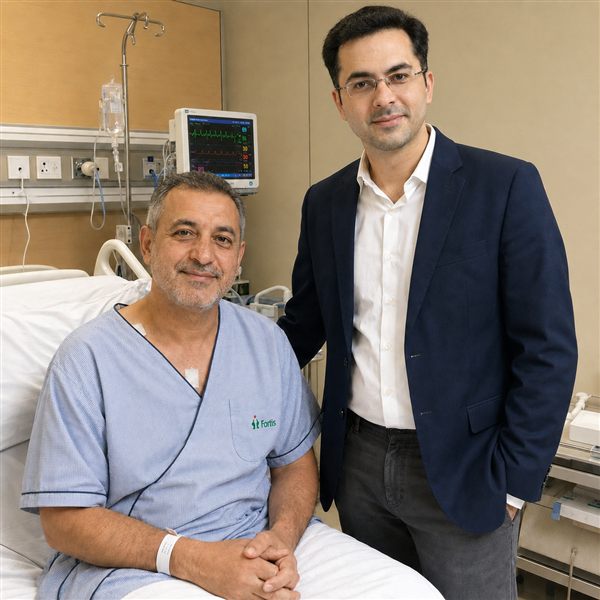
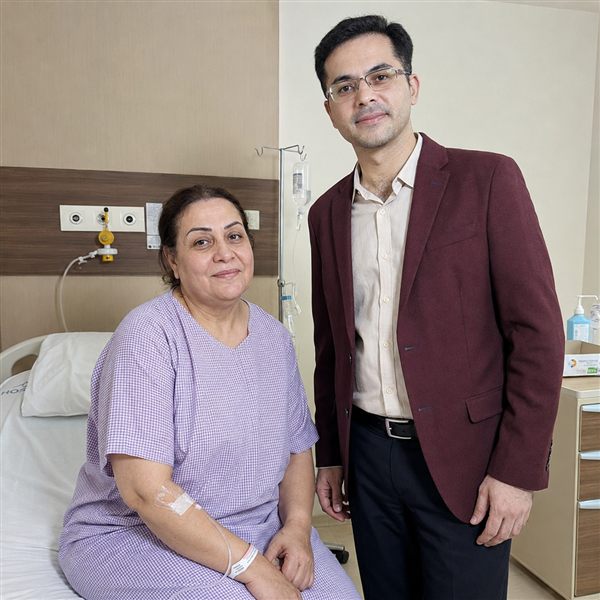
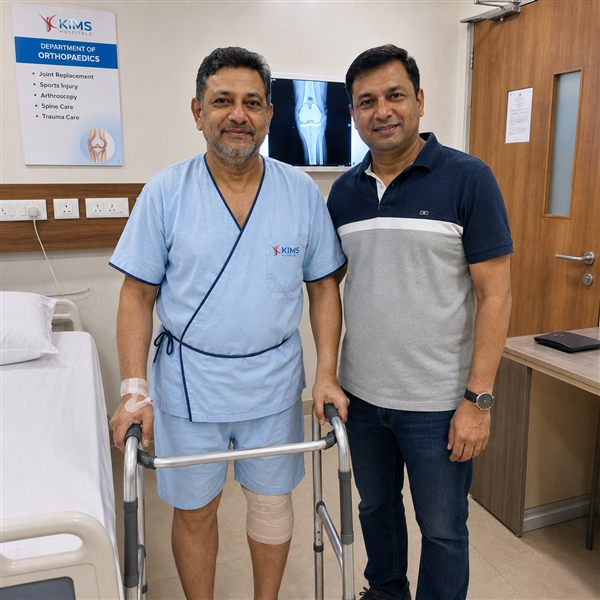
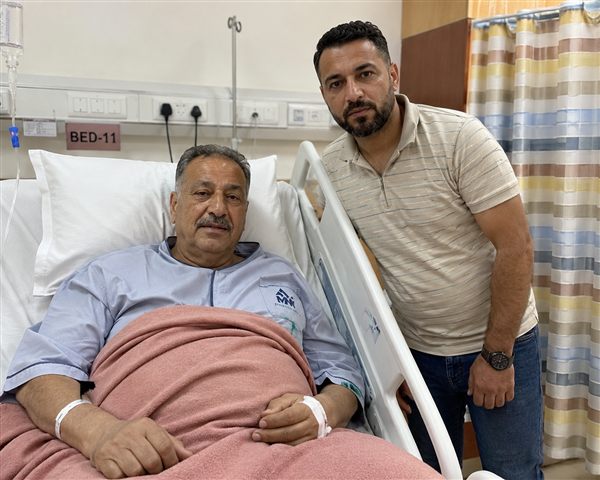
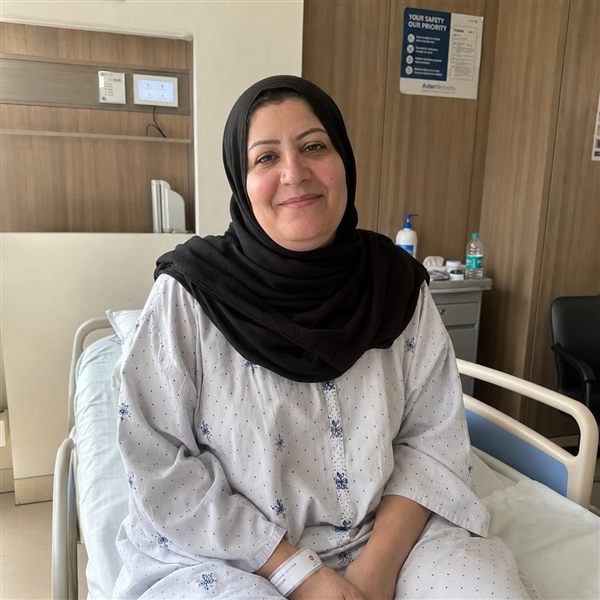
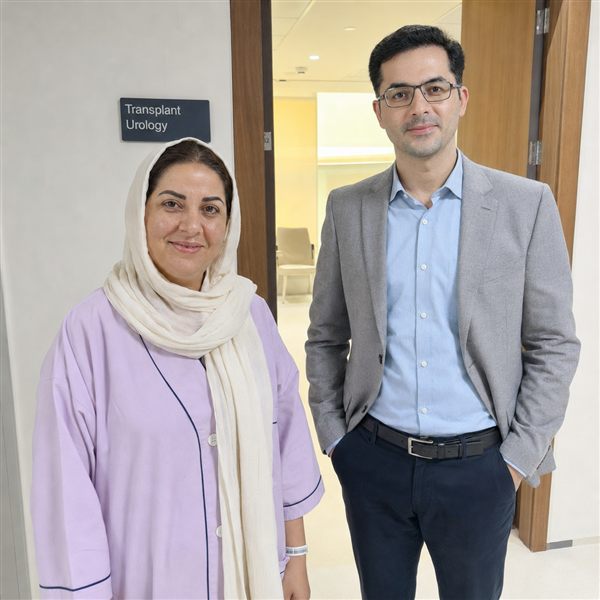
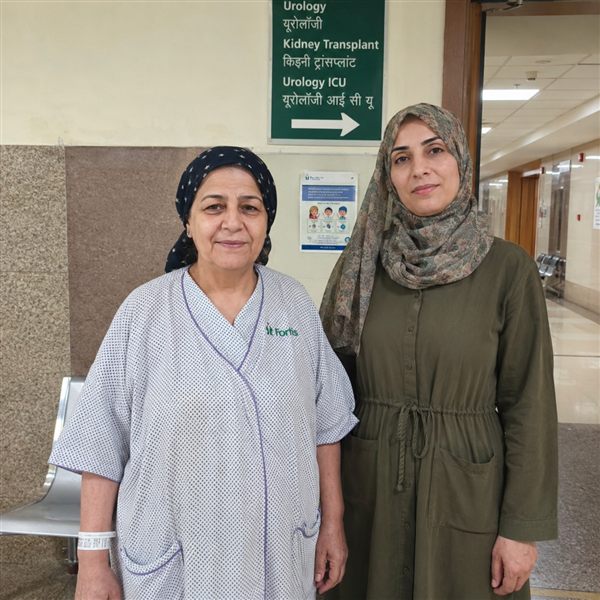
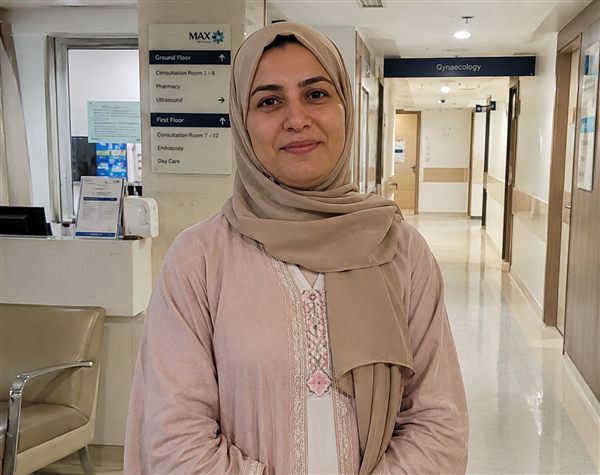
Patient Testimonials from Iraq



Ready to Take the First Step?
Share your Medical Reports with our Healthcare Managers Today and Get a FREE CONSULTATION, a Personalized Treatment Plan, and Complete Support from Arrival to Recovery.
Get Your Free ConsultationAreas We Serve
Indian Health Guru Consultants proudly assists patients from Iraq and surrounding Middle Eastern countries in accessing advanced, affordable and trusted medical treatment in India. Our team provides complete support for medical opinions, hospital selection, treatment planning, visa assistance, travel coordination, accommodation and post-treatment follow-up.
We regularly serve patients from:
- Iraq
- Turkey
- Iran
- Kuwait
- Jordan
- Syria
- Qatar
- Bahrain
- Oman
- Yemen
- Saudi Arabia
- United Arab Emirates
No matter where you are located, our experienced team is committed to making your medical journey to India safe, smooth, transparent and stress-free from the first enquiry to your return home.
From Iraq to India: Your Complete Patient Guide
- Heart Failure Treatment and Surgery in India for Iraqis
- Dental Implants and Smile Makeover in India for Iraqis
- Oral and Maxillofacial Surgery in India for Iraqis
- Knee Surgery in India for Iraqis
- Proton Therapy in India for Iraqis
- Heart Valve Replacement in India for Iraqis
- Cancer Treatment in India for Iraqi Patients
- Dental Surgery in India for Iraqis
- Leukemia, Lymphoma and Blood Cancer Treatment in India for Iraqis
- IVF and Fertility Treatment in India for Iraqis
- Kidney Transplant in India for Iraqis
- CyberKnife Treatment in India for Iraqis
- Colorectal Cancer Treatment and Surgery in India for Iraqis
- Liver Transplant in India for Iraqis
- Scoliosis Correction Surgery in India for Iraqis
- Neurosurgery in India for Iraqis
- Paediatric Neurosurgery in India for Iraqis
- Cardiac Pacemaker Treatment in India for Iraqi Patients