

Selecting the Best Oral and Maxillofacial Surgeons and Hospitals in India: A Guide for Patients from Iraq
A doctor’s honest, question-by-question guide for patients from Iraq on vetting a maxillofacial hospital in India — cleft-specific training, accreditation, speech monitoring, and the exact questions worth asking before you book anything.
Over the years, I have found that oral and maxillofacial surgery, particularly for cleft lip and palate patients needing jaw correction later in life, is one of the areas where a successful-looking surgical result can still leave a patient with a genuine problem if the full team is not involved. In my experience of 24 years advising families through exactly this decision, correcting the bite and jaw alignment, called orthognathic surgery, can meaningfully affect speech function in cleft patients specifically, and a hospital that focuses only on the surgical correction without ongoing speech monitoring has not addressed the complete picture.
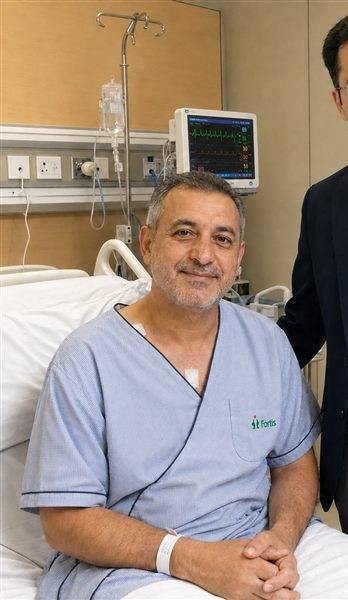
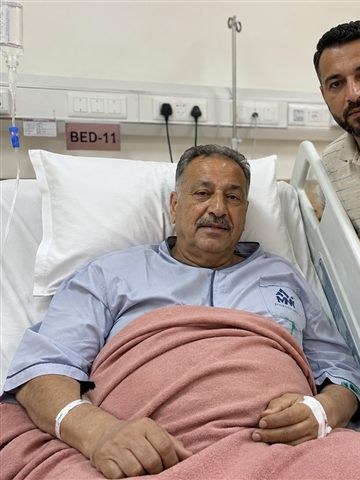
Healing Journeys of Iraqi Patients
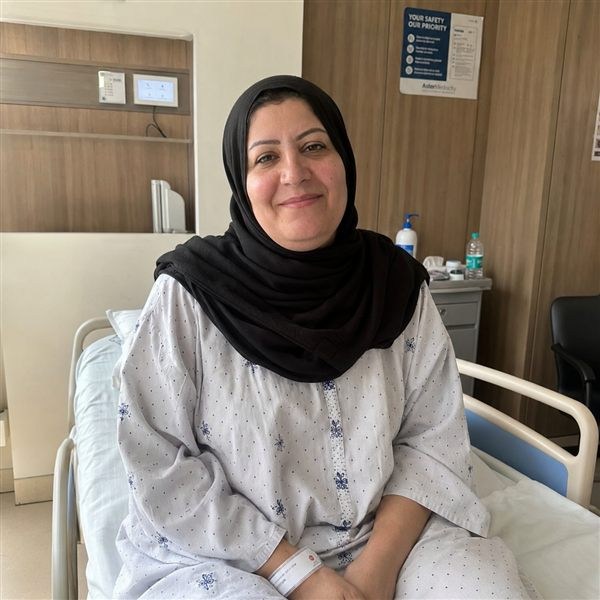
Key Takeaways
- For Iraqi patients considering oral and maxillofacial surgery in India, particularly those with cleft lip and palate requiring later jaw correction, a successful-looking surgical result does not necessarily represent a complete functional outcome. Orthognathic surgery can improve jaw alignment and bite while also affecting speech-related function in cleft patients, so ongoing speech monitoring should form part of the treatment plan.
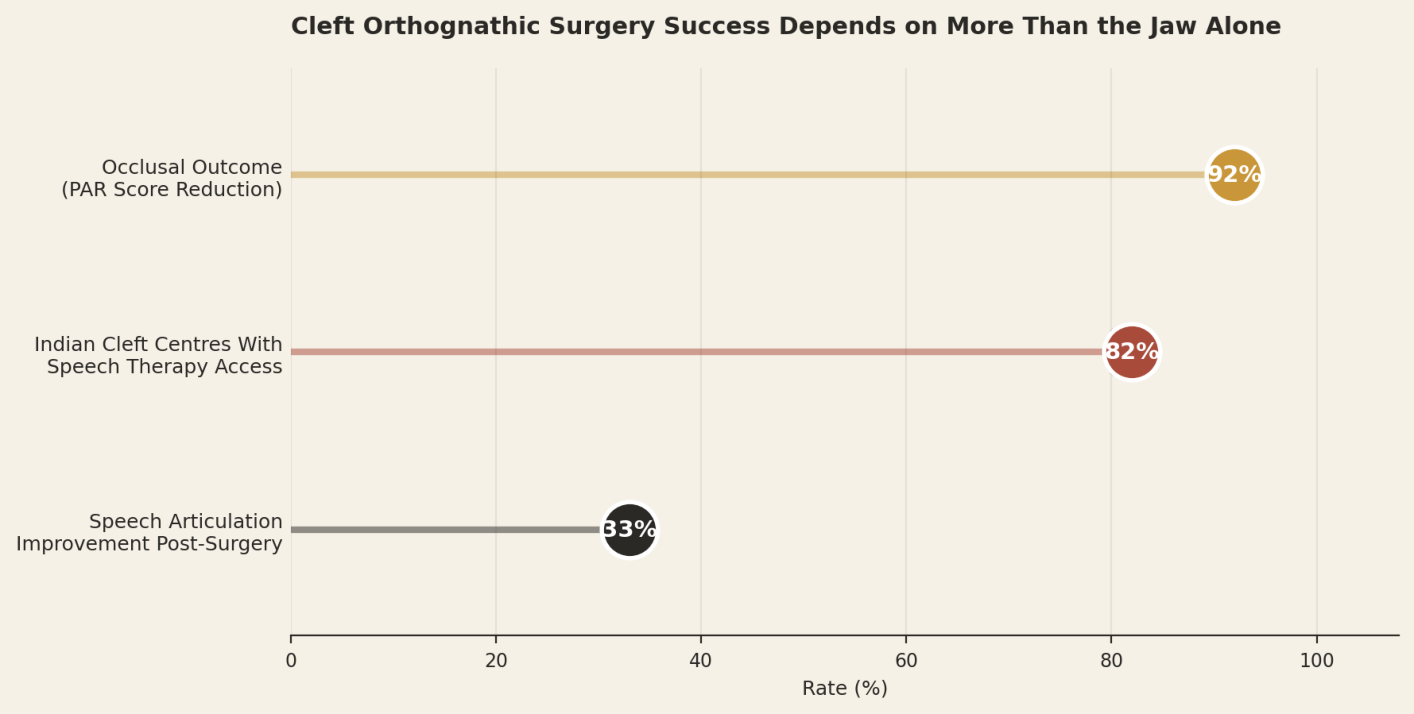
- The evidence presented in the guide illustrates this important balance. A retrospective study of cleft orthognathic surgery reported a 91.6% mean reduction in a standardized misalignment score, showing substantial improvement in occlusal alignment. However, a systematic review involving 2,550 cleft patients found that velopharyngeal function worsened by an average of 63% in severity scores after jaw-advancement surgery, even though speech articulation improved by approximately 33%.
- The chart on page 2 visually highlights the same principle: approximately 92% occlusal improvement, about 82% of Indian cleft centres reporting speech-therapy access, and approximately 33% improvement in speech articulation after surgery. The source notes that 81.8% of surveyed Indian cleft centres had access to speech therapy, meaning patients should specifically confirm that speech-language support is available as an integrated part of their own treatment programme.
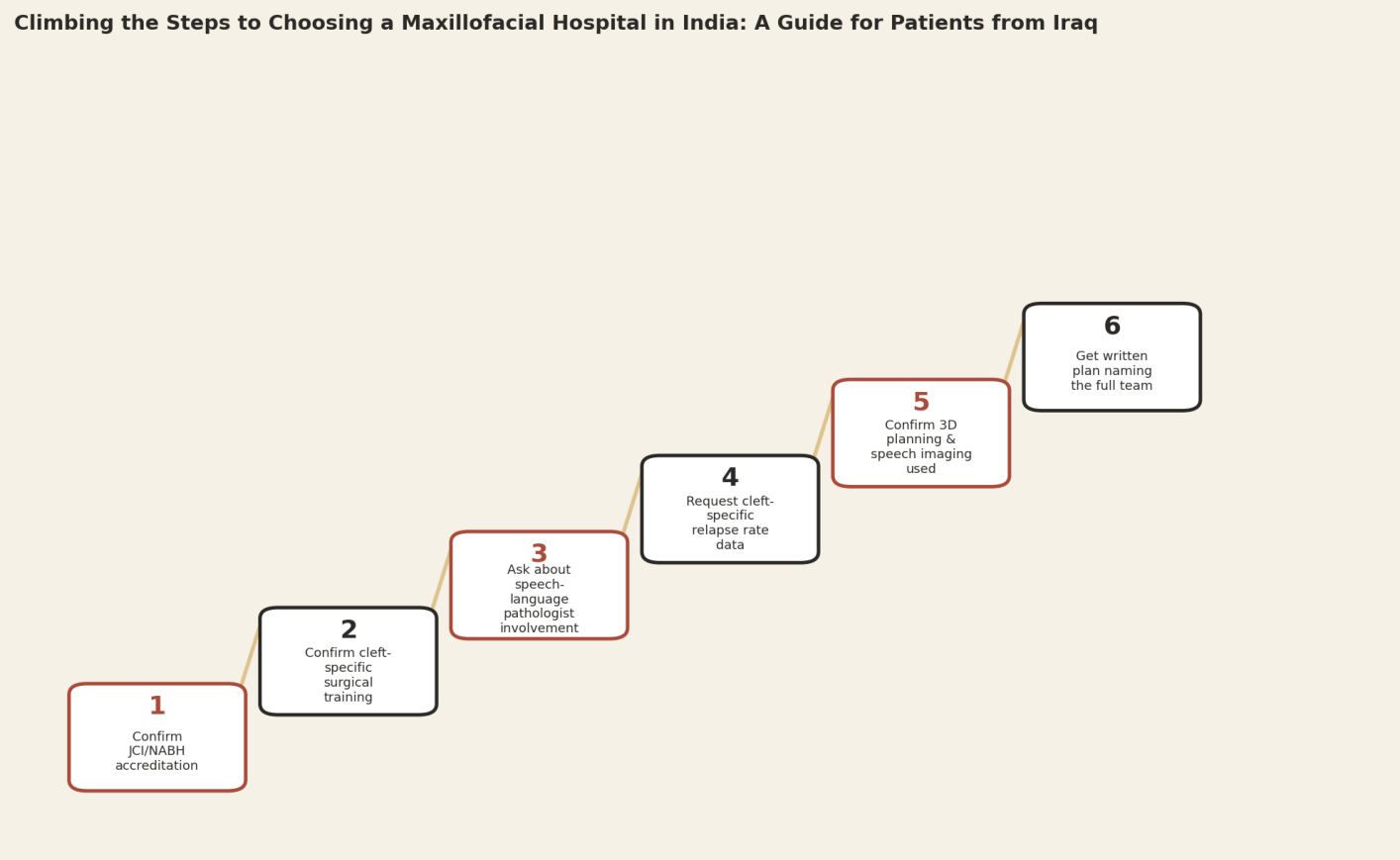
- Accreditation should be used as an initial quality filter, but Iraqi families should look beyond general hospital credentials. The guide recommends verifying JCI or NABH accreditation and then asking whether a dedicated speech-language pathologist is genuinely involved in the cleft care team.
- Cleft-specific surgical experience is more meaningful than general orthognathic surgery volume alone. The guide recommends asking whether the surgeon has specific oral and maxillofacial training for cleft patients, whether speech is formally assessed before and after surgery, what the centre's own cleft orthognathic relapse rate is, and whether surgery, orthodontics, and speech therapy jointly review the patient's case.
- A strong cleft maxillofacial programme should involve several disciplines. The source identifies an oral and maxillofacial surgeon with cleft-specific training, an orthodontist for dental alignment before and after surgery, a speech-language pathologist for functional assessment, a clinical psychologist when psychosocial support is relevant, and an audiologist because cleft palate patients may have increased risk of middle-ear and hearing complications.
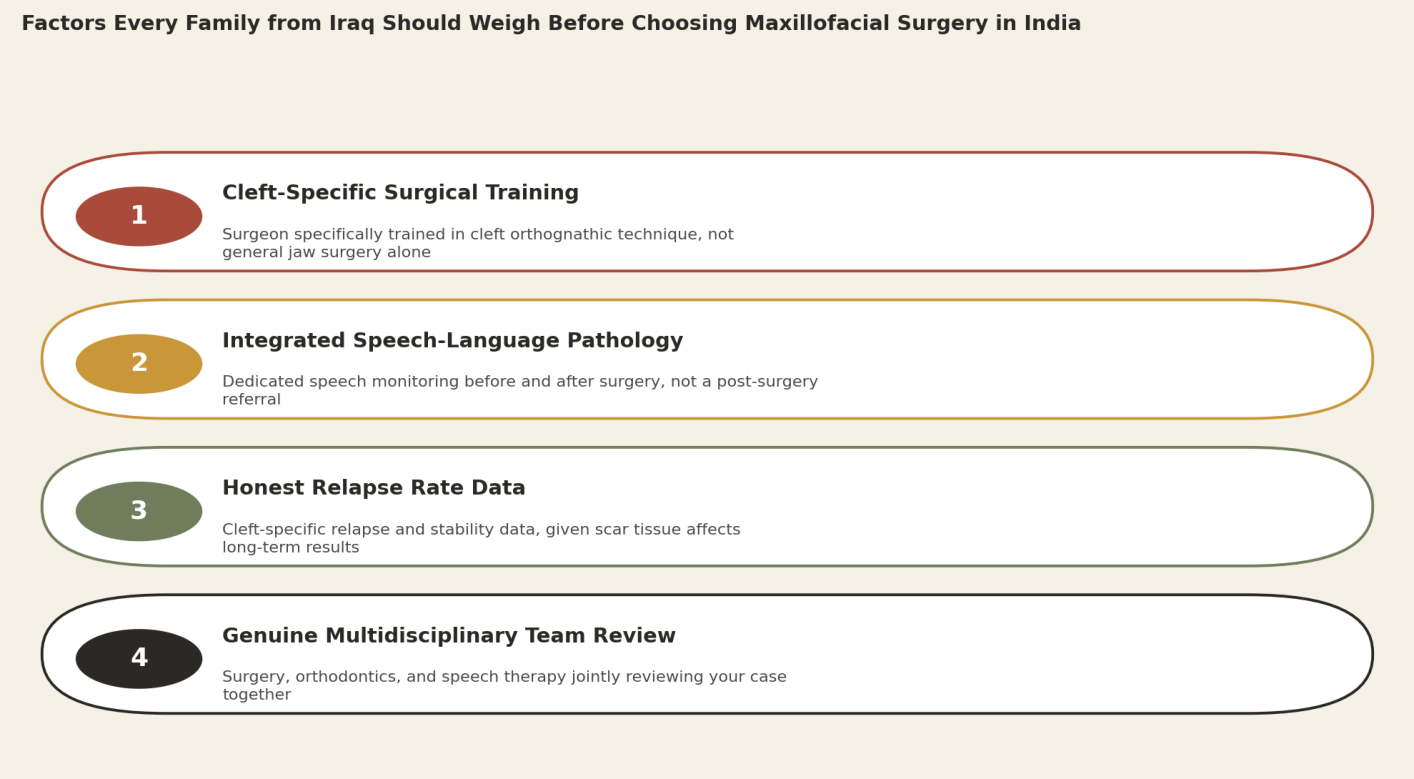
- Red flags include a surgeon without cleft-specific training, no speech monitoring, no genuine multidisciplinary cleft team, or no structured post-operative speech reassessment plan. The page 4 checklist highlights cleft-specific surgical training, integrated speech-language pathology, honest relapse rate data and genuine multidisciplinary team review.
Quick Facts
- Treatment
- Oral and maxillofacial surgery, including cleft-related orthognathic jaw correction
- Primary Patients
- Iraqi patients requiring complex maxillofacial or cleft-related treatment in India
- Main Speciality
- Oral and maxillofacial surgery
- Key Specialist
- Maxillofacial surgeon with specific cleft orthognathic training
- Main Procedure
- Orthognathic jaw correction for selected cleft patients
- Occlusal Improvement
- 91.6% mean reduction in standardized misalignment score in the cited study
- Speech Articulation
- Approximately 33% average improvement reported in the cited systematic review
- Velopharyngeal Function
- Worsening in severity scores was reported after jaw-advancement surgery in the cited review
- Speech Monitoring
- Should be performed before and after surgery
- Relapse Risk
- Previous cleft scar tissue can increase relapse risk
- Team
- Maxillofacial surgeon, orthodontist, speech-language pathologist, and other specialists as required
- Extended Team
- Clinical psychologist and audiologist may be relevant
- Imaging
- 3D imaging and virtual surgical planning may assist complex jaw correction
- Functional Assessment
- Nasoendoscopy or videofluoroscopy may assess velopharyngeal function
- Accreditation
- Verify JCI or NABH accreditation
- Post-operative Follow-Up
- Structured speech reassessment should be planned
- Important Outcome
- Jaw alignment alone does not represent the complete cleft surgery outcome
- Multidisciplinary Care
- Surgery, orthodontics, and speech therapy should coordinate treatment planning
- Author
- Dr. Dheeraj Bojwani
- Experience
- 24+ Years
In Brief
For Iraqi patients undergoing complex oral and maxillofacial surgery in India, especially cleft-related jaw correction, the treatment plan should evaluate both structural and functional outcomes. The source reports major improvement in occlusal alignment after cleft orthognathic surgery while also identifying potential changes in velopharyngeal function. A suitable centre should combine cleft-trained maxillofacial surgery with orthodontics, speech-language assessment, appropriate imaging, and structured follow-up. Patients should specifically ask about cleft-specific relapse rates, speech outcomes, multidisciplinary case review, and the availability of 3D surgical planning and post-operative functional assessment.
Why the Choice of Maxillofacial Team in India Matters as Much as the Choice of Hospital
Based on my interactions with international patients, the published data on this exact point deserves careful attention. A retrospective cohort study of cleft orthognathic surgery found occlusal outcomes, how well the teeth and jaw align, improved dramatically, with a mean reduction in a standardised misalignment score of 91.6 percent, genuinely excellent results comparable to non-cleft orthognathic surgery patients. However, a larger systematic review covering 2,550 cleft patients found that velopharyngeal function, the ability of the soft palate to close properly during speech, worsened by an average of 63 percent in severity scores following the same jaw-advancement surgery, even as speech articulation itself improved by an average of 33 percent, a genuinely important and non-obvious trade-off specific to cleft anatomy. A survey of Indian cleft care centres found that while most respondents had access to speech therapy, 81.8 percent overall, a meaningful minority did not, and the same survey found that historically, most Indian plastic surgeons performing cleft repair were not specifically trained in orthognathic surgery, a gap only recently being addressed as oral and maxillofacial surgeons have become more involved in this specific procedure. This tells a family something essential: a technically successful jaw correction is not the same as a complete, safe outcome unless speech function is actively monitored and managed by the full team afterward.
How Patients from Iraq Can Verify a Maxillofacial Hospital’s Accreditation in India
The fastest filter I recommend to every Iraqi family calling about cleft or complex maxillofacial surgery is verifiable accreditation, not marketing language. Joint Commission International, JCI, audits a hospital’s overall clinical safety systems against the same standard used across the United States and Europe. The National Accreditation Board for Hospitals and Healthcare Providers, NABH, is India’s own domestic equivalent, and in my experience of 24 years advising families on this exact decision, a centre holding both marks together is a meaningfully stronger signal than either alone. For cleft-related orthognathic surgery specifically, ask one further, very direct question: does this hospital have a dedicated speech-language pathologist as a genuine, ongoing member of the cleft care team, not simply a referral given after surgery is complete.
Maxillofacial Volume and Cleft-Specific Criteria That Predict Outcomes in India
Based on my interactions with dozens of maxillofacial and cleft care programmes over the years, a centre’s specific, integrated speech monitoring alongside surgical correction, not simply its general orthognathic surgery volume, is one of the clearest predictors of a genuinely good outcome for a cleft patient. General orthognathic surgical volume still matters as a baseline, but it does not by itself confirm that a centre has the specific cleft-focused, multidisciplinary structure your case actually needs. Ask directly, in writing:
- Is the surgeon performing my jaw correction specifically trained in oral and maxillofacial surgery for cleft patients, given how recently this sub-specialty involvement has developed in parts of India?
- Will my speech function be formally assessed before and after surgery by a dedicated speech-language pathologist, and what is the plan if velopharyngeal function changes after the jaw is repositioned?
- What is this centre's own relapse rate for cleft orthognathic surgery specifically, given that scar tissue from earlier cleft repairs is known to increase relapse compared with non-cleft patients?
- Is my case reviewed by a genuine multidisciplinary cleft team, including surgery, orthodontics, and speech therapy together, before the final surgical plan is set?
A centre confident in its own approach will answer these specifically. A centre that focuses only on the surgical correction without addressing speech monitoring deserves a second opinion before you commit.
Climbing the Steps to Choosing a Maxillofacial Hospital in India: A Guide for Patients from Iraq
Questions Patients from Iraq Should Ask About the Maxillofacial Team in India
Cleft-related maxillofacial surgery is never genuinely the work of one surgeon alone. In my experience of 24 years watching these programmes operate, the strongest units bring together an oral and maxillofacial surgeon with specific cleft training, an orthodontist for the pre- and post-surgical dental alignment phase, a speech-language pathologist for ongoing functional assessment, and a clinical psychologist given the genuine psychosocial impact cleft conditions and their treatment can carry across childhood and adolescence. An audiologist is also worth confirming as part of the extended team, since cleft palate patients carry a genuinely elevated risk of middle ear complications that can affect hearing if not monitored alongside the speech and surgical aspects of care. Ask specifically who fills each of these roles for your case, and confirm that this team meets together to review your case, rather than each specialist working in isolation.
Maxillofacial Technology Standards in India That Patients from Iraq Should Check
The specific technology available changes how precisely a team can plan complex jaw correction. Ask whether the hospital uses 3D imaging and virtual surgical planning to precisely predict the jaw’s new position before surgery, since this level of planning has been associated with more predictable outcomes than traditional two-dimensional planning alone. Ask whether nasoendoscopy or videofluoroscopy, imaging techniques that directly visualise the soft palate during speech, are available to assess velopharyngeal function both before and after surgery. Ask also whether the surgical plan includes a structured protocol for reassessing speech at defined intervals after surgery, since velopharyngeal function can change gradually as healing progresses rather than being fully apparent immediately afterward. Ask directly which of these specific capabilities apply to your case, not simply whether the hospital performs maxillofacial surgery in general terms.
Red Flags Patients from Iraq Should Watch For When Choosing a Maxillofacial Hospital in India
Over the years, certain patterns have become reliable warning signs for me. A hospital that does not mention speech function at all when discussing jaw correction for a cleft patient has not addressed a known, well-documented risk specific to this exact surgery. A surgeon without specific cleft orthognathic training, performing this procedure as an extension of general jaw surgery experience, may not fully appreciate the unique scar tissue and relapse considerations cleft patients present. A centre without a genuine multidisciplinary cleft team meeting is treating a complex, lifelong condition as a single isolated procedure. And a centre that cannot describe a structured post-operative speech reassessment schedule is not equipped to catch a functional change before it becomes a longer-term problem.
Factors Every Family from Iraq Should Weigh Before Choosing Maxillofacial Surgery in India
A Closing Thought for Iraqi Families
Cleft-related maxillofacial surgery deserves a team that treats jaw correction and speech function as equally important outcomes, not a single surgical result celebrated in isolation from its effect on how a patient speaks for the rest of their life. Based on my interactions with international patients over more than two decades, the families who ask about speech monitoring, cleft-specific surgical training, and genuine multidisciplinary team review consistently achieve more complete, better-managed outcomes than those who focus on the surgery alone. My role, and the role of any advisor a family works with, should be to help you ask these exact questions and confirm honestly that the specific team and specific hospital in front of you are the right fit for your family’s exact situation. Iraq’s families deserve the same standard of scrutiny in this decision as any family anywhere else in the world.
Sources & Further Reading
- Joint Commission International (JCI) — Accredited Organizations Directory (jointcommissioninternational.org)
- National Accreditation Board for Hospitals & Healthcare Providers (NABH), India (nabh.co)
- PMC — Occlusal and Cephalometric Outcomes of Cleft Orthognathic Surgery: A Retrospective Cohort Study (ncbi.nlm.nih.gov/pmc)
- PMC — Reshaping Faces, Redefining Risks: A Systematic Review of Orthognathic Surgery Outcomes in Cleft Lip and Palate Patients (ncbi.nlm.nih.gov/pmc)
- PMC — A Status Report on Management of Cleft Lip and Palate in India (pmc.ncbi.nlm.nih.gov)
Frequently Asked Questions by Iraqi Patients about Selecting an Oral and Maxillofacial Surgeon and Hospital in India
Is oral and maxillofacial surgery available in India for Iraqi patients?
Yes. The source specifically provides guidance for patients from Iraq evaluating oral and maxillofacial surgeons and hospitals in India, including complex cleft-related jaw correction.
What is orthognathic surgery for cleft patients?
Orthognathic surgery corrects jaw and bite alignment when required after earlier cleft treatment. The source emphasizes that the procedure should also be assessed for its potential effects on speech function.
What improvement in jaw alignment has been reported after cleft orthognathic surgery?
The cited retrospective cohort study found a 91.6% mean reduction in a standardized misalignment score, indicating substantial improvement in occlusal alignment.
Can cleft jaw surgery affect speech function?
Yes. The source reports that velopharyngeal function worsened in severity scores in the cited systematic review, even though speech articulation improved by approximately 33%. This is why formal speech monitoring is important.
Should Iraqi patients choose a surgeon specifically trained in cleft orthognathic surgery?
Yes. The guide recommends confirming that the surgeon has specific oral and maxillofacial training for cleft patients because previous cleft surgery and scar tissue can create different surgical and relapse considerations.
What specialists should be involved in cleft-related jaw surgery in India?
The recommended multidisciplinary team includes a cleft-trained maxillofacial surgeon, orthodontist, and speech-language pathologist. A psychologist and audiologist may also be relevant depending on the patient's needs.
What speech assessments should Iraqi patients ask for before and after cleft jaw surgery?
Patients should ask whether speech function will be formally assessed before and after surgery and whether nasoendoscopy or videofluoroscopy can be used to evaluate velopharyngeal function when appropriate.
Does previous cleft surgery affect the risk of relapse after jaw correction?
The source states that scar tissue from earlier cleft repairs is known to increase relapse compared with non-cleft patients. Iraqi patients should therefore request the hospital's own cleft-specific relapse information.
What technology should Iraqi patients ask about before complex maxillofacial surgery in India?
The guide recommends asking about 3D imaging and virtual surgical planning for jaw positioning, along with nasoendoscopy or videofluoroscopy for functional assessment.
What are the main warning signs when choosing a maxillofacial surgeon in India?
Important warning signs include no cleft-specific surgical training, no discussion of speech function, absence of a genuine multidisciplinary cleft team, and no structured schedule for post-operative speech reassessment.
Page Summary
Choosing an oral and maxillofacial surgeon in India for a cleft-related or complex jaw procedure requires more than assessing surgical experience alone. The source emphasizes the importance of cleft-specific training, orthodontic planning, speech monitoring, relapse assessment, and multidisciplinary decision-making. The goal should be to improve jaw and bite alignment while also protecting or monitoring important functional outcomes such as speech.
For Iraqi families, a suitable hospital should provide coordinated maxillofacial, orthodontic, speech-language, and supporting specialist care. 3D imaging, virtual surgical planning, and appropriate assessment of velopharyngeal function can strengthen treatment planning. Families should be cautious when a centre treats cleft jaw correction as an isolated operation or cannot provide a structured plan for speech assessment after surgery.
Citation Block
| Field | Details |
|---|---|
| Article / Topic | Selecting the Best Oral and Maxillofacial Surgeons and Hospitals in India |
| Primary Country | Iraq |
| Main Speciality | Oral and maxillofacial surgery |
| Treatment Focus | Cleft-related and complex maxillofacial surgery |
| Key Procedure | Cleft orthognathic jaw correction |
| Key Specialist | Cleft-trained oral and maxillofacial surgeon |
| Occlusal Outcome | 91.6% mean reduction in standardized misalignment score |
| Systematic Review Population | 2,550 cleft patients |
| Speech Articulation | Approximately 33% average improvement reported |
| Velopharyngeal Function | Worsening reported in severity scores after jaw advancement |
| Speech Therapy Access | 81.8% of surveyed Indian cleft centres reported access |
| Primary Team | Maxillofacial surgeon, orthodontist, speech-language pathologist |
| Additional Team | Clinical psychologist and audiologist when appropriate |
| Speech Assessment | Before and after surgery |
| Relapse Assessment | Ask for centre-specific cleft orthognathic relapse data |
| Surgical Planning | 3D imaging and virtual surgical planning |
| Functional Imaging | Nasoendoscopy or videofluoroscopy may assess velopharyngeal function |
| Follow-Up | Structured post-operative speech reassessment |
| Accreditation | Verify JCI or NABH accreditation |
| Important Selection Factor | Cleft-specific surgical training |
| Multidisciplinary Requirement | Surgery, orthodontics, and speech therapy should review the case together |

Our Mission Statement
Our mission is to place patients at the centre of every healthcare decision by providing trustworthy, evidence-based, and unbiased medical information. We believe that informed patients make better decisions. Backed by personalised guidance from our experienced advisory team, we help patients understand their treatment options, compare them objectively, and confidently choose the path that best suits their medical needs and personal circumstances.
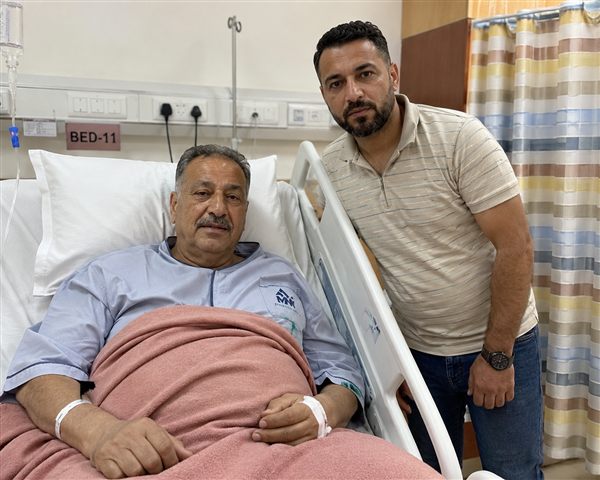
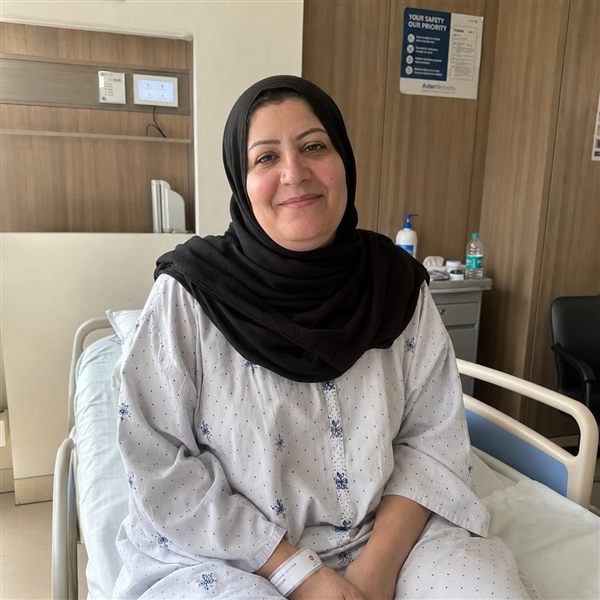
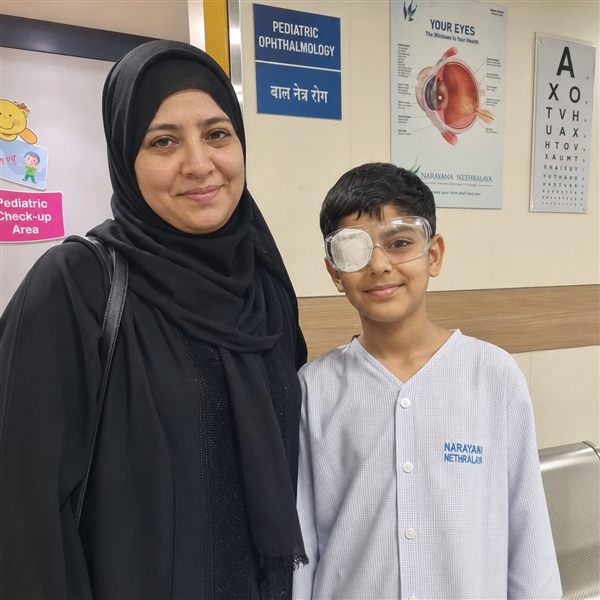
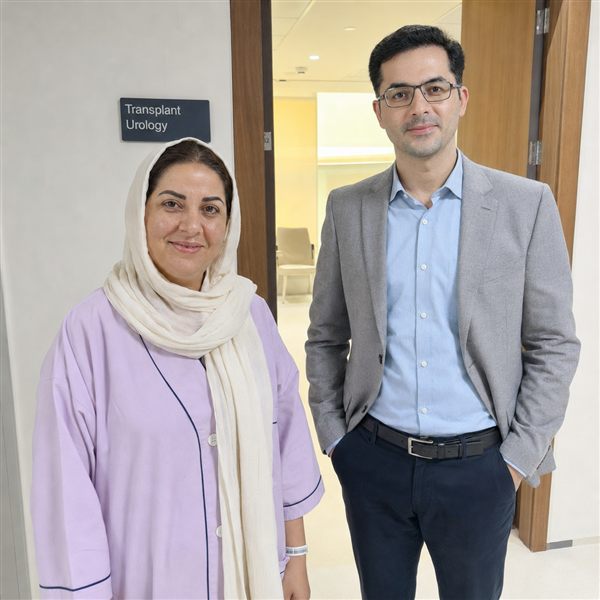
Patient Testimonials from Iraq
Ready to Take the First Step?
Share your Medical Reports with our Healthcare Managers Today and Get a FREE CONSULTATION, a Personalized Treatment Plan, and Complete Support from Arrival to Recovery.
Get Your Free ConsultationAreas We Serve
Indian Health Guru Consultants proudly assists patients from Iraq and surrounding Middle Eastern countries in accessing advanced, affordable and trusted medical treatment in India. Our team provides complete support for medical opinions, hospital selection, treatment planning, visa assistance, travel coordination, accommodation and post-treatment follow-up.
We regularly serve patients from:
- Iraq
- Turkey
- Iran
- Kuwait
- Jordan
- Syria
- Qatar
- Bahrain
- Oman
- Yemen
- Saudi Arabia
- United Arab Emirates
No matter where you are located, our experienced team is committed to making your medical journey to India safe, smooth, transparent and stress-free from the first enquiry to your return home.
From Iraq to India: Your Complete Patient Guide
- HIPEC Cancer Surgery in India for Iraqis
- Joint Arthroscopy and Sports Medicine in India for Iraqis
- Paediatric Orthopaedic Surgery in India for Iraqis
- Penile Implant Surgery in India for Iraqis
- Shoulder Surgery in India for Iraqis
- Oral and Maxillofacial Surgery in India for Iraqis
- IVF and Fertility Treatment in India for Iraqis
- Neurosurgery in India for Iraqis
- Proton Therapy in India for Iraqis
- Prostate Cancer Treatment and Surgery in India for Iraqis
- Cervical and Lumbar Disc Replacement Surgery in India for Iraqis
- Parkinson's Treatment and DBS Surgery in India for Iraqis
- Spine Surgery in India for Iraqis
- Heart Failure Treatment and Surgery in India for Iraqis
- Laparoscopic and Robotic Myomectomy in India for Iraqis
- Liver Transplant in India for Iraqis
- Gamma Knife Treatment in India for Iraqis
- Radiotherapy and Modern Cancer Treatment in India for Iraqis