

Selecting the Best IVF and Fertility Clinics in India: A Guide for Patients from Iraq
A doctor’s honest, question-by-question guide for patients from Iraq on vetting a fertility clinic in India — live birth rates, accreditation, embryology lab quality, and the exact questions worth asking before you book anything.
Over the years, I have found that IVF is the treatment category where marketing numbers and real numbers diverge most dramatically, and the reason is a specific, technical distinction most clinics never explain clearly: the difference between a clinical pregnancy rate and a live birth rate. In my experience of 24 years advising couples through exactly this decision, a clinic quoting “60 percent success” almost always means clinical pregnancy, a confirmed heartbeat on an early ultrasound, not a baby actually born, and the gap between those two numbers can be enormous, particularly for women over 35.
Healing Journeys of Iraqi Patients
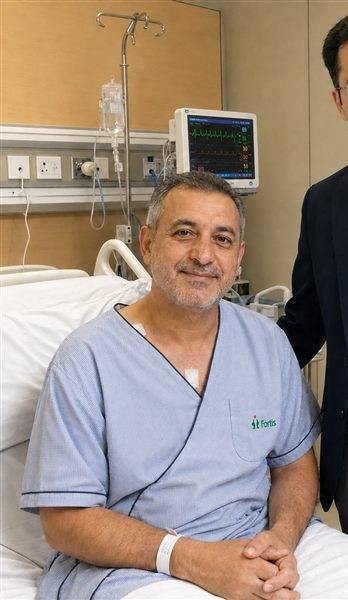

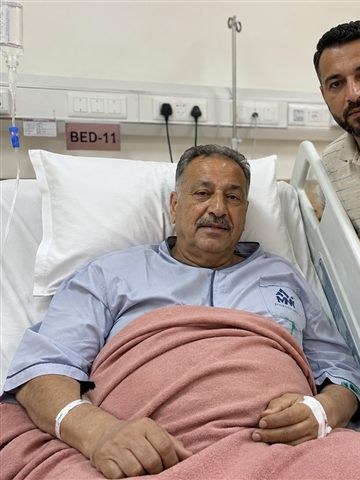
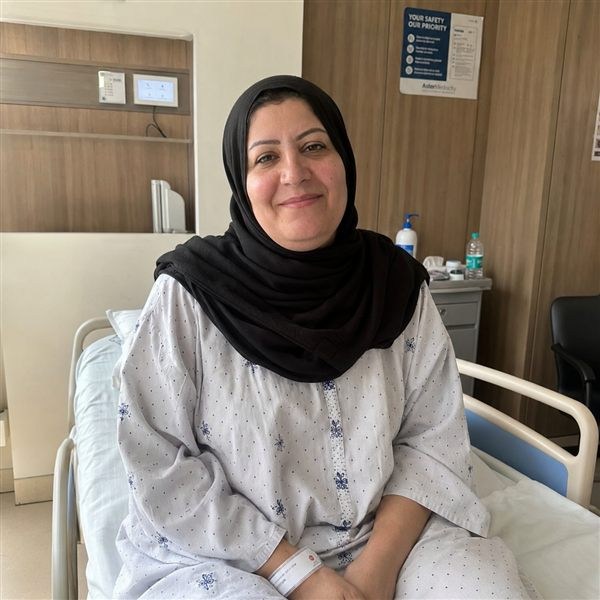


Key Takeaways
- IVF success statistics can be difficult to compare because clinics may use different definitions of success. The source emphasises the difference between a clinical pregnancy rate and a live birth rate. A clinical pregnancy generally reflects an early confirmed pregnancy, whereas live birth measures whether treatment ultimately results in a baby being born. For Iraqi couples comparing clinics, the guide recommends asking specifically for live birth data rather than accepting a single headline “success rate.”
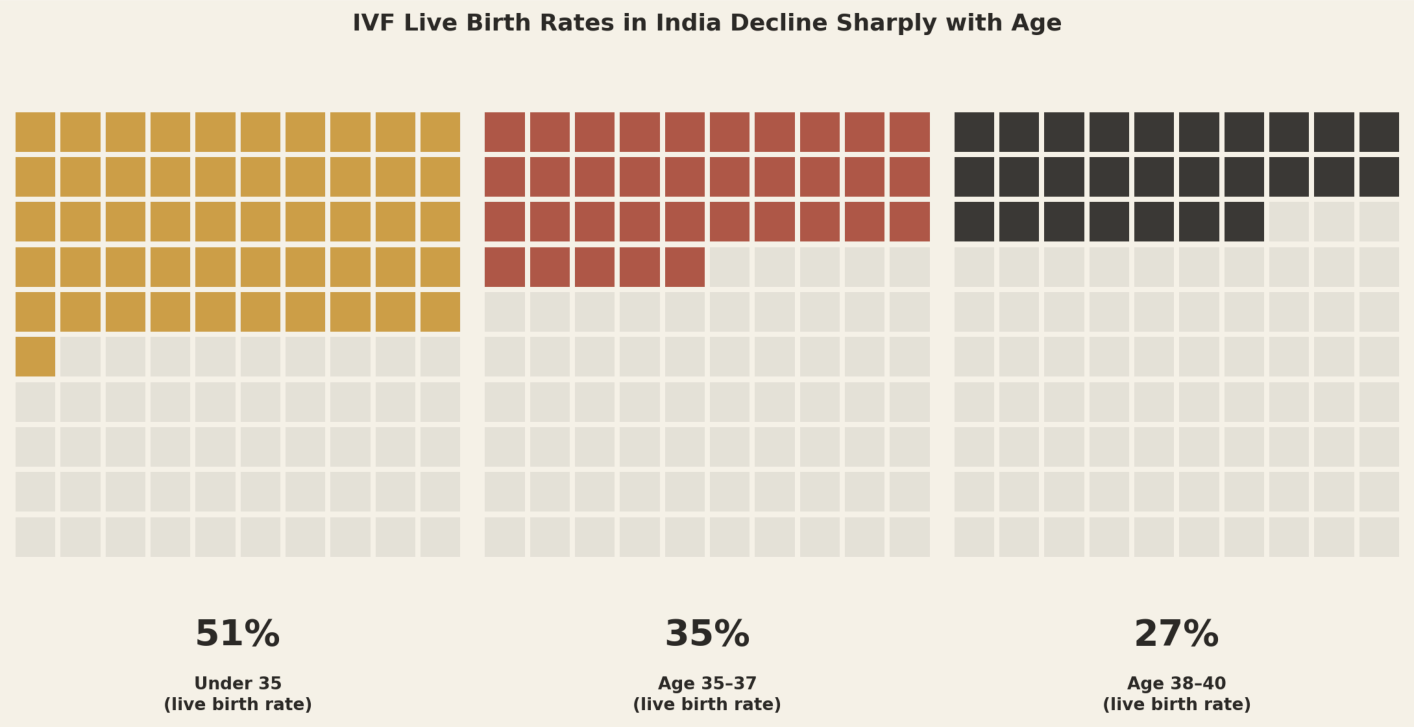
- The source cites Indian data showing that IVF outcomes vary substantially with maternal age. It reports live birth rates of 42–60% per cycle for women under 35, 30–40% for ages 35–37, 22–32% for ages 38–40 and below 15% for women over 41 using their own eggs. The guide also notes that India has more than 2,500 registered ART clinics and more than 250,000 cycles annually, while the absence of one mandatory national registry of standardised live birth data makes direct clinic-to-clinic comparison difficult.
- The age-based chart on page 2 visually illustrates the decline in live birth rates with age, showing approximately 51% for women under 35, 35% for ages 35–37 and 27% for ages 38–40 in the illustrated ICMR-accredited centre data. The source specifically advises patients to ask for live birth rates rather than clinical pregnancy rates and to request figures relevant to their own age group.
- Accreditation is an important initial filter for Iraqi couples evaluating fertility clinics in India. The guide recommends checking JCI accreditation where a fertility centre is housed within an accredited hospital and verifying NABH accreditation. More importantly, couples should ask whether the clinic's published success figure represents clinical pregnancy or live birth and whether results are separated by age instead of being presented as one blended average.
- Clinic-specific live birth performance should be examined alongside cumulative outcomes. The source recommends asking for the clinic's own live birth rate per embryo transfer for the relevant age group, whether preimplantation genetic testing is used and how it affects reported figures, and the cumulative live birth rate across two or three cycles. For women over 38, the guide also recommends an honest discussion of donor-egg treatment alongside continued attempts using their own eggs.
- IVF depends heavily on the embryology laboratory as well as the treating physician. The source recommends a fertility team that includes a reproductive endocrinologist, experienced embryologists, a genetic counsellor when genetic testing is considered and a dedicated fertility nurse coordinator. Iraqi couples should ask about the laboratory's own blastocyst formation and implantation rates because laboratory performance can differ substantially even when clinical treatment protocols appear similar.
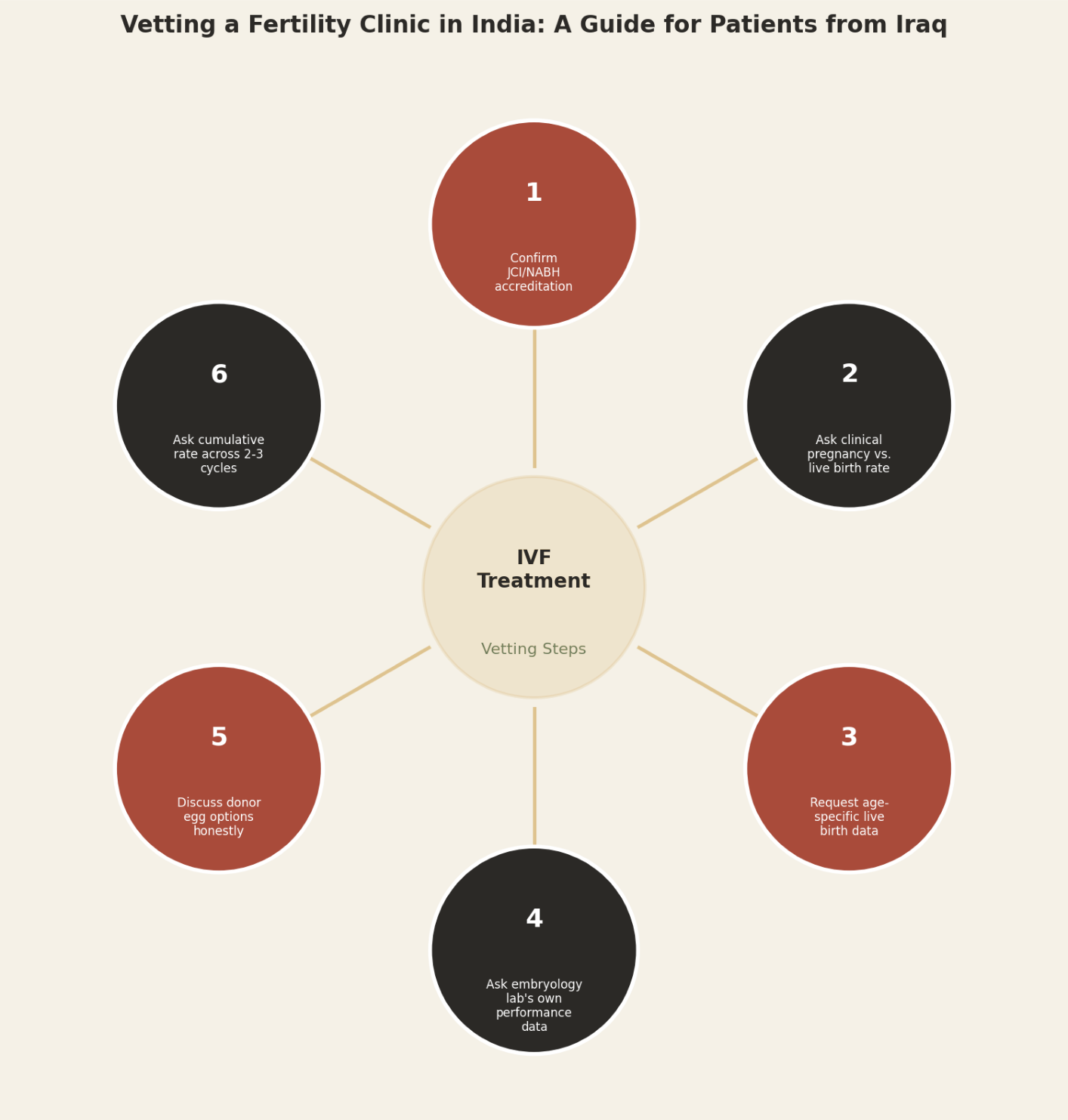
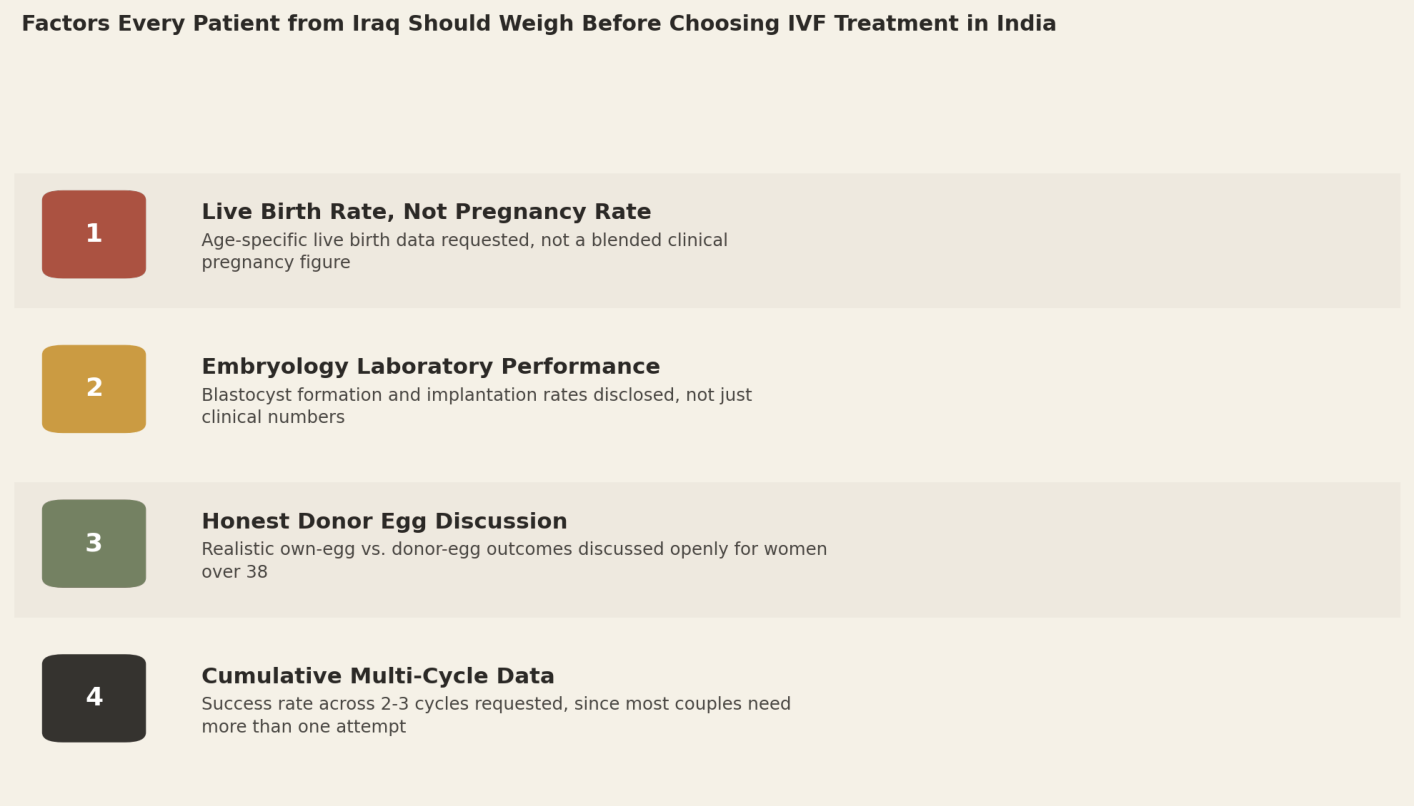
- The source identifies several warning signs: a clinic that gives one success percentage without explaining whether it represents clinical pregnancy or live birth, avoiding an honest discussion of donor eggs for women over 38, failing to disclose embryology laboratory performance and technology, and pressuring couples to make an immediate decision. The page 4 checklist highlights live birth rate rather than pregnancy rate, embryology laboratory performance, an honest discussion of donor eggs where appropriate and cumulative success across two or three treatment cycles.
Quick Facts
- Treatment
- IVF and fertility treatment
- Primary Patients
- Iraqi couples seeking fertility treatment in India
- Main Speciality
- Reproductive medicine and assisted reproductive technology
- Key Specialist
- Reproductive endocrinologist
- Success Measure
- Live birth rate is more useful than an unqualified pregnancy rate
- Age Factor
- IVF outcomes decline with increasing maternal age
- Under 35
- 42–60% live birth rate per cycle in cited data
- Age 35–37
- 30–40% live birth rate per cycle
- Age 38–40
- 22–32% live birth rate per cycle
- Over 41
- Below 15% using own eggs in cited data
- Clinic Comparison
- Ask for age-specific clinic data
- Cumulative Outcome
- Ask for live birth rates across two or three cycles
- Donor Eggs
- Discuss realistic donor-egg outcomes, particularly for women over 38
- Embryology Team
- Should have specific blastocyst and implantation performance data
- Genetic Testing
- Ask whether preimplantation genetic testing is offered
- Laboratory Technology
- Time-lapse monitoring and modern incubator systems may be available
- Embryo Freezing
- Vitrification should be discussed for appropriate cases
- Accreditation
- Verify JCI and NABH where applicable
- Treatment Planning
- Obtain age-specific outcome information before committing
- Author
- Dr. Dheeraj Bojwani
- Experience
- 24+ Years
In Brief
For Iraqi couples considering IVF in India, the most useful comparison is based on age-specific live birth data rather than a general clinic success percentage. The page 4 visual checklist highlights four priorities: live birth rate rather than pregnancy rate, embryology laboratory performance, an honest discussion of donor eggs where appropriate and cumulative success across two or three treatment cycles.
Why the Choice of Fertility Clinic in India Matters as Much as the Choice of Country
Based on my interactions with international couples, published Indian data makes this distinction unavoidable. The Indian Council of Medical Research cites a national IVF success rate of 45 to 60 percent per cycle, but this figure blends clinical pregnancy and live birth data depending on the specific source, and a clinical pregnancy rate of 35 to 40 percent can translate into a live birth rate as low as 10 to 15 percent once chromosomal abnormalities in embryos from older eggs are accounted for. Age-stratified data from ICMR-accredited Indian centres shows this gap clearly: live birth rates of 42 to 60 percent per cycle for women under 35, falling to 30 to 40 percent for ages 35 to 37, 22 to 32 percent for ages 38 to 40, and below 15 percent for women over 41 using their own eggs. India also has a genuine transparency gap worth knowing about directly: with more than 2,500 registered ART clinics and over 250,000 cycles performed annually, there is no single, mandatory national registry compiling standardised live birth data across all clinics, which makes comparing clinics on equal terms genuinely difficult without asking the right questions yourself.
How Patients from Iraq Can Verify a Fertility Clinic’s Accreditation in India
The fastest filter I recommend to every Iraqi couple calling about IVF is verifiable accreditation, not marketing language. Joint Commission International, JCI, accreditation, where held by a hospital housing a fertility centre, audits overall clinical safety systems against the same standard used across the United States and Europe. The National Accreditation Board for Hospitals and Healthcare Providers, NABH, is India’s own domestic equivalent, and in my experience of 24 years advising couples on this exact decision, a centre holding both marks together is a meaningfully stronger signal than either alone. For IVF specifically, ask one further, very direct question: is the quoted success rate a clinical pregnancy rate or a live birth rate, and does the clinic report figures broken down by your specific age group rather than a single blended average across all patients.
IVF Volume and Age-Specific Criteria That Predict Outcomes in India
Based on my interactions with dozens of fertility programmes over the years, a clinic’s own live birth rate for your specific age group, not a general success percentage, is one of the clearest predictors of a realistic outcome. Ask directly, in writing:
- What is this clinic's own live birth rate per embryo transfer specifically for women in my age group, not a clinical pregnancy rate or an all-ages blended average?
- Does the clinic use preimplantation genetic testing to screen embryos for chromosomal abnormalities, and how does this affect the specific numbers being quoted to me?
- What is the clinic's cumulative live birth rate across two or three cycles, since many couples need more than a single attempt, and this figure is often meaningfully higher than any single-cycle number?
- For women over 38 specifically, has the clinic discussed donor egg options honestly, including realistic success rates for that specific path, alongside continued attempts using my own eggs?
A clinic confident in its own outcomes will answer these specifically and promptly. A clinic that quotes only a single, unqualified success percentage regardless of age deserves a second opinion before you commit.
Vetting a Fertility Clinic in India: A Guide for Patients from Iraq
Questions Patients from Iraq Should Ask About the Fertility Team in India
IVF treatment is never genuinely the work of one doctor alone. In my experience of 24 years watching these programmes operate, the strongest units bring together a reproductive endocrinologist to manage the overall treatment protocol, an experienced embryology team responsible for fertilisation, culture, and embryo selection in the laboratory, since laboratory quality significantly affects outcomes independent of the clinical team, and a genetic counsellor for couples considering or needing preimplantation genetic testing. A dedicated fertility nurse coordinator is a further role worth confirming, since IVF involves a demanding schedule of monitoring visits and medication timing that benefits considerably from a single, consistent point of contact managing the process. Ask specifically who fills each of these roles for your case, and ask directly about the embryology laboratory’s own specific blastocyst formation and implantation rates, since laboratory performance varies meaningfully between clinics even when clinical protocols look similar on paper.
IVF Technology and Laboratory Standards in India That Patients from Iraq Should Check
The specific technology and laboratory standards available change what a clinic can realistically achieve. Ask whether the laboratory uses time-lapse embryo monitoring, which allows continuous observation of embryo development without disturbing the incubation environment, and whether AI-assisted embryo selection tools are used to help identify the embryos most likely to implant successfully. Ask specifically about the laboratory’s air quality control and incubator technology, since these environmental factors directly affect embryo development quality in ways that are not always visible to patients. Ask also whether embryo freezing uses vitrification, the rapid-freezing technique that has largely replaced older, slower-freezing methods because it better preserves embryo quality through the freeze-thaw process, particularly relevant if you are considering staged transfers or fertility preservation for later use. Ask directly which of these specific capabilities apply to your case, not simply whether the clinic advertises modern technology in general terms.
Red Flags Patients from Iraq Should Watch For When Choosing a Fertility Clinic in India
Over the years, certain patterns have become reliable warning signs for me. A clinic that quotes a single success percentage without clarifying whether it means clinical pregnancy or live birth, and without breaking it down by age group, has given you a number that is not genuinely useful for your specific situation. A clinic that does not openly discuss the realistic difference in outcomes between using your own eggs and using donor eggs for a woman over 38 has not given you the complete picture needed to make an informed decision. A clinic that cannot describe its embryology laboratory’s specific technology and performance metrics is asking you to trust the single most important part of the process without any verifiable information. And a clinic that pressures a couple toward an immediate decision, rather than allowing time to review the specific numbers and options presented, is not treating a deeply personal decision with the care it deserves.
Factors Every Patient from Iraq Should Weigh Before Choosing IVF Treatment in India
A Closing Thought for Iraqi Families
IVF success depends enormously on age, embryo quality, and the specific clinic’s laboratory performance, and it deserves a treatment plan built on live birth data specific to your situation, not a single optimistic percentage that may describe pregnancy rather than a baby. Based on my interactions with international patients over more than two decades, the couples who ask about live birth rates by age group, embryology laboratory performance, and cumulative success across multiple cycles consistently arrive at treatment with more realistic, better-managed expectations than those who accept a general marketing claim at face value. My role, and the role of any advisor a couple works with, should be to help you ask these exact questions and confirm honestly that the specific clinic and specific team in front of you are the right fit for your exact situation. Iraq’s families deserve the same standard of scrutiny in this decision as any family anywhere else in the world.
Sources & Further Reading
- Joint Commission International (JCI) — Accredited Organizations Directory (jointcommissioninternational.org)
- National Accreditation Board for Hospitals & Healthcare Providers (NABH), India (nabh.co)
- Indian Council of Medical Research (ICMR) — National Guidelines for Accreditation, Supervision and Regulation of ART Clinics (main.icmr.nic.in)
- American Society for Reproductive Medicine (ASRM) — 2023 Age-Stratified IVF Outcome Guidance (asrm.org)
- Forbes India — The Truth About What IVF Clinics Are Telling You (and What They Aren't) (forbesindia.com)
Frequently Asked Questions by Iraqi Patients about Selecting an IVF Clinic in India
Can Iraqi couples receive IVF treatment in India?
Yes. The guide specifically addresses Iraqi couples considering IVF and fertility treatment in India and focuses on how to compare clinics and treatment outcomes.
What IVF success rate should Iraqi patients ask clinics for?
Couples should ask for the live birth rate rather than accepting an unqualified clinical pregnancy rate. The guide also recommends requesting figures specifically for the woman's age group.
What are the cited IVF live birth rates for Iraqi women using their own eggs?
The source cites 42–60% per cycle for women under 35, 30–40% at ages 35–37, 22–32% at ages 38–40 and below 15% for women over 41 using their own eggs.
Should Iraqi women over 38 consider donor-egg IVF in India?
The guide recommends that women over 38 receive an honest discussion of donor-egg options and realistic outcomes alongside continued attempts using their own eggs. The decision should be based on individual fertility assessment.
Should Iraqi couples ask about cumulative IVF success across multiple cycles?
Yes. The source recommends asking for cumulative live birth rates across two or three cycles because many couples require more than one treatment attempt and cumulative outcomes may differ significantly from single-cycle results.
What should Iraqi patients ask about the IVF embryology laboratory?
They should ask for the laboratory's blastocyst formation and implantation rates and confirm which embryology specialists manage fertilisation, embryo culture and selection.
Is preimplantation genetic testing available for IVF patients in India?
The guide recommends asking whether the clinic uses preimplantation genetic testing and how testing affects the specific outcome figures being quoted. It also recommends access to genetic counselling when such testing is considered.
What IVF laboratory technology should Iraqi couples check?
The guide recommends asking about time-lapse embryo monitoring, AI-assisted embryo selection tools, incubator technology, air-quality controls and vitrification for embryo freezing.
What IVF accreditation should Iraqi patients check in India?
The source recommends verifying JCI accreditation where applicable and NABH accreditation. Accreditation should be considered alongside age-specific live birth data and laboratory performance.
What are the main warning signs when choosing an IVF clinic in India?
Warning signs include a single unexplained success percentage, no age-specific live birth data, reluctance to discuss donor eggs when relevant, no embryology laboratory performance information and pressure to make an immediate treatment decision.
Page Summary
IVF outcomes depend on age, embryo quality and the performance of the fertility clinic's embryology laboratory. The source emphasises that Iraqi couples should avoid relying on a single headline success percentage and instead request age-specific live birth data, because clinical pregnancy and live birth rates can differ substantially.
A suitable fertility clinic should provide transparent outcome data, experienced reproductive and embryology teams, appropriate laboratory technology and an honest discussion of treatment alternatives, including donor eggs when relevant. Cumulative results across multiple cycles can also provide a more realistic picture than a single-cycle statistic.
Citation Block
| Field | Details |
|---|---|
| Article / Topic | Selecting the Best IVF and Fertility Clinics in India |
| Primary Patients | Patients from Iraq |
| Treatment Area | IVF and assisted reproductive technology |
| Key Outcome Measure | Live birth rate |
| Clinical Pregnancy vs Live Birth | Should be clearly distinguished |
| Under 35 Live Birth Rate | 42–60% per cycle in cited data |
| Age 35–37 | 30–40% per cycle |
| Age 38–40 | 22–32% per cycle |
| Over 41 | Below 15% using own eggs in cited data |
| ART Clinic Scale | More than 2,500 registered ART clinics cited |
| Annual IVF Volume | More than 250,000 cycles cited |
| Data Limitation | No single mandatory national registry standardising live birth data across all clinics |
| Clinic Comparison | Age-specific live birth data should be requested |
| Cumulative Outcome | Ask for two- or three-cycle live birth data |
| Donor Egg Discussion | Particularly important for women over 38 |
| Fertility Team | Reproductive endocrinologist and embryology team |
| Genetic Support | Genetic counsellor when preimplantation testing is considered |
| Nursing Support | Dedicated fertility nurse coordinator |
| Laboratory Performance | Blastocyst formation and implantation rates |
| Laboratory Technology | Time-lapse monitoring, AI-assisted tools and modern incubators |
| Embryo Freezing | Vitrification |
| Accreditation | JCI and NABH where applicable |


Our Mission Statement
Our mission is to place patients at the centre of every healthcare decision by providing trustworthy, evidence-based, and unbiased medical information. We believe that informed patients make better decisions. Backed by personalised guidance from our experienced advisory team, we help patients understand their treatment options, compare them objectively, and confidently choose the path that best suits their medical needs and personal circumstances.
Patient Testimonials from Iraq



Ready to Take the First Step?
Share your Medical Reports with our Healthcare Managers Today and Get a FREE CONSULTATION, a Personalized Treatment Plan, and Complete Support from Arrival to Recovery.
Get Your Free ConsultationAreas We Serve
Indian Health Guru Consultants proudly assists patients from Iraq and surrounding Middle Eastern countries in accessing advanced, affordable and trusted medical treatment in India. Our team provides complete support for medical opinions, hospital selection, treatment planning, visa assistance, travel coordination, accommodation and post-treatment follow-up.
We regularly serve patients from:
- Iraq
- Turkey
- Iran
- Kuwait
- Jordan
- Syria
- Qatar
- Bahrain
- Oman
- Yemen
- Saudi Arabia
- United Arab Emirates
No matter where you are located, our experienced team is committed to making your medical journey to India safe, smooth, transparent and stress-free from the first enquiry to your return home.
From Iraq to India: Your Complete Patient Guide
- Breast Cancer Treatment in India for Iraqi Patients
- Radiotherapy and Modern Cancer Treatment in India for Iraqis
- Bone Marrow Transplant in India for Iraqi Patients
- Colorectal Cancer Treatment and Surgery in India for Iraqis
- Pancreatic Cancer Surgery in India for Iraqis
- Spine Surgery in India for Iraqis
- Proton Therapy in India for Iraqis
- Cancer Treatment in India for Iraqi Patients
- Cardiac Pacemaker Treatment in India for Iraqi Patients
- Laparoscopic and Robotic Myomectomy in India for Iraqis
- Cosmetic and Aesthetic Surgery in India for Iraqis
- Knee Surgery in India for Iraqis
- Dental Implants and Smile Makeover in India for Iraqis
- Cervical and Lumbar Disc Replacement Surgery in India for Iraqis
- Cornea Transplant and Advanced Eye Surgery in India for Iraqis
- Leukemia, Lymphoma and Blood Cancer Treatment in India for Iraqis
- Penile Implant Surgery in India for Iraqis
- Gamma Knife Treatment in India for Iraqis