

Selecting the Best Breast Cancer Surgeons and Hospitals in India: A Guide for Patients from Iraq
A doctor’s honest, question-by-question guide for patients from Iraq on vetting a breast cancer hospital in India — accreditation, oncoplastic volume, team composition, and the exact questions worth asking before you book anything.
Over the years, I have spoken with more Iraqi women facing a breast cancer diagnosis than almost any other single group of patients, and I have noticed a specific pattern worth naming plainly: many arrive already resigned to a mastectomy, simply because no one has yet told them that breast conservation, removing the tumour while preserving the breast, is very often just as safe when performed by a surgeon with the right specific training. In my experience of 24 years guiding women through this exact decision, the difference between a good outcome and a merely acceptable one in breast cancer surgery comes down to specific, checkable facts about the surgeon and hospital in front of you, not the reassurance of a glossy brochure. This guide sets out exactly what those facts are.
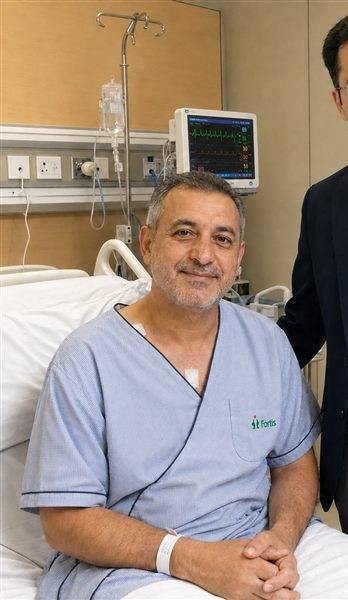
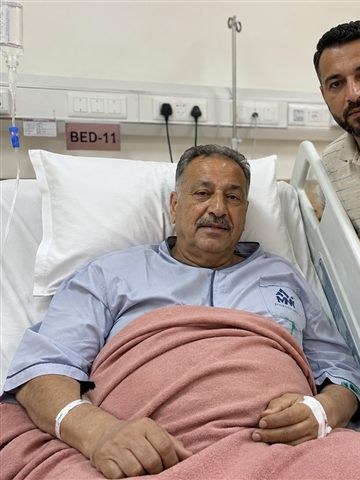
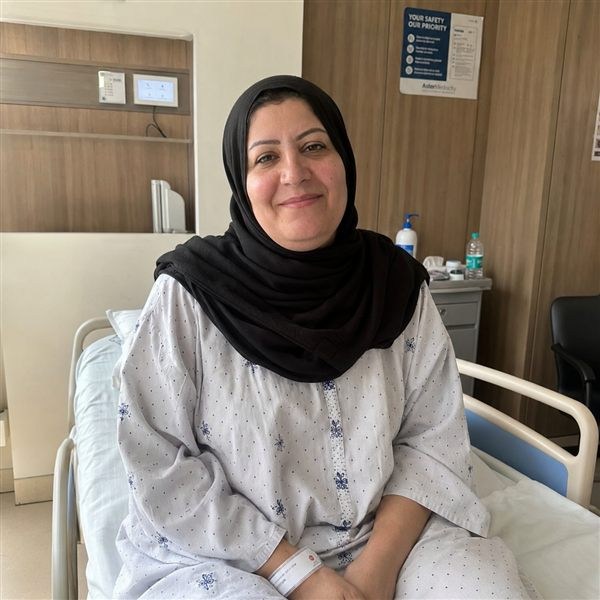
Healing Journeys of Iraqi Patients


Key Takeaways
- For Iraqi women seeking breast cancer surgery in India, the choice of surgeon can directly influence which surgical options are discussed. The source highlights that breast-conserving surgery followed by radiotherapy can provide survival outcomes equivalent to mastectomy in appropriate patients, yet an Indian survey found that only 11.3% of women who were offered breast conservation underwent it, compared with approximately 64.5% in the United States. The guide links this variation partly to differences in surgeons' specific oncoplastic and breast-conservation expertise.
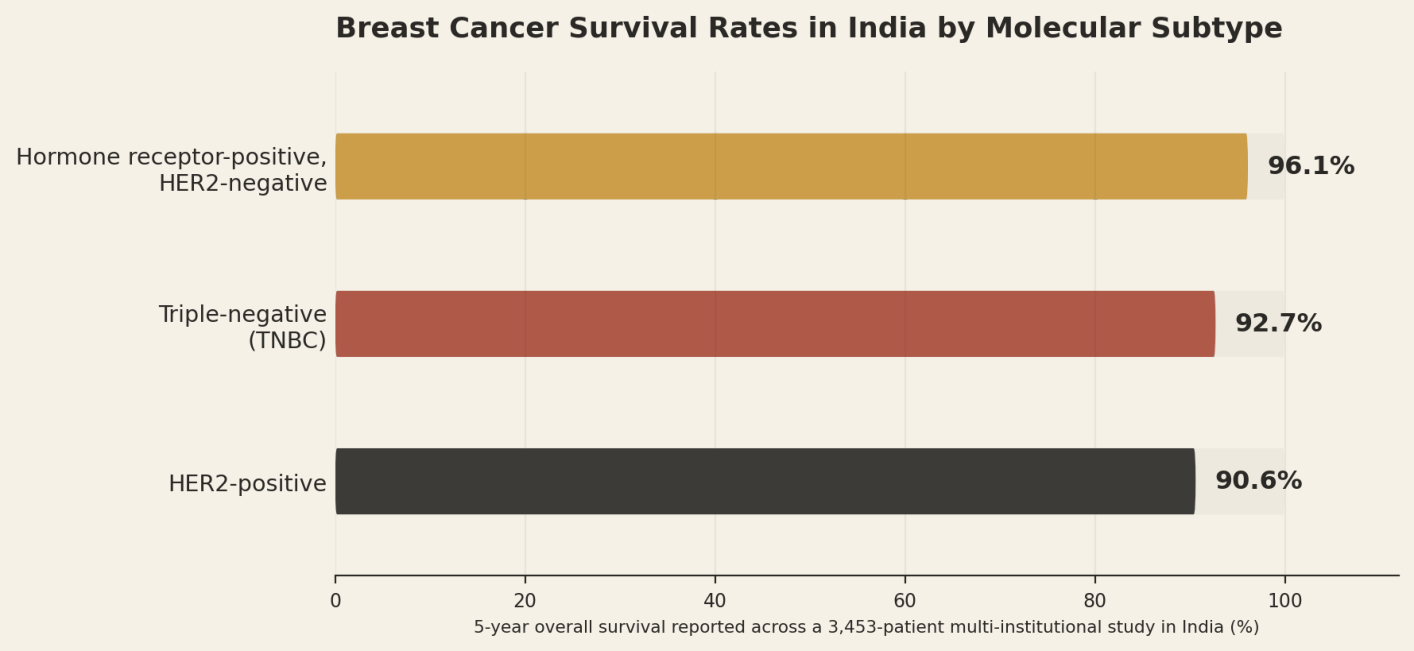
- The source also provides encouraging outcome data from a multi-institutional Indian study involving 3,453 women treated with upfront surgery. Five-year overall survival was 94.1% across the cohort, while reported survival was 96.1% for hormone-receptor-positive cancers, 90.6% for HER2-positive cancers and 92.7% for triple-negative cancers. These results came from specific experienced centres and should therefore be interpreted according to the patient's tumour biology rather than treated as a universal national survival rate.
- Hospital accreditation is an important initial screening step for Iraqi patients. The guide recommends verifying JCI and NABH accreditation and asking whether the hospital operates a dedicated breast unit with its own multidisciplinary tumour board. A specialised breast unit can provide more consistent access to oncoplastic techniques and reconstruction options than a general surgical oncology structure.
- The surgeon's specific breast-conservation and oncoplastic experience should be examined carefully. Iraqi patients should ask what proportion of the surgeon's early-stage breast cancer patients undergo breast conservation rather than mastectomy, whether the surgeon has fellowship-level training in oncoplastic breast surgery and whether the hospital can provide survival data separated by hormone-receptor status, HER2 status and nodal involvement. They should also establish whether immediate breast reconstruction is available when mastectomy is medically necessary or chosen.
- Breast cancer treatment should be managed by a multidisciplinary team rather than by the breast surgeon alone. The guide identifies a breast surgical oncologist with oncoplastic expertise, medical oncologist, radiation oncologist and dedicated breast pathologist as key members of the team. Pathology is particularly important because hormone-receptor, HER2 and margin results can directly influence chemotherapy, targeted therapy, hormonal therapy and subsequent treatment planning. The source recommends confirming that the case is reviewed by a genuine multidisciplinary tumour board before the final surgical decision.
- Diagnostic and surgical technology can also influence treatment quality. The guide recommends asking about intraoperative margin assessment, which evaluates the edges of removed tissue during surgery and may reduce the likelihood of a second procedure to obtain clear margins. It also highlights oncoplastic surgical techniques and appropriately accredited pathology services for hormone-receptor and HER2 testing. Iraqi patients should ask which of these capabilities will actually apply to their case rather than simply confirming that the hospital possesses the equipment or facilities.
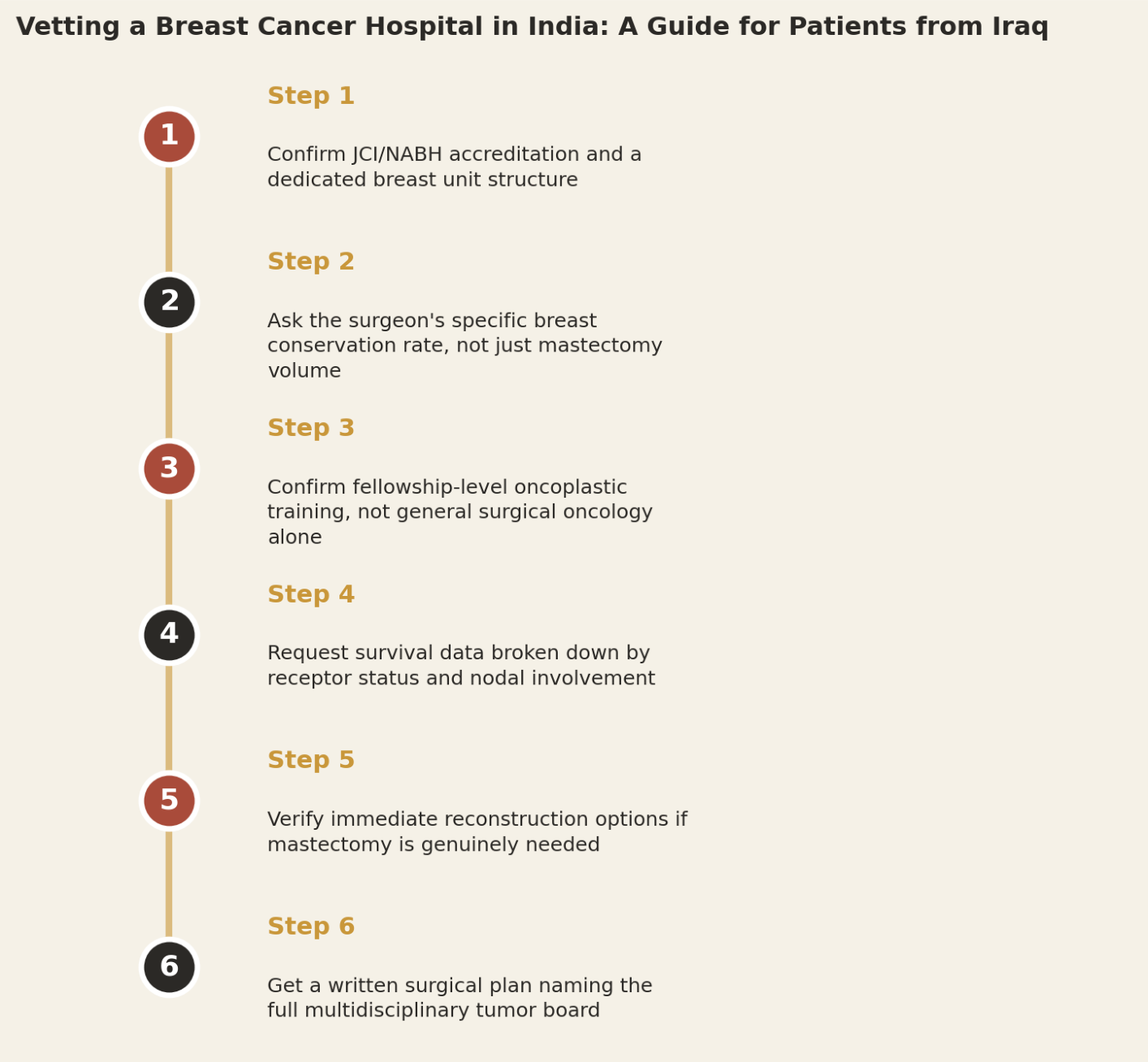
- The visual checklist on page 4 summarises six practical steps for Iraqi women: confirm JCI/NABH accreditation and a dedicated breast unit, ask for the surgeon's breast-conservation volume, verify fellowship-level oncoplastic training, request survival data by receptor status and nodal involvement, check immediate reconstruction options when mastectomy is required, and obtain a written plan naming the multidisciplinary tumour board. The guide identifies routine recommendation of mastectomy without discussing conservation, failure to provide receptor-specific survival data and discouraging a second opinion before mastectomy as important warning signs.
Quick Facts
- Treatment
- Breast cancer surgery and multidisciplinary breast cancer care in India
- Primary Patients
- Women from Iraq with breast cancer
- Main Speciality
- Breast surgical oncology
- Key Specialist
- Breast surgical oncologist with oncoplastic training
- Major Surgical Options
- Breast-conserving surgery or mastectomy when clinically appropriate
- Breast Conservation
- Can provide equivalent survival to mastectomy in appropriate patients when followed by radiotherapy
- Indian Study Size
- 3,453 women across three centres
- Five-Year Overall Survival
- 94.1% in the cited cohort
- Hormone-Receptor-Positive Survival
- 96.1%
- HER2-Positive Survival
- 90.6%
- Triple-Negative Survival
- 92.7%
- Accreditation
- Verify JCI and NABH
- Breast Unit
- Ask whether the hospital has a dedicated multidisciplinary breast unit
- Oncoplastic Expertise
- Confirm fellowship-level training where breast conservation or reconstruction is considered
- Outcome Data
- Request survival data by receptor status and nodal involvement
- Multidisciplinary Team
- Breast surgeon, medical oncologist, radiation oncologist and breast pathologist
- Tumour Board
- Confirm multidisciplinary review before final surgery planning
- Pathology
- Verify reliable hormone-receptor, HER2 and margin assessment
- Surgical Technology
- Ask about intraoperative margin assessment
- Reconstruction
- Confirm immediate breast reconstruction options if mastectomy is required
- Second Opinion
- Recommended before a permanent decision such as mastectomy when appropriate
- Written Plan
- Request a treatment plan identifying the multidisciplinary team
- Author
- Dr. Dheeraj Bojwani
- Experience
- 24+ Years
In Brief
For Iraqi women, selecting a breast cancer surgeon in India should involve much more than comparing hospital reputation or quoted prices. The key considerations are the surgeon’s experience with breast-conserving and oncoplastic surgery, the tumour’s biological characteristics, hospital accreditation, receptor-specific outcomes, multidisciplinary tumour-board review, pathology capability, reconstruction options and the technology available for achieving clear surgical margins. The source’s central recommendation is to ask these questions before travelling and confirm that the specific surgeon and hospital are appropriate for the patient’s exact diagnosis.
Why the Choice of Breast Cancer Surgeon in India Matters as Much as the Choice of Hospital
Based on my interactions with international patients, one of the most striking and least discussed facts about breast cancer surgery in India is this: even though breast conservation surgery followed by radiotherapy has been shown repeatedly to produce survival outcomes equivalent to mastectomy, a large published Indian survey found that only 11.3 percent of women who were actually offered breast conservation went on to have it, compared with roughly 64.5 percent in the United States. This gap is not primarily about disease stage; it reflects real variation in which surgeons have the specific oncoplastic training needed to offer conservation confidently, and which default to mastectomy instead. A large multi-institutional study across three Indian centres, covering 3,453 women treated with upfront surgery, reported five-year overall survival of 94.1 percent across the full cohort, with hormone-receptor-positive cancers at 96.1 percent, HER2-positive cancers at 90.6 percent, and triple-negative cancers at 92.7 percent. These are genuinely strong, internationally competitive numbers, but they were achieved at specific, experienced centres, not as a national average, which is precisely why the identity of your surgeon and hospital matters as much as the country you choose.
How Patients from Iraq Can Verify a Breast Cancer Hospital’s Accreditation in India
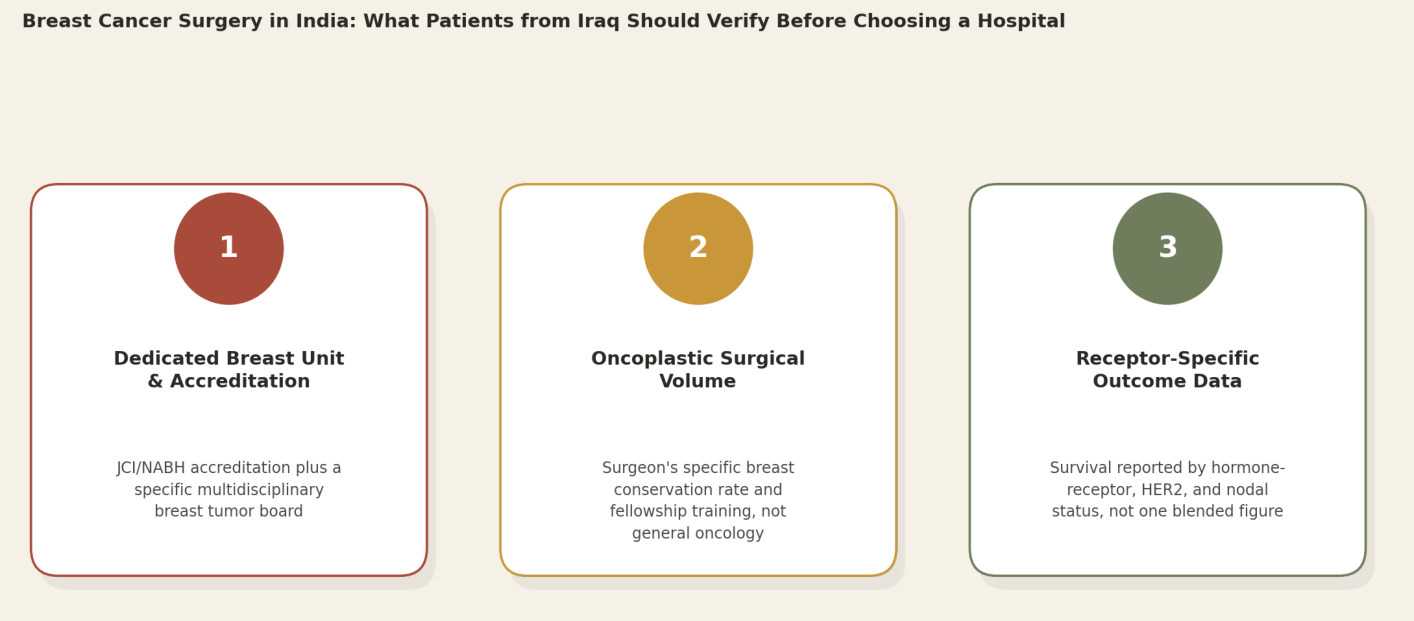
The fastest filter I recommend to every Iraqi woman calling about a breast cancer diagnosis is verifiable accreditation, not marketing language. Joint Commission International, JCI, audits a hospital’s overall clinical safety systems against the same standard used across the United States and Europe, and is the credential most recognised by international patients. The National Accreditation Board for Hospitals and Healthcare Providers, NABH, is India’s own domestic equivalent, and in my experience of 24 years advising women on this exact decision, a centre holding both marks together is a meaningfully stronger signal than either alone. For breast cancer specifically, ask one further question directly: does the hospital have a dedicated breast unit with its own multidisciplinary tumour board, or is breast cancer treated within a general surgical oncology department without a specific breast sub-specialty structure? The dedicated unit model is associated with more consistent access to oncoplastic technique and reconstruction options.
The Volume and Experience Metrics That Predict Breast Cancer Surgery Outcomes in India
Based on my interactions with dozens of breast surgical units over the years, a surgeon’s specific volume in oncoplastic and breast-conserving technique, not simply general surgical oncology experience, is one of the clearest predictors of whether conservation will genuinely be offered as a safe option for your specific tumour. Ask directly, in writing:
- What percentage of this surgeon’s early-stage breast cancer patients undergo breast conservation rather than mastectomy, and how does that compare with the roughly 60 to 65 percent breast conservation rate achieved at leading Western and Indian oncoplastic centres?
- Does the surgeon have specific fellowship training in oncoplastic breast surgery, distinct from general surgical oncology training?
- What is the hospital’s five-year survival rate reported separately by hormone-receptor status, HER2 status, and nodal involvement, not simply a single blended figure?
- Is immediate breast reconstruction genuinely offered at the time of mastectomy for patients who need or choose it, or is this handled as a separate, later referral?
A surgeon confident in their own outcomes will answer these specifically. A surgeon who moves straight to recommending mastectomy without first discussing whether conservation is oncologically appropriate for your specific tumour size and location deserves a second opinion.
Questions Patients from Iraq Should Ask About the Breast Cancer Team in India
In my experience of 24 years, breast cancer treatment is never genuinely the work of one surgeon alone. Over the years, I have found that the strongest breast units bring together a breast surgical oncologist with specific oncoplastic training, a medical oncologist to guide chemotherapy and targeted or hormonal therapy based on the tumour’s specific receptor profile, a radiation oncologist for cases needing adjuvant radiotherapy, and a dedicated breast pathologist to confirm hormone receptor, HER2, and margin status accurately, since these results directly determine the treatment plan that follows surgery. Ask specifically who fills each of these roles for your case, and confirm that your case will be reviewed at a genuine multidisciplinary tumour board meeting before the final surgical plan, rather than decided by the operating surgeon in isolation.
Breast Cancer Diagnostic and Surgical Technology Standards in India That Patients from Iraq Should Check
The specific technology available changes what a surgical team can safely offer. Intraoperative margin assessment, checking the removed tissue for cancer cells at the edge while the patient is still on the operating table, reduces the chance of needing a second surgery to achieve clear margins. Oncoplastic technique itself, reshaping breast tissue at the time of tumour removal to preserve natural appearance, requires specific training beyond standard surgical oncology. For hormone-receptor and HER2 testing, ask whether the pathology laboratory processing your tissue holds its own specific accreditation, since these results determine whether targeted therapies are used correctly. Ask directly which of these specific capabilities apply to your case, not simply whether the hospital owns the equipment somewhere in the building.
Red Flags Patients from Iraq Should Watch For When Choosing a Breast Cancer Hospital in India
Over the years, certain patterns have become reliable warning signs for me. A surgeon who recommends mastectomy for every early-stage patient without individually discussing conservation, especially given how large the gap between conservation eligibility and actual conservation rates has been documented to be in parts of India, deserves direct questioning about why. A hospital that cannot report its own survival figures broken down by receptor status and nodal involvement, offering only a single blended number, is not giving you information you can meaningfully use. And a hospital that discourages a second opinion before a mastectomy, a permanent and life-changing decision, is one of the clearest signals a family can receive that something is being rushed.
Vetting a Breast Cancer Hospital in India: A Guide for Patients from Iraq
A Closing Thought for Iraqi Families
A breast cancer diagnosis deserves a treatment plan built on the specific biology of your tumour and the specific, verifiable expertise of your surgical team, not on a hospital’s general reputation or the lowest quoted price. Based on my interactions with international patients over more than two decades, the women who ask the specific questions in this guide, about oncoplastic training, conservation rates, and receptor-specific survival data, consistently make more informed decisions than those who accept a single recommendation without question. My role, and the role of any advisor a family works with, should be to help you ask these exact questions and confirm honestly that the specific surgeon and specific hospital in front of you are the right fit for your exact diagnosis. Iraq’s women deserve the same standard of scrutiny in this decision as any patient anywhere else in the world.
Sources & Further Reading
- Joint Commission International (JCI) — Accredited Organizations Directory (jointcommissioninternational.org)
- National Accreditation Board for Hospitals & Healthcare Providers (NABH), India (nabh.co)
- Indian Journal of Medical Research — Breast Conservation Surgery & Oncoplasty in India (ijmr.org.in)
- Nature Scientific Reports — Multi-Institutional Real World Data Study of Breast Cancer Outcomes in India (nature.com/srep)
- American Cancer Society — Breast Cancer Survival Rates by Subtype (cancer.org)
Frequently Asked Questions by Iraqi Patients about Selecting a Breast Cancer Surgeon and Hospital in India
Is breast-conserving surgery available for Iraqi women in India?
Yes, breast conservation can be an appropriate option for selected patients, and the source notes that it can provide survival outcomes equivalent to mastectomy when appropriately followed by radiotherapy. Suitability depends on the individual tumour.
How should an Iraqi patient choose between breast-conserving surgery and mastectomy in India?
The decision should be based on tumour size, location, biology and oncological suitability rather than automatically choosing mastectomy. The guide recommends discussing conservation before proceeding with a permanent surgical decision.
What breast cancer survival rates should Iraqi patients ask about in India?
Patients should request outcomes relevant to their tumour biology rather than a single overall percentage. The cited Indian study reported five-year survival of 96.1% for hormone-receptor-positive, 90.6% for HER2-positive and 92.7% for triple-negative cancers.
How important is oncoplastic breast surgery experience for Iraqi patients?
It is important when breast conservation or reconstruction is being considered. The source recommends asking whether the surgeon has specific fellowship training in oncoplastic breast surgery rather than only general surgical oncology training.
Should Iraqi patients choose a hospital with a dedicated breast cancer unit in India?
The guide recommends asking whether the hospital has a dedicated breast unit and multidisciplinary tumour board. This structure can provide more consistent access to oncoplastic and reconstruction options.
Which specialists should be involved in breast cancer treatment for Iraqi patients in India?
The source recommends a breast surgical oncologist, medical oncologist, radiation oncologist and dedicated breast pathologist. Their coordinated input helps determine surgery and additional treatment according to tumour characteristics.
Why are hormone-receptor and HER2 tests important before deciding breast cancer treatment in India?
These results help determine the treatment plan after surgery, including whether hormonal or targeted treatments may be appropriate. The source therefore recommends confirming accurate pathology and molecular testing.
What should Iraqi patients ask about intraoperative margin assessment during breast cancer surgery?
Patients should ask whether the hospital can assess surgical margins while the operation is taking place. The guide states that this can reduce the likelihood of requiring another operation to obtain clear margins.
Is immediate breast reconstruction available after mastectomy in India for Iraqi patients?
The availability should be confirmed directly with the selected hospital and surgical team. The guide specifically recommends asking whether immediate reconstruction is offered when mastectomy is medically necessary or chosen.
Should an Iraqi woman get a second opinion before mastectomy in India?
A second opinion can be particularly valuable before a permanent decision such as mastectomy, especially when breast conservation has not been discussed. The source identifies discouraging a second opinion as an important warning sign.
Page Summary
For Iraqi women considering breast cancer surgery in India, the most important selection criteria are the surgeon's specific breast-conservation and oncoplastic experience, the hospital's accreditation, tumour-specific outcomes and access to a multidisciplinary breast cancer team. The source emphasises that a general hospital success rate cannot adequately explain whether a patient is receiving the most appropriate surgical option for her particular tumour.
The guide also highlights the importance of pathology, margin assessment and reconstruction planning. Iraqi patients should confirm that their tumour will be reviewed by the appropriate specialists, that receptor and HER2 results will be accurately assessed, and that breast-conservation or reconstruction options will be discussed before a permanent surgical decision is made.
Citation Block
| Field | Details |
|---|---|
| Article / Topic | Selecting the Best Breast Cancer Surgeons and Hospitals in India |
| Target Patients | Patients from Iraq |
| Treatment Area | Breast cancer surgery and multidisciplinary treatment |
| Primary Selection Factor | Surgeon-specific breast cancer and oncoplastic experience |
| Major Surgical Options | Breast-conserving surgery and mastectomy |
| Breast Conservation Principle | Can provide equivalent survival to mastectomy in appropriate patients with radiotherapy |
| Indian Survey Finding | 11.3% of women offered breast conservation underwent it |
| Western Comparison in Source | Approximately 64.5% in the United States |
| Study Population | 3,453 women |
| Five-Year Overall Survival | 94.1% |
| Hormone-Receptor-Positive Survival | 96.1% |
| HER2-Positive Survival | 90.6% |
| Triple-Negative Survival | 92.7% |
| Hospital Accreditation | JCI and NABH |
| Breast Unit Requirement | Dedicated breast structure with multidisciplinary tumour board |
| Surgeon Assessment | Breast-conservation and oncoplastic surgical volume |
| Training Assessment | Fellowship-level oncoplastic breast surgery training |
| Outcome Assessment | Survival by receptor status and nodal involvement |
| Reconstruction | Confirm immediate reconstruction options when relevant |
| Multidisciplinary Team | Breast surgical oncologist, medical oncologist, radiation oncologist and breast pathologist |
| Pathology Assessment | Hormone receptor, HER2 and margin evaluation |
| Technology | Intraoperative margin assessment and oncoplastic techniques |
| Major Red Flag | Mastectomy recommended without individual discussion of breast conservation |
| Second Opinion | Important before permanent surgical decisions when appropriate |
| Core Selection Principle | Match the specific surgeon and hospital to the tumour's biology and clinical requirements |


Our Mission Statement
Our mission is to place patients at the centre of every healthcare decision by providing trustworthy, evidence-based, and unbiased medical information. We believe that informed patients make better decisions. Backed by personalised guidance from our experienced advisory team, we help patients understand their treatment options, compare them objectively, and confidently choose the path that best suits their medical needs and personal circumstances.
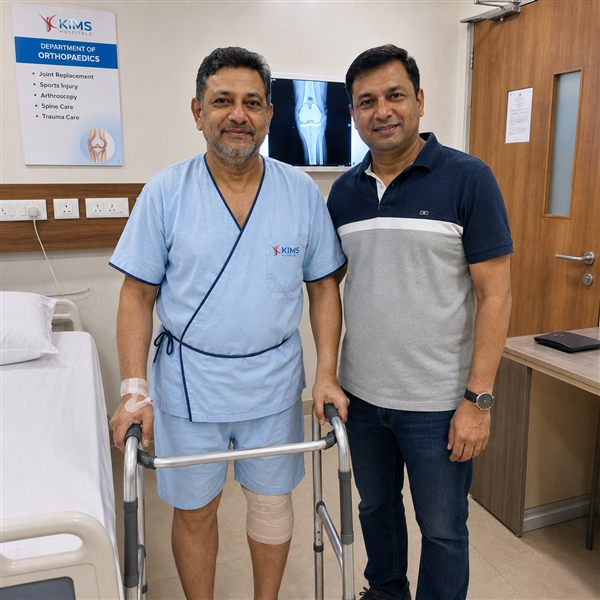
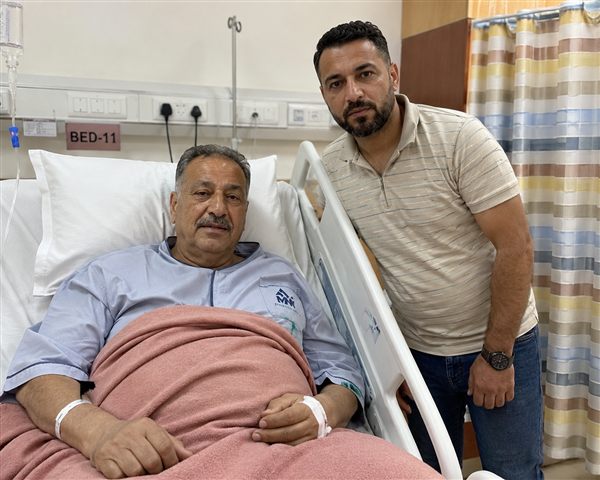
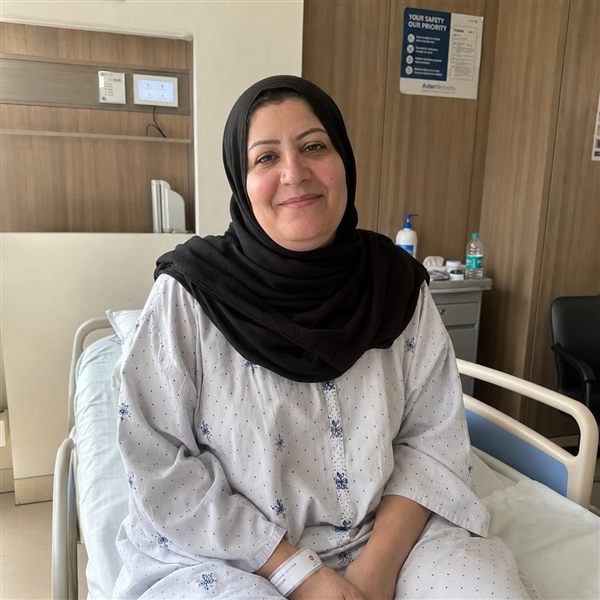
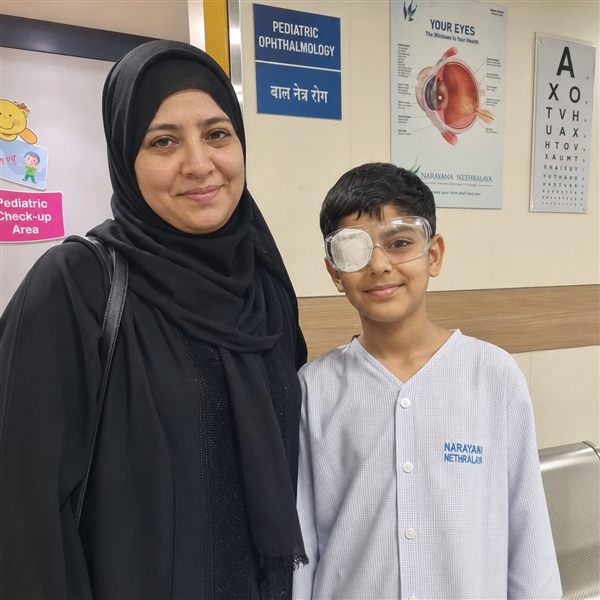
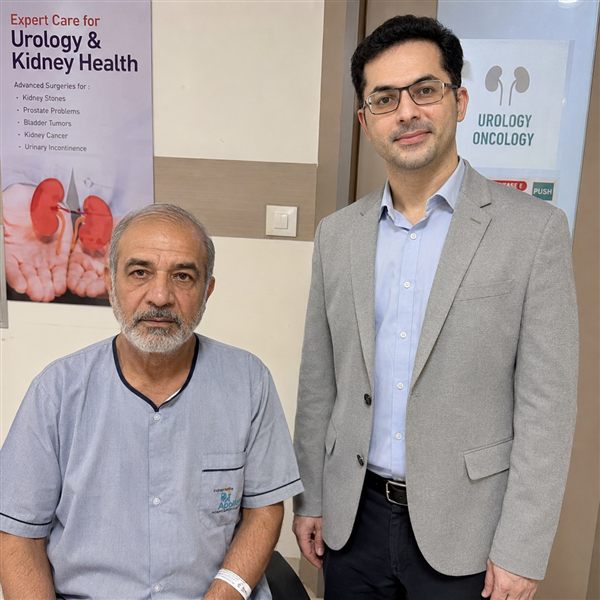
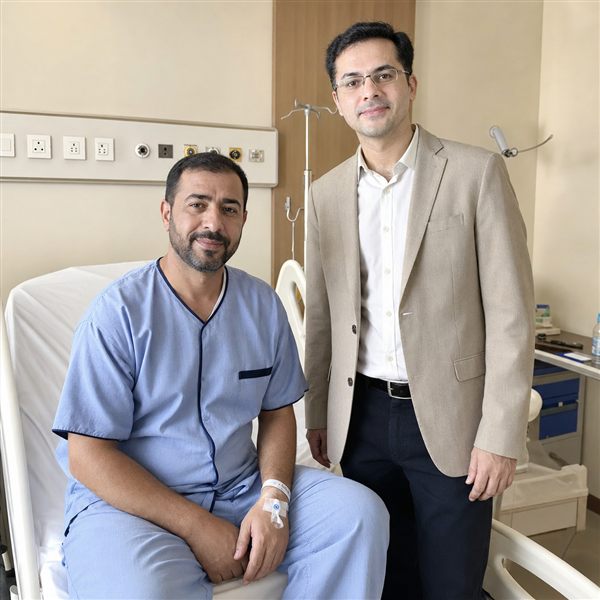
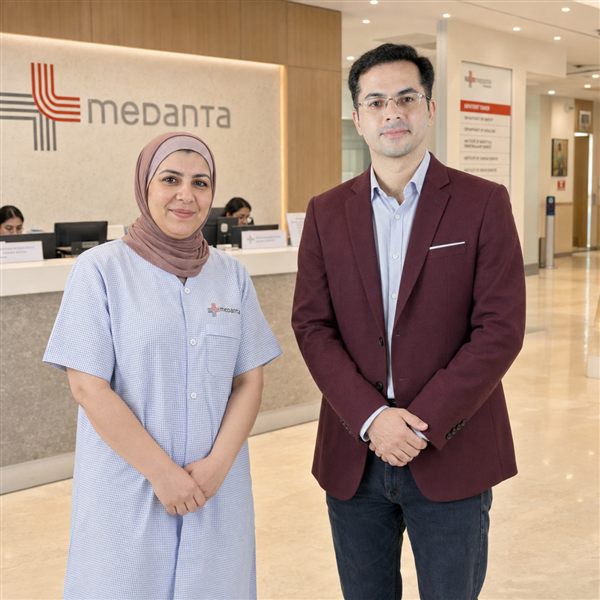
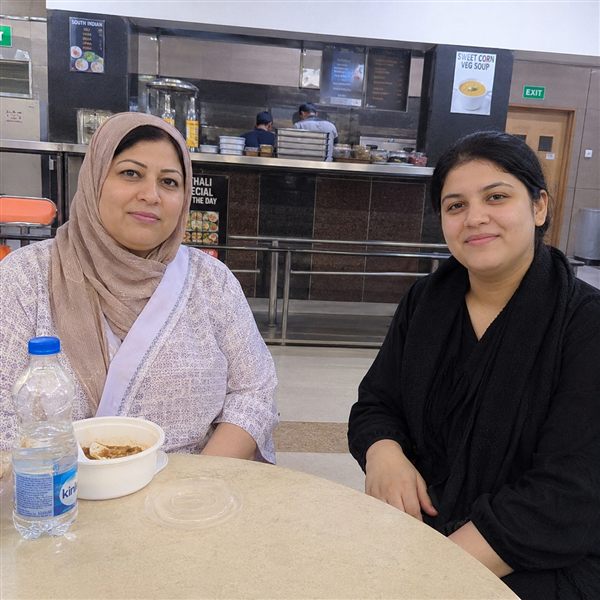
Patient Testimonials from Iraq
Ready to Take the First Step?
Share your Medical Reports with our Healthcare Managers Today and Get a FREE CONSULTATION, a Personalized Treatment Plan, and Complete Support from Arrival to Recovery.
Get Your Free ConsultationAreas We Serve
Indian Health Guru Consultants proudly assists patients from Iraq and surrounding Middle Eastern countries in accessing advanced, affordable and trusted medical treatment in India. Our team provides complete support for medical opinions, hospital selection, treatment planning, visa assistance, travel coordination, accommodation and post-treatment follow-up.
We regularly serve patients from:
- Iraq
- Turkey
- Iran
- Kuwait
- Jordan
- Syria
- Qatar
- Bahrain
- Oman
- Yemen
- Saudi Arabia
- United Arab Emirates
No matter where you are located, our experienced team is committed to making your medical journey to India safe, smooth, transparent and stress-free from the first enquiry to your return home.
From Iraq to India: Your Complete Patient Guide
- Cosmetic and Aesthetic Surgery in India for Iraqis
- Dental Surgery in India for Iraqis
- Knee Surgery in India for Iraqis
- Weight Loss and Bariatric Surgery in India for Iraqis: Cost & Guide
- CyberKnife Treatment in India for Iraqis
- Penile Implant Surgery in India for Iraqis
- Dental Implants and Smile Makeover in India for Iraqis
- Oral and Maxillofacial Surgery in India for Iraqis
- Heart Failure Treatment and Surgery in India for Iraqis
- Cardiac Pacemaker Treatment in India for Iraqi Patients
- IVF and Fertility Treatment in India for Iraqis
- Paediatric Heart Surgery in India for Iraqis
- Bone Marrow Transplant in India for Iraqi Patients
- Liver Transplant in India for Iraqis
- Parkinson's Treatment and DBS Surgery in India for Iraqis
- Cancer Treatment in India for Iraqi Patients
- Heart Valve Replacement in India for Iraqis
- Gamma Knife Treatment in India for Iraqis