

Scoliosis Correction Surgery in India: A Complete Guide for Patients from Bangladesh
What a Bangladeshi patient and their family should know before choosing a hospital, city and surgeon across the border — costs, process and the questions worth asking before you book a ticket.
Scoliosis behaves very differently depending on how quickly it is caught. A multi-centre international study comparing scoliosis surgery across seven countries — including Pakistan, a country with a healthcare access profile close to Bangladesh's — found that patients from lower-access countries arrived for surgery with significantly larger spinal curves, needed more vertebral levels fused, and had longer, more complicated operations than patients from countries with well-established paediatric spine screening. Without routine school screening or easy access to a paediatric spine specialist, a child's curve in Bangladesh can progress for years before anyone treats it, turning what could have been a moderate, more straightforward correction into major reconstructive surgery. This guide sets out what scoliosis correction surgery in India actually involves, what it realistically costs compared with the UK and US, and the practical decisions that separate a smooth trip from a stressful one.
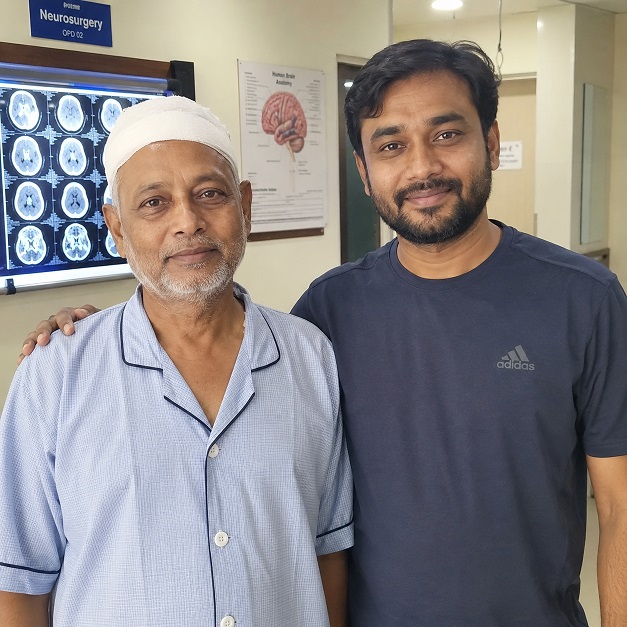
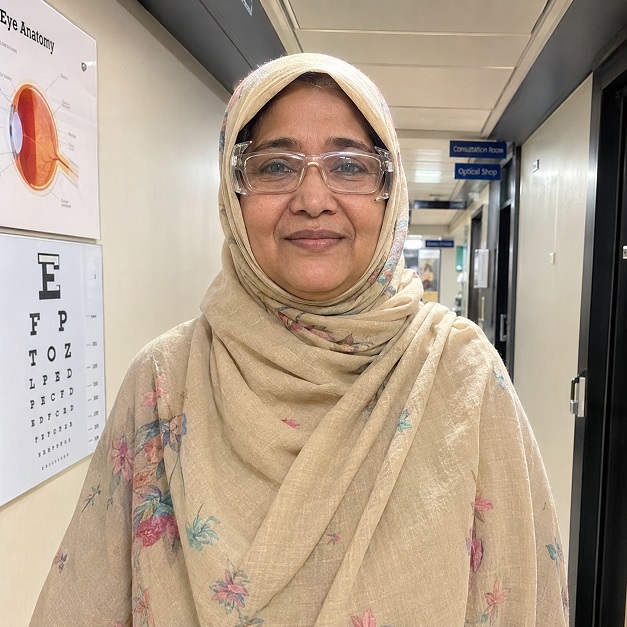
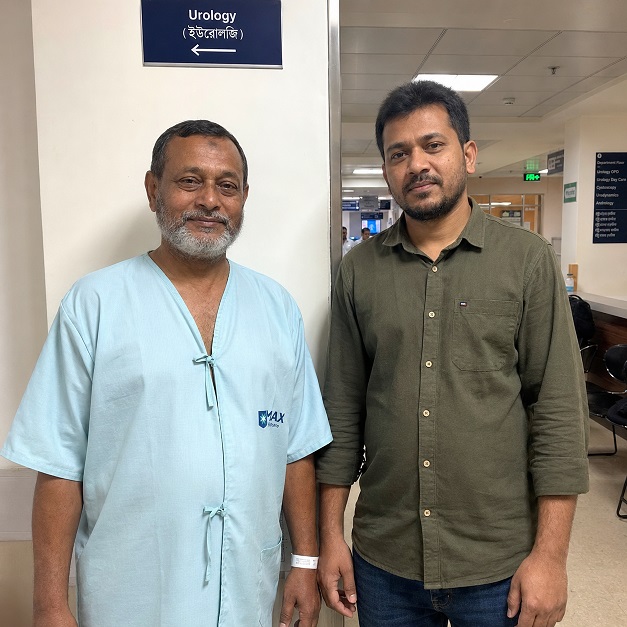
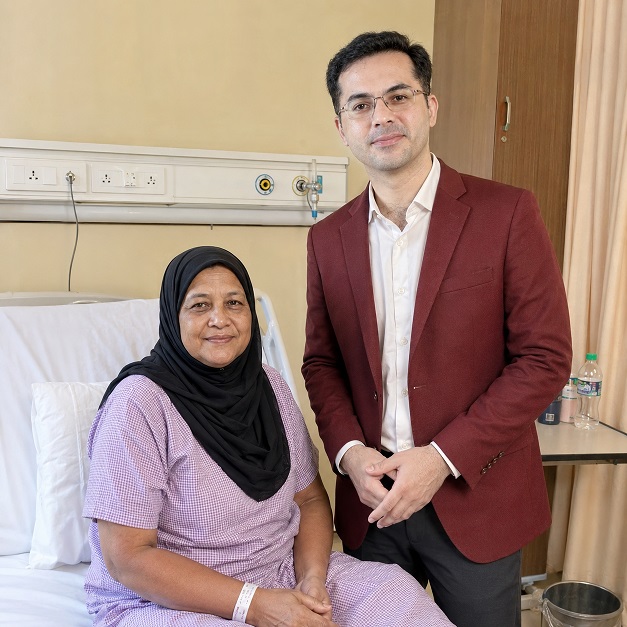
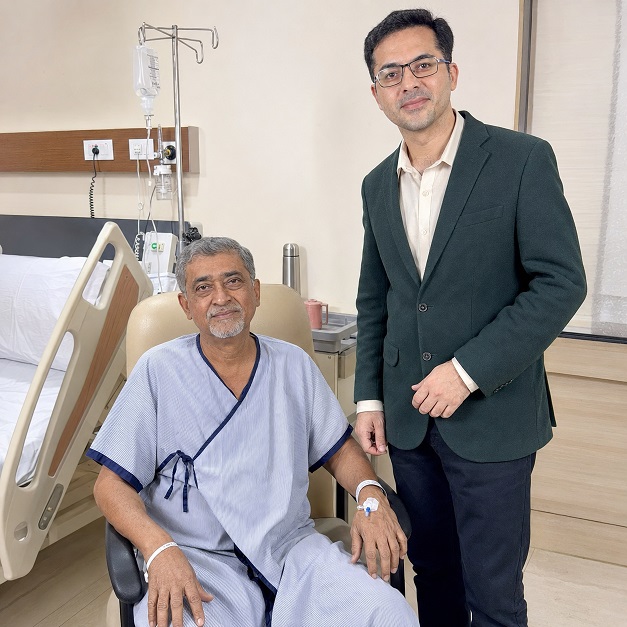
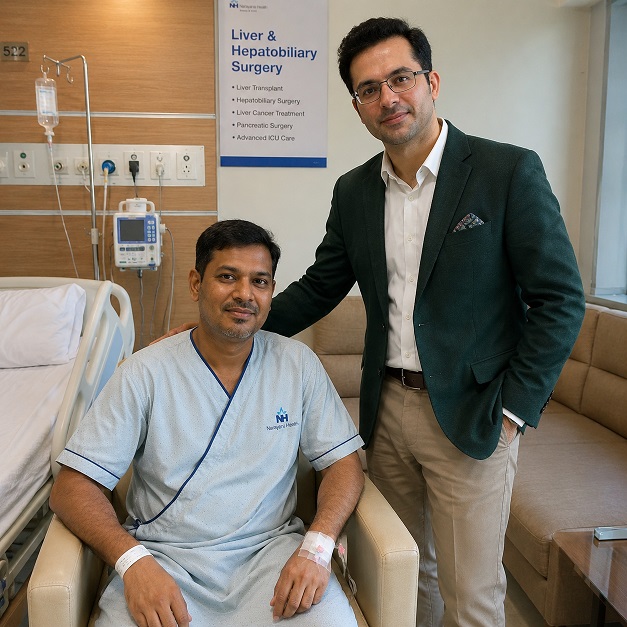
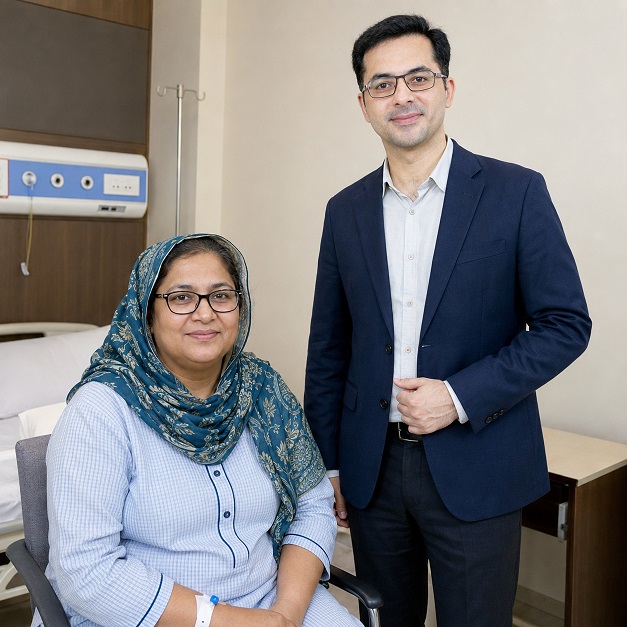
Healing Journeys of Bangladeshi Patients
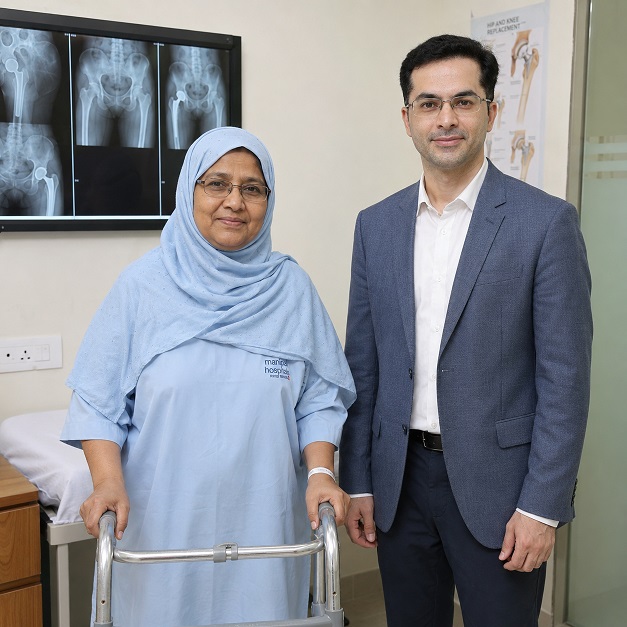
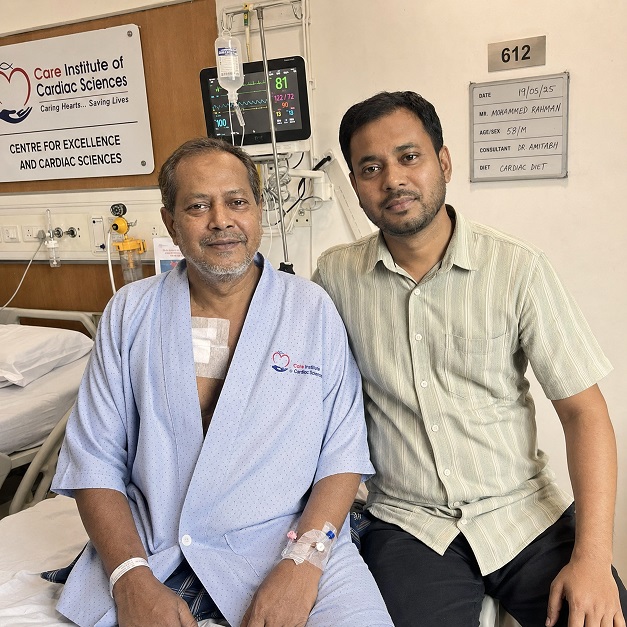
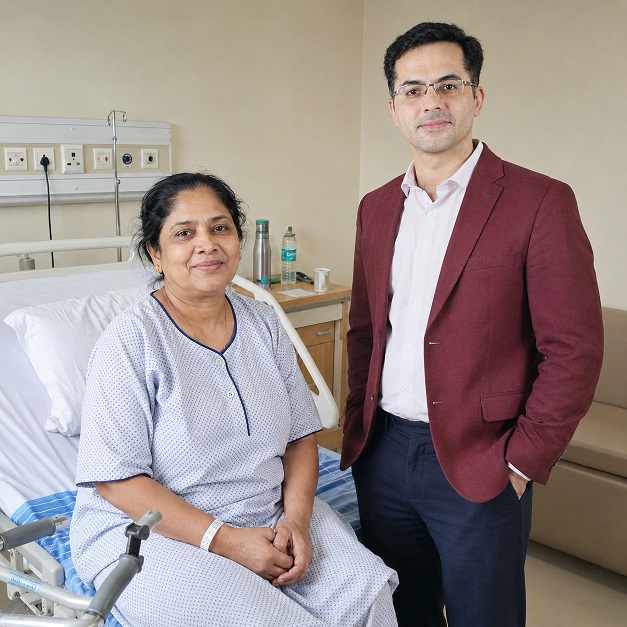
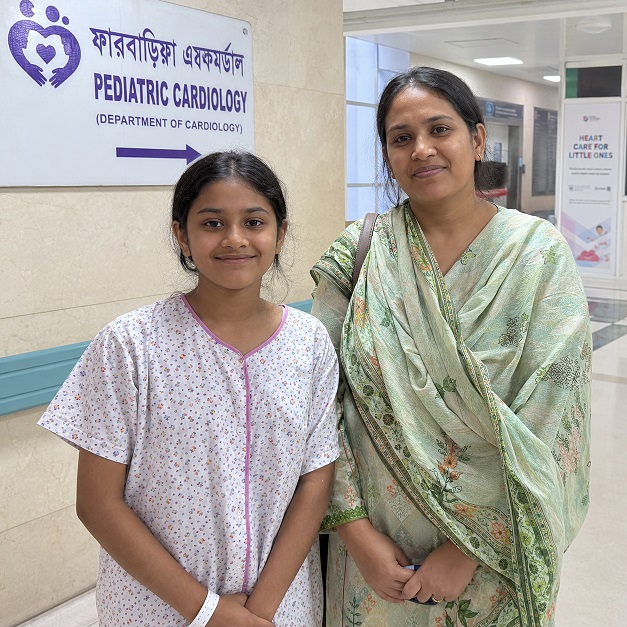
Key Takeaways
- Scoliosis treatment depends on the curve, age and underlying cause. Moderate curves in growing children may be managed with bracing, while larger or complex curves may require spinal fusion, growing rods or staged correction.
- Delayed diagnosis can lead to more complex spinal deformity. The guide cites international research showing that patients from lower-access countries may reach surgery with larger, stiffer curves requiring more extensive fusion and longer operations.
- The Cobb angle and curve flexibility are important before surgery. Families should obtain a specialist assessment to determine the curve magnitude, cause and flexibility before assuming a standard surgery or recovery plan applies.
- India offers specialised options for paediatric and severe scoliosis. Major centres may provide spinal fusion, growing-rod systems, halo-gravity traction and staged correction for severe or neglected curves in Kolkata, Chennai, Delhi and Mumbai.
- Intraoperative neuromonitoring is an important safety consideration. Families should confirm that spinal cord and nerve function will be continuously monitored during major scoliosis correction and that the hospital has appropriate deformity-spine expertise.
- Scoliosis correction surgery in India has lower illustrative costs than the UK and US. The guide gives an approximate 2026 range of US$8,000–16,000 in India, compared with US$40,000–80,000 in the UK and US$100,000–250,000+ in the US.
- The total budget should include implants and possible future procedures. Families should clarify implant systems, fused levels, ICU and hospital costs, pre-operative traction and future lengthening procedures when growing rods are used.
- Recovery and follow-up may require several weeks. A standard correction may require roughly four weeks in India, while severe curves requiring pre-operative traction or staged procedures can take considerably longer. Follow-up imaging and rehabilitation should continue in Bangladesh.
Quick Facts
- Treatment
- Scoliosis Correction Surgery
- Country
- India
- Patients
- Bangladeshi Patients
- Key Specialists
- Spine Surgeon, Paediatric Spine Surgeon and Deformity Specialist
- Treatment Options
- Bracing, Spinal Fusion, Growing Rods and Halo-Gravity Traction
- Key Assessment
- Cobb Angle, Curve Flexibility, Age and Underlying Cause
- Advanced Care
- Intraoperative Neuromonitoring and Growth-Friendly Spine Systems
- India Cost
- Approximately US$8,000–16,000
- UK Cost
- Approximately US$40,000–80,000
- US Cost
- Approximately US$100,000–250,000+
- Hospital Stay
- Approximately 7–12 days
- Overall Stay
- Roughly 4 weeks for standard correction
- Pre-Travel Assessment
- Full-spine X-rays and specialist review
- Medical Visa
- Hospital invitation and medical-attendant documentation required
- Follow-Up
- Rehabilitation and follow-up imaging in Bangladesh
- Key Selection Factor
- Surgeon-specific scoliosis correction experience
- Warning Sign
- Major correction planned without confirmed neuromonitoring or curve assessment
- Author
- Dr. Dheeraj Bojwani
- Experience
- 24+ Years
In Brief
Scoliosis correction surgery in India can provide Bangladeshi patients access to specialised paediatric and deformity spine teams, including spinal fusion, growth-friendly systems and traction-based treatment for selected severe curves. The appropriate approach depends on the child's age, Cobb angle, curve flexibility and underlying cause. A standard correction generally requires around four weeks in India, while complex cases may require a longer stay.
What Scoliosis Correction Surgery Actually Involves
Not every scoliosis diagnosis leads to surgery, and the right approach depends on the curve's size, the patient's age and remaining growth, and the underlying cause. Spine surgeons generally distinguish between:
- Bracing — a non-surgical option for moderate curves in a child who still has significant growth remaining, aimed at preventing further progression rather than correcting the existing curve.
- Posterior spinal fusion with instrumentation — the standard surgical correction for larger curves, using rods and screws to straighten and permanently stabilise the spine, most often performed once a child is closer to skeletal maturity.
- Growth-friendly systems (growing rods) — for young children whose spine is still growing significantly, using expandable rods that are periodically lengthened through minor follow-up procedures until the child is old enough for definitive fusion.
- Halo-gravity traction and staged surgery — for severe, rigid curves that have progressed for years, gradually stretching the spine before surgery to allow safer, more complete correction, sometimes over several weeks.
Scoliosis also has different underlying causes — idiopathic (no identified cause, most common in adolescents), congenital (present from birth), neuromuscular, and curvature caused by spinal tuberculosis. Ask a spine surgeon to confirm the specific cause and curve magnitude (Cobb angle) before assuming any one treatment path.
Why the Regional Care Gap Matters for Treatment Planning
Because routine screening and early paediatric spine referral are not widely available in Bangladesh, many families first notice scoliosis only when the curve is visibly severe — an uneven shoulder line, a rib hump, or a garment that no longer fits properly. By the time a specialist sees the child, the international comparison data suggests the curve is likely to be larger and stiffer than it would have been with earlier detection, which in turn means a more extensive operation: more levels fused, longer surgery, and a real possibility that pre-operative traction is needed before correction is attempted at all. This has a direct planning consequence: families should not assume a "standard" scoliosis surgery timeline or cost applies to their child until a surgeon has actually measured the curve and assessed its flexibility.
Why India Specifically for Scoliosis Correction?
India has become a common destination for Bangladeshi families seeking paediatric and deformity spine surgery abroad. Peer-reviewed research surveying patients directly at the Indian Visa Application Centre in Chittagong found that the decision consistently comes down to a combination of experienced specialist surgeons, hospital quality and cost, rather than any single factor. Several practical advantages reinforce this pattern for scoliosis correction specifically:
- Sub-specialised experience with severe, neglected curves — not just routine moderate cases — in larger deformity centres in Kolkata, Chennai, Delhi and Mumbai, including halo-gravity traction and staged correction for advanced deformity.
- Intraoperative neuromonitoring as standard practice, continuously checking spinal cord function throughout the correction to reduce the risk of neurological injury during surgery.
- Growth-friendly implant systems for young children, alongside definitive fusion for older adolescents, so the technique is matched to the child's remaining growth rather than a one-size approach.
- Easy connectivity and an established medical-visa system built specifically around Bangladeshi patients, including a dedicated government portal for hospital invitation letters and provision for up to three accompanying
Advisor's Note — DR. Dheeraj Bojwani
"In 24 years of guiding patients through this decision, the clearest advice I give a Bangladeshi family facing scoliosis surgery is this: ask directly whether intraoperative neuromonitoring will be used during the correction. This is not an optional extra — it is a basic safety standard for major spinal deformity surgery, and any centre proposing to correct a significant curve without it should raise questions. For a severe or rigid curve, also ask whether traction before surgery is being considered, rather than attempting full correction in a single operation."
Scoliosis Correction Surgery India Cost vs Other Countries
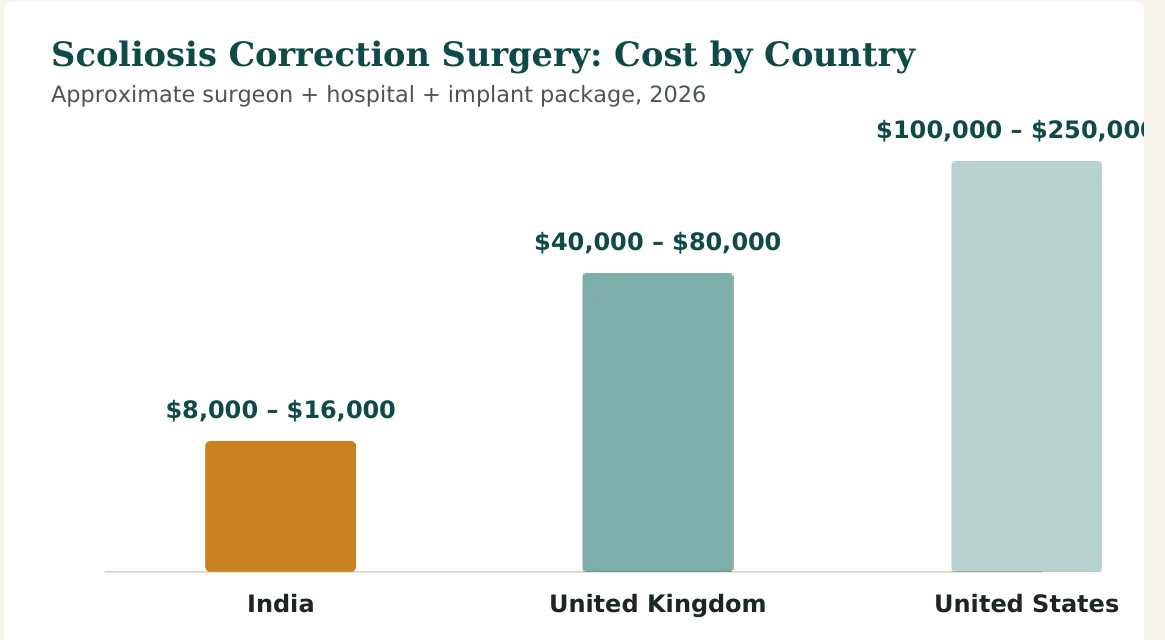
What the Numbers Actually Mean
The headline number matters less than what it includes. A Bangladeshi family comparing quotes should ask each Indian hospital to confirm whether the figure covers the specific implant or rod system, the number of vertebral levels being fused, intraoperative neuromonitoring, the full ICU and hospital stay rather than just the operating theatre fee, and any pre-operative traction. For growth-friendly systems in young children, ask what each subsequent lengthening procedure will cost — this is an ongoing, multi-year commitment, not a one-time expense.
Peer-reviewed research on cross-border medical travel found that international patients spend an average of 3,800 to 7,000 US dollars per visit once transport, accommodation and incidental costs are added to treatment itself — a range worth budgeting for on top of the surgery cost shown above. A standard correction typically requires an additional 20 to 28 days in India; a severe, rigid curve requiring weeks of pre-operative traction before surgery can extend the total stay considerably.
A note on insurance
Most Bangladeshi health insurance policies do not cover overseas treatment, and Indian hospitals generally expect self-pay or an advance deposit from international patients. Confirm this before travelling rather than after arrival.
The Typical Journey of a Bangladeshi Patient Planning Scoliosis Correction in India
Most Bangladeshi families follow a broadly similar sequence, whether they travel independently or through a medical-facilitation service. Knowing the shape of it in advance makes each step easier to plan for.
- Teleconsult from Bangladesh — full-spine X-rays reviewed remotely, Cobb angle assessed.
- Cost estimate & hospital confirmed — written package estimate shared before travel is booked.
- Medical visa & travel booked — hospital invitation letter filed through the official portal.
- In-person consult & curve assessment — MRI to check the cause; traction considered if severe and rigid.
- Surgery, ICU & hospital stay — typically 7 to 12 days, longer if staged correction is needed.
- Local recovery & wound check — 10 to 15 days of monitoring before clearance to fly.
- Fly home, continue follow-up in Bangladesh — rehabilitation and repeat imaging coordinated with a local doctor.
Total time away from home for a standard correction: roughly 4 weeks. Severe curves needing weeks of pre-operative traction take considerably longer.
Factors a Bangladeshi Patient Should Weigh Before Scoliosis Correction Surgery in India
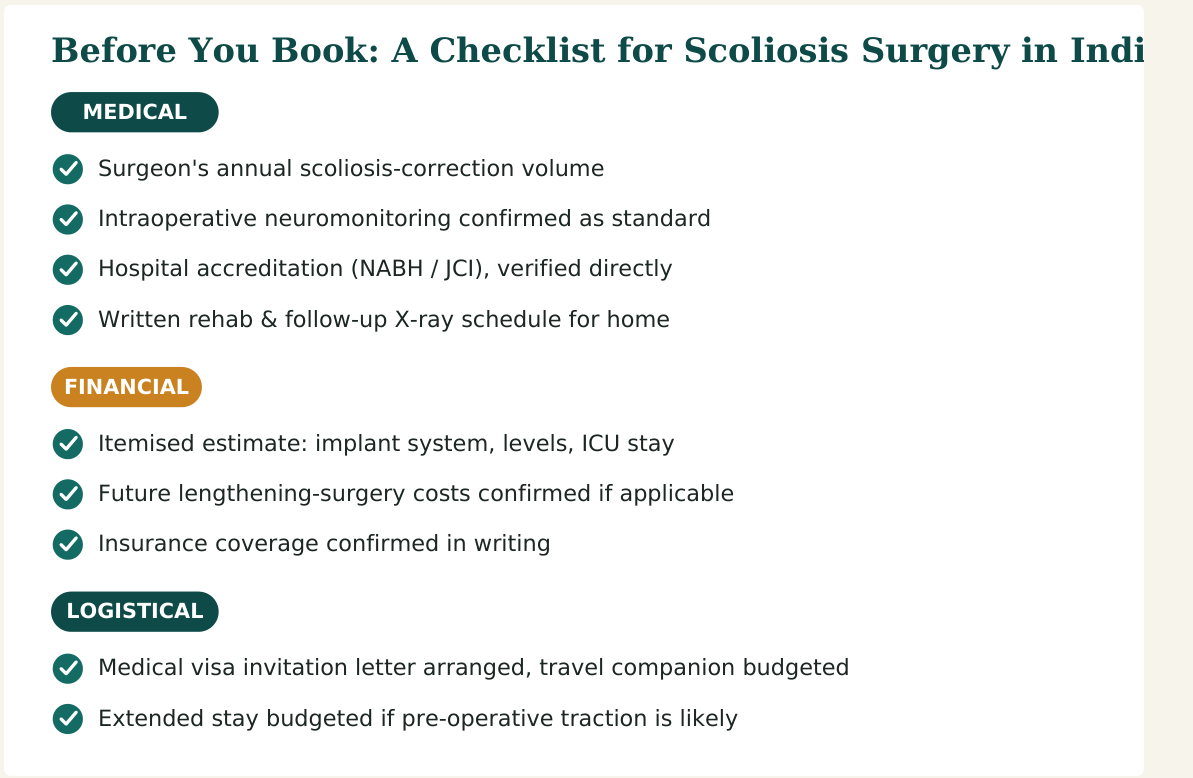
Beyond the surgery itself, the decisions that most affect a family's experience are logistical and financial rather than purely medical. Consider each of the following before confirming a hospital:
- Which city, not just which hospital. Kolkata is closest and most familiar linguistically; Chennai, Delhi and Mumbai often have a wider choice of dedicated paediatric and deformity spine centres. Weigh travel time and cost against the specific surgeon's experience.
- The surgeon's personal case volume specifically in scoliosis correction — not general spine surgery. Ask directly how many deformity corrections, including severe or neglected curves, the operating surgeon performs each year.
- Confirmed intraoperative neuromonitoring, verified as standard practice for this specific surgery, not an optional add-on.
- Genuine hospital accreditation. Ask whether the hospital holds NABH or JCI accreditation and verify it directly through the accreditation board's own directory rather than taking a brochure's word for it.
- An itemised, written estimate covering the implant system, number of levels fused, ICU stay, and — for growing children — the cost of future lengthening procedures.
- Medical visa documentation. A formal invitation letter from the treating hospital, submitted through India's official medical-visa channel, is required at the Indian visa centre in Dhaka, Chittagong, Sylhet or Rajshahi.
- A travel companion. Indian hospitals generally expect at least one attendant to stay with the patient; factor their stay, food and local transport into the budget.
- A written rehabilitation and follow-up imaging plan for after you return, including a schedule for repeat X-rays to confirm the fusion is solid or, for growing rods, when the next lengthening procedure is due.
Before You Book: A Checklist for Scoliosis Surgery in India
A Closing Words
For most Bangladeshi families, India offers a genuine value proposition for scoliosis correction: surgical experience with the severe, neglected curves common where early screening is limited, safety standards including routine neuromonitoring, and technique matched to a child's age and growth, at a fraction of the cost charged in the UK or US. The value, however, depends entirely on the specifics: an honest assessment of the curve's true severity, a transparent itemised estimate that accounts for future procedures if growing rods are used, and a realistic plan for travel, recovery and long-term follow-up back home. Families who ask detailed questions before booking, rather than after arriving, consistently report a smoother experience — medically and financially.
Sources
- 🌐 National Medical Commission of India — statutory body for verifying a doctor's registration and specialist qualifications. · nmc.org.in
- 🌐 National Accreditation Board for Hospitals & Healthcare Providers (NABH) — India's principal healthcare accreditation authority, under the Quality Council of India. · nabh.co
- 🌐 The Adolescent Idiopathic Scoliosis International Disease Severity Study: Do Operative Curve Magnitude and Complications Vary by Country? Peer-reviewed study, Spine Deformity journal, comparing surgical outcomes across seven countries including Pakistan. · sciencedirect.com/science/article/abs/pii/S2212134X19300668
- 🌐 Determinants of Bangladeshi patients' decision-making process and satisfaction toward medical tourism in India. Peer-reviewed study, hosted via NIH/NCBI. · pmc.ncbi.nlm.nih.gov/articles/PMC10185743
- 🌐 Government of India — Medical Value Travel / e-Medical Visa Portal, Bureau of Immigration, Ministry of Home Affairs — official channel for hospital invitation letters and medical-visa provisions for Bangladeshi nationals. · indianfrro.gov.in/frro/medicalvaluetravel
Frequently Asked Questions by Bangladeshi Patients about Scoliosis Correction Surgery in India
Why do Bangladeshi patients consider India for scoliosis correction surgery?
Bangladeshi families may consider India for access to specialised paediatric and deformity spine centres, particularly for severe or complex curves requiring advanced surgical care.
How much does scoliosis surgery in India cost for Bangladeshi patients?
The guide gives an illustrative cost of US$8,000–16,000 for standard scoliosis correction in India. Severe curves, traction, staged surgery or growing rods may increase the overall cost.
Which Indian cities are commonly considered by Bangladeshi scoliosis patients?
Bangladeshi families may consider Kolkata, Chennai, Delhi and Mumbai. Kolkata may offer easier connectivity, while other cities may provide a wider choice of specialised deformity-spine centres.
Do Bangladeshi patients need a medical visa for scoliosis surgery in India?
Yes. Patients travelling to India for treatment require appropriate medical-visa documentation, including an invitation letter from the treating hospital and documentation for accompanying attendants.
Can Bangladeshi parents accompany their child for scoliosis surgery in India?
Yes. The guide notes that Bangladeshi medical patients can have up to three accompanying attendants under the relevant medical-attendant visa provisions. Families should confirm current requirements before travelling.
How long does a Bangladeshi patient need to stay in India for scoliosis surgery?
A standard correction generally requires around four weeks in India, including assessment, surgery, hospital recovery and follow-up before returning to Bangladesh. Severe curves requiring traction may require longer.
Can scoliosis follow-up continue in Bangladesh after surgery in India?
Yes. Rehabilitation and follow-up X-rays can be coordinated with a spine specialist in Bangladesh according to the Indian surgeon's written postoperative plan.
What should Bangladeshi families check before choosing an Indian scoliosis surgeon?
Families should ask about the surgeon's personal scoliosis case volume, experience with severe deformities, use of intraoperative neuromonitoring, hospital accreditation and the proposed implant system.
What happens if my Bangladeshi child needs growing rods?
Growing rods require periodic lengthening procedures as the child grows. Families should discuss whether future procedures will be performed in India or coordinated in Bangladesh and clarify the expected costs beforehand.
Does Bangladeshi health insurance cover scoliosis surgery in India?
Most Bangladeshi health insurance policies generally do not cover overseas treatment, according to the guide. Families should confirm their individual coverage and the Indian hospital's payment requirements before travelling.
Page Summary
Scoliosis correction surgery in India can be an option for Bangladeshi patients requiring specialised treatment for moderate, severe or complex spinal curves. Treatment may range from bracing to spinal fusion, growing rods and halo-gravity traction depending on age, curve severity, flexibility and underlying cause.
Citation Block
| Field | Information |
|---|---|
| Topic | Scoliosis Correction Surgery in India |
| Treatment | Spinal Fusion, Growing Rods, Bracing & Halo-Gravity Traction |
| Country | India |
| Patients | Bangladeshi Patients |
| Key Specialists | Spine Surgeon, Paediatric Spine Surgeon & Deformity Specialist |
| Treatment Selection | Cobb Angle, Age, Curve Flexibility & Underlying Cause |
| Surgical Care | Posterior Spinal Fusion With Instrumentation |
| Growth-Friendly Care | Growing Rods for Selected Young Children |
| Complex Care | Halo-Gravity Traction and Staged Correction for Severe Curves |
| Safety | Intraoperative Neuromonitoring Should Be Confirmed |
| India Cost | US$8,000–16,000 |
| UK Cost | US$40,000–80,000 |
| US Cost | US$100,000–250,000+ |
| Pre-Travel Assessment | Full-Spine X-Rays, Cobb Angle and Curve Assessment |
| Travel Planning | Medical Visa, Hospital Invitation, Attendant and Accommodation |
| Overall Stay | Approximately 4 Weeks for Standard Correction |
| Follow-Up | Rehabilitation and Repeat Imaging in Bangladesh |
| Key Selection Factor | Personal Surgeon Experience With Scoliosis Correction |
| Warning Sign | Surgery Planned Without Adequate Curve Assessment or Neuromonitoring |
Our Mission Statement
Our mission is to place patients at the centre of every healthcare decision by providing trustworthy, evidence-based, and unbiased medical information. We believe that informed patients make better decisions. Backed by personalised guidance from our experienced advisory team, we help patients understand their treatment options, compare them objectively, and confidently choose the path that best suits their medical needs and personal circumstances.
Patient Testimonials from Bangladesh
Ready to Take the First Step?
Share your medical reports with our healthcare managers today and receive a FREE CONSULTATION, a personalized treatment plan and complete support from your arrival to your recovery.
Get Your Free ConsultationFrom Bangladesh to India: Your Complete Patient Guide
- Complex Orthopaedic and Joint Revision Surgery in India for Bangladeshi Patients
- Heart Failure Treatment and Surgery in India for Bangladeshi Patients
- Joint Arthroscopy and Sports Medicine in India for Bangladeshi Patients
- Leukemia, Lymphoma and Blood Cancer Treatment in India for Bangladeshi Patients
- Kidney Transplant in India for Bangladeshi Patients
- Liver Transplant in India for Bangladeshi Patients
- Hip Surgery in India for Bangladeshi Patients
- Knee Surgery in India for Bangladeshi Patients
- Spine Surgery in India for Bangladeshi Patients
- Shoulder Surgery in India for Bangladeshi Patients
- IVF and Fertility Treatment in India for Bangladeshi Patients
- Robotic Cancer Surgery in India for Bangladeshi Patients
- Brain Tumor Treatment in India for Bangladeshi Patients
- Neurosurgery in India for Bangladeshi Patients
- Prostate Cancer Treatment and Surgery in India for Bangladeshi Patients
- Cardiac Surgery in India for Bangladeshi Patients
- Dental Implants and Smile Makeover in India for Bangladeshi Patients
- Weight Loss and Bariatric Surgery in India for Bangladeshi Patients