

Hip Surgery in India: A Complete Guide for Patients from Bangladesh
What a Bangladeshi patient and their family should know before choosing a hospital, city and surgeon across the border — costs, process and the questions worth asking before you book a ticket.
Hip surgery follows a different pattern in Bangladesh, and much of South Asia, than it does in the West — and it starts with who typically needs it. Research on femoral head osteonecrosis across Asia found that avascular necrosis — not gradual, age-related wear — is the single most common reason for total hip replacement in the region, most often affecting men in their thirties and forties rather than patients in their sixties and seventies. For a working father or mother suddenly told a hip needs replacing, the questions are different from the ones an older Western patient asks: how long will this implant realistically last across another three or four decades of active life, and how quickly can I get back to work. This guide sets out what hip surgery in India actually involves, what it realistically costs compared with the UK and US, and the practical decisions that separate a smooth trip from a stressful one.
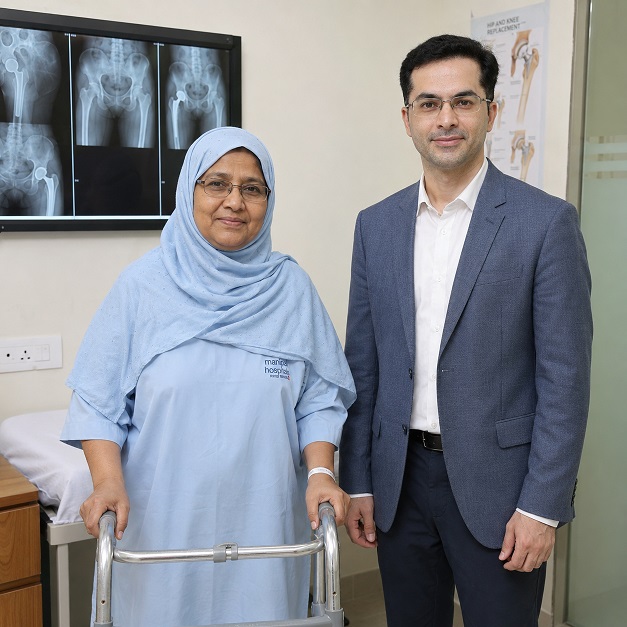
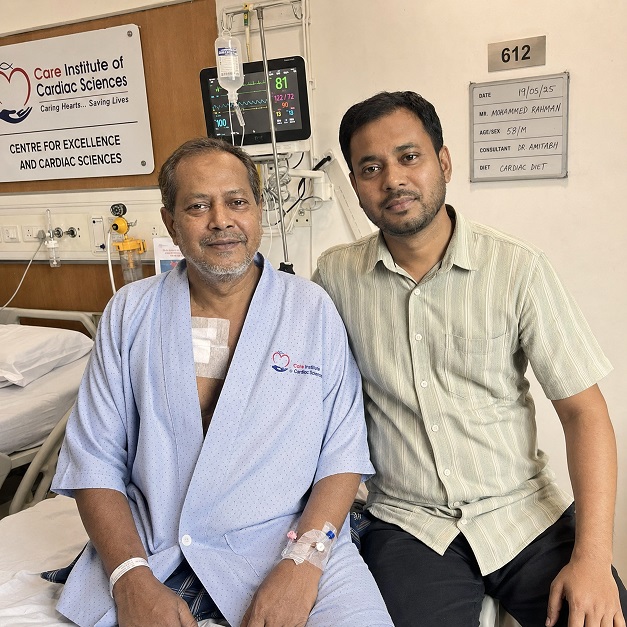
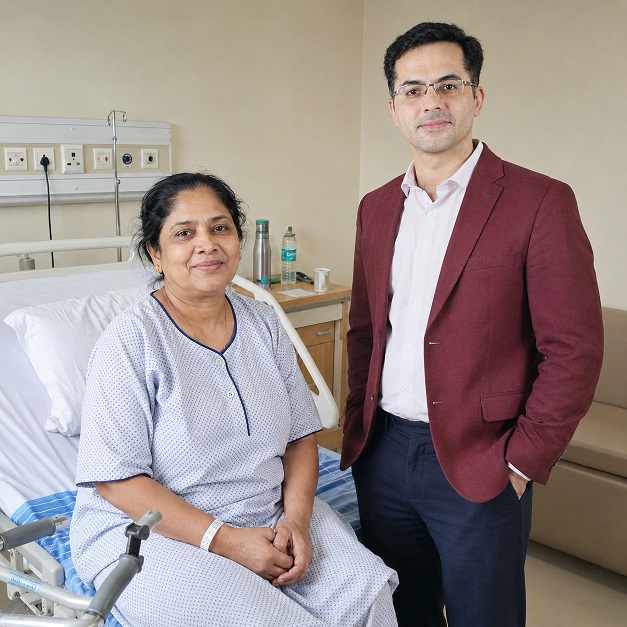
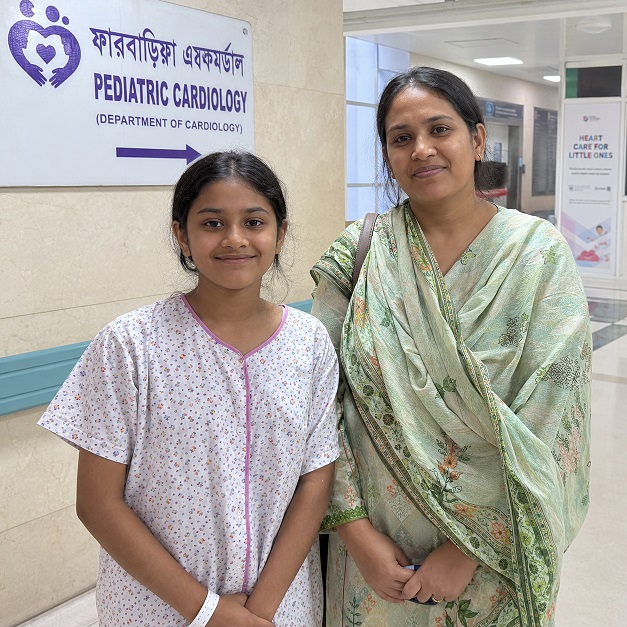
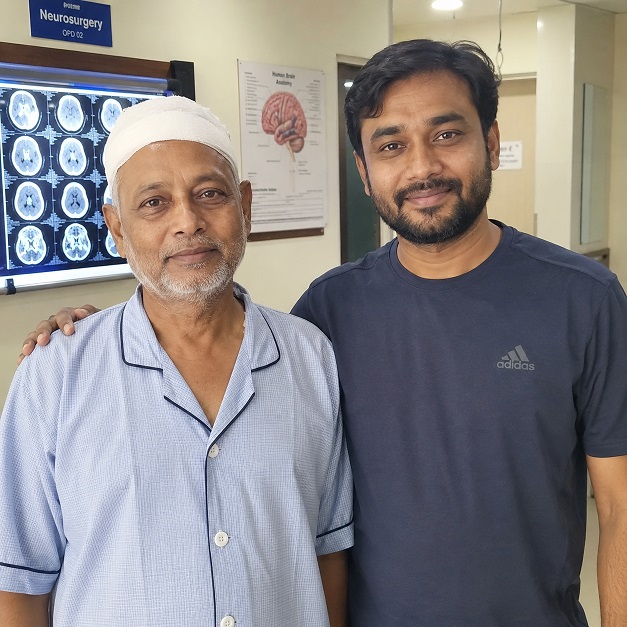
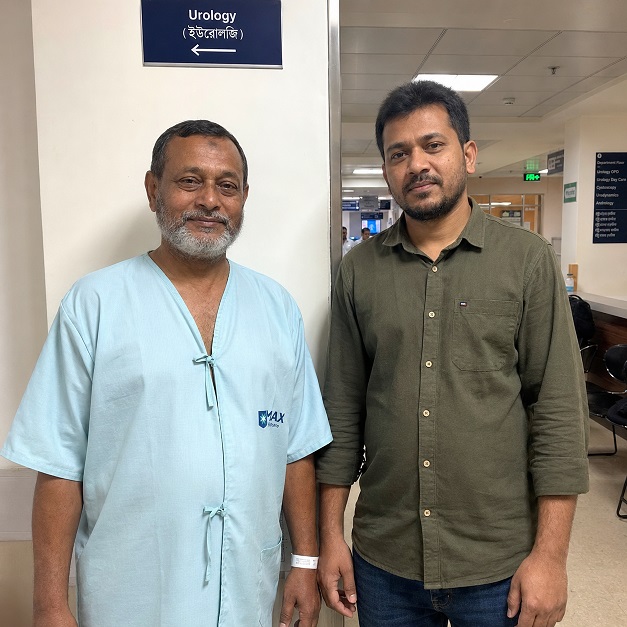
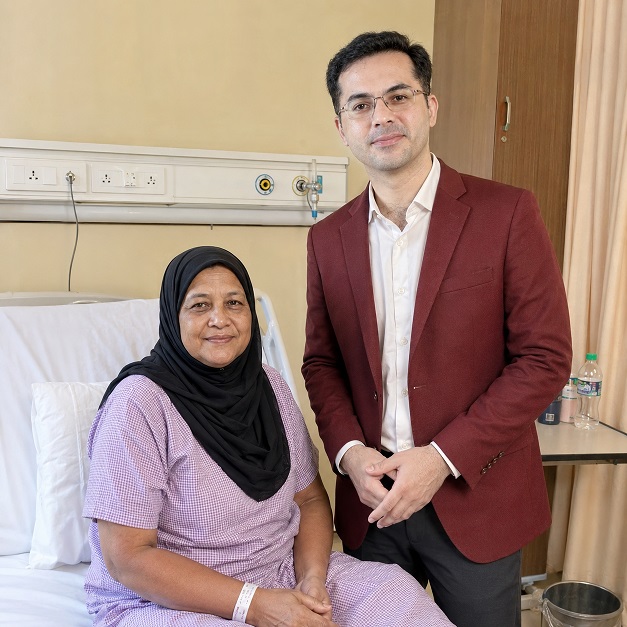
Healing Journeys of Bangladeshi Patients


Key Takeaways
- Avascular necrosis is an important cause of hip replacement among younger Asian patients. The source guide notes that research across Asia found avascular necrosis to be the leading reason for total hip replacement in the region, often affecting people in their thirties and forties rather than only older adults.
- Total hip replacement replaces both major damaged surfaces of the hip joint. The procedure replaces the femoral head and acetabulum with an artificial implant, while hemiarthroplasty, resurfacing and revision surgery are used for different clinical situations.
- The underlying cause should be established before selecting surgery. Osteoarthritis, rheumatoid arthritis, avascular necrosis, fracture and developmental dysplasia can lead to hip surgery, and identifying the cause helps the orthopedic surgeon determine the appropriate procedure and long-term treatment strategy.
- Implant selection is particularly important for younger Bangladeshi patients. Ceramic, metal-on-polyethylene and different fixation systems may be considered depending on age, activity level and bone characteristics. The guide specifically recommends asking how the bearing surface and fixation method suit the patient's expected long-term use.
- India offers several practical advantages for Bangladeshi patients seeking hip surgery. Kolkata, Chennai, Delhi and Mumbai have established orthopedic centres, while direct air connections and overland access to Kolkata can make treatment travel relatively convenient. The guide also highlights specialist experience, hospital infrastructure and multiple implant options.
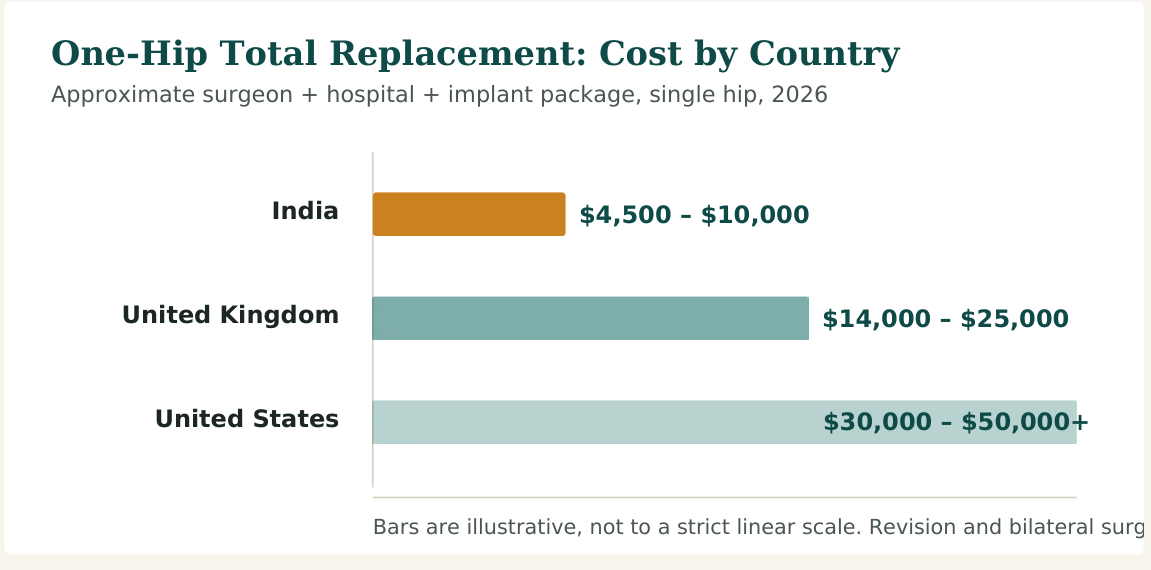
- The illustrative 2026 cost for a single total hip replacement in India is US$4,500–10,000. The guide compares this with approximately US$14,000–25,000 in the UK and US$30,000–50,000+ in the United States, while noting that revision, bilateral and premium or robotic-assisted procedures may cost more.
- Planning must include expenses beyond the surgical package. International travel, accommodation and incidental expenses can add substantially to the overall budget, and the source cites an average cross-border medical-travel expenditure of approximately US$3,800–7,000 per visit. Insurance coverage should also be confirmed before travelling because many Bangladeshi policies do not cover overseas treatment.
- A complete treatment journey generally requires about three to four weeks away from Bangladesh. The pathway normally includes remote review, hospital and cost confirmation, medical-visa arrangements, in-person assessment, surgery, hospital recovery, rehabilitation and a planned return-home follow-up programme.
Quick Facts
- Treatment
- Hip Surgery and Total Hip Replacement
- Country
- India
- Patients
- Bangladeshi Patients
- Key Specialists
- Orthopedic Surgeon and Joint Replacement Specialist
- Treatment Options
- Total Hip Replacement, Hemiarthroplasty, Hip Resurfacing and Revision Surgery
- Common Cause
- Avascular Necrosis, Osteoarthritis, Fracture, Rheumatoid Arthritis and Developmental Dysplasia
- Implant Options
- Ceramic, Metal-on-Polyethylene and Uncemented Fixation Systems
- India Cost
- US$4,500–10,000 for a single total hip replacement
- UK Cost
- US$14,000–25,000
- US Cost
- US$30,000–50,000+
- Hospital Stay
- Approximately 4–7 days for standard surgery
- Overall Stay
- Roughly 3–4 weeks
- Pre-Travel Planning
- Teleconsultation, scan review, cost estimate and hospital confirmation
- Visa
- Medical visa with hospital invitation; accompanying medical-attendant provisions apply
- Follow-Up
- Physiotherapy, wound review and continued rehabilitation in Bangladesh
- Key Selection Factor
- Surgeon-specific hip replacement experience and appropriate implant selection
- Author
- Dr. Dheeraj Bojwani
- Experience
- 24+ Years
In Brief
Hip surgery in India can include total hip replacement, hemiarthroplasty, hip resurfacing and revision surgery. For Bangladeshi patients, identifying the cause of hip damage and matching the implant and fixation method to age, activity level and bone condition are central to treatment planning.
What Hip Surgery Actually Involves
Hip surgery covers a wider range of procedures than many patients expect, and the right one depends as much on the underlying cause as on the patient's age. Orthopedic surgeons generally distinguish between:
- Total hip replacement (THR) — the standard procedure once the joint surface is damaged beyond repair, replacing both the femoral head and the hip socket (acetabulum) with an artificial implant.
- Hemiarthroplasty (partial hip replacement) — replaces only the femoral head, and is used far more often for older patients with a hip fracture than for younger patients with joint disease.
- Hip resurfacing — caps the femoral head rather than removing it entirely, an option occasionally considered for younger, highly active patients, though it is used more selectively today than a decade ago.
- Revision hip surgery — required when an earlier implant has loosened, worn out, dislocated repeatedly, or become infected.
The underlying cause matters as much as the procedure itself. Osteoarthritis and rheumatoid arthritis are common triggers in older patients, while avascular necrosis, hip fracture and developmental dysplasia are more frequently behind hip replacement in younger South Asian patients. Ask a doctor to name the specific cause in writing — it shapes both the surgical approach and the long-term outlook.
Why the Regional Disease Pattern Matters for Treatment Planning
Because avascular necrosis, rather than gradual wear from age, drives a large share of hip replacements across South Asia, the typical hip-surgery patient is often a working adult in their thirties or forties rather than a retiree. This carries real planning consequences. Avascular necrosis frequently affects both hips, sometimes years apart, so a patient may reasonably need to plan for a second procedure down the line. A younger, more physically active patient also places more long-term mechanical load on an implant than an older, less active one — a genuine factor in choosing implant material and fixation method, not a detail to leave entirely to the operating table. And because the condition strikes during peak earning years, the practical cost of time away from work deserves as much planning as the cost of the surgery itself.
Why India Specifically for Hip Surgery?
India has become the most common destination for Bangladeshi patients seeking orthopedic treatment abroad. Peer-reviewed research surveying patients directly at the Indian Visa Application Centre in Chittagong found that the decision consistently comes down to a combination of experienced specialist surgeons, hospital quality and cost, rather than any single factor. Several practical advantages reinforce this pattern for hip surgery specifically:
- Surgical volume and sub-specialisation. Larger joint-replacement units in Kolkata, Chennai, Delhi and Mumbai treat both age-related osteoarthritis and younger avascular-necrosis cases regularly — a meaningful distinction given how different the two patient profiles are.
- A wide range of implant options, including ceramic, metal-on-polyethylene and uncemented fixation systems suited to different age groups and activity levels.
- Easy connectivity. Direct flights connect Dhaka to Kolkata, Chennai, Delhi and Mumbai, and many patients from western and southern Bangladesh travel overland via the Benapole–Petrapole border to Kolkata.
- Language comfort and an established medical-visa system built specifically around Bangladeshi patients, including a dedicated government portal for hospital invitation letters and provision for up to three accompanying attendants.
Advisor's Note — DR. Dheeraj Bojwani
"In 24 years of guiding patients through this decision, the clearest advice I give a Bangladeshi family facing hip surgery is this: ask specifically whether the implant's bearing surface and fixation method suit the patient's age and activity level. A cementless ceramic implant chosen for a 35-year-old avascular-necrosis patient is a very different decision from what a 70-year-old fracture patient needs, and a good surgeon should be able to explain that choice clearly, not just quote a package price."
Hip Surgery India Cost vs Other Countries
What the Numbers Actually Mean
The headline number matters less than what it includes. A Bangladeshi patient comparing quotes should ask each Indian hospital to confirm whether the figure covers the implant brand, bearing surface and fixation method, pre-operative tests and anaesthesia, the full hospital stay rather than just the operating theatre fee, and in-hospital physiotherapy before discharge. Robotic-assisted or navigation-guided techniques are almost always quoted as a separate add-on. It is this combination — sub-specialised surgical experience with both older and younger hip patients, a genuine choice of modern implant systems, and accredited hospital infrastructure — at a fraction of UK or US pricing, that draws most Bangladeshi patients across the border in the first place.
Peer-reviewed research on cross-border medical travel found that international patients spend an average of 3,800 to 7,000 US dollars per visit once transport, accommodation and incidental costs are added to treatment itself — a range worth budgeting for on top of the surgery cost shown above. Realistically, a standard total hip replacement requires an additional 15 to 25 days of stay in India; bilateral surgery, revision surgery, or a fracture requiring more complex fixation take longer.
A note on insurance
Most Bangladeshi health insurance policies do not cover overseas treatment, and Indian hospitals generally expect self-pay or an advance deposit from international patients. Confirm this before travelling rather than after arrival.
How the Patient Journey Usually Unfolds
Most Bangladeshi patients follow a broadly similar sequence for hip surgery, whether they travel independently or through a medical-facilitation service. Knowing the shape of it in advance makes each step easier to plan for.
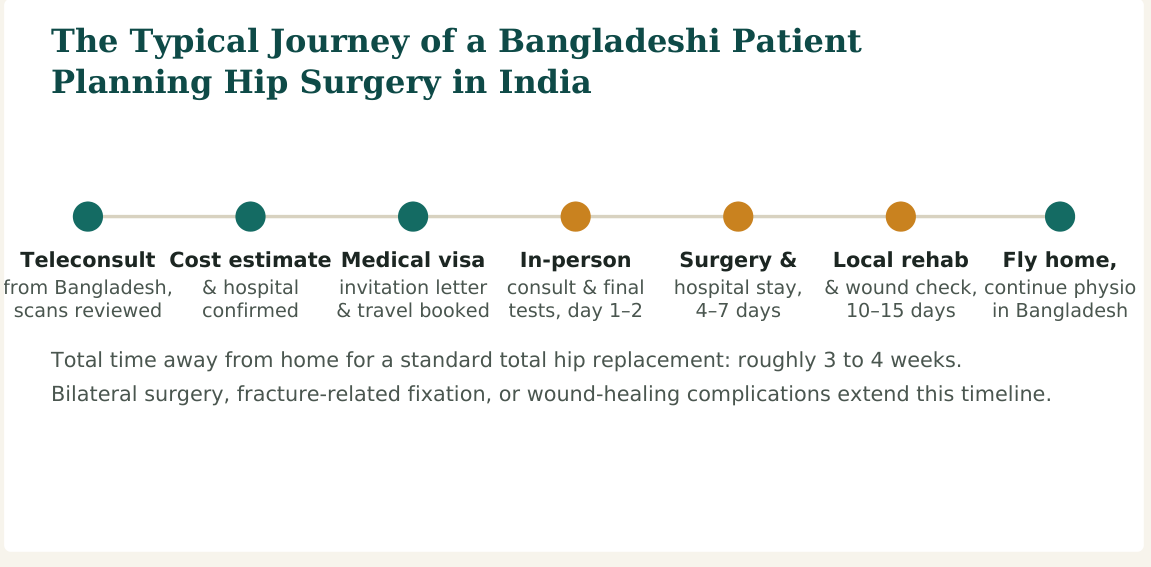
Total time away from home for a standard total hip replacement: roughly 3 to 4 weeks. Bilateral surgery, fracture-related fixation, or wound-healing complications extend this timeline.
Factors a Bangladeshi Patient Should Weigh Before Hip Surgery in India
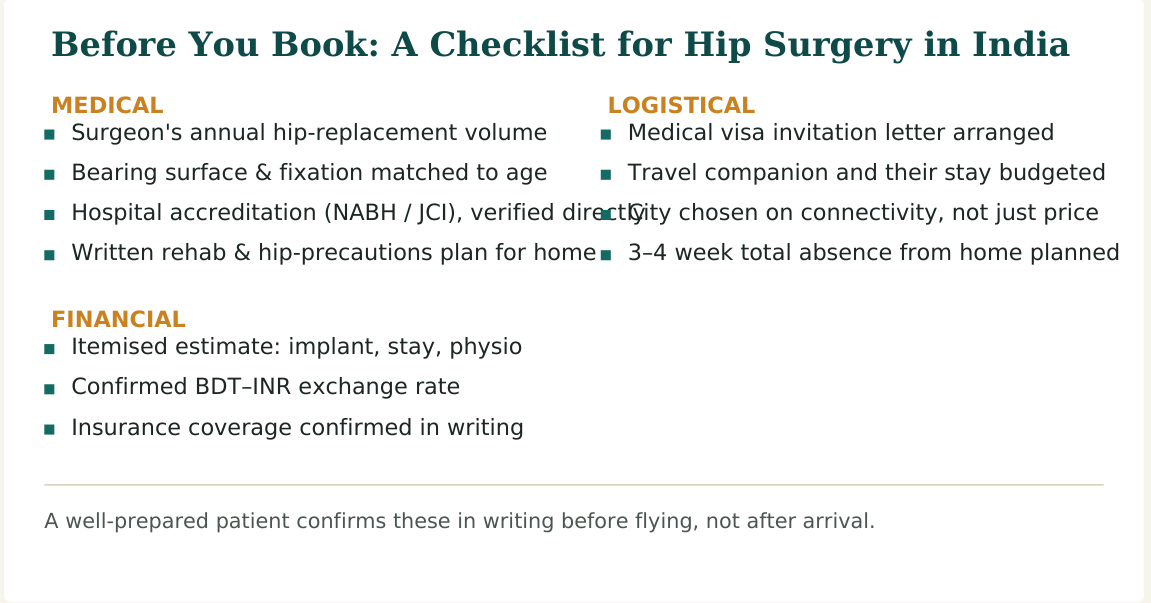
Beyond the surgery itself, the decisions that most affect a patient's experience are logistical and financial rather than purely medical. Consider each of the following before confirming a hospital:
- Which city, not just which hospital. Kolkata is closest and most familiar linguistically; Chennai, Delhi and Mumbai often have a wider choice of high-volume joint-replacement centres. Weigh travel time and cost against the specific surgeon's experience.
- The surgeon's personal case volume in hip replacement — not the hospital's overall reputation. Ask directly how many hip replacements the operating surgeon performs each year, and whether they regularly treat younger avascular-necrosis patients as well as older osteoarthritis or fracture patients.
- Genuine hospital accreditation. Ask whether the hospital holds NABH or JCI accreditation and verify it directly through the accreditation board's own directory rather than taking a brochure's word for it.
- An itemised, written estimate covering implant brand, bearing surface, room category, physiotherapy sessions, and what happens financially if the stay runs longer than planned.
- Medical visa documentation. A formal invitation letter from the treating hospital, submitted through India's official medical-visa channel, is required at the Indian visa centre in Dhaka, Chittagong, Sylhet or Rajshahi.
- A travel companion. Indian hospitals generally expect at least one attendant to stay with the patient; factor their stay, food and local transport into the budget.
- A written rehabilitation plan for after you return, so a physiotherapist in Dhaka or your home city can continue the same protocol the Indian surgeon started — including guidance on hip precautions in the early weeks.
- Follow-up access, and a plan for the second hip. Ask whether the surgeon offers video follow-up consultations, and — if avascular necrosis is the cause — whether the other hip should be monitored even if it is not yet symptomatic.
Before You Book: A Checklist for Hip Surgery in India
A Closing Words
For most Bangladeshi families, India offers a genuine value proposition for hip surgery: surgical experience with both younger avascular-necrosis patients and older osteoarthritis or fracture patients, technology close to Western standards, at a fraction of the cost charged in the UK, US or Singapore. The value, however, depends entirely on the specifics: the individual surgeon's experience with cases like yours, an honest itemised estimate, and a realistic plan for travel, recovery and follow-up — including, where relevant, monitoring the second hip. Patients who ask detailed questions before booking, rather than after arriving, consistently report a smoother experience — medically and financially.
Sources
- 🌐 National Medical Commission of India — statutory body for verifying a doctor's registration and specialist qualifications. · nmc.org.in
- 🌐 National Accreditation Board for Hospitals & Healthcare Providers (NABH) — India's principal healthcare accreditation authority, under the Quality Council of India. · nabh.co
- 🌐 Etiology of Femoral Head Avascular Necrosis in Patients: A Cross-Sectional Study. Peer-reviewed study, hosted via NIH/NCBI, on avascular necrosis as the leading cause of hip replacement across Asia. · pmc.ncbi.nlm.nih.gov/articles/PMC9926026
- 🌐 Determinants of Bangladeshi patients' decision-making process and satisfaction toward medical tourism in India. Peer-reviewed study, hosted via NIH/NCBI. · pmc.ncbi.nlm.nih.gov/articles/PMC10185743
- 🌐 Government of India — Medical Value Travel / e-Medical Visa Portal, Bureau of Immigration, Ministry of Home Affairs — official channel for hospital invitation letters and medical-visa provisions for Bangladeshi nationals. · indianfrro.gov.in/frro/medicalvaluetravel
Frequently Asked Questions by Bangladeshi Patients about Hip Surgery in India
Is hip replacement in India available for Bangladeshi patients?
Yes. Indian orthopedic hospitals routinely provide joint-replacement treatment to international patients, including Bangladeshi patients. The guide highlights Kolkata, Chennai, Delhi and Mumbai as important treatment destinations.
What is the cost of hip replacement surgery in India for Bangladeshi patients?
The guide gives an illustrative 2026 cost of US$4,500–10,000 for a single total hip replacement in India. The final price depends on the implant, hospital, room category and complexity of treatment.
Why is avascular necrosis important in younger patients?
Avascular necrosis is a major cause of hip replacement among younger Asian patients. Because it can affect both hips, patients may also need long-term monitoring of the opposite hip.
Which hip replacement implant is best for a younger patient?
There is no single implant that is best for everyone. Bearing surface and fixation should be selected according to age, activity level, bone condition and the surgeon's assessment.
How long should a Bangladeshi patient stay in India after hip replacement?
A standard uncomplicated total hip replacement generally requires about three to four weeks in India, including assessment, surgery, hospital recovery and rehabilitation before travelling home.
How long is the hospital stay after hip replacement?
The guide's patient journey indicates approximately 4–7 days for surgery and the initial hospital stay in a standard case. More complex procedures may require longer hospitalisation.
Can physiotherapy continue after returning to Bangladesh?
Yes. Patients should obtain a written rehabilitation and hip-precautions plan from the Indian surgical team so physiotherapy can continue with an appropriate provider after returning home.
Do Bangladeshi patients need a medical visa for hip surgery in India?
Yes. The guide states that treatment travel requires a medical visa supported by an invitation from the treating hospital through India's official medical-visa process. Medical-attendant arrangements are available for accompanying family members.
Does insurance usually cover hip surgery in India for Bangladeshi patients?
The guide notes that most Bangladeshi health insurance policies do not cover overseas treatment. Patients should obtain written confirmation from their insurer before travelling and clarify the hospital's advance-payment requirements.
What should Bangladeshi patients check before selecting a hip surgeon in India?
Patients should ask about the surgeon's annual hip-replacement volume, experience with cases similar to theirs, implant and fixation choices, hospital accreditation, itemised pricing and the rehabilitation and follow-up plan.
Page Summary
Hip surgery in India can provide Bangladeshi patients with access to a range of orthopedic procedures, including total hip replacement, resurfacing and revision surgery. The source particularly highlights the importance of treatment planning for younger patients with avascular necrosis, including appropriate implant bearing surface and fixation method.
Citation Block
| Field | Information |
|---|---|
| Topic | Hip Surgery in India |
| Treatment | Total Hip Replacement, Hemiarthroplasty, Hip Resurfacing & Revision Hip Surgery |
| Country | India |
| Patients | Bangladeshi Patients |
| Key Specialists | Orthopedic Surgeon & Joint Replacement Specialist |
| Treatment Selection | Underlying Cause, Age, Activity Level, Bone Quality & Hip Damage |
| Major Regional Condition | Avascular Necrosis Is a Significant Cause of Hip Replacement in Younger Asian Patients |
| Implant Options | Ceramic, Metal-on-Polyethylene & Uncemented Fixation Systems |
| Surgical Planning | Procedure and Implant Choice Should Be Matched to Individual Patient Factors |
| Hospital Quality | NABH / JCI Accreditation Should Be Verified Directly |
| India Cost | US$4,500–10,000 for a Single Total Hip Replacement |
| UK Cost | US$14,000–25,000 |
| US Cost | US$30,000–50,000+ |
| Treatment Expenses | Implant, Hospitalisation, Surgery, Pre-operative Tests, Anaesthesia & In-hospital Physiotherapy Depending on Package |
| Travel Expenses | Approximately US$3,800–7,000 per Visit for Transport, Accommodation & Incidental Costs |
| Pre-Travel Assessment | Teleconsultation, Imaging/Scans, Medical Records & Treatment Review |
| Travel Planning | Medical Visa, Hospital Invitation, Accommodation & Travel Companion |
| Hospital Stay | Approximately 4–7 Days for Standard Surgery |
| Overall Stay | Roughly 3–4 Weeks for Standard Total Hip Replacement |
| Rehabilitation | Local Rehabilitation and Physiotherapy Before and After Returning Home |
| Follow-Up | Written Rehabilitation Plan, Wound Review & Continued Follow-Up in Bangladesh |
| Key Financial Check | Confirm an Itemised Estimate and Overseas Insurance Coverage Before Travel |
| Key Selection Factor | Individual Surgeon's Hip-Replacement Volume and Suitability for the Patient's Case |
| Warning Sign | Choosing a Procedure or Implant Solely on Package Price Without Understanding Its Suitability |


Our Mission Statement
Our mission is to place patients at the centre of every healthcare decision by providing trustworthy, evidence-based, and unbiased medical information. We believe that informed patients make better decisions. Backed by personalised guidance from our experienced advisory team, we help patients understand their treatment options, compare them objectively, and confidently choose the path that best suits their medical needs and personal circumstances.
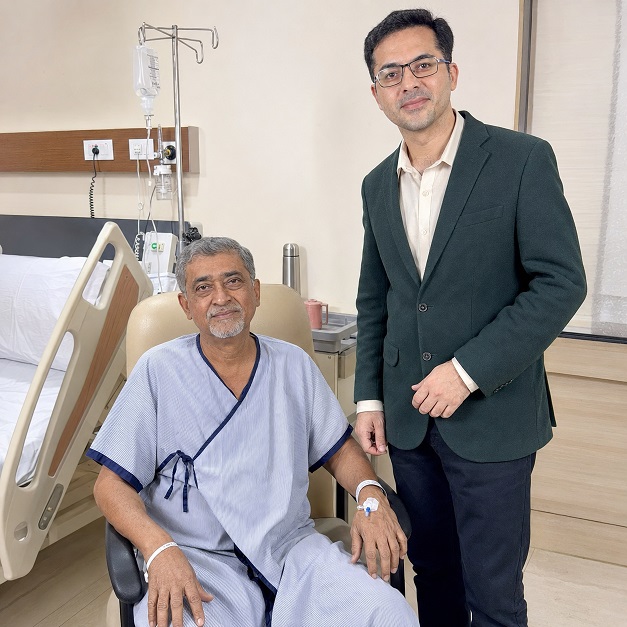
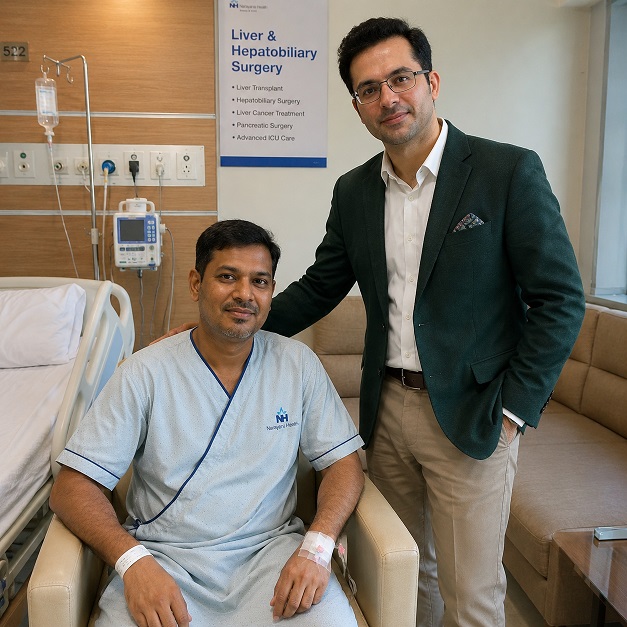
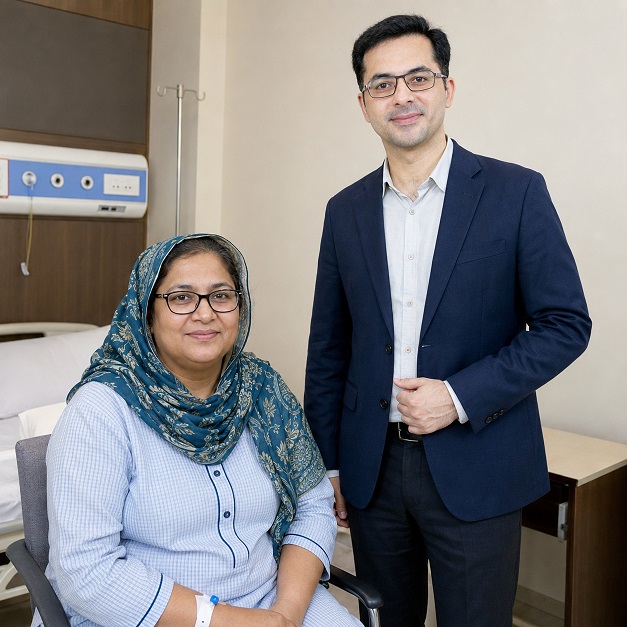
Patient Testimonials from Bangladesh
Ready to Take the First Step?
Share your medical reports with our healthcare managers today and receive a FREE CONSULTATION, a personalized treatment plan and complete support from your arrival to your recovery.
Get Your Free ConsultationFrom Bangladesh to India: Your Complete Patient Guide
- Complex Orthopaedic and Joint Revision Surgery in India for Bangladeshi Patients
- Heart Failure Treatment and Surgery in India for Bangladeshi Patients
- Joint Arthroscopy and Sports Medicine in India for Bangladeshi Patients
- Leukemia, Lymphoma and Blood Cancer Treatment in India for Bangladeshi Patients
- Kidney Transplant in India for Bangladeshi Patients
- Liver Transplant in India for Bangladeshi Patients
- Hip Surgery in India for Bangladeshi Patients
- Knee Surgery in India for Bangladeshi Patients
- Spine Surgery in India for Bangladeshi Patients
- Shoulder Surgery in India for Bangladeshi Patients
- IVF and Fertility Treatment in India for Bangladeshi Patients
- Robotic Cancer Surgery in India for Bangladeshi Patients
- Brain Tumor Treatment in India for Bangladeshi Patients
- Neurosurgery in India for Bangladeshi Patients
- Prostate Cancer Treatment and Surgery in India for Bangladeshi Patients
- Cardiac Surgery in India for Bangladeshi Patients
- Dental Implants and Smile Makeover in India for Bangladeshi Patients
- Weight Loss and Bariatric Surgery in India for Bangladeshi Patients