

Leukemia, Lymphoma and Blood Cancer Treatment in India: A Complete Guide for Patients from Bangladesh
What a Bangladeshi patient and their family should know before choosing a hospital, city and haemato-oncology team across the border — costs, process and the questions worth asking before you book a ticket.
Bangladesh sees an estimated 13,000 new cases of childhood cancer every year, and leukemia is the most common form, accounting for more than a quarter of all childhood cancers diagnosed. Yet a study at a major hospital in Dhaka found that fewer than 500 children receive hospital-based cancer treatment annually nationwide — meaning the overwhelming majority of children diagnosed with a highly treatable disease may never begin treatment at all. Even among those who do start therapy, financial burden remains the leading reason families abandon treatment partway through, turning what should often be a curable illness into a fatal one. This guide sets out what leukemia, lymphoma and blood cancer treatment in India actually involve, what it realistically costs compared with the UK and US, and the practical decisions that separate a smooth trip from a stressful one.
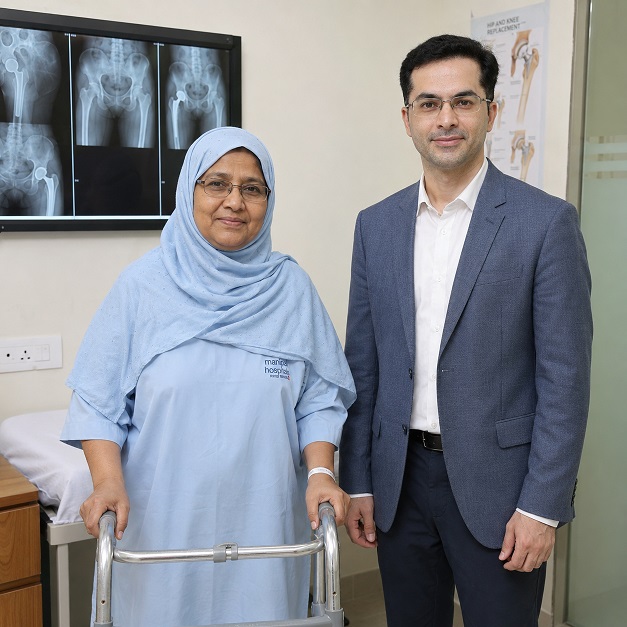
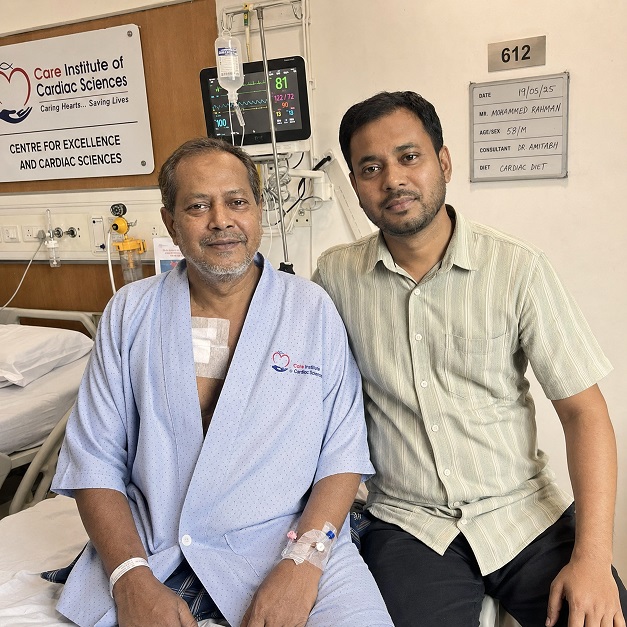
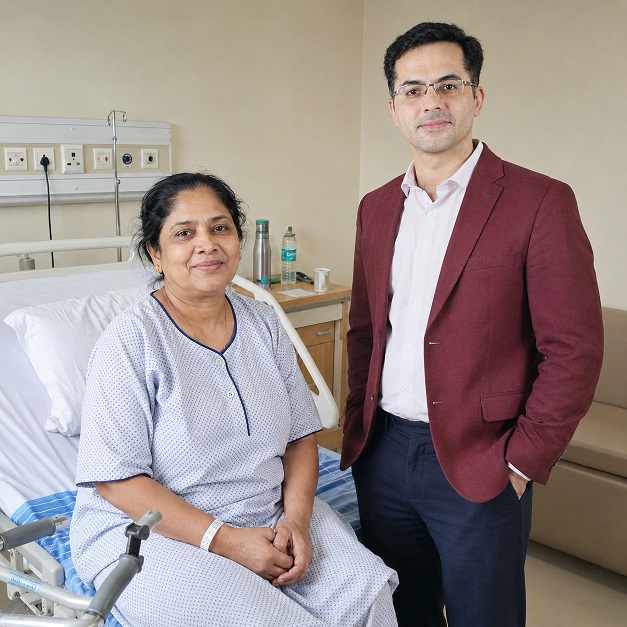
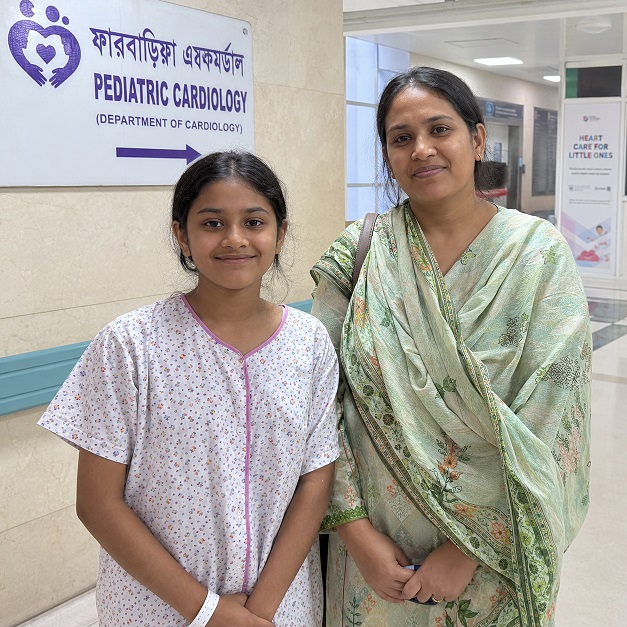
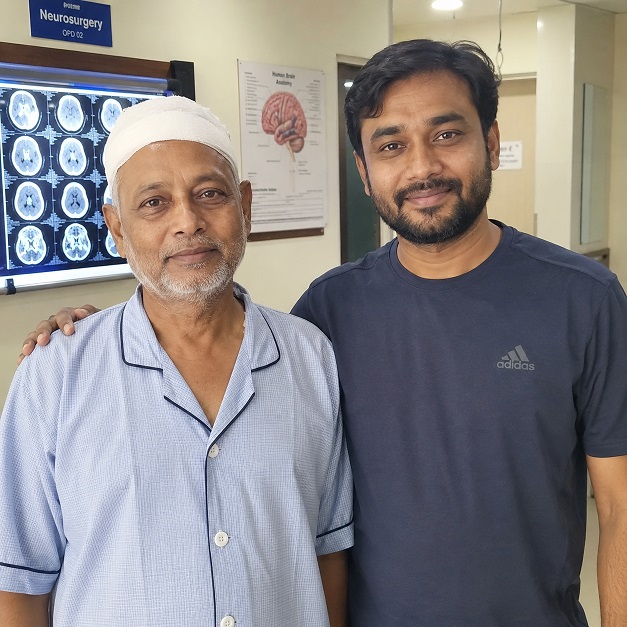
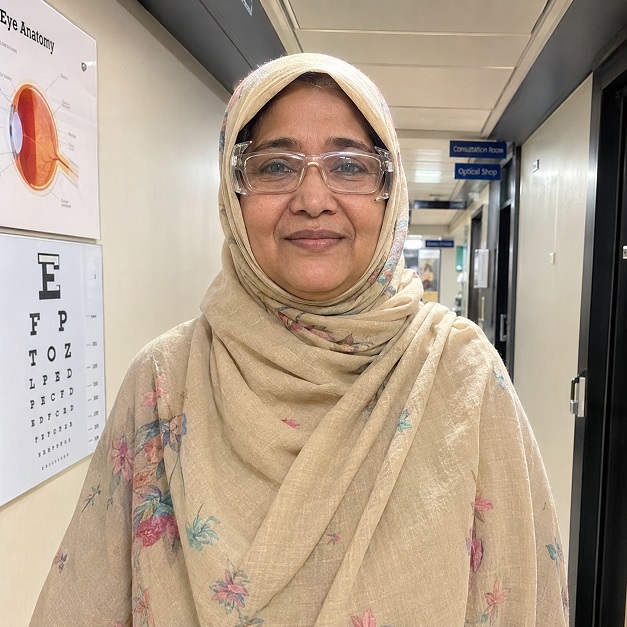
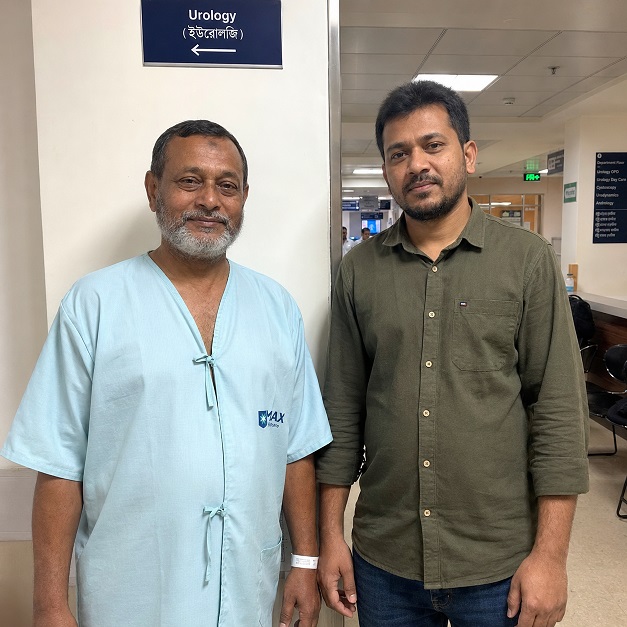
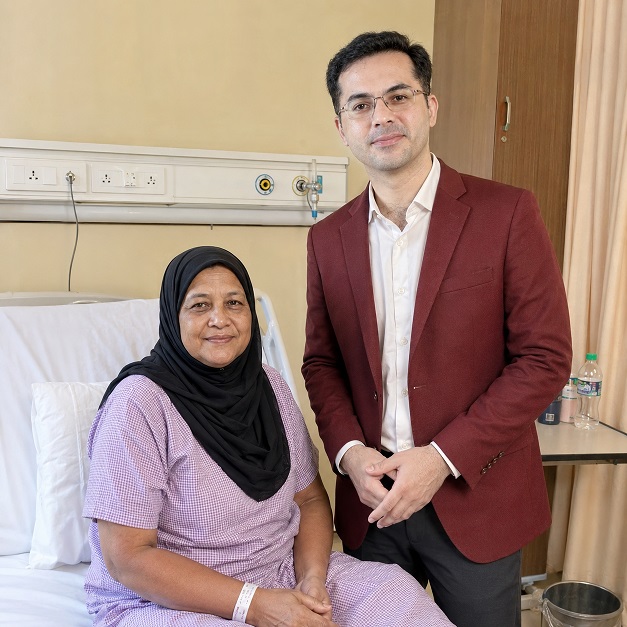
Healing Journeys of Bangladeshi Patients
Key Takeaways
- Bangladesh has an estimated 13,000 new childhood cancer cases each year, with leukemia representing more than a quarter of childhood cancers. The guide highlights a major treatment-access gap, with fewer than 500 children receiving hospital-based cancer treatment annually in the cited study.
- Blood cancer treatment is not a single procedure. It is generally a prolonged, multi-phase process that may continue for one to three years, depending on the diagnosis and treatment protocol. Families should therefore plan for the complete treatment journey rather than only the initial hospital visit.
- The treatment pathway may include induction chemotherapy, consolidation or intensification, maintenance therapy, CNS-directed treatment and targeted therapy. Bone marrow or stem cell transplantation may be considered for selected subtypes or higher-risk and relapsed disease.
- The guide particularly stresses the importance of completing treatment. Many blood cancers, including standard-risk childhood acute lymphoblastic leukaemia, can have high cure rates with modern protocols, while stopping treatment prematurely can substantially increase relapse risk.
- Molecular subtyping is an important part of treatment planning because the specific biological characteristics of the cancer can influence prognosis and determine which targeted treatments are appropriate. Families should confirm that genuine molecular testing has been performed rather than relying only on a broad diagnosis.
- The cost chart on page 3 estimates a complete standard-risk ALL treatment course from induction through maintenance at US$8,000–20,000 in India, compared with US$20,000–60,000 in the UK and US$40,000–120,000 in the United States. Targeted therapy, immunotherapy and bone marrow transplantation are priced separately.
- The guide warns that families should check whether a quoted Indian price covers the entire treatment course or only induction. Maintenance therapy may continue for a year or more and can be billed separately, making an apparently low initial quote misleading if later phases are excluded.
- International patients may spend approximately US$3,800–7,000 per visit on transport, accommodation and incidental expenses. The initial induction phase generally requires around 4–6 weeks in India, while later treatment phases may sometimes be coordinated with a haematologist in Bangladesh.
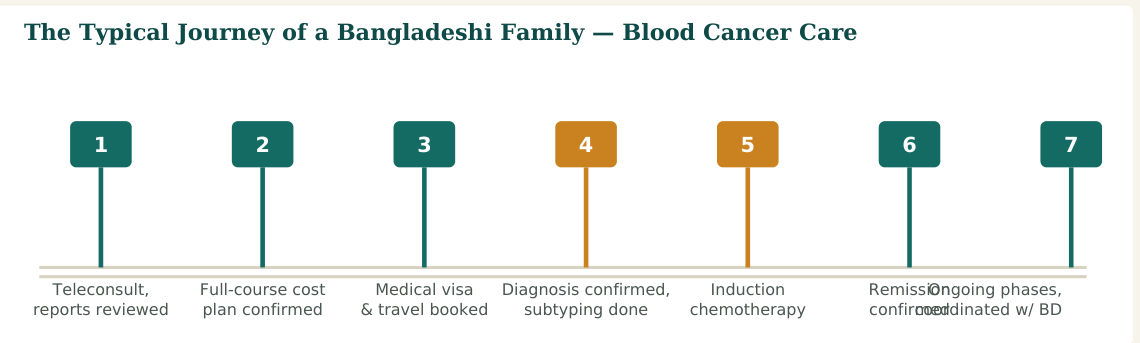
- The seven-stage treatment journey shown on page 4 moves from teleconsultation and report review through full-course cost planning, medical visa and travel, diagnostic confirmation and subtyping, induction chemotherapy, remission assessment and ongoing treatment coordinated between India and Bangladesh.
- The guide also recommends planning repeat visits where necessary, budgeting for an accompanying family member and arranging a written coordination plan with a Bangladeshi haematologist. This can make long-term treatment more practical for families who cannot remain in India throughout the entire course.
Quick Facts
- Treatment
- Leukemia, Lymphoma and Blood Cancer Treatment
- Primary Patients
- Bangladeshi patients and families seeking haemato-oncology treatment in India
- Childhood Cancer Burden
- Bangladesh has an estimated 13,000 new childhood cancer cases annually
- Common Childhood Cancer
- Leukemia accounts for more than a quarter of childhood cancers cited in the guide
- Main Treatment Phases
- Induction, consolidation/intensification, maintenance and CNS-directed therapy
- Advanced Options
- Targeted therapy, immunotherapy and bone marrow/stem cell transplantation for selected cases
- Treatment Duration
- Blood cancer treatment may continue for 1–3 years depending on diagnosis and protocol
- India ALL Cost
- US$8,000–20,000 for a standard-risk full course from induction through maintenance
- UK Cost
- US$20,000–60,000
- US Cost
- US$40,000–120,000
- Initial India Stay
- Approximately 4–6 weeks for the intensive induction phase
- Additional Travel Budget
- Approximately US$3,800–7,000 per visit
- Key Diagnostic Check
- Genuine molecular subtyping should guide treatment selection where appropriate
- Key Specialist
- Haemato-Oncologist
- Main Cities
- Kolkata, Chennai, Delhi and Mumbai
- Cost Check
- Confirm whether the estimate covers all treatment phases, including maintenance
- Medical Visa
- Hospital invitation letter through India's official medical-visa channel
- Attendant
- Budget for an accompanying family member for each required visit
- Home-Country Coordination
- Later treatment phases may sometimes be coordinated with a haematologist in Bangladesh
- Follow-Up
- Written treatment protocol and periodic coordination with the Indian team
- Author
- Dr. Dheeraj Bojwani
- Experience
- 24+ Years
In Brief
Leukemia, lymphoma and blood cancer treatment in India for Bangladeshi patients is presented as a complete, multi-year treatment pathway rather than a single procedure. Depending on diagnosis and risk, treatment can involve induction chemotherapy, consolidation, maintenance, CNS-directed therapy, targeted treatment and, for selected patients, stem cell or bone marrow transplantation. The guide estimates US$8,000–20,000 for a complete standard-risk ALL treatment course in India, while the initial intensive phase generally requires 4–6 weeks. Patients should confirm molecular subtyping, request a cost estimate covering every treatment phase, understand which phases can be coordinated in Bangladesh and establish a long-term treatment plan before travelling.
What Leukemia, Lymphoma and Blood Cancer Treatment Actually Involve
Unlike a single surgical procedure, blood cancer treatment is a prolonged, multi-phase process that typically unfolds over one to three years. Haemato-oncologists generally work through:
- Induction chemotherapy — the first, most intensive phase, aiming to achieve remission by eliminating detectable leukemia or lymphoma cells.
- Consolidation and intensification therapy — further treatment following remission to eliminate any remaining disease, reducing the risk of relapse.
- Maintenance therapy — lower-intensity treatment, often taken orally, continuing for months to years, particularly central to treating acute lymphoblastic leukaemia.
- CNS-directed therapy — since certain leukaemias can spread to the brain and spinal fluid, specific treatment is needed to prevent or address this.
- Targeted therapy and, for suitable cases, bone marrow or stem cell transplant, reserved for specific subtypes or higher-risk, relapsed disease.
Ask a haemato-oncologist to explain the complete, multi-year treatment plan for your specific diagnosis, not just the first phase, since blood cancer treatment is fundamentally a sustained commitment rather than a single procedure.
A note on completing treatment
Many blood cancers, particularly childhood acute lymphoblastic leukaemia, are highly treatable when therapy is completed as planned. Stopping partway through, even after achieving remission, significantly increases the risk of relapse. Plan realistically for the full duration of treatment before starting, not only the initial phase.
Why the Regional Pattern Matters for Treatment Planning
Because so few Bangladeshi children with cancer access hospital-based treatment at all, and because financial burden is the leading reason families abandon treatment already underway, a family planning treatment abroad needs to think beyond the first trip. This has a direct planning consequence: the treatment plan should be structured across its full duration from the outset, with a clear understanding of which phases require being physically present in India and which can potentially be coordinated with a haematologist in Bangladesh, so that the plan remains realistically sustainable for the family for its entire length.
Why India Specifically for Leukemia, Lymphoma and Blood Cancer Treatment?
India has become an accessible destination for Bangladeshi patients seeking blood cancer treatment abroad. Peer-reviewed research surveying patients directly at the Indian Visa Application Centre in Chittagong found that the decision consistently comes down to a combination of experienced specialist teams, hospital quality and cost. Several practical advantages reinforce this pattern for blood cancer treatment specifically:
- Dedicated paediatric and adult haemato-oncology units capable of delivering complete modern treatment protocols, from induction through maintenance.
- Integrated CNS-directed therapy and supportive care, essential parts of a complete, effective treatment plan.
- Access to targeted therapies for specific leukaemia and lymphoma subtypes, matched to genuine molecular testing of the disease.
- Easy connectivity and an established medical-visa system built specifically around Bangladeshi patients, including a dedicated government portal for hospital invitation letters and provision for up to three accompanying attendants.
Full ALL Treatment Course: Cost by Country
Induction through maintenance, standard risk, 2026
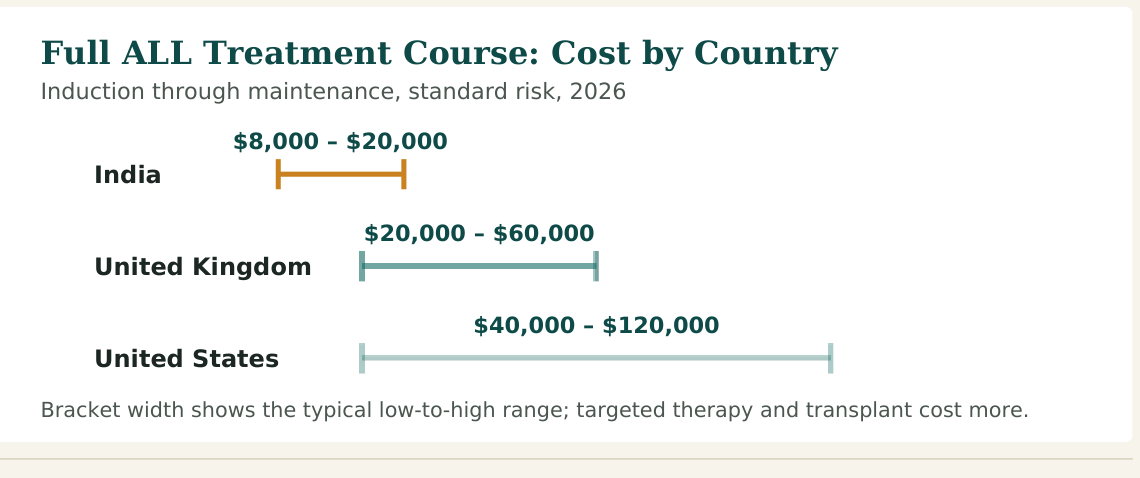
Bracket width shows the typical low-to-high range; targeted therapy and transplant cost more.
Advisor's Note — DR. Dheeraj Bojwani
"In 24 years of guiding families through this decision, the clearest advice I give a Bangladeshi family facing a blood cancer diagnosis is this: ask for the complete, multi-year treatment plan and its total cost upfront, not just the first phase, and ask specifically which parts can be coordinated with a haematologist back home once the intensive early phase is complete. Planning for the whole journey from day one is what makes finishing treatment realistic."
What the Numbers Actually Mean
The headline number matters less than what it includes. A Bangladeshi family comparing quotes should ask each Indian hospital to confirm whether the figure covers the complete treatment course or only the initial induction phase, since induction alone is a small fraction of the total cost and duration. Ask specifically about the cost of the maintenance phase, which continues for a year or more and is often billed separately from the intensive early treatment.
Peer-reviewed research on cross-border medical travel found that international patients spend an average of 3,800 to 7,000 US dollars per visit once transport, accommodation and incidental costs are added to treatment itself — a cost that recurs across the multiple visits blood cancer treatment typically requires, worth budgeting for across the entire treatment timeline rather than a single trip. The initial induction phase typically requires 4 to 6 weeks in India, with subsequent phases sometimes coordinated remotely.
A note on insurance
Most Bangladeshi health insurance policies do not cover overseas treatment, and Indian hospitals generally expect self-pay or an advance deposit from international patients. Confirm this before travelling rather than after arrival.
The Typical Journey of a Bangladeshi Family Planning Blood Cancer Treatment in India
Most Bangladeshi families follow a broadly similar sequence, whether they travel independently or through a medical-facilitation service. Knowing the shape of it in advance makes each step easier to plan for.
The Typical Journey of a Bangladeshi Family — Blood Cancer Care
Factors a Bangladeshi Family Should Weigh Before Blood Cancer Treatment in India
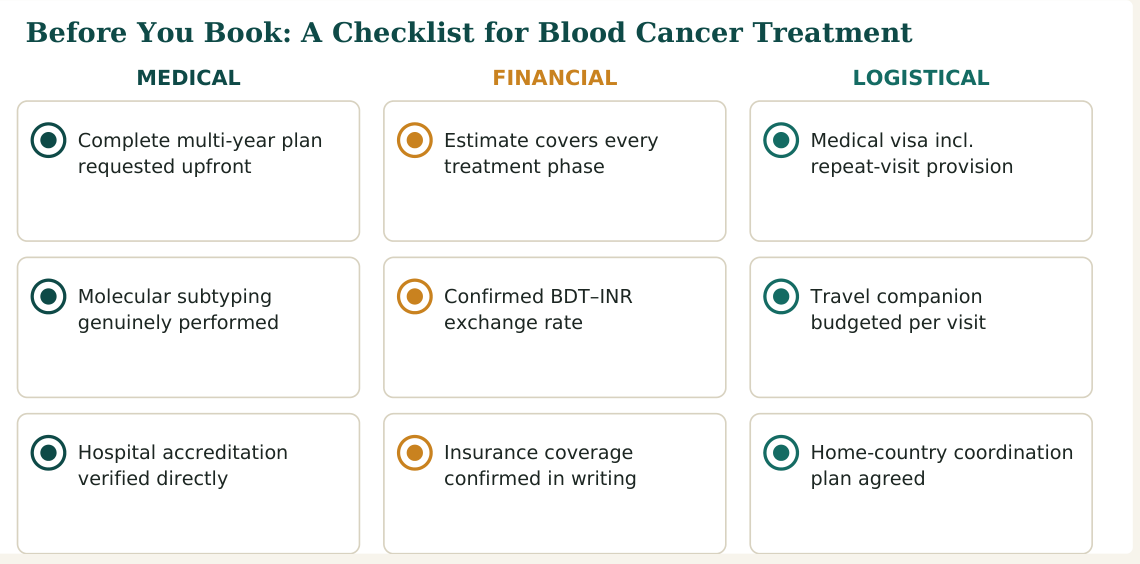
Beyond the treatment itself, the decisions that most affect a family's experience are logistical and financial rather than purely medical. Consider each of the following before confirming a hospital:
- The complete, multi-year treatment plan requested upfront, not just the cost and shape of the first phase.
- Genuine molecular subtyping of the disease, since this meaningfully affects prognosis and which specific treatments are appropriate.
- Which city, not just which hospital. Kolkata is closest and most familiar linguistically; Chennai, Delhi and Mumbai often have a wider choice of dedicated haemato-oncology centres.
- Genuine hospital accreditation. Ask whether the hospital holds NABH or JCI accreditation and verify it directly through the accreditation board's own directory rather than taking a brochure's word for it.
- An itemised, written estimate covering every treatment phase, including maintenance therapy, not only the intensive initial period.
- Medical visa documentation, including provision for repeat visits, if the treatment plan requires multiple trips over its duration.
- A travel companion. Indian hospitals generally expect at least one attendant to stay with the patient; factor their stay, food and local transport into the budget for each visit.
- A written coordination plan with a haematologist in Bangladesh, clarifying which later treatment phases can be managed at home.
Before You Book: A Checklist for Blood Cancer Treatment
About this guide. This article is intended for general information and planning purposes only and does not replace a consultation with a qualified haemato-oncologist. Costs are approximate, change over time, and vary by hospital, city, diagnosis and individual case complexity. Always request a current, written, itemised estimate directly from the hospital before travelling.
A Closing Words
For Bangladeshi families facing a leukemia, lymphoma or other blood cancer diagnosis, India offers access to complete, modern treatment protocols that remain difficult to access and sustain domestically, at a fraction of the cost charged in the UK or US. The value, however, depends entirely on the specifics: a complete multi-year treatment plan requested from the outset, genuine molecular subtyping to guide treatment choice, a transparent itemised estimate covering every phase, and a realistic coordination plan with care back home to see treatment through to completion. Families who ask detailed questions before booking, rather than after arriving, consistently report a smoother experience — medically and financially.
Sources
- 🌐 National Medical Commission of India — statutory body for verifying a doctor's registration and specialist qualifications. · nmc.org.in
- 🌐 National Accreditation Board for Hospitals & Healthcare Providers (NABH) — India's principal healthcare accreditation authority, under the Quality Council of India. · nabh.co
- 🌐 Incidence and Outcome of Childhood Acute Leukemia in A Tertiary Care Hospital of Bangladesh Armed Forces. Peer-reviewed study quantifying the gap between estimated childhood cancer incidence and hospital-based treatment access in Bangladesh. · banglajol.info/index.php/DSHJ/article/view/66997
- 🌐 Determinants of Bangladeshi patients' decision-making process and satisfaction toward medical tourism in India. Peer-reviewed study, hosted via NIH/NCBI. · pmc.ncbi.nlm.nih.gov/articles/PMC10185743
- 🌐 Government of India — Medical Value Travel / e-Medical Visa Portal, Bureau of Immigration, Ministry of Home Affairs — official channel for hospital invitation letters and medical-visa provisions for Bangladeshi nationals. · indianfrro.gov.in/frro/medicalvaluetravel
Frequently Asked Questions by Bangladeshi Patients about Leukemia, Lymphoma and Blood Cancer Treatment in India
Why might Bangladeshi patients seek leukemia and lymphoma treatment in India?
The guide highlights access to dedicated haemato-oncology units, modern treatment protocols, molecular testing and specialist care. It also notes India's established medical-visa arrangements for Bangladeshi patients.
What blood cancer treatments are available in India for Bangladeshi patients?
Treatment may include induction chemotherapy, consolidation, maintenance, CNS-directed therapy and targeted treatment. Stem cell or bone marrow transplantation may be considered for selected high-risk or relapsed cases.
How much does leukemia treatment cost in India for Bangladeshi patients?
The guide estimates US$8,000–20,000 for a complete standard-risk ALL course from induction through maintenance. Targeted therapy, immunotherapy and transplantation are priced separately.
Why should families request the complete treatment cost upfront?
Induction is only the beginning of treatment. Maintenance can continue for a year or more and may be billed separately, so families should understand the financial requirement for the entire planned course.
What is molecular subtyping and why does it matter?
Molecular subtyping identifies specific biological characteristics of the blood cancer. The results can influence prognosis and help doctors determine whether particular targeted treatments are appropriate.
How long does the first trip to India usually take?
The initial intensive induction phase typically requires around 4–6 weeks in India, including diagnosis confirmation, subtyping, intensive chemotherapy and remission assessment.
Does a Bangladeshi child need to remain in India for the entire treatment?
Not necessarily. Later phases, particularly some maintenance treatment, may sometimes be coordinated with a haematologist in Bangladesh, depending on the diagnosis and treating team's plan.
Is childhood leukemia treatable?
The guide notes that many cases, particularly standard-risk acute lymphoblastic leukaemia, have high cure rates when modern treatment protocols are completed. Incomplete treatment significantly increases the risk of relapse.
What should Bangladeshi families check before choosing a blood cancer centre in India?
They should verify the diagnosis and molecular subtype, request a complete multi-year treatment plan, check hospital accreditation, obtain an itemised estimate and establish which treatment phases can be managed in Bangladesh.
Can blood cancer follow-up continue in Bangladesh after treatment in India?
For appropriate treatment phases, yes. The Indian haemato-oncology team can provide a written protocol for the Bangladeshi haematologist and arrange periodic communication or return visits when required.
Page Summary
Leukemia, Lymphoma and Blood Cancer Treatment in India: A Complete Guide for Patients from Bangladesh explains the prolonged treatment pathway for blood cancers, including chemotherapy phases, CNS-directed treatment, molecular subtyping, targeted therapies and transplantation for selected cases. The guide provides 2026 cost comparisons, explains the 4–6-week initial treatment stay, and highlights the importance of complete-course budgeting, medical-visa planning and coordination of later treatment phases with haematologists in Bangladesh.
Citation Block
| Field | Information |
|---|---|
| Article / Topic | Leukemia, Lymphoma and Blood Cancer Treatment in India |
| Country / Patients | India / Bangladeshi Patients |
| Key Specialist | Haemato-Oncologist |
| Main Treatment | Chemotherapy, CNS-directed therapy, targeted treatment and selected transplantation |
| Treatment Duration | Approximately 1–3 years depending on diagnosis and protocol |
| Childhood Cancer Estimate | 13,000 new cases annually in Bangladesh |
| Childhood Leukemia | More than a quarter of childhood cancers cited |
| Main Treatment Phases | Induction, consolidation/intensification and maintenance |
| Molecular Testing | Important for disease subtyping and treatment selection |
| Advanced Treatment | Targeted therapy, immunotherapy and bone marrow/stem cell transplant for selected cases |
| India ALL Cost | US$8,000–20,000 |
| UK Cost | US$20,000–60,000 |
| US Cost | US$40,000–120,000 |
| Initial Stay | Approximately 4–6 weeks |
| Travel Budget | US$3,800–7,000 per visit |
| Cost Check | Confirm that maintenance and later phases are included |
| Surgeon / Specialist Check | Verify haemato-oncology expertise relevant to the exact diagnosis |
| Hospital Check | Verify NABH or JCI accreditation directly |
| Medical Visa | Hospital invitation letter and medical visa; discuss repeat-visit requirements |
| Home Coordination | Written plan with a haematologist in Bangladesh |
| Follow-Up | Periodic review and coordination with the original Indian treatment team |
| Important Warning | Do not compare only induction costs; the complete treatment course should be planned from the outset |


Our Mission Statement
Our mission is to place patients at the centre of every healthcare decision by providing trustworthy, evidence-based, and unbiased medical information. We believe that informed patients make better decisions. Backed by personalised guidance from our experienced advisory team, we help patients understand their treatment options, compare them objectively, and confidently choose the path that best suits their medical needs and personal circumstances.
Patient Testimonials from Bangladesh
Ready to Take the First Step?
Share your medical reports with our healthcare managers today and receive a FREE CONSULTATION, a personalized treatment plan and complete support from your arrival to your recovery.
Get Your Free ConsultationFrom Bangladesh to India: Your Complete Patient Guide
- Complex Orthopaedic and Joint Revision Surgery in India for Bangladeshi Patients
- Heart Failure Treatment and Surgery in India for Bangladeshi Patients
- Joint Arthroscopy and Sports Medicine in India for Bangladeshi Patients
- Kidney Transplant in India for Bangladeshi Patients
- Liver Transplant in India for Bangladeshi Patients
- Hip Surgery in India for Bangladeshi Patients
- Knee Surgery in India for Bangladeshi Patients
- Spine Surgery in India for Bangladeshi Patients
- Shoulder Surgery in India for Bangladeshi Patients
- IVF and Fertility Treatment in India for Bangladeshi Patients
- Robotic Cancer Surgery in India for Bangladeshi Patients
- Brain Tumor Treatment in India for Bangladeshi Patients
- Neurosurgery in India for Bangladeshi Patients
- Prostate Cancer Treatment and Surgery in India for Bangladeshi Patients
- Cardiac Surgery in India for Bangladeshi Patients
- Dental Implants and Smile Makeover in India for Bangladeshi Patients
- Weight Loss and Bariatric Surgery in India for Bangladeshi Patients