

Parkinson's Treatment and DBS Surgery in India: A Complete Guide for Patients from Bangladesh
What a Bangladeshi patient and their family should know before choosing a hospital, city and care team across the border — costs, process and the questions worth asking before you book a ticket.
Parkinson's disease is not simply a movement disorder, and Bangladeshi data makes this especially clear. A study of patients attending a tertiary hospital in Dhaka found that 42 percent had major depressive disorder — a rate far higher than most families expect, and one that significantly affects quality of life on top of the tremor and stiffness most people associate with the condition. This matters directly for how treatment should be planned: a Bangladeshi patient with movement symptoms and depression needs a coordinated approach addressing both, not treatment aimed at tremor alone. This guide sets out what Parkinson's treatment and DBS surgery in India actually involve, what DBS realistically costs compared with the UK and US, and the practical decisions that separate a smooth trip from a stressful one.
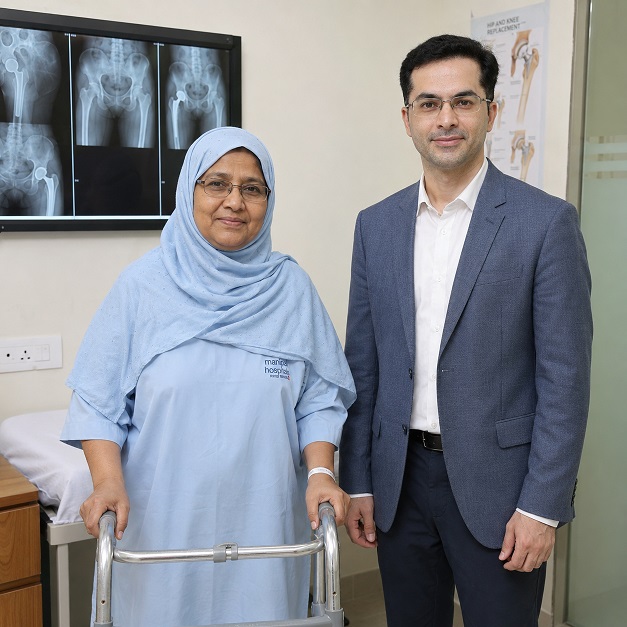
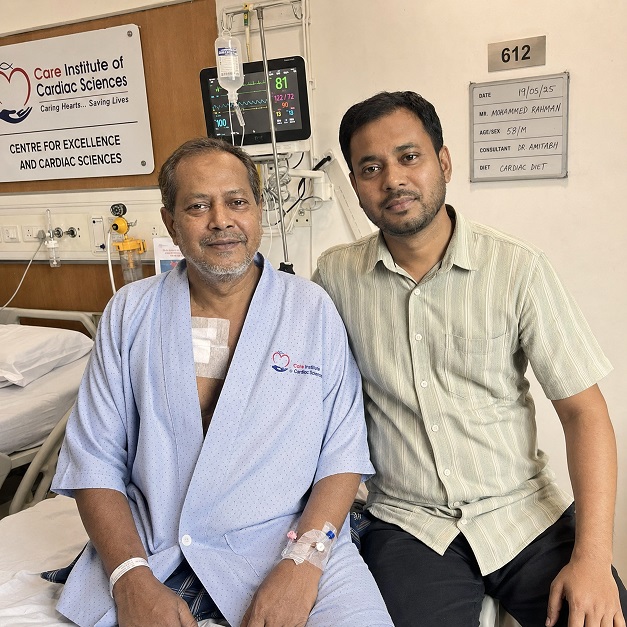
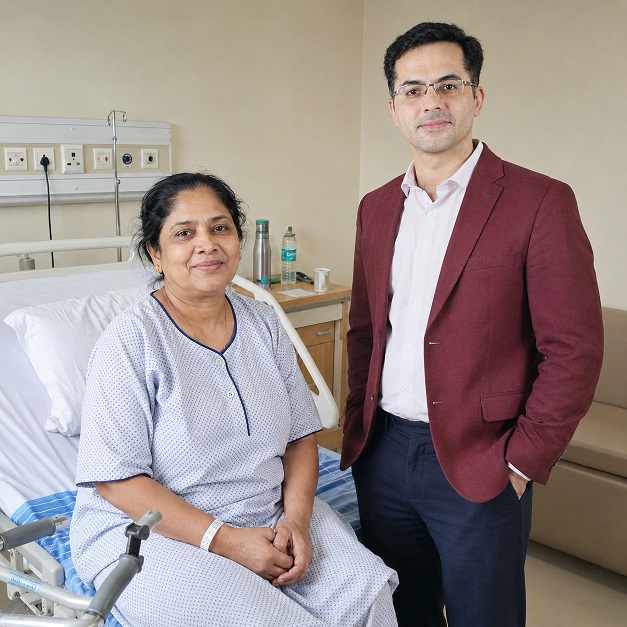
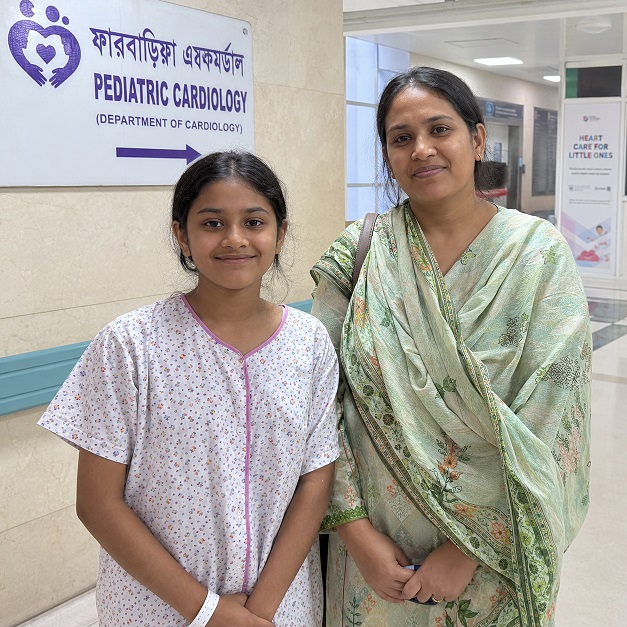
Healing Journeys of Bangladeshi Patients
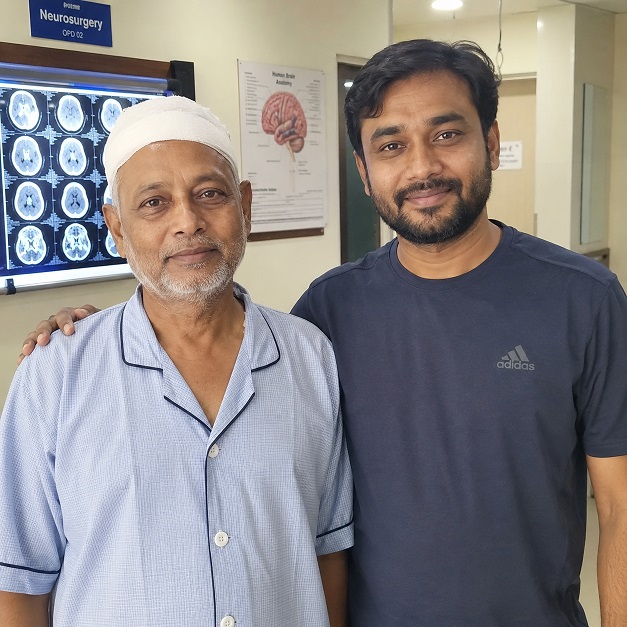
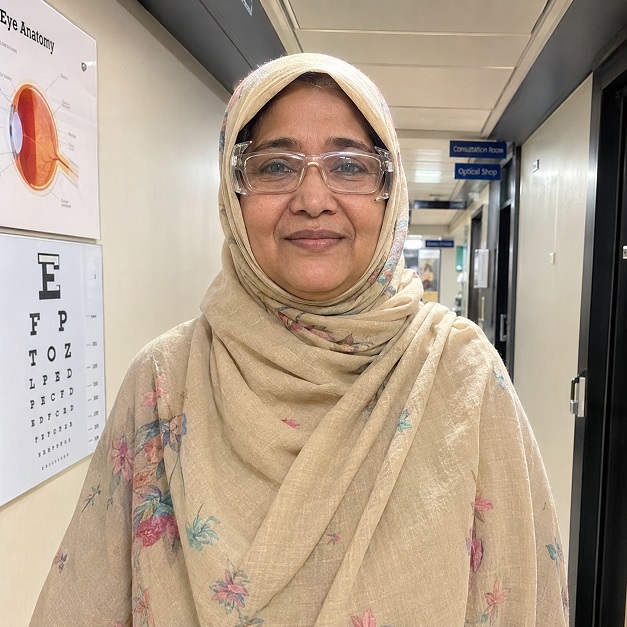
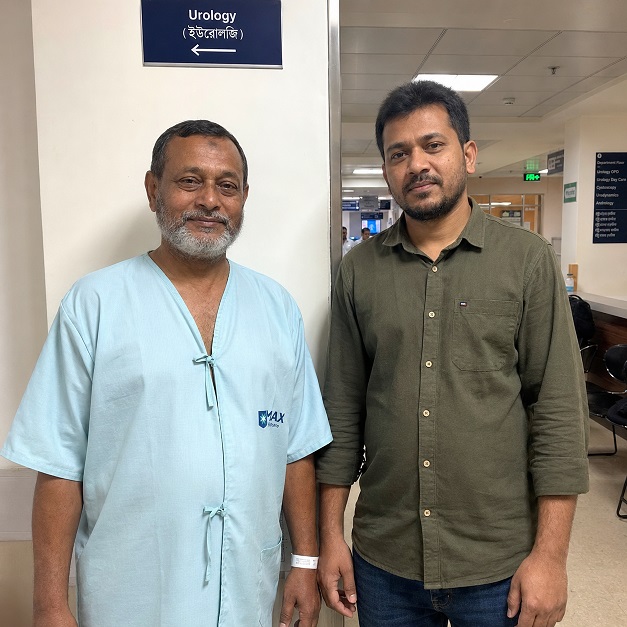
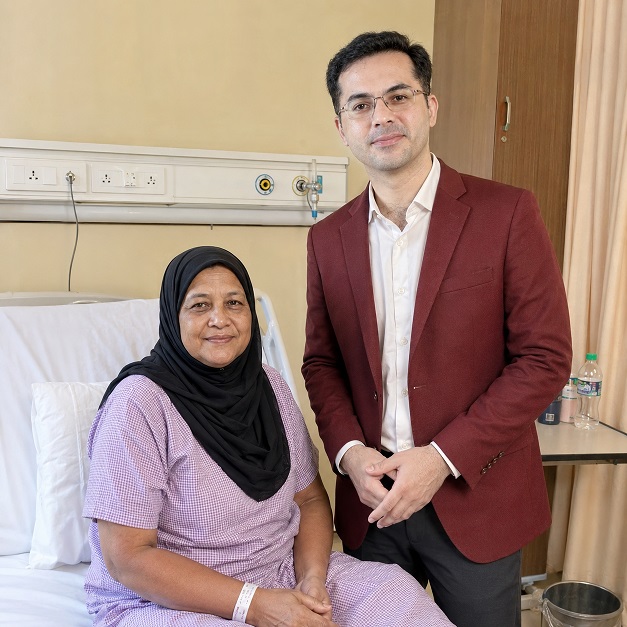
Key Takeaways
- The guide explains that Parkinson's disease involves more than tremor and stiffness. A study of patients attending a tertiary hospital in Dhaka found that 42% had major depressive disorder, highlighting the importance of screening and treating depression and other non-motor symptoms alongside movement problems.
- Parkinson's treatment generally progresses from medication such as levodopa to advanced treatments when motor fluctuations and dyskinesias become difficult to control. Deep brain stimulation (DBS) is a surgical option for carefully selected patients, but it does not cure Parkinson's disease or stop its progression.
- The guide places particular importance on levodopa-responsiveness testing before DBS. Patients who continue to respond meaningfully to levodopa generally have better DBS outcomes, while patients who no longer respond meaningfully may be poor candidates regardless of symptom severity.
- For Bangladeshi patients, DBS planning should also include assessment of depression, anxiety, cognitive symptoms, sleep disturbance and autonomic symptoms. The guide recommends a multidisciplinary movement-disorder team involving neurology, psychiatry and neurosurgery rather than treating the condition as a movement-only problem.
- India is presented as an accessible option for Bangladeshi patients seeking DBS because of experienced specialist teams, dedicated movement-disorder centres, structured DBS candidate selection and established medical-visa arrangements. Kolkata, Chennai, Delhi and Mumbai are highlighted, with Kolkata offering particular geographical and linguistic familiarity for many Bangladeshi families.
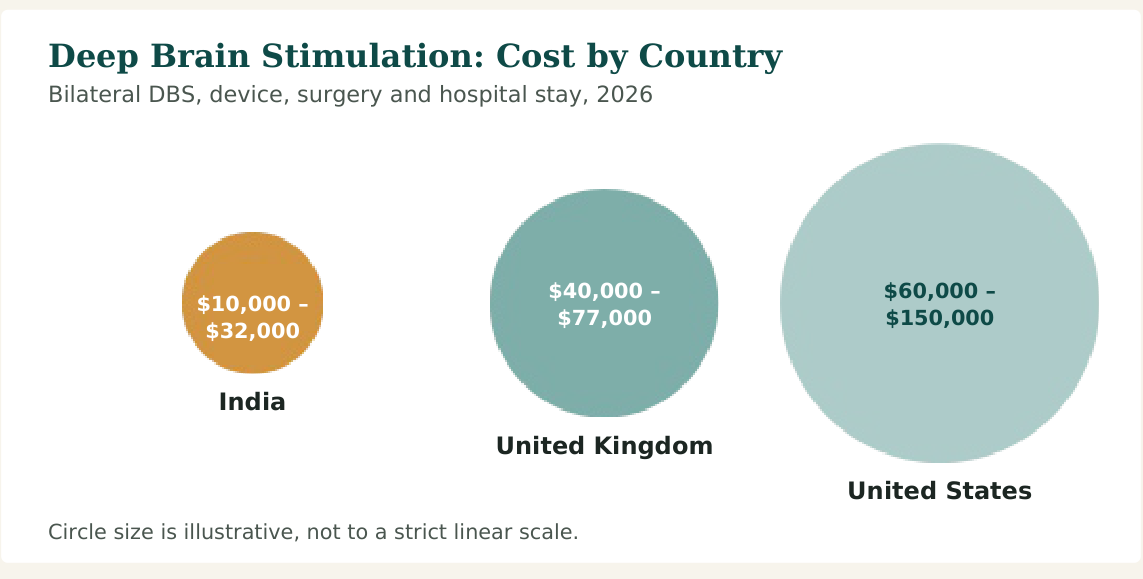
- The cost chart on page 3 gives an indicative 2026 range of US$10,000–32,000 in India for bilateral DBS, including the device, surgery and hospital stay. The comparable ranges shown are US$40,000–77,000 in the UK and US$60,000–150,000 in the US. Rechargeable systems, additional programming and future battery replacement can increase total long-term costs.
- The guide stresses that families should request an itemised DBS quotation specifying the device type, pre-operative workup, levodopa-responsiveness testing and number of post-operative programming visits included. Non-rechargeable battery replacement is a separate future expense, while additional programming may be required several times during the months following surgery.
- The seven-stage journey diagram on page 4 shows teleconsultation, cost confirmation, medical visa and travel, levodopa testing and candidacy assessment, DBS surgery, recovery and initial programming, followed by return to Bangladesh. Patients should generally plan for approximately 2–4 weeks in India, with further programming adjustments continuing for months after returning home.
Quick Facts
- Author
- Dr. Dheeraj Bojwani
- Experience
- 24+ Years
- Treatment
- Parkinson's Treatment and DBS Surgery
- Country
- India
- Patients
- Bangladeshi Patients
- Key Specialist
- Movement Disorder Neurologist / Functional Neurosurgeon
- Main Treatment
- Medication and Deep Brain Stimulation (DBS)
- DBS Target
- Commonly the Subthalamic Nucleus
- Key Candidacy Test
- Levodopa-Responsiveness Testing
- Non-Motor Assessment
- Depression, Anxiety, Cognitive, Sleep and Autonomic Symptoms
- India Cost
- US$10,000–32,000 for bilateral DBS including device, surgery and hospital stay
- UK Cost
- US$40,000–77,000
- US Cost
- US$60,000–150,000
- Typical Time in India
- Approximately 2–4 weeks
- Programming
- Initial programming in India followed by adjustments over subsequent months
- Centre Check
- Confirm dedicated movement-disorder and DBS experience
- Hospital Check
- Verify NABH or JCI accreditation directly
- Cost Check
- Confirm device type, pre-operative testing and programming visits included
- Medical Visa
- Medical visa supported by an invitation from the treating Indian hospital
- Attendant
- Provision for up to three accompanying attendants
- Insurance Check
- Confirm overseas-treatment coverage before travelling
- Follow-Up
- Long-term neurological care and DBS programming in Bangladesh
- Key Warning
- DBS does not cure Parkinson's disease or stop its progression.
In Brief
Parkinson's treatment and DBS surgery in India can provide Bangladeshi patients access to multidisciplinary movement-disorder teams, structured DBS candidate assessment and specialist neurosurgical care. The guide particularly emphasises formal levodopa-responsiveness testing and screening for depression and other non-motor symptoms before surgery, because DBS is a symptom-control treatment rather than a cure. Bilateral DBS is estimated at approximately US$10,000–32,000 in India, with most patients requiring 2–4 weeks in India for pre-operative testing, surgery and initial programming, followed by further DBS adjustments and neurological follow-up in Bangladesh.
What Parkinson's Treatment and DBS Surgery Actually Involve
Parkinson's disease is managed in stages, and surgery is never the first step. Neurologists generally work through:
- Medication (levodopa and related drugs) — the mainstay of treatment, often highly effective for years, though its benefits can become less consistent over time, leading to motor fluctuations and involuntary movements (dyskinesias).
- Deep brain stimulation (DBS) — a surgical option for patients whose motor fluctuations are no longer well controlled by medication alone. Electrodes are implanted in a precise brain target, commonly the subthalamic nucleus, connected to a pulse generator that delivers continuous electrical stimulation.
- Non-motor symptom management — treating depression, anxiety, cognitive changes, sleep disturbance and autonomic symptoms, which affect the large majority of Parkinson's patients and are just as important to quality of life as movement symptoms.
DBS does not cure Parkinson's disease or stop its progression — it can significantly reduce motor fluctuations and medication burden for well-selected patients. Ask a movement disorder specialist to confirm whether a patient still responds well to levodopa, since this is one of the strongest predictors of a good outcome from DBS.
Why the Regional Pattern Matters for Treatment Planning
Because depression in Parkinson's disease appears to be substantially under-recognised in Bangladesh, and because DBS is essentially unavailable domestically, many patients receive treatment focused narrowly on tremor and stiffness while non-motor symptoms go unaddressed. This has a direct planning consequence: a Bangladeshi family should ask specifically whether depression, anxiety, sleep and cognitive symptoms are being screened for and treated, not just movement symptoms, and should understand that DBS — when appropriate — is a genuine option currently accessible mainly through travel abroad.
Why India Specifically for Parkinson's Treatment and DBS?
India has become the most accessible destination for Bangladeshi patients seeking DBS surgery abroad. Peer-reviewed research surveying patients directly at the Indian Visa Application Centre in Chittagong found that the decision consistently comes down to a combination of experienced specialist teams, hospital quality and cost. Several practical advantages reinforce this pattern for Parkinson's care specifically:
- Dedicated movement disorder centres with multidisciplinary teams — neurology, psychiatry and neurosurgery working together — rather than a single specialist managing every aspect of a complex condition.
- Structured DBS candidate selection, including formal levodopa-responsiveness testing to identify which patients are genuinely likely to benefit.
- Established management of non-motor symptoms including depression, alongside movement care, rather than treating tremor in isolation.
- Easy connectivity and an established medical-visa system built specifically around Bangladeshi patients, including a dedicated government portal for hospital invitation letters and provision for up to three accompanying attendants.
Advisor's Note — DR. Dheeraj Bojwani
"In 24 years of guiding families through this decision, the clearest advice I give a Bangladeshi family facing Parkinson's disease is this: ask directly whether depression and other non-motor symptoms have been screened for, not just movement symptoms — this is commonly missed. And if DBS is being considered, ask specifically about levodopa-responsiveness testing, since a patient who no longer responds well to levodopa is unlikely to benefit as much from surgery, regardless of how advanced their symptoms are."
What the Numbers Actually Mean
The headline number matters less than what it includes. A Bangladeshi family comparing quotes should ask each Indian hospital to confirm whether the figure covers the rechargeable or non-rechargeable device, the full pre-operative workup including levodopa-responsiveness testing, and post-operative programming visits, which are typically needed several times in the months after surgery to optimise the settings. Battery replacement, needed periodically for non-rechargeable systems, is a separate future cost worth understanding upfront.
Peer-reviewed research on cross-border medical travel found that international patients spend an average of 3,800 to 7,000 US dollars per visit once transport, accommodation and incidental costs are added to treatment itself — a range worth budgeting for on top of the surgery cost shown above. DBS typically requires 2 to 4 weeks in India, covering pre-operative testing, the surgery itself, and initial post-operative programming before the settings are stable enough for the patient to travel.
A note on insurance
Most Bangladeshi health insurance policies do not cover overseas treatment, and Indian hospitals generally expect self-pay or an advance deposit from international patients. Confirm this before travelling rather than after arrival.
The Typical Journey of a Bangladeshi Patient Planning DBS Surgery in India
Most Bangladeshi patients follow a broadly similar sequence, whether they travel independently or through a medical-facilitation service. Knowing the shape of it in advance makes each step easier to plan for.
The Typical Journey of a Bangladeshi Patient — DBS Surgery
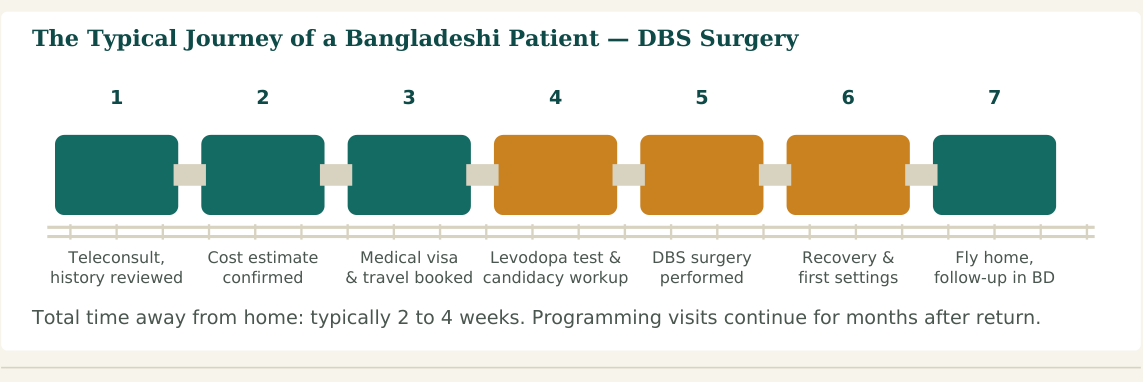
Total time away from home: typically 2 to 4 weeks. Programming visits continue for months after return.
Factors a Bangladeshi Family Should Weigh Before DBS Surgery in India
Beyond the surgery itself, the decisions that most affect a family's experience are logistical and financial rather than purely medical. Consider each of the following before confirming a hospital:
- Genuine candidacy confirmed through levodopa-responsiveness testing, not assumed from symptom severity alone.
- Screening and treatment for non-motor symptoms, including depression, as part of the overall care plan, not an afterthought.
- Which city, not just which hospital. Kolkata is closest and most familiar linguistically; Chennai, Delhi and Mumbai often have a wider choice of dedicated movement disorder centres.
- Genuine hospital accreditation. Ask whether the hospital holds NABH or JCI accreditation and verify it directly through the accreditation board's own directory rather than taking a brochure's word for it.
- An itemised, written estimate covering the device type, pre-operative workup, and the number of post-operative programming visits included.
- Medical visa documentation. A formal invitation letter from the treating hospital, submitted through India's official medical-visa channel, is required at the Indian visa centre in Dhaka, Chittagong, Sylhet or Rajshahi.
- A travel companion. Indian hospitals generally expect at least one attendant to stay with the patient; factor their stay, food and local transport into the budget.
- A written long-term programming and follow-up plan for after you return, since DBS settings are adjusted over months, and a coordinated relationship with a neurologist in Bangladesh matters for this ongoing care.
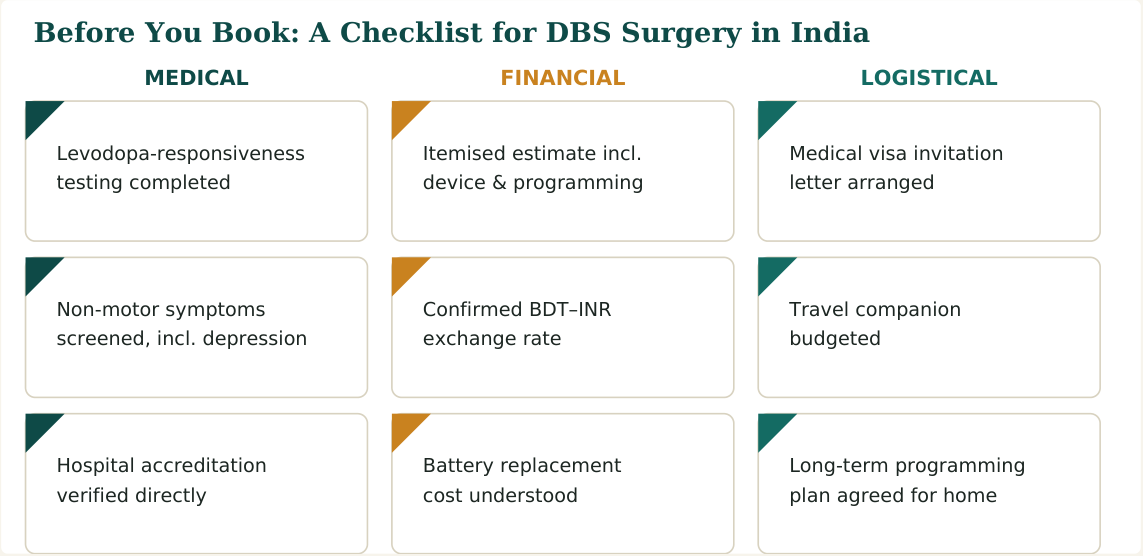
Before You Book: A Checklist for DBS Surgery in India
About this guide. This article is intended for general information and planning purposes only and does not replace a consultation with a qualified neurologist or movement disorder specialist. Costs are approximate, change over time, and vary by hospital, city, device type and individual case complexity. Always request a current, written, itemised estimate directly from the hospital before travelling.
A Closing Words
For well-selected Bangladeshi patients, India offers access to DBS surgery and multidisciplinary Parkinson's care that is not consistently available at home, at a fraction of the cost charged in the UK or US. The value, however, depends entirely on the specifics: genuine candidacy confirmed through proper testing rather than assumed, comprehensive attention to non-motor symptoms like depression alongside movement care, a transparent itemised estimate, and a realistic plan for the months of programming adjustments that follow every DBS surgery. Families who ask detailed questions before booking, rather than after arriving, consistently report a smoother experience — medically and financially.
Sources
- 🌐 National Medical Commission of India — statutory body for verifying a doctor's registration and specialist qualifications. · nmc.org.in
- 🌐 National Accreditation Board for Hospitals & Healthcare Providers (NABH) — India's principal healthcare accreditation authority, under the Quality Council of India. · nabh.co
- 🌐 Risk Factors of Major Depressive Disorder in Parkinson's Disease. Peer-reviewed study by Shaheed Suhrawardy Medical College and Hospital, Dhaka, Bangladesh Medical Research Council Bulletin, quantifying depression prevalence among Bangladeshi Parkinson's patients. · banglajol.info/index.php/BMRCB/article/download/36799/24809
- 🌐 Determinants of Bangladeshi patients' decision-making process and satisfaction toward medical tourism in India. Peer-reviewed study, hosted via NIH/NCBI. · pmc.ncbi.nlm.nih.gov/articles/PMC10185743
- 🌐 Government of India — Medical Value Travel / e-Medical Visa Portal, Bureau of Immigration, Ministry of Home Affairs — official channel for hospital invitation letters and medical-visa provisions for Bangladeshi nationals. · indianfrro.gov.in/frro/medicalvaluetravel
Frequently Asked Questions by Bangladeshi Patients about Parkinson's Treatment and DBS Surgery in India
Can Bangladeshi patients receive DBS surgery for Parkinson's disease in India?
Yes. The guide presents India as an accessible option for Bangladeshi patients seeking DBS through dedicated movement-disorder and neurosurgical teams.
How does a Bangladeshi patient know if DBS is suitable?
DBS should follow a structured candidacy assessment, particularly formal levodopa-responsiveness testing. Symptom severity alone should not be used to decide whether surgery is appropriate.
Why is levodopa responsiveness important before DBS surgery?
Patients who continue to respond meaningfully to levodopa generally have better DBS outcomes. The guide states that patients who no longer respond meaningfully to levodopa are generally poor candidates regardless of how advanced their symptoms are.
How much does DBS surgery cost in India for Bangladeshi patients?
The page 3 cost chart gives an indicative range of US$10,000–32,000 for bilateral DBS, including the device, surgery and hospital stay. Device type and additional programming can affect the overall cost.
How long should a Bangladeshi family stay in India for DBS surgery?
The guide recommends planning for approximately 2–4 weeks in India, covering pre-operative testing, surgery and initial programming before the settings are stable enough for travel.
Should depression be assessed before DBS for a Bangladeshi patient?
Yes. The guide highlights a 42% major-depression rate in the cited Dhaka study and recommends screening and treating depression and other non-motor symptoms as part of Parkinson's care.
What should Bangladeshi patients ask about the DBS device?
Families should ask whether the quotation includes a rechargeable or non-rechargeable device, programming visits and other device-related costs. Battery replacement for non-rechargeable systems is a separate future expense.
Which Indian cities are highlighted for Bangladeshi DBS patients?
The guide highlights Kolkata, Chennai, Delhi and Mumbai. Kolkata may be particularly convenient for many Bangladeshi families because of geographical proximity and linguistic familiarity.
Can DBS programming continue after the Bangladeshi patient returns home?
Yes, but programming adjustments may continue for months after surgery. The guide recommends obtaining a written long-term programming plan and coordinating routine neurological care with a specialist in Bangladesh.
What should a Bangladeshi family confirm before booking DBS surgery in India?
Confirm levodopa responsiveness, non-motor symptom assessment, hospital accreditation, device type, itemised costs, programming arrangements and the long-term follow-up plan before travelling.
Page Summary
The six-page guide explains Parkinson's treatment and DBS surgery in India for Bangladeshi patients, focusing on medication management, DBS candidacy, levodopa responsiveness, non-motor symptoms and multidisciplinary movement-disorder care. It emphasises formal candidate testing, depression screening, transparent device and programming costs, hospital accreditation and long-term DBS adjustments after returning to Bangladesh. The page 3 cost chart places bilateral DBS at US$10,000–32,000 in India, while the page 4 journey diagram presents a seven-stage pathway requiring approximately 2–4 weeks in India, followed by months of programming adjustments and follow-up.
Citation Block
| Field | Information |
|---|---|
| Article / Topic | Parkinson's Treatment and DBS Surgery in India for Patients from Bangladesh |
| Treatment | Parkinson's treatment and Deep Brain Stimulation |
| Country / Patients | India / Bangladeshi Patients |
| Key Specialists | Movement Disorder Neurologist and Functional Neurosurgeon |
| Primary Advanced Treatment | Bilateral Deep Brain Stimulation (DBS) |
| Common DBS Target | Subthalamic Nucleus |
| Candidacy Assessment | Formal levodopa-responsiveness testing |
| Non-Motor Assessment | Depression, anxiety, cognitive symptoms, sleep disturbance and autonomic symptoms |
| India Cost | US$10,000–32,000 for bilateral DBS including device, surgery and hospital stay |
| UK Cost | US$40,000–77,000 |
| US Cost | US$60,000–150,000 |
| Typical Time in India | Approximately 2–4 weeks |
| Programming | Initial settings in India followed by adjustments over subsequent months |
| Centre Requirement | Dedicated movement-disorder centre with structured DBS candidate selection |
| Team Requirement | Neurology, psychiatry and neurosurgery coordination |
| Cost Check | Confirm device type, pre-operative workup and post-operative programming visits |
| Future Cost | Battery replacement for non-rechargeable systems is a separate long-term expense |
| Hospital Check | Verify NABH or JCI accreditation directly |
| City Options | Kolkata, Chennai, Delhi and Mumbai |
| Medical Visa | Medical visa supported by an invitation from the treating Indian hospital |
| Attendant | Provision for up to three accompanying attendants |
| Follow-Up | Ongoing DBS programming and neurological care in Bangladesh |
| Key Selection Criteria | Genuine DBS experience, levodopa testing, non-motor symptom management, accreditation and transparent costing |
| Important Warning | DBS is not a cure and does not stop Parkinson's disease from progressing |
| Travel Planning | Budget separately for transport, accommodation and incidental expenses |
| Long-Term Planning | Obtain a written programming and follow-up plan before returning to Bangladesh |
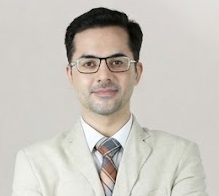

Our Mission Statement
Our mission is to place patients at the centre of every healthcare decision by providing trustworthy, evidence-based, and unbiased medical information. We believe that informed patients make better decisions. Backed by personalised guidance from our experienced advisory team, we help patients understand their treatment options, compare them objectively, and confidently choose the path that best suits their medical needs and personal circumstances.
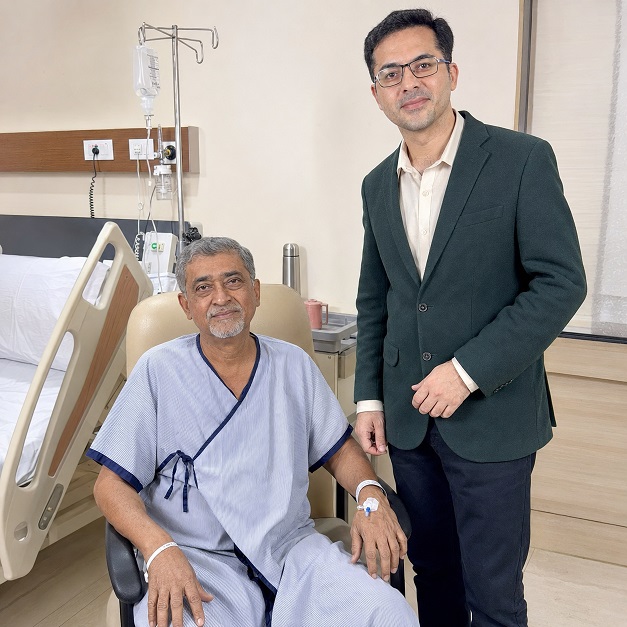
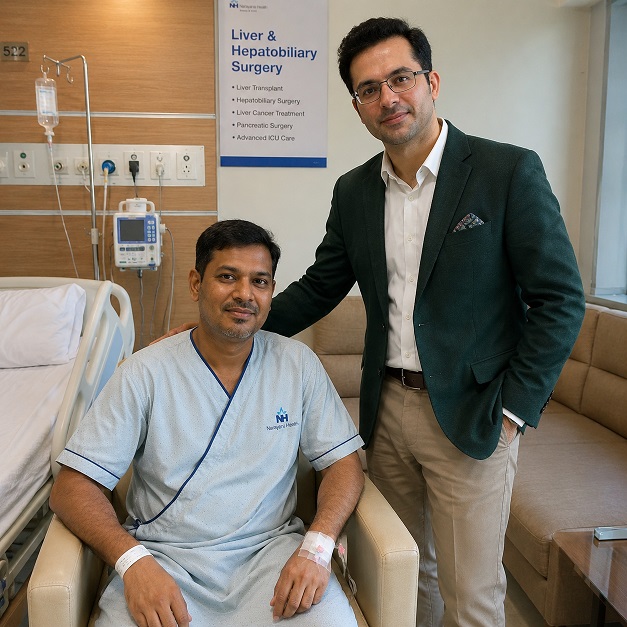
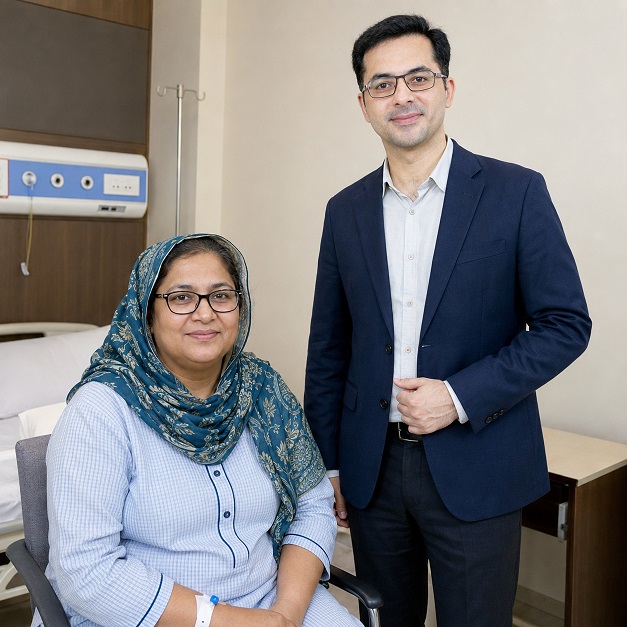
Patient Testimonials from Bangladesh
Ready to Take the First Step?
Share your medical reports with our healthcare managers today and receive a FREE CONSULTATION, a personalized treatment plan and complete support from your arrival to your recovery.
Get Your Free ConsultationFrom Bangladesh to India: Your Complete Patient Guide
- Complex Orthopaedic and Joint Revision Surgery in India for Bangladeshi Patients
- Heart Failure Treatment and Surgery in India for Bangladeshi Patients
- Joint Arthroscopy and Sports Medicine in India for Bangladeshi Patients
- Leukemia, Lymphoma and Blood Cancer Treatment in India for Bangladeshi Patients
- Kidney Transplant in India for Bangladeshi Patients
- Liver Transplant in India for Bangladeshi Patients
- Hip Surgery in India for Bangladeshi Patients
- Knee Surgery in India for Bangladeshi Patients
- Spine Surgery in India for Bangladeshi Patients
- Shoulder Surgery in India for Bangladeshi Patients
- IVF and Fertility Treatment in India for Bangladeshi Patients
- Robotic Cancer Surgery in India for Bangladeshi Patients
- Brain Tumor Treatment in India for Bangladeshi Patients
- Neurosurgery in India for Bangladeshi Patients
- Prostate Cancer Treatment and Surgery in India for Bangladeshi Patients
- Cardiac Surgery in India for Bangladeshi Patients
- Dental Implants and Smile Makeover in India for Bangladeshi Patients
- Weight Loss and Bariatric Surgery in India for Bangladeshi Patients