

Cervical and Lumbar Disc Replacement Surgery in India: A Complete Guide for Patients from Bangladesh
What a Bangladeshi patient and their family should know before choosing a hospital, city and surgeon across the border — costs, process and the questions worth asking before you book a ticket.
Bangladesh's first nationally representative survey of low back pain found a weighted prevalence of 18.5 percent among adults, higher still in women. Occupational studies across the country's garment factories, industrial sites and offices consistently find even higher rates among people whose work involves repetitive bending, prolonged sitting or manual labour. For many of these patients, the disc problem behind their pain is diagnosed in their thirties or forties — years, often decades, before they plan to stop working — which makes the choice of surgical technique genuinely consequential, not just for pain relief today but for how their spine holds up across a long working life ahead. This guide sets out what cervical and lumbar disc replacement surgery in India actually involves, what it realistically costs compared with the UK and US, and the practical decisions that separate a smooth trip from a stressful one.
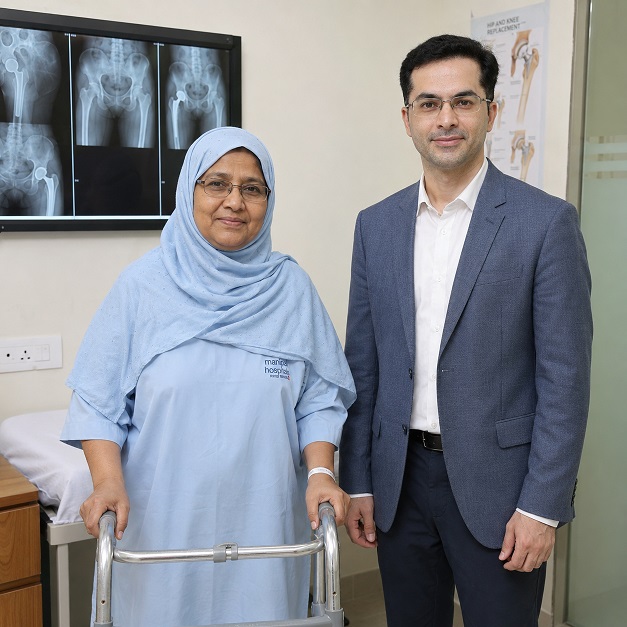
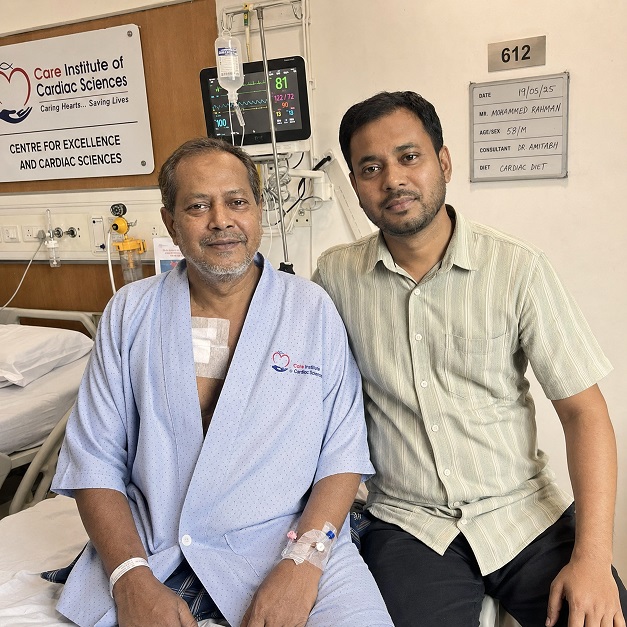
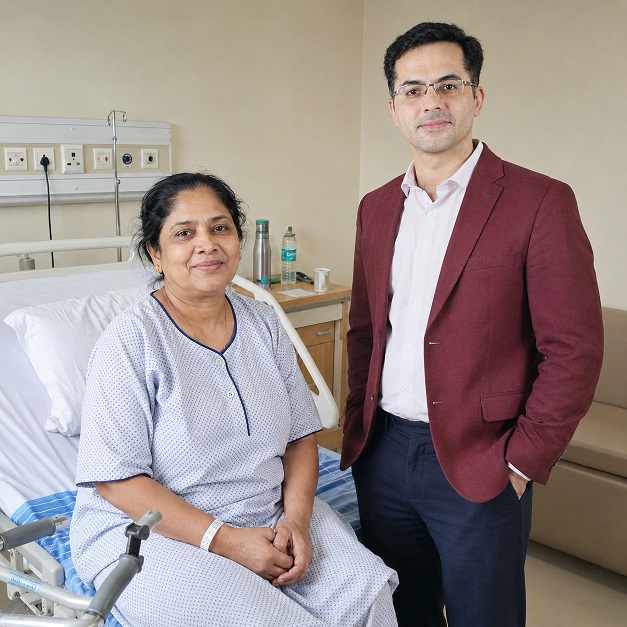
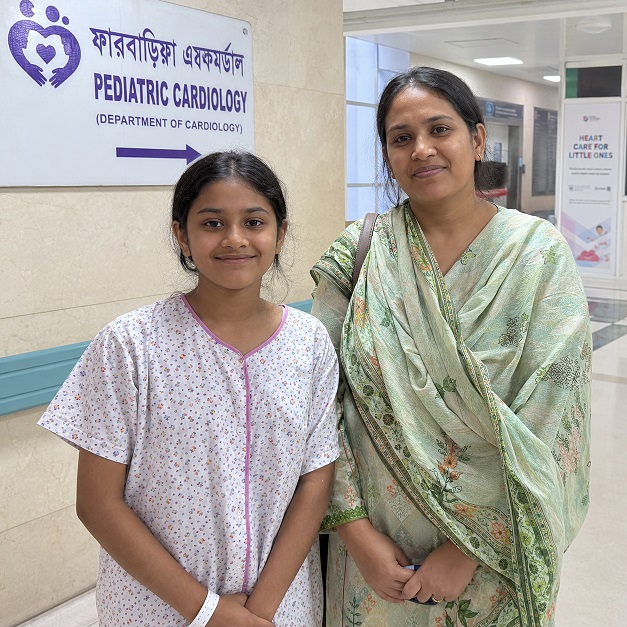
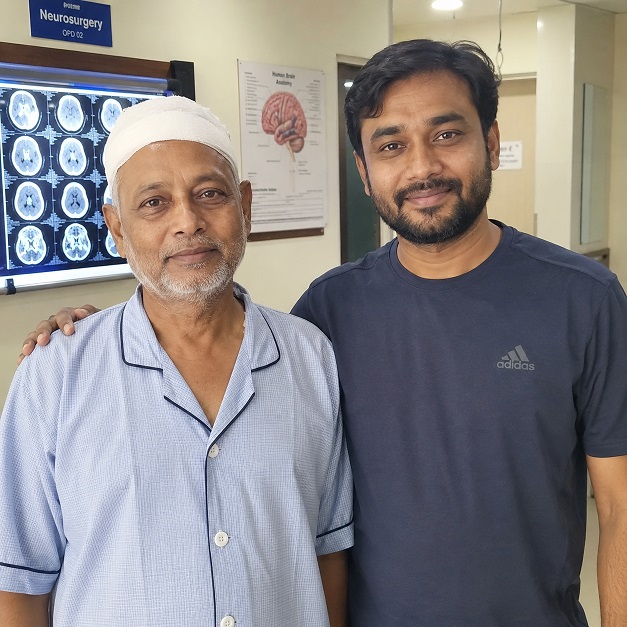
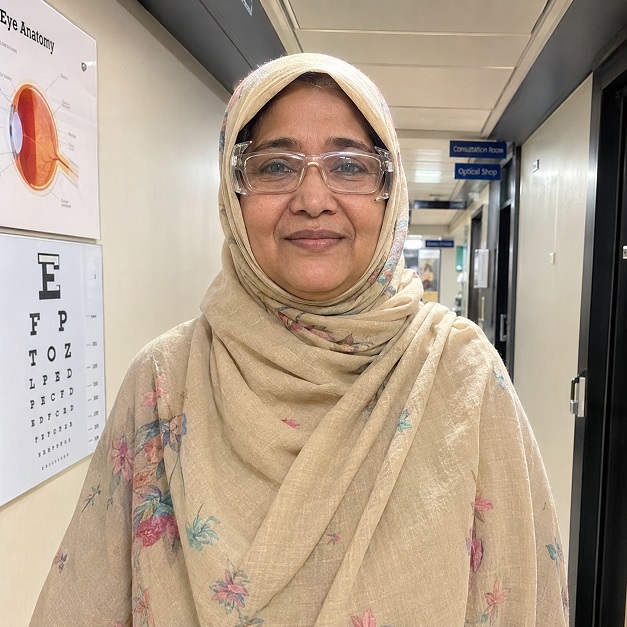
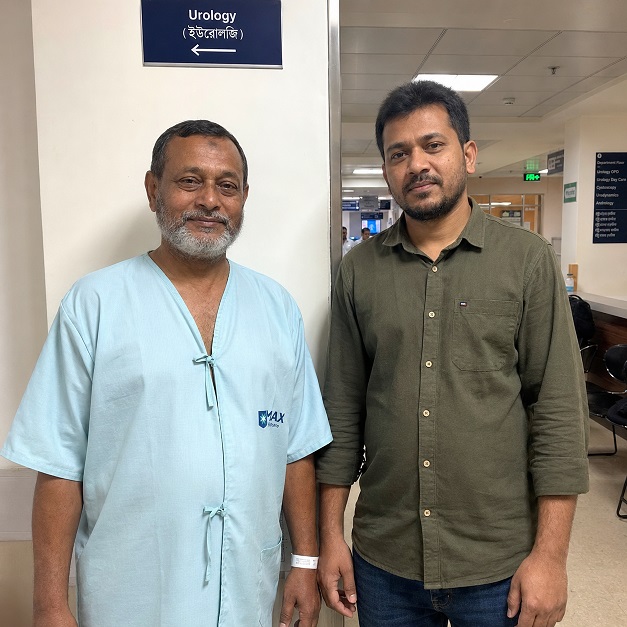
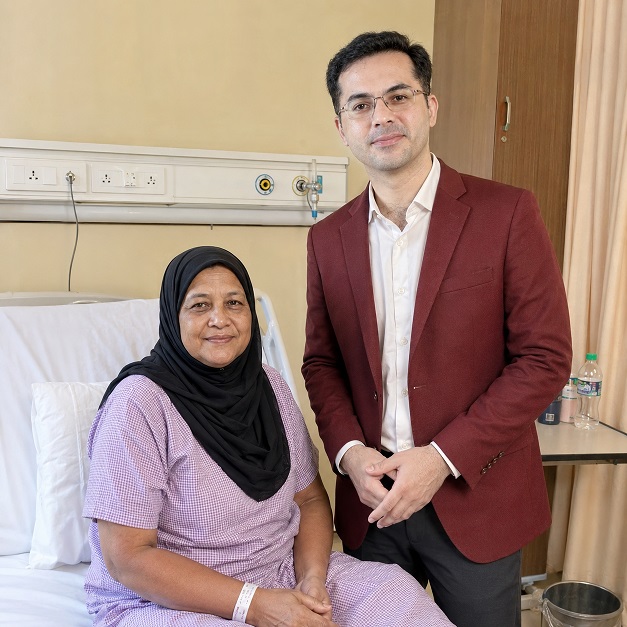
Healing Journeys of Bangladeshi Patients
Key Takeaways
- Bangladesh has a significant burden of low back pain. The guide cites the country's first nationally representative survey, which found a weighted prevalence of 18.5% among adults, with higher prevalence among women. Occupational studies also report higher rates among people involved in repetitive bending, prolonged sitting and manual labour.
- Artificial disc replacement is designed to preserve movement at the treated spinal level, unlike fusion, which permanently joins two vertebrae and eliminates motion at that segment. Cervical disc replacement is described as the more established procedure, while lumbar replacement is used more selectively and may require an abdominal approach involving vascular-surgical collaboration.
- Not every patient with a damaged or degenerated disc is suitable for replacement. The guide stresses that candidacy depends on facet-joint health, spinal alignment, number of levels involved and the extent of disease. Significant instability, deformity or advanced facet-joint arthritis may make fusion the more appropriate option.
- For working-age Bangladeshi patients, especially those involved in manual or repetitive occupations, the choice between motion preservation and fusion can have long-term implications. The guide recommends asking the surgeon to explain how occupation, expected activity level and future spinal demands influenced the treatment recommendation.
- India is presented as an option because dedicated spine centres in Kolkata, Chennai, Delhi and Mumbai may offer experience with multiple artificial disc systems, structured patient-selection protocols and multidisciplinary teams. For lumbar disc replacement, collaboration between orthopaedic/spine and vascular surgeons may be particularly important.
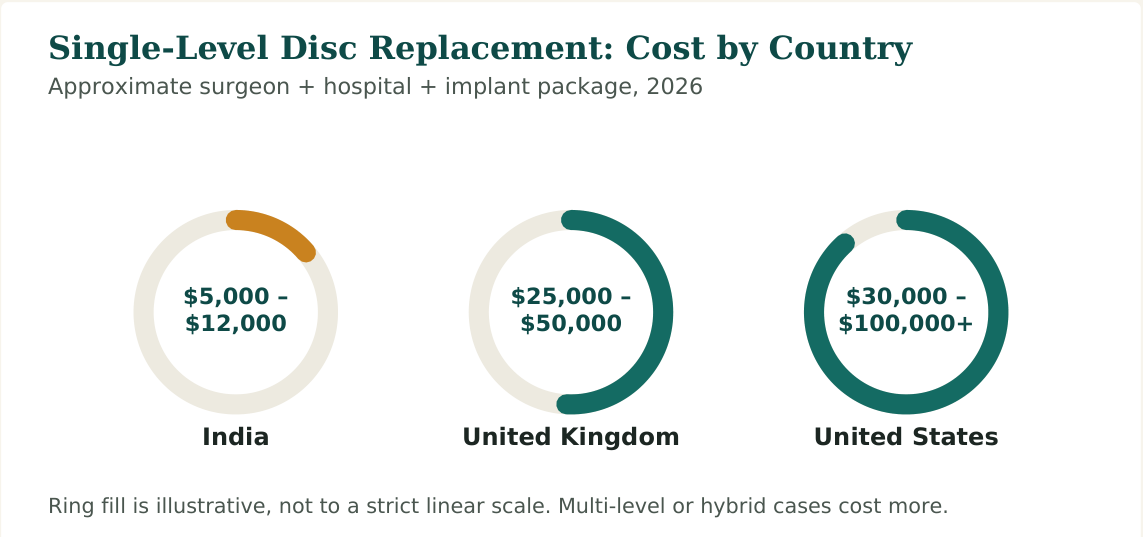
- The cost chart on page 3 gives an indicative 2026 range of US$5,000–12,000 in India for a single-level cervical or lumbar disc replacement, compared with US$25,000–50,000 in the UK and US$30,000–100,000+ in the US. Multi-level, robotic-assisted and hybrid fusion-plus-replacement procedures can cost more.
- The guide emphasises that the headline price should not be considered sufficient. Bangladeshi patients should confirm the exact implant brand and type, number of levels, whether vascular-surgeon involvement is included for lumbar surgery and whether a hybrid procedure is being proposed. It also cites additional international travel expenses of approximately US$3,800–7,000 per visit.
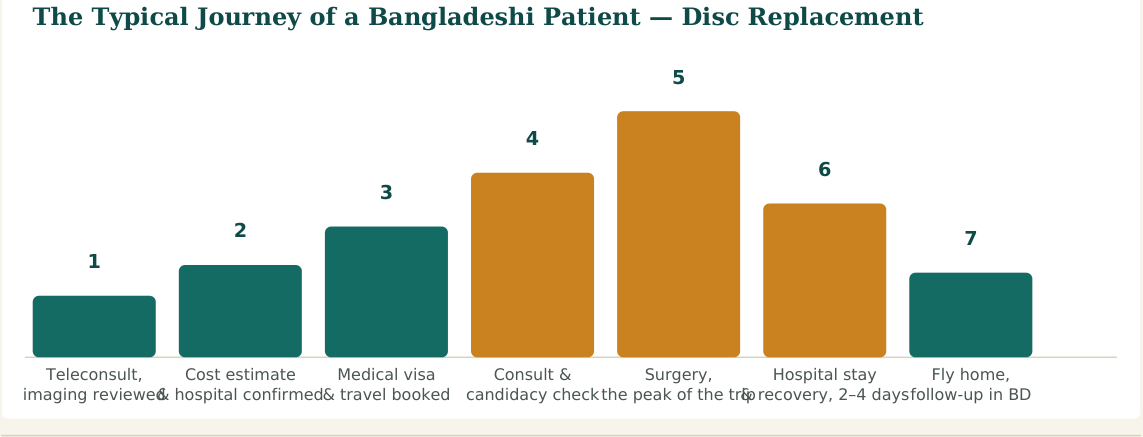
- The seven-stage journey diagram on page 4 covers teleconsultation and imaging review, cost and hospital confirmation, medical visa and travel, in-person candidacy assessment, surgery, hospital recovery and return to Bangladesh for follow-up. A standard single-level case generally requires around two to three weeks away from home, with approximately 2–4 days of hospital stay shown in the journey diagram.
Quick Facts
- Author
- Dr. Dheeraj Bojwani
- Experience
- 24+ Years
- Treatment
- Cervical and Lumbar Disc Replacement Surgery
- Country
- India
- Patients
- Bangladeshi Patients
- Key Specialist
- Spine Surgeon / Orthopaedic Spine Specialist
- Main Procedures
- Cervical and Lumbar Artificial Disc Replacement
- Treatment Goal
- Preserve natural movement at the treated spinal level
- Alternative
- Spinal Fusion where clinically more appropriate
- Candidacy Factors
- Facet-joint health, spinal alignment, affected levels and extent of disease
- India Cost
- US$5,000–12,000 for single-level disc replacement
- UK Cost
- US$25,000–50,000
- US Cost
- US$30,000–100,000+
- Typical Time Away
- Approximately 2–3 weeks
- Hospital Recovery
- Approximately 2–4 days shown in the treatment journey
- Lumbar Requirement
- Vascular-surgical collaboration may be required for the abdominal approach
- Advanced Cases
- Multi-level, robotic-assisted and hybrid procedures may cost more
- Surgeon Check
- Ask about experience with the specific artificial disc device proposed
- Hospital Check
- Verify NABH or JCI accreditation directly
- Medical Visa
- Indian medical visa with hospital invitation
- Travel Budget
- Additional transport, accommodation and incidental expenses should be planned
- Return-to-Work
- Obtain written activity and return-to-work guidance based on occupation
- Follow-Up
- Written recovery plan for continued care in Bangladesh
- Key Warning
- Do not assume disc replacement is preferable to fusion without an imaging-based assessment of individual anatomy.
In Brief
Cervical and lumbar disc replacement surgery in India can provide Bangladeshi patients access to dedicated spine centres experienced with multiple artificial disc systems and motion-preservation procedures. The guide stresses that replacement should only be considered after imaging-based assessment of facet-joint health, spinal alignment and the number of affected levels, with fusion remaining appropriate for patients with instability, deformity or advanced facet arthritis. A single-level disc replacement is estimated at approximately US$5,000–12,000 in India, with a standard journey generally requiring two to three weeks away from Bangladesh, followed by a written recovery and activity plan for continued follow-up at home.
What Disc Replacement Surgery Actually Involves
Artificial disc replacement treats a damaged or degenerated spinal disc by removing it and inserting a device designed to preserve natural movement at that level — a fundamentally different goal from spinal fusion, which permanently joins two vertebrae together, eliminating motion at that segment entirely. The distinction matters for long-term outcomes:
- Cervical disc replacement (neck) — the more established of the two, with a strong long-term track record, used for herniated or degenerated discs causing neck and arm pain.
- Lumbar disc replacement (lower back) — used more selectively, involves a larger implant and typically requires a different surgical approach through the abdomen, often performed alongside a vascular surgeon.
- Fusion, by contrast, remains the right choice for many patients, particularly where there is spinal instability, significant deformity, or advanced facet joint arthritis — but it places additional mechanical stress on the discs at neighbouring levels, a phenomenon called adjacent segment degeneration, which can itself become symptomatic years later.
- Candidacy for disc replacement depends on the specific level and extent of disease, the health of the facet joints, and overall spinal alignment — not every patient with a damaged disc is a suitable candidate.
Ask a spine surgeon to explain, based on your imaging, whether you are a genuine candidate for disc replacement or whether fusion is medically the better option for your specific anatomy — and to walk through the reasoning, not just state a preference.
Why the Regional Pattern Matters for Treatment Planning
Because a large share of Bangladeshi patients with disc-related neck and back pain are of working age, often in physically demanding occupations, the choice between motion-preserving disc replacement and fusion carries different stakes than it might for an older, less active patient nearing retirement. A younger patient facing several more decades of manual or repetitive work has more to gain from preserving natural spinal motion and reducing the risk of adjacent segment problems developing later — and more to lose if the wrong technique is chosen without a proper discussion of the trade-offs. This has a direct planning consequence: a Bangladeshi patient should ask specifically how their occupation and expected activity level factored into the surgeon's recommendation.
Why India Specifically for Disc Replacement Surgery?
India has become a common destination for Bangladeshi patients seeking spine surgery abroad. Peer-reviewed research surveying patients directly at the Indian Visa Application Centre in Chittagong found that the decision consistently comes down to a combination of experienced specialist surgeons, hospital quality and cost. Several practical advantages reinforce this pattern for disc replacement specifically:
- Dedicated spine centres in Kolkata, Chennai, Delhi and Mumbai with experience across multiple artificial disc systems, rather than a single device a smaller centre happens to stock.
- Careful patient-selection protocols, using imaging to confirm genuine candidacy for disc replacement rather than defaulting to whichever procedure a surgeon is most comfortable performing.
- Combined orthopaedic and vascular surgical teams for lumbar disc replacement, where the abdominal approach requires this specific collaboration.
- Easy connectivity and an established medical-visa system built specifically around Bangladeshi patients, including a dedicated government portal for hospital invitation letters and provision for up to three accompanying attendants.
Advisor's Note — DR. Dheeraj Bojwani
"In 24 years of guiding patients through this decision, the clearest advice I give a Bangladeshi patient considering disc replacement is this: ask directly whether your specific anatomy — the health of your facet joints, your spinal alignment, the number of levels involved — genuinely makes you a candidate for motion preservation, or whether fusion is the more honest recommendation for your case. Also ask about the surgeon's experience with the specific device being proposed, since these implants are newer than fusion hardware and outcomes vary by device and by surgeon."
What the Numbers Actually Mean
The headline number matters less than what it includes. A Bangladeshi patient comparing quotes should ask each Indian hospital to confirm the specific implant brand and type, whether the quote covers a single level or more, and whether a vascular surgeon's involvement is included for a lumbar procedure. A "hybrid" approach — combining disc replacement at one level with fusion at another — is priced differently again, and should be clearly itemised if proposed.
Peer-reviewed research on cross-border medical travel found that international patients spend an average of 3,800 to 7,000 US dollars per visit once transport, accommodation and incidental costs are added to treatment itself — a range worth budgeting for on top of the surgery cost shown above. A standard single-level disc replacement typically requires 10 to 15 days in India for consultation, surgery and initial recovery.
A note on insurance
Most Bangladeshi health insurance policies do not cover overseas treatment, and Indian hospitals generally expect self-pay or an advance deposit from international patients. Confirm this before travelling rather than after arrival.
The Typical Journey of a Bangladeshi Patient Planning Disc Replacement in India
Most Bangladeshi patients follow a broadly similar sequence, whether they travel independently or through a medical-facilitation service. Knowing the shape of it in advance makes each step easier to plan for.
Factors a Bangladeshi Patient Should Weigh Before Disc Replacement Surgery in India
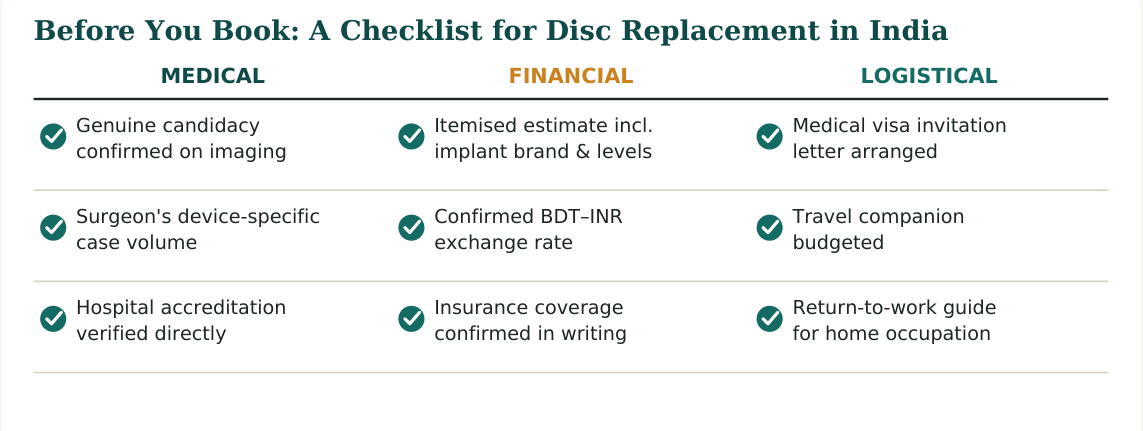
Beyond the surgery itself, the decisions that most affect a patient's experience are logistical and financial rather than purely medical. Consider each of the following before confirming a hospital:
- Confirm genuine candidacy for disc replacement based on your specific imaging — facet joint health, alignment and number of levels involved all matter, and a good surgeon will explain this clearly.
- Which city, not just which hospital. Kolkata is closest and most familiar linguistically; Chennai, Delhi and Mumbai often have a wider choice of dedicated spine centres.
- The surgeon's experience with the specific device being proposed — not general spine surgery volume alone. Ask how many procedures with that exact implant they perform each year.
- Genuine hospital accreditation. Ask whether the hospital holds NABH or JCI accreditation and verify it directly through the accreditation board's own directory rather than taking a brochure's word for it.
- An itemised, written estimate covering the implant brand, number of levels, and whether a hybrid approach with fusion is part of the plan.
- Medical visa documentation. A formal invitation letter from the treating hospital, submitted through India's official medical-visa channel, is required at the Indian visa centre in Dhaka, Chittagong, Sylhet or Rajshahi.
- A travel companion. Indian hospitals generally expect at least one attendant to stay with the patient; factor their stay, food and local transport into the budget.
- A written return-to-work and activity guide for after you return, especially if your occupation involves manual labour, repetitive bending, or prolonged sitting — ask specifically when and how to resume it safely.
Before You Book: A Checklist for Disc Replacement in India
About this guide. This article is intended for general information and planning purposes only and does not replace a consultation with a qualified spine surgeon. Costs are approximate, change over time, and vary by hospital, city, implant and individual case complexity. Always request a current, written, itemised estimate directly from the hospital before travelling.
A Closing Words
For most Bangladeshi patients, India offers a genuine value proposition for disc replacement surgery: dedicated spine centres with experience across multiple implant systems and careful patient-selection protocols, at a fraction of the cost charged in the UK or US. The value, however, depends entirely on the specifics: an honest, imaging-based assessment of whether disc replacement or fusion genuinely fits your anatomy, a surgeon with real experience in the specific device proposed, a transparent itemised estimate, and a realistic return-to-work plan that accounts for the physical demands of your occupation. Patients who ask detailed questions before booking, rather than after arriving, consistently report a smoother experience — medically and financially.
Sources
- 🌐 National Medical Commission of India — statutory body for verifying a doctor's registration and specialist qualifications. · nmc.org.in
- 🌐 National Accreditation Board for Hospitals & Healthcare Providers (NABH) — India's principal healthcare accreditation authority, under the Quality Council of India. · nabh.co
- 🌐 Low back pain in the Bangladeshi adult population: a cross-sectional national survey. Peer-reviewed nationally representative study, hosted via NIH/NCBI, on low back pain prevalence in Bangladesh. · ncbi.nlm.nih.gov/pmc/articles/PMC9462101
- 🌐 Determinants of Bangladeshi patients' decision-making process and satisfaction toward medical tourism in India. Peer-reviewed study, hosted via NIH/NCBI. · pmc.ncbi.nlm.nih.gov/articles/PMC10185743
- 🌐 Government of India — Medical Value Travel / e-Medical Visa Portal, Bureau of Immigration, Ministry of Home Affairs — official channel for hospital invitation letters and medical-visa provisions for Bangladeshi nationals. · indianfrro.gov.in/frro/medicalvaluetravel
Frequently Asked Questions by Bangladeshi Patients about Cervical and Lumbar Disc Replacement Surgery in India
Is disc replacement better than spinal fusion for Bangladeshi patients?
Neither procedure is automatically better for everyone. The guide states that the decision should be based on facet-joint health, spinal alignment, affected levels and overall anatomy, with fusion remaining appropriate for many patients.
Am I a candidate for cervical or lumbar disc replacement in India?
Candidacy must be determined from your imaging and clinical assessment. Patients should specifically ask about facet-joint condition, spinal alignment and the number of levels involved before travelling from Bangladesh.
Why might fusion be recommended instead of disc replacement for a Bangladeshi patient?
The guide identifies spinal instability, significant deformity and advanced facet-joint arthritis as situations where fusion may be medically more appropriate than artificial disc replacement.
How much does single-level disc replacement cost in India for Bangladeshi patients?
The page 3 cost chart gives an indicative range of US$5,000–12,000 for a single-level cervical or lumbar disc replacement in India. Multi-level and hybrid procedures can cost more.
What should Bangladeshi patients ask about the artificial disc being used?
Ask for the exact implant brand and type and how many procedures the surgeon has performed using that specific device. The guide stresses device-specific experience rather than relying only on overall spine surgery volume.
Why is lumbar disc replacement different from cervical disc replacement?
Lumbar replacement is described as more selective and typically uses a different surgical approach through the abdomen, which may require collaboration with a vascular surgeon. Cervical disc replacement is the more established of the two procedures.
How long does a Bangladeshi patient need to stay in India for disc replacement?
The guide indicates that a standard single-level case generally requires two to three weeks away from home, with approximately 2–4 days of hospital recovery shown in the journey diagram.
Can Bangladeshi patients return to manual work after disc replacement in India?
The timing depends on the procedure, number of levels and physical demands of the occupation. The guide recommends obtaining written, occupation-specific return-to-work and activity instructions before leaving India.
What should be included in a disc replacement quotation for a Bangladeshi patient?
The quotation should clearly identify the implant brand and type, number of levels and whether vascular-surgeon involvement is included for lumbar surgery. Any hybrid fusion-plus-replacement approach should also be itemised separately.
Can follow-up after disc replacement in India continue in Bangladesh?
Yes. The guide recommends that the Indian surgical team provide a written recovery and activity plan for a physiotherapist or spine specialist in Bangladesh, together with arrangements for periodic video follow-up where appropriate.
Page Summary
The six-page guide explains cervical and lumbar disc replacement surgery in India for Bangladeshi patients, focusing on motion preservation, patient selection and the differences between artificial disc replacement and spinal fusion. It highlights facet-joint health, spinal alignment, affected levels and occupational demands as important decision factors, while also addressing surgeon-specific device experience, hospital accreditation, costs and medical-visa planning. The page 3 cost chart places single-level disc replacement at US$5,000–12,000 in India, while the page 4 journey diagram outlines a seven-stage pathway requiring approximately two to three weeks away from Bangladesh.
Citation Block
| Field | Information |
|---|---|
| Article / Topic | Cervical and Lumbar Disc Replacement Surgery in India for Patients from Bangladesh |
| Treatment | Cervical and lumbar artificial disc replacement |
| Country / Patients | India / Bangladeshi Patients |
| Key Specialist | Spine Surgeon / Orthopaedic Spine Specialist |
| Treatment Goal | Preserve movement at the treated spinal level |
| Alternative | Spinal fusion where medically more appropriate |
| Candidacy Factors | Facet-joint health, spinal alignment, number of levels and extent of disease |
| Fusion Consideration | Instability, significant deformity or advanced facet-joint arthritis may favour fusion |
| India Cost | US$5,000–12,000 for single-level disc replacement |
| Typical Time Away | Approximately 2–3 weeks |
| Hospital Stay | Approximately 2–4 days shown in the treatment journey |
| Lumbar Surgery | May require collaboration with a vascular surgeon |
| Implant Check | Confirm the specific implant brand, type and surgeon's experience with that device |
| Hospital Check | Verify NABH or JCI accreditation directly |
| Medical Visa | Medical visa supported by an invitation from the treating Indian hospital |
| Follow-Up | Written recovery, activity and return-to-work plan for continued care in Bangladesh |
| Key Selection Criteria | Genuine imaging-based candidacy, device-specific surgeon experience, hospital accreditation and transparent costing |
| Important Warning | Do not choose disc replacement over fusion based on preference alone; the decision should reflect the patient's specific anatomy and disease. |


Our Mission Statement
Our mission is to place patients at the centre of every healthcare decision by providing trustworthy, evidence-based, and unbiased medical information. We believe that informed patients make better decisions. Backed by personalised guidance from our experienced advisory team, we help patients understand their treatment options, compare them objectively, and confidently choose the path that best suits their medical needs and personal circumstances.
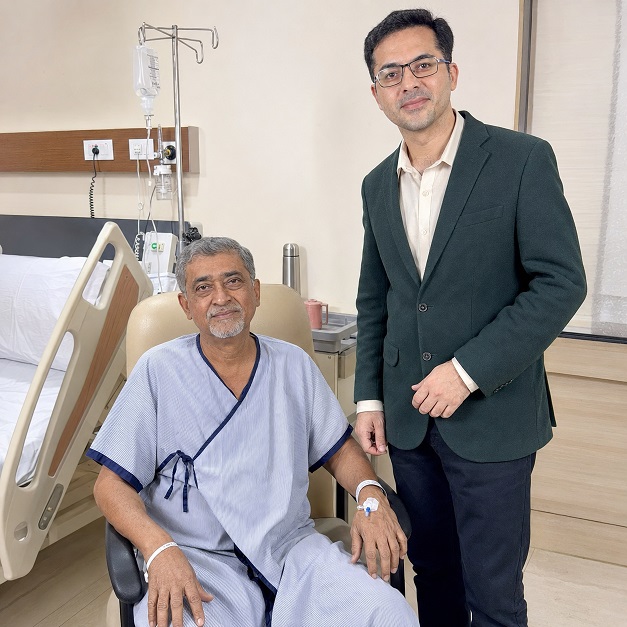
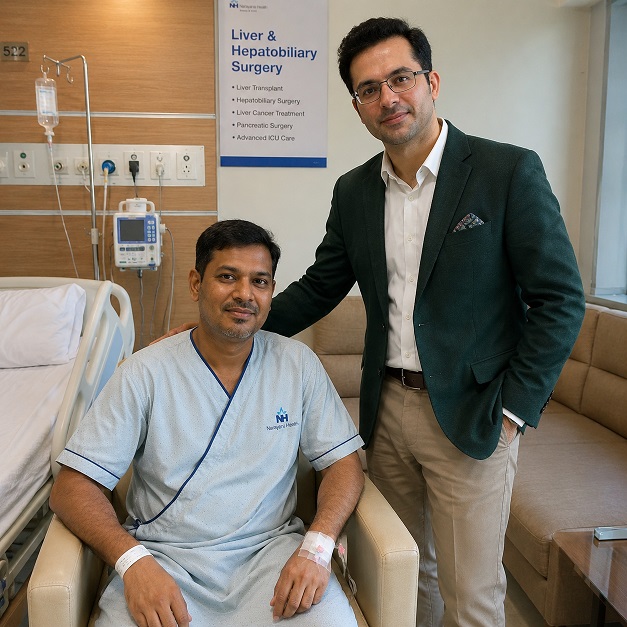
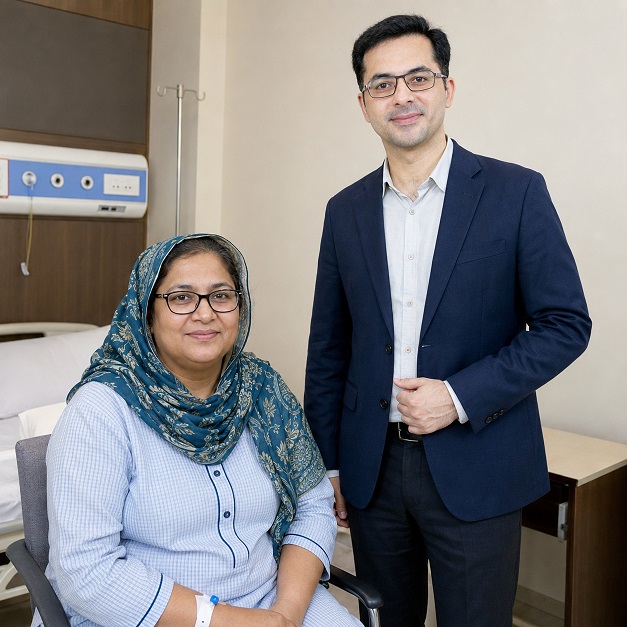
Patient Testimonials from Bangladesh
Ready to Take the First Step?
Share your medical reports with our healthcare managers today and receive a FREE CONSULTATION, a personalized treatment plan and complete support from your arrival to your recovery.
Get Your Free ConsultationFrom Bangladesh to India: Your Complete Patient Guide
- Complex Orthopaedic and Joint Revision Surgery in India for Bangladeshi Patients
- Heart Failure Treatment and Surgery in India for Bangladeshi Patients
- Joint Arthroscopy and Sports Medicine in India for Bangladeshi Patients
- Leukemia, Lymphoma and Blood Cancer Treatment in India for Bangladeshi Patients
- Kidney Transplant in India for Bangladeshi Patients
- Liver Transplant in India for Bangladeshi Patients
- Hip Surgery in India for Bangladeshi Patients
- Knee Surgery in India for Bangladeshi Patients
- Spine Surgery in India for Bangladeshi Patients
- Shoulder Surgery in India for Bangladeshi Patients
- IVF and Fertility Treatment in India for Bangladeshi Patients
- Robotic Cancer Surgery in India for Bangladeshi Patients
- Brain Tumor Treatment in India for Bangladeshi Patients
- Neurosurgery in India for Bangladeshi Patients
- Prostate Cancer Treatment and Surgery in India for Bangladeshi Patients
- Cardiac Surgery in India for Bangladeshi Patients
- Dental Implants and Smile Makeover in India for Bangladeshi Patients
- Weight Loss and Bariatric Surgery in India for Bangladeshi Patients