

Best Heart Valve Replacement Surgeons and Hospitals in India: A Selection Guide for Bangladeshi Patients
A practical guide for Bangladeshi patients choosing heart valve replacement surgeons and hospitals in India, covering surgeon qualifications, valve-specific experience, repair options, valve selection, accreditation and cardiac care.
How to evaluate credentials, experience and hospital infrastructure so you choose with confidence — not guesswork — before you travel. Every year, thousands of Bangladeshi patients travel to India for heart valve replacement, drawn by a combination of experienced cardiac surgeons, internationally accredited hospitals and costs that run a fraction of what the same operation costs in the UK or US. But "going to India" is not, by itself, a strategy. India has thousands of cardiac surgeons and hundreds of hospitals offering valve surgery — the outcome you get depends entirely on which specific surgeon and which specific hospital you choose. This guide sets out exactly how to evaluate both, so your decision is based on real, checkable criteria rather than a brochure or a stranger's recommendation.
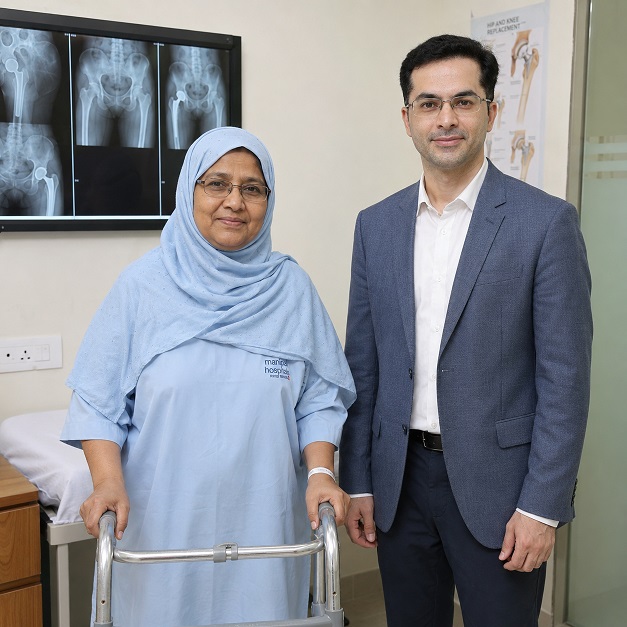
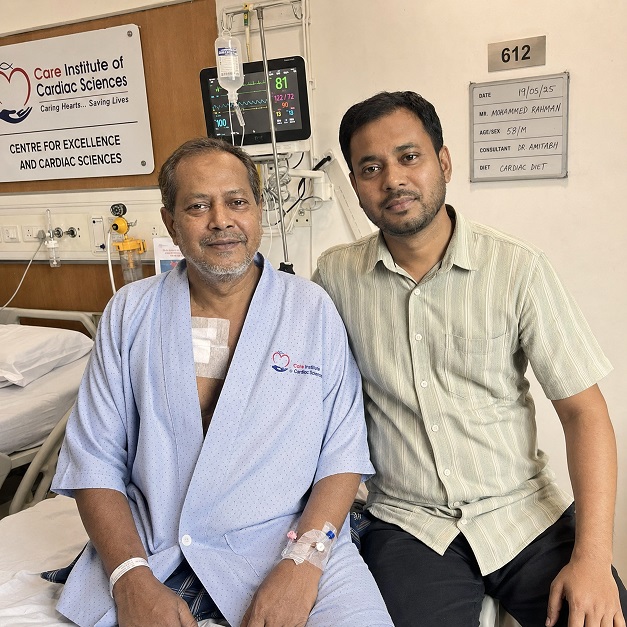
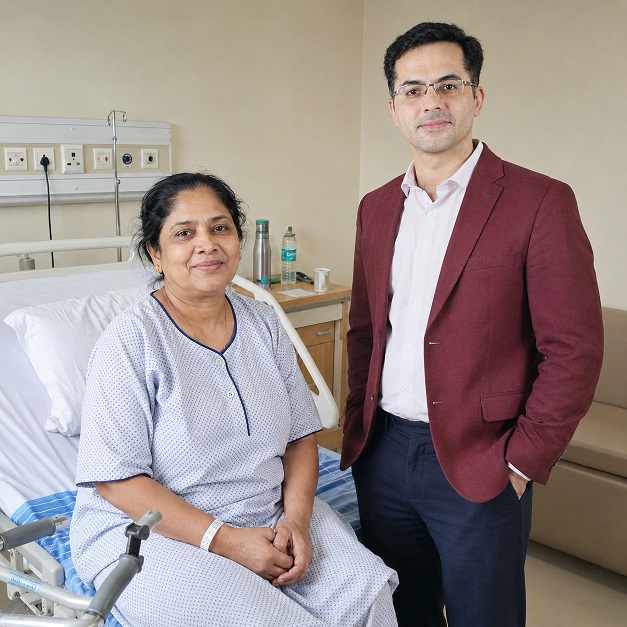
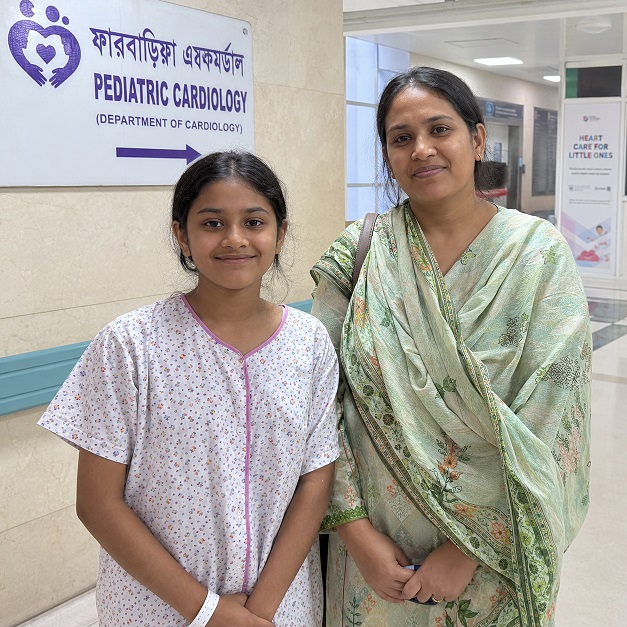
Healing Journeys of Bangladeshi Patients

Key Takeaways
- Choosing the individual cardiac surgeon is presented as the most important decision for Bangladeshi patients considering heart valve replacement in India. The guide recommends evaluating the surgeon who will actually perform the operation rather than relying mainly on hospital branding or marketing.
- Patients should independently verify the surgeon's registration through the National Medical Commission or relevant State Medical Council and look for an MCh CTVS or equivalent postgraduate qualification. Valve-specific experience should also be confirmed rather than relying only on general years of practice.
- The guide recommends asking how many procedures the surgeon personally performs for the patient's specific valve, such as the mitral or aortic valve, and how much experience they have with valve repair as well as replacement.
- Valve repair should be genuinely considered when clinically feasible. The guide explains that preserving the patient's own valve may avoid lifelong anticoagulation associated with mechanical valves and can provide good long-term durability in suitable cases.
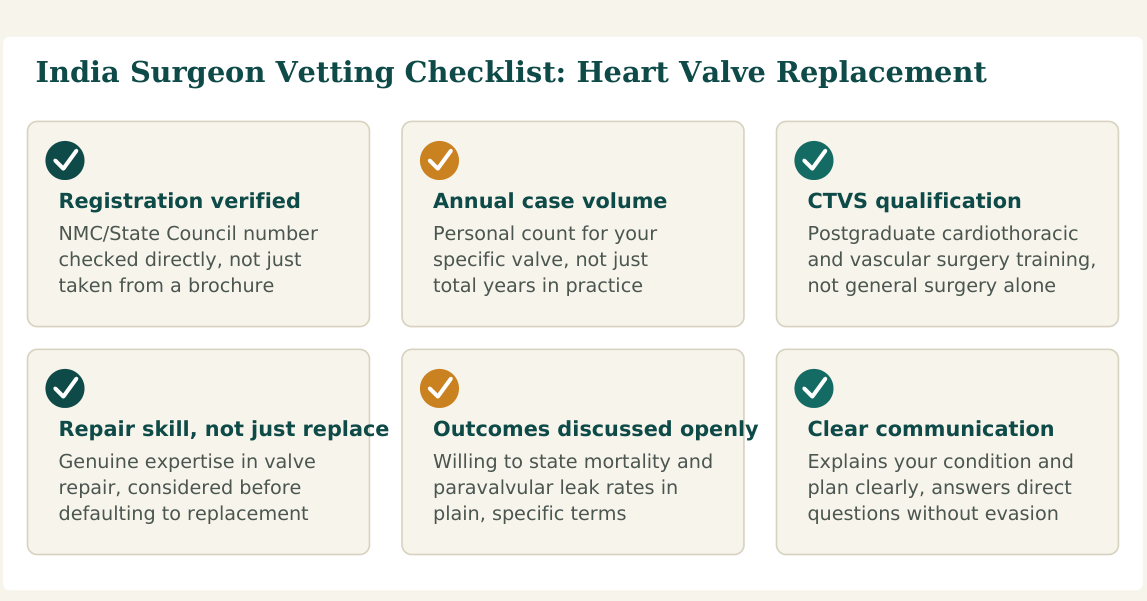
- The surgeon-vetting checklist on page 2 highlights registration, valve-specific case volume, CTVS qualification, repair expertise, outcome transparency and clear communication as the main factors to verify before booking.
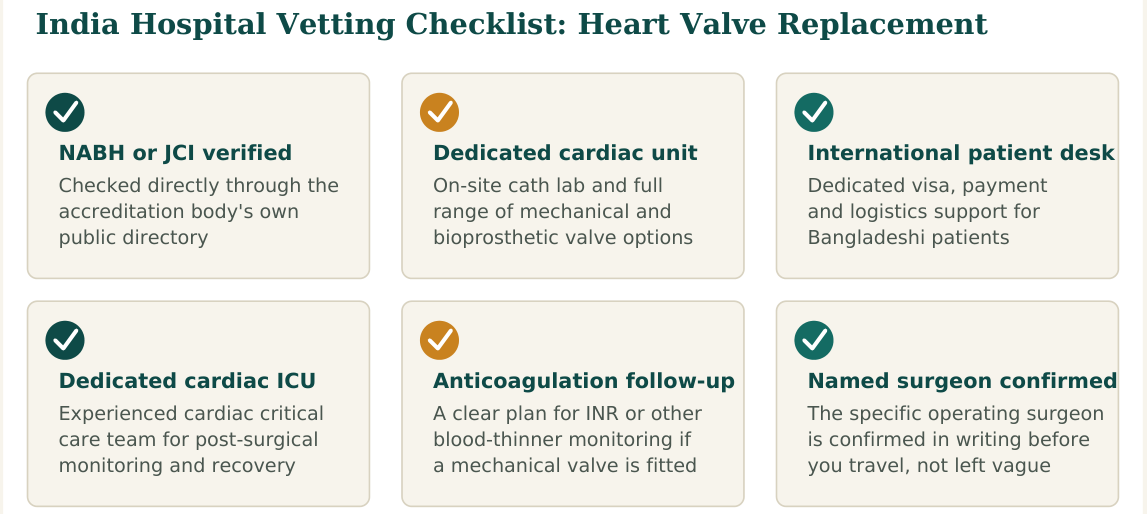
- Hospital selection should focus on cardiac-specific infrastructure, including a dedicated cardiac surgery unit, on-site catheterisation laboratory, dedicated cardiac ICU and access to both mechanical and bioprosthetic valve options. NABH or JCI accreditation should be independently verified.
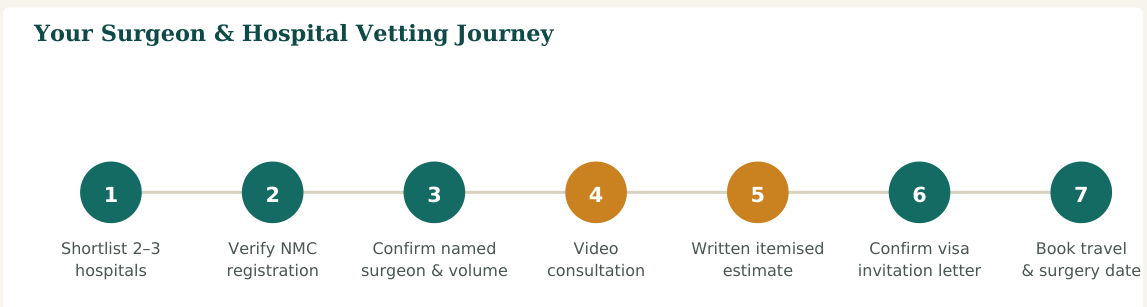
- The page 4 seven-step vetting diagram shows the recommended process from shortlisting hospitals and verifying NMC registration to confirming the named surgeon and case volume, completing a video consultation, obtaining an itemised estimate, confirming the visa invitation and booking travel and surgery.
- The guide also stresses the importance of discussing mechanical versus bioprosthetic valves. Mechanical valves generally offer greater durability but require lifelong blood thinners, while bioprosthetic valves avoid lifelong anticoagulation but may wear out sooner. The choice should be individualised according to age, lifestyle and ability to manage anticoagulation.
- For mechanical valve patients, the hospital should provide a clear plan for INR or other blood-thinner monitoring after surgery. This is particularly important when a Bangladeshi patient returns home after treatment in India.
- The guide identifies pressure to make a quick decision, refusal to provide a fully itemised estimate and inability to confirm the specific operating surgeon as important red flags. It recommends getting the surgeon, treatment plan and costs clearly documented before travel.
Quick Facts
- Treatment
- Heart valve replacement and valve surgery
- Primary Patients
- Bangladeshi patients travelling to India
- Key Specialist
- Cardiothoracic and Vascular Surgeon / Cardiac Surgeon
- Main Valves
- Mitral, aortic and other heart valves
- Main Options
- Valve repair or valve replacement
- Key Qualification
- MCh CTVS or equivalent
- Registration Check
- NMC or State Medical Council
- Experience Check
- Personal volume for the patient's specific valve
- Repair Expertise
- Confirm whether valve repair is genuinely considered
- Valve Options
- Mechanical and bioprosthetic valves
- Mechanical Valve
- Generally longer-lasting but requires lifelong anticoagulation
- Bioprosthetic Valve
- Avoids lifelong anticoagulation but may wear out sooner
- Outcome Check
- Mortality, valve durability and paravalvular leak rates
- Hospital Accreditation
- NABH or JCI
- Cardiac Infrastructure
- Dedicated cardiac surgery unit and catheterisation laboratory
- Critical Care
- Dedicated cardiac ICU
- Anticoagulation Follow-Up
- INR or blood-thinner monitoring plan where required
- International Support
- Visa, payment, airport and language assistance
- Consultation
- Video consultation before travel
- Cost Documentation
- Surgery, valve, ICU stay and follow-up itemised
- Named Surgeon
- Specific operating surgeon confirmed in writing
- Vetting Process
- Shortlist, registration, surgeon volume, consultation, estimate, visa and travel
- Main Patient Locations
- Dhaka, Chittagong, Sylhet, Khulna and across Bangladesh
- Red Flags
- Pressure tactics, vague costing or unidentified surgeon
- Follow-Up
- Clear recovery and anticoagulation plan before returning to Bangladesh
- Author
- Dr. Dheeraj Bojwani
- Experience
- 24+ Years
In Brief
For Bangladeshi patients considering heart valve replacement in India, the guide recommends choosing the specific cardiac surgeon first and then evaluating the hospital around that surgeon. Important checks include NMC or State Medical Council registration, MCh CTVS or equivalent qualifications, valve-specific surgical volume, genuine valve-repair expertise, outcome information, mechanical and bioprosthetic valve options, dedicated cardiac ICU and catheterisation facilities, NABH or JCI accreditation and anticoagulation follow-up planning. A video consultation, itemised written estimate and written confirmation of the operating surgeon should be obtained before travel.
Why India Is a Leading Destination for Heart Valve Replacement
India has built one of the world's largest and most experienced valve surgery ecosystems, driven by an extremely high domestic burden of rheumatic heart disease and decades of international patient volume from across South Asia, the Middle East and Africa. This scale matters in a very practical way: many Indian cardiac surgeons personally perform a large volume of valve repairs and replacements a year, a depth of experience that is difficult to match in smaller healthcare systems, and case volume is one of the factors most consistently linked to better surgical outcomes. Combined with a full range of mechanical and bioprosthetic valve options, minimally invasive and transcatheter techniques, NABH and JCI-accredited hospitals, and an established medical-visa pathway built specifically for Bangladeshi patients, India offers a genuinely credible option — provided you know how to identify the right surgeon and hospital for your specific case.
How to Select an Experienced Heart Valve Surgeon in India from Bangladesh?
The single most important decision in your treatment is not the hospital's marketing or its lobby — it is the individual surgeon who will operate on your heart. Evaluate every candidate against these criteria before booking anything.
1. Verify Registration and Qualifications Independently
Every practising cardiac surgeon in India must be registered with the National Medical Commission (NMC) or a State Medical Council. Ask for the surgeon's registration number and verify it directly through the NMC's own database rather than relying on a hospital website's claims. Look for a postgraduate qualification in cardiothoracic and vascular surgery (MCh CTVS or equivalent), since this is a distinct speciality from general surgery or cardiology.
2. Ask About Procedure-Specific Case Volume, Not General Experience
"20 years of experience" tells you little on its own. Ask specifically how many valve procedures the surgeon performs personally each year, and how many are valve repairs versus replacements for your specific valve — mitral, aortic, or another. A surgeon doing a high volume of your specific valve procedure has a fundamentally different depth of pattern-recognition than one doing a handful alongside a broad general cardiac practice.
3. Check Whether Valve Repair Is Genuinely Considered
Ask specifically whether valve repair — preserving your own valve tissue — is possible for your case, rather than moving straight to replacement. Repair, when feasible, generally avoids the need for lifelong blood thinners that mechanical valves require and can offer better long-term durability than replacement in suitable cases. A surgeon genuinely skilled in repair techniques, not just replacement, is worth specifically seeking out.
4. Ask for Outcome and Complication Data
A confident, experienced surgeon should be willing to discuss their personal mortality rate, valve durability outcomes, and paravalvular leak rates in plain terms. Given how much is at stake with heart surgery, vague reassurance without numbers is a signal to ask more questions, not fewer.
India Surgeon Vetting Checklist: Heart Valve Replacement
What Should Bangladeshi Patients Look for When Choosing a Heart Valve Hospital in India?
The hospital matters almost as much as the surgeon, because a great surgeon operating in a facility without genuine cardiac-specific infrastructure — a real cardiac ICU, on-site cath lab, anticoagulation monitoring — can still produce a disappointing overall experience. Evaluate hospitals against these criteria specifically for valve surgery, not their general reputation.
1. Confirm Genuine Accreditation
Look for NABH (National Accreditation Board for Hospitals) or JCI (Joint Commission International) accreditation, and verify it directly through the accreditation body's own online directory rather than trusting a logo on the hospital's website. Accreditation reflects independently audited standards for patient safety, infection control and clinical governance.
2. Look for a Dedicated Cardiac Surgery Unit
Hospitals with a dedicated cardiac surgery department — including an on-site catheterisation lab, dedicated cardiac ICU, and a full range of mechanical and bioprosthetic valve options — rather than valve surgery being one of many procedures a general surgical department handles occasionally, typically have more refined protocols and staff genuinely experienced in valve surgery recovery.
3. Check International Patient Support Infrastructure
A hospital genuinely set up for Bangladeshi patients will have a dedicated international patient desk that can help with visa invitation letters, currency and payment logistics, airport transfers, and language support. This infrastructure is a meaningful sign of real experience treating patients from abroad, not an afterthought.
A red flag worth knowing
Be cautious of any hospital or facilitator that pressures you toward a decision, refuses to provide a fully itemised written estimate, or cannot clearly confirm the specific surgeon who will perform your surgery before you travel. Genuine confidence in quality of care does not require pressure tactics.
Advisor's Note — DR. Dheeraj Bojwani
"In 24 years of guiding Bangladeshi patients through this exact decision, my advice is always the same: pick the surgeon first, then confirm the hospital around them. A high-volume, CTVS-qualified surgeon genuinely skilled in valve repair at a solid NABH-accredited hospital will almost always give you a better outcome than a well-marketed hospital with an unclear surgeon assignment."
Your Vetting and Booking Journey: A Step-by-Step Process
Use this structured process to move from an initial shortlist to a confirmed booking with genuine confidence in your choice.
Your Surgeon & Hospital Vetting Journey
Questions to Ask Before You Book
Bring this list to every consultation, whether by video call or in person, and insist on specific, direct answers:
- "How many procedures on my specific valve do you personally perform each year?" — not the hospital's total, your specific surgeon's number.
- "Is repair possible for my valve, or does it need replacement?" — the answer should reference your specific imaging and valve pathology.
- "Mechanical or bioprosthetic valve — which do you recommend for me, and why?" — this decision affects whether you need lifelong blood thinners.
- "What exactly is included in this cost estimate?" — surgery, the valve itself, ICU stay and follow-up should all be itemised separately.
- "Who will manage my case if a complication arises during recovery?" — get a clear, named answer.
India Hospital Vetting Checklist: Heart Valve Replacement
A Closing Words
India's combination of high-volume, appropriately qualified cardiac surgeons, internationally accredited hospitals and dramatically lower costs makes it a genuinely strong choice for heart valve replacement — but only when you choose the specific surgeon and hospital carefully. The patients who report the smoothest experiences are consistently the ones who verified registration and case volume directly, insisted on a video consultation, and got everything in writing before booking travel. Treat this vetting process as seriously as the surgery itself, and India's genuine strengths in this field will work in your favour.
Sources
- 🌐 National Medical Commission of India — statutory body for verifying a doctor's registration and specialist qualifications. · nmc.org.in
- 🌐 National Accreditation Board for Hospitals & Healthcare Providers (NABH) — India's principal healthcare accreditation authority, under the Quality Council of India. · nabh.co
- 🌐 Joint Commission International (JCI) — international healthcare accreditation body with a public directory of accredited hospitals worldwide, including in India. · jointcommissioninternational.org
- 🌐 Determinants of Bangladeshi patients' decision-making process and satisfaction toward medical tourism in India. Peer-reviewed study, hosted via NIH/NCBI. · pmc.ncbi.nlm.nih.gov/articles/PMC10185743
- 🌐 Government of India — Medical Value Travel / e-Medical Visa Portal, Bureau of Immigration, Ministry of Home Affairs — official channel for hospital invitation letters and medical-visa provisions for Bangladeshi nationals. · indianfrro.gov.in/frro/medicalvaluetravel
Frequently Asked Questions by Bangladeshi Patients about Best Heart Valve Replacement Surgeons and Hospitals in India
How can Bangladeshi patients choose the best heart valve surgeon in India?
The guide recommends checking NMC registration, MCh CTVS or equivalent qualifications, experience with the patient's specific valve, valve-repair expertise, outcomes and communication before selecting a surgeon.
How can a Bangladeshi patient verify an Indian cardiac surgeon's registration?
Patients should request the surgeon's registration number and independently verify it through the National Medical Commission or relevant State Medical Council rather than relying only on hospital information.
Should Bangladeshi patients ask about valve repair before replacement?
Yes. The guide recommends specifically asking whether repair is possible for the patient's valve because preserving the native valve may provide important long-term advantages in suitable cases.
How should Bangladeshi patients choose between a mechanical and bioprosthetic valve?
The decision depends on factors such as age, lifestyle and the patient's ability to manage lifelong blood thinners. The guide recommends discussing the durability and anticoagulation trade-off directly with the surgeon.
What experience should Bangladeshi patients ask an Indian valve surgeon about?
Patients should ask how many procedures involving their specific valve the surgeon personally performs each year and how much experience they have with repair as well as replacement.
What hospital facilities should Bangladeshi patients check before heart valve surgery in India?
The guide recommends checking a dedicated cardiac surgery unit, on-site catheterisation laboratory, dedicated cardiac ICU, mechanical and bioprosthetic valve options and verified NABH or JCI accreditation.
Why is anticoagulation follow-up important for Bangladeshi patients with a mechanical valve?
Mechanical valves generally require lifelong anticoagulation. Patients returning to Bangladesh should have a clear plan for INR or other blood-thinner monitoring and know who will manage this follow-up.
Should Bangladeshi patients have a video consultation before travelling to India?
Yes. The guide recommends having the surgeon review imaging and valve pathology before travel so patients can understand whether repair or replacement is appropriate and discuss valve options.
What should be included in a heart valve surgery estimate for Bangladeshi patients?
The estimate should clearly identify the surgery, valve itself, ICU stay and follow-up. Patients should obtain a fully itemised written estimate before booking travel.
What should Bangladeshi patients verify before booking heart valve replacement in India?
Verify the surgeon's registration, CTVS qualification, valve-specific experience, repair expertise and outcomes; then check hospital accreditation, cardiac ICU, catheterisation facilities, valve options, anticoagulation support, itemised costing and written confirmation of the operating surgeon.
Page Summary
This six-page guide helps Bangladeshi patients evaluate heart valve replacement surgeons and hospitals in India. Pages 1–3 focus on surgeon qualifications, valve-specific experience, repair expertise, outcomes and hospital infrastructure. Page 4 presents a seven-step vetting journey and hospital checklist covering accreditation, cardiac ICU, valve options, anticoagulation follow-up, international support and surgeon confirmation. Page 5 explains valve selection and reinforces the importance of video consultation and written confirmation before travel.
Citation Block
| Field | Information |
|---|---|
| Article / Topic | Best Heart Valve Replacement Surgeons and Hospitals in India |
| Country / Patients | India / Bangladeshi Patients |
| Main Treatment | Heart Valve Replacement and Surgery |
| Key Specialist | Cardiothoracic and Vascular Surgeon |
| Main Valves | Mitral, aortic and other heart valves |
| Main Options | Valve repair or replacement |
| Registration | NMC or State Medical Council |
| Key Qualification | MCh CTVS or equivalent |
| Case Volume | Personal experience with the specific valve procedure |
| Repair Expertise | Confirm whether repair is feasible before replacement |
| Outcome Data | Mortality, valve durability and paravalvular leak |
| Valve Selection | Mechanical versus bioprosthetic based on individual factors |
| Hospital Accreditation | NABH or JCI |
| Cardiac Unit | Dedicated cardiac surgery department |
| Cath Lab | On-site catheterisation laboratory |
| Cardiac ICU | Dedicated cardiac critical-care support |
| Anticoagulation | INR or blood-thinner monitoring plan when required |
| International Patient Desk | Visa, payment, logistics and language support |
| Video Consultation | Recommended before travel |
| Written Estimate | Surgery, valve, ICU and follow-up itemised |
| Named Surgeon | Confirmed in writing before travel |
| Vetting Journey | Shortlist, registration, volume, consultation, estimate, visa and travel |
| Key Questions | Valve-specific volume, repair possibility, valve choice, outcomes and costs |
| Red Flags | Pressure tactics, vague estimates or unidentified surgeon |
| Follow-Up | Confirm recovery and anticoagulation arrangements in Bangladesh |
| Key Selection Criterion | High-volume valve surgeon with genuine repair expertise and appropriate cardiac infrastructure |
| Important Warning | Do not choose a heart valve surgeon solely on hospital branding, price or general experience; independently verify qualifications, valve-specific volume, repair expertise, outcomes and the actual operating surgeon |


Our Mission Statement
Our mission is to place patients at the centre of every healthcare decision by providing trustworthy, evidence-based, and unbiased medical information. We believe that informed patients make better decisions. Backed by personalised guidance from our experienced advisory team, we help patients understand their treatment options, compare them objectively, and confidently choose the path that best suits their medical needs and personal circumstances.
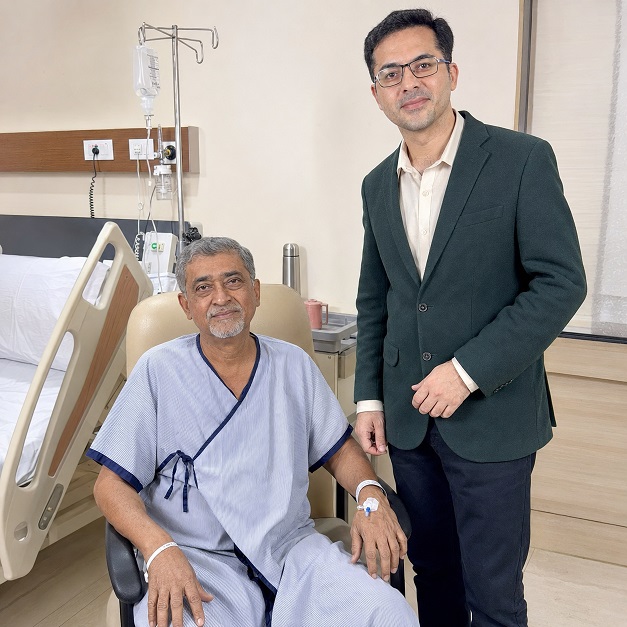
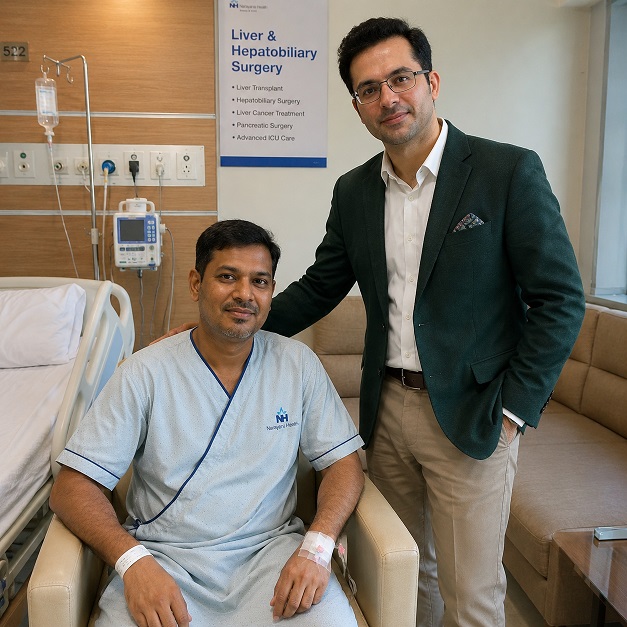
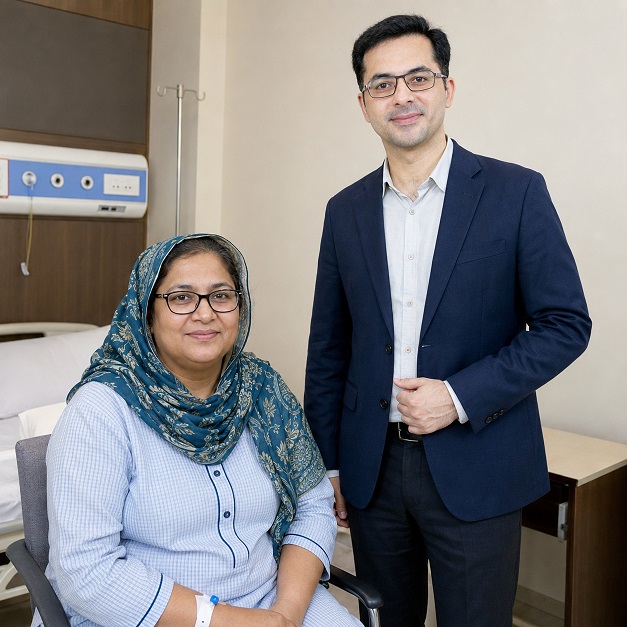
Patient Testimonials from Bangladesh
Ready to Take the First Step?
Share your medical reports with our healthcare managers today and receive a FREE CONSULTATION, a personalized treatment plan and complete support from your arrival to your recovery.
Get Your Free ConsultationFrom Bangladesh to India: Your Complete Patient Guide
- Complex Orthopaedic and Joint Revision Surgery in India for Bangladeshi Patients
- Heart Failure Treatment and Surgery in India for Bangladeshi Patients
- Joint Arthroscopy and Sports Medicine in India for Bangladeshi Patients
- Leukemia, Lymphoma and Blood Cancer Treatment in India for Bangladeshi Patients
- Kidney Transplant in India for Bangladeshi Patients
- Liver Transplant in India for Bangladeshi Patients
- Hip Surgery in India for Bangladeshi Patients
- Knee Surgery in India for Bangladeshi Patients
- Spine Surgery in India for Bangladeshi Patients
- Shoulder Surgery in India for Bangladeshi Patients
- IVF and Fertility Treatment in India for Bangladeshi Patients
- Robotic Cancer Surgery in India for Bangladeshi Patients
- Brain Tumor Treatment in India for Bangladeshi Patients
- Neurosurgery in India for Bangladeshi Patients
- Prostate Cancer Treatment and Surgery in India for Bangladeshi Patients
- Cardiac Surgery in India for Bangladeshi Patients
- Dental Implants and Smile Makeover in India for Bangladeshi Patients
- Weight Loss and Bariatric Surgery in India for Bangladeshi Patients