

Selecting the Best Joint Arthroscopy and Sports Medicine Surgeons and Hospitals in India: A Guide for Patients from Iraq
A doctor’s honest, question-by-question guide for patients from Iraq on vetting a sports medicine hospital in India — injury-specific outcomes, accreditation, rehabilitation supervision, and the exact questions worth asking before you book anything.
Over the years, I have found that Iraqi athletes and active patients researching arthroscopic surgery often ask me a single question: what is the success rate? In my experience of 24 years advising patients through exactly this decision, that question genuinely cannot be answered honestly without first knowing the specific injury pattern involved, since a straightforward ACL tear and a combined ACL and meniscus injury behave very differently after surgery, and treating them as the same procedure with the same expected outcome is where realistic expectations go wrong.
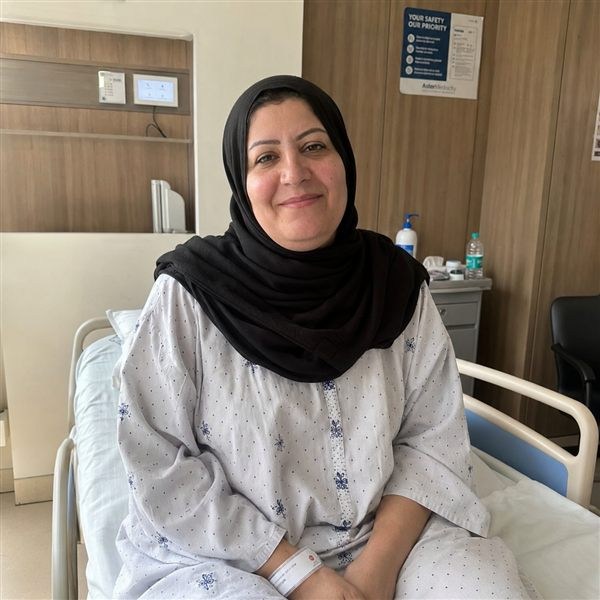
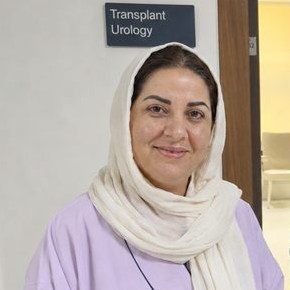
Healing Journeys of Iraqi Patients
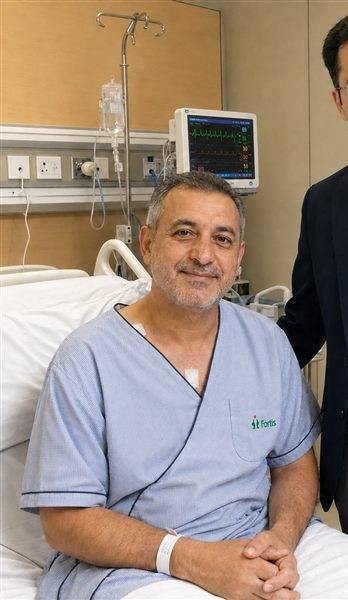
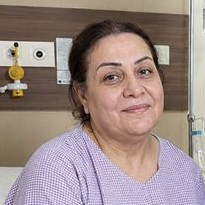
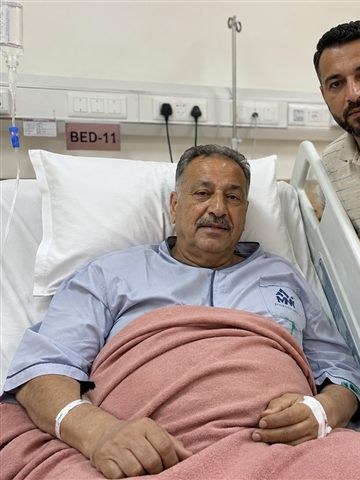
Key Takeaways
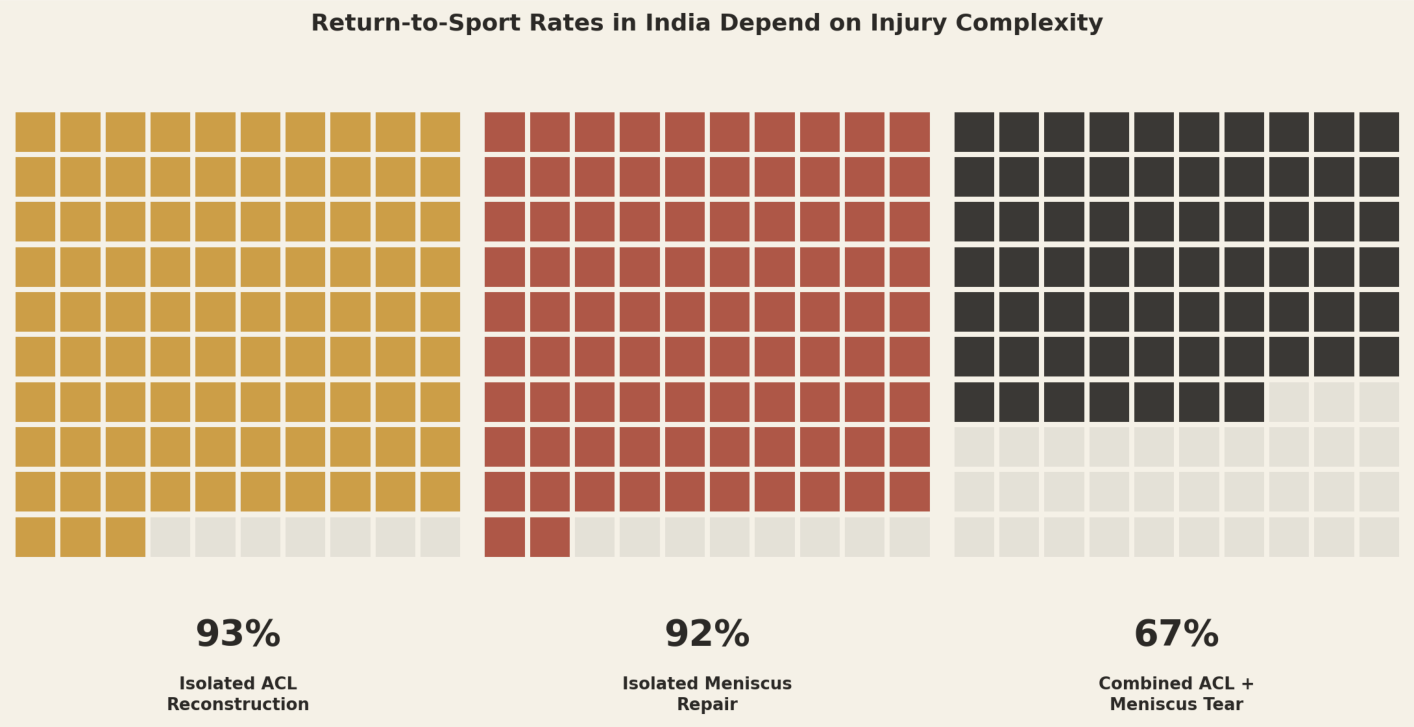
- Joint arthroscopy outcomes depend strongly on the exact injury pattern. The source highlights a major difference between isolated ACL injuries and combined ACL-meniscus injuries. In professional athletes, the cited study reported a 92.9% return-to-sport rate after ACL reconstruction without a meniscus tear, compared with 66.7% when a meniscus tear requiring repair was also present.
- Meniscus treatment strategy can also influence outcomes. For complex displaced bucket-handle meniscus tears combined with ACL reconstruction, the cited study reported an overall repair failure rate of 27%. This fell to 15% when ACL reconstruction and meniscus repair were performed together in a single-stage procedure, compared with 35.9% when the procedures were performed as two separate surgeries.
- The chart on page 2 visually compares approximately 93% return to sport for isolated ACL reconstruction, 92% for isolated meniscus repair and 67% for combined ACL and meniscus injury. These figures illustrate how the injury combination can influence recovery expectations and should not be treated as guaranteed outcomes for an individual Iraqi patient.
- Iraqi patients should therefore ask the surgeon to identify whether their injury involves the ACL alone or a combined ACL and meniscus injury. The guide recommends asking how the specific combination changes expected return-to-sport timing and whether combined procedures should be performed during one operation or staged.
- Graft selection should also be individualised. The source recommends asking whether a hamstring graft, patellar tendon graft or another option is most appropriate for the patient's sport, activity level and specific injury. General arthroscopy volume is useful, but experience with the exact injury combination is considered more informative.
- Rehabilitation is a major part of sports medicine treatment rather than an optional addition after surgery. The source recommends a dedicated sports physiotherapist who personally supervises the structured rehabilitation programme, with a strength and conditioning specialist involved when an athlete is returning to competitive sport. A sports medicine physician can also assist with load management and future injury prevention.
- Technology and testing should support a safe return to activity. Iraqi patients should ask about modern fixation and graft-preparation techniques, objective strength and functional movement testing, and whether return-to-play clearance is based on demonstrated physical readiness rather than simply the number of weeks since surgery.
Quick Facts
- Treatment
- Joint arthroscopy and sports medicine surgery
- Primary Patients
- Iraqi patients and athletes seeking treatment in India
- Main Speciality
- Sports medicine and arthroscopic surgery
- Key Specialist
- Fellowship-trained sports medicine surgeon
- Main Procedures
- ACL reconstruction and meniscus repair
- Isolated ACL Return to Sport
- 92.9% in the cited professional-athlete study
- Combined ACL-Meniscus Return to Sport
- 66.7%
- Overall Complex Meniscus Repair Failure
- 27%
- Single-Stage Failure
- 15% in the cited study
- Two-Stage Failure
- 35.9% in the cited study
- Graft Options
- Hamstring, patellar tendon or other suitable graft
- Surgery Planning
- Single-stage versus staged treatment should be individually assessed
- Rehabilitation
- Personally supervised and structured
- Return-to-Play
- Objective strength and functional testing
- Core Team
- Sports medicine surgeon and sports physiotherapist
- Additional Support
- Strength and conditioning specialist for competitive athletes
- Sports Medicine Physician
- Load management and injury prevention
- Technology
- Modern fixation and graft-preparation techniques
- Biologic Option
- PRP may be considered in selected cases where evidence supports its use
- Accreditation
- Verify current JCI and/or NABH status
- Main Red Flag
- Return-to-sport clearance based only on elapsed time
- Author
- Dr. Dheeraj Bojwani
- Experience
- 24+ Years
In Brief
For Iraqi patients considering ACL reconstruction, meniscus repair or other joint arthroscopy in India, the most important selection factor is the surgeon's experience with the exact injury combination rather than general arthroscopy volume alone. Patients should understand whether the injury is isolated or combined, ask about single-stage versus staged surgery where both ACL and meniscus are involved, clarify graft selection and confirm that a personally supervised rehabilitation and objective return-to-play programme is included.
Why the Choice of Sports Medicine Surgeon in India Matters as Much as the Choice of Hospital
Based on my interactions with international patients, published data on this specific distinction is genuinely striking. A study of professional athletes undergoing ACL reconstruction found a return-to-sport rate of 92.9 percent when no meniscus tear was present, falling to just 66.7 percent when a meniscus tear requiring repair accompanied the ACL injury, a substantial gap driven by the added complexity and healing demands of treating both structures together. For meniscus repair specifically, technique and timing matter enormously: a study of complex, displaced bucket-handle meniscus tears combined with ACL reconstruction found an overall repair failure rate of 27 percent, but this dropped to 15 percent when the meniscus repair and ACL reconstruction were performed together in a single-stage operation, compared with 35.9 percent when performed as two separate surgeries. India has genuine, growing domestic expertise in this field, with multiple prospective studies from Indian tertiary centres documenting strong functional outcomes using modern hamstring autograft and all-inside reconstruction techniques. This is precisely why the specific injury pattern in your case, and the specific surgical strategy chosen to address it, should shape your expectations far more than a single blended success percentage.
How Patients from Iraq Can Verify a Sports Medicine Hospital’s Accreditation in India
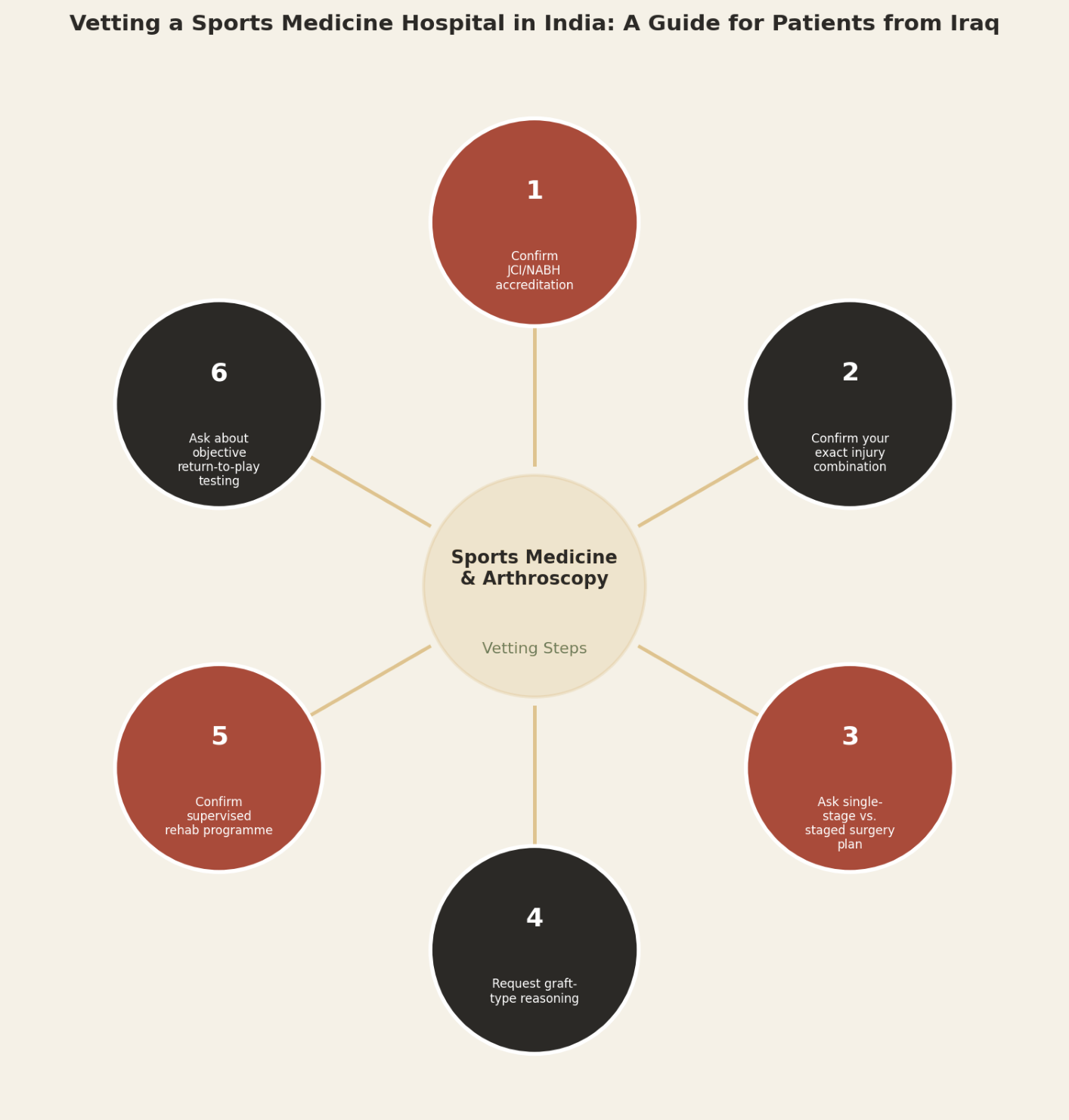
The fastest filter I recommend to every Iraqi patient calling about arthroscopic surgery is verifiable accreditation, not marketing language. Joint Commission International, JCI, audits a hospital’s overall clinical safety systems against the same standard used across the United States and Europe. The National Accreditation Board for Hospitals and Healthcare Providers, NABH, is India’s own domestic equivalent, and in my experience of 24 years advising patients on this exact decision, a centre holding both marks together is a meaningfully stronger signal than either alone. For sports medicine specifically, ask one further, very direct question: does this hospital have a dedicated sports medicine and rehabilitation programme with its own supervised physiotherapy team, since a documented survey of Indian arthroscopic surgeons found meaningful variation in how consistently post-operative rehabilitation is personally supervised, a factor that directly affects your final outcome regardless of how well the surgery itself is performed.
Arthroscopy Volume and Injury-Complexity Criteria That Predict Outcomes in India
Based on my interactions with dozens of sports medicine programmes over the years, a surgeon’s specific experience with your exact injury combination, not simply their general arthroscopy volume, is one of the clearest predictors of a good outcome. Overall volume still matters as a baseline, since a surgeon performing a genuinely high number of arthroscopic procedures each year builds broader pattern recognition than one performing them occasionally, but volume alone does not tell you whether that experience specifically covers combined injury cases like yours. Ask directly, in writing:
- Does my injury involve the ACL alone, or a combined ACL and meniscus tear, and how does this specific combination change the expected return-to-sport timeline and rate?
- If meniscus repair is needed alongside ACL reconstruction, will both be performed in a single operation, and what does the surgeon's own experience show about single-stage versus staged surgery for a case like mine?
- What graft type is being recommended, hamstring, patellar tendon, or another option, and why is it the right choice for my specific activity level and sport?
- What does the hospital's own supervised rehabilitation programme look like specifically, and who personally oversees my recovery process week by week?
A surgeon confident in their own reasoning will answer these specifically. A surgeon who quotes a single success percentage without asking about your specific injury pattern deserves a second opinion before you commit.
Vetting a Sports Medicine Hospital in India: A Guide for Patients from Iraq
Questions Patients from Iraq Should Ask About the Sports Medicine Team in India
Arthroscopic sports medicine recovery depends on far more than the surgery itself. In my experience of 24 years watching these programmes operate, the strongest units bring together a fellowship-trained sports medicine surgeon, a dedicated sports physiotherapist who personally supervises the structured rehabilitation protocol rather than delegating it entirely, and, for athletes returning to competitive sport, a strength and conditioning specialist to guide the final phase of return-to-play testing. A sports medicine physician focused specifically on non-surgical aspects of recovery, including load management and injury prevention strategy for the future, rounds out the strongest programmes, since a well-reconstructed ligament still benefits from broader guidance on avoiding re-injury once an athlete returns to full activity. Ask specifically who fills each of these roles for your case, and confirm that a specific, week-by-week rehabilitation plan has been outlined before your surgery, not improvised afterward based on how recovery happens to progress.
Sports Medicine Technology Standards in India That Patients from Iraq Should Check
The specific technology and technique available change both surgical precision and rehabilitation quality. Ask whether the hospital uses modern fixation devices and graft preparation techniques, since these details affect graft healing and long-term stability. Ask whether objective return-to-play testing, including strength and functional movement assessments, is used to confirm genuine readiness before clearing an athlete to return to sport, rather than relying on time elapsed alone. Ask also whether the hospital offers biologic augmentation options, such as platelet-rich plasma, for cases where the evidence supports their use in supporting healing, and ask honestly whether the evidence for your specific situation justifies the additional cost, since these adjuncts are not universally necessary. Ask directly which of these specific capabilities apply to your case, not simply whether the hospital owns modern arthroscopic equipment in general terms.
Red Flags Patients from Iraq Should Watch For When Choosing a Sports Medicine Hospital in India
Over the years, certain patterns have become reliable warning signs for me. A surgeon who quotes a single success rate without first asking whether a meniscus tear accompanies your ACL injury has not engaged with the specific complexity of your case. A hospital without a dedicated, personally supervised rehabilitation programme, relying instead on generic take-home exercise sheets, is leaving the outcome-determining half of your recovery under-managed. A hospital that clears an athlete to return to sport based on time elapsed alone, without objective strength and functional testing, is taking an unnecessary risk with re-injury. And a hospital that recommends staged, two-separate-surgery treatment for a combined ACL and complex meniscus tear without explaining why single-stage surgery was not considered deserves direct questioning, given the meaningful difference in failure rates published between the two approaches.
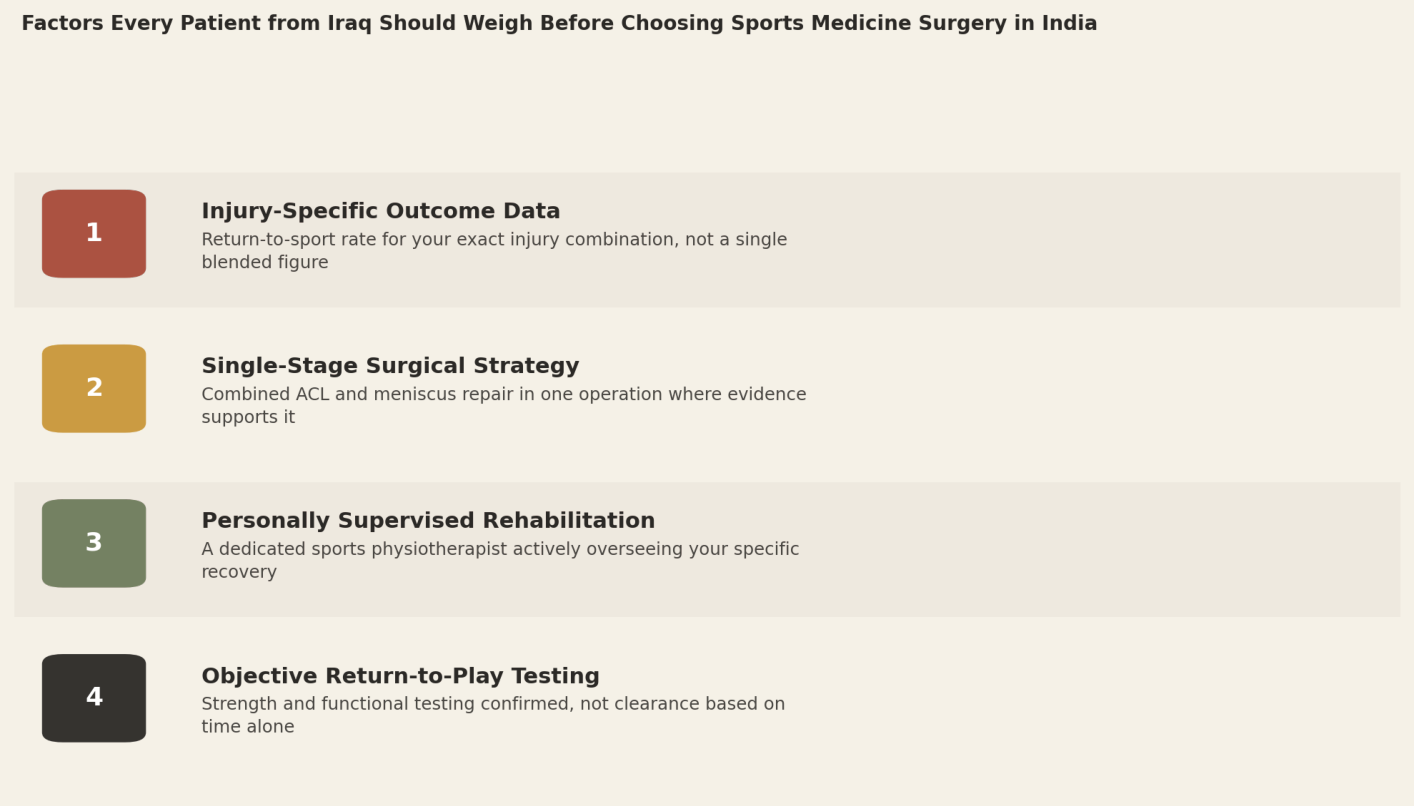
Factors Every Patient from Iraq Should Weigh Before Choosing Sports Medicine Surgery in India
A Closing Thought for Iraqi Families
Arthroscopic sports medicine surgery deserves a treatment plan built around your specific injury pattern and a genuinely supervised rehabilitation programme, not a single optimistic percentage that may describe a far simpler case than your own. Based on my interactions with international patients over more than two decades, the patients who ask about injury-specific outcomes, single-stage versus staged surgical strategy, and personally supervised rehabilitation consistently return to their sport more safely and predictably than those who accept a general reassurance alone. My role, and the role of any advisor a patient works with, should be to help you ask these exact questions and confirm honestly that the specific surgeon and specific hospital in front of you are the right fit for your exact injury. Iraq’s patients deserve the same standard of scrutiny in this decision as any patient anywhere else in the world.
Sources & Further Reading
- Joint Commission International (JCI) — Accredited Organizations Directory (jointcommissioninternational.org)
- National Accreditation Board for Hospitals & Healthcare Providers (NABH), India (nabh.co)
- PubMed Central — Failure Rate of Meniscal Repair With ACL Reconstruction Among Professional Athletes (pmc.ncbi.nlm.nih.gov)
- PubMed Central — Single-Stage vs. Two-Stage Surgery for Displaced Bucket-Handle Meniscus Repair (ncbi.nlm.nih.gov/pmc)
- American Orthopaedic Society for Sports Medicine (AOSSM) — Patient Education (sportsmed.org)
Frequently Asked Questions by Iraqi Patients about Selecting a Sports Medicine Surgeon and Hospital in India
Is ACL reconstruction available in India for Iraqi patients?
Yes. The source specifically discusses ACL reconstruction and arthroscopic sports medicine programmes in India for patients from Iraq.
What is the return-to-sport rate after ACL reconstruction for Iraqi athletes?
The cited professional-athlete study reported a 92.9% return-to-sport rate when no meniscus tear was present. Outcomes were lower when ACL injury was combined with a meniscus tear requiring repair.
How does a meniscus tear affect ACL surgery recovery?
In the cited study, return to sport fell from 92.9% for isolated ACL reconstruction to 66.7% when a meniscus tear requiring repair accompanied the ACL injury. The additional injury therefore needs to be included in treatment planning.
Should ACL reconstruction and meniscus repair be performed in one operation?
For some combined injuries, single-stage treatment may be appropriate. The cited complex bucket-handle meniscus study reported a 15% failure rate with single-stage surgery versus 35.9% with staged procedures, but the correct strategy must be determined for the individual case.
Which ACL graft should an Iraqi athlete choose in India?
The source discusses hamstring, patellar tendon and other graft options and recommends asking why the proposed graft is appropriate for the patient's specific sport, activity level and injury.
How long does rehabilitation take after ACL and meniscus surgery?
The source does not provide one universal recovery duration. Instead, it recommends a specific week-by-week rehabilitation plan supervised by a sports physiotherapist and objective testing before return to sport.
What rehabilitation should Iraqi athletes receive after arthroscopic surgery?
A strong programme should include personally supervised sports physiotherapy. Competitive athletes may also benefit from strength and conditioning support during the final return-to-play phase.
Should return to sport be based only on the number of weeks after ACL surgery?
No. The source recommends objective strength and functional movement assessments before clearance. Time elapsed alone should not be the only criterion for returning to sport.
Is platelet-rich plasma necessary after sports medicine surgery?
Not necessarily. The source recommends asking whether evidence supports PRP for the specific case and whether the potential benefit justifies the additional cost because biologic adjuncts are not universally necessary.
How should Iraqi patients choose the best sports medicine surgeon in India?
They should compare injury-specific surgical experience, ACL and meniscus expertise, graft reasoning, single-stage versus staged treatment strategy, supervised rehabilitation and objective return-to-play testing. A surgeon who gives only a general success percentage without analysing the injury combination deserves further questioning.
Page Summary
For Iraqi patients seeking joint arthroscopy or sports medicine treatment in India, the source emphasises that outcomes vary according to the precise injury pattern. Combined ACL and meniscus injuries can have substantially different return-to-sport outcomes from isolated ACL injuries, while the timing and strategy of meniscus repair may also influence failure rates.
Patients should compare surgeons according to injury-specific experience, graft selection, single-stage versus staged surgical planning and the quality of supervised rehabilitation. Objective strength and functional testing should form part of return-to-sport decisions rather than relying only on a fixed postoperative timeline.
Citation Block
| Field | Details |
|---|---|
| Article / Topic | Selecting the Best Joint Arthroscopy and Sports Medicine Surgeons and Hospitals in India |
| Target Country | Iraq |
| Treatment Area | Joint arthroscopy and sports medicine |
| Main Speciality | Sports medicine and arthroscopic surgery |
| Key Procedure | ACL reconstruction |
| Additional Procedure | Meniscus repair |
| Isolated ACL Return-to-Sport Rate | 92.9% |
| Combined ACL-Meniscus Return-to-Sport Rate | 66.7% |
| Complex Meniscus Repair Failure Rate | 27% |
| Single-Stage Failure Rate | 15% |
| Two-Stage Failure Rate | 35.9% |
| Key Selection Factor | Experience with exact injury combination |
| Graft Options | Hamstring, patellar tendon or other suitable graft |
| Surgical Strategy | Single-stage versus staged treatment |
| Rehabilitation | Structured and personally supervised |
| Physiotherapy | Dedicated sports physiotherapist |
| Return-to-Play Support | Strength and conditioning specialist |
| Medical Support | Sports medicine physician |
| Testing | Strength and functional movement assessment |
| Fixation Technology | Modern fixation devices |
| Graft Preparation | Modern graft preparation techniques |
| Biologic Option | PRP for selected cases |
| Accreditation | JCI and/or NABH |
| Main Red Flag | Return-to-sport clearance based only on time |
| Decision Principle | Match treatment to injury pattern and sporting demands |
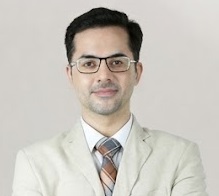

Our Mission Statement
Our mission is to place patients at the centre of every healthcare decision by providing trustworthy, evidence-based, and unbiased medical information. We believe that informed patients make better decisions. Backed by personalised guidance from our experienced advisory team, we help patients understand their treatment options, compare them objectively, and confidently choose the path that best suits their medical needs and personal circumstances.
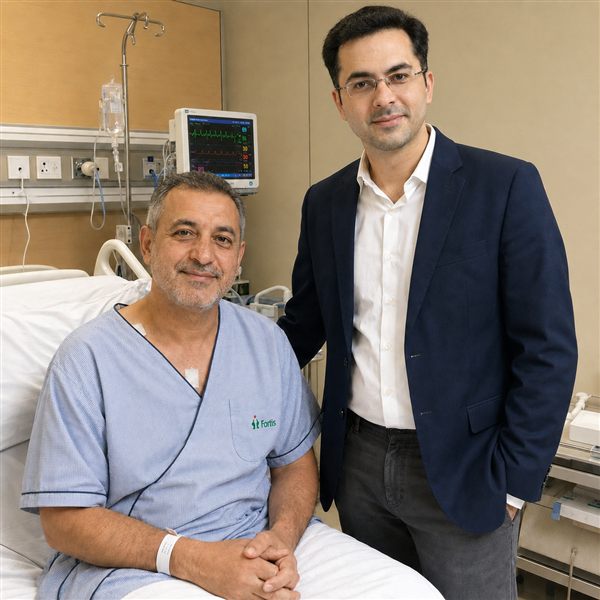
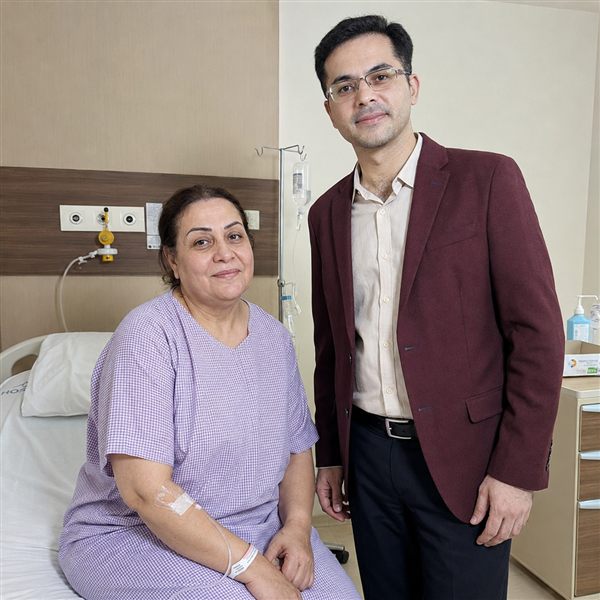
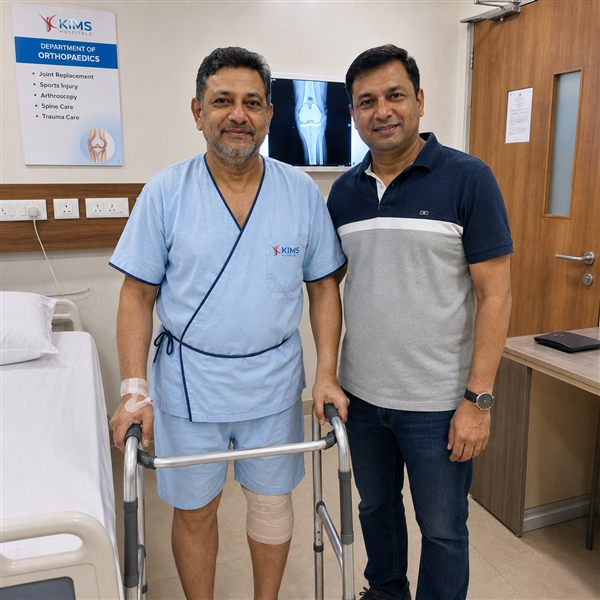
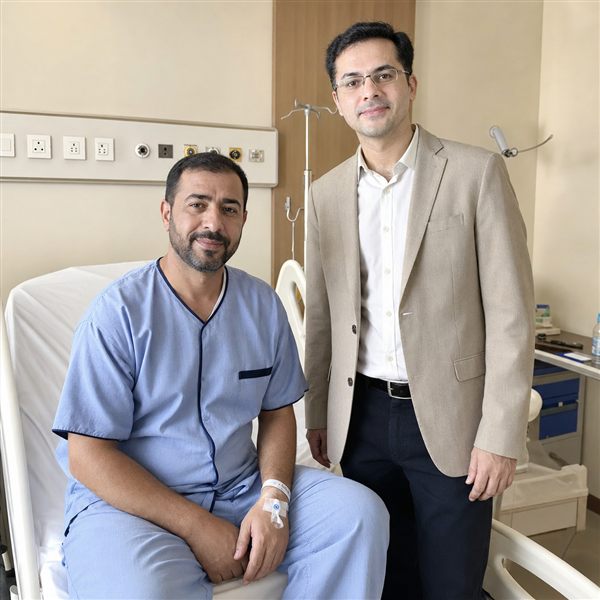
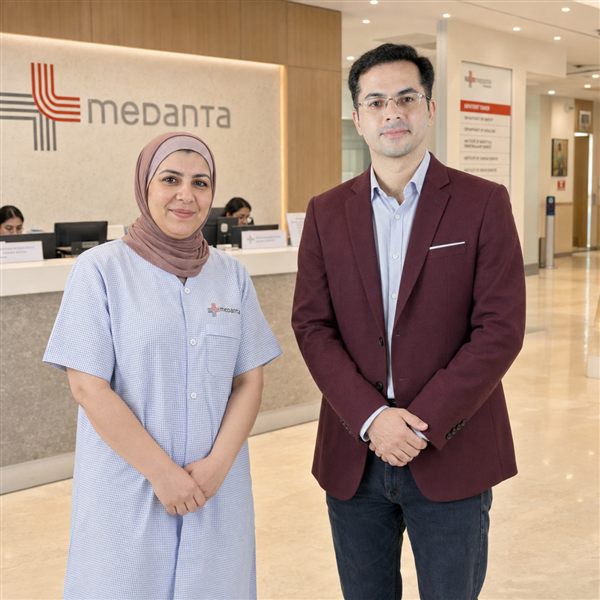
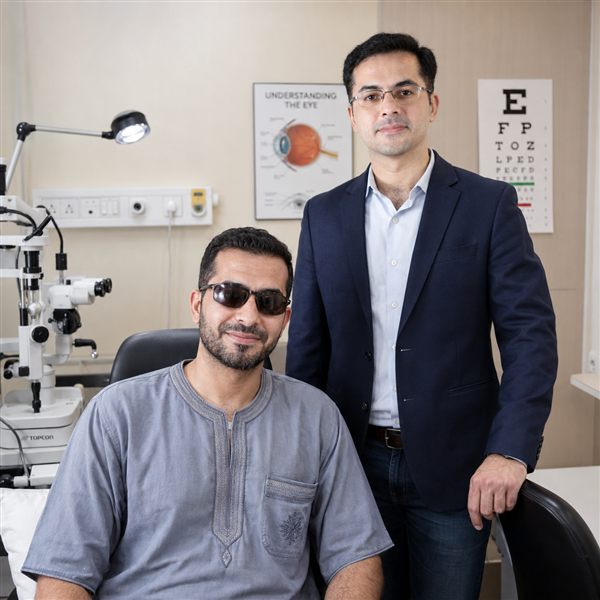
Patient Testimonials from Iraq
Ready to Take the First Step?
Share your Medical Reports with our Healthcare Managers Today and Get a FREE CONSULTATION, a Personalized Treatment Plan, and Complete Support from Arrival to Recovery.
Get Your Free ConsultationAreas We Serve
Indian Health Guru Consultants proudly assists patients from Iraq and surrounding Middle Eastern countries in accessing advanced, affordable and trusted medical treatment in India. Our team provides complete support for medical opinions, hospital selection, treatment planning, visa assistance, travel coordination, accommodation and post-treatment follow-up.
We regularly serve patients from:
- Iraq
- Turkey
- Iran
- Kuwait
- Jordan
- Syria
- Qatar
- Bahrain
- Oman
- Yemen
- Saudi Arabia
- United Arab Emirates
No matter where you are located, our experienced team is committed to making your medical journey to India safe, smooth, transparent and stress-free from the first enquiry to your return home.
From Iraq to India: Your Complete Patient Guide
- Heart Valve Replacement in India for Iraqis
- Neurosurgery in India for Iraqis
- Hip Surgery in India for Iraqis
- Cosmetic and Aesthetic Surgery in India for Iraqis
- Oral and Maxillofacial Surgery in India for Iraqis
- Robotic Cancer Surgery in India for Iraqis
- Cardiac Pacemaker Treatment in India for Iraqi Patients
- CyberKnife Treatment in India for Iraqis
- Liver Transplant in India for Iraqis
- Urosurgery and Reconstructive Urology in India for Iraqis
- Prostate Cancer Treatment and Surgery in India for Iraqis
- Gamma Knife Treatment in India for Iraqis
- Cancer Treatment in India for Iraqi Patients
- Shoulder Surgery in India for Iraqis
- Cardiac Surgery in India for Iraqis
- Paediatric Orthopaedic Surgery in India for Iraqis
- Penile Implant Surgery in India for Iraqis
- Cervical and Lumbar Disc Replacement Surgery in India for Iraqis