

Selecting the Best CyberKnife Surgeons and Hospitals in India: A Guide for Patients from Iraq
A doctor’s honest, question-by-question guide for patients from Iraq on vetting a CyberKnife hospital in India — tumor-specific control rates, accreditation, team composition, and the exact questions worth asking before you book anything.
Over the years, I have fielded a specific kind of question from Iraqi families researching CyberKnife treatment: they have usually already read a hospital’s marketing page quoting one impressive success percentage, and they call me to ask whether it is genuinely accurate. In my experience of 24 years advising patients through exactly this decision, the honest answer is almost always the same: the number is probably real, but it very likely describes a specific tumour type, a specific follow-up period, and a specific level of complexity that may or may not match your actual case. CyberKnife is a genuinely precise technology, but precision in marketing language is a different thing from precision in radiation delivery, and this guide is designed to help you tell the two apart.
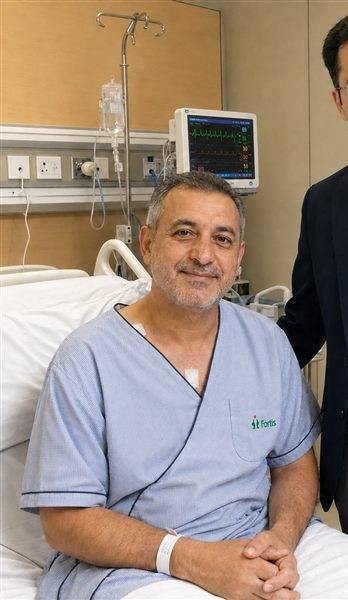
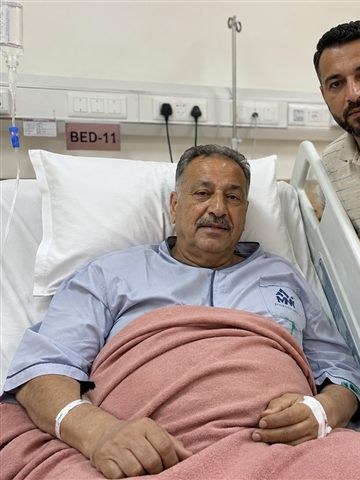
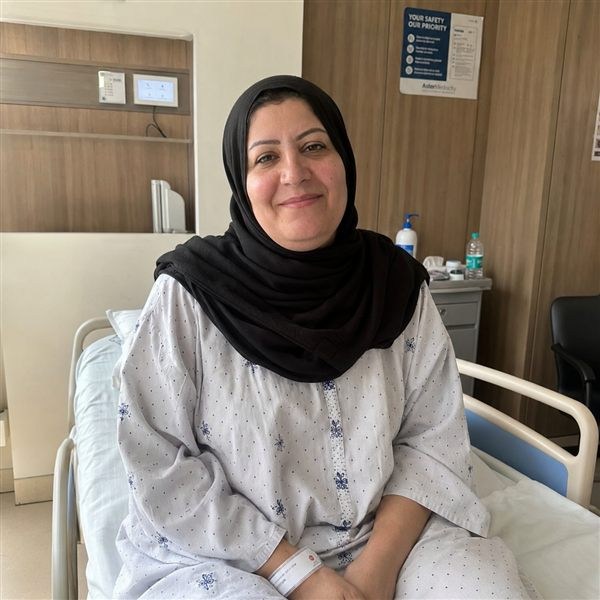
Healing Journeys of Iraqi Patients



Key Takeaways
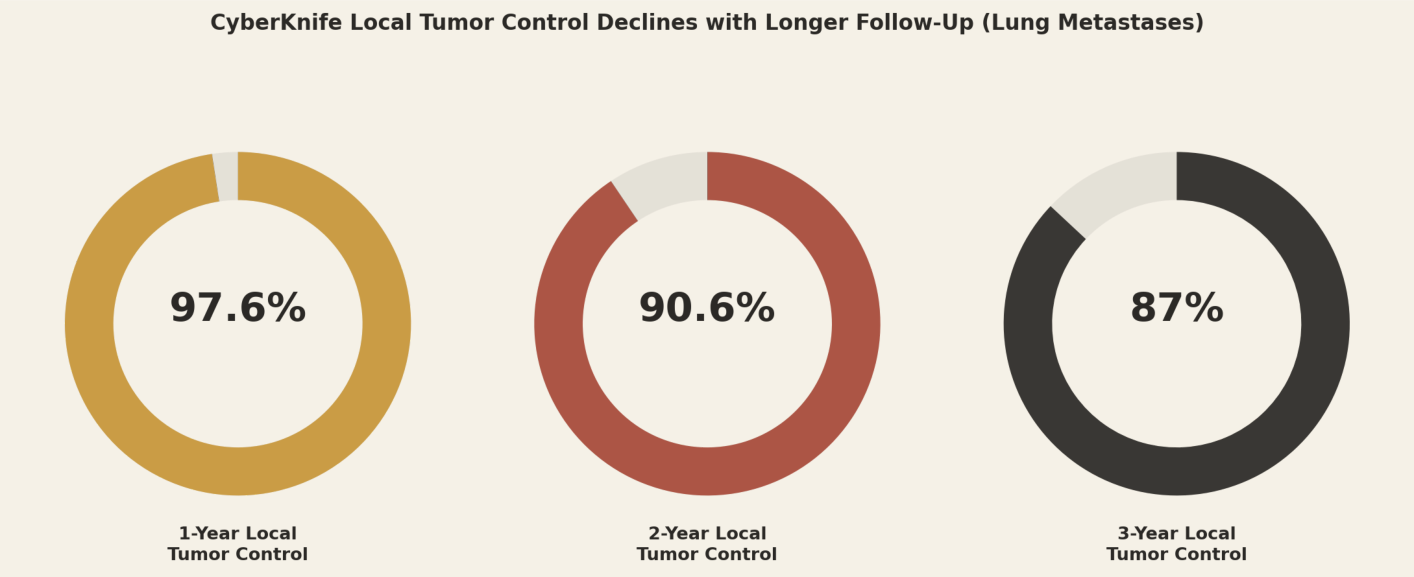
- CyberKnife is a highly precise radiation-delivery technology, but the source strongly cautions Iraqi families against judging a hospital from one headline success percentage. Outcomes vary according to tumour type, location, previous treatment and length of follow-up. For example, a published series of lung metastases treated with CyberKnife reported local tumour control of 97.6% at one year, 90.6% at two years and 87% at three years. The source contrasts these results with other tumour types, including recurrent brain tumours and difficult lesions near critical structures, where control rates can be substantially different.
- The chart on page 2 clearly illustrates why the follow-up interval matters. It shows 97.6% one-year local tumour control, 90.6% two-year control and 87% three-year control for the cited CyberKnife-treated lung metastases. Iraqi patients should therefore ask whether any quoted control rate represents one year, two years, three years or longer rather than comparing percentages without knowing the follow-up period.
- Hospital accreditation is an important first screening step. The guide recommends verifying JCI and NABH accreditation and then asking how long the specific CyberKnife system has been operating at the hospital and how many cases the radiation oncology team has actually delivered. Current NABH information provides an accreditation directory that can be searched by healthcare organisation and speciality, allowing patients to independently verify accreditation rather than relying only on promotional material.
- The most useful measure of CyberKnife experience is not simply the total number of treatments performed by a centre. Iraqi patients should ask how many cases the hospital has treated for their exact tumour type and location, what local control rate it reports for that indication and at what follow-up interval, and whether the case involves previous surgery, previous radiation or recurrence. A hospital that provides only one blended success figure across all tumour types does not give enough information to judge its relevance to the individual case.
- CyberKnife treatment planning should involve multiple specialists. The source describes a strong team as including a radiation oncologist, medical physicist and, depending on the tumour, a neurosurgeon, thoracic surgeon or another relevant specialist. A dosimetrist may also work with the physicist to optimise beam arrangement. Iraqi patients should confirm who fulfils each role and whether imaging and treatment planning are reviewed by more than one specialist before treatment begins.
- Technology should be assessed according to the patient’s tumour rather than simply whether the hospital owns a CyberKnife machine. For tumours that move with breathing, such as lung or liver tumours, the guide recommends asking whether the specific system provides real-time tumour tracking. Patients should also ask how many treatment sessions are planned and why; the source states that CyberKnife is typically delivered over one to five sessions depending on tumour type and location.
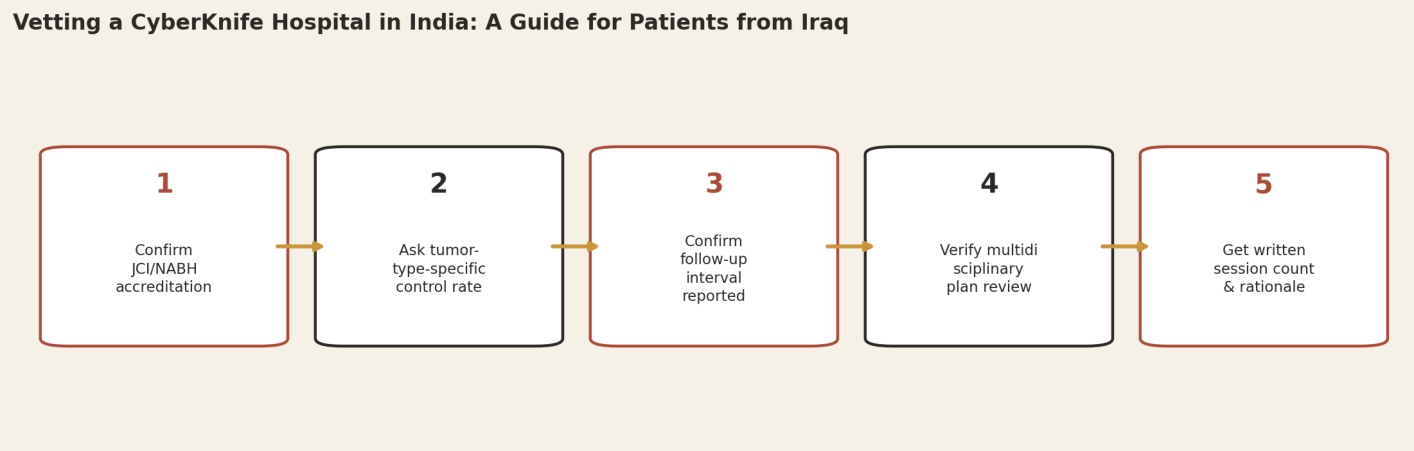
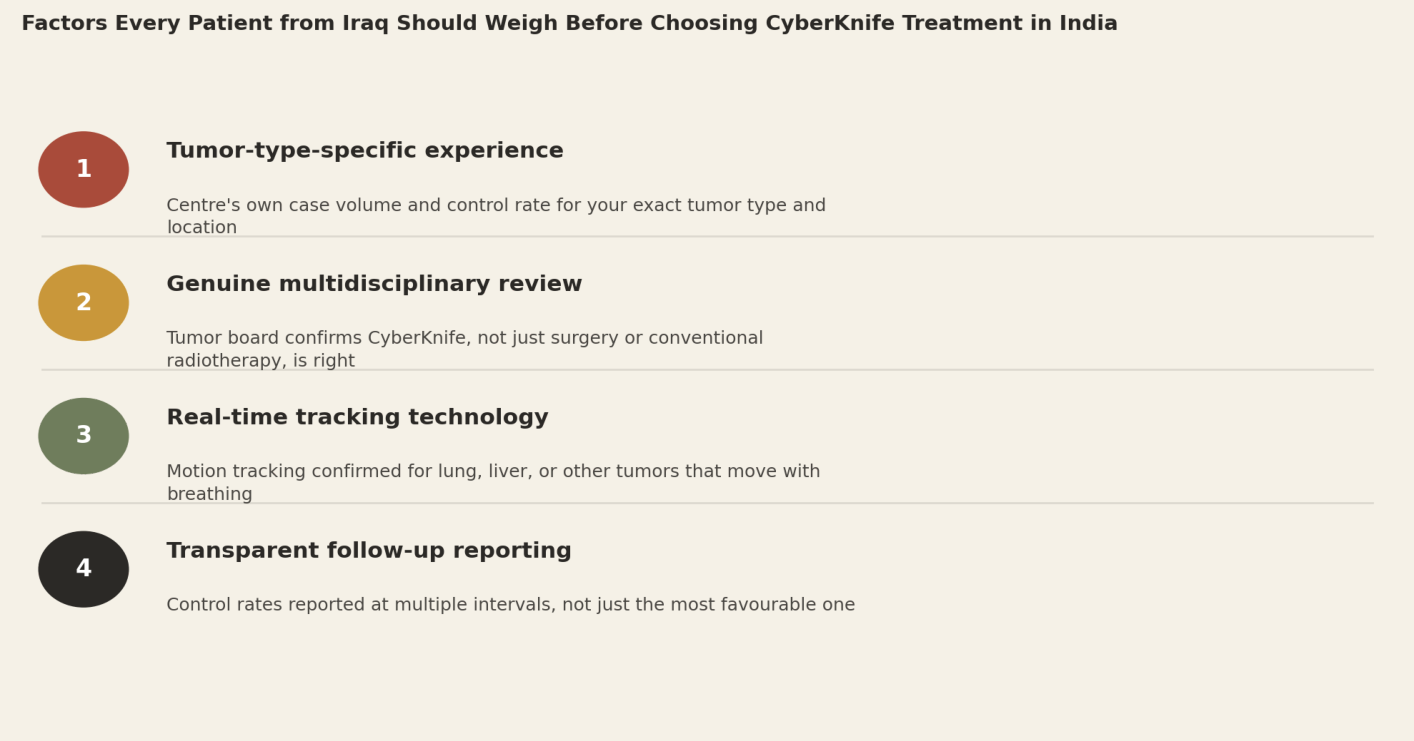
- The source identifies several important red flags: a hospital that quotes one success percentage without specifying tumour type, location and follow-up interval; a centre that cannot demonstrate experience with the patient's exact tumour type and instead gives only its total CyberKnife case count; and CyberKnife recommended simply because the equipment is available rather than through a genuine multidisciplinary review. The page 4 checklist summarises four factors: tumour-type-specific experience, genuine multidisciplinary review, real-time tracking technology where relevant, and transparent follow-up reporting.
Quick Facts
- Treatment
- CyberKnife stereotactic radiation treatment
- Primary Patients
- Iraqi patients seeking CyberKnife treatment in India
- Main Speciality
- Radiation oncology
- Key Specialist
- Radiation oncologist experienced with the relevant tumour type
- Lung Metastases
- 97.6% one-year local control in the cited study
- Two-Year Control
- 90.6% in the cited lung-metastasis series
- Three-Year Control
- 87% in the cited lung-metastasis series
- Treatment Sessions
- Typically one to five sessions depending on tumour type and location
- Tumour Assessment
- Type, location and previous treatment should be considered
- Previous Treatment
- Ask specifically about cases involving prior surgery, radiation or recurrence
- Accreditation
- Verify JCI and/or NABH accreditation
- CyberKnife Experience
- Ask for cases treated for the exact tumour type and location
- Multidisciplinary Team
- Radiation oncologist, medical physicist and relevant specialist
- Planning Support
- Dosimetrist may assist with radiation-beam planning
- Motion Tracking
- Confirm real-time tracking for tumours affected by breathing where relevant
- Treatment Review
- Imaging and treatment plan should be reviewed by more than one specialist
- Treatment Alternatives
- Confirm whether surgery or conventional radiotherapy may be more appropriate
- Combined Treatment
- Ask about coordination with systemic treatments where clinically relevant
- Follow-Up
- Request tumour-control data at multiple follow-up intervals
- Pre-Travel
- Provide imaging, pathology and previous treatment records
- Author
- Dr. Dheeraj Bojwani
- Experience
- 24+ Years
In Brief
For Iraqi patients considering CyberKnife in India, the most important question is not simply whether a hospital has CyberKnife technology but whether its radiation oncology team has meaningful experience with the patient’s exact tumour type and location. The source cites lung-metastasis data showing local tumour control of 97.6% at one year, 90.6% at two years and 87% at three years, demonstrating how reported outcomes can change with longer follow-up. Patients should therefore request tumour-specific control rates, understand the follow-up interval, confirm multidisciplinary review and ask whether the available technology provides capabilities such as real-time tracking when required.
Why the Choice of Radiation Oncology Team in India Matters as Much as the Choice of Technology
Based on my interactions with international patients, published clinical data on CyberKnife makes one thing very clear: outcomes are highly specific to tumour type, location, and how long after treatment a patient is followed. A published series treating lung metastases with CyberKnife reported local tumour control of 97.6 percent at one year, still a strong 90.6 percent at two years, and 87 percent at three years, a gradual decline over time that is entirely normal and expected for this kind of data, but one that a hospital quoting only the one-year figure would present very differently from a hospital being fully transparent about longer follow-up. Other published series treating different tumour types, including spinal metastases, recurrent brain tumours, and rare vascular tumours of the central nervous system, report meaningfully different control rates, in some cases considerably lower, particularly for tumours that have already recurred after previous treatment or that sit in technically difficult locations near critical structures. One published series of recurrent medulloblastoma, for instance, reported three-year local control of only 65 percent overall, with outcomes differing further between paediatric and adult patients. This is precisely why the specific tumour type, location, and treatment history in your case, not a single headline percentage borrowed from a different situation entirely, should shape your expectations before you travel.
How Patients from Iraq Can Verify a CyberKnife Hospital’s Accreditation in India
The fastest filter I recommend to every Iraqi family calling about CyberKnife is verifiable accreditation, not marketing language. Joint Commission International, JCI, audits a hospital’s overall clinical safety systems against the same standard used across the United States and Europe. The National Accreditation Board for Hospitals and Healthcare Providers, NABH, is India’s own domestic equivalent, and in my experience of 24 years advising families on this exact decision, a centre holding both marks together is a meaningfully stronger signal than either alone. For CyberKnife specifically, ask one further, very direct question: how many years has this specific machine been in clinical operation at this hospital, and how many CyberKnife cases has the treating radiation oncology team actually delivered, since owning the equipment and having deep clinical experience with it are two different things entirely.
CyberKnife Volume and Case-Complexity Criteria That Predict Outcomes in India
Based on my interactions with dozens of radiation oncology programmes over the years, a centre’s specific experience with your exact tumour type and its specific location is one of the clearest predictors of a good outcome, considerably more informative than the total number of CyberKnife treatments performed across every indication combined. Ask directly, in writing:
- How many CyberKnife cases has this centre treated specifically for my tumour type and location, not simply a total case count across every indication treated?
- What local tumour control rate does the centre report for this specific tumour type, and at what follow-up interval, one year, two years, or longer?
- Is my case a first treatment or a case involving prior surgery, prior radiation, or recurrence, and how does the centre's own data reflect outcomes specifically for cases like mine?
- Who reviews the treatment plan before delivery, a single radiation oncologist or a full multidisciplinary tumour board including a medical physicist?
A centre confident in its own outcomes will answer these specifically and promptly. A centre that responds only with a single blended success percentage regardless of tumour type or complexity deserves a second opinion before you commit.
Vetting a CyberKnife Hospital in India: A Guide for Patients from Iraq
Questions Patients from Iraq Should Ask About the CyberKnife Team in India
CyberKnife treatment planning is never genuinely the work of one person alone. In my experience of 24 years watching these programmes operate, the strongest units bring together a radiation oncologist to determine the overall treatment strategy, a medical physicist to plan and verify the precise radiation dose distribution, and, depending on the tumour type, a neurosurgeon, thoracic surgeon, or other relevant specialist to confirm that CyberKnife is genuinely the right tool for your specific case rather than conventional radiotherapy or surgery. A dosimetrist is often involved as well, working alongside the physicist to fine-tune exactly how the radiation beams are arranged around the tumour while sparing surrounding healthy tissue, a technical step that directly affects both how well the tumour responds and how few side effects the patient experiences afterward. Ask specifically who fills each of these roles for your case, and confirm that your imaging and treatment plan have been reviewed by more than one specialist before treatment begins, rather than finalised by a single radiation oncologist working alone.
CyberKnife Technology and Planning Standards in India That Patients from Iraq Should Check
The specific technology generation and planning process available changes what a centre can safely and precisely achieve. Ask whether the specific CyberKnife system at the hospital includes real-time tumour tracking for tumours that move with breathing, such as lung or liver tumours, since this capability directly affects treatment accuracy for these specific locations and is a meaningfully more advanced feature than static targeting alone. Ask how many treatment sessions your specific case will require and why, since CyberKnife is typically delivered over one to five sessions depending on tumour type and location, and a plan significantly outside this range for a straightforward case deserves an explanation. Ask also whether the centre has specific experience combining CyberKnife with other treatments, such as immunotherapy or targeted drug therapy, for cases where a combined approach has shown benefit in published research, since a centre limited to CyberKnife alone may not offer the fullest range of options for a complex case. Ask directly which of these specific capabilities apply to your case, not simply whether the hospital owns the equipment somewhere in the building.
Red Flags Patients from Iraq Should Watch For When Choosing a CyberKnife Hospital in India
Over the years, certain patterns have become reliable warning signs for me. A hospital that quotes a single success percentage without specifying tumour type, location, and follow-up interval has given you a number without the context needed to interpret it honestly. A centre that cannot state its own specific experience with your exact tumour type, offering only a total case count across all indications, has not demonstrated the specific expertise your case actually needs. And a centre that recommends CyberKnife without first confirming, through a genuine multidisciplinary review, that it is more appropriate than surgery or conventional radiotherapy for your specific situation deserves closer questioning before you proceed.
Factors Every Patient from Iraq Should Weigh Before Choosing CyberKnife Treatment in India
A Closing Thought for Iraqi Families
CyberKnife is a genuinely precise and valuable technology for the right tumour type and location, and it deserves a treatment team that explains honestly which category your case falls into and what outcome data actually applies, rather than a single optimistic percentage detached from your specific situation. Based on my interactions with international patients over more than two decades, the families who ask about tumour-specific control rates, follow-up intervals, and genuine multidisciplinary review consistently arrive at treatment better informed than those who accept a general marketing claim at face value. My role, and the role of any advisor a family works with, should be to help you ask these exact questions and confirm honestly that the specific team and specific hospital in front of you are the right fit for your family’s exact diagnosis. Iraq’s families deserve the same standard of scrutiny in this decision as any family anywhere else in the world.
Sources & Further Reading
- Joint Commission International (JCI) — Accredited Organizations Directory (jointcommissioninternational.org)
- National Accreditation Board for Hospitals & Healthcare Providers (NABH), India (nabh.co)
- PubMed Central — Clinical Outcomes of CyberKnife Stereotactic Radiosurgery for Lung Metastases (pmc.ncbi.nlm.nih.gov)
- PubMed Central — CyberKnife Radiosurgery for Recurrent Cranial Medulloblastomas (ncbi.nlm.nih.gov/pmc)
- American Society for Radiation Oncology (ASTRO) — Stereotactic Radiosurgery Patient Information (astro.org)
Frequently Asked Questions by Iraqi Patients about Selecting a CyberKnife Surgeon and Hospital in India
Can Iraqi patients receive CyberKnife treatment in India?
Yes. The guide is specifically intended to help Iraqi families evaluate CyberKnife hospitals and radiation oncology teams in India before travelling for treatment.
What is the CyberKnife success rate for Iraqi patients in India?
There is no single success rate applicable to every CyberKnife patient. The source cites lung-metastasis local control of 97.6% at one year, 90.6% at two years and 87% at three years, while other tumour types can have different outcomes.
How should Iraqi patients compare CyberKnife hospitals in India?
They should compare tumour-specific case volume, local control rates, follow-up intervals, multidisciplinary review, technology capabilities and experience with patients who have had previous treatment or recurrence.
How many CyberKnife sessions are usually required?
The source states that CyberKnife is typically delivered over one to five sessions, depending on the tumour type and location. Patients should ask why the proposed number of sessions is appropriate for their particular case.
Is CyberKnife suitable for recurrent tumours in Iraqi patients?
It may be considered for selected recurrent tumours, but outcomes can differ from those of first-treatment cases. Iraqi patients should ask for the centre's own results specifically for patients with previous surgery, radiation or recurrence.
Can CyberKnife treat lung tumours or lung metastases in India?
The source includes published data for CyberKnife-treated lung metastases and specifically recommends asking whether the system provides real-time tumour tracking for tumours that move with breathing.
What specialists should review an Iraqi patient's CyberKnife treatment plan?
The team may include a radiation oncologist, medical physicist, dosimetrist and a relevant specialist such as a neurosurgeon or thoracic surgeon depending on the tumour. The guide recommends multidisciplinary review before treatment.
Why is real-time tumour tracking important for CyberKnife treatment?
Tumours in organs such as the lung or liver can move with breathing. The source recommends confirming whether the CyberKnife system can track such movement in real time when this capability is relevant to the patient's treatment.
Should Iraqi patients choose CyberKnife instead of surgery or conventional radiotherapy?
Not automatically. The guide recommends confirming through genuine multidisciplinary review that CyberKnife is the appropriate treatment for the patient's tumour rather than choosing it simply because the technology is available.
What should Iraqi patients verify before travelling to India for CyberKnife treatment?
They should verify accreditation, tumour-specific CyberKnife experience, local control data and follow-up intervals, multidisciplinary treatment review, relevant motion-tracking technology and the number of planned treatment sessions. A written treatment and follow-up plan should be obtained before travelling.
Page Summary
CyberKnife can provide highly precise stereotactic radiation for selected tumours, but the source stresses that treatment outcomes depend on tumour type, location, previous treatment and follow-up duration. Iraqi patients should therefore avoid comparing hospitals through a single advertised success percentage. The page 2 chart demonstrates this clearly, showing local control for lung metastases declining from 97.6% at one year to 90.6% at two years and 87% at three years.
A suitable CyberKnife programme should combine appropriate accreditation with tumour-specific experience, multidisciplinary treatment planning, relevant motion-tracking technology and transparent long-term outcome reporting. Before travelling from Iraq, patients should establish whether CyberKnife is genuinely preferable to surgery or conventional radiotherapy for their diagnosis and obtain a written plan explaining the treatment sessions, specialist team and follow-up strategy.
Citation Block
| Field | Details |
|---|---|
| Article / Topic | Selecting the Best CyberKnife Surgeons and Hospitals in India |
| Primary Patients | Patients from Iraq |
| Treatment Area | CyberKnife stereotactic radiation treatment |
| Main Specialist | Radiation oncologist |
| Key Selection Principle | Tumour-specific experience and outcomes |
| Lung Metastases One-Year Control | 97.6% |
| Lung Metastases Two-Year Control | 90.6% |
| Lung Metastases Three-Year Control | 87% |
| Other Tumour Outcomes | Can differ substantially by tumour type and complexity |
| Accreditation | JCI and NABH |
| Machine Experience | Ask how long the specific CyberKnife system has operated |
| Centre Volume | Ask for cases involving the exact tumour type and location |
| Outcome Reporting | Request tumour-specific local control rates |
| Follow-Up Interval | Confirm whether reported outcomes are at one, two, three years or longer |
| Previous Treatment | Assess prior surgery, radiation and recurrence |
| Radiation Oncologist | Determines overall treatment strategy |
| Medical Physicist | Plans and verifies radiation-dose distribution |
| Relevant Specialist | Neurosurgeon, thoracic surgeon or other specialist depending on tumour |
| Dosimetrist | May optimise radiation-beam arrangement |
| Multidisciplinary Review | Treatment plan should be reviewed by more than one specialist |
| Motion Tracking | Real-time tracking should be confirmed for moving tumours where relevant |
| Treatment Sessions | Typically one to five sessions depending on tumour and location |
| Alternative Treatment | Confirm whether surgery or conventional radiotherapy is more appropriate |
| Combined Therapy | Ask about coordination with immunotherapy or targeted treatment where relevant |


Our Mission Statement
Our mission is to place patients at the centre of every healthcare decision by providing trustworthy, evidence-based, and unbiased medical information. We believe that informed patients make better decisions. Backed by personalised guidance from our experienced advisory team, we help patients understand their treatment options, compare them objectively, and confidently choose the path that best suits their medical needs and personal circumstances.
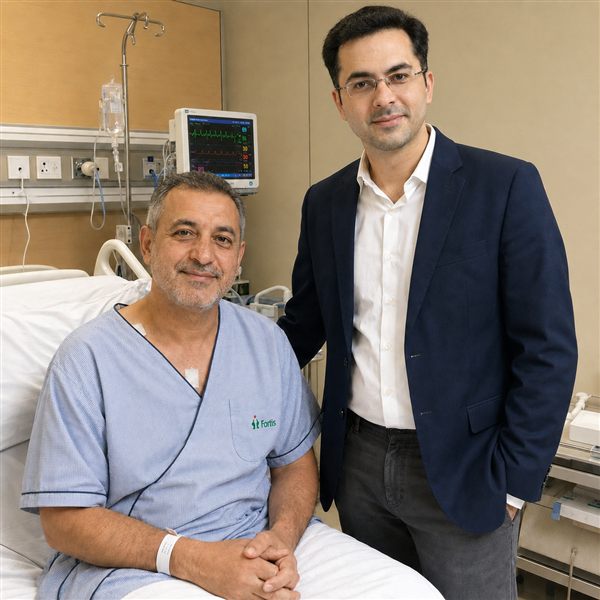
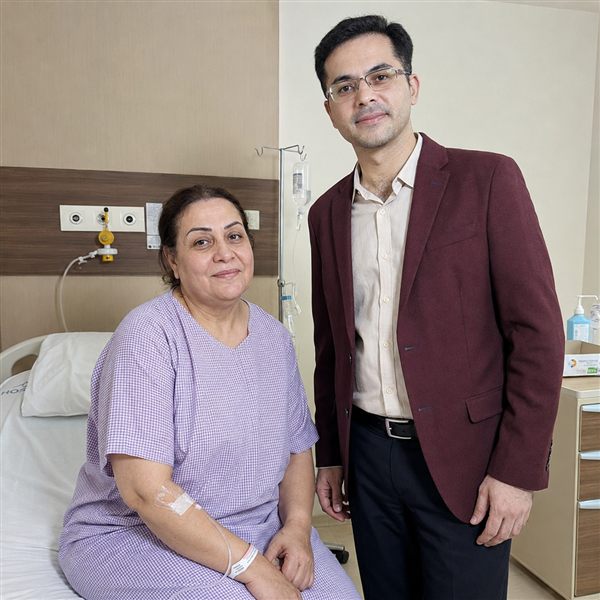
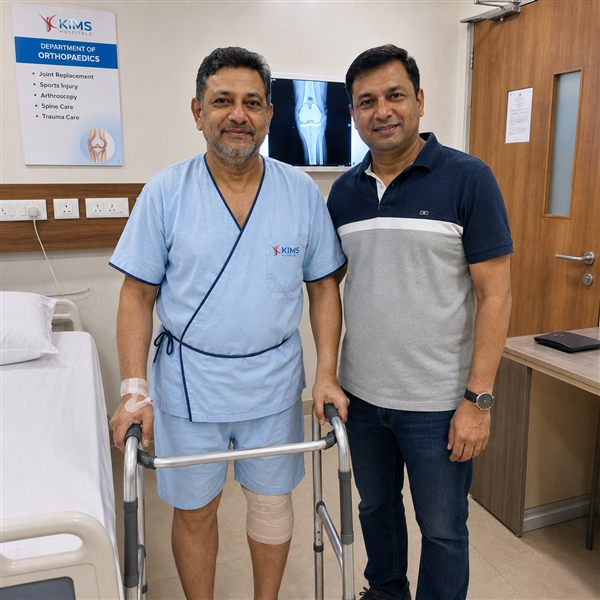
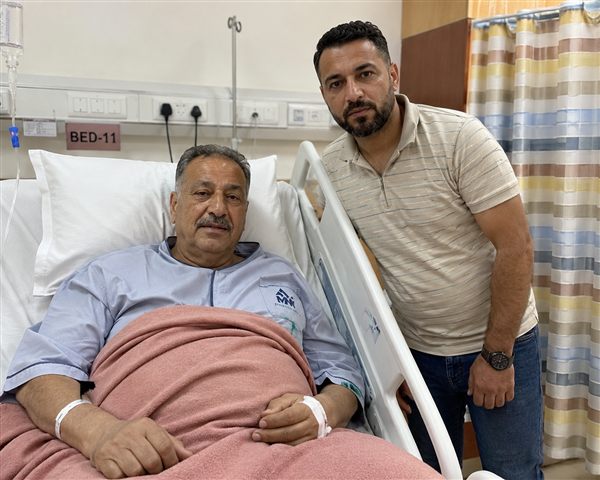
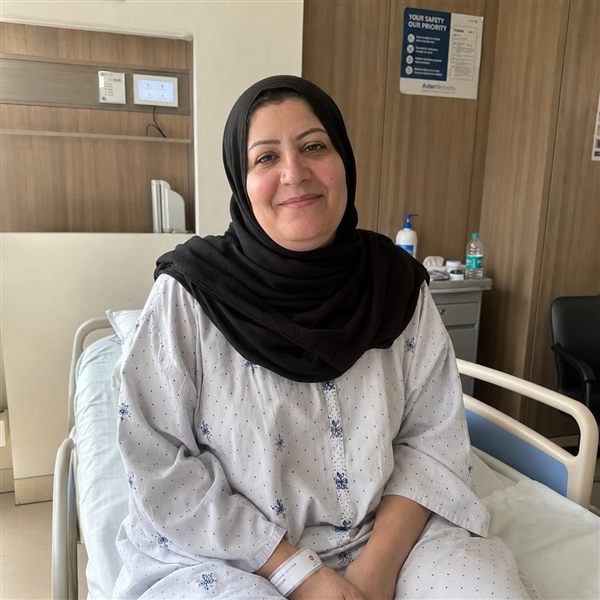
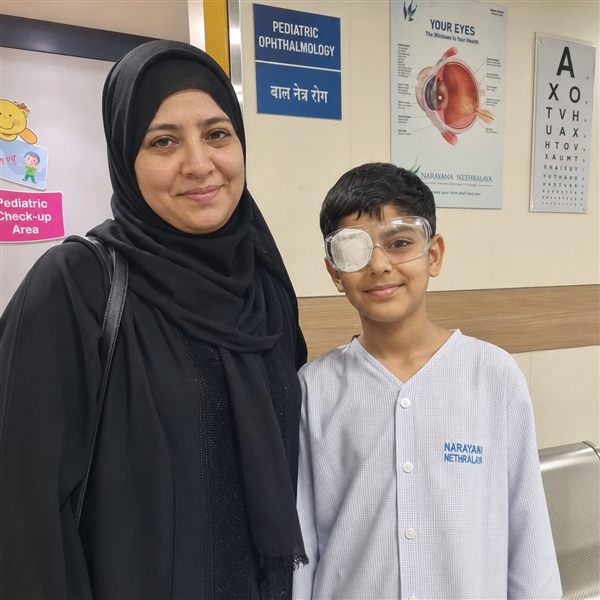
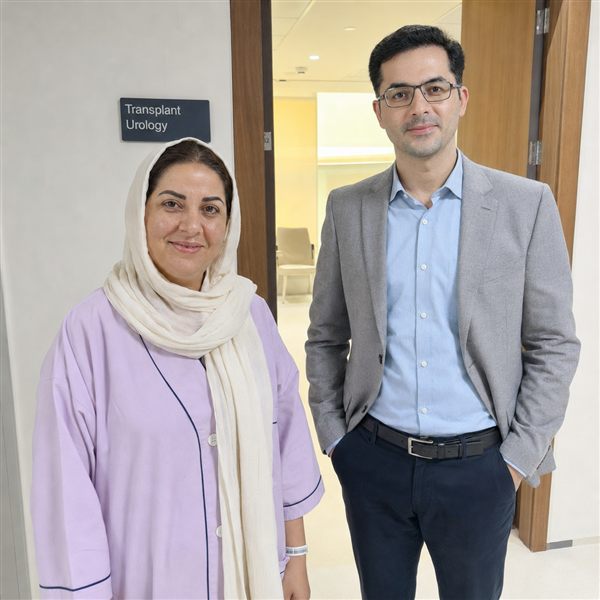
Patient Testimonials from Iraq


Ready to Take the First Step?
Share your Medical Reports with our Healthcare Managers Today and Get a FREE CONSULTATION, a Personalized Treatment Plan, and Complete Support from Arrival to Recovery.
Get Your Free ConsultationAreas We Serve
Indian Health Guru Consultants proudly assists patients from Iraq and surrounding Middle Eastern countries in accessing advanced, affordable and trusted medical treatment in India. Our team provides complete support for medical opinions, hospital selection, treatment planning, visa assistance, travel coordination, accommodation and post-treatment follow-up.
We regularly serve patients from:
- Iraq
- Turkey
- Iran
- Kuwait
- Jordan
- Syria
- Qatar
- Bahrain
- Oman
- Yemen
- Saudi Arabia
- United Arab Emirates
No matter where you are located, our experienced team is committed to making your medical journey to India safe, smooth, transparent and stress-free from the first enquiry to your return home.
From Iraq to India: Your Complete Patient Guide
- Gamma Knife Treatment in India for Iraqis
- Paediatric Orthopaedic Surgery in India for Iraqis
- Cervical and Lumbar Disc Replacement Surgery in India for Iraqis
- Scoliosis Correction Surgery in India for Iraqis
- Cosmetic and Aesthetic Surgery in India for Iraqis
- Weight Loss and Bariatric Surgery in India for Iraqis: Cost & Guide
- Hip Surgery in India for Iraqis
- Brain Tumour Surgery in India for Iraqi Patients
- Pancreatic Cancer Surgery in India for Iraqis
- Proton Therapy in India for Iraqis
- Heart Failure Treatment and Surgery in India for Iraqis
- Cornea Transplant and Advanced Eye Surgery in India for Iraqis
- Neurosurgery in India for Iraqis
- Cardiac Surgery in India for Iraqis
- Dental Surgery in India for Iraqis
- Dental Implants and Smile Makeover in India for Iraqis
- Paediatric Heart Surgery in India for Iraqis
- Cancer Treatment in India for Iraqi Patients