

Selecting the Best Cornea Transplant and Advanced Eye Surgeons and Hospitals in India: A Guide for Patients from Iraq
A doctor’s honest, question-by-question guide for patients from Iraq on vetting a corneal transplant hospital in India — risk category, accreditation, eye bank quality, and the exact questions worth asking before you book anything.
Over the years, I have noticed that corneal transplant is often discussed as though it were a single, uniform procedure with one success rate, when the published data shows something quite different. In my experience of 24 years advising patients on this exact decision, the specific category your case falls into, a routine first-time transplant for a stable condition versus a high-risk repeat graft or an emergency transplant to save an actively infected eye, changes the realistic outcome dramatically, and a hospital that quotes one flat success percentage regardless of your specific situation has not yet engaged with the details of your case.
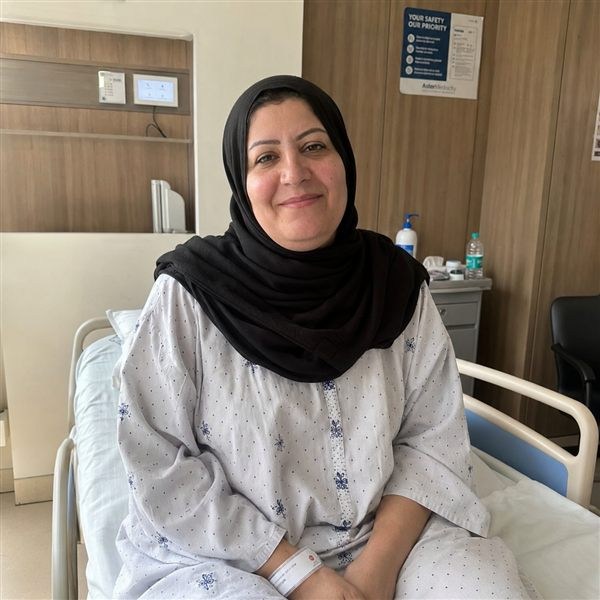
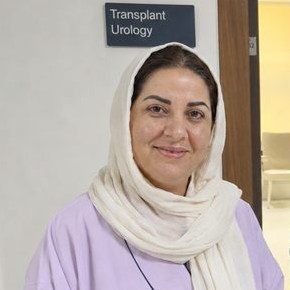
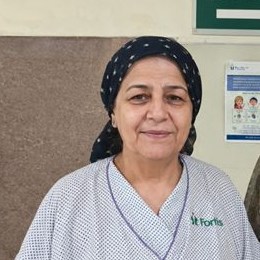
Healing Journeys of Iraqi Patients
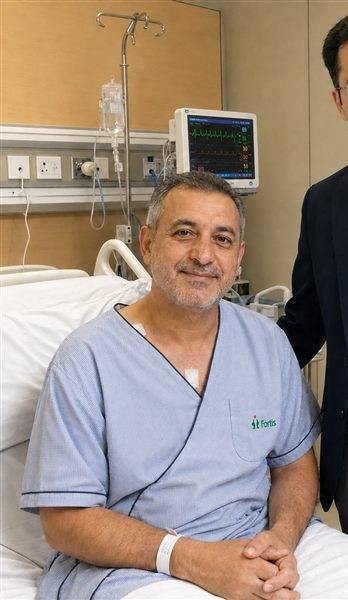
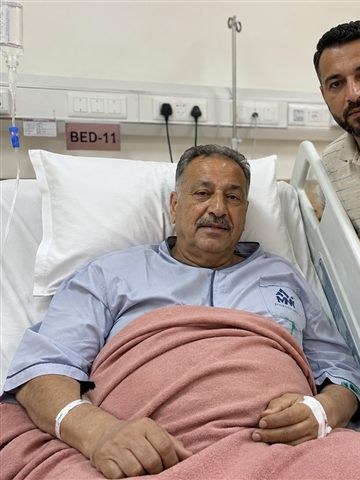


Key Takeaways
- Corneal transplantation should not be treated as one procedure with one universal success rate. The source distinguishes between first-time, low-risk optical keratoplasty, high-risk or repeat transplantation and therapeutic keratoplasty performed urgently for an actively infected eye. First-time low-risk optical transplantation is reported at approximately 85–90% success, while high-risk or repeat grafts are reported around 60–75%. Therapeutic transplantation has a substantially different prognosis because the eye is already in crisis; the cited South Indian study found only 7.5% of original grafts remained clear at six months and 9.4% achieved clarity at three years.
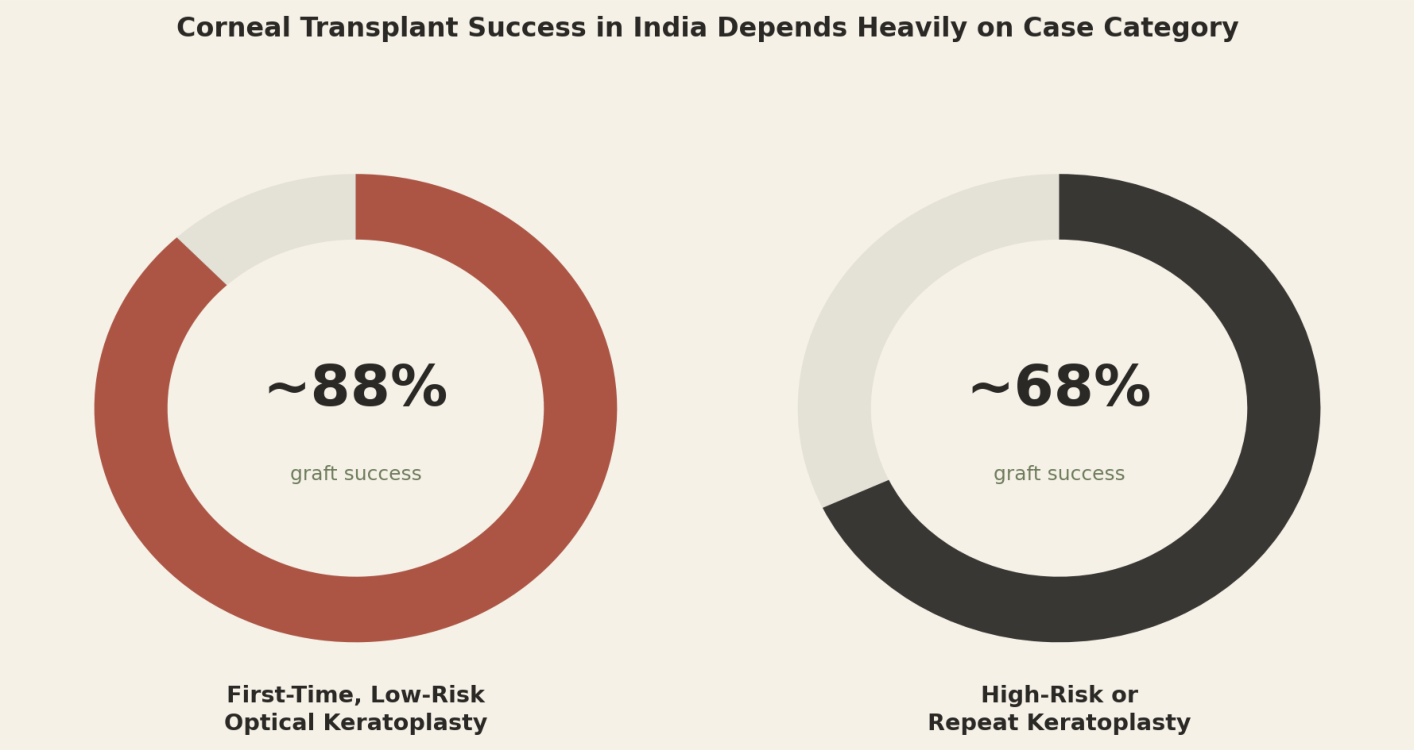
- The chart on page 2 reinforces the importance of identifying the patient's risk category before comparing success figures. It presents an illustrative graft-success figure of approximately 88% for first-time, low-risk optical keratoplasty and approximately 68% for high-risk or repeat keratoplasty. These figures are intended to illustrate the difference between case categories rather than predict an individual patient's result. Iraqi patients should therefore ask which category their own eye belongs to before comparing surgeons or hospitals.
- Hospital accreditation is recommended as an initial screening step, but the guide places particular importance on the relationship between the eye hospital and its eye bank. Iraqi patients should verify JCI and NABH accreditation and ask whether the hospital works with an established eye bank that maintains a transparent and quality-controlled donor-tissue supply chain. The source specifically links donor tissue quality and handling with graft survival, making eye bank arrangements an important part of hospital selection.
- The surgeon's experience should be specific to the exact type of keratoplasty required. The guide recommends asking whether the case is a first-time low-risk transplant, high-risk repeat graft or therapeutic transplant, and whether the surgeon performs selective procedures such as Descemet's stripping endothelial keratoplasty or deep anterior lamellar keratoplasty when appropriate. These techniques replace only the diseased corneal layer rather than the full thickness of the cornea, making it important for patients to understand whether a selective procedure is suitable for their condition.
- The source also highlights risk factors that can change the prognosis. Iraqi patients should ask whether corneal vascularisation has been assessed because blood-vessel growth into the cornea can meaningfully increase rejection risk. Patients should also ask about the surgeon's fellowship-level corneal training, access to timely donor tissue and experience with the exact keratoplasty technique being considered. A surgeon who quotes one general success percentage without first identifying the patient's case category should be questioned and may warrant a second opinion.
- Long-term follow-up is an essential part of corneal transplant care. The source recommends a corneal specialist with specific training, a reliable eye bank relationship and a structured follow-up protocol for detecting graft rejection. Rejection can occur months or even years after an apparently successful transplant, so Iraqi patients should establish before travelling who will monitor the graft after they return home and how early warning signs of rejection will be recognised and managed remotely.
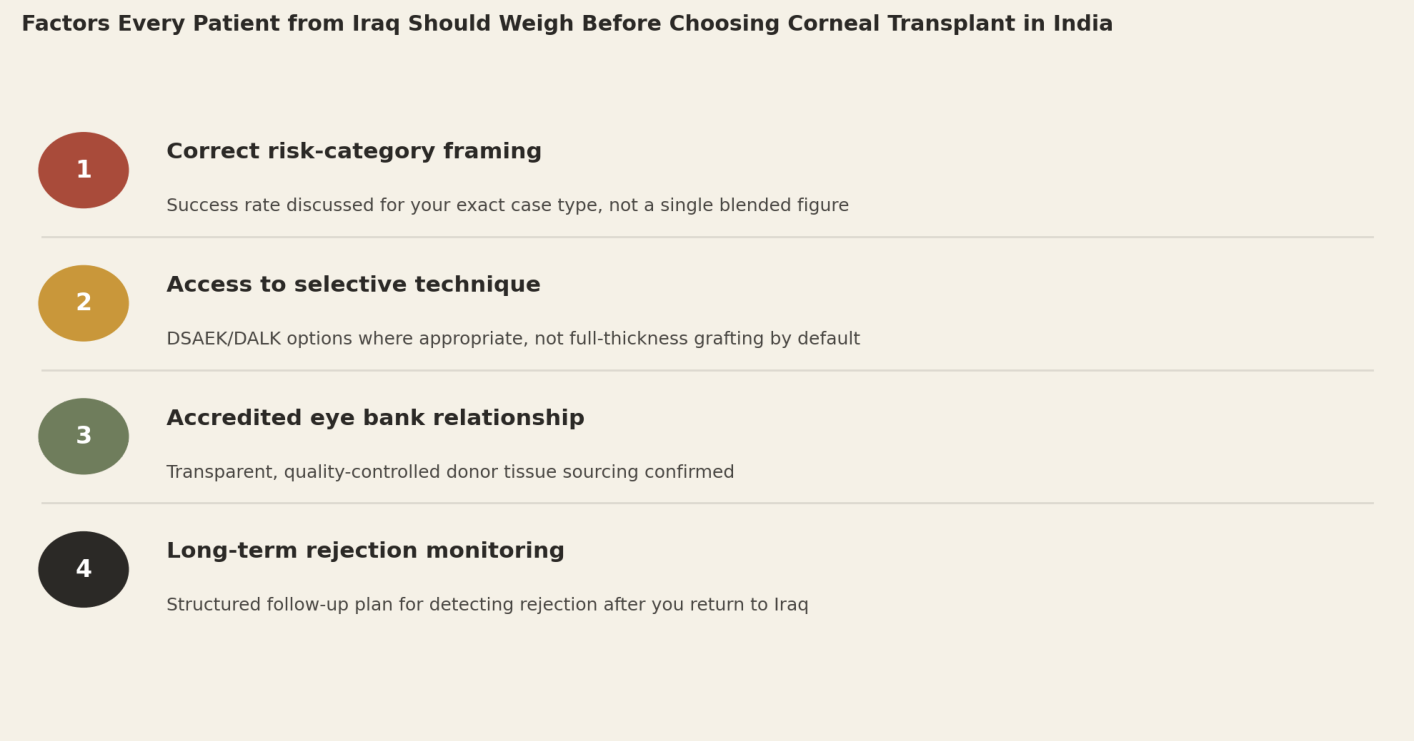
- The page 3 checklist summarises four key factors for Iraqi patients: correct risk-category assessment, access to selective techniques such as DSEK/DALK when appropriate, a transparent accredited eye-bank relationship and structured long-term rejection monitoring. The guide also identifies important red flags, including a hospital quoting one flat success rate, inability to clearly explain donor tissue sourcing and absence of a long-term rejection-monitoring plan. The closing message is that patients should compare surgeons based on their exact clinical situation, available techniques and donor-tissue quality rather than accepting an optimistic percentage taken from a different category of corneal transplant.
Quick Facts
- Treatment
- Cornea transplant and advanced corneal surgery
- Primary Patients
- Iraqi patients seeking corneal treatment in India
- Main Speciality
- Corneal and anterior-segment ophthalmology
- Key Specialist
- Corneal surgeon with specific keratoplasty training
- Low-Risk Transplant
- Approximately 85–90% reported success
- High-Risk or Repeat Graft
- Approximately 60–75% reported success
- Therapeutic Keratoplasty
- Emergency treatment for an actively infected eye with substantially different outcomes
- First-Time Low-Risk Chart Figure
- Approximately 88%
- High-Risk or Repeat Chart Figure
- Approximately 68%
- Selective Techniques
- DSEK and DALK where clinically appropriate
- Eye Bank
- Verify an established, quality-controlled donor tissue supply chain
- Accreditation
- Verify JCI and/or NABH accreditation
- Risk Factor
- Corneal vascularisation can increase rejection risk
- Specialist Experience
- Ask about experience with the exact keratoplasty type
- Follow-Up
- Long-term graft and rejection monitoring is essential
- Rejection
- Can occur months or years after transplantation
- Remote Care
- Confirm how follow-up will continue after returning to Iraq
- Pre-Travel
- Provide corneal examination records and previous treatment information
- Written Plan
- Obtain a clear treatment and follow-up plan
- Author
- Dr. Dheeraj Bojwani
- Experience
- 24+ Years
In Brief
For Iraqi patients considering corneal transplantation in India, the first question should be which clinical category the patient falls into rather than what single success rate a hospital advertises. The source reports approximately 85–90% success for first-time, low-risk optical keratoplasty and approximately 60–75% for high-risk or repeat grafts, while therapeutic keratoplasty for active infection has a much more difficult prognosis. The page 2 visual comparison shows approximately 88% graft success for first-time, low-risk optical keratoplasty versus approximately 68% for high-risk or repeat keratoplasty. Patients should therefore seek a prognosis based on their individual risk category, surgical technique and eye condition.
Why the Choice of Corneal Surgeon in India Matters as Much as the Choice of Hospital
Based on my interactions with international patients, the published literature on this distinction is genuinely stark. First-time, low-risk optical keratoplasty, performed electively to restore vision in a stable eye, commonly reports success rates in the range of 85 to 90 percent, with newer, more minimally invasive techniques such as endothelial keratoplasty often performing even better. High-risk or repeat transplants, by contrast, are reported in the range of 60 to 75 percent. Therapeutic keratoplasty, performed as an emergency to save an eye with active infection rather than primarily to restore vision, is a different picture entirely: a published outcomes study from a tertiary eye care hospital in South India found that only 7.5 percent of grafts remained clear at six months, rising modestly to 9.4 percent achieving clarity at three years for the original graft. This is not a criticism of the surgeons involved, since therapeutic keratoplasty is inherently a rescue procedure performed on eyes already in crisis, but it is a critical distinction a family needs to understand before comparing “success rate” figures across different situations.
How Patients from Iraq Can Verify an Eye Hospital’s Accreditation in India
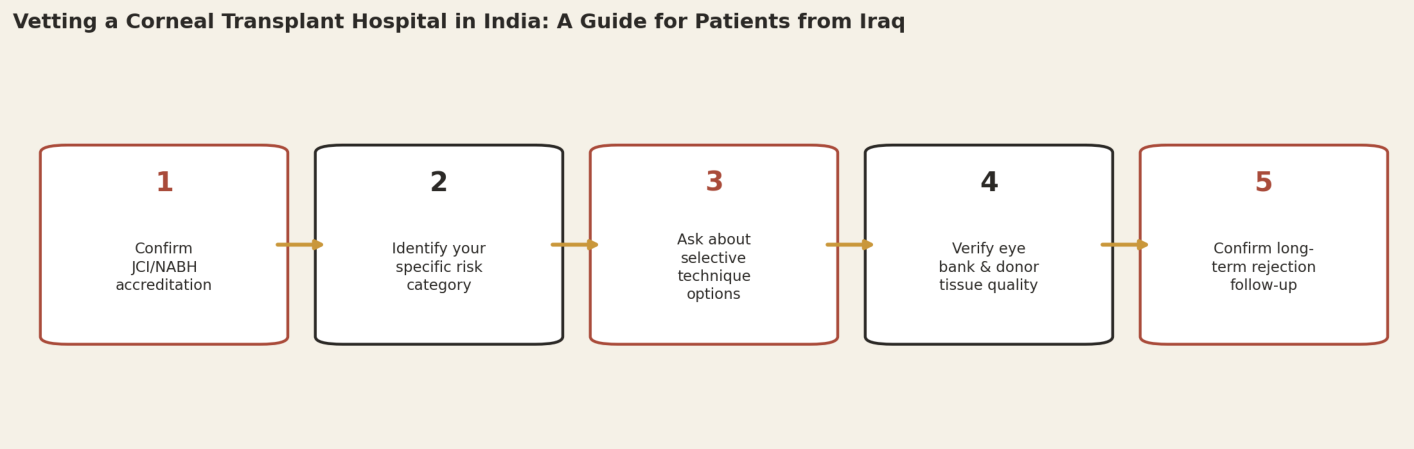
The fastest filter I recommend to every Iraqi patient calling about a corneal transplant is verifiable accreditation, not marketing language. Joint Commission International, JCI, audits a hospital’s overall clinical safety systems against the same standard used across the United States and Europe. The National Accreditation Board for Hospitals and Healthcare Providers, NABH, is India’s own domestic equivalent, and in my experience of 24 years advising patients on this exact decision, a centre holding both marks together is a meaningfully stronger signal than either alone. For corneal transplant specifically, ask one further, very direct question: does the hospital work with an established eye bank with a transparent, quality-controlled donor tissue supply chain, since the quality and handling of donor tissue directly affects graft survival.
Corneal Surgery Volume and Technique Criteria That Predict Outcomes in India
Based on my interactions with dozens of corneal surgery programmes over the years, a surgeon’s specific experience with your exact type of keratoplasty, and their access to the newer, more selective techniques, is one of the clearest predictors of a good outcome. India’s own eye care community has noted that treating corneal blindness at scale requires roughly one thousand well-trained corneal specialists nationally, underscoring how genuinely specialised this sub-field is even within ophthalmology. Ask directly, in writing:
- Is my specific case a first-time, low-risk transplant, a high-risk repeat graft, or a therapeutic transplant for active infection, and what does published data suggest for that specific category?
- Does the surgeon offer selective techniques such as Descemet’s stripping endothelial keratoplasty or deep anterior lamellar keratoplasty, which replace only the diseased layer of the cornea rather than the full thickness, where appropriate for my condition?
- What is the source and quality-control process for the donor cornea, and does the hospital work with an accredited eye bank?
- If I have corneal vascularisation, blood vessel growth into the cornea that meaningfully raises rejection risk, has this been assessed and factored into my specific prognosis?
A surgeon confident in their own outcomes will answer these specifically. A surgeon who quotes a single success percentage without asking which category your case falls into deserves a second opinion.
Vetting a Corneal Transplant Hospital in India: A Guide for Patients from Iraq
Questions Patients from Iraq Should Ask About the Corneal Surgery Team in India
Corneal transplant outcomes depend on more than the surgery itself. In my experience of 24 years watching these programmes operate, the strongest units include a corneal specialist with specific fellowship training beyond general ophthalmology, a reliable eye bank relationship for timely, quality donor tissue, and a structured long-term follow-up protocol for monitoring graft rejection, since rejection can occur months or even years after a seemingly successful transplant. Ask specifically who will manage your long-term follow-up once you return to Iraq, and confirm a clear plan exists for recognising and treating early signs of rejection remotely.
Red Flags Patients from Iraq Should Watch For When Choosing an Eye Hospital in India
Over the years, certain patterns have become reliable warning signs for me. A hospital that quotes one flat success rate without asking whether your case is first-time, repeat, or therapeutic has not engaged with the actual complexity of corneal transplant outcomes. A hospital that cannot describe its donor tissue sourcing and eye bank relationship clearly is asking you to trust a critical part of the process on faith alone. And a hospital with no structured long-term follow-up plan for rejection monitoring is leaving the most important part of your recovery unmanaged once you leave the country.
Factors Every Patient from Iraq Should Weigh Before Choosing Corneal Transplant in India
A Closing Thought for Iraqi Families
Corneal transplant restores one of the senses people fear losing most, and it deserves a surgeon who understands precisely which category your case falls into and communicates that honestly, not a single optimistic percentage borrowed from an entirely different type of case. Based on my interactions with international patients over more than two decades, the patients who ask about their specific risk category, technique options, and eye bank quality consistently arrive better prepared than those who accept a general reassurance alone. My role, and the role of any advisor a patient works with, should be to help you ask these exact questions and confirm honestly that the specific surgeon and specific hospital in front of you are the right fit for your exact situation. Iraq’s patients deserve the same standard of scrutiny in this decision as any patient anywhere else in the world.
Sources & Further Reading
- Joint Commission International (JCI) — Accredited Organizations Directory (jointcommissioninternational.org)
- National Accreditation Board for Hospitals & Healthcare Providers (NABH), India (nabh.co)
- PubMed Central — Data Gap: Transplantable Corneal Blindness, Transplantation, and Eye Banking in India (pmc.ncbi.nlm.nih.gov)
- PubMed Central — Long-Term Outcomes of Therapeutic Corneal Transplants, South India (pmc.ncbi.nlm.nih.gov)
- Eye Bank Association of America (EBAA) — Patient Information on Corneal Transplant (restoresight.org)
Frequently Asked Questions by Iraqi Patients about Selecting a Cornea Transplant Surgeon and Hospital in India
Can Iraqi patients undergo cornea transplant surgery in India?
Yes. The guide is specifically intended to help patients from Iraq evaluate Indian corneal surgeons and eye hospitals before travelling for transplantation.
What is the success rate of cornea transplant surgery in India for Iraqi patients?
The source reports approximately 85–90% for first-time, low-risk optical keratoplasty and approximately 60–75% for high-risk or repeat grafts. Individual outcomes depend on the patient's condition and risk category.
What is the difference between a first-time and repeat cornea transplant?
A first-time transplant in a stable, low-risk eye generally has a different prognosis from a repeat graft. The source advises patients to identify their exact category before comparing success rates between hospitals.
What is therapeutic keratoplasty and when is it performed?
Therapeutic keratoplasty is an emergency corneal transplant performed to save an eye affected by active infection rather than primarily to restore vision. The source reports substantially lower graft clarity in this high-risk situation.
Are DSEK and DALK available for Iraqi patients in India?
The guide recommends asking whether the surgeon offers selective procedures such as DSEK or DALK when appropriate. These techniques replace only the diseased corneal layer rather than the entire corneal thickness.
Why is the eye bank important for cornea transplant patients from Iraq?
Donor corneal tissue is central to transplantation, so patients should ask where the tissue comes from and how it is quality-controlled. The source recommends choosing a hospital with a reliable relationship with an established eye bank.
Does corneal vascularisation affect cornea transplant outcomes?
It can. The guide identifies blood-vessel growth into the cornea as a factor that can meaningfully increase rejection risk, so Iraqi patients should ask whether it has been assessed in their case.
How long do Iraqi patients need cornea transplant follow-up after returning from India?
The source stresses that monitoring needs to continue long term because graft rejection can occur months or even years after transplantation. Patients should establish a clear follow-up and remote-monitoring plan before returning to Iraq.
What should Iraqi patients ask a cornea transplant surgeon in India?
They should ask which risk category their case belongs to, the surgeon's experience with the exact keratoplasty technique, whether selective procedures are appropriate, the surgeon's approach to vascularisation and the expected follow-up plan.
What should Iraqi patients verify before travelling to India for cornea transplant surgery?
They should verify hospital accreditation, the surgeon's corneal expertise, donor tissue and eye-bank arrangements, suitability of selective techniques, individual rejection risk and a structured long-term follow-up plan after returning to Iraq.
Page Summary
Cornea transplantation for Iraqi patients should be planned according to the patient's exact clinical category. First-time low-risk optical grafts, high-risk or repeat grafts and therapeutic transplants for active infection have substantially different expected outcomes, so comparing hospitals using one general success percentage can be misleading. The guide recommends evaluating the surgeon's specific keratoplasty experience, selective surgical techniques, donor tissue arrangements and individual risk factors such as corneal vascularisation.
A suitable Indian eye hospital should provide appropriate accreditation, access to a reliable eye bank, specialist corneal expertise and structured long-term monitoring. Iraqi patients should also establish how rejection will be detected and managed after returning home because graft complications can occur long after the original transplant. The source's central recommendation is to choose the surgeon and hospital based on the exact clinical situation and quality of ongoing care rather than a generic success claim.
Citation Block
| Field | Details |
|---|---|
| Article / Topic | Selecting the Best Cornea Transplant and Advanced Eye Surgeons and Hospitals in India |
| Primary Patients | Patients from Iraq |
| Treatment Area | Corneal transplantation and advanced corneal surgery |
| Main Specialist | Corneal surgeon |
| First-Time Low-Risk Success | Approximately 85–90% |
| High-Risk or Repeat Success | Approximately 60–75% |
| Therapeutic Keratoplasty | Emergency transplant for active infection |
| Therapeutic Graft Clarity | 7.5% at six months and 9.4% at three years for the original graft in the cited study |
| Page 2 Low-Risk Figure | Approximately 88% |
| Page 2 High-Risk/Repeat Figure | Approximately 68% |
| Accreditation | JCI and NABH |
| Eye Bank | Established and quality-controlled donor tissue supply |
| Surgical Expertise | Exact keratoplasty category and technique |
| Selective Techniques | DSEK and DALK where appropriate |
| Risk Assessment | Determine first-time, repeat or therapeutic category |
| Corneal Vascularisation | Should be assessed because it can increase rejection risk |
| Specialist Training | Specific corneal fellowship training is recommended |
| Follow-Up | Structured long-term graft monitoring |
| Rejection Monitoring | Required after returning to Iraq |
| Remote Follow-Up | Clear plan for recognising and managing early rejection |
| Red Flag | One flat success rate for all transplant categories |
| Patient Preparation | Provide previous eye treatment and examination records |
| Treatment Planning | Obtain a case-specific surgical and follow-up plan |


Our Mission Statement
Our mission is to place patients at the centre of every healthcare decision by providing trustworthy, evidence-based, and unbiased medical information. We believe that informed patients make better decisions. Backed by personalised guidance from our experienced advisory team, we help patients understand their treatment options, compare them objectively, and confidently choose the path that best suits their medical needs and personal circumstances.
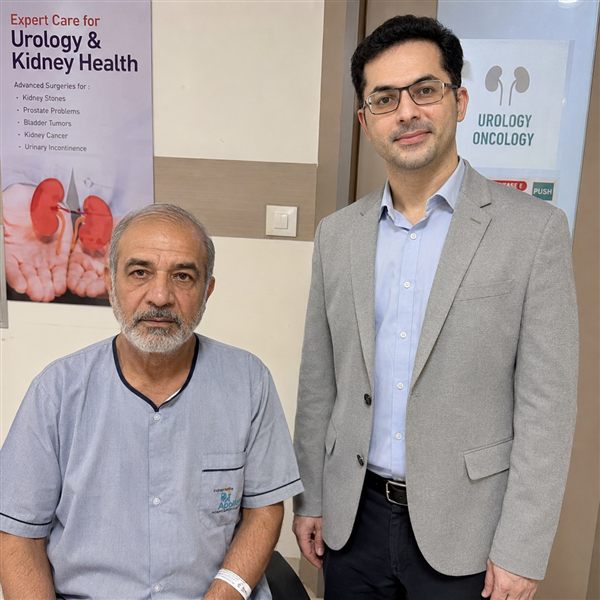
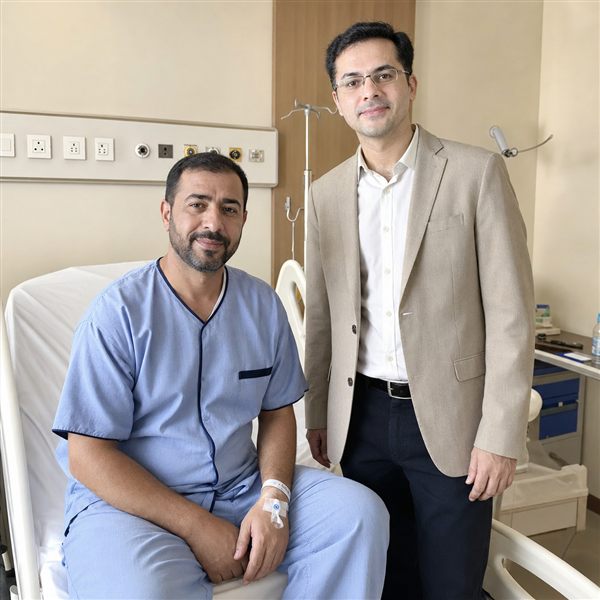
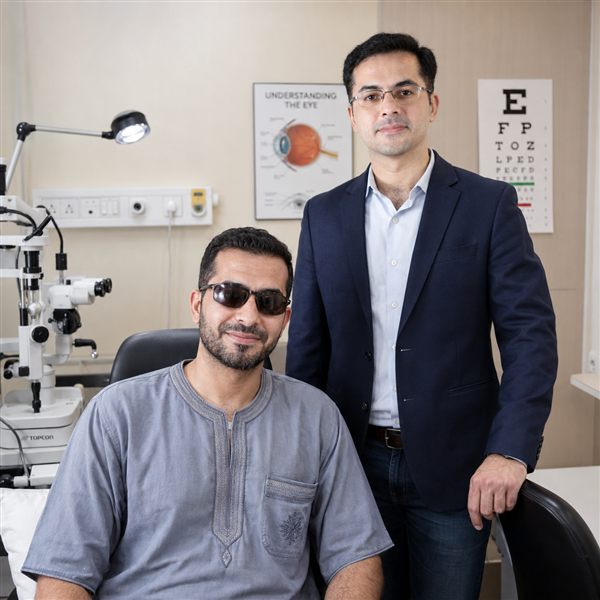
Patient Testimonials from Iraq


Ready to Take the First Step?
Share your Medical Reports with our Healthcare Managers Today and Get a FREE CONSULTATION, a Personalized Treatment Plan, and Complete Support from Arrival to Recovery.
Get Your Free ConsultationAreas We Serve
Indian Health Guru Consultants proudly assists patients from Iraq and surrounding Middle Eastern countries in accessing advanced, affordable and trusted medical treatment in India. Our team provides complete support for medical opinions, hospital selection, treatment planning, visa assistance, travel coordination, accommodation and post-treatment follow-up.
We regularly serve patients from:
- Iraq
- Turkey
- Iran
- Kuwait
- Jordan
- Syria
- Qatar
- Bahrain
- Oman
- Yemen
- Saudi Arabia
- United Arab Emirates
No matter where you are located, our experienced team is committed to making your medical journey to India safe, smooth, transparent and stress-free from the first enquiry to your return home.
From Iraq to India: Your Complete Patient Guide
- Proton Therapy in India for Iraqis
- Scoliosis Correction Surgery in India for Iraqis
- Heart Valve Replacement in India for Iraqis
- Spine Surgery in India for Iraqis
- Pancreatic Cancer Surgery in India for Iraqis
- IVF and Fertility Treatment in India for Iraqis
- Cervical and Lumbar Disc Replacement Surgery in India for Iraqis
- Paediatric Heart Surgery in India for Iraqis
- Weight Loss and Bariatric Surgery in India for Iraqis: Cost & Guide
- Laparoscopic and Robotic Myomectomy in India for Iraqis
- Colorectal Cancer Treatment and Surgery in India for Iraqis
- Shoulder Surgery in India for Iraqis
- Penile Implant Surgery in India for Iraqis
- Paediatric Orthopaedic Surgery in India for Iraqis
- Prostate Cancer Treatment and Surgery in India for Iraqis
- Cosmetic and Aesthetic Surgery in India for Iraqis
- Parkinson's Treatment and DBS Surgery in India for Iraqis
- Leukemia, Lymphoma and Blood Cancer Treatment in India for Iraqis