

Selecting the Best Brain Tumor Surgeons and Hospitals in India: A Guide for Patients from Iraq
A doctor’s honest, question-by-question guide for patients from Iraq on vetting a brain tumour hospital in India — accreditation, volume, team composition, and the exact questions worth asking before you book anything.
Over the years, I have had more difficult phone calls about brain tumours than about almost any other diagnosis, and the reason is simple: the word “tumour” itself frightens families long before anyone has actually established what type it is, where exactly it sits, or what a genuinely experienced neurosurgical team could realistically achieve. In my experience of 24 years guiding patients through exactly this decision, the single biggest mistake a family can make is choosing a hospital based on its reputation as a whole rather than on the specific neurosurgeon’s experience with the exact tumour type and location their loved one actually has. This guide sets out precisely what to check, and how to check it, before deciding where a brain tumour operation should be performed in India.
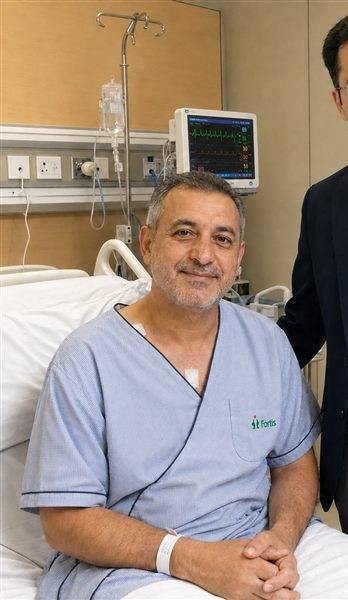
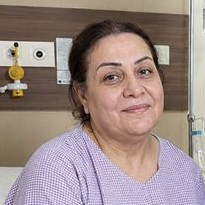
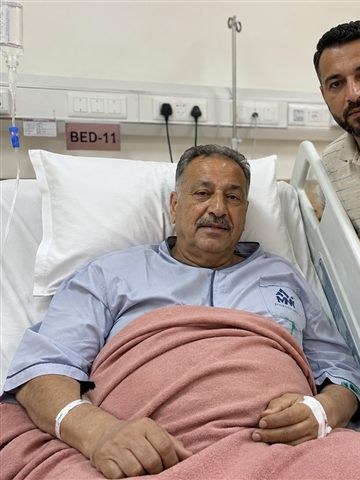
Healing Journeys of Iraqi Patients
Key Takeaways
- For Iraqi families seeking brain tumor surgery in India, choosing the neurosurgeon according to the exact tumor type and location is more meaningful than selecting a hospital solely because of its overall reputation. The source explains that brain tumor outcomes vary substantially by tumor category. Experienced Indian centres report gross total resection rates above 90% for accessible benign tumors such as meningiomas and acoustic neuromas, while five-year survival is described as approximately 85–95% in these cases. Low-grade gliomas have a different prognosis, while high-grade gliomas require a treatment philosophy focused on maximal safe resection and preservation of neurological function.
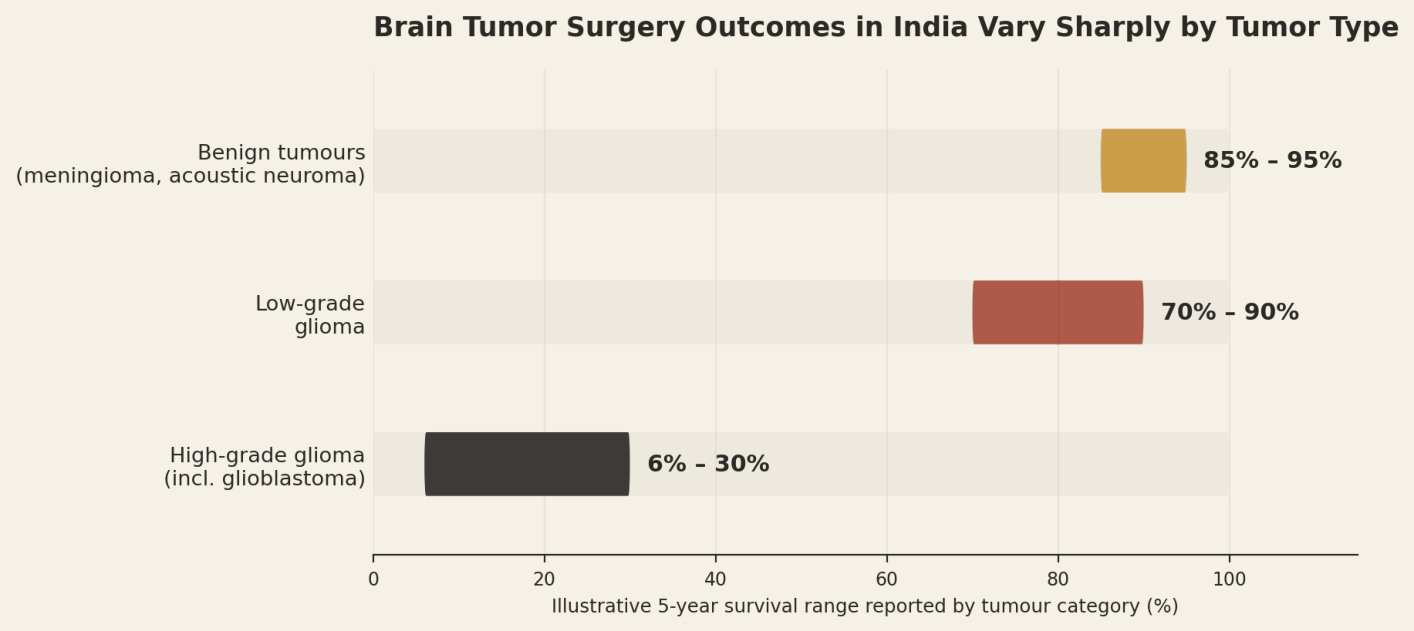
- The chart on page 2 visually reinforces why a single hospital-wide brain tumor success rate can be misleading. It presents illustrative five-year survival ranges of approximately 85–95% for benign tumors, 70–90% for low-grade gliomas and 6–30% for high-grade gliomas including glioblastoma. Iraqi families should therefore first establish the exact tumor category before comparing outcome figures between hospitals or surgeons.
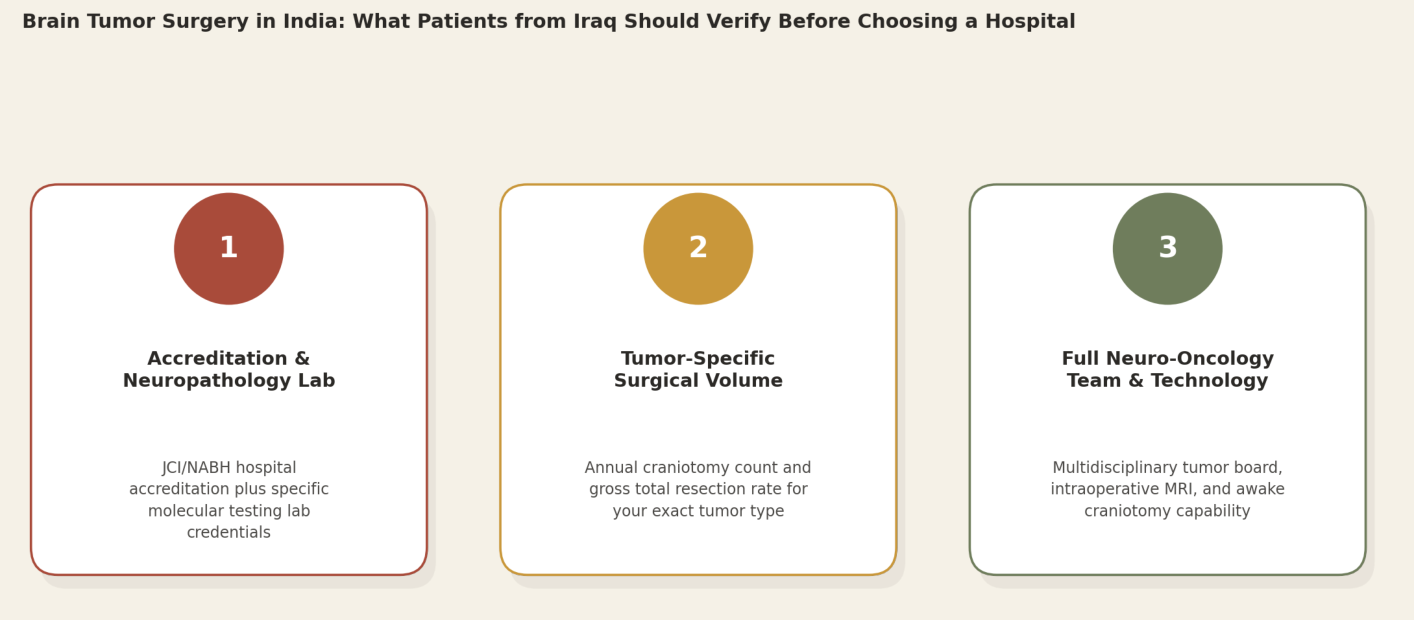
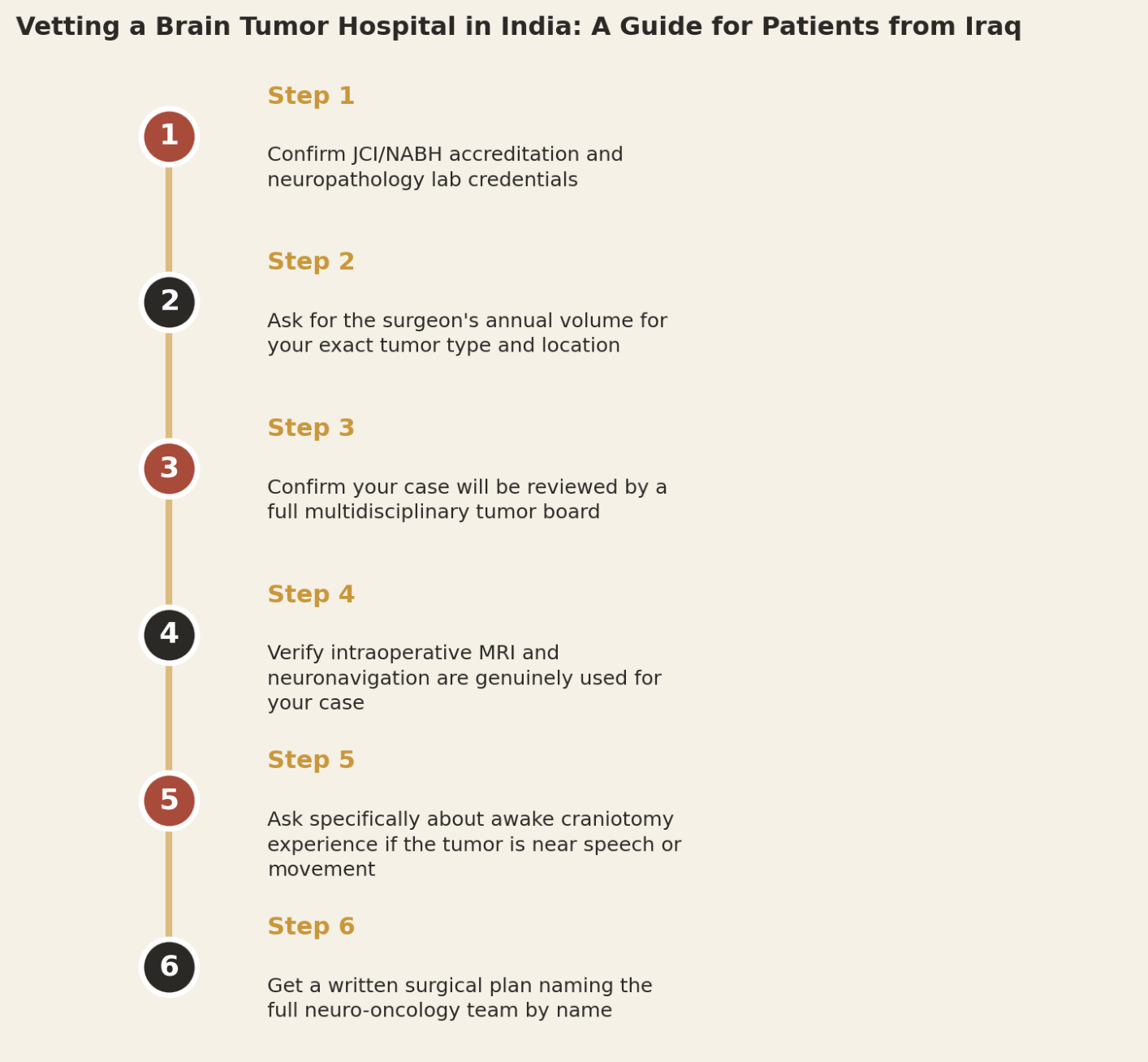
- Hospital accreditation provides an important initial screening step. The guide recommends verifying JCI and NABH accreditation rather than relying on promotional descriptions. It also highlights the importance of asking about accreditation of the neuropathology laboratory because molecular and genetic analysis of tumor tissue can influence treatment decisions after surgery. NABH’s current accreditation directory can be searched by hospital, location and speciality, providing an independent way to check healthcare-organisation credentials.
- Tumor-specific surgical volume should be another major consideration. Iraqi patients should ask how many craniotomies the lead neurosurgeon has performed for the exact tumor type during the previous year and over the surgeon’s career. They should also ask for the hospital’s gross total resection rate for tumors in the specific location and whether intraoperative neuromonitoring is routinely used for tumors close to speech, movement or vision areas.
- Brain tumor treatment requires a multidisciplinary neuro-oncology approach. The source recommends a team that can include a neurosurgeon with relevant subspecialty experience, neuro-oncologist, radiation oncologist, neuropathologist and neuro-anaesthesiologist. Iraqi families should also confirm that their case will be reviewed by a multidisciplinary tumor board before the final surgical plan is established rather than being decided by the operating surgeon alone.
- Advanced technology can influence what can be safely attempted during brain tumor surgery. The guide specifically identifies intraoperative MRI, frameless neuronavigation and awake craniotomy as technologies worth discussing. Intraoperative MRI can help the team assess residual tumor during surgery, neuronavigation supports planning around deep or difficult anatomy, and awake craniotomy may allow functional mapping when tumors are close to speech or movement areas. Patients should ask which technology will actually be used for their case rather than simply whether the hospital owns the equipment.
- The source identifies several important warning signs for Iraqi families. Surgery should not be rushed before multidisciplinary review of the imaging, and surgeons should be able to discuss their own gross total resection experience for the relevant tumor location. A generic “high success rate” without tumor-specific context is not sufficiently useful, while discouraging a second surgical opinion is particularly concerning for high-grade tumors where the surgical strategy can influence subsequent treatment.
Quick Facts
- Treatment
- Brain tumor surgery and neuro-oncology care in India
- Primary Patients
- Patients from Iraq with brain tumors
- Main Speciality
- Neurosurgery and neuro-oncology
- Key Specialist
- Neurosurgeon experienced with the exact tumor type and location
- Major Tumor Categories
- Benign tumors, low-grade gliomas and high-grade gliomas
- Benign Tumor Outcome Range
- Approximately 85–95% five-year survival in the cited accessible cases
- Low-Grade Glioma Range
- Approximately 70–90% five-year survival
- High-Grade Glioma Range
- Approximately 6–30% five-year survival
- Surgical Goal
- Maximal safe resection where complete removal is not appropriate
- Accreditation
- Verify JCI and NABH accreditation
- Neuropathology
- Check the laboratory’s relevant accreditation and molecular-testing capability
- Volume Check
- Ask for the surgeon’s annual and career experience with the exact tumor
- Outcome Check
- Request gross total resection data for the specific tumor location
- Tumor Board
- Confirm multidisciplinary review before final surgery planning
- Neuro-Oncology Team
- Neurosurgeon, neuro-oncologist, radiation oncologist, neuropathologist and neuro-anaesthesiologist as appropriate
- Technology
- Intraoperative MRI and frameless neuronavigation may support selected cases
- Awake Craniotomy
- Considered for selected tumors near speech or movement areas
- Neuromonitoring
- Ask whether it is used for tumors near critical functional areas
- Second Opinion
- Particularly important when surgery is complex or the tumor is high grade
- Written Plan
- Confirm the named multidisciplinary team and proposed surgical approach
- Author
- Dr. Dheeraj Bojwani
- Experience
- 24+ Years
In Brief
Selecting a brain tumor surgeon and hospital in India for an Iraqi patient should be based on the exact diagnosis, tumor location, surgeon-specific experience, hospital accreditation, multidisciplinary planning and technology relevant to the case. Families should request tumor-specific surgical volumes and outcomes, confirm neuropathology and neuro-oncology capabilities, establish whether their case will be reviewed by a tumor board and obtain a written plan identifying the full treatment team. The source’s central message is that reputation alone is insufficient; Iraqi families should verify the specific neurosurgeon and hospital against the requirements of the individual diagnosis.
Why the Choice of Neurosurgeon in India Matters as Much as the Choice of Hospital
Based on my interactions with international patients, brain tumour outcomes vary more by tumour category than almost any other condition in this entire series, which makes a single blended “success rate” from a hospital nearly useless on its own. For benign tumours such as meningiomas and acoustic neuromas, experienced centres in India report gross total resection rates above 90 percent, and five-year survival for these patients commonly runs between 85 and 95 percent when the tumour is fully accessible. Low-grade gliomas behave differently again, with favourable five-year survival typically in the 70 to 90 percent range when a good extent of resection is achieved. High-grade gliomas, including glioblastoma, are a genuinely different picture: published data consistently shows five-year survival in the single digits to low twenties depending on age, and here the surgical goal shifts from cure to what neurosurgeons call maximal safe resection, removing as much tumour as possible while preserving function, in order to extend both survival and quality of life. A hospital that quotes one flat success percentage without asking which of these categories your case falls into has not yet done the most basic work of understanding your situation.
How Patients from Iraq Can Verify a Brain Tumour Hospital’s Accreditation in India
The fastest filter I recommend to every Iraqi family calling about a brain tumour is the same one I recommend for any major surgery: verifiable accreditation, not marketing language. Joint Commission International, JCI, audits a hospital’s overall clinical safety systems against the same standard used across the United States and Europe, and is the accreditation most recognised by international patients specifically. The National Accreditation Board for Hospitals and Healthcare Providers, NABH, is India’s own domestic equivalent, and in my experience of 24 years advising families on this exact decision, a centre holding both marks together is a meaningfully stronger signal than either alone. For brain tumour surgery specifically, there is a third credential worth asking about directly: whether the hospital’s neuropathology laboratory has its own specific accreditation, since the molecular and genetic testing performed on the tumour tissue after surgery, not simply the operation itself, increasingly determines what treatment comes next.
The Volume and Experience Metrics That Predict Brain Tumour Surgery Outcomes in India
Based on my interactions with dozens of neurosurgical teams over the years, surgical volume in this specific field is not a vague reassurance, it is one of the most concrete predictors available to a family. A neurosurgeon who performs a genuinely high number of craniotomies for your specific tumour type and location every year develops pattern recognition for that exact anatomy that a lower-volume surgeon, however skilled generally, simply has not had the opportunity to build. Ask directly, in writing:
- How many craniotomies for this specific tumour type has the lead neurosurgeon performed in the past year, and over their career?
- What is the centre’s own reported gross total resection rate for tumours in this specific location?
- Is intraoperative neuromonitoring used routinely for tumours near speech, movement, or vision centres, and does the team have specific experience with awake craniotomy if the location requires it?
- Who reviews the imaging and pathology before confirming the surgical plan, a single surgeon or a full multidisciplinary tumour board?
A team confident in its own numbers will answer each of these specifically. A team that responds only with reassurance rather than figures deserves a second opinion before you commit.
Questions Patients from Iraq Should Ask About the Neuro-Oncology Team in India
A brain tumour operation is never genuinely the work of one surgeon alone. In my experience of 24 years watching these programmes operate, the strongest ones bring together a neurosurgeon with specific sub-specialty experience in the tumour’s exact location, a neuro-oncologist to guide any chemotherapy needed before or after surgery, a radiation oncologist for cases needing adjuvant radiotherapy, a dedicated neuropathologist to interpret the tissue and molecular testing accurately, and a neuro-anaesthesiologist experienced specifically in managing anaesthesia for brain surgery, which carries different risks from general surgical anaesthesia. Ask specifically who fills each of these roles for your case, and confirm that your case will actually be presented at a multidisciplinary tumour board meeting before the final surgical plan is set, rather than decided by the operating surgeon alone.
Brain Tumour Surgery Technology Standards in India That Patients from Iraq Should Check
The specific technology available in the operating theatre changes what a surgeon can safely attempt. Intraoperative MRI allows a surgical team to scan the brain during the operation itself and confirm how much tumour remains before closing, directly improving the extent of resection achievable for many tumour types. Frameless neuronavigation, essentially real-time GPS for the brain built from the patient’s own pre-operative scans, lets a surgeon plan the safest possible approach to a deep or awkwardly located tumour. For tumours near areas controlling speech or movement, awake craniotomy, keeping the patient conscious and responsive during part of the operation so the team can map and protect critical function in real time, requires a specific, experienced team well beyond the surgeon alone. Ask directly which of these specific technologies will actually be used for your case, not simply whether the hospital owns the equipment somewhere in the building.
Red Flags Patients from Iraq Should Watch For When Choosing a Brain Tumour Hospital in India
Over the years, certain patterns have become reliable warning signs for me. A hospital that recommends surgery before a full multidisciplinary tumour board has reviewed the imaging is moving faster than the case genuinely warrants. A surgeon who cannot state their own gross total resection rate for your specific tumour location, or who quotes only a generic “high success rate” without reference to tumour type, has not given you information you can actually use. And a hospital that discourages a second surgical opinion, particularly for a high-grade tumour where the surgical plan genuinely affects downstream treatment options, is one of the clearest signals a family can receive that something is being rushed.
Vetting a Brain Tumor Hospital in India: A Guide for Patients from Iraq
A Closing Thought for Iraqi Families
A brain tumour diagnosis leaves a family very little room for a decision made on reputation alone, and it deserves to be made on the same verifiable facts this guide has walked through: the surgeon’s specific volume with your exact tumour type, the hospital’s accreditation, the multidisciplinary team actually assigned to your case, and the technology genuinely available in the operating theatre for your specific situation. Based on my interactions with international patients over more than two decades, the families who ask these exact questions before travelling consistently make better decisions than those who choose on the strength of a hospital’s own marketing claims. My role, and the role of any advisor a family works with, should be to help you ask these questions directly and confirm honestly that the specific neurosurgeon and specific hospital in front of you are the right fit for your exact diagnosis. Iraq’s families deserve the same standard of scrutiny in this decision as any family anywhere else in the world.
Sources & Further Reading
- Joint Commission International (JCI) — Accredited Organizations Directory (jointcommissioninternational.org)
- National Accreditation Board for Hospitals & Healthcare Providers (NABH), India (nabh.co)
- American Cancer Society — Brain and Spinal Cord Tumor Survival Rates (cancer.org)
- American Association of Neurological Surgeons (AANS) — Brain Tumor Patient Information (aans.org)
- National Institute for Health and Care Excellence (NICE, UK) — Brain Tumours Guidance (nice.org.uk)
Frequently Asked Questions by Iraqi Patients about Selecting a Brain Tumor Surgeon and Hospital in India
How should Iraqi patients choose a brain tumor surgeon in India?
They should prioritise a neurosurgeon with substantial experience treating the exact tumor type and location. The guide recommends asking for annual and career craniotomy numbers for that specific tumor.
What brain tumor surgery outcomes should Iraqi patients ask about in India?
Patients should request outcomes specific to their tumor category and location, particularly the centre's gross total resection rate. A general hospital-wide success percentage is not considered sufficiently informative.
What is the reported five-year survival range for brain tumors treated in India?
The source presents approximately 85–95% for the cited accessible benign tumors, 70–90% for low-grade gliomas and 6–30% for high-grade gliomas. These figures are illustrative ranges by tumor category, not individual guarantees.
Should Iraqi patients verify JCI and NABH accreditation before brain tumor surgery in India?
Yes. The guide recommends independently verifying hospital accreditation rather than relying on marketing claims. NABH's current directory provides a searchable database of accredited, certified or empanelled healthcare organisations.
Why is neuropathology important for Iraqi patients having brain tumor surgery in India?
Tumor tissue may require molecular and genetic analysis after surgery, and these findings can influence subsequent treatment. The source therefore recommends asking about the neuropathology laboratory's specific credentials and capabilities.
Should a brain tumor case from Iraq be reviewed by a multidisciplinary tumor board in India?
The guide recommends confirming that the case is reviewed by a multidisciplinary tumor board before the final surgical plan is established. This brings together relevant surgical, oncology, pathology and anaesthesia expertise.
When might awake craniotomy be considered for an Iraqi patient in India?
It may be relevant when a tumor is close to brain regions responsible for speech or movement. The technique requires an experienced team capable of mapping and protecting critical neurological functions during surgery.
What advanced brain tumor surgery technology should Iraqi patients ask about in India?
The guide specifically recommends asking about intraoperative MRI, frameless neuronavigation and, where appropriate, awake craniotomy. Patients should establish which technology will actually be used for their particular tumor rather than simply confirming that the hospital owns the equipment.
Is a second opinion important before brain tumor surgery in India for Iraqi patients?
Yes, particularly for complex or high-grade tumors. The source identifies discouraging a second surgical opinion as a warning sign because the surgical approach can affect subsequent treatment options.
What are the main warning signs when choosing brain tumor surgery in India?
Important warning signs include recommending surgery before multidisciplinary imaging review, inability to provide tumor-location-specific resection data, quoting only a generic success rate and discouraging an independent second opinion.
Page Summary
For Iraqi patients, choosing a brain tumor hospital in India should begin with the exact tumor diagnosis and anatomical location rather than the hospital's general reputation. The source recommends comparing tumor-specific surgical volume, gross total resection outcomes, accreditation and the expertise of the multidisciplinary neuro-oncology team.
Technology and clinical decision-making should then be assessed together. Iraqi families should confirm whether intraoperative MRI, neuronavigation, neuromonitoring or awake craniotomy are genuinely appropriate and available for their case, while ensuring that a multidisciplinary tumor board reviews the imaging before surgery. The guide also recommends obtaining a second opinion when the situation is complex rather than allowing a treatment decision to be rushed.
Citation Block
| Field | Details |
|---|---|
| Article / Topic | Selecting the Best Brain Tumor Surgeons and Hospitals in India |
| Target Patients | Patients from Iraq |
| Treatment Area | Brain tumor surgery and neuro-oncology |
| Primary Selection Factor | Neurosurgeon's experience with the exact tumor type and location |
| Benign Tumor Examples | Meningioma and acoustic neuroma |
| Benign Five-Year Survival Range | 85–95% in the cited accessible cases |
| Low-Grade Glioma Range | 70–90% five-year survival |
| High-Grade Glioma Range | 6–30% five-year survival |
| High-Grade Surgical Goal | Maximal safe resection with preservation of function |
| Hospital Accreditation | JCI and NABH |
| Laboratory Check | Neuropathology and molecular-testing accreditation |
| Volume Assessment | Exact tumor-specific craniotomy volume |
| Outcome Assessment | Gross total resection rate for the specific location |
| Functional Monitoring | Intraoperative neuromonitoring for selected critical-area tumors |
| Multidisciplinary Review | Tumor board review before final surgical planning |
| Neurosurgical Team | Tumor-specific neurosurgeon |
| Supporting Specialists | Neuro-oncologist, radiation oncologist, neuropathologist and neuro-anaesthesiologist |
| Advanced Technology | Intraoperative MRI and frameless neuronavigation |
| Functional Surgery | Awake craniotomy for selected tumors near speech or movement areas |
| Major Red Flag | Generic success rate without tumor-specific information |
| Second Opinion | Important for complex and high-grade cases |
| Written Plan | Confirm the full neuro-oncology team and proposed surgical approach |
| Core Selection Principle | Match the specific surgeon, hospital and technology to the exact diagnosis |

Our Mission Statement
Our mission is to place patients at the centre of every healthcare decision by providing trustworthy, evidence-based, and unbiased medical information. We believe that informed patients make better decisions. Backed by personalised guidance from our experienced advisory team, we help patients understand their treatment options, compare them objectively, and confidently choose the path that best suits their medical needs and personal circumstances.
Patient Testimonials from Iraq
Ready to Take the First Step?
Share your Medical Reports with our Healthcare Managers Today and Get a FREE CONSULTATION, a Personalized Treatment Plan, and Complete Support from Arrival to Recovery.
Get Your Free ConsultationAreas We Serve
Indian Health Guru Consultants proudly assists patients from Iraq and surrounding Middle Eastern countries in accessing advanced, affordable and trusted medical treatment in India. Our team provides complete support for medical opinions, hospital selection, treatment planning, visa assistance, travel coordination, accommodation and post-treatment follow-up.
We regularly serve patients from:
- Iraq
- Turkey
- Iran
- Kuwait
- Jordan
- Syria
- Qatar
- Bahrain
- Oman
- Yemen
- Saudi Arabia
- United Arab Emirates
No matter where you are located, our experienced team is committed to making your medical journey to India safe, smooth, transparent and stress-free from the first enquiry to your return home.
From Iraq to India: Your Complete Patient Guide
- Pancreatic Cancer Surgery in India for Iraqis
- Robotic Cancer Surgery in India for Iraqis
- Urosurgery and Reconstructive Urology in India for Iraqis
- Paediatric Neurosurgery in India for Iraqis
- Weight Loss and Bariatric Surgery in India for Iraqis: Cost & Guide
- Proton Therapy in India for Iraqis
- Parkinson's Treatment and DBS Surgery in India for Iraqis
- Spine Surgery in India for Iraqis
- Knee Surgery in India for Iraqis
- Neuronavigation and Advanced Brain Surgery in India for Iraqis
- Cornea Transplant and Advanced Eye Surgery in India for Iraqis
- HIPEC Cancer Surgery in India for Iraqis
- Penile Implant Surgery in India for Iraqis
- CyberKnife Treatment in India for Iraqis
- Cardiac Pacemaker Treatment in India for Iraqi Patients
- Shoulder Surgery in India for Iraqis
- Oral and Maxillofacial Surgery in India for Iraqis
- Prostate Cancer Treatment and Surgery in India for Iraqis