

Selecting the Best Paediatric Neurosurgeons and Hospitals in India: A Guide for Patients from Iraq
A doctor’s honest, question-by-question guide for patients from Iraq on vetting a paediatric neurosurgery hospital in India — cause-specific outcomes, accreditation, predictive scoring, and the exact questions worth asking before you book anything.
Over the years, I have found that hydrocephalus in children is one of the conditions where a specific technical distinction, the underlying cause of the fluid buildup, changes the realistic outcome of treatment more dramatically than almost any other paediatric neurosurgical condition. In my experience of 24 years advising families through exactly this decision, endoscopic third ventriculostomy, a technique that avoids implanting a permanent shunt, can be genuinely excellent for the right cause of hydrocephalus and considerably less reliable for another, and a hospital that recommends the same approach regardless of cause has not properly evaluated your child’s specific situation.
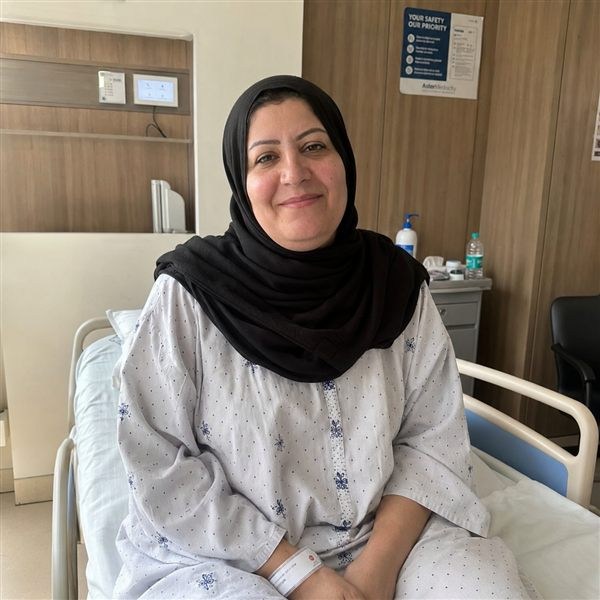
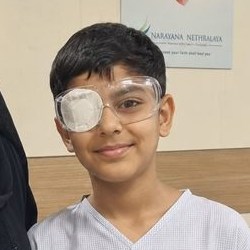
Healing Journeys of Iraqi Patients
Key Takeaways
- For Iraqi families considering paediatric neurosurgery in India, the source highlights that the cause of hydrocephalus should guide treatment decisions. Endoscopic third ventriculostomy, or ETV, can work very well in selected children but is not equally effective for every type of hydrocephalus.
- Published evidence shows important differences in ETV outcomes according to the type of hydrocephalus. One study reported 79.49% success for non-communicating hydrocephalus compared with 20.51% for communicating hydrocephalus. The source also identifies congenital aqueductal stenosis as a condition associated with stronger ETV outcomes.
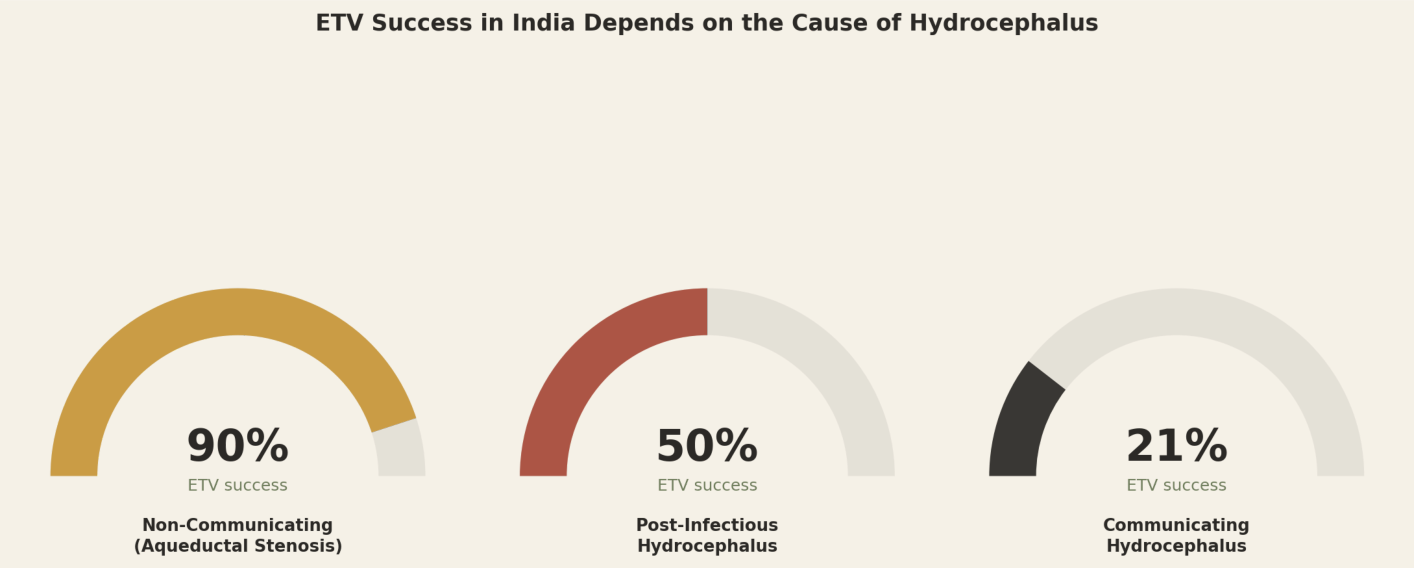
- The page 2 visual compares illustrative ETV success of approximately 90% for non-communicating hydrocephalus, 50% for post-infectious hydrocephalus and 21% for communicating hydrocephalus. These figures illustrate why the child's underlying cause matters and should not be treated as an individual prediction.
- The source recommends checking JCI or NABH accreditation when comparing paediatric neurosurgery hospitals in India. Families should also ask whether the hospital uses a validated predictive tool such as the ETV Success Score to estimate the child's likelihood of benefiting from ETV rather than simply recommending the same procedure for every case.
- Hospital experience should be assessed according to the specific cause and type of hydrocephalus. Iraqi parents should ask about the centre's own ETV results for similar cases, the child's predicted ETV success score, shunt infection and revision rates, and the hospital's long-term follow-up plan.
- A strong paediatric neurosurgical programme should involve more than one specialist. The source identifies a paediatric neurosurgeon trained in endoscopic techniques, paediatric neurologist, paediatric neuro-imaging team, paediatric anaesthesiologist and developmental follow-up team.
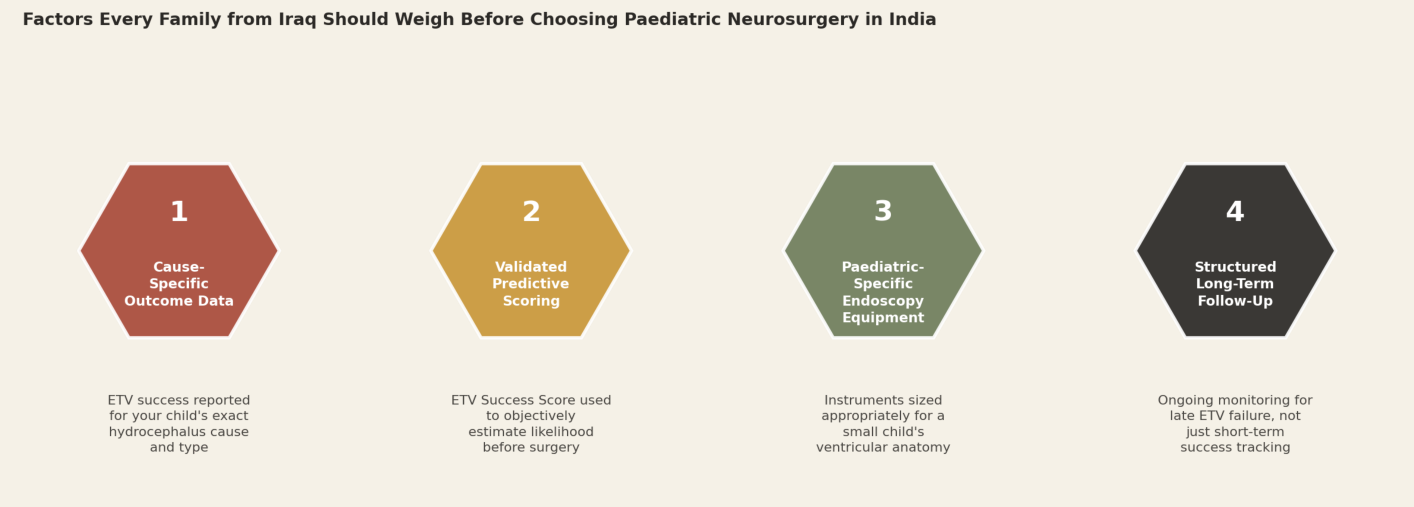
- Technology should be appropriate for children. Families should ask whether the hospital uses paediatric-specific neuroendoscopy equipment, considers choroid plexus cauterisation where appropriate and has programmable shunt valves when a shunt is required. The page 4 checklist highlights cause-specific outcome data, validated predictive scoring, paediatric-specific endoscopy equipment and structured long-term follow-up.
Quick Facts
- Treatment
- Paediatric neurosurgery for hydrocephalus
- Primary Patients
- Children from Iraq requiring hydrocephalus treatment
- Main Speciality
- Paediatric neurosurgery
- Key Specialist
- Paediatric neurosurgeon experienced in endoscopic techniques
- Main Procedure
- Endoscopic third ventriculostomy (ETV)
- Alternative
- Shunt surgery when ETV is unsuitable
- Important Factor
- Exact cause and type of hydrocephalus
- Non-Communicating Hydrocephalus
- Generally associated with stronger ETV outcomes
- Communicating Hydrocephalus
- Reported lower ETV success in the cited literature
- ETV Evidence
- One cited study reported 79.49% success in non-communicating cases
- Indian Series
- 34 paediatric patients had an overall ETV success rate of 79%
- Predictive Tool
- ETV Success Score
- Accreditation
- Verify JCI and/or NABH status
- Imaging
- Detailed paediatric MRI assessment before treatment
- Neuroendoscopy
- Paediatric-specific equipment should be available
- Shunt Option
- Programmable valves may be considered when a shunt is required
- Follow-Up
- Long-term monitoring should be planned
- Developmental Care
- Cognitive and motor development should be monitored
- Pre-Treatment
- Confirm the exact cause of hydrocephalus
- Author
- Dr. Dheeraj Bojwani
- Experience
- 24+ Years
In Brief
For Iraqi children with hydrocephalus, selecting a paediatric neurosurgeon and hospital should begin with an accurate diagnosis of the underlying cause. Families should compare cause-specific ETV outcomes, ask whether a validated ETV Success Score is used, understand when shunt surgery may be preferable and confirm access to paediatric neuroendoscopy, appropriate imaging and long-term follow-up. The most suitable programme should provide a treatment plan based on the child’s individual anatomy and hydrocephalus type rather than applying ETV or shunt surgery as a routine approach to every child.
Why the Choice of Paediatric Neurosurgical Team in India Matters as Much as the Choice of Technique
Based on my interactions with international families, the published data on endoscopic third ventriculostomy, commonly called ETV, illustrates this point with real clarity. Published series consistently show that children with non-communicating hydrocephalus, where cerebrospinal fluid flow is physically obstructed, achieve success rates considerably higher than children with communicating hydrocephalus, where fluid absorption itself is impaired, with one study reporting 79.49 percent success for non-communicating cases compared with just 20.51 percent for communicating cases. Cause matters just as much: children with hydrocephalus from congenital aqueductal stenosis, a specific narrowing in the fluid pathway present from birth, have consistently shown the strongest ETV outcomes across multiple studies, while children with hydrocephalus following meningitis or bleeding into the brain show meaningfully lower success, since inflammation and scarring from these conditions can affect the procedure’s ability to work. A real Indian series of 34 paediatric patients found an overall ETV success rate of 79 percent, and importantly showed that success measured within the first two years was 68.42 percent, rising to 93.33 percent for cases followed beyond two years, since most failures happen relatively early after surgery. This tells a family something essential: your child’s specific cause and type of hydrocephalus should shape whether ETV or a traditional shunt is the more appropriate choice, not a hospital’s general preference for one technique.
How Patients from Iraq Can Verify a Paediatric Neurosurgery Hospital’s Accreditation in India
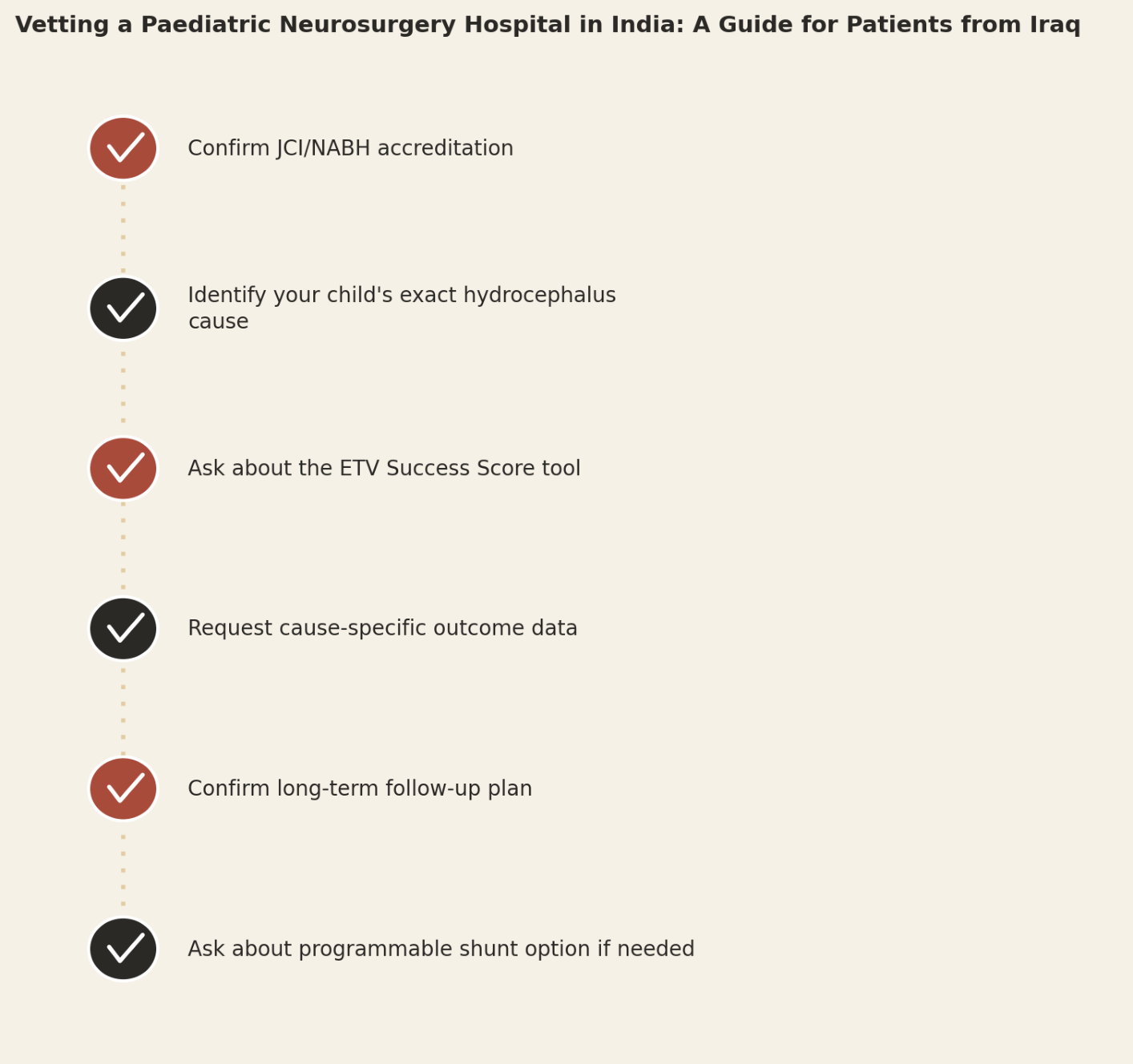
The fastest filter I recommend to every Iraqi family calling about paediatric neurosurgery is verifiable accreditation, not marketing language. Joint Commission International, JCI, audits a hospital’s overall clinical safety systems against the same standard used across the United States and Europe. The National Accreditation Board for Hospitals and Healthcare Providers, NABH, is India’s own domestic equivalent, and in my experience of 24 years advising families on this exact decision, a centre holding both marks together is a meaningfully stronger signal than either alone. For hydrocephalus specifically, ask one further, very direct question: does this hospital use a validated predictive tool, such as the ETV Success Score, to objectively estimate your child’s specific likelihood of success before recommending ETV over a shunt.
Paediatric Neurosurgery Volume and Cause-Specific Criteria That Predict Outcomes in India
Based on my interactions with dozens of paediatric neurosurgery programmes over the years, a centre’s specific outcome data by the cause and type of your child’s condition, not a single blended success statistic, is one of the clearest signs of a trustworthy, evidence-based programme. General neuroendoscopy case volume still provides useful context, but it does not by itself confirm the centre’s specific success rate for your child’s exact underlying cause. Ask directly, in writing:
- What is the specific cause of my child's hydrocephalus, and what does this centre's own data show for ETV success in that exact cause category, not a general hydrocephalus statistic?
- Does the centre use a validated scoring tool to predict ETV success before recommending it, and what does that specific score suggest for my child?
- If ETV is not appropriate for my child's specific cause, what shunt system and technique does the centre recommend, and what is their own shunt-specific infection and revision rate?
- What is the centre's plan for long-term follow-up, given that ETV failures can occur even after an initial period of apparent success?
A centre confident in its own reasoning will answer these specifically. A centre that recommends ETV or shunt placement without first identifying the specific cause of hydrocephalus deserves a second opinion before you commit.
Vetting a Paediatric Neurosurgery Hospital in India: A Guide for Patients from Iraq
Questions Patients from Iraq Should Ask About the Paediatric Neurosurgery Team in India
Paediatric neurosurgery for hydrocephalus and related conditions is never genuinely the work of one surgeon alone. In my experience of 24 years watching these programmes operate, the strongest units bring together a paediatric neurosurgeon with specific fellowship training in endoscopic technique, a paediatric neurologist for ongoing developmental assessment, and a dedicated paediatric neuro-imaging team capable of the detailed MRI sequences needed to accurately classify the specific type and cause of hydrocephalus before surgery. A paediatric anaesthesiologist experienced specifically in the unique physiological considerations of infant and young child neurosurgery, and a developmental follow-up team to monitor for the cognitive and motor effects hydrocephalus itself and its treatment can carry, round out the strongest programmes. Ask specifically who fills each of these roles for your child’s case, and confirm that detailed imaging has been reviewed to classify the specific cause before any technique is recommended.
Paediatric Neurosurgery Technology Standards in India That Patients from Iraq Should Check
The specific technology available changes how precisely a team can plan and execute treatment. Ask whether the hospital uses neuroendoscopy equipment specifically designed for paediatric anatomy, since instrument size matters considerably in a small child’s ventricular system. Ask whether choroid plexus cauterisation, an additional endoscopic step sometimes combined with ETV to reduce fluid production, is considered for appropriate cases, since this combination has been studied as a way to improve success in certain patient groups. Ask also whether the hospital has access to programmable shunt valves for cases where a shunt genuinely is the better option, since these adjustable devices allow the flow rate to be tuned after implantation as a child grows, rather than requiring a full replacement surgery to adjust. Ask directly which of these specific capabilities apply to your child’s case, not simply whether the hospital performs paediatric neurosurgery in general terms.
Red Flags Patients from Iraq Should Watch For When Choosing a Paediatric Neurosurgery Hospital in India
Over the years, certain patterns have become reliable warning signs for me. A hospital that recommends ETV for every hydrocephalus case regardless of cause, without objectively assessing the specific likelihood of success, has not properly evaluated your child’s situation. A centre that cannot state its own success rate broken down by hydrocephalus cause and type has not given you information specific enough to be useful. A centre without a clear, structured long-term follow-up plan is not prepared for the genuine possibility of later ETV failure, even after an initially successful result. And a centre that recommends a shunt without discussing whether your child’s specific cause and anatomy might make ETV a genuinely viable, shunt-avoiding alternative has not presented the full range of current treatment options.
Factors Every Family from Iraq Should Weigh Before Choosing Paediatric Neurosurgery in India
A Closing Thought for Iraqi Families
Paediatric neurosurgery for hydrocephalus deserves a treatment plan built on your child’s specific cause and type of condition, with an honestly estimated likelihood of success, not a single default technique applied to every case. Based on my interactions with international patients over more than two decades, the families who ask about cause-specific outcome data, validated predictive scoring, and structured long-term follow-up consistently make better-informed decisions than those who accept a general reassurance alone. My role, and the role of any advisor a family works with, should be to help you ask these exact questions and confirm honestly that the specific team and specific hospital in front of you are the right fit for your child’s exact diagnosis. Iraq’s children deserve the same standard of scrutiny in this decision as any child anywhere else in the world.
Sources & Further Reading
- Joint Commission International (JCI) — Accredited Organizations Directory (jointcommissioninternational.org)
- National Accreditation Board for Hospitals & Healthcare Providers (NABH), India (nabh.co)
- PMC — Endoscopic Third Ventriculostomy in Children: Problems and Surgical Outcome: Analysis of 34 Cases (pmc.ncbi.nlm.nih.gov)
- PMC — Outcomes of Endoscopic Third Ventriculostomy in Paediatric Patients With Hydrocephalus (ncbi.nlm.nih.gov/pmc)
- Journal of Pediatrics — Endoscopic Third Ventriculostomy in the Treatment of Childhood Hydrocephalus (ETV Success Score) (med-fom-neuroethics.sites.olt.ubc.ca)
Frequently Asked Questions by Iraqi Patients about Selecting a Paediatric Neurosurgeon and Hospital in India
Is hydrocephalus treatment available in India for Iraqi children?
Yes. The source specifically addresses paediatric hydrocephalus treatment in India and explains how Iraqi families can evaluate hospitals, neurosurgeons and treatment options.
Is ETV surgery suitable for every Iraqi child with hydrocephalus?
No. ETV success depends strongly on the cause and type of hydrocephalus. The source recommends determining the specific diagnosis before deciding between ETV and shunt surgery.
How successful is ETV surgery for children in India?
The cited Indian series of 34 paediatric patients reported an overall ETV success rate of 79%. Success varied with follow-up duration and the underlying cause of hydrocephalus.
What is the ETV Success Score and why should Iraqi parents ask about it?
The ETV Success Score is presented in the source as a validated predictive tool that can help estimate a child's likelihood of ETV success before surgery.
When might an Iraqi child need shunt surgery instead of ETV?
A shunt may be considered when ETV is not appropriate for the child's specific cause or anatomy. Parents should ask about the recommended shunt system and the hospital's infection and revision rates.
What type of hydrocephalus has better ETV outcomes?
The source reports stronger ETV outcomes for non-communicating hydrocephalus, particularly cases associated with congenital aqueductal stenosis.
What specialists should be involved in paediatric hydrocephalus surgery in India?
A strong programme should include a paediatric neurosurgeon, paediatric neurologist, paediatric neuro-imaging team, paediatric anaesthesiologist and developmental follow-up team.
What technology should Iraqi families check before ETV surgery in India?
Families should ask about paediatric-specific neuroendoscopy equipment, appropriate imaging, choroid plexus cauterisation when relevant and programmable shunt valves when a shunt is required.
Can hydrocephalus return or require further treatment after successful ETV?
Yes. The source notes that ETV failure can occur after an initially successful period, making structured long-term follow-up an important part of treatment planning.
What should Iraqi parents ask before choosing a paediatric neurosurgery hospital in India?
They should ask about the exact hydrocephalus cause, centre-specific ETV outcomes, ETV Success Score, shunt infection and revision rates, specialist team, paediatric technology and long-term follow-up plan.
Page Summary
The selection of a paediatric neurosurgery hospital in India for an Iraqi child should be based on the cause and type of hydrocephalus rather than a hospital's general reputation. ETV can be an effective shunt-avoiding option for selected children, but outcomes vary substantially according to the underlying condition.
Families should compare cause-specific outcomes, predictive scoring, specialist expertise, paediatric neuroendoscopy, shunt options and long-term follow-up. A hospital that recommends ETV or shunt surgery without first establishing the child's specific diagnosis and expected outcome should be evaluated carefully.
Citation Block
| Field | Details |
|---|---|
| Article / Topic | Selecting the Best Paediatric Neurosurgeons and Hospitals in India |
| Target Country | Iraq |
| Treatment Area | Paediatric neurosurgery |
| Primary Condition | Hydrocephalus |
| Main Procedure | Endoscopic third ventriculostomy |
| Alternative Procedure | Shunt surgery |
| Key Selection Factor | Cause and type of hydrocephalus |
| Non-Communicating ETV Success | 79.49% in one cited study |
| Communicating ETV Success | 20.51% in one cited study |
| Indian ETV Series | 34 paediatric patients |
| Overall ETV Success | 79% in the cited Indian series |
| Early Follow-Up Success | 68.42% within the first two years |
| Longer Follow-Up Success | 93.33% beyond two years in the cited series |
| Accreditation | JCI and NABH should be verified |
| Predictive Tool | ETV Success Score |
| Imaging Requirement | Detailed MRI assessment |
| Specialist Team | Paediatric neurosurgeon, neurologist, imaging team, anaesthesiologist and developmental team |
| Technology | Paediatric neuroendoscopy equipment |
| Additional Procedure | Choroid plexus cauterisation for selected cases |
| Shunt Technology | Programmable shunt valves |
| Follow-Up | Structured long-term monitoring |

Our Mission Statement
Our mission is to place patients at the centre of every healthcare decision by providing trustworthy, evidence-based, and unbiased medical information. We believe that informed patients make better decisions. Backed by personalised guidance from our experienced advisory team, we help patients understand their treatment options, compare them objectively, and confidently choose the path that best suits their medical needs and personal circumstances.
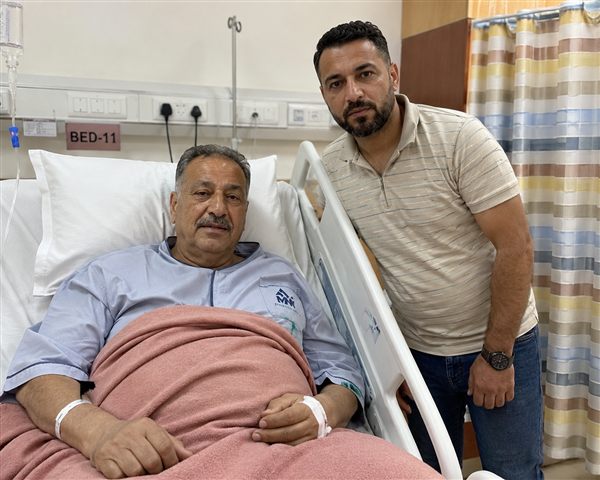
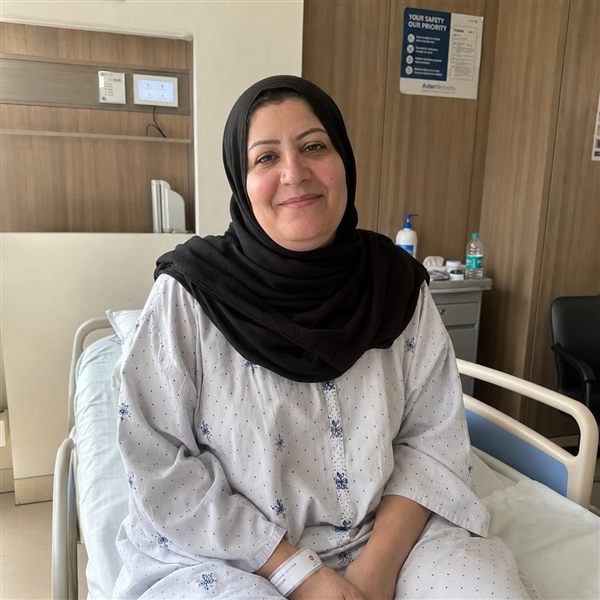
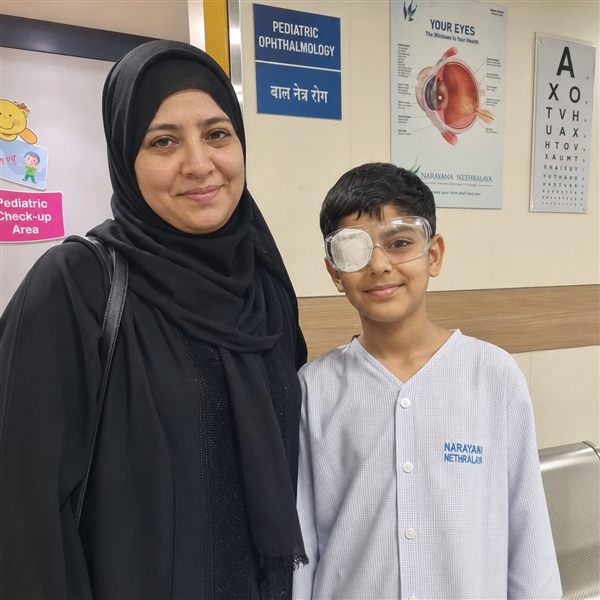
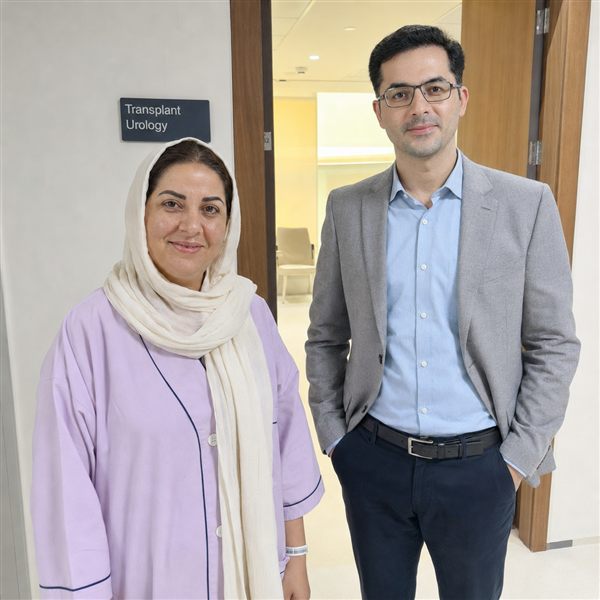
Patient Testimonials from Iraq
Ready to Take the First Step?
Share your Medical Reports with our Healthcare Managers Today and Get a FREE CONSULTATION, a Personalized Treatment Plan, and Complete Support from Arrival to Recovery.
Get Your Free ConsultationAreas We Serve
Indian Health Guru Consultants proudly assists patients from Iraq and surrounding Middle Eastern countries in accessing advanced, affordable and trusted medical treatment in India. Our team provides complete support for medical opinions, hospital selection, treatment planning, visa assistance, travel coordination, accommodation and post-treatment follow-up.
We regularly serve patients from:
- Iraq
- Turkey
- Iran
- Kuwait
- Jordan
- Syria
- Qatar
- Bahrain
- Oman
- Yemen
- Saudi Arabia
- United Arab Emirates
No matter where you are located, our experienced team is committed to making your medical journey to India safe, smooth, transparent and stress-free from the first enquiry to your return home.
From Iraq to India: Your Complete Patient Guide
- IVF and Fertility Treatment in India for Iraqis
- Bone Marrow Transplant in India for Iraqi Patients
- Liver Transplant in India for Iraqis
- Cosmetic and Aesthetic Surgery in India for Iraqis
- Prostate Cancer Treatment and Surgery in India for Iraqis
- Colorectal Cancer Treatment and Surgery in India for Iraqis
- Brain Tumour Surgery in India for Iraqi Patients
- HIPEC Cancer Surgery in India for Iraqis
- Robotic Cancer Surgery in India for Iraqis
- Cornea Transplant and Advanced Eye Surgery in India for Iraqis
- Cardiac Pacemaker Treatment in India for Iraqi Patients
- Neurosurgery in India for Iraqis
- Paediatric Heart Surgery in India for Iraqis
- Parkinson's Treatment and DBS Surgery in India for Iraqis
- Gamma Knife Treatment in India for Iraqis
- Urosurgery and Reconstructive Urology in India for Iraqis
- Oral and Maxillofacial Surgery in India for Iraqis
- Plastic and Reconstructive Surgery in India for Iraqis