

Selecting the Best HIPEC Surgeons and Hospitals in India: A Guide for Patients from Iraq
A doctor’s honest, question-by-question guide for patients from Iraq on vetting a HIPEC hospital in India — cytoreduction completeness, accreditation, team composition, and the exact questions worth asking before you book anything.
Over the years, I have found that HIPEC, hyperthermic intraperitoneal chemotherapy combined with cytoreductive surgery, is one of the procedures Iraqi families most often hear about only after being told there is nothing more that can be done for a cancer that has spread across the lining of the abdomen. In my experience of 24 years advising patients through exactly this decision, that is very often not true, but the single factor that determines whether HIPEC genuinely helps is whether the surgeon can achieve what is called complete cytoreduction, removing essentially all visible tumour before the heated chemotherapy is delivered, and this depends entirely on the specific surgeon’s skill and experience, not simply on having access to the HIPEC equipment itself.
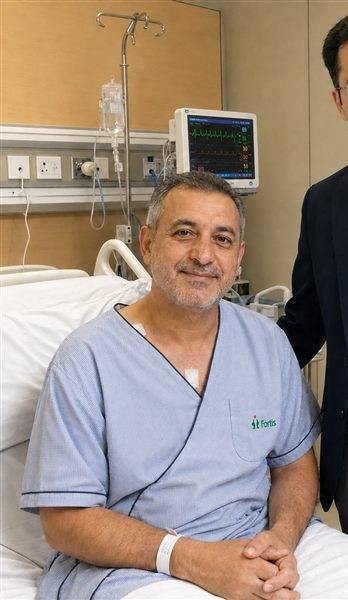
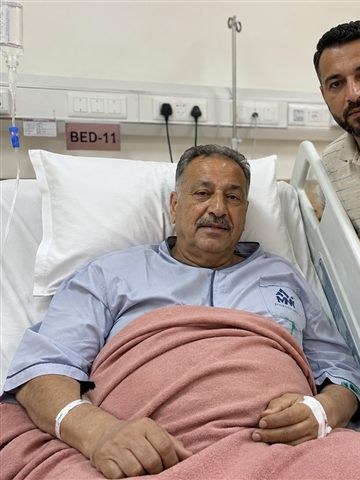
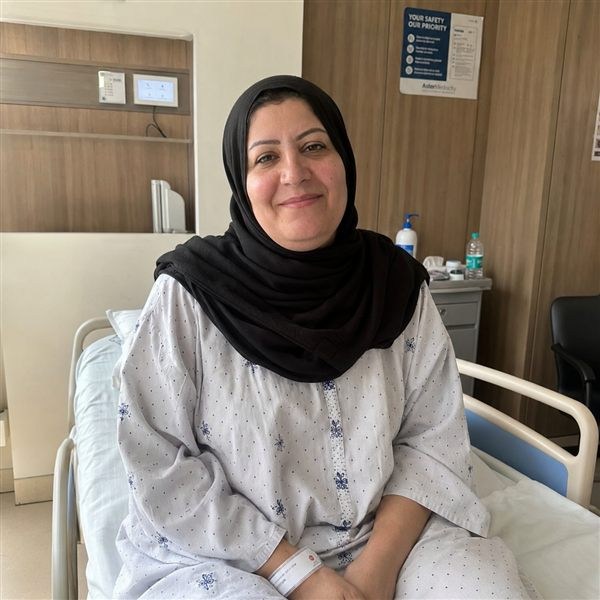
Healing Journeys of Iraqi Patients





Key Takeaways
- HIPEC, or hyperthermic intraperitoneal chemotherapy, is combined with cytoreductive surgery to treat selected cancers that have spread across the lining of the abdomen. The guide emphasises that simply having HIPEC equipment does not determine whether treatment will be beneficial. The critical factor is whether the surgeon can achieve complete cytoreduction, meaning removal of essentially all visible tumour before the heated chemotherapy is delivered.
- Completeness of cytoreduction is identified in the source as the strongest predictor of survival after HIPEC. The Indian HIPEC Registry, covering 374 patients treated between 2010 and 2016 across multiple Indian centres, reported complete or near-complete cytoreduction in 83% of cases. Tumour-specific outcomes also varied considerably: a North Indian peritoneal mesothelioma study reported 86.7% one-year survival and 33.3% three-year survival, while an Indian uterine sarcoma series reported 78% one-year, 53% three-year and 35% five-year survival with complete cytoreduction achieved in 94% of cases.
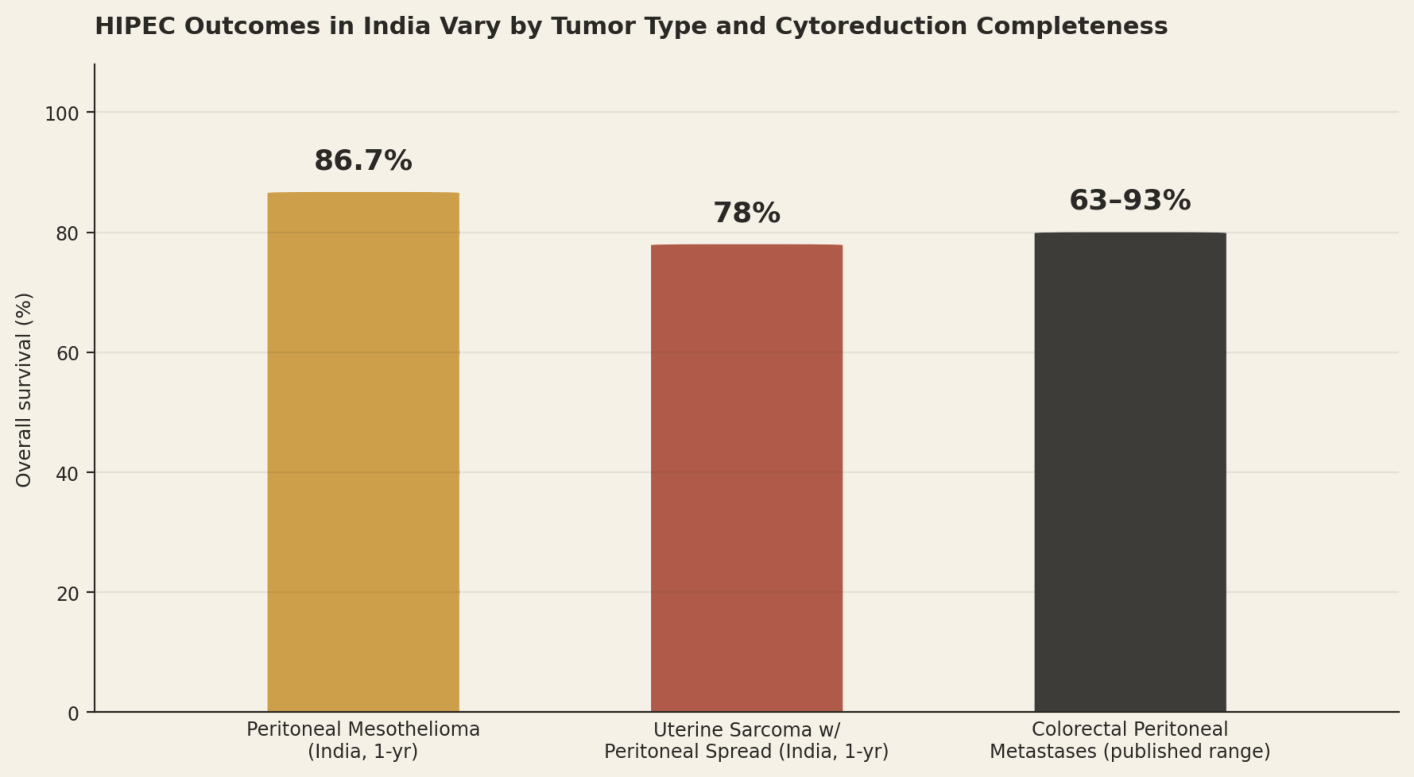
- The chart on page 2 compares illustrative one-year survival figures of 86.7% for peritoneal mesothelioma and 78% for uterine sarcoma, while published international colorectal peritoneal metastasis studies show an overall survival range of 63–93%. The guide makes clear that these figures vary by tumour type and patient selection and should not be interpreted as a universal HIPEC success rate.
- For Iraqi patients, hospital accreditation is an initial screening factor, but the guide recommends going further and asking for the individual surgeon's completeness-of-cytoreduction rate. JCI and NABH accreditation should be verified, while the surgeon should be able to explain how cytoreduction completeness is measured and reported. The source considers this procedure-specific information more useful than a broad hospital-wide HIPEC success percentage.
- Disease extent must be formally assessed before deciding whether HIPEC is appropriate. The source recommends using a recognised scoring system such as the peritoneal cancer index and asking for the patient's individual score. Iraqi patients should also ask how many HIPEC procedures the surgeon has performed recently, how many involved their exact primary cancer type and what the centre's procedure-specific postoperative complication and mortality rates are.
- HIPEC and cytoreductive surgery require a multidisciplinary team rather than one surgeon working alone. The guide highlights a surgical oncologist with specific peritoneal surface malignancy training, a medical oncologist, an intensive care team experienced in the fluid and metabolic demands of the procedure, and a perfusionist or trained technician responsible for HIPEC delivery. Published research has also shown that a genuine multidisciplinary team approach is associated with meaningfully higher rates of complete cytoreduction.
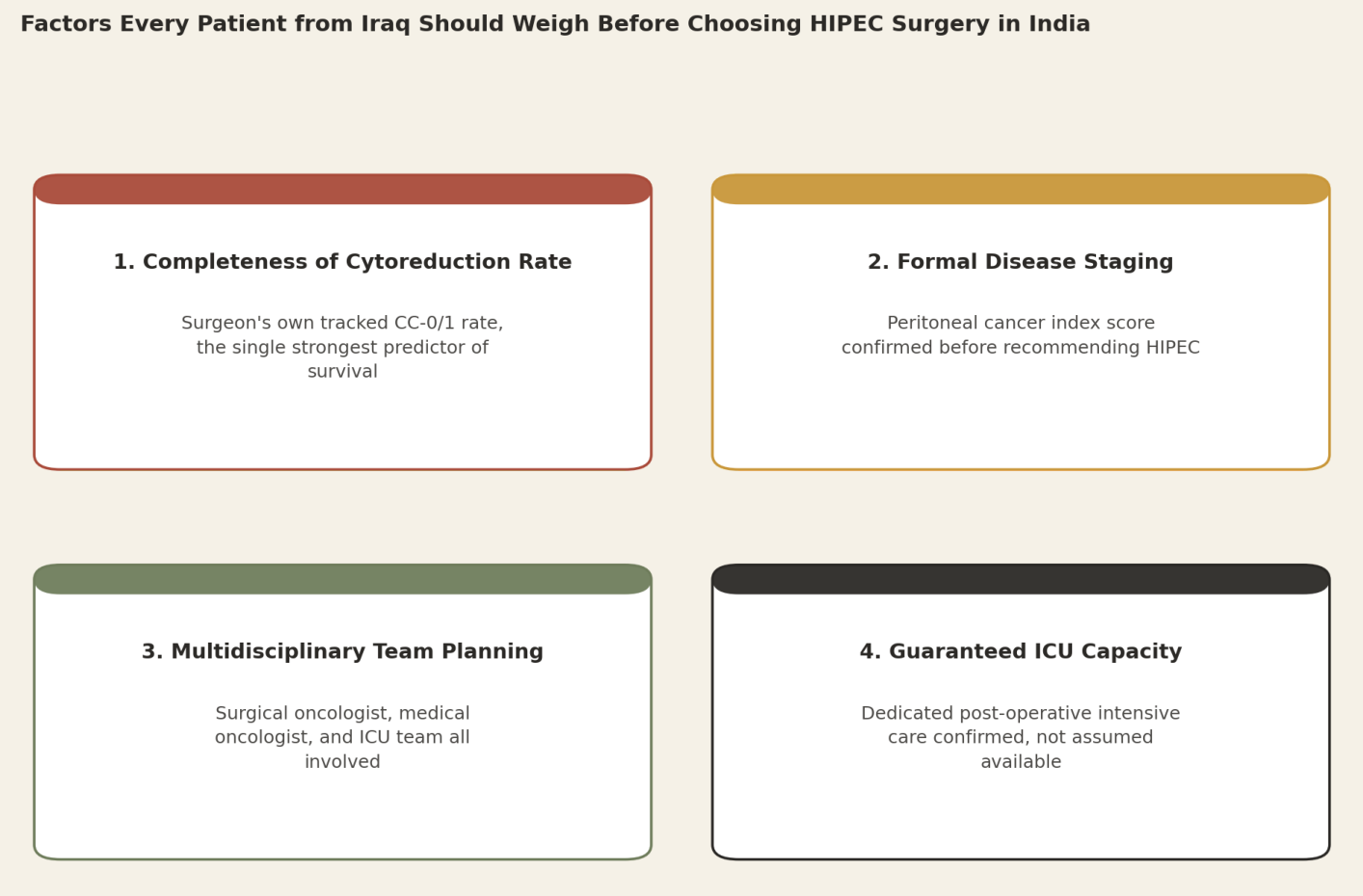
- The guide identifies clear warning signs: a surgeon who cannot provide their own cytoreduction-completeness rate, a centre that recommends HIPEC without formal peritoneal cancer index staging, and a hospital without a dedicated postoperative ICU plan. The page 4 checklist highlights four core priorities: cytoreduction completeness, formal disease staging, multidisciplinary planning and guaranteed ICU capacity.
Quick Facts
- Treatment
- HIPEC with cytoreductive surgery
- Primary Patients
- Iraqi patients with selected peritoneal surface malignancies
- Main Speciality
- Surgical oncology and peritoneal surface malignancy
- Key Specialist
- Surgical oncologist experienced in CRS and HIPEC
- Core Objective
- Complete or near-complete removal of visible tumour
- Indian HIPEC Registry
- 374 patients across multiple Indian centres
- Cytoreduction Rate
- 83% complete or near-complete cytoreduction in the cited registry
- Peritoneal Mesothelioma
- 86.7% one-year survival in the cited North Indian study
- Uterine Sarcoma
- 78% one-year survival in the cited Indian series
- Colorectal Peritoneal Metastases
- Published overall survival range of 63–93%
- Disease Staging
- Peritoneal cancer index should be assessed before surgery
- Surgeon Experience
- Ask for recent HIPEC volume and exact tumour-specific experience
- Outcome Data
- Request cytoreduction, complication and mortality rates
- Team
- Surgical oncologist, medical oncologist, ICU team and HIPEC technician/perfusionist
- HIPEC Technique
- Ask whether an open or closed technique is used
- ICU
- Dedicated postoperative ICU capacity should be confirmed
- Pathology
- Experience with peritoneal surface malignancy specimens is important
- Accreditation
- Verify JCI and NABH accreditation
- Treatment Planning
- Obtain formal staging and multidisciplinary review
- Author
- Dr. Dheeraj Bojwani
- Experience
- 24+ Years
In Brief
For Iraqi patients considering HIPEC in India, the central question is whether complete cytoreduction is realistically achievable for their particular cancer and extent of peritoneal disease. The source’s page 4 checklist places the surgeon’s tracked cytoreduction rate, formal peritoneal cancer index staging, multidisciplinary case planning and guaranteed postoperative ICU capacity ahead of general claims about HIPEC success.
Why the Choice of Surgical Oncologist in India Matters as Much as the Choice of Hospital
Based on my interactions with international patients, the published data on this point is unusually consistent across every study I have reviewed: completeness of cytoreduction is the single strongest predictor of survival after HIPEC, more important than almost any other factor. The Indian HIPEC Registry, tracking 374 patients treated between 2010 and 2016 across multiple Indian centres, achieved a complete or near-complete cytoreduction score in 83 percent of cases, a genuinely strong result reflecting real, accumulated Indian surgical experience with this technically demanding procedure. Outcomes specific to tumour type illustrate why this matters: a study of peritoneal mesothelioma patients treated in North India reported one-year survival of 86.7 percent, falling to 33.3 percent at three years, while a separate Indian series of uterine sarcoma patients with peritoneal spread reported one-year survival of 78 percent, 53 percent at three years, and 35 percent at five years, figures achieved with complete cytoreduction in 94 percent of cases. International literature on colorectal peritoneal metastases treated with HIPEC reports overall survival ranging from 63 to 93 percent depending on the specific study and patient selection, again converging on the same message: the completeness of the surgery itself, not the country or hospital in the abstract, is what determines the outcome.
How Patients from Iraq Can Verify a HIPEC Hospital’s Accreditation in India
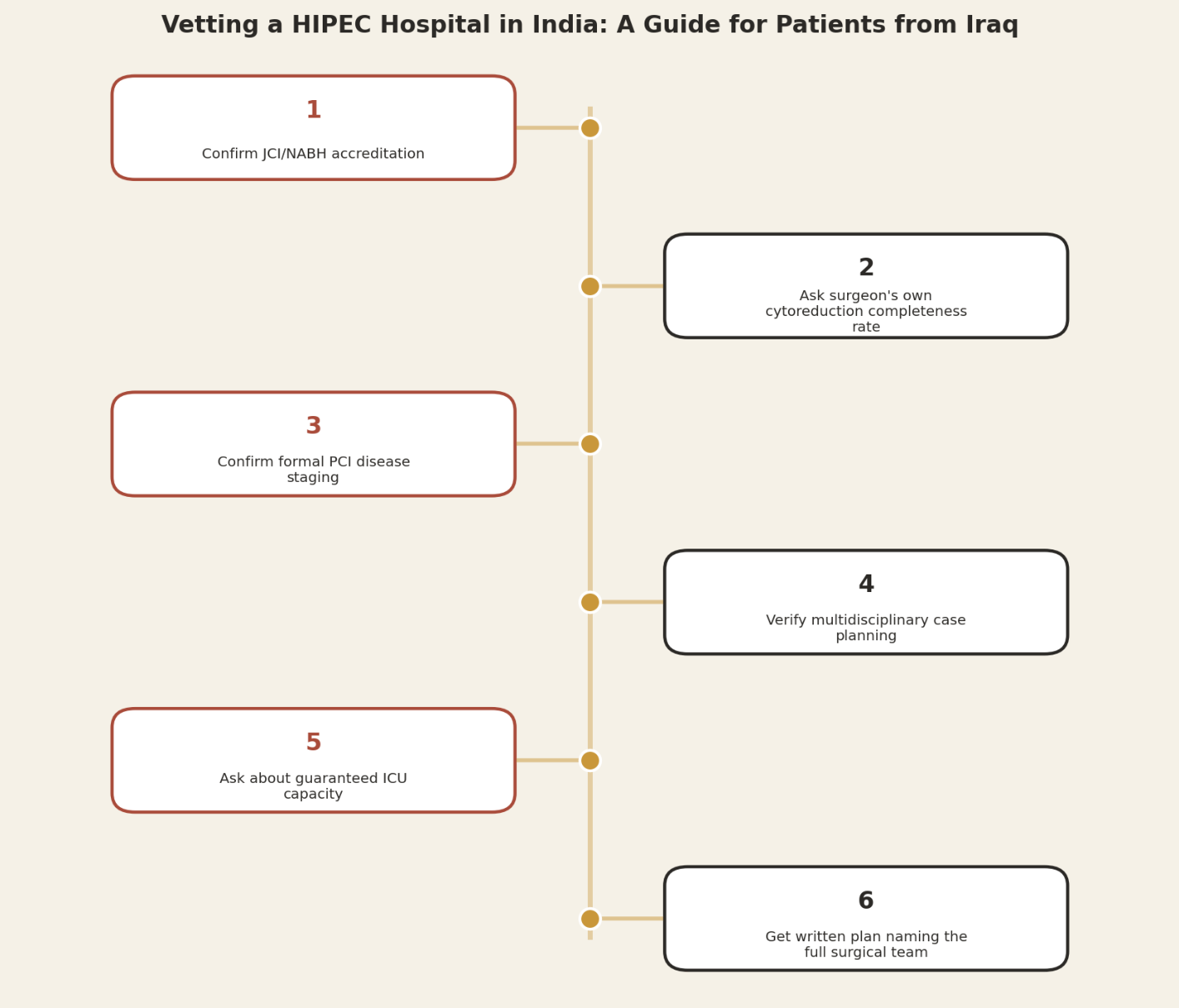
The fastest filter I recommend to every Iraqi family calling about HIPEC is verifiable accreditation, not marketing language. Joint Commission International, JCI, audits a hospital’s overall clinical safety systems against the same standard used across the United States and Europe. The National Accreditation Board for Hospitals and Healthcare Providers, NABH, is India’s own domestic equivalent, and in my experience of 24 years advising families on this exact decision, a centre holding both marks together is a meaningfully stronger signal than either alone. For HIPEC specifically, ask one further, very direct question: what is this specific surgeon’s own completeness of cytoreduction rate, and how is it measured and reported, since this single figure matters more than almost any other statistic the hospital could offer you.
HIPEC Volume and Cytoreduction-Specific Criteria That Predict Outcomes in India
Based on my interactions with dozens of peritoneal surface malignancy programmes over the years, a surgeon’s specific volume in HIPEC and cytoreductive surgery, and their own tracked completeness of cytoreduction rate, is one of the clearest predictors of a good outcome available to a family. Ask directly, in writing:
- What is this surgeon's own completeness of cytoreduction rate for patients with my specific tumour type and disease extent, not a general HIPEC statistic?
- How is disease extent measured before surgery, using a formal scoring system such as the peritoneal cancer index, and what is my own specific score?
- How many HIPEC procedures has this surgeon performed in the past year, and specifically how many for my exact primary cancer type?
- What is the centre's own postoperative complication and mortality rate for this specific procedure, since HIPEC combined with extensive cytoreductive surgery carries genuine surgical risk that should be discussed openly?
A surgeon confident in their own outcomes will answer these specifically. A surgeon who cannot state their own completeness of cytoreduction rate, or who offers HIPEC without first properly staging the extent of disease, deserves a second opinion before you commit.
Vetting a HIPEC Hospital in India: A Guide for Patients from Iraq
Questions Patients from Iraq Should Ask About the HIPEC Team in India
HIPEC and cytoreductive surgery are never genuinely the work of one surgeon alone. In my experience of 24 years watching these programmes operate, the strongest units bring together a surgical oncologist with specific fellowship training in peritoneal surface malignancy, a medical oncologist to coordinate any chemotherapy given before or after surgery, and an intensive care team experienced specifically in managing the fluid shifts and metabolic demands that follow this particular combination of extensive surgery and heated chemotherapy. A dedicated perfusionist or trained technician managing the HIPEC delivery equipment itself is a further specific role worth confirming, since the precise temperature and circulation of the heated chemotherapy solution throughout the abdominal cavity is a technical detail that directly affects treatment effectiveness. Published research has also shown that a genuine multidisciplinary team approach is associated with meaningfully higher rates of complete cytoreduction compared with cases planned without this team structure. Ask specifically who fills each of these roles for your case, and confirm that your disease extent has been formally scored and discussed by a multidisciplinary team before HIPEC is recommended.
HIPEC Technology and Perioperative Standards in India That Patients from Iraq Should Check
The specific technology and perioperative infrastructure available change what a centre can safely offer. Ask whether the hospital uses a closed or open HIPEC technique, and ask the surgeon to explain why their preferred approach suits your specific case, since each technique has recognised advantages depending on the extent and distribution of disease. Ask whether a dedicated intensive care bed is guaranteed for the days immediately following surgery, since this extended, high-acuity recovery period is a standard and necessary part of the procedure, not an optional extra, and a hospital without guaranteed ICU capacity may be forced to delay or compromise your post-operative care. Ask also whether the hospital’s pathology team has specific experience interpreting peritoneal surface malignancy specimens, since accurate assessment of the tissue removed during surgery directly informs decisions about further treatment. Ask directly which of these specific capabilities apply to your case, not simply whether the hospital owns the equipment somewhere in the building.
Red Flags Patients from Iraq Should Watch For When Choosing a HIPEC Hospital in India
Over the years, certain patterns have become reliable warning signs for me. A surgeon who cannot state their own completeness of cytoreduction rate, offering only a general HIPEC success percentage instead, has not given you information you can actually use. A hospital that recommends HIPEC without first performing formal disease staging using a peritoneal cancer index score has not properly assessed whether complete cytoreduction is realistically achievable in your specific case. And a hospital without a dedicated intensive care plan for the days following surgery is underestimating the genuine physiological demands this combined procedure places on a patient.
Factors Every Patient from Iraq Should Weigh Before Choosing HIPEC Surgery in India
A Closing Thought for Iraqi Families
HIPEC can offer genuine hope for patients with peritoneal spread of cancer who may have been told nothing more could be done, but that hope depends entirely on a surgeon capable of achieving complete cytoreduction for your specific disease extent, not simply access to the equipment itself. Based on my interactions with international patients over more than two decades, the families who ask about completeness of cytoreduction rates, formal disease staging, and multidisciplinary planning consistently make better-informed decisions than those who accept a general reassurance alone. My role, and the role of any advisor a family works with, should be to help you ask these exact questions and confirm honestly that the specific surgeon and specific hospital in front of you are the right fit for your family’s exact diagnosis. Iraq’s families deserve the same standard of scrutiny in this decision as any family anywhere else in the world.
Sources & Further Reading
- Joint Commission International (JCI) — Accredited Organizations Directory (jointcommissioninternational.org)
- National Accreditation Board for Hospitals & Healthcare Providers (NABH), India (nabh.co)
- PubMed Central — Long-Term Survival After CRS with or without HIPEC: Report from the Indian HIPEC Registry (pmc.ncbi.nlm.nih.gov)
- PubMed Central — Cytoreductive Surgery and HIPEC for Peritoneal Mesothelioma: Outcomes from a Tertiary Cancer Care Center in India (ncbi.nlm.nih.gov/pmc)
- Society of Surgical Oncology (SSO) — Peritoneal Surface Malignancy Patient Information (surgonc.org)
Frequently Asked Questions by Iraqi Patients about Selecting a HIPEC Surgeon and Hospital in India
Can Iraqi patients receive HIPEC treatment in India?
Yes. The guide specifically discusses HIPEC and cytoreductive surgery for patients from Iraq with selected cancers involving the peritoneal surface.
What is HIPEC surgery for Iraqi cancer patients?
HIPEC combines cytoreductive surgery with heated chemotherapy delivered inside the abdominal cavity after visible tumour has been removed. The guide emphasises that complete cytoreduction is central to the potential benefit of treatment.
Which cancers may be treated with HIPEC in India for Iraqi patients?
The source discusses peritoneal mesothelioma, uterine sarcoma and colorectal peritoneal metastases. Suitability depends on the primary cancer, disease distribution and whether complete cytoreduction is realistically achievable.
Why is complete cytoreduction important in HIPEC?
The guide identifies completeness of cytoreduction as the strongest predictor of survival after HIPEC. The goal is to remove essentially all visible tumour before heated chemotherapy is administered.
What is the peritoneal cancer index and why should Iraqi patients ask about it?
The peritoneal cancer index is a formal way of assessing the extent of disease within the peritoneal cavity. The guide recommends obtaining the patient's specific score before HIPEC is recommended.
How much HIPEC experience should an Iraqi patient ask about?
Patients should ask how many HIPEC procedures the surgeon has performed recently and, more importantly, how many involved their exact primary cancer type and similar disease extent.
What HIPEC outcome information should Iraqi patients request?
They should ask for the surgeon's own completeness-of-cytoreduction rate and the centre's procedure-specific postoperative complication and mortality rates rather than relying on a general HIPEC success percentage.
What specialists should be involved in HIPEC treatment in India?
The guide recommends a surgical oncologist with peritoneal surface malignancy expertise, a medical oncologist, an experienced intensive care team and a trained HIPEC technician or perfusionist.
Should Iraqi patients ask whether a hospital uses open or closed HIPEC?
Yes. The guide recommends asking which technique the hospital uses and why it is considered appropriate for the patient's specific extent and distribution of peritoneal disease.
What should Iraqi patients check before choosing a HIPEC hospital in India?
They should verify JCI and NABH accreditation, request surgeon-specific cytoreduction data, confirm formal disease staging, ensure multidisciplinary planning and verify dedicated postoperative ICU capacity before travelling for HIPEC.
Page Summary
HIPEC can be considered for selected patients with cancer involving the peritoneal surface, but the guide emphasises that access to HIPEC equipment alone does not determine treatment success. Complete cytoreduction, formal assessment of disease extent and the surgeon's specific experience are central to determining whether the procedure is appropriate.
For Iraqi patients travelling to India, a suitable HIPEC centre should provide experienced peritoneal surface malignancy specialists, multidisciplinary planning, procedure-specific outcome data, formal peritoneal cancer index staging and dedicated postoperative ICU support. The hospital should also be able to explain its HIPEC technique and provide a clear plan for pathology and continued cancer care.
Citation Block
| Field | Details |
|---|---|
| Article / Topic | Selecting the Best HIPEC Surgeons and Hospitals in India |
| Primary Patients | Patients from Iraq |
| Treatment Area | HIPEC with cytoreductive surgery |
| Core Treatment Principle | Complete cytoreduction before heated chemotherapy |
| Indian HIPEC Registry | 374 patients treated between 2010 and 2016 |
| Complete/Near-Complete Cytoreduction | 83% in cited Indian HIPEC Registry |
| Peritoneal Mesothelioma | 86.7% one-year survival; 33.3% three-year survival |
| Uterine Sarcoma | 78% one-year; 53% three-year; 35% five-year survival |
| Uterine Sarcoma Cytoreduction | 94% complete cytoreduction in cited series |
| Colorectal Peritoneal Metastases | Published overall survival range of 63–93% |
| Primary Selection Factor | Surgeon-specific cytoreduction completeness |
| Disease Staging | Peritoneal cancer index |
| Surgeon Volume | Recent HIPEC and exact tumour-type experience |
| Outcome Data | Procedure-specific complication and mortality rates |
| Surgical Team | Surgical oncologist with peritoneal malignancy expertise |
| Medical Oncology | Coordinates chemotherapy before or after surgery |
| ICU Team | Experienced in fluid and metabolic demands after CRS-HIPEC |
| HIPEC Technician | Manages heated chemotherapy delivery |
| HIPEC Technique | Open or closed technique should be explained |
| ICU Capacity | Dedicated postoperative ICU bed should be confirmed |
| Pathology | Peritoneal surface malignancy expertise |
| Accreditation | JCI and NABH |


Our Mission Statement
Our mission is to place patients at the centre of every healthcare decision by providing trustworthy, evidence-based, and unbiased medical information. We believe that informed patients make better decisions. Backed by personalised guidance from our experienced advisory team, we help patients understand their treatment options, compare them objectively, and confidently choose the path that best suits their medical needs and personal circumstances.
Patient Testimonials from Iraq




Ready to Take the First Step?
Share your Medical Reports with our Healthcare Managers Today and Get a FREE CONSULTATION, a Personalized Treatment Plan, and Complete Support from Arrival to Recovery.
Get Your Free ConsultationAreas We Serve
Indian Health Guru Consultants proudly assists patients from Iraq and surrounding Middle Eastern countries in accessing advanced, affordable and trusted medical treatment in India. Our team provides complete support for medical opinions, hospital selection, treatment planning, visa assistance, travel coordination, accommodation and post-treatment follow-up.
We regularly serve patients from:
- Iraq
- Turkey
- Iran
- Kuwait
- Jordan
- Syria
- Qatar
- Bahrain
- Oman
- Yemen
- Saudi Arabia
- United Arab Emirates
No matter where you are located, our experienced team is committed to making your medical journey to India safe, smooth, transparent and stress-free from the first enquiry to your return home.
From Iraq to India: Your Complete Patient Guide
- Liver Transplant in India for Iraqis
- Oral and Maxillofacial Surgery in India for Iraqis
- Robotic Cancer Surgery in India for Iraqis
- Cancer Treatment in India for Iraqi Patients
- Dental Implants and Smile Makeover in India for Iraqis
- Paediatric Orthopaedic Surgery in India for Iraqis
- Gamma Knife Treatment in India for Iraqis
- Cornea Transplant and Advanced Eye Surgery in India for Iraqis
- Joint Arthroscopy and Sports Medicine in India for Iraqis
- Breast Cancer Treatment in India for Iraqi Patients
- Dental Surgery in India for Iraqis
- Leukemia, Lymphoma and Blood Cancer Treatment in India for Iraqis
- CyberKnife Treatment in India for Iraqis
- Cardiac Surgery in India for Iraqis
- Prostate Cancer Treatment and Surgery in India for Iraqis
- Knee Surgery in India for Iraqis
- Scoliosis Correction Surgery in India for Iraqis
- Penile Implant Surgery in India for Iraqis