

Selecting the Best Dental Implant and Smile Makeover Clinics in India: A Guide for Patients from Iraq
A doctor’s honest, question-by-question guide for patients from Iraq on vetting a dental implant clinic in India — digital planning, accreditation, team composition, and the exact questions worth asking before you book anything.
Over the years, I have noticed that dental implants are treated, understandably, as a relatively low-stakes decision compared with major surgery, and for a single, straightforward implant in a healthy patient, that instinct is largely correct. In my experience of 24 years advising patients on this exact decision, the calculation changes considerably once a patient needs a full-mouth or full-arch rehabilitation, or has risk factors such as significant bone loss, diabetes, or a history of radiotherapy, since the specific planning technique used, not simply the implant brand or the surgeon’s general reputation, becomes the factor that most determines success.
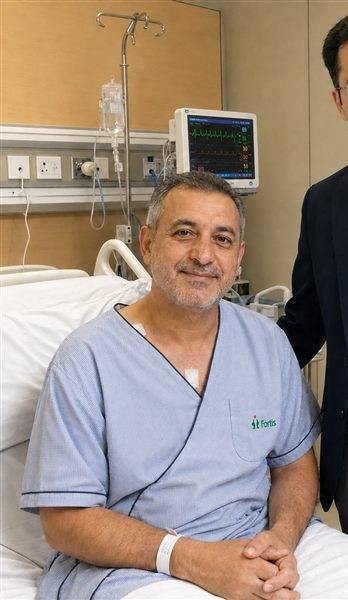
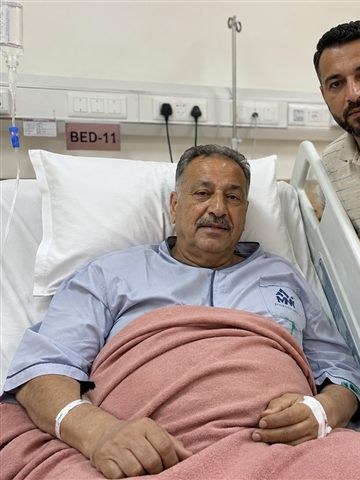
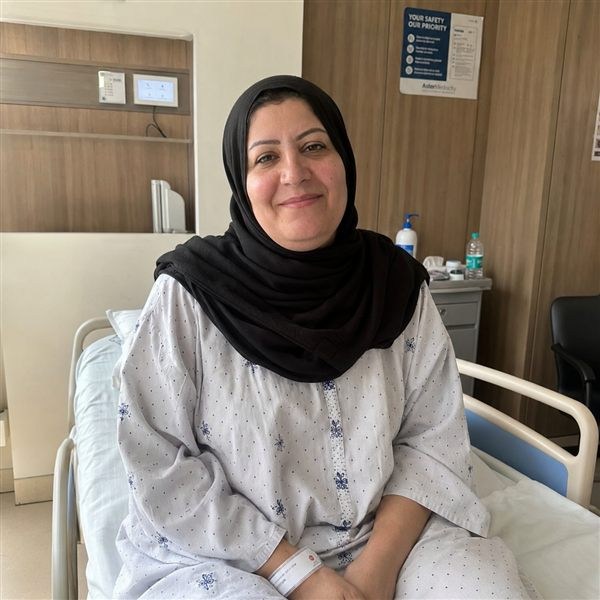
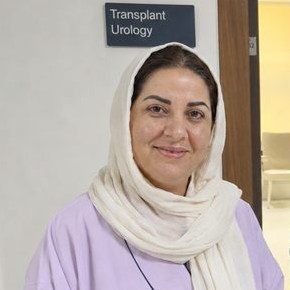
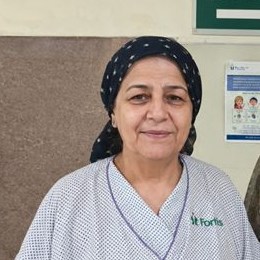
Healing Journeys of Iraqi Patients
Key Takeaways
- Dental implants are generally a reliable treatment, but the source explains that complexity changes how a patient should evaluate a clinic. A straightforward implant in a patient with good bone quality and no major risk factors commonly achieves long-term success of around 95–98%. Full-mouth or full-arch rehabilitation is more complex, particularly when there is significant bone loss, diabetes or previous radiotherapy, so the planning technique and the team's experience with similar cases become especially important.
- The source compares different implant workflows and highlights the importance of digital planning for complex rehabilitation. A cited randomised clinical trial comparing traditional and fully digital computer-guided All-on-4 treatment reported four-year success of 98% with the traditional workflow and 100% with the fully digital protocol, together with less bone loss around implants and less reported pain in the digital group. These figures should be interpreted according to the specific case rather than treated as a universal guarantee.
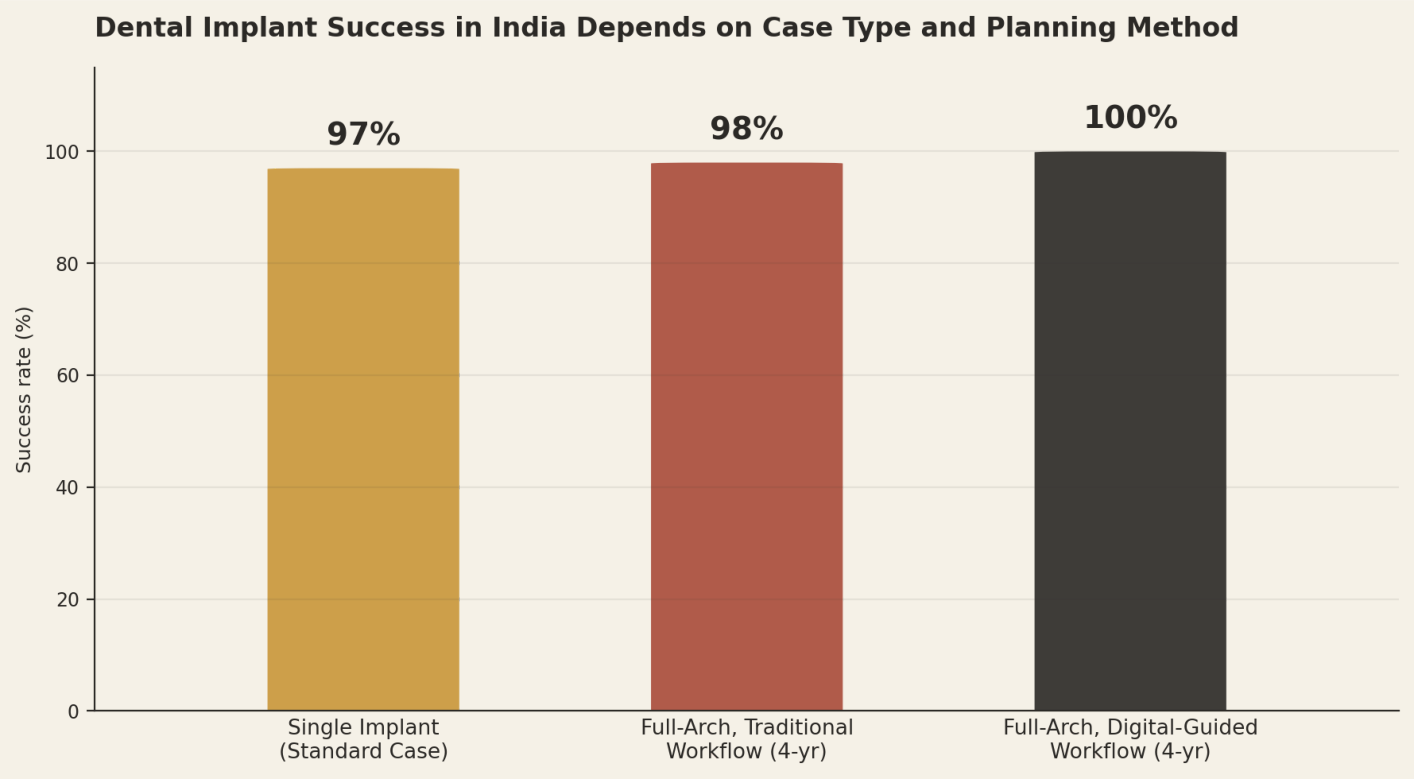
- The chart on page 2 visually compares three case categories: approximately 97% for a standard single implant, 98% for full-arch treatment using the traditional workflow and 100% for full-arch treatment using the digital-guided workflow at four years. The source describes these as illustrative success rates and recommends asking which category most closely matches the patient's own situation before comparing clinics.
- Accreditation is an important initial screening factor for Iraqi patients. The guide recommends checking NABH accreditation and, where a dental department operates within a larger hospital, considering JCI accreditation as an additional layer of oversight. NABH also has dedicated accreditation standards for dental healthcare service providers covering areas such as patient safety, quality improvement, infection control, facility safety and human-resource management.
- Clinic-specific experience should be assessed according to the complexity of the patient's treatment. Iraqi patients requiring full-mouth or full-arch rehabilitation should ask how many comparable cases the clinic has completed rather than relying on its total number of single-implant procedures. They should also ask whether digital smile design and computer-guided surgical planning are routinely used, whether a sample digital treatment plan can be shown, how bone grafting would affect the treatment timeline and what success rate the clinic achieves in patients with a similar risk profile.
- A complex dental implant rehabilitation usually requires more than one dental professional. The source recommends a team that can include an implant surgeon or periodontist for surgical placement, a prosthodontist for the final crowns, bridges or dentures and, in complex cases, an oral and maxillofacial radiologist for detailed 3D imaging. A dental technician working closely with the prosthodontist can also be important for custom restorations, particularly when digital design and milling are performed in-house.
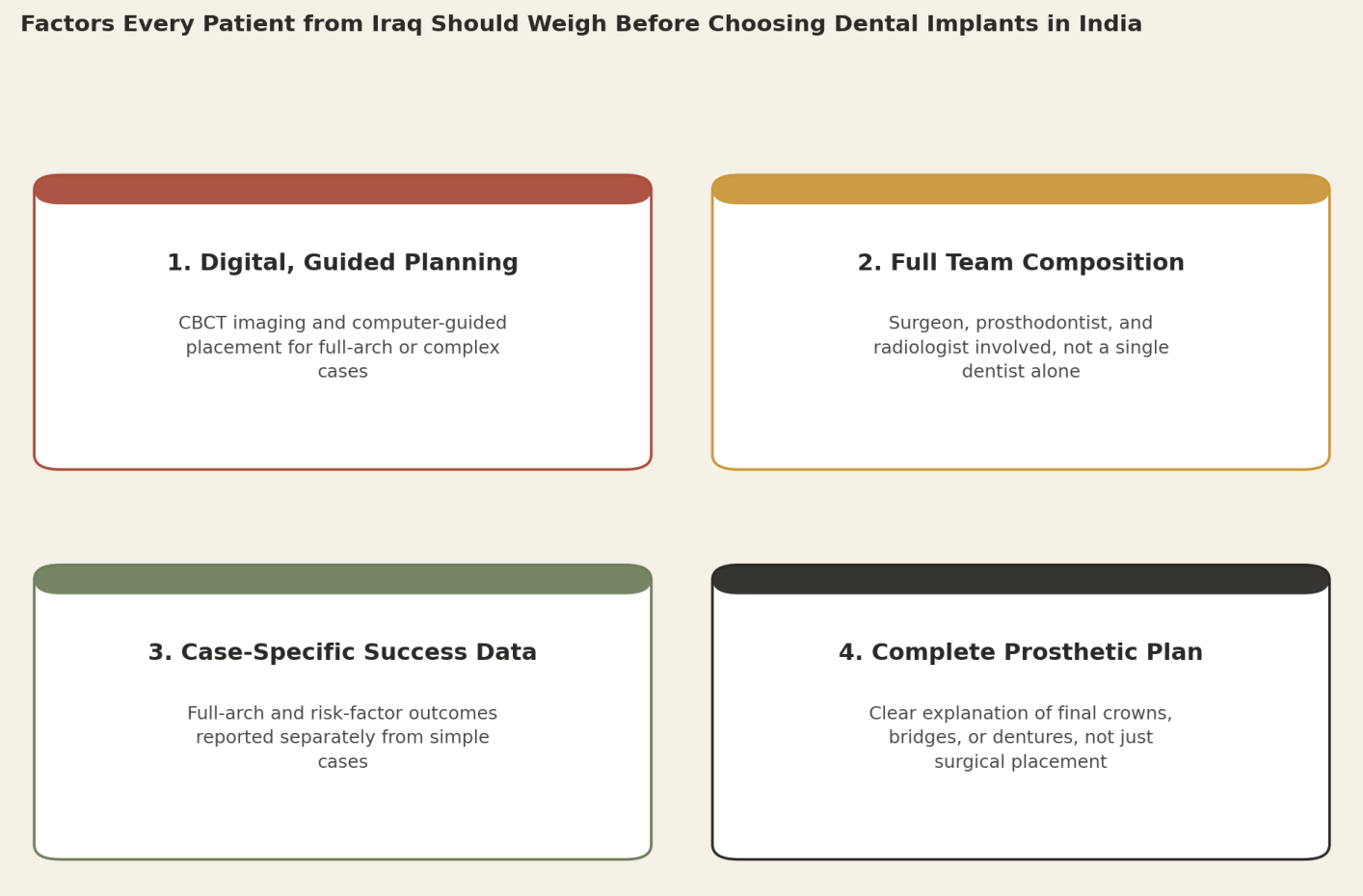
- The guide identifies several warning signs for Iraqi patients: a clinic that quotes one implant success rate without distinguishing straightforward single implants from complex full-arch rehabilitation, full-mouth treatment without CBCT or digital planning, unclear explanation of the final prosthodontic design, and a flat price quoted before assessing bone quality and possible grafting. The page 4 checklist emphasises digital guided planning, full team composition, case-specific success data and a complete prosthetic plan.
Quick Facts
- Treatment
- Dental implants and smile makeover treatment
- Primary Patients
- Iraqi patients seeking dental treatment in India
- Main Speciality
- Implant dentistry and prosthodontics
- Key Specialists
- Implant surgeon or periodontist and prosthodontist
- Single Implant Success
- Approximately 95–98% in straightforward cases
- Full-Arch Digital Workflow
- 100% four-year success in the cited trial
- Full-Arch Traditional Workflow
- 98% four-year success in the cited trial
- Imaging
- CBCT 3D imaging recommended for complex implant planning
- Planning
- Digital, computer-guided planning for complex cases
- Digital Smile Design
- Ask whether it is routinely used
- Bone Grafting
- May be required where bone volume is insufficient
- Team
- Implant surgeon, prosthodontist and relevant imaging specialist
- Final Restoration
- Crowns, bridges or dentures depending on the treatment plan
- CAD/CAM
- On-site digital production may reduce restoration turnaround time
- Implant Materials
- Ask about titanium surface technology and zirconia options
- Immediate Teeth
- Same-day temporary teeth depend on individual bone quality
- Accreditation
- Verify NABH and relevant JCI accreditation
- Case-Specific Data
- Ask for outcomes matching the patient's risk profile
- Treatment Plan
- Obtain a written surgical and prosthetic plan
- Author
- Dr. Dheeraj Bojwani
- Experience
- 24+ Years
In Brief
For Iraqi patients considering dental implants or a smile makeover in India, the most important comparison is not simply the implant brand or advertised success percentage. Complex full-mouth and full-arch cases should be assessed using detailed CBCT imaging, digital planning, case-specific success data and a complete team that can manage both surgical placement and the final prosthetic restoration. The source’s page 4 checklist particularly emphasises digital guided planning, full team composition, case-specific success data and a complete prosthetic plan before treatment begins.
Why the Choice of Implant Planning Technique in India Matters as Much as the Choice of Surgeon
Based on my interactions with international patients, the published data on this distinction is genuinely instructive. A single, straightforward dental implant placed in a patient with good bone quality and no major risk factors commonly achieves a long-term success rate in the range of 95 to 98 percent, a figure well supported by decades of peer-reviewed research across multiple countries including India. Full-arch rehabilitation is a different picture, and here the specific planning method used matters considerably. A randomised clinical trial comparing traditional workflow against a fully digital, computer-guided workflow for full-arch “All on Four” implant rehabilitation found a four-year success rate of 98 percent with the traditional approach compared with 100 percent using the fully digital protocol, alongside meaningfully less bone loss around the implants and significantly less pain reported by patients treated digitally. For patients with genuine risk factors, the picture shifts again: a study of implant-based reconstruction in oncology patients, many of whom had received radiotherapy, found an overall implant success rate of 92.1 percent, with the substantial majority of implant losses occurring specifically in patients who had undergone radiation treatment. None of this means implants are unsafe; it means the specific technique and the specific risk profile of your case should shape which numbers are actually relevant to you.
How Patients from Iraq Can Verify a Dental Implant Clinic’s Accreditation in India
The fastest filter I recommend to every Iraqi patient calling about dental implants, particularly full-mouth rehabilitation, is verifiable accreditation, not marketing language. The National Accreditation Board for Hospitals and Healthcare Providers, NABH, is India’s domestic accreditation body and increasingly extends to dedicated dental and maxillofacial centres, not simply general hospitals. Joint Commission International, JCI, accreditation, where held by a larger hospital housing a dental department, adds a further internationally recognised layer of clinical safety oversight. Based on my interactions with dozens of dental practices over the years, for full-mouth or full-arch cases specifically, ask one further, very direct question: does this clinic use digital, computer-guided implant planning as standard practice for complex cases, or does it rely on traditional, freehand placement even for full-arch rehabilitation.
Dental Implant Volume and Technology Criteria That Predict Outcomes in India
Based on my interactions with dozens of dental implant practices over the years, a clinic’s specific experience with your exact case type, single implant, full-arch rehabilitation, or a case involving significant bone loss, is one of the clearest predictors of a good outcome. Ask directly, in writing:
- How many full-arch or full-mouth rehabilitation cases has this specific clinic completed, separate from their total single-implant case count?
- Does the clinic use digital smile design and computer-guided surgical planning as standard for complex cases, and can they show you a sample digital treatment plan before your own procedure begins?
- If bone grafting is needed to support implant placement, what is the clinic's specific experience with this additional procedure, and how does it affect the overall treatment timeline?
- What is the clinic's own implant success rate specifically for cases matching your risk profile, not simply their overall published figure?
A clinic confident in its own outcomes and technology will answer these specifically. A clinic that cannot describe its planning process in detail, or that treats every case identically regardless of complexity, deserves a second opinion before you commit.
Questions Patients from Iraq Should Ask About the Dental Implant Team in India
A full-mouth rehabilitation is rarely the work of one dentist alone. In my experience of 24 years watching these practices operate, the strongest teams bring together an implant surgeon or periodontist for the surgical placement itself, a prosthodontist to design and fit the final crowns, bridges, or dentures the implants will support, and, for complex cases, an oral and maxillofacial radiologist to interpret detailed 3D imaging before planning begins. A dental technician working closely with the prosthodontist, ideally using in-house digital design and milling equipment, rounds out the team for cases needing custom-fabricated final restorations. Ask specifically who fills each of these roles for your case, and confirm that your treatment plan has been reviewed using detailed 3D cone-beam imaging rather than standard two-dimensional X-rays alone, since the additional detail this imaging provides is precisely what makes digital, guided implant placement possible.
Vetting a Dental Implant Clinic in India: A Guide for Patients from Iraq
Dental Implant Technology Standards in India That Patients from Iraq Should Check
The specific technology and materials available change both the precision of placement and the durability of the final result. Ask whether the clinic uses cone-beam computed tomography, CBCT, to plan implant position in three dimensions before surgery, since this level of detail is what enables guided, minimally invasive placement rather than a more exploratory freehand approach. Ask which implant material and surface technology is being used, since modern titanium surface treatments and newer materials such as zirconia have been developed specifically to improve osseointegration, the biological process by which bone fuses to the implant. For full-arch cases, ask whether same-day, immediately loaded temporary teeth are genuinely an option for your specific bone quality, since this affects how much of your trip requires you to be without functional teeth. Ask also whether the clinic manufactures its final crowns and prosthetics using digital CAD/CAM technology on-site, since this shortens turnaround time considerably compared with sending impressions to an external laboratory and waiting for a physical model to be returned.
Red Flags Patients from Iraq Should Watch For When Choosing a Dental Implant Provider in India
Over the years, certain patterns have become reliable warning signs for me. A clinic that quotes a single implant success percentage without distinguishing between straightforward single-implant cases and complex full-arch rehabilitation has not given you information specific enough to be useful. A clinic offering full-mouth rehabilitation without cone-beam imaging or digital planning as standard practice is relying on a less precise, more dated approach than current best practice supports. A clinic that cannot clearly explain the prosthodontic plan, exactly what the final teeth will look like and how they will be attached, focusing only on the surgical placement itself, has not given you the complete picture of your own treatment. And a clinic that quotes a single flat price for full-mouth rehabilitation without first reviewing your specific bone quality and the possible need for grafting is very likely underestimating the true scope of your case.
Factors Every Patient from Iraq Should Weigh Before Choosing Dental Implants in India
A Closing Thought for Iraqi Families
Dental implants are a genuinely reliable, well-established treatment, but a full-mouth or complex rehabilitation deserves the same scrutiny as any major medical decision, built on the specific planning technology and the specific team’s experience with cases like yours, not a single reassuring percentage borrowed from the simplest possible case. Based on my interactions with international patients over more than two decades, the patients who ask about digital planning, case-specific success rates, and full team composition consistently achieve more predictable, comfortable results than those who accept a general reassurance alone. My role, and the role of any advisor a patient works with, should be to help you ask these exact questions and confirm honestly that the specific clinic and specific team in front of you are the right fit for your exact case. Iraq’s patients deserve the same standard of scrutiny in this decision as any patient anywhere else in the world.
Sources & Further Reading
- National Accreditation Board for Hospitals & Healthcare Providers (NABH), India (nabh.co)
- Joint Commission International (JCI) — Accredited Organizations Directory (jointcommissioninternational.org)
- PubMed Central — Digital Smile Designed Computer-Aided Surgery vs. Traditional Workflow in All-on-Four Rehabilitations (ncbi.nlm.nih.gov/pmc)
- PubMed Central — Functional Outcomes with Dental Implants for Oncologic Reconstruction (ncbi.nlm.nih.gov/pmc)
- American Academy of Implant Dentistry (AAID) — Patient Information (aaid.com)
Frequently Asked Questions by Iraqi Patients about Selecting a Dental Implant Clinic in India
Can Iraqi patients get dental implants in India?
Yes. The guide is specifically designed for Iraqi patients evaluating dental implant and smile makeover clinics in India, including straightforward and complex rehabilitation cases.
What is the dental implant success rate in India for Iraqi patients?
For a straightforward implant in a healthy patient with good bone quality, the source cites long-term success of approximately 95–98%. More complex full-mouth cases should be assessed using case-specific data.
Are full-mouth dental implants available for Iraqi patients in India?
Yes. The source specifically discusses full-mouth and full-arch rehabilitation and recommends choosing clinics with substantial experience in these more complex cases rather than relying on single-implant experience alone.
Are All-on-4 dental implants suitable for Iraqi patients?
The source discusses All-on-4 full-arch rehabilitation and reports different outcomes for traditional and fully digital workflows. Suitability should be determined after assessing the patient's bone quality, oral condition and complete treatment requirements.
Do Iraqi patients need CBCT before dental implants in India?
For complex implant treatment, the guide recommends detailed 3D CBCT imaging because it supports accurate implant positioning and computer-guided planning. Standard two-dimensional X-rays alone may not provide the same level of planning information.
Can Iraqi patients get a smile makeover along with dental implants in India?
Yes, implant treatment can involve final crowns, bridges or other prosthetic restorations as part of a broader smile rehabilitation. The source recommends discussing the complete prosthodontic plan rather than focusing only on surgical implant placement.
Is bone grafting required for dental implants in Iraqi patients?
It may be required when there is insufficient bone to support implant placement. Patients should ask how much experience the clinic has with grafting and how it could change the treatment timeline.
Can Iraqi patients receive same-day temporary teeth after full-arch implants?
The source states that same-day immediately loaded temporary teeth may be an option for selected full-arch cases, but suitability depends on the patient's individual bone quality and treatment plan.
How should Iraqi patients choose a dental implant clinic in India?
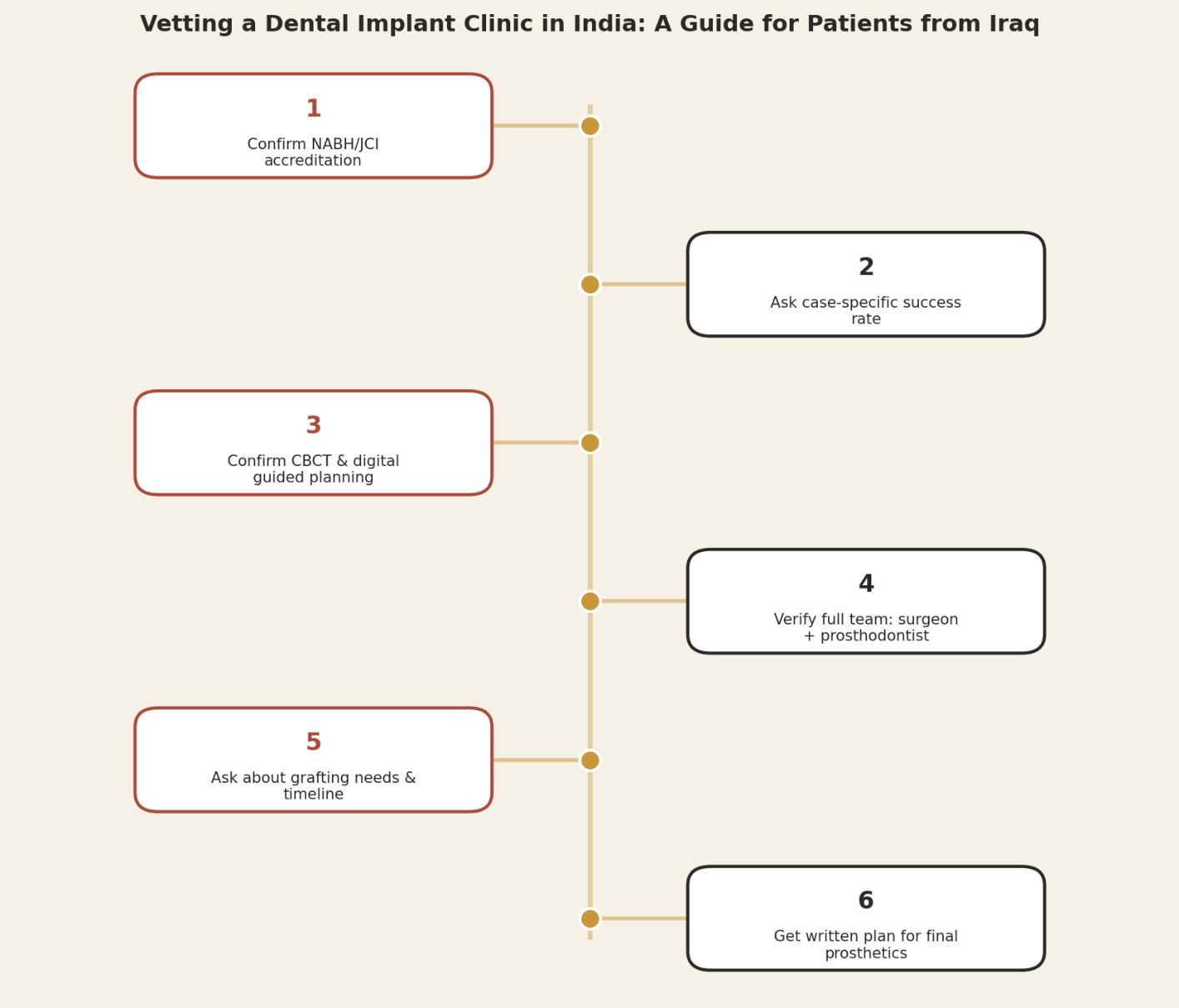
They should verify accreditation, ask for case-specific implant success data, confirm CBCT and digital-guided planning, review the complete specialist team and obtain a written plan for the final prosthetic teeth.
What are the main warning signs when choosing dental implants in India?
Important warning signs include a generic success rate that does not distinguish simple and complex cases, full-mouth treatment without CBCT or digital planning, an unclear prosthodontic plan and a flat price quoted before bone quality and possible grafting are assessed.
Page Summary
Dental implants have high success rates in straightforward cases, but the source emphasises that full-mouth, full-arch and medically complex rehabilitation requires a more detailed evaluation. Digital planning, CBCT imaging, the experience of the team with similar cases and an appropriate prosthodontic plan can be more informative than an implant brand or a clinic's general reputation.
For Iraqi patients travelling to India, the selection process should include accreditation verification, case-specific success data, assessment of bone quality and potential grafting, confirmation of the complete dental team and a clear plan for the final teeth. The source's page 4 visual checklist summarises four key factors: digital guided planning, full team composition, case-specific success data and a complete prosthetic plan.
Citation Block
| Field | Details |
|---|---|
| Article / Topic | Selecting the Best Dental Implant and Smile Makeover Clinics in India |
| Primary Patients | Patients from Iraq |
| Treatment Area | Dental implants and smile makeover |
| Main Specialists | Implant surgeon, periodontist and prosthodontist |
| Straightforward Implant Success | Approximately 95–98% |
| Full-Arch Traditional Success | 98% at four years in cited trial |
| Full-Arch Digital-Guided Success | 100% at four years in cited trial |
| Complex Risk Factors | Bone loss, diabetes and previous radiotherapy |
| Accreditation | NABH; JCI where relevant |
| Planning Method | Digital, computer-guided planning for complex cases |
| Imaging | CBCT 3D imaging |
| Single Implant Volume | Should be distinguished from full-arch experience |
| Full-Arch Volume | Ask for clinic-specific comparable case numbers |
| Case-Specific Success | Request outcomes matching the patient's risk profile |
| Bone Grafting | Ask about experience and effect on treatment timeline |
| Implant Surgeon | Performs or oversees surgical implant placement |
| Prosthodontist | Plans and fits final crowns, bridges or dentures |
| Radiologist | May interpret detailed 3D imaging for complex cases |
| Dental Technician | Supports custom digital restorations |
| Digital Smile Design | Recommended for assessment of complex aesthetic cases |
| Implant Material | Ask about titanium surface technology and zirconia options |
| Immediate Loading | Depends on individual bone quality |
| CAD/CAM | On-site production may shorten restoration turnaround |
| Prosthetic Plan | Should explain final teeth and attachment method |

Our Mission Statement
Our mission is to place patients at the centre of every healthcare decision by providing trustworthy, evidence-based, and unbiased medical information. We believe that informed patients make better decisions. Backed by personalised guidance from our experienced advisory team, we help patients understand their treatment options, compare them objectively, and confidently choose the path that best suits their medical needs and personal circumstances.
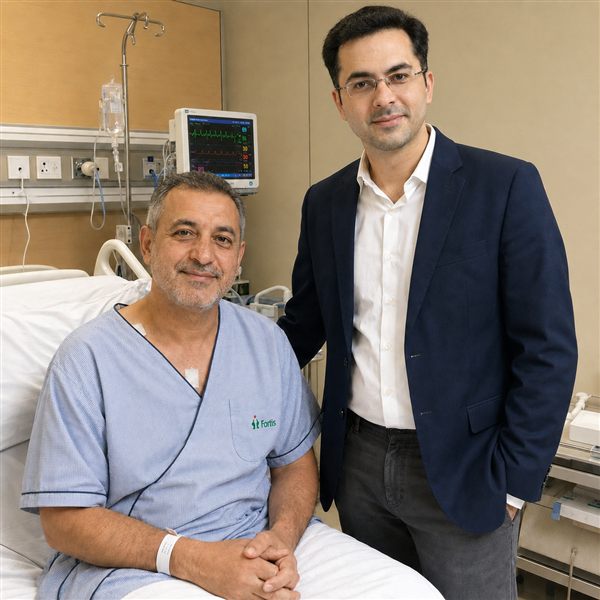
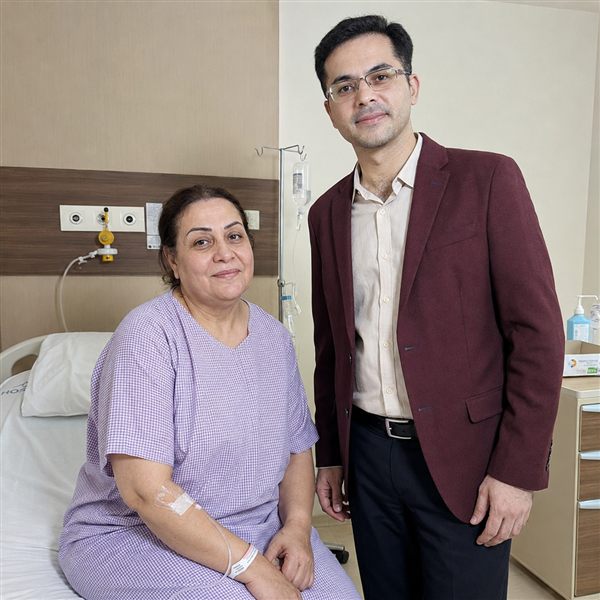
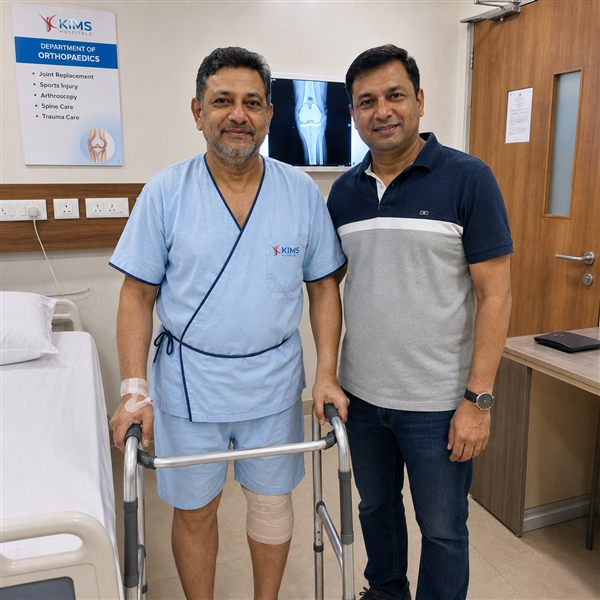
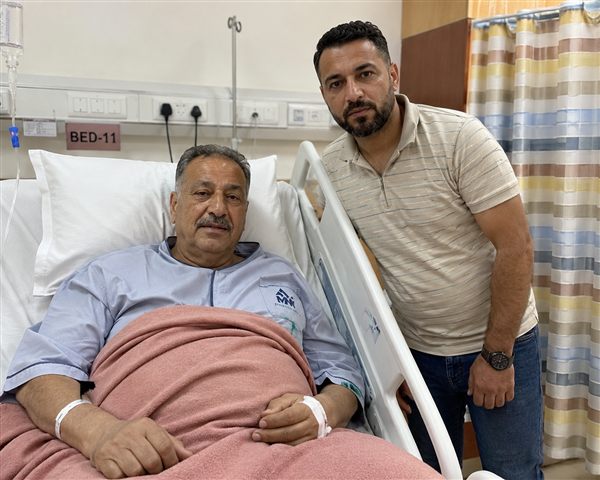
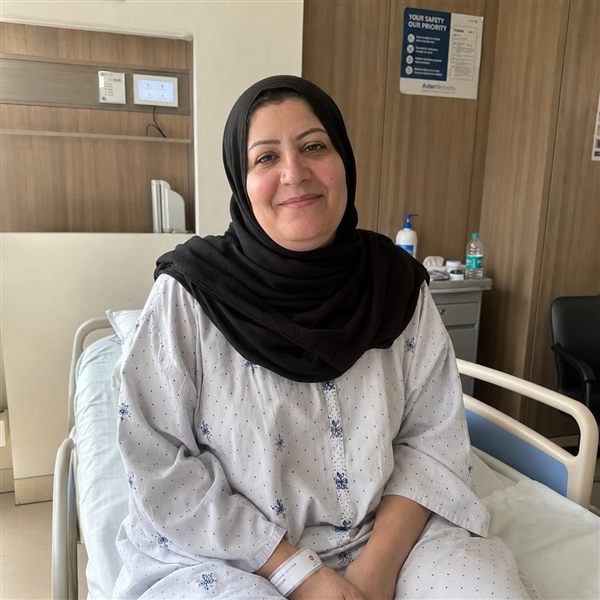
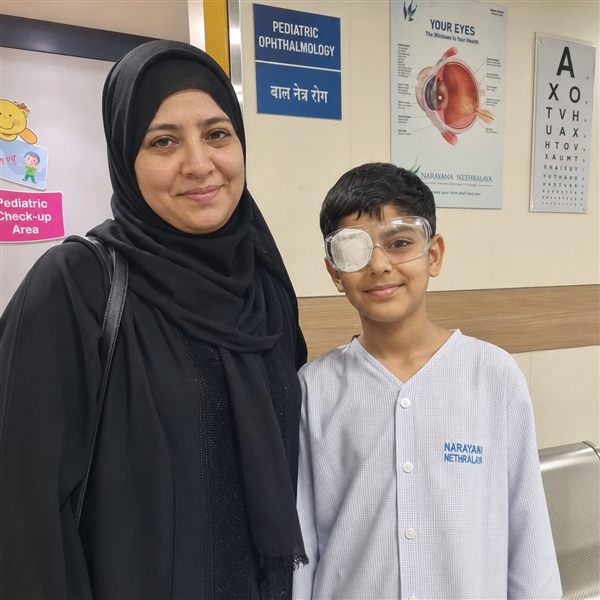
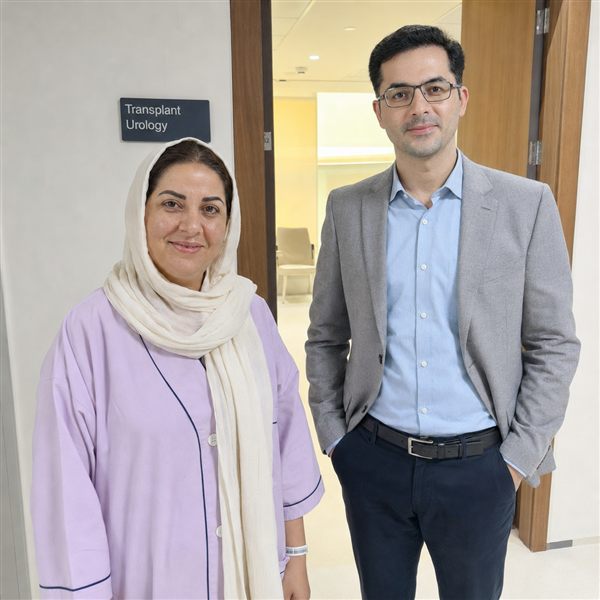
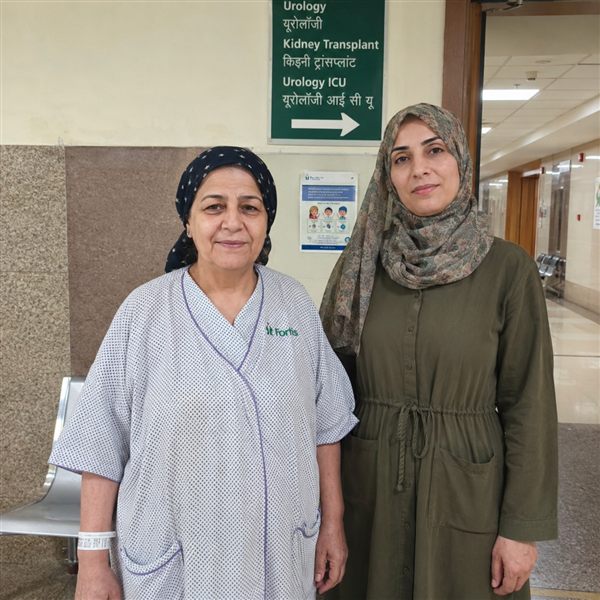
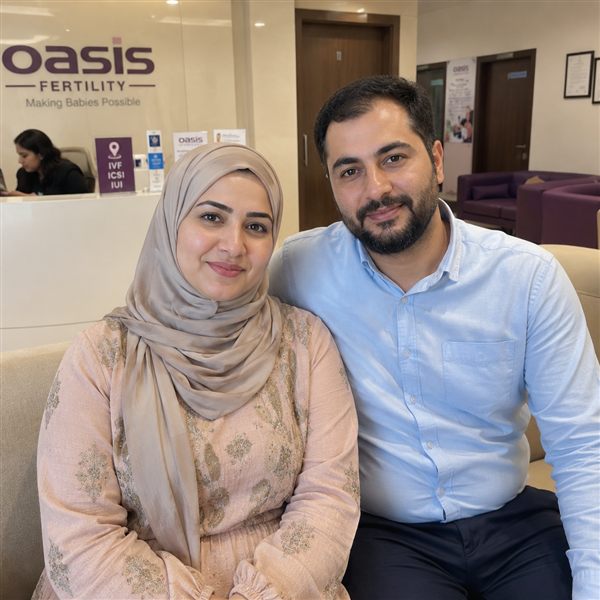
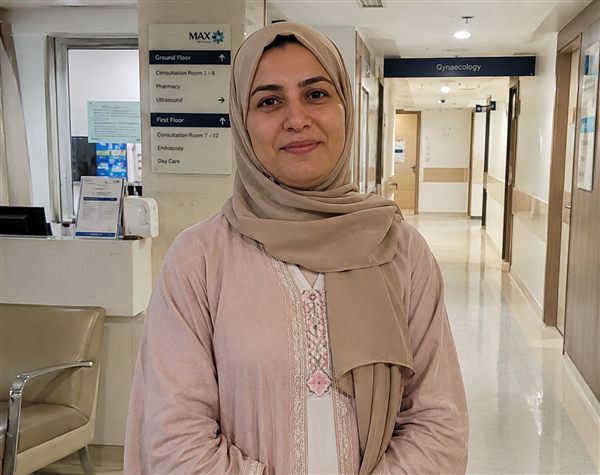
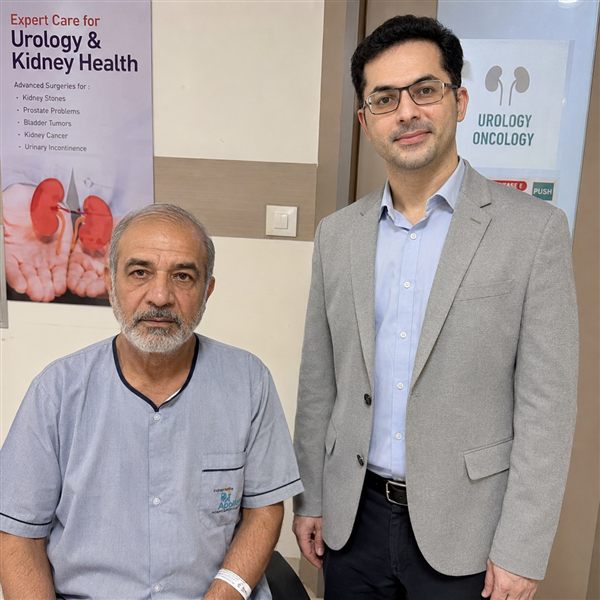
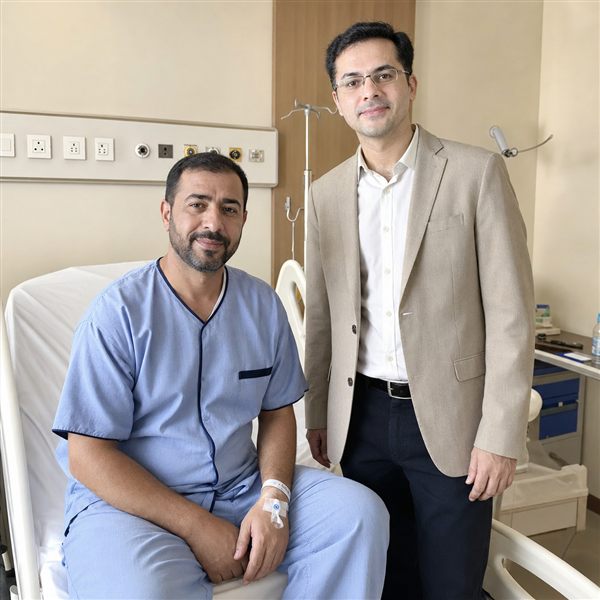
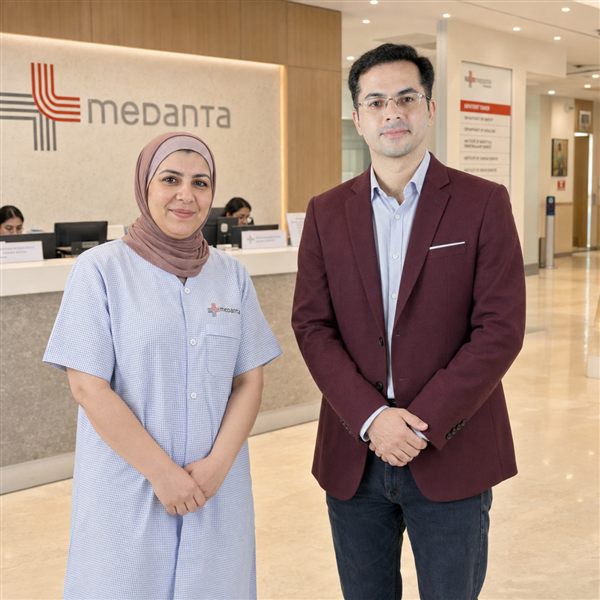
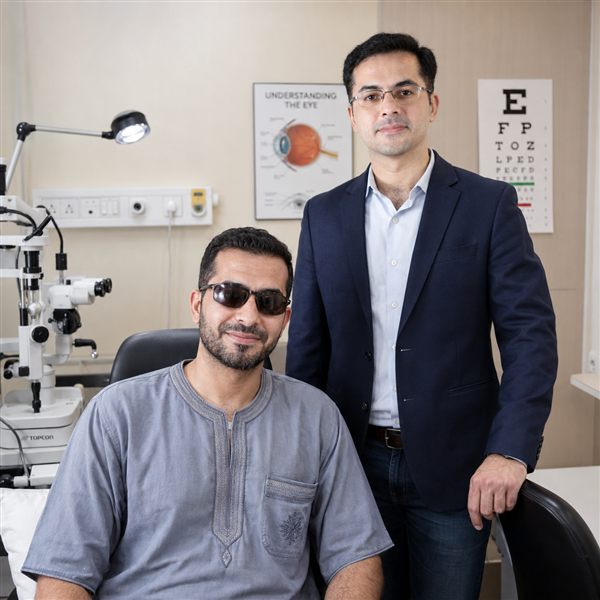
Patient Testimonials from Iraq
Ready to Take the First Step?
Share your Medical Reports with our Healthcare Managers Today and Get a FREE CONSULTATION, a Personalized Treatment Plan, and Complete Support from Arrival to Recovery.
Get Your Free ConsultationAreas We Serve
Indian Health Guru Consultants proudly assists patients from Iraq and surrounding Middle Eastern countries in accessing advanced, affordable and trusted medical treatment in India. Our team provides complete support for medical opinions, hospital selection, treatment planning, visa assistance, travel coordination, accommodation and post-treatment follow-up.
We regularly serve patients from:
- Iraq
- Turkey
- Iran
- Kuwait
- Jordan
- Syria
- Qatar
- Bahrain
- Oman
- Yemen
- Saudi Arabia
- United Arab Emirates
No matter where you are located, our experienced team is committed to making your medical journey to India safe, smooth, transparent and stress-free from the first enquiry to your return home.
From Iraq to India: Your Complete Patient Guide
- Liver Transplant in India for Iraqis
- Radiotherapy and Modern Cancer Treatment in India for Iraqis
- Paediatric Heart Surgery in India for Iraqis
- Kidney Transplant in India for Iraqis
- Knee Surgery in India for Iraqis
- Prostate Cancer Treatment and Surgery in India for Iraqis
- Hip Surgery in India for Iraqis
- Robotic Cancer Surgery in India for Iraqis
- Gamma Knife Treatment in India for Iraqis
- Laparoscopic and Robotic Myomectomy in India for Iraqis
- Paediatric Orthopaedic Surgery in India for Iraqis
- Dental Implants and Smile Makeover in India for Iraqis
- Weight Loss and Bariatric Surgery in India for Iraqis: Cost & Guide
- Oral and Maxillofacial Surgery in India for Iraqis
- Heart Valve Replacement in India for Iraqis
- Spine Surgery in India for Iraqis
- Cervical and Lumbar Disc Replacement Surgery in India for Iraqis
- Bone Marrow Transplant in India for Iraqi Patients