

Selecting the Best Cardiac Surgeons and Hospitals in India: A Guide for Patients from Iraq
A doctor’s honest, question-by-question guide for patients from Iraq on vetting a cardiac surgery hospital in India — accreditation, risk-adjusted outcomes, team composition, and the exact questions worth asking before you book anything.
Over the years, I have found that cardiac surgery is the category where Iraqi families ask me the most detailed questions, and rightly so, since it is genuinely one of the higher-risk categories of surgery a family will ever face. In my experience of 24 years advising patients through exactly this decision, the honest starting point is that “cardiac surgery” covers a wide range of procedures with meaningfully different risk profiles, and a hospital’s ability to report its own risk-adjusted outcomes, not simply a generic success percentage, is one of the clearest signs of a programme worth trusting.
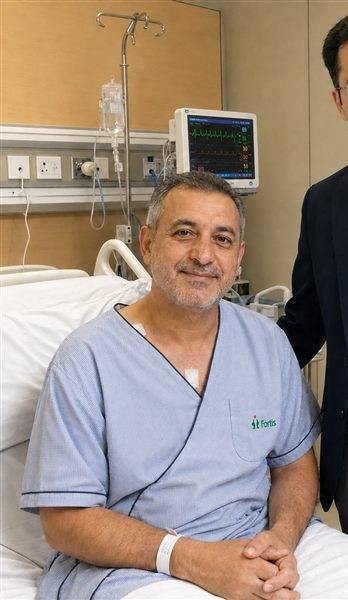
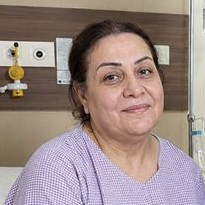
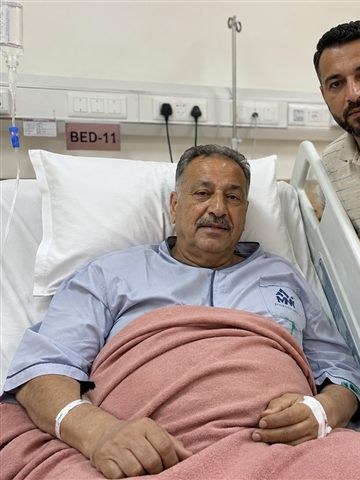
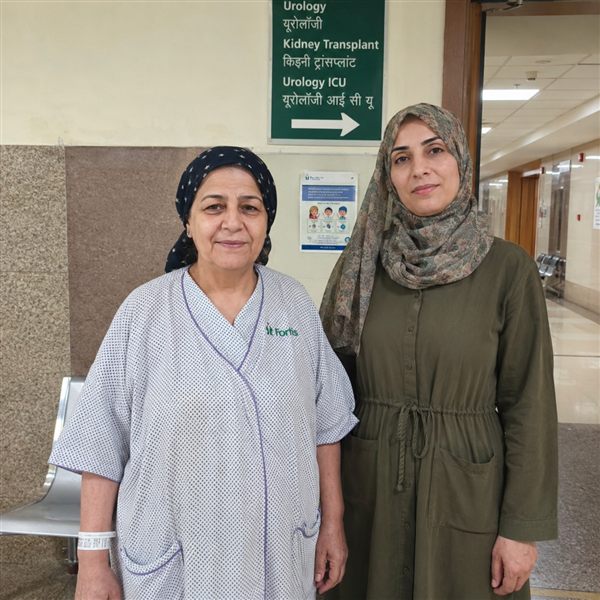
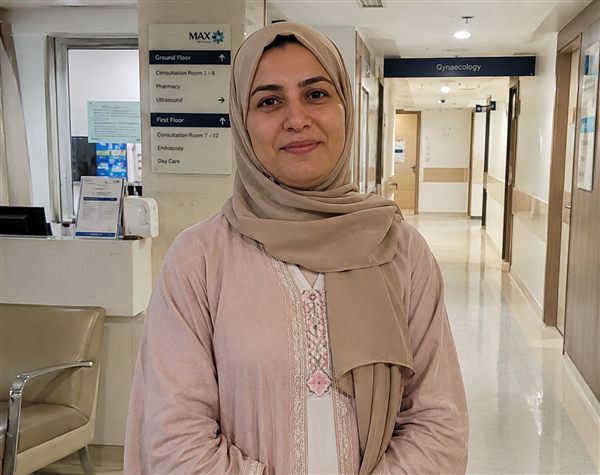
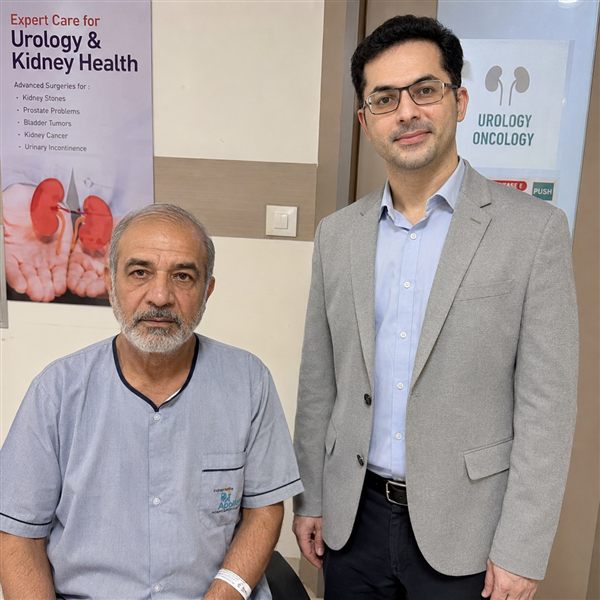
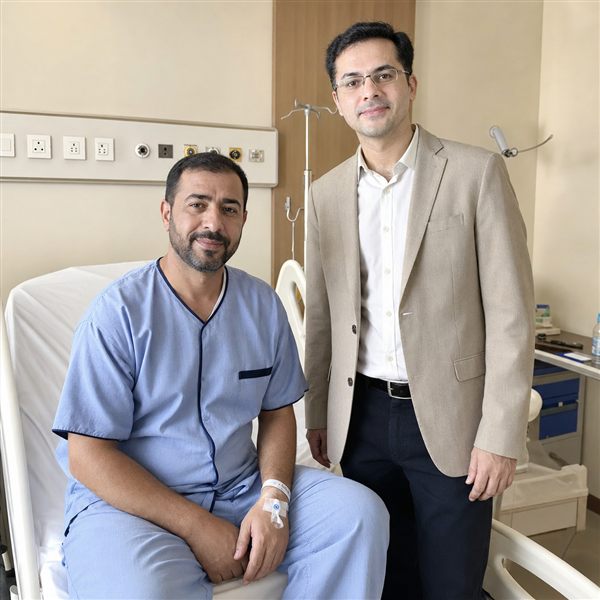
Healing Journeys of Iraqi Patients


Key Takeaways
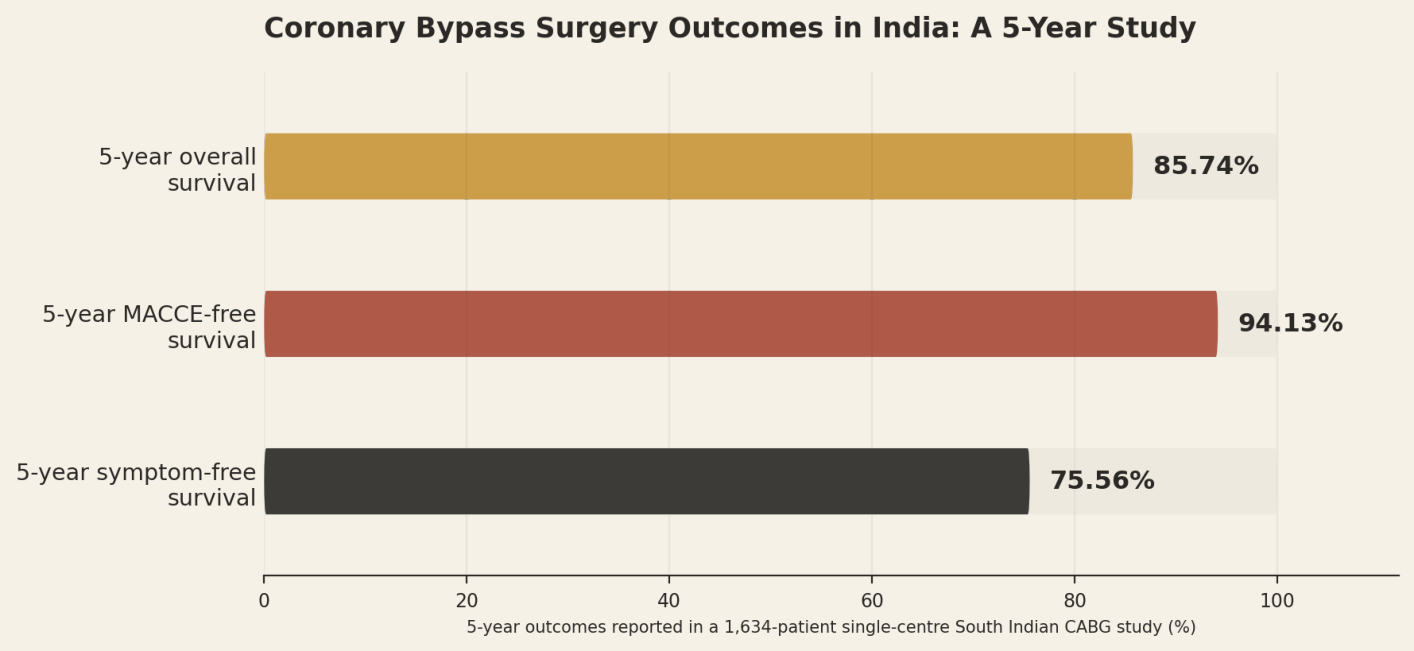
- Cardiac surgery covers several procedures with substantially different risk profiles, so Iraqi patients should not choose a hospital based on one general cardiac-surgery success percentage. The source places particular emphasis on risk-adjusted outcomes for the specific operation being considered. In a peer-reviewed study of 1,634 patients undergoing isolated coronary artery bypass grafting at a single South Indian centre, five-year overall survival was 85.74%, while five-year major adverse cardiac and cerebrovascular event-free survival was 94.13% and five-year symptom-free survival was 75.56%, as shown in the chart on page 2.
- The guide also highlights the importance of comparing observed outcomes with recognised risk models. A separate validation study cited in the source reported observed mortality of 6.6% for coronary bypass and 4.2% for valve surgery while evaluating the EuroSCORE II model in Indian cardiac-surgery patients. Iraqi families should therefore ask whether a hospital tracks mortality using a recognised system such as EuroSCORE II or the STS risk calculator instead of relying only on internally generated success claims.
- Accreditation is recommended as an initial screening criterion when choosing an Indian cardiac-surgery hospital. The source advises Iraqi patients to verify JCI and NABH accreditation and then ask whether the hospital reports its mortality against an internationally recognised risk model. Accreditation should therefore be considered alongside measurable clinical outcomes rather than treated as proof of a particular surgeon's individual performance.
- Procedure-specific surgical volume is another important consideration. Patients should ask how many isolated bypass operations and how many combined bypass-and-valve procedures the hospital and surgical team perform annually. The source specifically points out that combined procedures carry meaningfully higher risk than isolated procedures, making it inappropriate to compare a surgeon's general cardiac-surgery volume without understanding the exact operation required.
- Before major cardiac surgery, Iraqi patients should request information about their individual predicted risk. The guide recommends asking for the hospital's five-year survival and major adverse event rates in patients with a similar risk profile, asking whether EuroSCORE II or another recognised risk score is calculated before surgery, and requesting the patient's own predicted risk. It also recommends asking about return-to-operating-room rates for bleeding, deep sternal wound infection and stroke.
- Cardiac surgery requires a coordinated team rather than a surgeon working alone. The source identifies the cardiac surgeon, cardiac anaesthesiologist experienced in cardiopulmonary bypass, perfusionist responsible for the heart-lung machine and dedicated cardiac intensive-care team as important components of the programme. Iraqi patients should also verify that the hospital has a dedicated cardiac surgery ICU rather than relying on a shared general surgical ICU, because post-cardiac-surgery monitoring needs are different.
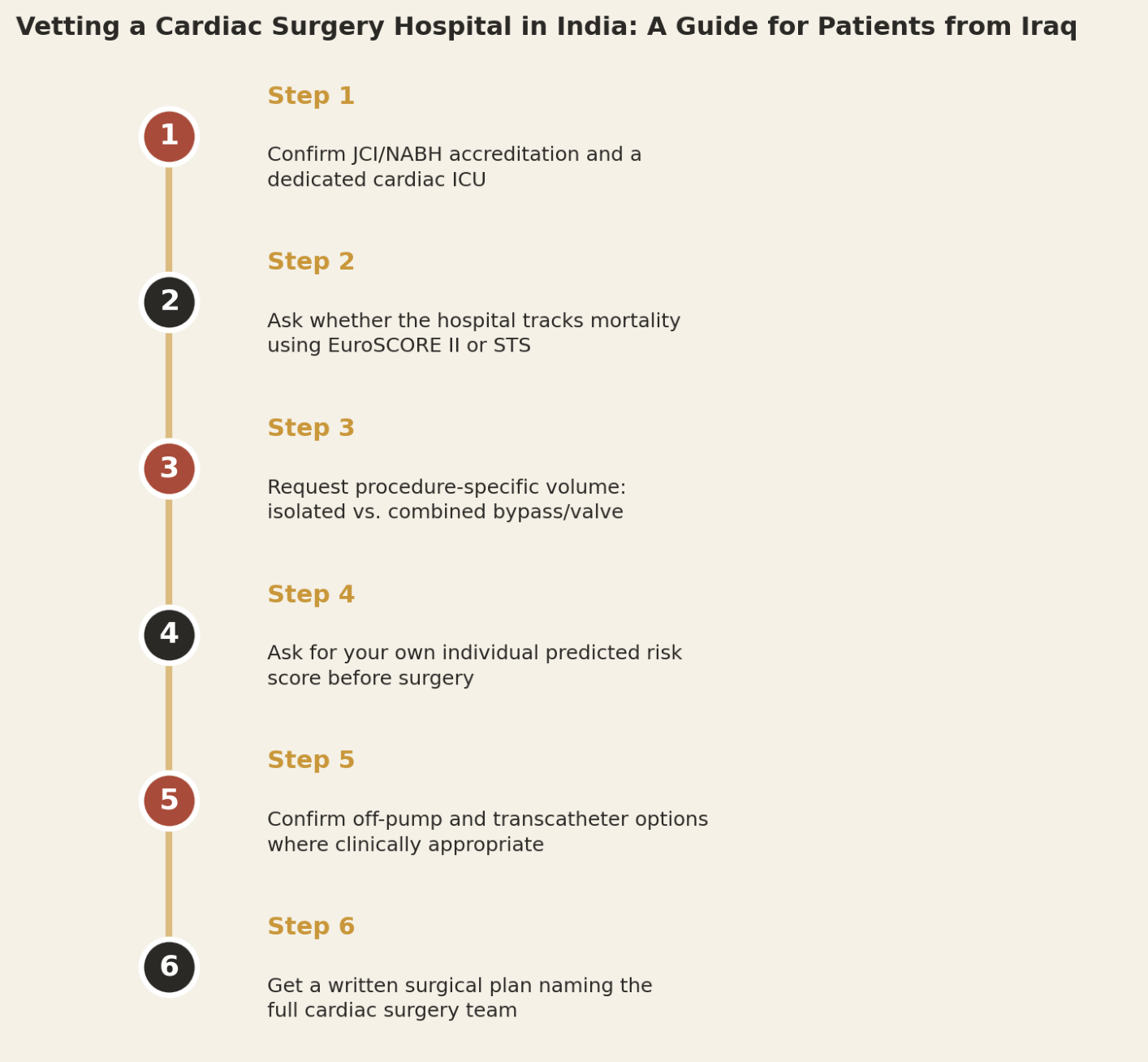
- The available technology and infrastructure should match the patient's specific operation. The guide recommends asking whether off-pump bypass is available for suitable candidates, whether the blood bank can provide matched blood products promptly and whether both surgical and transcatheter valve replacement options are available when valve disease is involved. The six-step checklist on page 4 also emphasises dedicated cardiac ICU facilities, risk tracking, procedure-specific volume, individual risk assessment and a written surgical plan.
Quick Facts
- Treatment
- Cardiac surgery in India
- Primary Patients
- Iraqi patients seeking heart surgery in India
- Main Speciality
- Cardiothoracic and cardiac surgery
- Key Specialist
- Cardiac surgeon with experience in the exact procedure required
- Common Procedures
- CABG, valve surgery and combined bypass-plus-valve surgery
- Outcome Measure
- Risk-adjusted mortality and procedure-specific outcomes
- Risk Models
- EuroSCORE II or STS risk calculator
- CABG Study
- 1,634 patients in a single-centre South Indian study
- Five-Year Survival
- 85.74% in the cited CABG study
- Five-Year MACCE-Free Survival
- 94.13%
- Five-Year Symptom-Free Survival
- 75.56%
- Accreditation
- Verify JCI and/or NABH accreditation
- Surgical Volume
- Ask for annual volume of the exact procedure
- Individual Risk
- Request the patient's predicted surgical risk before surgery
- Complications
- Ask about bleeding, wound infection, stroke and reoperation rates
- Cardiac Team
- Surgeon, cardiac anaesthesiologist, perfusionist and cardiac ICU team
- Cardiac ICU
- Confirm a dedicated cardiac surgery ICU
- Technology
- Ask about off-pump bypass and appropriate valve replacement options
- Blood Bank
- Confirm reliable access to matched blood products
- Pre-Travel
- Send cardiac investigations and previous treatment records for review
- Written Plan
- Obtain a surgical plan naming the cardiac team
- Author
- Dr. Dheeraj Bojwani
- Experience
- 24+ Years
In Brief
For Iraqi patients seeking cardiac surgery in India, the strongest selection criteria are procedure-specific experience, risk-adjusted outcomes, recognised risk scoring, multidisciplinary team structure and dedicated cardiac intensive-care infrastructure. The source’s page 2 chart reports five-year overall survival of 85.74%, major adverse cardiac and cerebrovascular event-free survival of 94.13% and symptom-free survival of 75.56% in a 1,634-patient South Indian CABG study. These figures should be viewed as study-specific outcomes rather than universal results for every Indian hospital, reinforcing the need to request data from the actual cardiac centre and team being considered.
Why the Choice of Cardiac Surgery Team in India Matters as Much as the Choice of Hospital
Based on my interactions with international patients, a peer-reviewed study following 1,634 patients who underwent isolated coronary artery bypass grafting at a single centre in South India reported an overall five-year survival of 85.74 percent, with a five-year major adverse cardiac and cerebrovascular event rate of 5.87 percent. A separate validation study applying the internationally recognised EuroSCORE II risk model to Indian cardiac surgery patients found observed mortality of 6.6 percent for coronary bypass and 4.2 percent for valve surgery, figures that the study’s own authors used specifically to check how well a hospital’s actual outcomes matched what the risk model predicted for that patient population. This is precisely the point: a hospital that tracks and publishes its risk-adjusted outcomes against an internationally recognised model is demonstrating a level of clinical accountability that a hospital offering only a flat, unqualified success percentage is not.
How Patients from Iraq Can Verify a Cardiac Surgery Hospital’s Accreditation in India
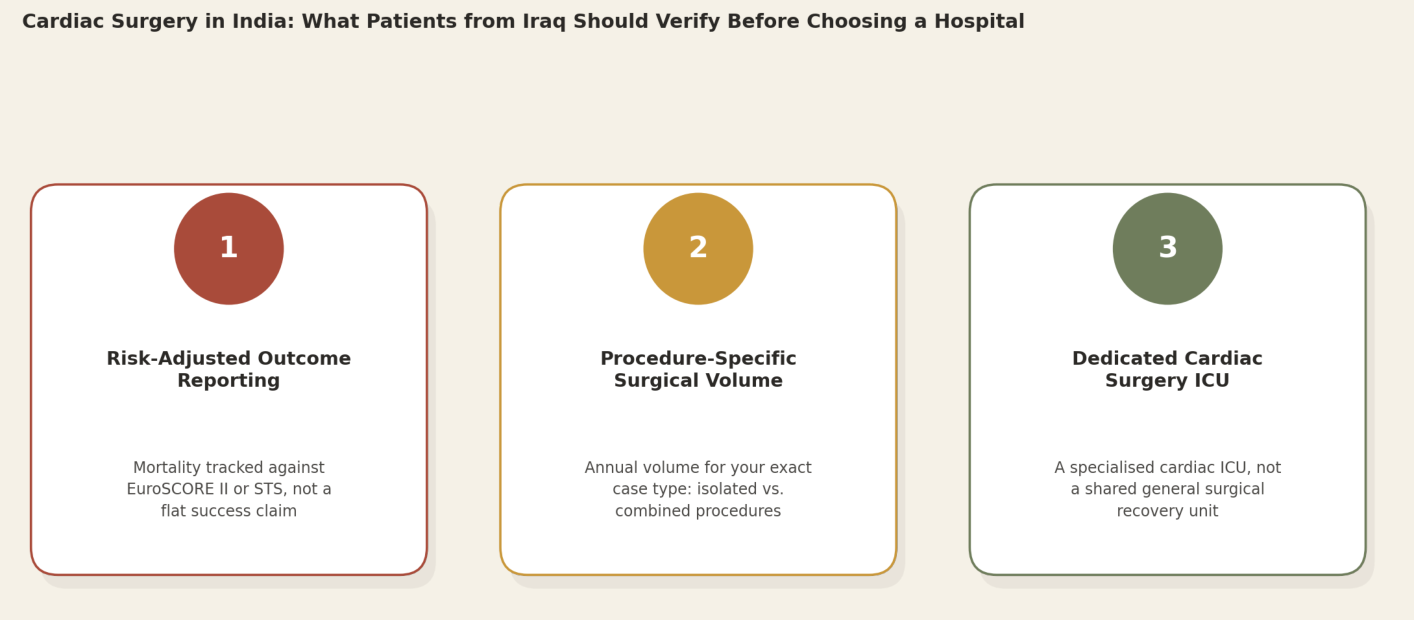
The fastest filter I recommend to every Iraqi family calling about cardiac surgery is verifiable accreditation, not marketing language. Joint Commission International, JCI, audits a hospital’s overall clinical safety systems against the same standard used across the United States and Europe. The National Accreditation Board for Hospitals and Healthcare Providers, NABH, is India’s own domestic equivalent, and in my experience of 24 years advising families on this exact decision, a centre holding both marks together is a meaningfully stronger signal than either alone. For cardiac surgery specifically, ask one further, very direct question: does the hospital track and report its own mortality using a recognised international risk model, such as EuroSCORE II or the STS risk calculator, or does it rely only on internally generated success percentages with no external benchmark.
The Volume and Experience Metrics That Predict Cardiac Surgery Outcomes in India
Based on my interactions with dozens of cardiac surgery programmes over the years, a surgeon’s and hospital’s specific annual volume for your exact procedure, whether isolated bypass, valve surgery, or a combined bypass-plus-valve case, is one of the clearest predictors available to a family, since combined procedures carry meaningfully higher risk than an isolated one. Ask directly, in writing:
- What is this hospital’s own five-year survival and major adverse event rate for patients with a risk profile similar to mine, not a generic institutional average?
- How many isolated bypass procedures, and how many combined bypass-and-valve procedures, does this specific surgical team perform annually?
- Does the hospital calculate and report a recognised risk score, such as EuroSCORE II, for each patient before surgery, and will you be shown your own individual predicted risk?
- What is the hospital’s specific rate of return to the operating room for bleeding, deep sternal wound infection, and stroke, the complications that most affect long-term recovery?
A team confident in its own numbers will answer these specifically and promptly. A team that responds only with a flat, unqualified success percentage deserves a second opinion before you commit.
Questions Patients from Iraq Should Ask About the Cardiac Surgery Team in India
Cardiac surgery is never genuinely the work of one surgeon alone. In my experience of 24 years watching these programmes operate, the strongest units bring together a cardiac surgeon, a cardiac anaesthesiologist experienced specifically in managing anaesthesia during cardiopulmonary bypass, a perfusionist operating the heart-lung machine, and a dedicated cardiac intensive care team for the critical first days of recovery. Ask specifically who fills each of these roles for your case, and confirm the intensive care unit is a dedicated cardiac surgery ICU rather than a shared general surgical ICU, since the specific monitoring needs of a post-cardiac-surgery patient differ meaningfully from general post-operative care.
Cardiac Surgery Technology Standards in India That Patients from Iraq Should Check
The specific technology and infrastructure available changes what a team can safely offer. Ask whether off-pump bypass surgery, performed on a beating heart without cardiopulmonary bypass, is genuinely available for patients who are good candidates for it, since this can reduce certain risks for appropriately selected cases. Ask whether the hospital’s blood bank can reliably supply matched blood products on short notice, since cardiac surgery carries a meaningful transfusion requirement. For valve surgery specifically, confirm whether both surgical and transcatheter valve replacement options are genuinely available, since the right approach depends on the patient’s specific anatomy and surgical risk.
Red Flags Patients from Iraq Should Watch For When Choosing a Cardiac Surgery Hospital in India
Over the years, certain patterns have become reliable warning signs for me. A hospital that cannot provide its own risk-adjusted mortality data, or that quotes a single flat success percentage regardless of the complexity of your specific procedure, has not given you information you can actually use. A hospital without a dedicated cardiac surgery intensive care unit, relying instead on a shared general surgical ICU, represents a genuine gap in post-operative safety infrastructure. And a hospital that discourages a second opinion before major cardiac surgery, one of the highest-stakes decisions a family will ever make, is one of the clearest signals that something is being rushed.
Vetting a Cardiac Surgery Hospital in India: A Guide for Patients from Iraq
A Closing Thought for Iraqi Families
Cardiac surgery carries real risk, and that risk deserves to be managed by a team that measures and reports its own outcomes honestly against recognised international benchmarks, not simply reassured away with a marketing claim. Based on my interactions with international patients over more than two decades, the families who ask about risk-adjusted mortality, procedure-specific volume, and dedicated cardiac ICU infrastructure consistently make better-informed decisions than those who accept a general reassurance about India’s cardiac care reputation alone. My role, and the role of any advisor a family works with, should be to help you ask these exact questions and confirm honestly that the specific team and specific hospital in front of you are the right fit for your family’s exact situation. Iraq’s families deserve the same standard of scrutiny in this decision as any family anywhere else in the world.
Sources & Further Reading
- Joint Commission International (JCI) — Accredited Organizations Directory (jointcommissioninternational.org)
- National Accreditation Board for Hospitals & Healthcare Providers (NABH), India (nabh.co)
- PubMed — Outcomes of Coronary Artery Bypass Grafting: Insights From a Single Centre in South India (pubmed.ncbi.nlm.nih.gov)
- PubMed Central — Mortality Prediction in Indian Cardiac Surgery Patients: Validation of EuroSCORE II (pmc.ncbi.nlm.nih.gov)
- Society of Thoracic Surgeons (STS) — Adult Cardiac Surgery Risk Calculator (sts.org)
Frequently Asked Questions by Iraqi Patients about Selecting a Cardiac Surgeon and Hospital in India
Can Iraqi patients undergo cardiac surgery in India?
Yes. The guide specifically explains how patients from Iraq can evaluate Indian cardiac surgeons and hospitals before travelling for major heart surgery.
Which cardiac surgeries can Iraqi patients consider in India?
The source discusses procedures including isolated coronary artery bypass surgery, valve surgery and combined bypass-and-valve operations. The appropriate procedure depends on the patient's diagnosis and individual surgical risk.
How should Iraqi patients choose a CABG surgeon in India?
They should ask about the surgeon's and hospital's annual volume of isolated CABG procedures, risk-adjusted outcomes and results in patients with similar risk profiles rather than relying on a general success percentage.
What CABG outcomes are reported in the source for India?
The cited 1,634-patient South Indian study reported five-year overall survival of 85.74%, five-year MACCE-free survival of 94.13% and five-year symptom-free survival of 75.56%. These are study-specific figures, not a guarantee for every hospital.
What risk score should Iraqi cardiac-surgery patients ask about?
The guide recommends asking whether the hospital calculates a recognised risk score such as EuroSCORE II or the STS risk calculator before surgery and whether the patient can receive their individual predicted risk.
How can Iraqi patients compare Indian hospitals for valve replacement surgery?
They should ask for procedure-specific outcomes, valve-surgery volume, risk-adjusted mortality and available treatment approaches. The source recommends confirming whether both surgical and transcatheter valve replacement options are available when clinically appropriate.
What cardiac surgery complications should Iraqi patients ask Indian hospitals about?
Patients should ask about return-to-operating-room rates for bleeding, deep sternal wound infection and stroke. These complications are specifically highlighted in the source as important measures of postoperative outcomes.
Why is a dedicated cardiac ICU important after heart surgery?
A dedicated cardiac surgery ICU provides postoperative monitoring suited specifically to cardiac-surgery patients. The guide considers reliance on a shared general surgical ICU a significant infrastructure concern.
Is off-pump bypass surgery available in India for Iraqi patients?
The guide recommends asking whether off-pump CABG is available for patients who are appropriate candidates. It should be considered according to the individual patient's clinical situation rather than as a universal alternative to conventional bypass.
What should Iraqi patients verify before travelling to India for cardiac surgery?
They should verify accreditation, risk-adjusted outcome reporting, procedure-specific surgical volume, individual predicted risk, dedicated cardiac ICU facilities, appropriate surgical or transcatheter options and a written plan identifying the full cardiac surgery team.
Page Summary
Cardiac surgery is a high-stakes treatment area in which the exact operation, patient's risk profile and experience of the treating centre can substantially influence outcomes. For Iraqi patients, the source recommends examining risk-adjusted mortality, procedure-specific surgical volume and recognised risk models rather than accepting a generic success rate. The CABG study presented in the source provides specific five-year outcome measures, while the guide stresses that these should not be treated as universal figures for every Indian cardiac hospital.
A suitable cardiac hospital should have an appropriately experienced surgical team, dedicated cardiac intensive care, adequate blood-bank support and technology suited to the patient's procedure. Iraqi families should also request an individual predicted risk, understand the proposed surgical approach and obtain a written plan before travelling. The source's final message is that measurable clinical accountability and procedure-specific expertise are more meaningful than general reassurance about India's cardiac-care reputation.
Citation Block
| Field | Details |
|---|---|
| Article / Topic | Selecting the Best Cardiac Surgeons and Hospitals in India |
| Primary Patients | Patients from Iraq |
| Treatment Area | Cardiac and cardiothoracic surgery |
| Key Procedures | Coronary bypass, valve surgery and combined bypass-plus-valve surgery |
| Main Selection Principle | Evaluate risk-adjusted, procedure-specific outcomes |
| CABG Study Population | 1,634 patients at a single South Indian centre |
| Five-Year Overall Survival | 85.74% |
| Five-Year MACCE-Free Survival | 94.13% |
| Five-Year Symptom-Free Survival | 75.56% |
| CABG Observed Mortality in Validation Study | 6.6% |
| Valve Surgery Observed Mortality in Validation Study | 4.2% |
| Risk Model | EuroSCORE II |
| Alternative Risk Tool | STS risk calculator |
| Accreditation | JCI and NABH |
| Procedure Volume | Ask for annual volume of the exact procedure |
| Individual Risk Assessment | Request the patient's predicted risk before surgery |
| Outcome Data | Five-year survival and major adverse event rates for comparable patients |
| Complication Data | Reoperation for bleeding, deep sternal wound infection and stroke |
| Cardiac Team | Cardiac surgeon, cardiac anaesthesiologist and perfusionist |
| Critical Care | Dedicated cardiac surgery ICU |
| Off-Pump Surgery | Confirm availability for clinically suitable candidates |
| Blood Bank | Confirm reliable access to matched blood products |
| Valve Options | Surgical and transcatheter approaches where clinically appropriate |
| Red Flag | No risk-adjusted mortality data |


Our Mission Statement
Our mission is to place patients at the centre of every healthcare decision by providing trustworthy, evidence-based, and unbiased medical information. We believe that informed patients make better decisions. Backed by personalised guidance from our experienced advisory team, we help patients understand their treatment options, compare them objectively, and confidently choose the path that best suits their medical needs and personal circumstances.
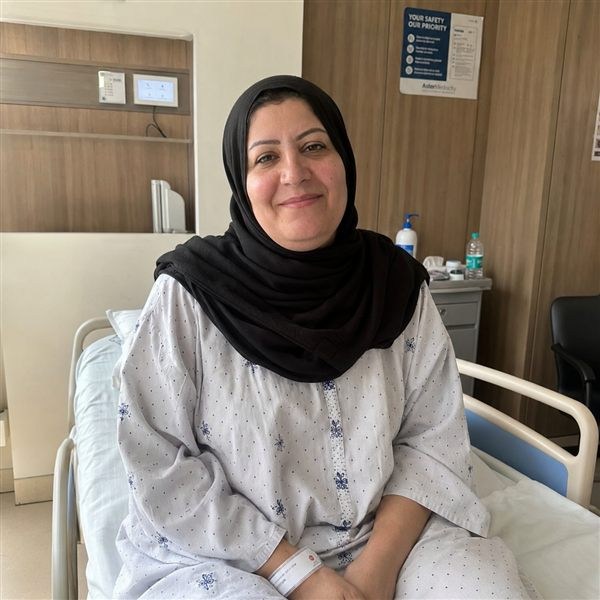
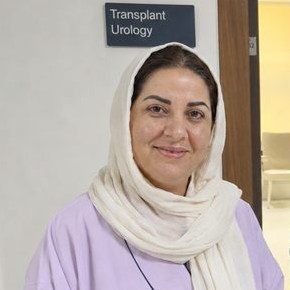
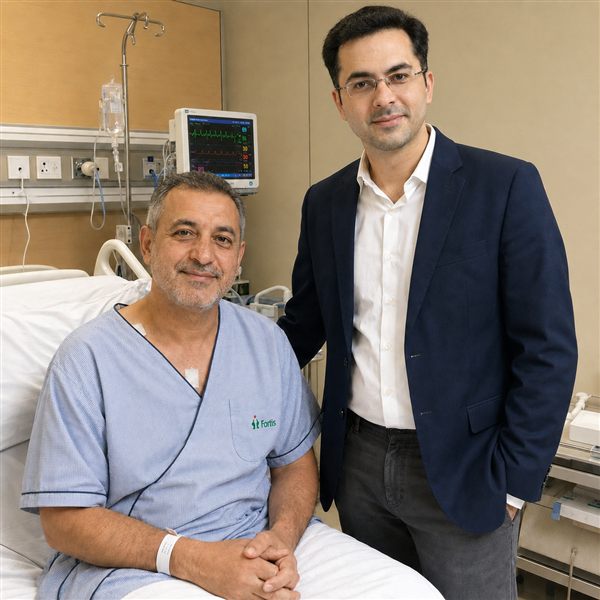
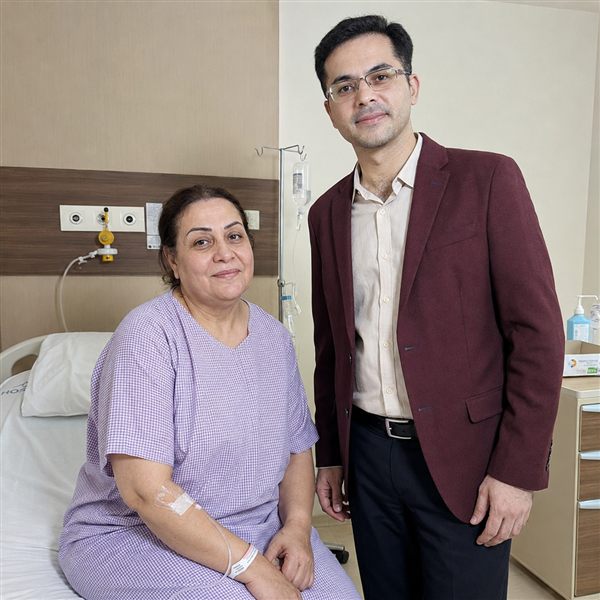
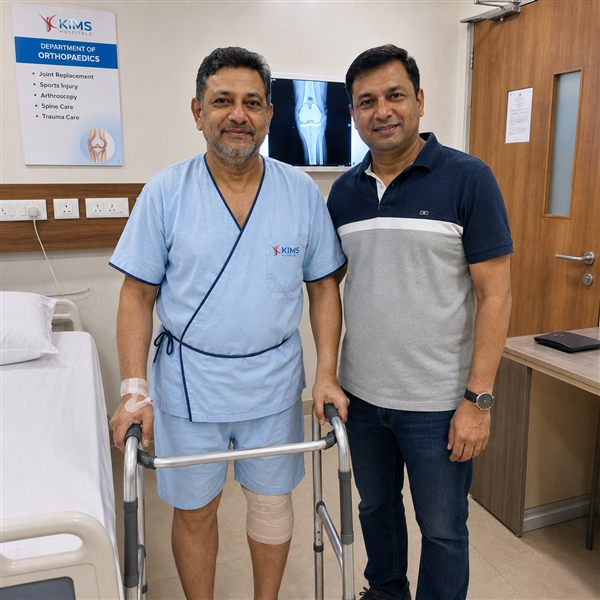
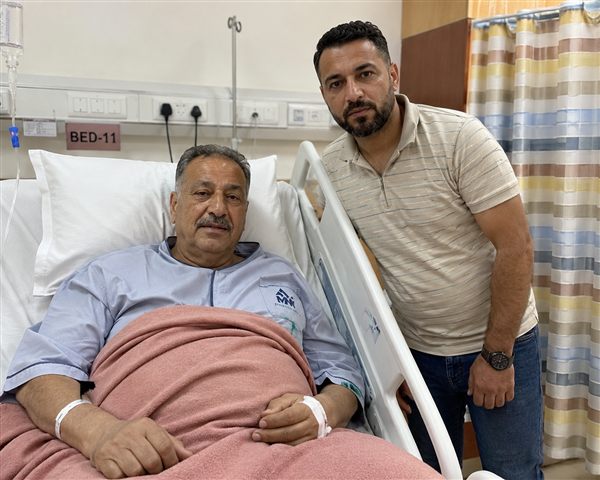
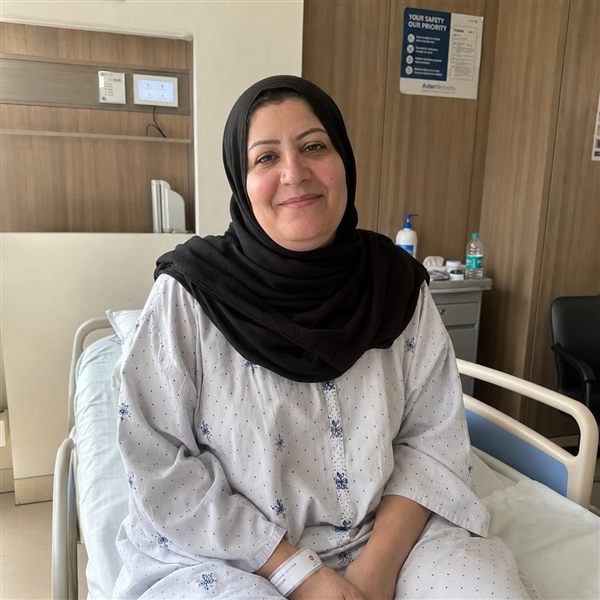
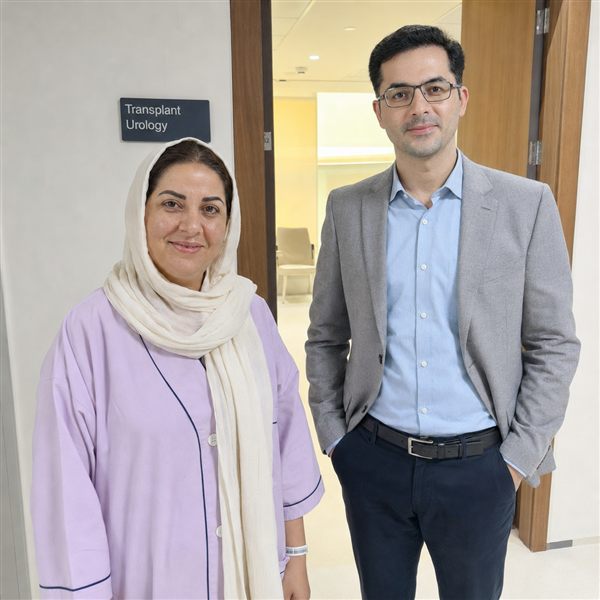
Patient Testimonials from Iraq



Ready to Take the First Step?
Share your Medical Reports with our Healthcare Managers Today and Get a FREE CONSULTATION, a Personalized Treatment Plan, and Complete Support from Arrival to Recovery.
Get Your Free ConsultationAreas We Serve
Indian Health Guru Consultants proudly assists patients from Iraq and surrounding Middle Eastern countries in accessing advanced, affordable and trusted medical treatment in India. Our team provides complete support for medical opinions, hospital selection, treatment planning, visa assistance, travel coordination, accommodation and post-treatment follow-up.
We regularly serve patients from:
- Iraq
- Turkey
- Iran
- Kuwait
- Jordan
- Syria
- Qatar
- Bahrain
- Oman
- Yemen
- Saudi Arabia
- United Arab Emirates
No matter where you are located, our experienced team is committed to making your medical journey to India safe, smooth, transparent and stress-free from the first enquiry to your return home.
From Iraq to India: Your Complete Patient Guide
- HIPEC Cancer Surgery in India for Iraqis
- Brain Tumour Surgery in India for Iraqi Patients
- Cancer Treatment in India for Iraqi Patients
- Prostate Cancer Treatment and Surgery in India for Iraqis
- Parkinson's Treatment and DBS Surgery in India for Iraqis
- Dental Implants and Smile Makeover in India for Iraqis
- Hip Surgery in India for Iraqis
- Laparoscopic and Robotic Myomectomy in India for Iraqis
- Colorectal Cancer Treatment and Surgery in India for Iraqis
- Pancreatic Cancer Surgery in India for Iraqis
- Neuronavigation and Advanced Brain Surgery in India for Iraqis
- Oral and Maxillofacial Surgery in India for Iraqis
- Neurosurgery in India for Iraqis
- Kidney Transplant in India for Iraqis
- Breast Cancer Treatment in India for Iraqi Patients
- Proton Therapy in India for Iraqis
- Spine Surgery in India for Iraqis
- Paediatric Orthopaedic Surgery in India for Iraqis