
 New Zealand
 India
In Brief
For patients in New Zealand living with cataracts, refractive errors, glaucoma, retinal conditions, or other eye problems, surgery may become necessary when glasses, medication, or other treatment are not enough to preserve or restore vision. India performs a very high volume of eye surgery, particularly cataract surgery, supported by dedicated ophthalmic surgical teams and modern diagnostic and surgical technology.
For a patient travelling from New Zealand, the important question is not simply “Can this be treated in India?” The more useful questions are: What exactly is causing my visual symptoms? Which procedure, and which lens or technology choice, is appropriate for my eyes specifically? What are the risks? How long will visual recovery take? And when will I be fit enough to make the journey back to New Zealand? This guide explains the clinical aspects of eye surgery and ophthalmology in India from the perspective of New Zealand patients.
Guide Roadmap19 topics · tap any topic to jump5 stages
- Stage 1Topics 1–4
- Stage 2Topics 5–8
- Stage 3Topics 9–12
- Stage 4Topics 13–16
- Stage 5Topics 17–19
1.New Zealand to India: What Is Eye Surgery and Ophthalmology?
Ophthalmic surgery covers procedures performed on the eye and surrounding structures. The objective depends entirely on the diagnosis: removing a clouded lens in cataract surgery, reshaping the cornea to reduce dependence on glasses in refractive surgery, lowering eye pressure in glaucoma surgery, or treating conditions of the retina at the back of the eye. Many eye procedures are now performed using small, precise incisions and can be completed on a day-case basis, though the specific approach and recovery vary considerably by diagnosis.
2.Common Conditions for Eye Surgery from New Zealand in India
Cataracts
Clouding of the eye’s natural lens, causing blurred vision, is treated by removing the cataract and implanting an artificial intraocular lens.
Refractive Errors (Short-Sightedness, Long-Sightedness, Astigmatism)
Laser or lens-based refractive surgery can reduce dependence on glasses or contact lenses in appropriately selected patients.
Glaucoma
A condition involving raised eye pressure that can damage the optic nerve; selected patients not controlled by medication may require surgical treatment.
Retinal Detachment
A serious condition requiring prompt surgical treatment to reattach the retina and preserve vision.
Diabetic Retinopathy
Diabetes-related damage to the retina’s blood vessels may require laser treatment or surgery in advanced cases.
Corneal Disease
Conditions affecting the cornea’s clarity or shape may require corneal transplantation or other corneal procedures.
Squint (Strabismus)
Misalignment of the eyes may be corrected surgically, particularly in children.
Eyelid and Orbital Conditions
Conditions affecting the eyelids or the area around the eye may require surgical correction.
3.Does Every Condition Need Surgery?
No. This is one of the most important principles for a New Zealand patient considering travelling overseas. Depending on the diagnosis, appropriate treatment may include:
- Glasses or contact lenses instead of refractive surgery for many patients
- Eye drops or other medication instead of surgery for early-stage glaucoma
- Laser treatment instead of surgery for selected retinal conditions
- Observation for early, visually insignificant cataracts
- Treatment of an underlying condition (such as improving diabetes control) instead of immediate eye surgery
Not every visual symptom requires surgery, and not every cataract needs to be removed immediately. An ophthalmologist should conduct a complete eye examination to confirm the diagnosis and the extent to which it is affecting vision and daily function before recommending a specific procedure.
4.When May Surgery Be Recommended?
- Cataracts are significantly affecting vision and daily activities
- Glaucoma is not adequately controlled with medication and is threatening further optic nerve damage
- A retinal condition, such as detachment, requires prompt surgical treatment to prevent vision loss
- Refractive surgery is being considered by a patient who meets the specific eligibility criteria after thorough assessment
5.Warning Signs to Watch in New Zealand Before Eye Surgery in India
- Sudden loss or significant reduction of vision
- Sudden onset of flashing lights or a shower of floaters
- A curtain or shadow appearing across part of the vision
- Sudden severe eye pain, particularly with redness and nausea (which can indicate acute glaucoma)
- Significant eye injury or penetrating trauma
A patient with sudden vision loss, a curtain or shadow across the vision, or sudden severe eye pain should seek immediate local emergency eye care in New Zealand rather than delaying to arrange overseas treatment, as these can indicate sight-threatening emergencies.
6.Tests Required Before Eye Surgery from New Zealand in India
Comprehensive Eye Examination
Includes visual acuity testing and detailed examination of the front and back of the eye.
Optical Coherence Tomography (OCT)
Provides detailed cross-sectional imaging of the retina and optic nerve, relevant for glaucoma and retinal conditions.
Corneal Topography
Maps the shape of the cornea, particularly important before refractive surgery.
Intraocular Pressure Measurement
Assesses eye pressure, particularly relevant for glaucoma.
Biometry
Precise measurement of the eye used to calculate the correct power of an artificial lens before cataract surgery.
7.New Zealand to India: Major Types of Eye Surgery
Phacoemulsification Cataract Surgery
The clouded natural lens is broken up using ultrasound energy and removed through a small incision, with an artificial intraocular lens implanted in its place.
LASIK and Other Refractive Surgery
Laser reshaping of the cornea to reduce dependence on glasses or contact lenses in appropriately selected patients.
Glaucoma Surgery
Various surgical techniques to improve drainage of fluid from the eye and lower eye pressure.
Vitreoretinal Surgery
Surgery on the vitreous gel and retina, used for conditions such as retinal detachment or complex diabetic retinopathy.
Corneal Transplantation
Replacement of diseased corneal tissue with healthy donor tissue, performed as a full-thickness or partial-thickness procedure depending on the condition.
Squint (Strabismus) Surgery
Adjustment of the eye muscles to correct misalignment of the eyes.
8.Small-Incision and Laser-Assisted Techniques
Modern cataract surgery is typically performed through a very small self-sealing incision, often without stitches, allowing quicker visual recovery than older techniques. Selected centres also offer femtosecond laser-assisted cataract surgery for specific steps of the procedure. Refractive surgery techniques vary depending on corneal thickness and shape, and the appropriate technique should be determined by detailed corneal assessment rather than patient preference alone.
9.Premium Intraocular Lenses and Diagnostic Technology
Advanced Indian eye centres offer a range of intraocular lens options for cataract surgery, including lenses designed to reduce dependence on glasses for distance and near vision, alongside detailed diagnostic technology for planning. A useful question for New Zealand patients is not “Which is the most expensive lens?” but “Which lens is most appropriate for my eyes, my visual goals, and my other eye health, and why?”
Can the Eye Surgeon Review My Reports and Scans While I Am Still in New Zealand?
10.New Zealand to India: Risks and Possible Complications of Eye Surgery
- Infection (endophthalmitis), which is rare but serious
- Bleeding
- Inflammation
- Increased or decreased eye pressure
- Retinal detachment as a complication of certain procedures
- Under- or over-correction of vision after refractive surgery
- Need for further surgery or enhancement
- Dry eye symptoms, particularly after refractive surgery
- Glare or halos around lights, particularly at night, with certain lens types
The risk profile of routine cataract surgery is very different from that of complex vitreoretinal or corneal transplant surgery. Patients should request procedure-specific risk information rather than relying on generic complication percentages.
11.Recovery After Surgery
Early Phase
- Use of prescribed eye drops
- Protective eye shield, particularly at night
- Avoiding rubbing or pressure on the eye
- Monitoring for pain, redness, or vision changes
- Follow-up examination in the days immediately after surgery
Following Weeks
- Continued use of eye drops as prescribed
- Gradual visual improvement and stabilisation
- Avoiding swimming, dusty environments, and eye make-up for a period as advised
- Follow-up examinations to monitor healing
- Updating glasses prescription once vision has stabilised, if needed
Longer-Term Recovery
Visual recovery from routine cataract surgery is often noticeable within days, though full stabilisation can take four to six weeks. Recovery from more complex procedures, such as vitreoretinal surgery or corneal transplantation, is typically slower and may take several months for vision to fully stabilise.
12.Visual Rehabilitation and Long-Term Eye Care
- Structured eye-drop regimen following surgery
- Follow-up examinations at scheduled intervals
- Updated glasses prescription once vision stabilises
- Low-vision support where relevant for patients with limited visual recovery
- Long-term monitoring for glaucoma or retinal conditions
- Protective eyewear guidance where relevant
13.When Can Patients Return to Work?
This depends heavily on the procedure and occupation. Many patients return to desk-based work within a few days after routine cataract or refractive surgery, while more complex procedures such as vitreoretinal surgery may require one to several weeks, depending on the specific case.
14.How Long to Stay from New Zealand in India for Eye Surgery?
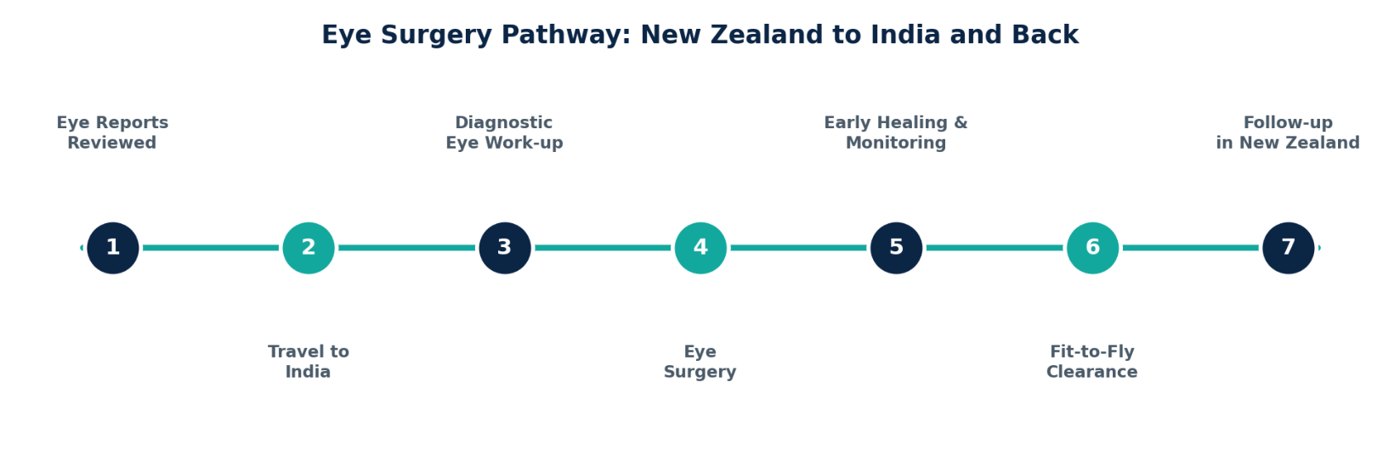
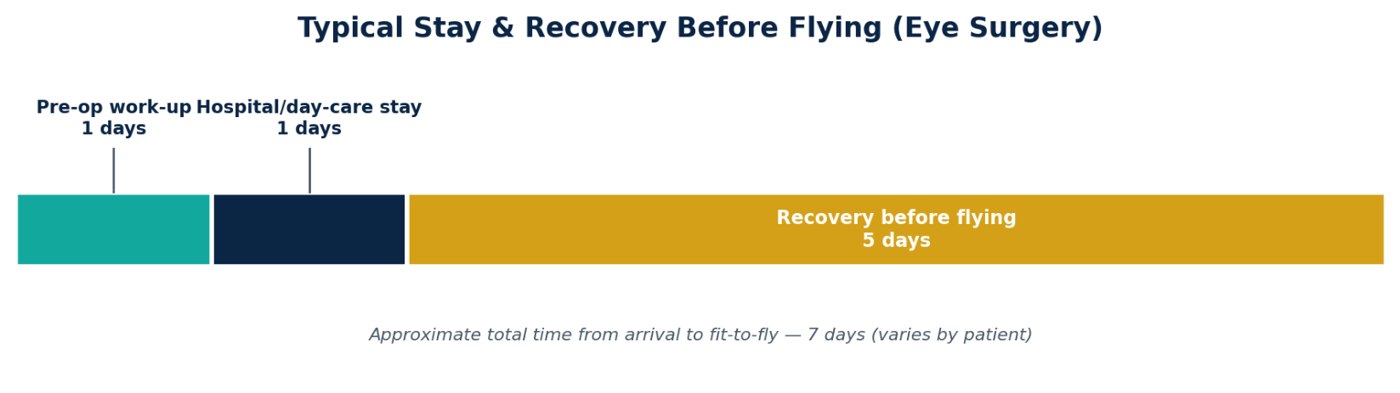
This depends on the procedure. Routine cataract or refractive surgery may allow travel home within a few days to a week, once the surgeon has confirmed early healing is progressing normally, while more complex retinal or corneal procedures may require a longer stay for closer monitoring. A New Zealand patient should confirm the expected timeline for their specific procedure before finalising travel plans.
15.Flying Back to New Zealand After Eye Surgery
- Fit-to-fly clearance from the treating ophthalmologist
- Confirmation that the eye is healing appropriately before flying
- Continued eye-drop regimen during travel
- Protective eyewear for the journey
- Avoiding eye strain during travel where advised
- Airport wheelchair assistance if needed
Patients who have had certain vitreoretinal procedures involving a gas bubble in the eye may need to avoid flying for a specific period, since altitude changes can affect the gas bubble; this should be confirmed specifically with the surgeon.
16.What Medical Information Should You Take Back to New Zealand?
- Discharge summary
- Operative report, including any lens or implant details
- Relevant pre- and post-operative eye measurements and imaging
- Eye-drop and medication regimen
- Updated glasses prescription once available
- Follow-up schedule
- Emergency warning signs specific to the procedure performed
- Treating ophthalmologist’s contact/follow-up pathway
17.Follow-Up After Returning to New Zealand
- Follow-up eye examination with a local ophthalmologist
- Continued eye-drop regimen as prescribed
- Monitoring for delayed complications
- Updated glasses prescription once vision stabilises
- Long-term monitoring for glaucoma or retinal conditions where relevant
- Coordination with the Indian team for any planned further treatment
18.How Successful Is This Surgery?
There is no meaningful single “success rate” for eye surgery as a category. Outcomes depend heavily on the specific diagnosis, its severity, and any other underlying eye conditions. The expected outcome of routine cataract surgery in an otherwise healthy eye cannot reasonably be compared with complex retinal surgery in an eye with advanced diabetic damage. Patients should be cautious about clinics offering one universal success percentage.
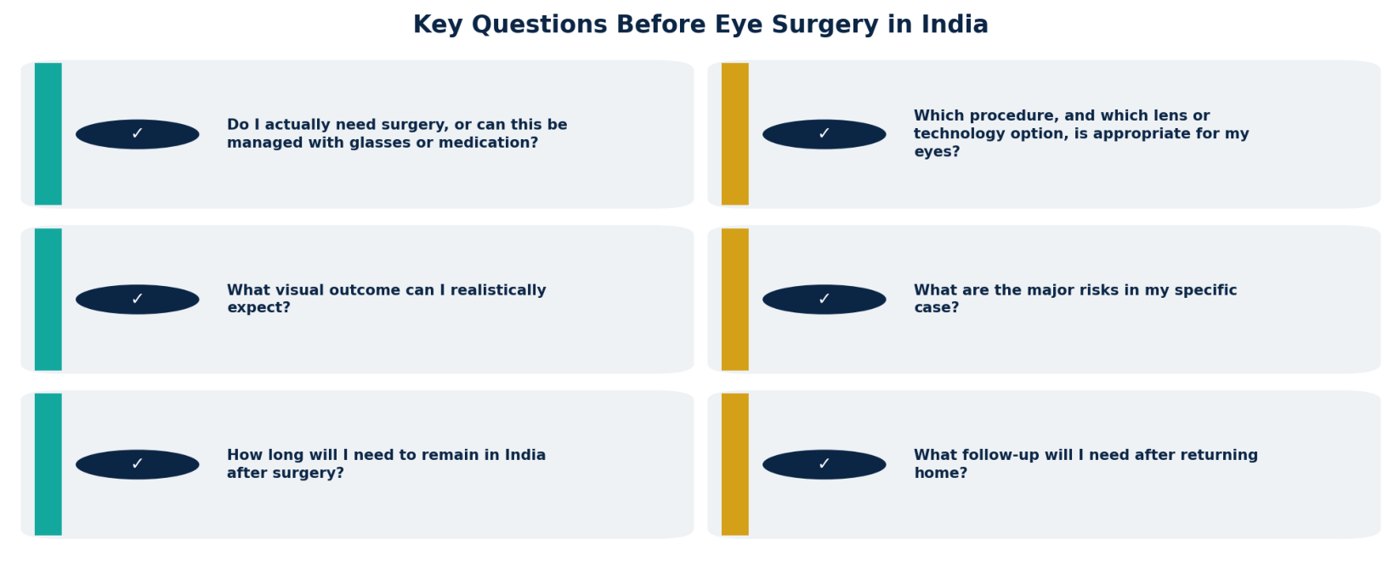
19.Questions to Ask from New Zealand in India Before Agreeing to Eye Surgery
- What is my exact diagnosis?
- Do I actually need surgery, or can this be managed with glasses or medication?
- Which procedure, and which lens or technology option, is appropriate for my eyes specifically?
- What are the major risks in my specific case?
- How frequently does this surgeon perform this exact procedure?
- What visual outcome can I realistically expect?
- How long will visual recovery take?
- How long will I need to remain in India after surgery?
- When will I be fit to fly back to New Zealand?
- What follow-up will I need after returning home?
New Zealand Patients — Ready to Take the First Step?
Share your eye examination reports and scans from New Zealand with our advisory team today and get a MEDICAL CONSULTATION, an indicative cost estimate in US$, and complete support — from your flight out of Auckland to your eye surgery in India and follow-up back home.
Get Your Medical ConsultationFrequently Asked Questions: New Zealand to India Eye Surgery
From New Zealand, can my eye scans be reviewed before I travel to India?
Often, yes, for an initial opinion. Digital imaging and reports can be reviewed remotely, though a definitive plan usually requires an in-person examination with specialised equipment.
Does every cataract need to be removed immediately?
No. Many early cataracts causing minimal visual disturbance are simply monitored until they progress to the point of affecting daily activities.
Am I a candidate for LASIK or other refractive surgery?
This depends on your corneal thickness, shape, and overall eye health, which can only be confirmed through detailed testing; not everyone is a suitable candidate.
Which intraocular lens should I choose for cataract surgery?
This depends on your visual goals, lifestyle, and any other eye conditions; your surgeon should explain the trade-offs of different lens options for your specific eyes.
How soon can I fly back to New Zealand after eye surgery in India?
There is no universal timeframe. Your ophthalmologist should clear you for travel based on how your eye is healing and the specific procedure performed.
From New Zealand, what if I have already had eye surgery elsewhere before treatment in India?
Further or revision treatment is often still possible. Send previous operative records and eye measurements for assessment.
Will my vision be perfect after surgery?
Most procedures aim for significant improvement, but perfect vision without any need for glasses cannot be guaranteed; realistic expectations should be discussed beforehand.
From New Zealand, should I choose a hospital in India based on its technology alone?
No. Surgeon experience with your specific condition and procedure, correct diagnosis, and postoperative care remain fundamental.
Key Takeaway: New Zealand to India Eye Surgery and Ophthalmology
Travelling from New Zealand to India for eye surgery can offer excellent value, but the right starting point is always a complete diagnostic eye examination to confirm exactly what is causing your visual symptoms and which procedure, and which lens or technology option where relevant, is appropriate for your specific eyes. For a New Zealand patient, the plan should also address recovery in India, realistic expectations for visual outcome, fitness for travel, and a clear follow-up pathway once home.
Citation Block: New Zealand — Eye Surgery and Ophthalmology in India
| Field | Details |
|---|---|
| Article / Topic | New Zealand — Eye Surgery and Ophthalmology in India: Complete Clinical & Surgical Guide |
| Primary Patient Group | From New Zealand — people with cataracts, refractive errors, glaucoma, retinal or corneal disease considering eye surgery in India |
| Typical Hospital Stay | Same day–2 days, procedure-dependent |
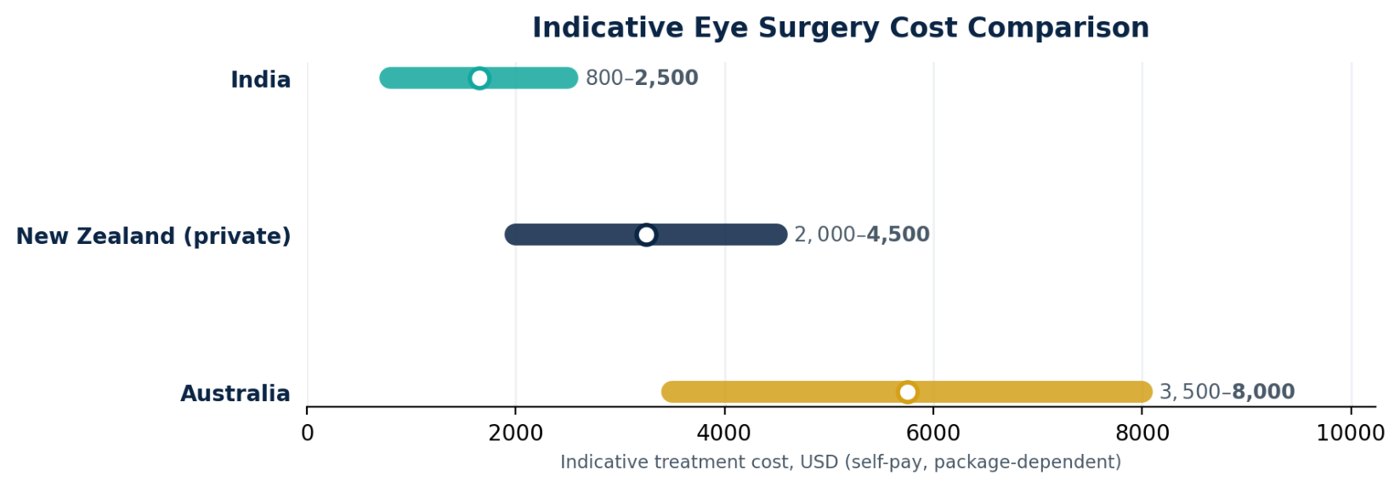
| Typical Cost Saving | 50–70% vs. Australia, package-dependent |
| Conditions Covered | Common eye conditions for which New Zealand patients may consider eye surgery in India (Section 2) |
| Tests Before Surgery | Diagnostic eye tests usually required before eye surgery (Section 6) |
| Treatment Types | Major types of eye surgery in India, small-incision and laser-assisted techniques, premium intraocular lenses |
| Recovery | Recovery after surgery, visual rehabilitation, long-term eye care and return to work |
| Take Home | Medical information to take back to New Zealand and follow-up after returning home |
| Key Decision Factor | From New Zealand to India: complete diagnosis, the right procedure and lens/technology, an experienced surgeon and clear follow-up — before price |