

Radiotherapy and Modern Cancer Treatments in India for Omanis: A Doctor’s Guide to Making the Right Decision
A practical guide for Omani patients covering modern radiotherapy techniques, targeted therapy, immunotherapy, costs, treatment sessions and follow-up in Oman.
About half of all cancer patients receive radiation therapy at some point in their treatment, whether to cure a cancer outright, shrink a tumour before surgery, clean up microscopic disease afterward, or relieve pain from advanced disease. Yet radiotherapy remains one of the least understood parts of cancer care for many Omani families — often imagined as a single dramatic event rather than what it actually is: a carefully planned course of daily treatments delivered over several weeks. Over 24 years of advising Gulf families on cancer treatment, I want to walk Omani patients through what this actually involves. Oman's hospitals, including Apollo Hospital Muscat, Badr Al Samaa, Aster Al Raffah, and Burjeel Medical Centre, provide oncology consultation and are the right starting point for staging and treatment planning. This guide is written to help Omani patients understand, honestly and without sales pressure, the different radiotherapy techniques and modern cancer treatments in use today, and what to check carefully before deciding where to receive them.
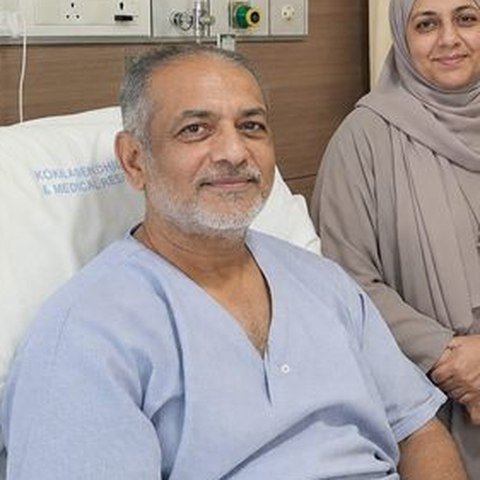
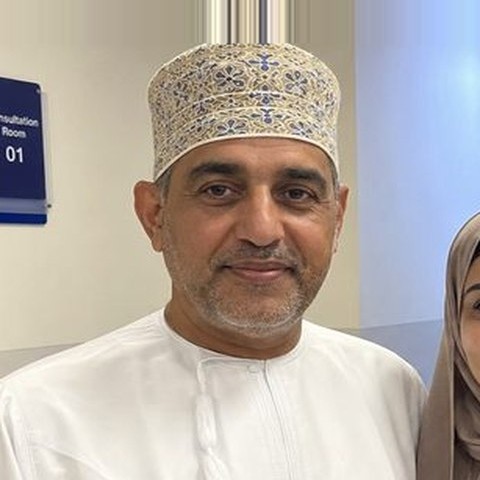
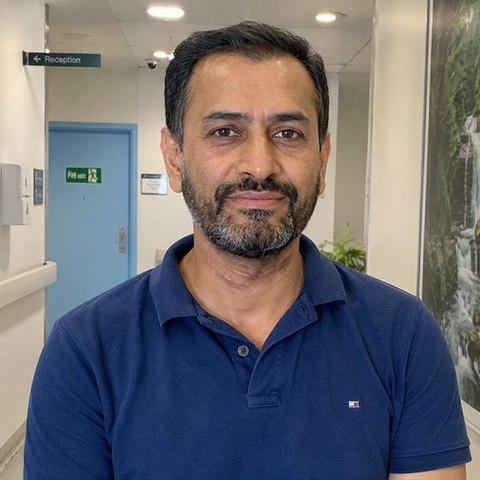
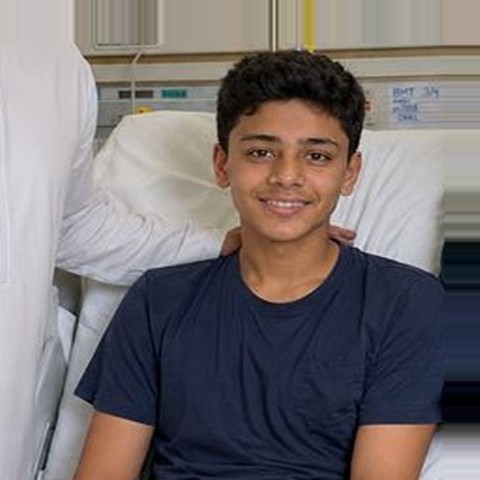
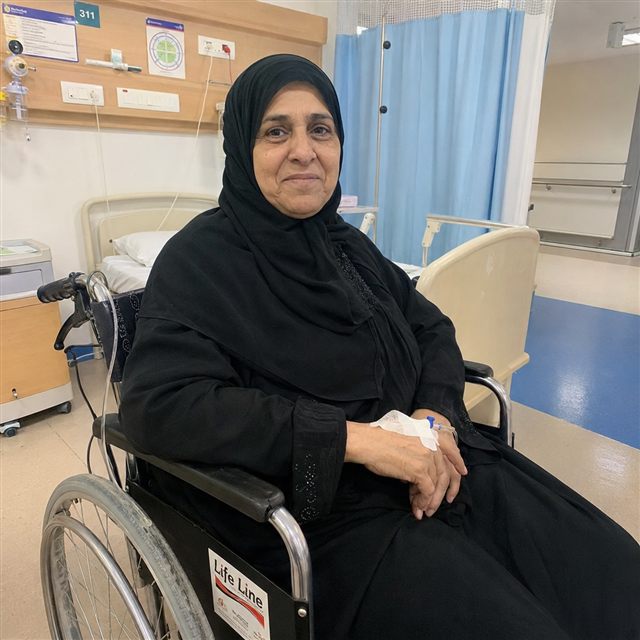
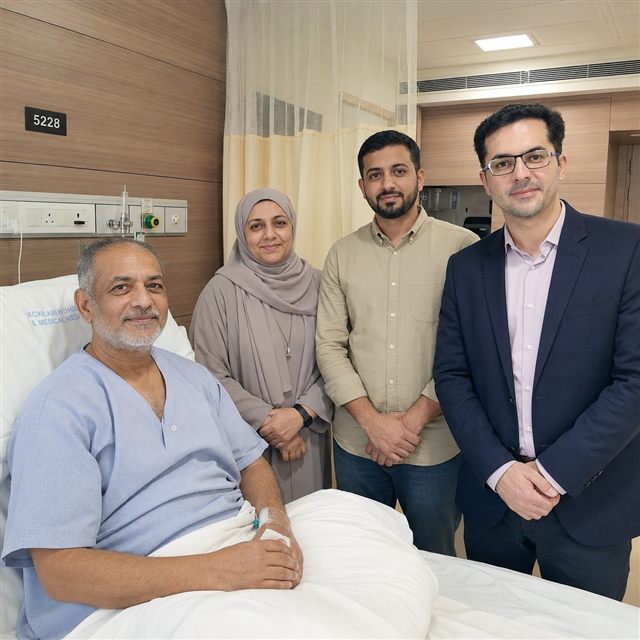
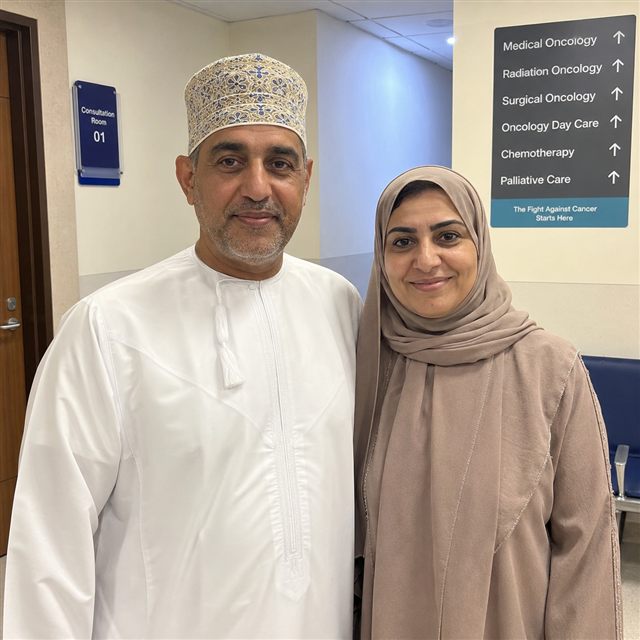
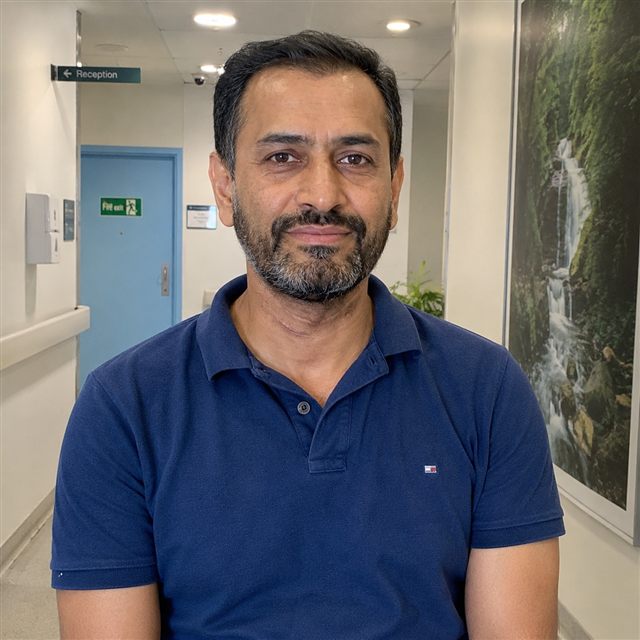
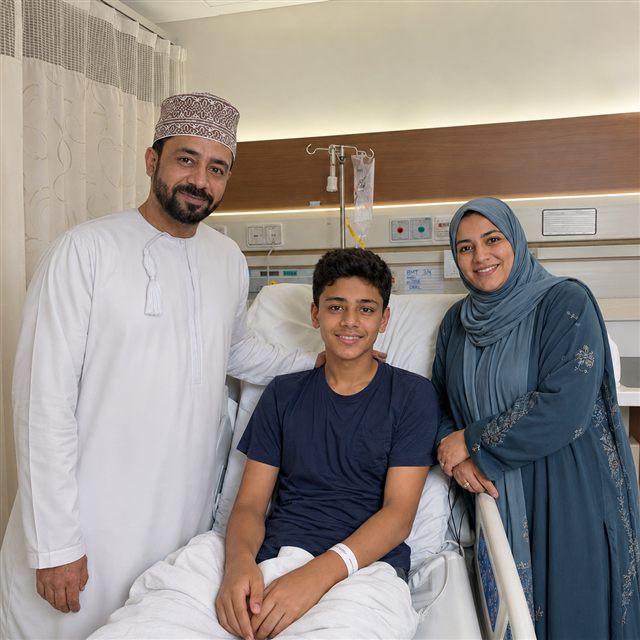
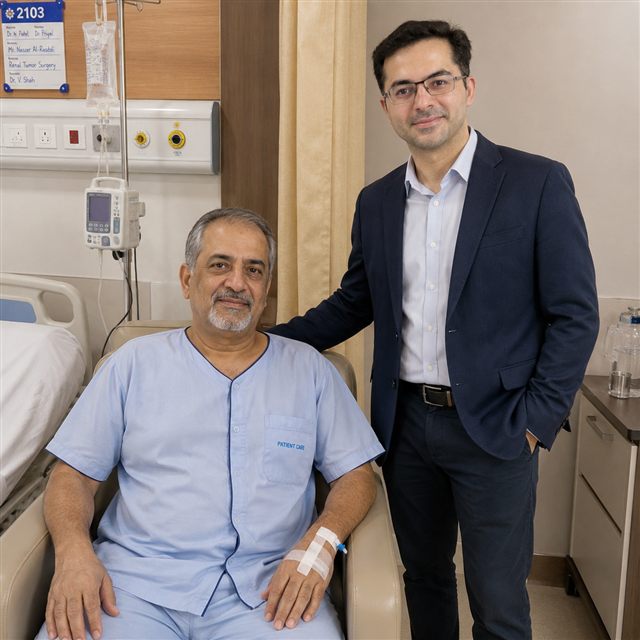
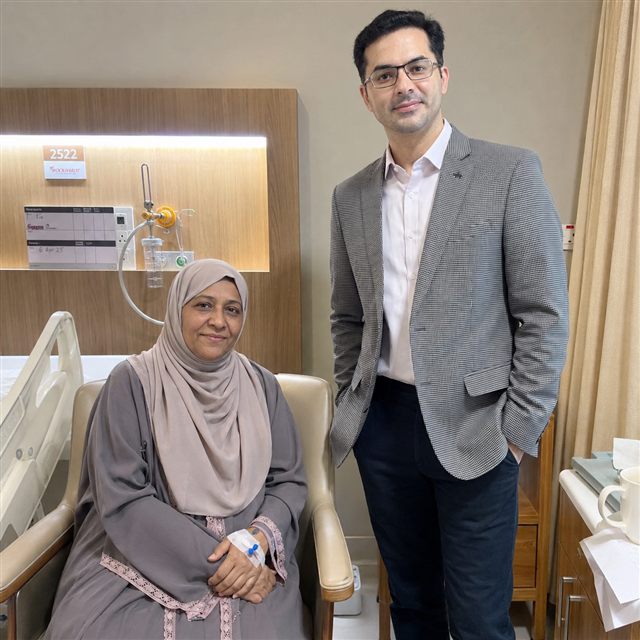
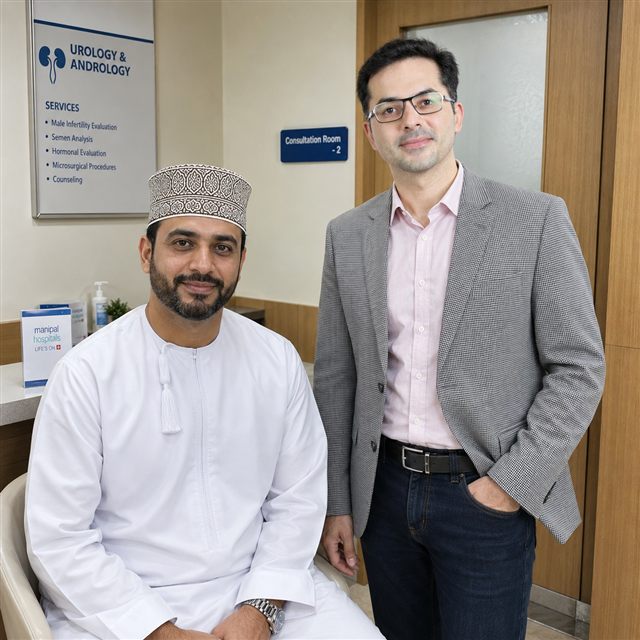
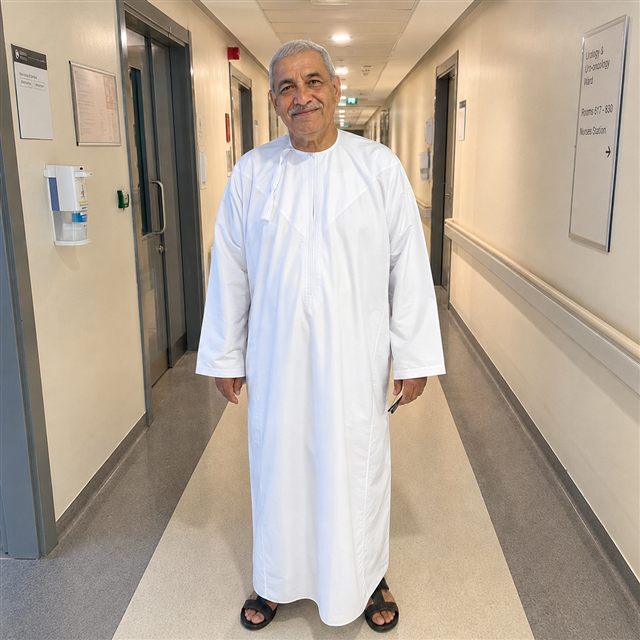
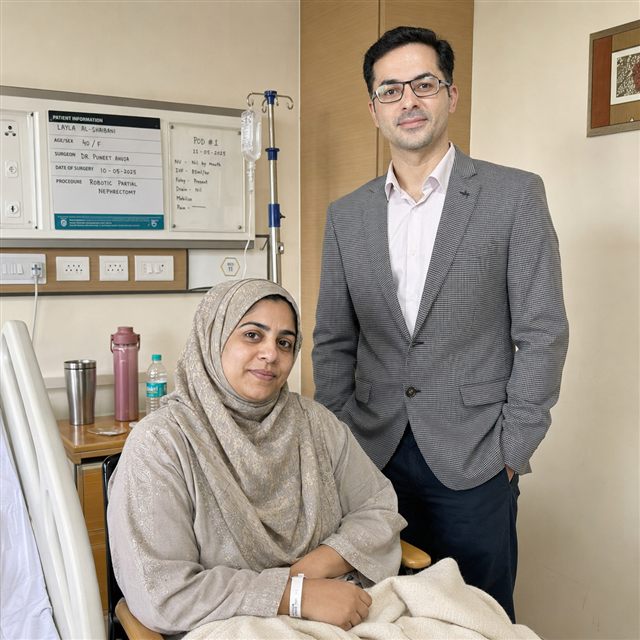
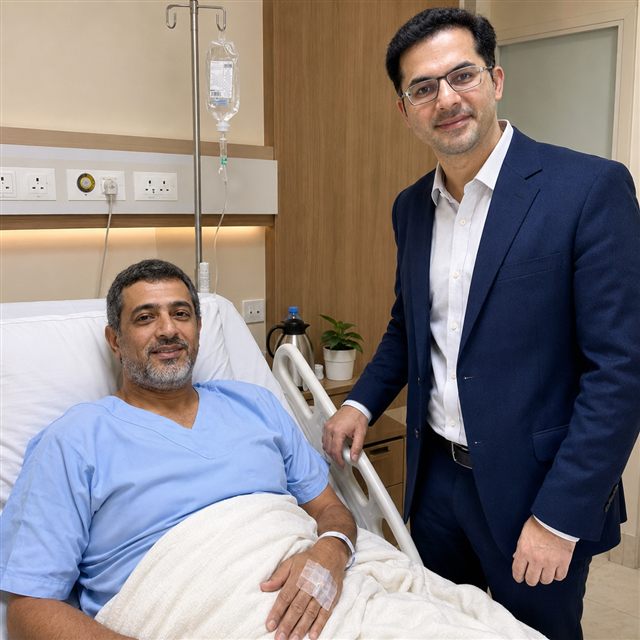
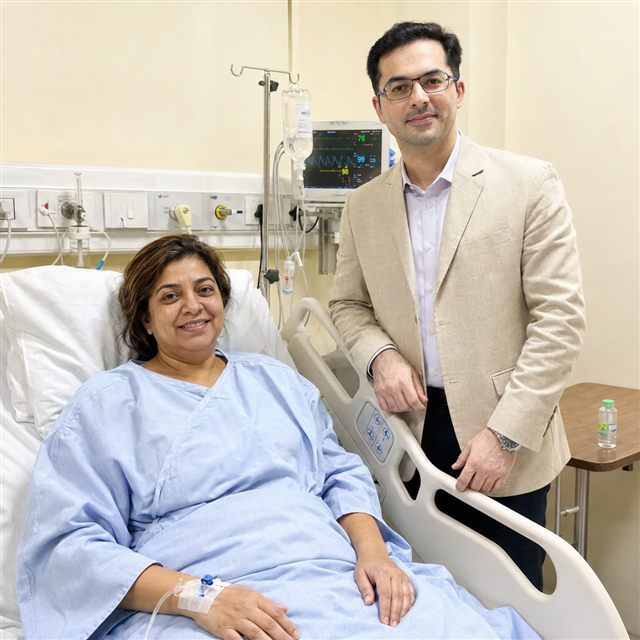
Healing Journeys of Omani Patients
Key Takeaways
- Radiotherapy is used in approximately half of all cancer patients at some point in their treatment. It may be used to cure cancer, shrink a tumour before surgery, eliminate microscopic disease after surgery or relieve symptoms such as pain in advanced disease.
- Modern radiotherapy is much more precise than older techniques. The guide explains IMRT, IGRT, VMAT and SBRT, with each technique serving different clinical purposes. SBRT, for example, can deliver high doses in only a few sessions for selected tumours, while conventional courses may involve several weeks of treatment.
- Modern cancer treatment may also include targeted therapy and immunotherapy. However, the guide stresses that these treatments are not suitable for every cancer and should be considered only after appropriate molecular or genetic testing confirms that the tumour is a genuine candidate.
- India's major cancer centres in Delhi, Mumbai, Chennai and Bengaluru offer current-generation linear accelerators supporting IMRT, IGRT, VMAT and SBRT, alongside access to targeted therapy and immunotherapy for eligible patients. The guide emphasises matching the technology to the tumour rather than choosing treatment simply because it is newer.
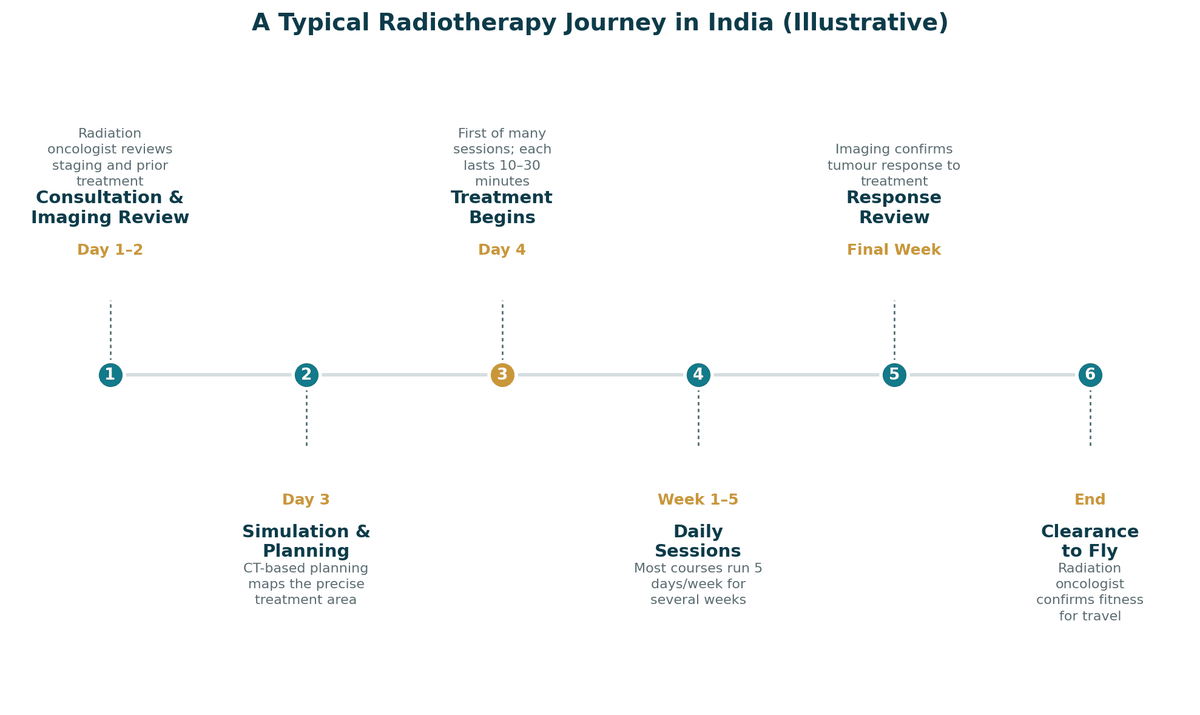
- The page 2 treatment journey diagram illustrates a typical radiotherapy pathway: consultation and imaging review on days 1–2, simulation and planning on day 3, treatment beginning around day 4, daily sessions during weeks 1–5, response review in the final week and clearance to fly at the end of treatment.
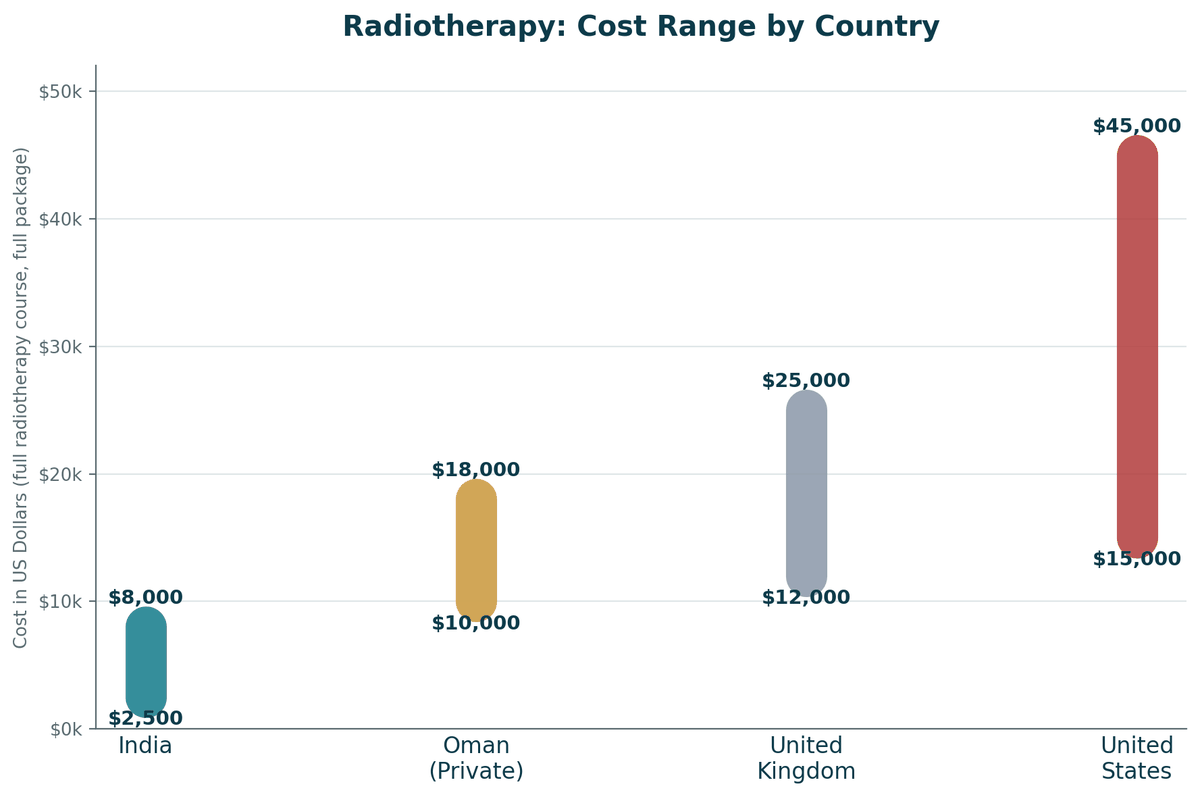
- The page 3 cost chart and comparison table gives a representative full radiotherapy course at US$2,500–8,000 in India, compared with US$10,000–18,000 in private Oman, US$12,000–25,000 in private UK care and US$15,000–45,000+ in the United States.
- The guide makes clear that the number of treatment sessions is one of the biggest factors affecting both cost and the patient's length of stay. A five-session SBRT course and a thirty-five-session IMRT course represent very different treatment commitments and should not be compared using a generic price.
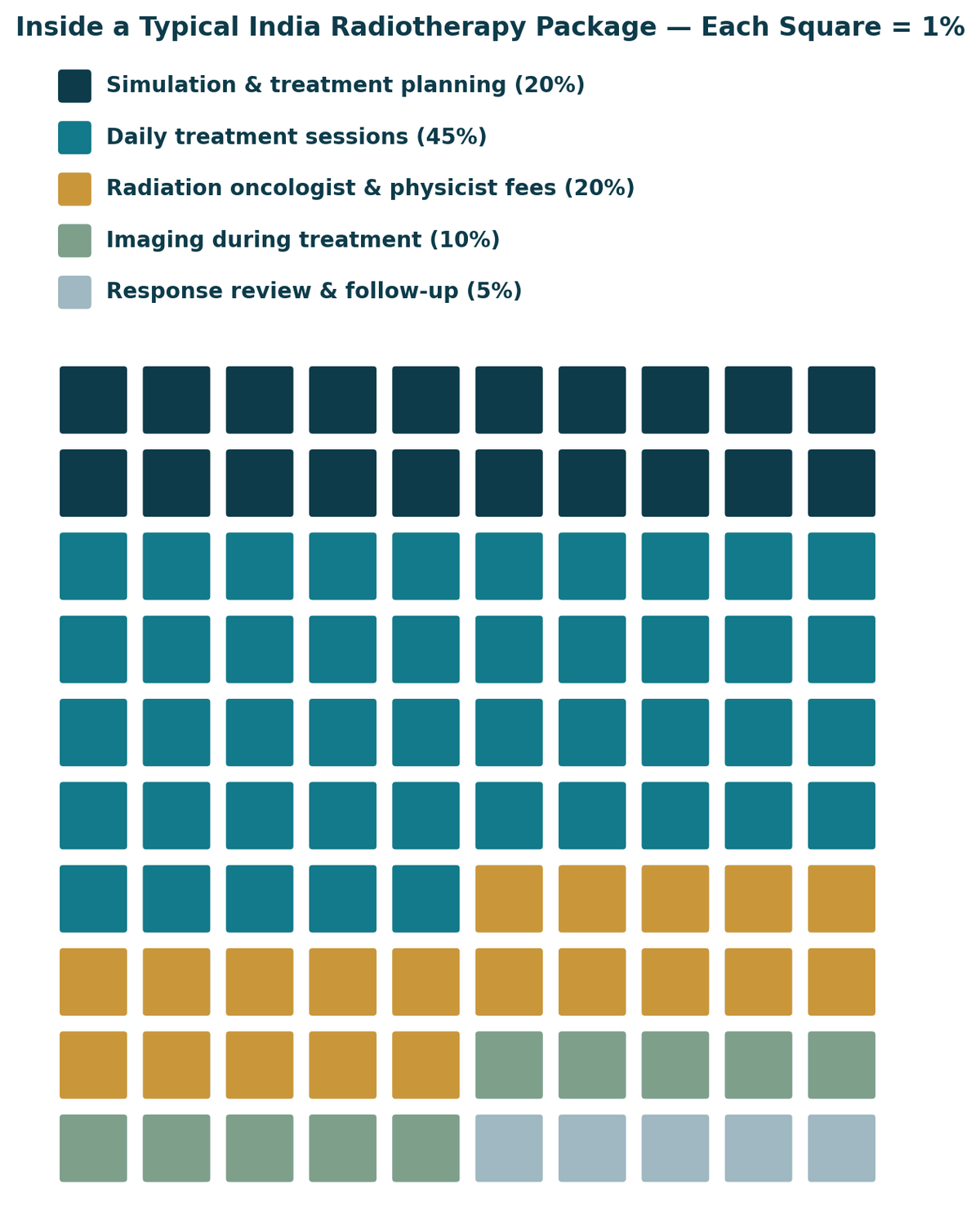
- The page 4 package graphic shows an illustrative India radiotherapy package with daily treatment sessions accounting for 45%, simulation and treatment planning 20%, radiation oncologist and physicist fees 20%, imaging during treatment 10% and response review and follow-up 5%.
- Targeted therapy and immunotherapy drugs are generally priced separately by treatment cycle and can substantially increase the overall cost. Omani patients should therefore ask whether these medicines are included in the quoted package or billed separately.
- The guide recommends obtaining a session-specific quotation after the treatment plan is finalised. This helps avoid misleading comparisons because the total cost depends on the technique, number of sessions, planning requirements and imaging during treatment.
- Omani patients should send their pathology and imaging to an independent radiation oncology team in India before committing to treatment. This allows the proposed technique—IMRT, IGRT, VMAT or SBRT—to be assessed specifically for the patient's tumour.
- Radiotherapy often requires patients to remain in India for several weeks. The guide recommends budgeting not only for treatment itself but also for accommodation and the full duration away from Oman.
- Follow-up planning should be completed before leaving India. The source recommends arranging follow-up imaging and monitoring in Oman and confirming that the Indian oncology team will provide detailed treatment records and coordinate with the oncologist at home.
Quick Facts
- Treatment
- Radiotherapy and modern cancer treatments
- Primary Patients
- Omani cancer patients
- Main Radiotherapy Techniques
- IMRT, IGRT, VMAT and SBRT
- Modern Drug Treatments
- Targeted therapy and immunotherapy
- Key Specialist
- Radiation Oncologist with Medical Physics Team
- Main India Cities
- Delhi, Mumbai, Chennai and Bengaluru
- India Cost
- US$2,500–8,000 for a full radiotherapy course
- Oman Private Cost
- US$10,000–18,000
- UK Private Cost
- US$12,000–25,000
- US Cost
- US$15,000–45,000+
- Typical Treatment
- Daily sessions over several weeks, depending on technique
- SBRT
- High-dose treatment delivered in a few sessions for suitable tumours
- Consultation / Imaging
- Days 1–2
- Simulation / Planning
- Day 3
- Treatment Begins
- Day 4
- Daily Sessions
- Weeks 1–5
- Response Review
- Final week
- Clearance to Fly
- End of treatment, subject to radiation oncologist approval
- Package Breakdown
- Daily treatment sessions 45%, simulation/planning 20%, radiation oncologist/physicist 20%, imaging 10%, response review/follow-up 5%
- Molecular Testing
- Important when targeted therapy or immunotherapy is proposed
- Session Check
- Confirm the exact number of sessions
- Cost Check
- Obtain a session-specific written quotation
- Insurance
- Check Omani insurance or employer reimbursement
- Ministry of Health
- Clarify overseas-treatment requirements
- Stay Planning
- Budget for accommodation throughout the full treatment course
- Follow-Up
- Arrange imaging and monitoring in Oman
- Author
- Dr. Dheeraj Bojwani
- Experience
- 24+ Years
In Brief
Radiotherapy and modern cancer treatments in India can provide Omani patients with access to IMRT, IGRT, VMAT and SBRT, together with targeted therapy and immunotherapy for appropriately selected cancers. The guide emphasises that treatment should be based on tumour type, biology and clinical need rather than the novelty of a technology. A representative full radiotherapy course costs US$2,500–8,000 in India compared with US$10,000–18,000 in private Oman. Treatment may involve several weeks of daily sessions, making technique selection, session count, package costing and follow-up planning important before travelling from Oman.
Understanding the Modern Radiotherapy Landscape
Radiotherapy has evolved considerably from older, less precise techniques. Intensity-modulated radiation therapy (IMRT) shapes and varies the strength of radiation beams to concentrate dose on the tumour while sparing surrounding healthy tissue. Image-guided radiation therapy (IGRT) adds real-time imaging during each session to confirm the tumour's exact position before treatment, improving accuracy day to day. Volumetric modulated arc therapy (VMAT) delivers radiation in a continuous rotating arc, often shortening treatment time while maintaining precision. Stereotactic body radiotherapy (SBRT) delivers very high, precisely targeted doses in just a few sessions rather than many weeks, for suitable tumours.
Beyond radiotherapy, “modern cancer treatments” increasingly includes targeted therapy, which attacks specific genetic or molecular features of a cancer rather than all rapidly dividing cells, and immunotherapy, which helps a patient's own immune system recognise and attack cancer cells. Not every cancer responds to these newer approaches — their use depends heavily on the specific tumour type and its genetic profile, which is why proper molecular testing, not assumption, should guide whether these options are genuinely relevant to your case.
What Makes India a Strong Option for Radiotherapy and Modern Treatments
India's leading cancer centres, concentrated in Delhi, Mumbai, Chennai, and Bengaluru, operate current-generation linear accelerators supporting IMRT, IGRT, VMAT, and SBRT, alongside genuine access to targeted therapy and immunotherapy for eligible patients. This breadth matters because the right technique for a specific tumour is a clinical decision, not a marketing feature, and a centre offering the full range can genuinely match the technology to the tumour rather than the tumour to whatever the centre happens to have.
India also gives patients access to medical physicists and radiation oncologists who plan and deliver very high volumes of these treatments, which matters directly for radiotherapy precision and outcomes. And because Indian hospitals have spent two decades building international oncology pathways for Gulf and African patients, Omani patients arrive to Arabic-speaking coordinators and a well-tested process for reviewing pathology and molecular testing results before travel is even booked.
This does not mean every cancer patient needs to travel for radiotherapy. It means that for cases needing more advanced techniques, or where a family wants confirmation that the recommended treatment genuinely fits the tumour's biology, a high-volume centre with the full range of technology and genuine molecular testing capability deserves serious consideration.
Cost Comparison: India vs. Oman vs. Western Countries
The figures below represent a full radiotherapy course, in approximate US dollars, for a full package at an accredited private hospital. Targeted therapy and immunotherapy drugs are typically priced separately by treatment cycle, and can add substantially to overall cost in every country.
| Destination | Typical Cost (Full Radiotherapy Course) | What This Usually Includes |
|---|---|---|
| India | US $2,500 – $8,000 | Simulation, planning, all treatment sessions, and standard imaging during treatment |
| Oman (private) | US $10,000 – $18,000 | Simulation, sessions, and physician fees; varies by technique and hospital tier |
| United Kingdom (private) | US $12,000 – $25,000 | Simulation and sessions; follow-up imaging often billed separately |
| United States | US $15,000 – $45,000+ | Highly variable by state, technique, and number of sessions |
A few honest caveats specific to radiotherapy. First, get a session-specific quote once your treatment plan is finalised, since a five-session SBRT course and a thirty-five-session standard IMRT course for a different cancer type are entirely different undertakings at different price points. Second, if targeted therapy or immunotherapy is being recommended, ask specifically whether molecular or genetic testing has confirmed your tumour is a genuine candidate, since these drugs are priced separately and are not appropriate for every cancer. Third, radiotherapy courses often run several weeks, so factor the full length of stay in India into your planning, not just the treatment days themselves.
What a Typical Omani Patient Should Weigh Before Deciding Radiotherapy in India
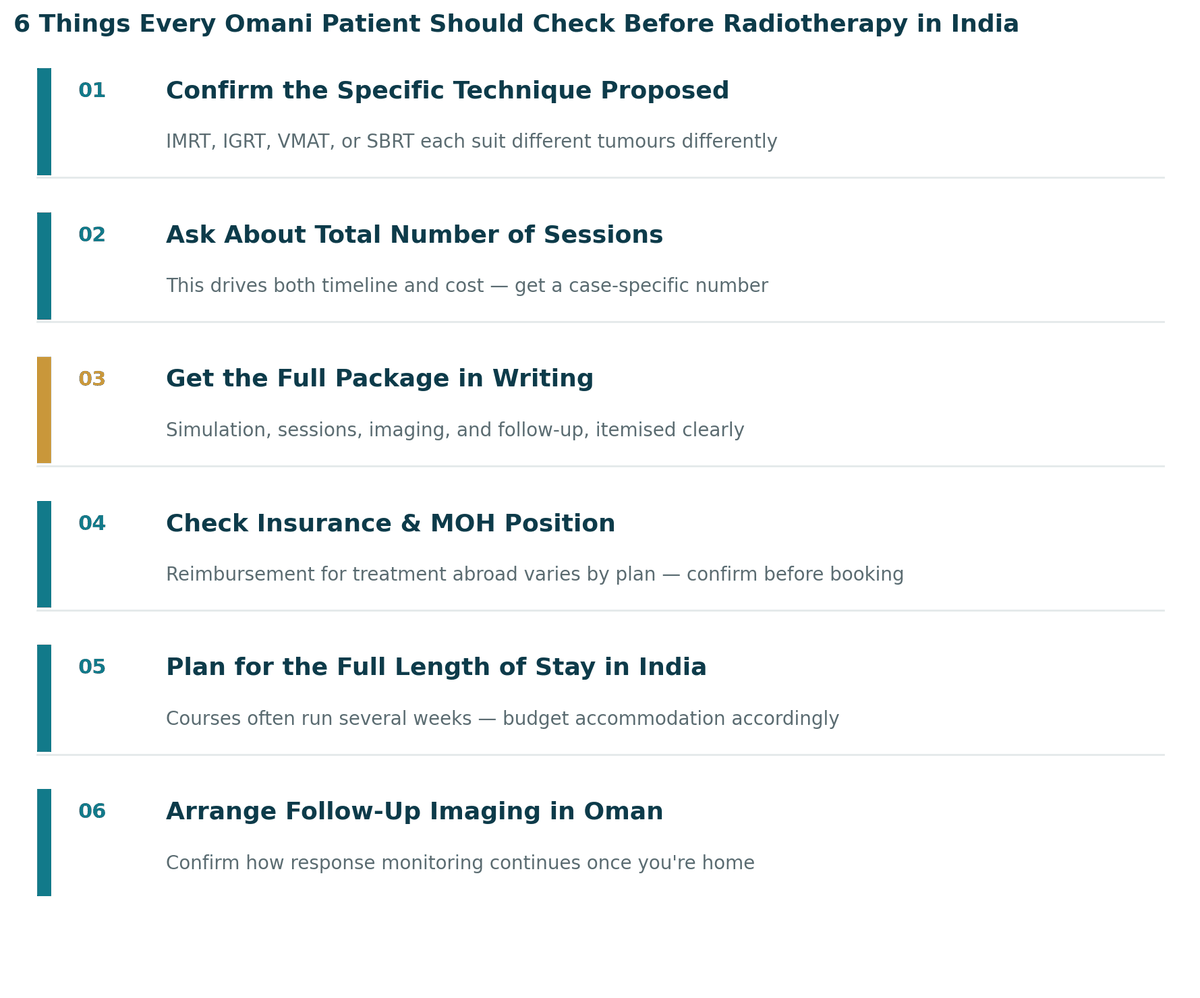
Having guided patients through this exact decision for 24 years, here is what I encourage every Omani family to work through before committing to a hospital:
- Confirm the specific technique being recommended, and why. Send your pathology and imaging to an independent radiation oncology team in India before committing. Understand why IMRT, IGRT, VMAT, or SBRT is being proposed for your specific tumour.
- Ask for the total number of sessions your case requires. This is the single biggest driver of both cost and how long you'll need to stay in India.
- Get the full package itemised in writing. Simulation, planning, all sessions, and imaging during treatment should each be clear before you travel.
- Check your insurance and Ministry of Health position. Some Omani insurance plans and employer health schemes offer partial reimbursement for treatment abroad; others do not cover it at all. Clarify this before you travel, not after.
- Plan realistically for the full length of stay. Radiotherapy courses often run daily for several weeks. Budget accommodation and time away from home accordingly, not just for the initial consultation.
- Arrange follow-up imaging and monitoring in Oman before you leave. Confirm your Indian team is willing to share detailed records and coordinate with an oncologist back home for ongoing surveillance.
A Few Final Words
Radiotherapy asks for patience in a way surgery does not — not one dramatic event, but weeks of quiet, daily commitment to a treatment plan built with real precision behind it. Understanding that rhythm in advance, rather than being surprised by it partway through, makes the whole process considerably easier to manage, wherever it happens to take place. A clear conversation with a radiation oncologist about exactly which technique and how many sessions your specific case requires is the most useful thing to secure before any travel plans are made.
Sources & Further Reading
- National Cancer Institute (NCI), National Institutes of Health — Radiation Therapy to Treat Cancer (cancer.gov)
- MedlinePlus, U.S. National Library of Medicine (NIH) — Radiation Therapy (medlineplus.gov)
- American Cancer Society (ACS), non-profit organization — Radiation Therapy Basics (cancer.org)
- American Society for Radiation Oncology (ASTRO), non-profit professional association — Patient Resources (astro.org)
- NHS (UK National Health Service) — Radiotherapy (nhs.uk)
Frequently Asked Questions by Omani Patients about Radiotherapy and Modern Cancer Treatments in India
Can Omani patients receive modern radiotherapy in India?
Yes. The guide presents India as an option for Omani patients requiring advanced radiotherapy techniques or a multidisciplinary review of whether a proposed treatment is appropriate.
Which radiotherapy techniques are available for Omani patients in India?
The guide covers IMRT, IGRT, VMAT and SBRT. The appropriate technique depends on the tumour and treatment objective rather than simply choosing the newest technology.
How much does a full radiotherapy course cost in India for Omani patients?
The guide gives a representative cost of US$2,500–8,000 in India, compared with US$10,000–18,000 in private Oman.
How does radiotherapy cost in India compare with private Oman?
The representative India range is US$2,500–8,000 compared with US$10,000–18,000 in private Oman. The final price depends significantly on the technique and number of sessions.
How many radiotherapy sessions might an Omani patient need in India?
The number varies according to the treatment plan. The guide contrasts a five-session SBRT course with a thirty-five-session standard IMRT course, demonstrating why a case-specific session count is essential.
How long does an Omani patient need to stay in India for radiotherapy?
Many courses require daily treatment over several weeks. The guide recommends planning accommodation and the complete period away from Oman rather than budgeting only for the consultation or first treatment session.
Are targeted therapy and immunotherapy included in the radiotherapy package?
Typically, these drugs are priced separately by treatment cycle. Omani patients should confirm whether recommended medicines are included in the quotation because they can substantially increase the overall treatment cost.
Should an Omani patient get a second opinion before radiotherapy in India?
Yes. The guide recommends sending pathology and imaging to an independent radiation oncology team in India and asking why the proposed technique is appropriate for the specific tumour.
What should Omani patients check before booking radiotherapy in India?
They should confirm the exact technique, total number of sessions, complete itemised package, insurance and Ministry of Health position, full length of stay and follow-up arrangements in Oman.
How should follow-up be managed after an Omani patient completes radiotherapy in India?
The guide recommends arranging follow-up imaging and monitoring in Oman before leaving India. The Indian team should provide detailed treatment records and coordinate ongoing surveillance with the patient's oncologist at home.
Page Summary
This six-page guide explains radiotherapy and modern cancer treatments in India for Omani patients, covering IMRT, IGRT, VMAT, SBRT, targeted therapy, immunotherapy, costs and follow-up. The page 2 journey diagram illustrates consultation, planning, daily treatment, response review and clearance to fly. The page 3 cost chart compares India at US$2,500–8,000 with private Oman at US$10,000–18,000, while page 4 shows the main components of an illustrative India radiotherapy package. Pages 5–6 focus on technique selection, session count, written package costs, insurance and Ministry of Health checks, realistic stay planning and follow-up imaging in Oman.
Citation Block
| Field | Details |
|---|---|
| Article / Topic | Radiotherapy and Modern Cancer Treatments in India |
| Country / Patients | India / Omani Patients |
| Main Treatment | Radiotherapy and modern cancer treatments |
| Radiotherapy Techniques | IMRT, IGRT, VMAT and SBRT |
| Modern Drug Treatments | Targeted therapy and immunotherapy |
| Key Specialist | Radiation Oncologist / Medical Physics Team |
| Main India Cities | Delhi, Mumbai, Chennai and Bengaluru |
| India Cost | US$2,500–8,000 |
| Oman Private Cost | US$10,000–18,000 |
| UK Private Cost | US$12,000–25,000 |
| US Cost | US$15,000–45,000+ |
| Consultation / Imaging | Days 1–2 |
| Simulation / Planning | Day 3 |
| Treatment Begins | Day 4 |
| Daily Sessions | Weeks 1–5 |
| Response Review | Final week |
| Clearance to Fly | End of treatment |
| Package Breakdown | Daily treatment sessions 45%, simulation/planning 20%, radiation oncologist/physicist 20%, imaging 10%, response review/follow-up 5% |
| Technique Check | Confirm why IMRT, IGRT, VMAT or SBRT is recommended |
| Session Check | Confirm total number of sessions before travel |
| Molecular Testing | Confirm eligibility before targeted therapy or immunotherapy |
| Cost Check | Obtain a final session-specific package in writing |
| Insurance / MOH | Confirm overseas-treatment reimbursement before travel |
| Stay Planning | Budget for several weeks when required |
| Follow-Up | Arrange imaging and oncology monitoring in Oman |
| Key Selection Criterion | Match treatment technique to tumour type and clinical need |
| Important Warning | Do not choose a radiotherapy technique simply because it is newer; the appropriate technique and number of sessions should be determined for the specific tumour |


Our Mission Statement
Our mission is to place patients at the centre of every healthcare decision by providing trustworthy, evidence-based, and unbiased medical information. We believe that informed patients make better decisions. Backed by personalised guidance from our experienced advisory team, we help patients understand their treatment options, compare them objectively, and confidently choose the path that best suits their medical needs and personal circumstances.
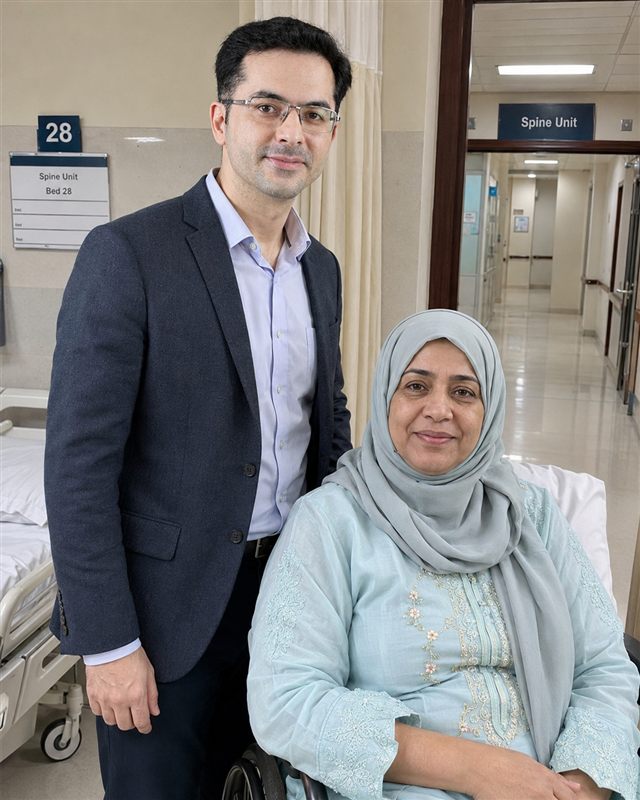
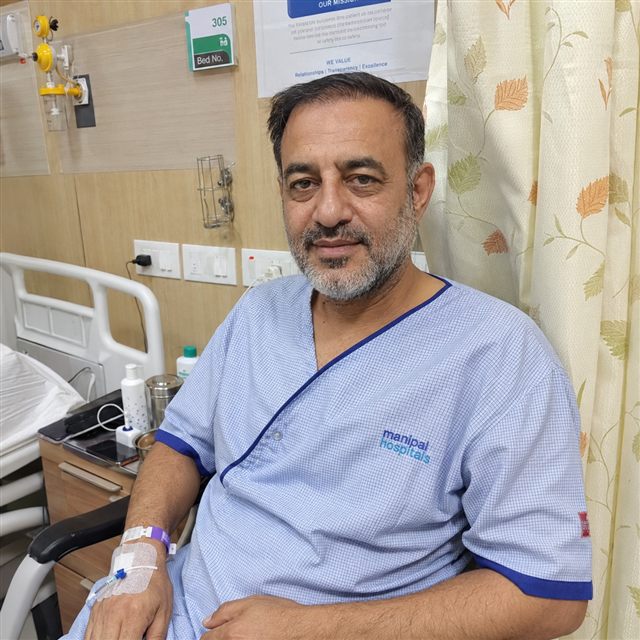
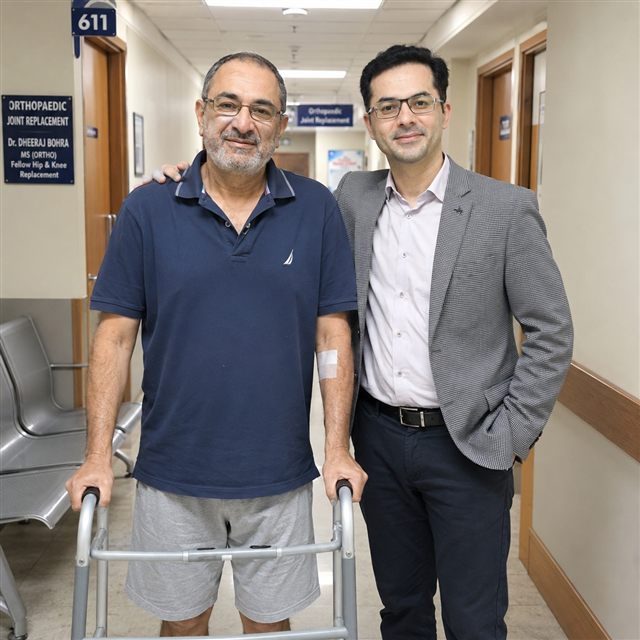
Patient Testimonials from Oman
Ready to Take the First Step?
Share your Medical Reports with our Healthcare Managers Today and Get a FREE CONSULTATION, a Personalized Treatment Plan, and Complete Support from Arrival to Recovery.
Get Your Free ConsultationAreas We Serve
Indian Health Guru Consultants proudly assists patients from Oman and surrounding Middle Eastern countries in accessing advanced, affordable and trusted medical treatment in India. Our team provides complete support for medical opinions, hospital selection, treatment planning, visa assistance, travel coordination, accommodation and post-treatment follow-up.
We regularly serve patients from:
- Oman
- Turkey
- Iran
- Kuwait
- Jordan
- Syria
- Qatar
- Bahrain
- Yemen
- Iraq
- Saudi Arabia
- United Arab Emirates
No matter where you are located, our experienced team is committed to making your medical journey to India safe, smooth, transparent and stress-free from the first enquiry to your return home.
From Oman to India: Your Complete Patient Guide
- Weight Loss and Bariatric Surgery in India for Omanis: Cost & Guide
- Brain Tumor Surgery in India for Omanis: Cost & Guide
- Cancer Treatment in India for Omanis: Cost & Guide
- Cardiac Surgery in India for Omanis: Cost & Guide
- Breast Cancer Treatment in India for Omanis: Cost & Guide
- Neurosurgery in India for Omanis: Cost & Guide
- Spine Surgery in India for Omanis: Cost & Guide
- Bone Marrow Transplant in India for Omanis: Cost & Guide
- Kidney Transplant in India for Omanis: Cost & Guide
- Best Dentists and Clinics for Dental Surgery in India for Omani Patients
- Best Doctors and Hospitals for Blood Cancer Treatment in India for Omani Patients
- Best Bone Marrow Transplant Doctors and Hospitals in India for Omani Patients
- Best IVF and Fertility Doctors and Hospitals in India for Omani Couples
- Best Bariatric Surgeons and Hospitals for Weight Loss Surgery in India for Omani Patients
- Best Brain Tumor Surgery Doctors and Hospitals in India for Omani Patients
- Best Cardiac Surgeons and Hospitals in India for Omani Patients
- Best Colorectal Cancer Surgeons and Hospitals in India for Omani Patients
- Best Surgeons and Hospitals for Complex Joint Revision Surgery in India for Omani Patients