

Proton Therapy in India for Omanis: A Doctor’s Guide to Making the Right Decision
A practical guide for Omani patients covering proton therapy eligibility, suitable tumours, treatment sessions, India costs, planning and follow-up.
Proton therapy is one of the most advanced forms of radiation treatment available today, and also one of the most frequently misunderstood. Patients often ask me whether it is simply a “better” version of standard radiotherapy. The honest answer is more specific: proton therapy is a genuine advance for certain tumours, in certain locations, in certain patients — not a universal upgrade for every cancer. Over 24 years of advising Gulf families on advanced cancer treatment, I want to give Omani patients a clear, honest picture of what it offers. Proton therapy is not currently available within Oman itself, and access across the wider Gulf and South Asia region is genuinely limited to a small number of specialised centres. This guide is written to help Omani patients and families understand what proton therapy actually does differently from standard radiation, when it is genuinely the better choice, and what to check carefully before pursuing it in India.
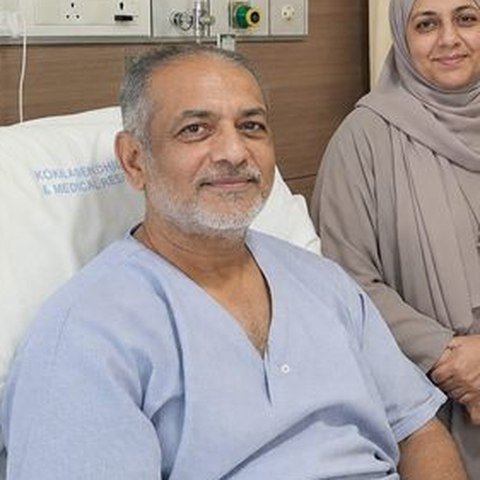
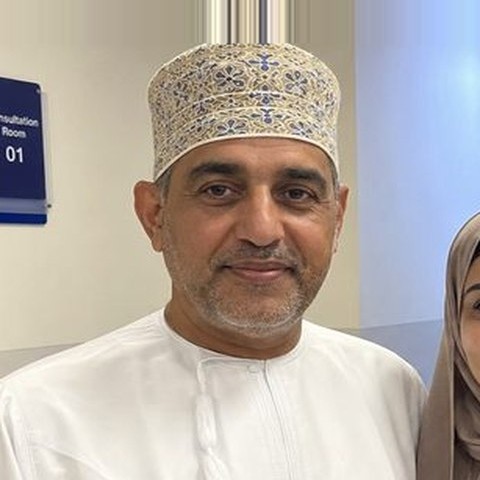
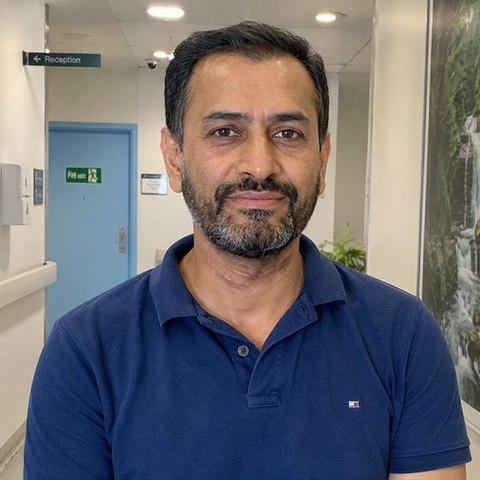
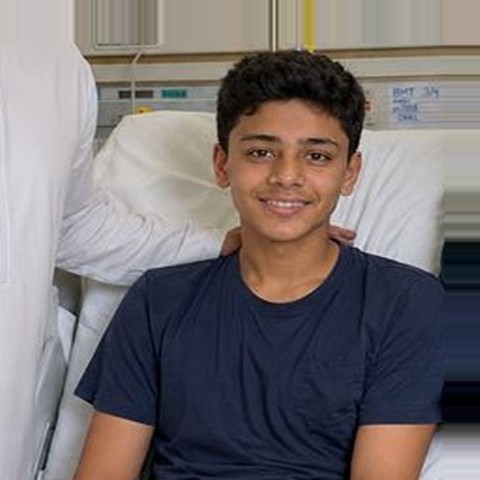
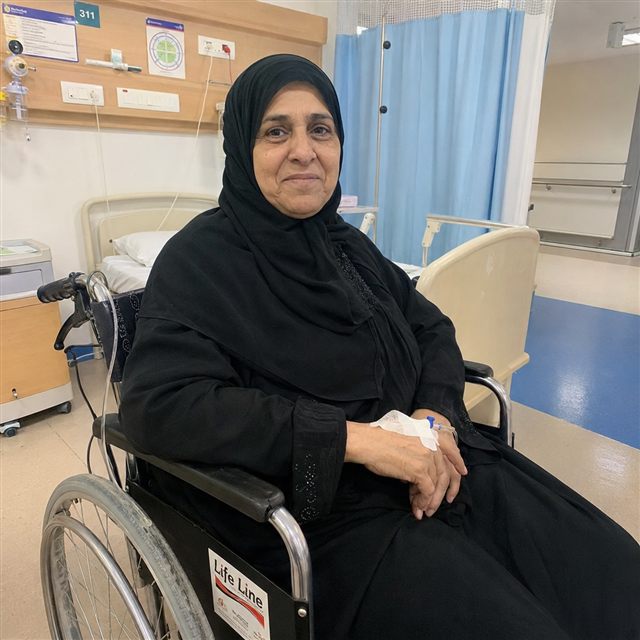
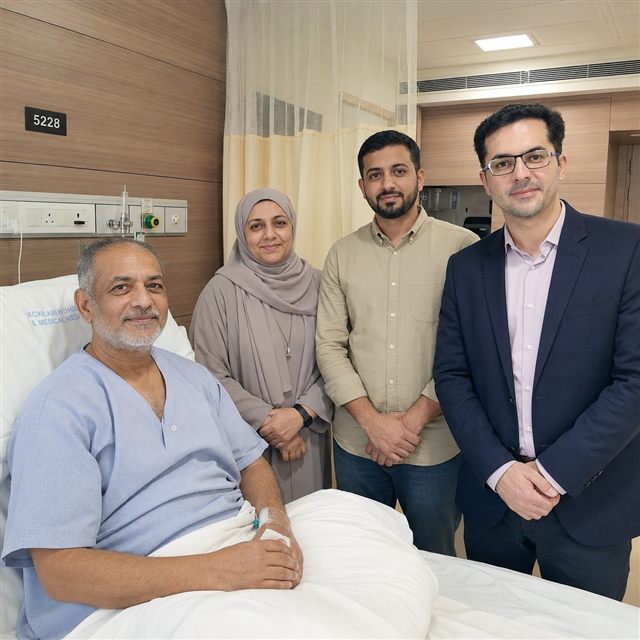
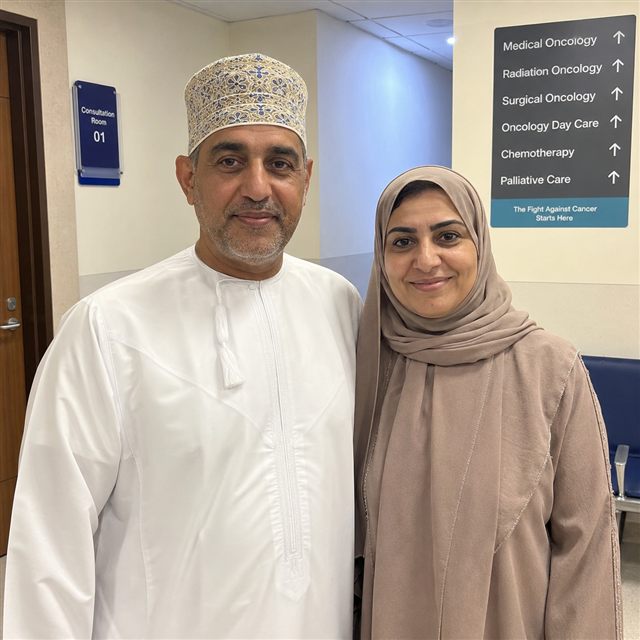
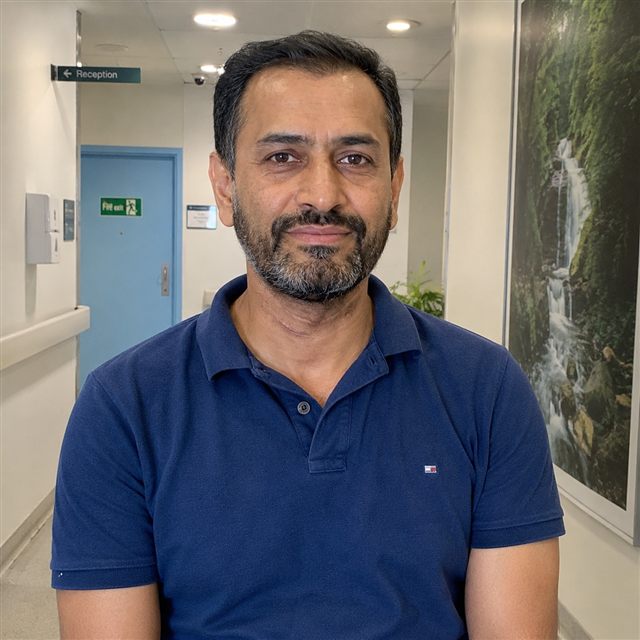
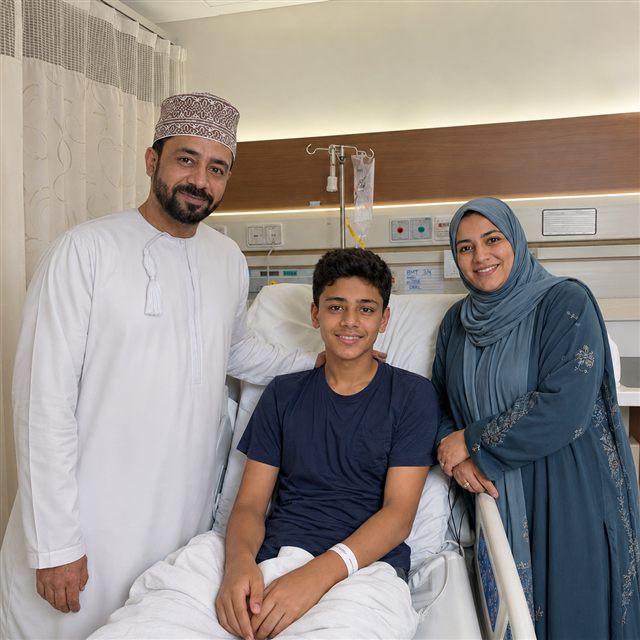
Healing Journeys of Omani Patients
Key Takeaways
- Proton therapy is an advanced form of radiation treatment, but the guide emphasises that it is not automatically better than conventional radiotherapy for every cancer. Its main advantage comes from the ability of protons to deposit most of their energy at a controlled depth and deliver very little radiation beyond the target.
- This physical property, known as the Bragg peak, can be particularly valuable when a tumour lies close to critical structures. The guide highlights paediatric cancers, skull-base and spinal tumours, and certain head and neck cancers as situations where reducing radiation exposure to surrounding healthy tissue may be especially important.
- For many other cancers, modern photon techniques such as IMRT and VMAT may provide comparable outcomes at a substantially lower cost. Omani patients should therefore first establish whether proton therapy offers a meaningful clinical advantage for their particular tumour.
- The guide identifies the Apollo Proton Cancer Centre in Chennai as the regional proton therapy facility serving patients from the Gulf, including Oman. It uses pencil-beam scanning and operates within a multidisciplinary cancer centre with tumour-board review.
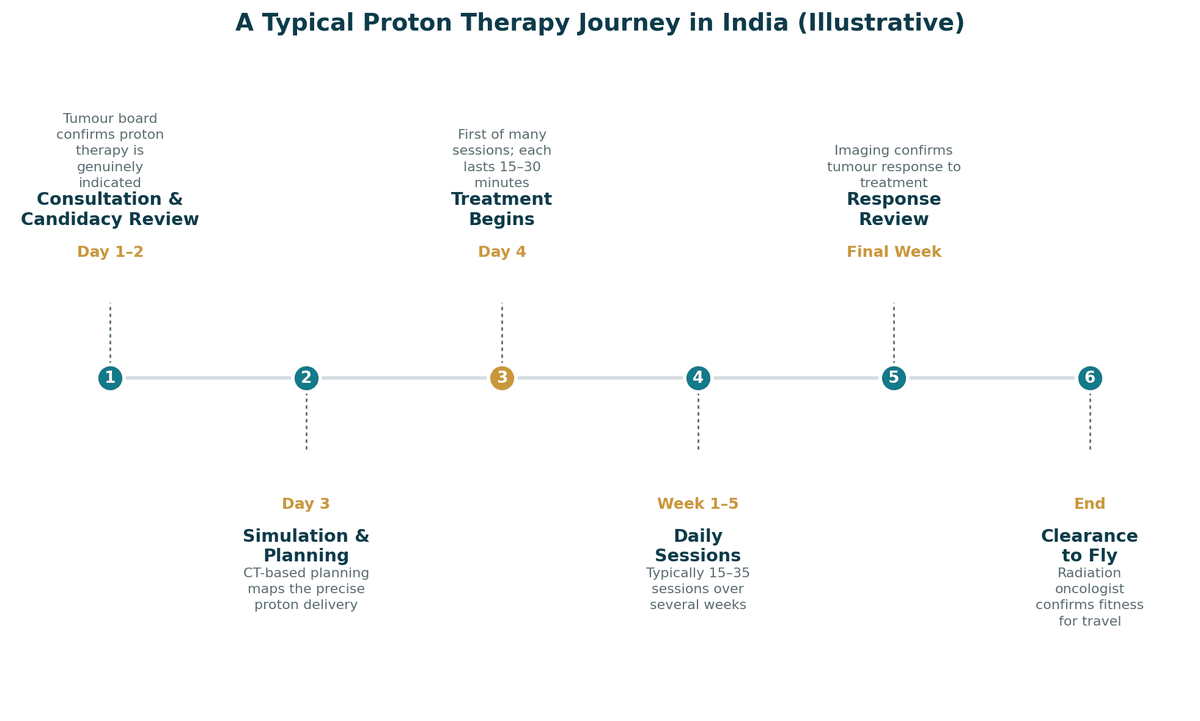
- The page 2 treatment journey diagram illustrates an example pathway beginning with consultation and tumour-board candidacy review on days 1–2, simulation and treatment planning on day 3, the beginning of treatment on day 4, daily sessions during weeks 1–5, response review during the final week and clearance to fly at the end of treatment.
- The guide states that proton therapy courses typically involve 15–35 treatment sessions over several weeks. Omani patients should therefore plan for a multi-week stay in India rather than treating proton therapy as a short hospital procedure.
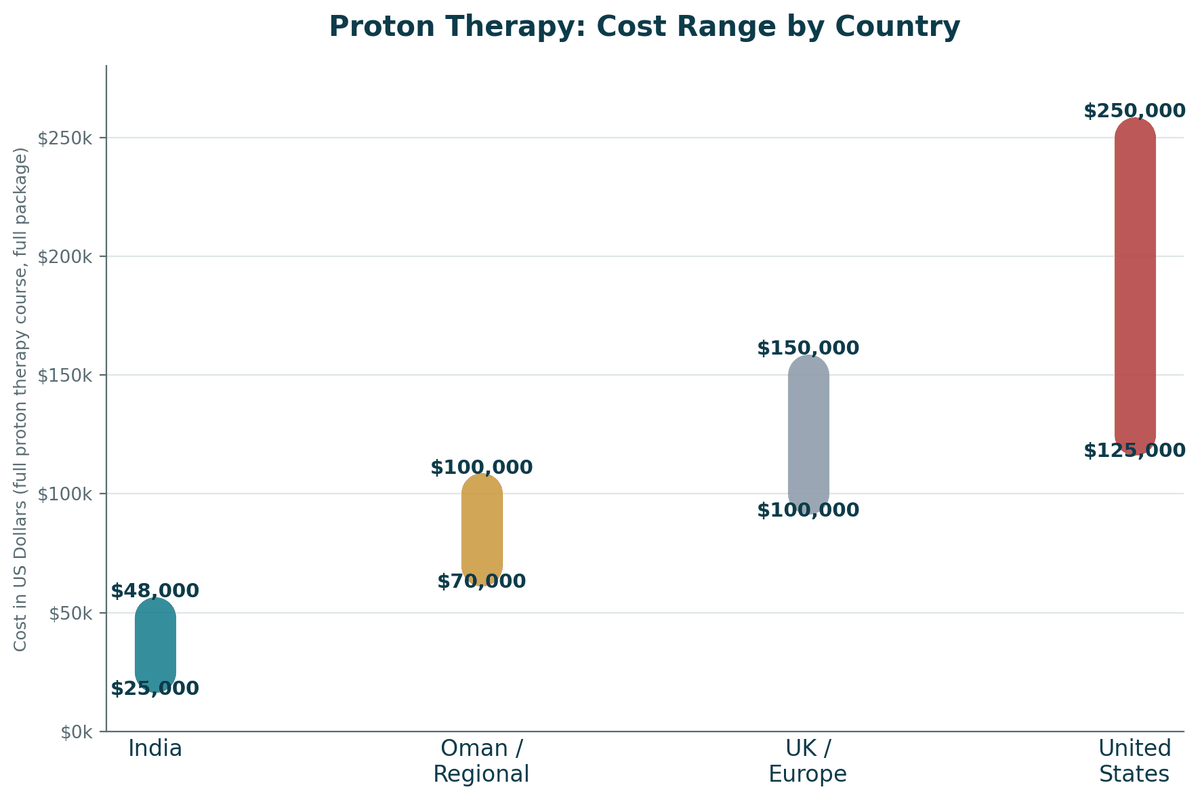
- The page 3 cost chart and comparison table gives a representative full proton therapy course at US$25,000–48,000 in India, compared with US$70,000–100,000 through limited regional pathways, US$100,000–150,000 in private UK/Europe and US$125,000–250,000+ in the United States.
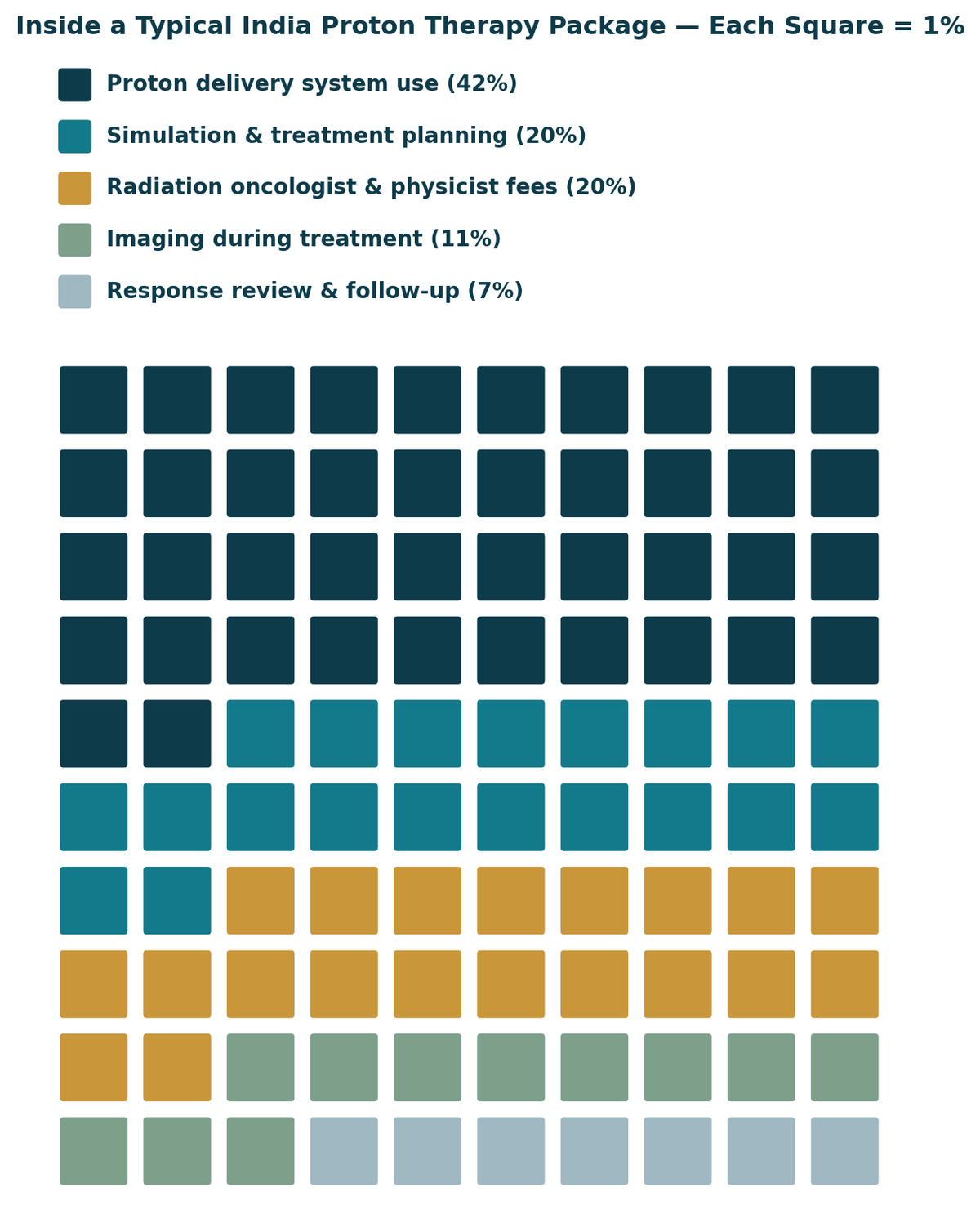
- The page 4 package graphic shows an illustrative India proton therapy package divided between proton delivery system use at 42%, simulation and treatment planning at 20%, radiation oncologist and physicist fees at 20%, imaging during treatment at 11% and response review and follow-up at 7%.
- Paediatric treatment can involve additional complexity and cost, particularly when daily anaesthesia is required. Families should specifically ask whether anaesthesia will be necessary and whether it is included in the quoted treatment package.
- Because proton therapy facilities are relatively limited worldwide, the guide recommends planning well in advance. Treatment scheduling, accommodation, travel arrangements and the patient's longer stay in India all need to be considered before treatment begins.
- The source recommends an independent tumour-board review before an Omani patient commits to proton therapy. The review should explain why proton therapy offers a real advantage over standard radiation for the specific tumour, or clearly state when conventional treatment would be equally appropriate.
- Follow-up planning should begin before the patient leaves Oman. The guide recommends arranging imaging and monitoring in Oman and confirming that the Indian oncology team will provide detailed treatment records and coordinate ongoing surveillance with the patient's oncologist at home.
Quick Facts
- Treatment
- Proton therapy for cancer
- Primary Patients
- Omani patients requiring specialised radiation treatment
- Main Technology
- Proton beam therapy using the Bragg peak
- Delivery System
- Pencil-beam scanning
- Potentially Relevant Tumours
- Paediatric cancers, skull-base tumours, spinal tumours and selected head and neck cancers
- Alternative Radiation
- IMRT and VMAT may be appropriate for many cancers
- Key Specialist
- Radiation Oncologist with Proton Therapy Team
- Main India Centre
- Chennai
- India Cost
- US$25,000–48,000 for a full course
- Oman / Regional Cost
- US$70,000–100,000 where accessible
- UK / Europe Cost
- US$100,000–150,000
- US Cost
- US$125,000–250,000+
- Typical Sessions
- 15–35 sessions
- Treatment Duration
- Several weeks
- Initial Review
- Days 1–2
- Simulation / Planning
- Day 3
- Treatment Begins
- Day 4
- Daily Treatment
- Weeks 1–5
- Response Review
- Final week
- Clearance to Fly
- End of treatment
- Package Breakdown
- Proton delivery system 42%, simulation/planning 20%, radiation oncologist/physicist 20%, imaging 11%, response review/follow-up 7%
- Eligibility Check
- Confirm genuine clinical benefit over standard radiation
- Second Opinion
- Independent tumour-board review
- Paediatric Check
- Ask about daily anaesthesia and additional costs
- Technology Check
- Confirm pencil-beam scanning system
- Insurance
- Check Omani insurance or employer reimbursement
- Ministry of Health
- Clarify overseas-treatment requirements
- Travel Planning
- Budget for a multi-week stay in India
- Follow-Up
- Arrange imaging and oncology monitoring in Oman
- Author
- Dr. Dheeraj Bojwani
- Experience
- 24+ Years
In Brief
Proton therapy in India can be considered by Omani patients whose tumour location and clinical circumstances make the reduction in radiation exposure to surrounding healthy tissue particularly valuable. The guide highlights paediatric cancers, skull-base and spinal tumours and selected head and neck cancers, while noting that conventional IMRT or VMAT may be equally appropriate for many other cancers. A full proton therapy course is estimated at US$25,000–48,000 in India, with treatment typically involving 15–35 sessions over several weeks. Independent tumour-board review, delivery-system assessment, complete package costing and follow-up planning in Oman are important before treatment.
What Makes Proton Therapy Genuinely Different
Standard radiotherapy uses X-ray photons, which deposit radiation dose along their entire path through the body, including healthy tissue beyond the tumour. Proton therapy uses protons, which can be precisely controlled to deposit most of their energy directly at the tumour and then stop, releasing very little radiation to tissue beyond that point. This physical property, known as the Bragg peak, is what gives proton therapy its real advantage: the ability to spare healthy tissue and critical organs near the tumour more effectively than photon-based radiation in specific situations.
This advantage matters most for tumours near critical structures — paediatric cancers, where sparing a growing child's healthy tissue and organs has lifelong consequences, tumours at the base of the skull or along the spine near the spinal cord, and certain head and neck cancers where minimising damage to surrounding structures significantly affects quality of life afterward. For many other cancers, modern photon-based techniques like IMRT and VMAT achieve comparable outcomes at a fraction of the cost, which is why proton therapy is not automatically the right choice simply because it is more advanced technology.
What Makes India a Strong Option for Proton Therapy
The Apollo Proton Cancer Centre in Chennai is the only proton therapy facility across South Asia and the Middle East, and has specifically been designated as the regional referral centre for proton therapy patients from the Gulf, including Oman. This means Omani patients travelling for proton therapy are typically travelling to India not as one option among several regional choices, but as the nearest genuinely available option for this specific technology.
The centre uses pencil-beam scanning technology, a modern and precise method of delivering proton dose, and has treated patients from well over a hundred countries since opening. Because the facility operates as part of a broader multidisciplinary cancer centre, patients also have access to full tumour board review, ensuring proton therapy is genuinely the right choice for a specific case rather than a default recommendation. The cost advantage compared to the very limited number of alternative centres worldwide is also substantial — often 60 to 80 percent lower than equivalent treatment in the United States or Europe.
Given how limited global access to proton therapy remains, the practical question for most Omani patients is less “which country” and more “is proton therapy genuinely indicated for my specific tumour” — a question a proper multidisciplinary review can answer honestly.
Cost Comparison: India vs. Regional and Western Alternatives
The figures below represent a full proton therapy course, in approximate US dollars, for a full package at an accredited centre. Given the very limited number of global facilities, “Oman/Regional” reflects the cost of accessing proton therapy through other regional or referral pathways outside India.
| Destination | Typical Cost (Full Proton Therapy Course) | What This Usually Includes |
|---|---|---|
| India | US $25,000 – $48,000 | Simulation, planning, all sessions, and standard imaging during treatment |
| Oman / Regional | US $70,000 – $100,000 | Where accessible via other regional referral pathways; highly limited availability |
| UK / Europe (private) | US $100,000 – $150,000 | Simulation and sessions; follow-up often billed separately |
| United States | US $125,000 – $250,000+ | Highly variable by centre and number of sessions |
A few honest caveats specific to proton therapy. First, confirm genuinely, through an independent tumour board review, that proton therapy offers a real clinical advantage for your specific tumour location and type — it is not the right choice for every cancer, regardless of how advanced the technology sounds. Second, paediatric cases and tumours requiring daily anaesthesia during treatment typically add meaningfully to both complexity and cost, so ask specifically whether this applies to your child's case. Third, given the very limited number of global facilities, plan well in advance, since scheduling and travel logistics require more lead time than for more widely available treatments.
What a Typical Omani Patient Should Weigh Before Deciding Proton Therapy in India
Having guided patients through this exact decision for 24 years, here is what I encourage every Omani family to work through before committing to treatment:
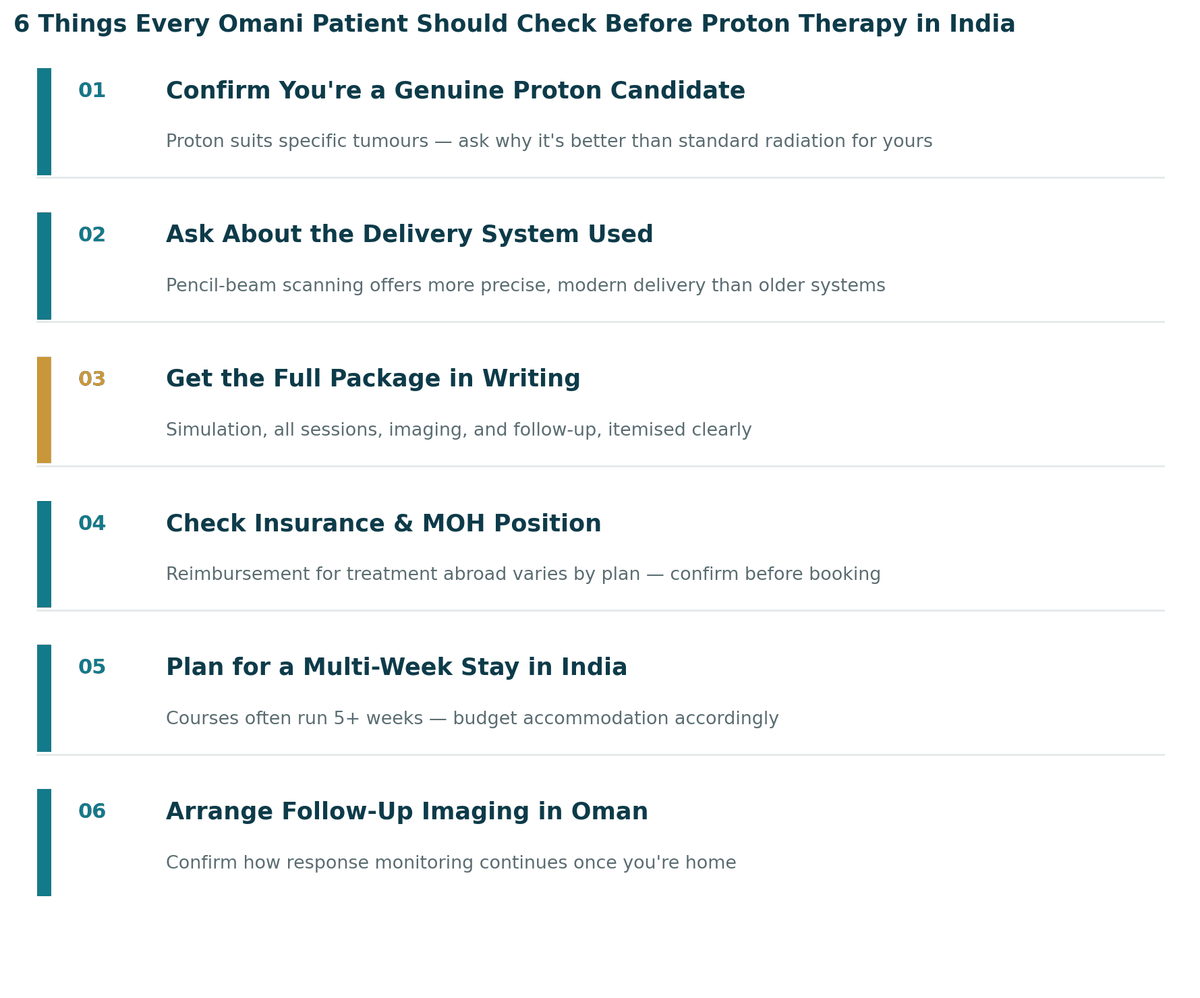
- Confirm you are a genuine proton therapy candidate. Send your imaging and pathology to an independent tumour board in India before committing. A responsible team will explain clearly why proton offers a real advantage over standard radiation for your specific tumour, or say plainly if it does not.
- Ask about the specific delivery system used. Pencil-beam scanning represents modern, precise proton delivery. Confirm this is the technology treating you.
- Get the full package itemised in writing. Simulation, all sessions, imaging, and follow-up should each be clear, along with what a paediatric case requiring anaesthesia would add to the cost.
- Check your insurance and Ministry of Health position. Some Omani insurance plans and employer health schemes offer partial reimbursement for treatment abroad; others do not cover it at all, and this is a genuinely significant expense. Clarify this before you travel, not after.
- Plan realistically for a multi-week stay in India. Proton therapy courses typically run 15 to 35 sessions over several weeks. Budget accommodation and time away from home accordingly.
- Arrange follow-up imaging and monitoring in Oman before you leave. Confirm your Indian team is willing to share detailed records and coordinate ongoing surveillance with an oncologist back home.
One Final Note
Proton therapy earns its reputation honestly for the specific tumours where its physics genuinely matters, but that reputation can create pressure to seek it out even when a more conventional, more accessible treatment would serve just as well. The right question is never “is this the most advanced technology available,” but “does this specific technology change the outcome for this specific tumour.” A tumour board that will answer that question honestly, rather than simply recommending what it happens to offer, is worth seeking out. An independent review of whether proton therapy is genuinely indicated for your case is worth obtaining before any treatment commitment is made.
Sources & Further Reading
- National Cancer Institute (NCI), National Institutes of Health — Proton Therapy (cancer.gov)
- MedlinePlus, U.S. National Library of Medicine (NIH) — Proton Beam Therapy (medlineplus.gov)
- American Cancer Society (ACS), non-profit organization — Proton Therapy for Cancer (cancer.org)
- American Society for Radiation Oncology (ASTRO), non-profit professional association — Proton Therapy Patient Resources (astro.org)
- National Association for Proton Therapy (NAPT), non-profit organization — Patient Education (proton-therapy.org)
Frequently Asked Questions by Omani Patients about Proton Therapy in India
Can Omani patients receive proton therapy in India?
Yes. The guide identifies India as an important option for Omani patients because proton therapy is not currently available within Oman and regional access is highly limited.
Is proton therapy better than standard radiotherapy for Omani patients?
Not automatically. The guide explains that proton therapy is most valuable when its ability to reduce radiation exposure to surrounding healthy tissue provides a meaningful advantage for the specific tumour.
Which cancers may particularly benefit from proton therapy in India?
The guide highlights paediatric cancers, tumours at the skull base or near the spinal cord and certain head and neck cancers where protecting nearby critical structures can be especially important.
How much does proton therapy cost in India for Omani patients?
A representative full-course cost is US$25,000–48,000 in India. The final cost can increase for complex cases, particularly when paediatric anaesthesia is required.
How does proton therapy cost in India compare with regional access for Omani patients?
The guide estimates US$25,000–48,000 in India compared with US$70,000–100,000 through limited regional referral pathways. Access outside India is also considerably more restricted.
How many proton therapy sessions does an Omani patient need in India?
The guide states that courses typically involve 15–35 sessions over several weeks. The exact number depends on the tumour and prescribed treatment plan.
How long should an Omani patient stay in India for proton therapy?
Because treatment is delivered over multiple sessions, patients should plan for a multi-week stay. The illustrated journey runs from initial review through several weeks of daily treatment and final clearance to fly.
What should Omani parents ask if a child needs proton therapy in India?
They should ask whether daily anaesthesia is required, how this affects the treatment schedule and whether anaesthesia-related costs are included in the package. Paediatric treatment can add significant complexity.
Should an Omani patient obtain a second opinion before proton therapy?
Yes. The guide strongly recommends an independent tumour-board review to establish whether proton therapy provides a genuine clinical advantage over standard radiation for the patient's specific tumour.
What should Omani patients arrange before returning home after proton therapy?
They should arrange follow-up imaging and oncology monitoring in Oman and confirm that the Indian team will provide detailed treatment records and coordinate ongoing surveillance with the treating oncologist at home.
Page Summary
This six-page guide explains proton therapy in India for Omani patients, focusing on how proton treatment differs from standard radiation, suitable tumour locations, treatment duration, costs and long-term follow-up. The page 2 treatment diagram shows the pathway from tumour-board review and simulation through daily sessions, response assessment and clearance to fly. The page 3 cost chart compares India at US$25,000–48,000 with limited regional access at US$70,000–100,000 and substantially higher Western costs. Page 4 illustrates the proton therapy package components, while pages 5–6 emphasise independent candidacy review, delivery technology, insurance and Ministry of Health checks, multi-week travel planning and follow-up imaging in Oman.
Citation Block
| Field | Details |
|---|---|
| Article / Topic | Proton Therapy in India |
| Country / Patients | India / Omani Patients |
| Main Treatment | Proton Beam Therapy |
| Key Specialist | Radiation Oncologist / Proton Therapy Team |
| Key Technology | Bragg peak and pencil-beam scanning |
| Potentially Relevant Tumours | Paediatric, skull-base, spinal and selected head and neck cancers |
| Alternative Treatment | IMRT / VMAT for many appropriate cancers |
| Main India Location | Chennai |
| India Cost | US$25,000–48,000 |
| Oman / Regional Cost | US$70,000–100,000 |
| UK / Europe Cost | US$100,000–150,000 |
| US Cost | US$125,000–250,000+ |
| Typical Sessions | 15–35 |
| Treatment Duration | Several weeks |
| Candidacy Review | Days 1–2 |
| Simulation / Planning | Day 3 |
| Treatment Begins | Day 4 |
| Daily Sessions | Weeks 1–5 |
| Clearance to Fly | End of treatment |
| Package Breakdown | Proton delivery system 42%, simulation/planning 20%, radiation oncologist/physicist 20%, imaging 11%, response review/follow-up 7% |
| Eligibility Check | Confirm genuine advantage over standard radiation |
| Tumour Board | Independent multidisciplinary review recommended |
| Paediatric Check | Determine whether daily anaesthesia is required |
| Technology Check | Confirm pencil-beam scanning delivery |
| Insurance / MOH | Confirm overseas-treatment reimbursement before travel |
| Stay Planning | Budget for several weeks in India |
| Follow-Up | Arrange monitoring and imaging in Oman |
| Key Selection Criterion | Demonstrable clinical benefit for the specific tumour |
| Important Warning | Do not choose proton therapy simply because it is more advanced; confirm that it offers a meaningful advantage over standard radiation for the specific tumour |


Our Mission Statement
Our mission is to place patients at the centre of every healthcare decision by providing trustworthy, evidence-based, and unbiased medical information. We believe that informed patients make better decisions. Backed by personalised guidance from our experienced advisory team, we help patients understand their treatment options, compare them objectively, and confidently choose the path that best suits their medical needs and personal circumstances.
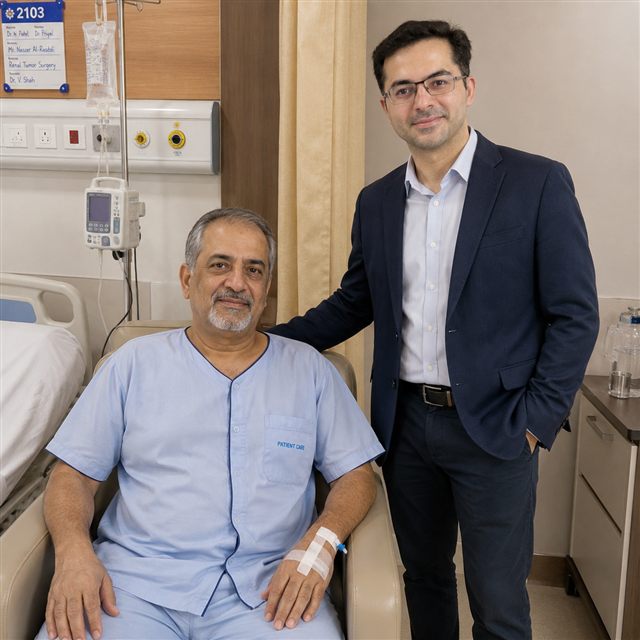
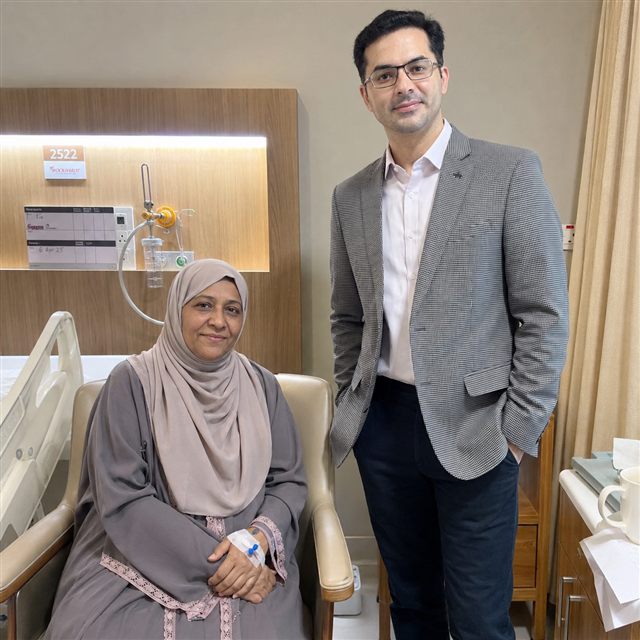
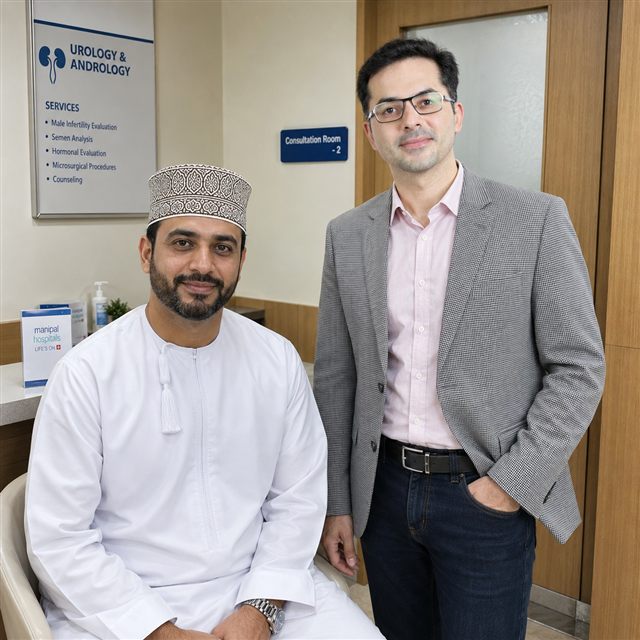
Patient Testimonials from Oman
Ready to Take the First Step?
Share your Medical Reports with our Healthcare Managers Today and Get a FREE CONSULTATION, a Personalized Treatment Plan, and Complete Support from Arrival to Recovery.
Get Your Free ConsultationAreas We Serve
Indian Health Guru Consultants proudly assists patients from Oman and surrounding Middle Eastern countries in accessing advanced, affordable and trusted medical treatment in India. Our team provides complete support for medical opinions, hospital selection, treatment planning, visa assistance, travel coordination, accommodation and post-treatment follow-up.
We regularly serve patients from:
- Oman
- Turkey
- Iran
- Kuwait
- Jordan
- Syria
- Qatar
- Bahrain
- Yemen
- Iraq
- Saudi Arabia
- United Arab Emirates
No matter where you are located, our experienced team is committed to making your medical journey to India safe, smooth, transparent and stress-free from the first enquiry to your return home.
From Oman to India: Your Complete Patient Guide
- Weight Loss and Bariatric Surgery in India for Omanis: Cost & Guide
- Brain Tumor Surgery in India for Omanis: Cost & Guide
- Cancer Treatment in India for Omanis: Cost & Guide
- Cardiac Surgery in India for Omanis: Cost & Guide
- Breast Cancer Treatment in India for Omanis: Cost & Guide
- Neurosurgery in India for Omanis: Cost & Guide
- Spine Surgery in India for Omanis: Cost & Guide
- Bone Marrow Transplant in India for Omanis: Cost & Guide
- Kidney Transplant in India for Omanis: Cost & Guide
- Best Dentists and Clinics for Dental Surgery in India for Omani Patients
- Best Doctors and Hospitals for Blood Cancer Treatment in India for Omani Patients
- Best Bone Marrow Transplant Doctors and Hospitals in India for Omani Patients
- Best IVF and Fertility Doctors and Hospitals in India for Omani Couples
- Best Bariatric Surgeons and Hospitals for Weight Loss Surgery in India for Omani Patients
- Best Brain Tumor Surgery Doctors and Hospitals in India for Omani Patients
- Best Cardiac Surgeons and Hospitals in India for Omani Patients
- Best Colorectal Cancer Surgeons and Hospitals in India for Omani Patients
- Best Surgeons and Hospitals for Complex Joint Revision Surgery in India for Omani Patients