

Parkinson’s Treatment and DBS Surgery in India for Omanis: A Doctor’s Guide to Making the Right Decision
A practical guide for Omani patients covering Parkinson's treatment, DBS eligibility, device options, costs, programming and long-term follow-up.
Parkinson's disease has a way of narrowing a person's world gradually — a tremor that makes writing difficult, a stiffness that turns dressing into a slow chore, medication that works well for a few years and then, unpredictably, stops holding symptoms steady through the day. For many Omani patients reaching this point, deep brain stimulation, or DBS, becomes part of the conversation. Over 24 years of advising Gulf families on advanced neurological treatment, I have found that DBS is one of the most consistently misunderstood options available, and I want to walk Omani patients through what it actually offers. Oman's hospitals, including Apollo Hospital Muscat, Badr Al Samaa, Aster Al Raffah, and Burjeel Medical Centre, provide neurology consultation and medication management for Parkinson's disease, though DBS surgery itself is a specialised procedure not yet widely available across every Gulf hospital. This guide is written to help Omani patients and families understand, honestly and without sales pressure, what DBS can and cannot do, and what to check carefully before pursuing it in India.
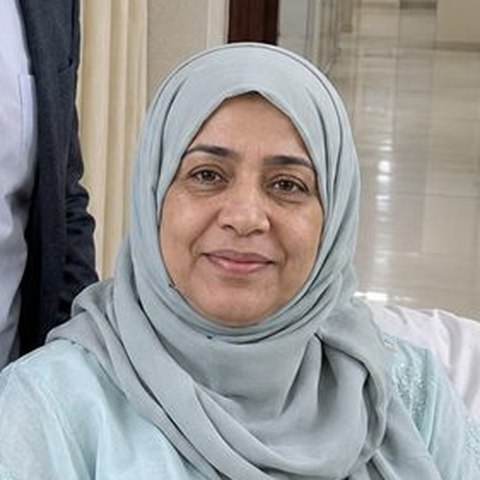
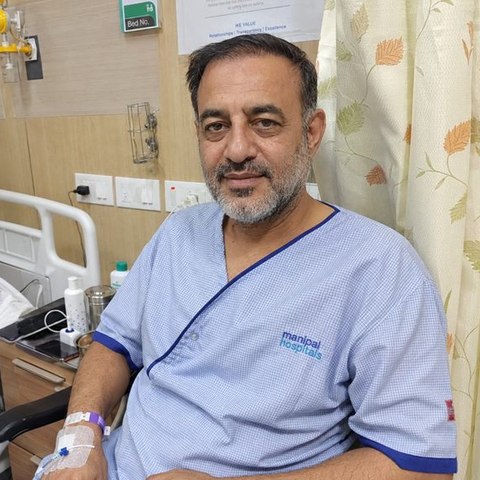
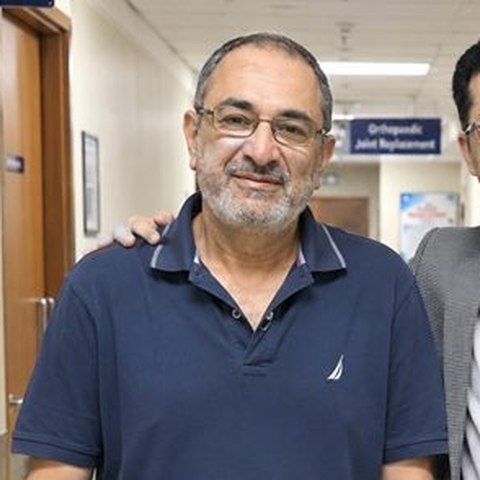
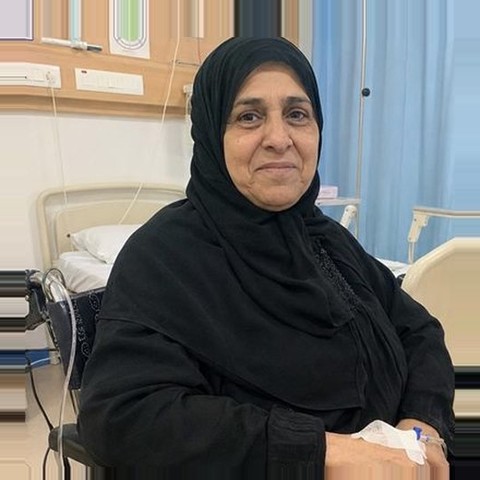
Healing Journeys of Omani Patients
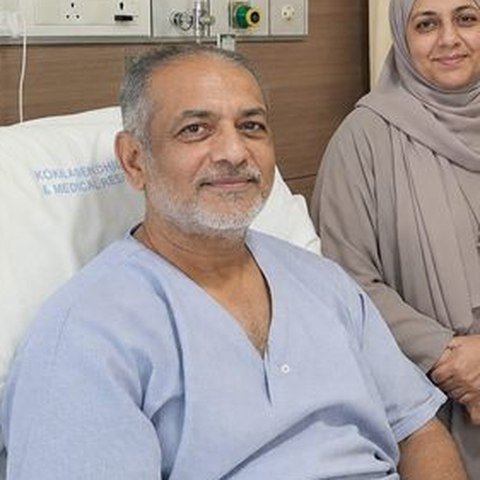
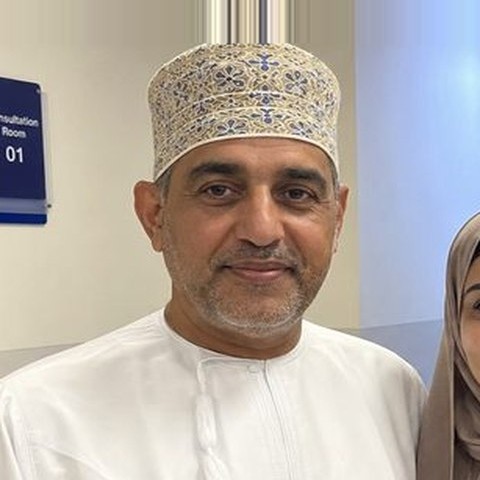
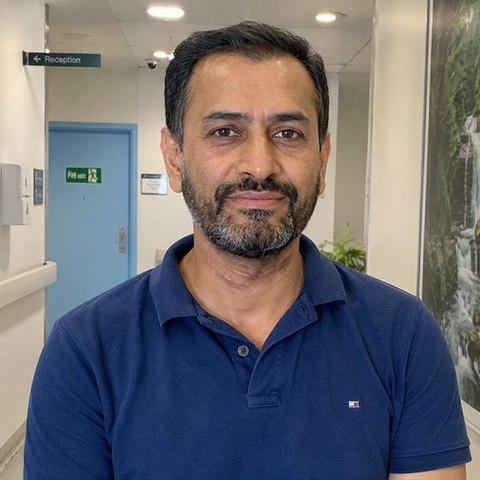
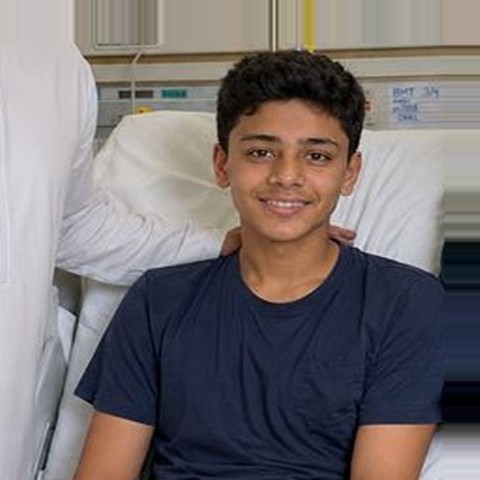
Key Takeaways
- Parkinson's disease treatment may progress from medication management to advanced therapies when symptoms become difficult to control. The guide focuses on deep brain stimulation (DBS) for Omani patients whose medication response has become unpredictable, while emphasising that DBS is not a cure and does not stop the underlying progression of Parkinson's disease.
- DBS works best for carefully selected patients who continue to respond meaningfully to levodopa but experience troublesome tremor, rigidity or unpredictable “on-off” fluctuations. Patients whose main problems are balance, cognitive difficulties or symptoms that never responded to medication may not be suitable candidates.
- The guide stresses that DBS success depends on much more than the implantation procedure. Neurological, psychiatric and cognitive assessment before surgery, accurate patient selection and careful programming after implantation are all important parts of the treatment pathway.
- India's leading movement-disorder centres in Delhi, Mumbai, Chennai and Bengaluru provide access to experienced DBS teams, microelectrode recording during surgery and different neurostimulator options. The source particularly highlights the importance of movement-disorder neurologists who remain involved in patient selection and long-term programming.
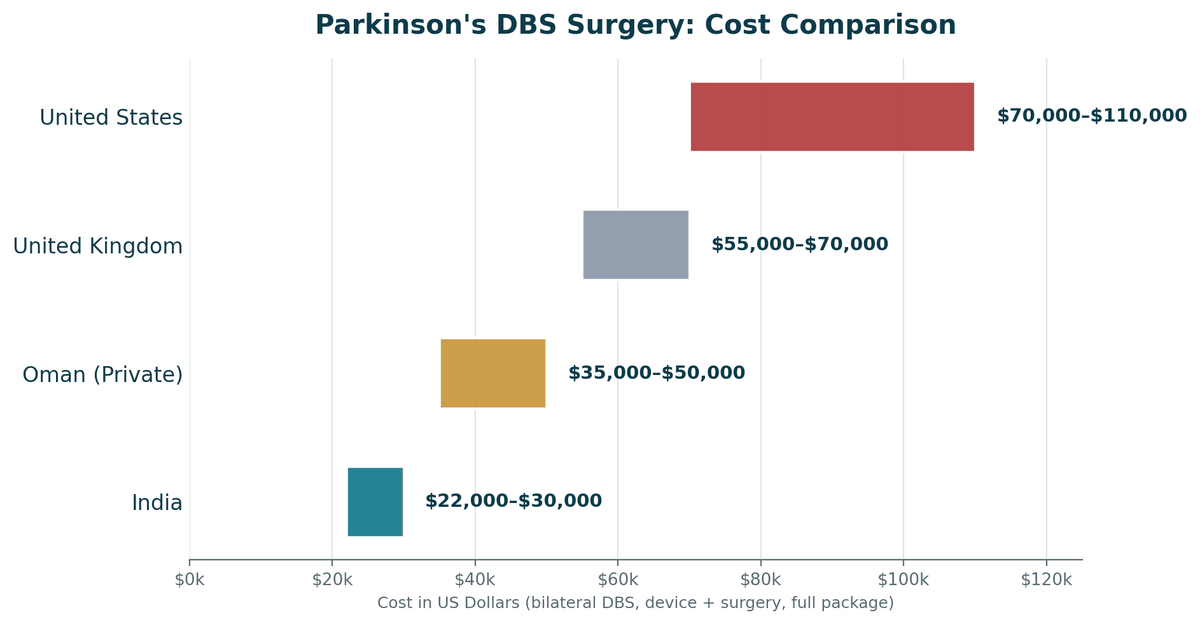
- The page 3–4 cost comparison gives a representative complete bilateral DBS package at US$22,000–30,000 in India, compared with US$35,000–50,000 in private Oman, US$55,000–70,000 in private UK care and US$70,000–110,000 in the United States.
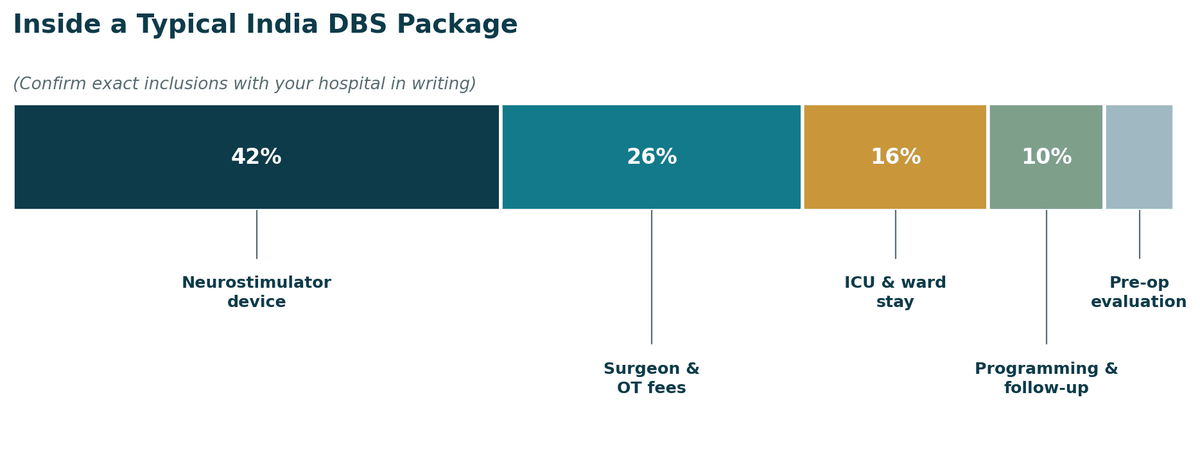
- The implanted neurostimulator itself is a major part of the DBS cost, accounting for approximately 30–40% of the overall expense according to the guide. Rechargeable devices generally cost more initially but can reduce the need for replacement surgery compared with non-rechargeable systems.
- The source makes clear that DBS is not a one-time treatment. Programming usually requires several visits during the weeks after implantation, with further adjustments over subsequent months. Omani patients should therefore establish how programming and follow-up will be managed after returning home.
- The guide also points out that unilateral DBS can cost less than bilateral DBS. Omani patients should confirm whether one-sided or bilateral stimulation is actually being recommended for their symptoms before comparing treatment quotations.
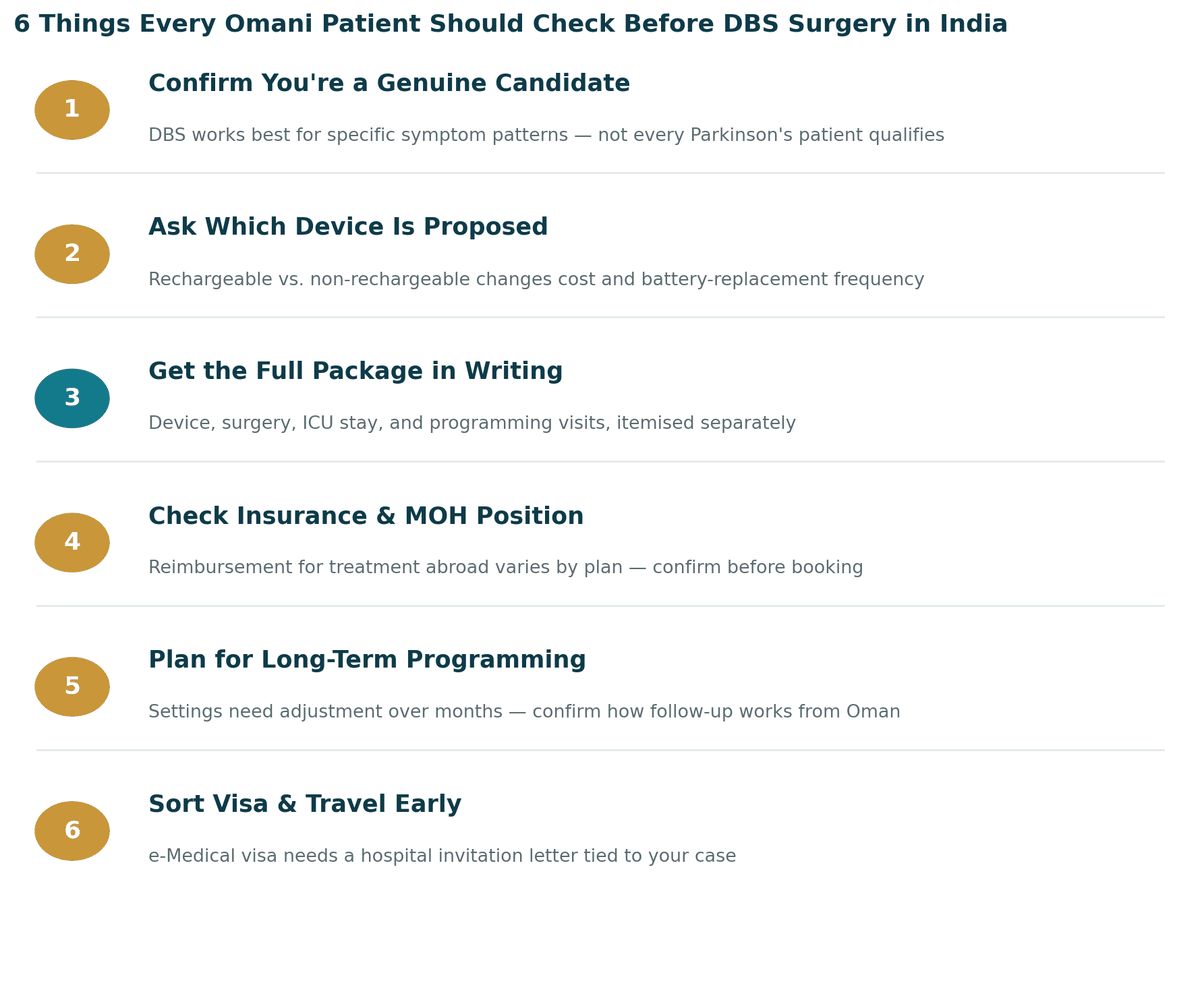
- The page 5 visual checklist highlights the main decisions for Omani patients: confirming genuine DBS candidacy, understanding the proposed device, obtaining the complete package in writing, checking insurance and Ministry of Health requirements, planning long-term programming and arranging visa and travel logistics.
- The guide recommends sending the patient's medication history and symptom pattern to an independent movement-disorder neurologist in India before booking travel. This helps determine whether DBS is genuinely appropriate rather than making the decision based simply on the duration of Parkinson's disease.
- Omani patients should also consider the lifetime cost of the implanted device rather than looking only at the initial surgical quotation. Battery or device replacement, future programming and ongoing neurological care should all be discussed before choosing between rechargeable and non-rechargeable systems.
- The guide recommends confirming insurance and Ministry of Health arrangements before travelling from Oman. It also notes that India's e-Medical Visa requires a hospital invitation letter connected to the patient's specific hospital and case, making early travel planning important.
Quick Facts
- Treatment
- Parkinson's disease treatment and Deep Brain Stimulation (DBS)
- Primary Patients
- Omani patients with Parkinson's disease being considered for advanced therapy
- Main Symptoms Addressed
- Tremor, rigidity and unpredictable medication-related “on-off” fluctuations
- DBS Purpose
- Symptom control rather than cure or disease reversal
- Key Eligibility Factor
- Meaningful response to levodopa with problematic symptom fluctuations
- Key Specialist
- Movement Disorder Neurologist and Functional Neurosurgeon
- Main India Cities
- Delhi, Mumbai, Chennai and Bengaluru
- Advanced Technology
- Microelectrode recording and programmable neurostimulators
- Device Options
- Rechargeable and non-rechargeable systems
- India Cost
- US$22,000–30,000 for bilateral DBS
- Oman Private Cost
- US$35,000–50,000
- UK Private Cost
- US$55,000–70,000
- US Cost
- US$70,000–110,000
- Device Cost Share
- Approximately 30–40% of total DBS cost
- Illustrative Journey
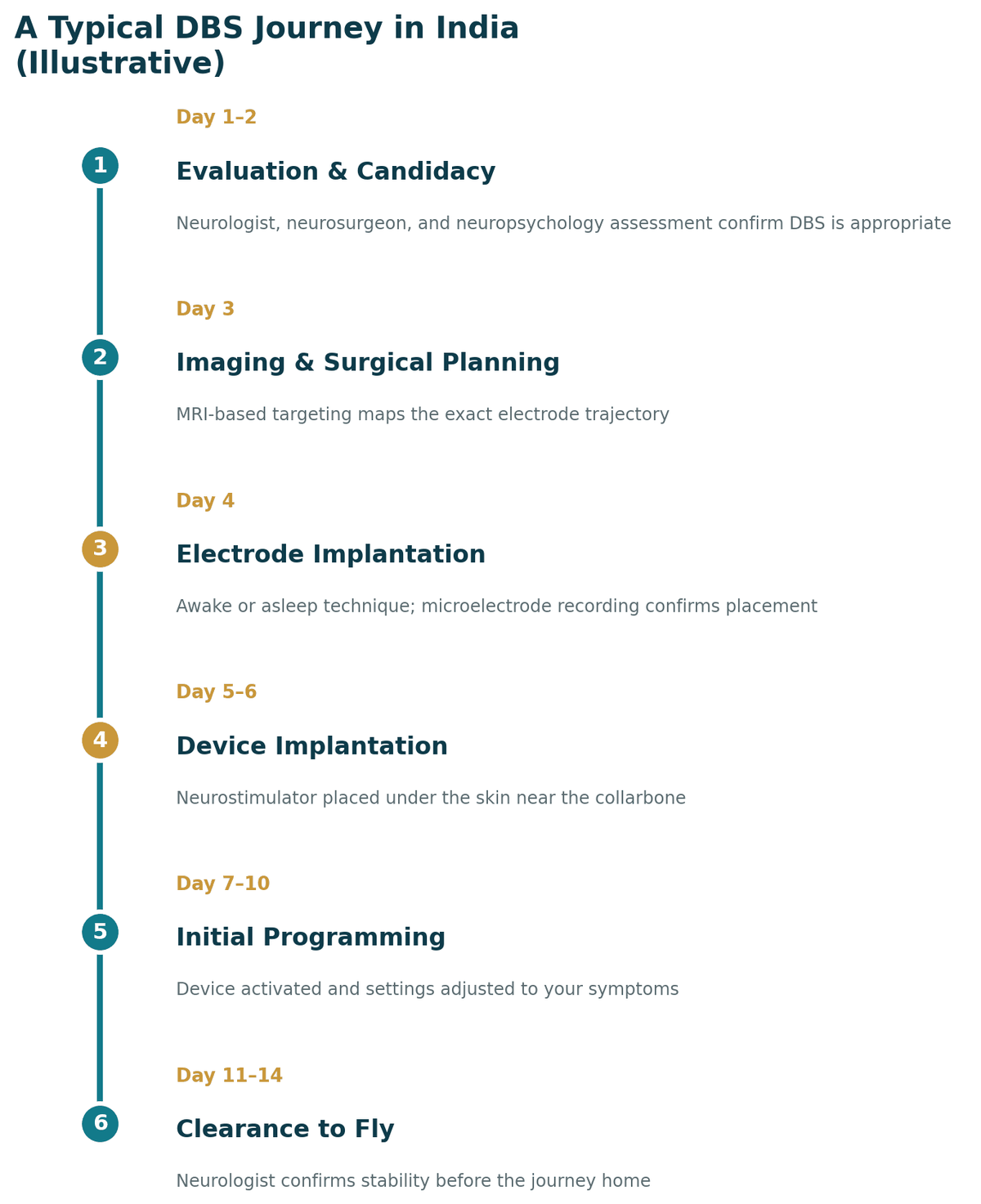
- Evaluation days 1–2, electrode implantation day 4, clearance to fly days 11–14
- Package Breakdown
- Neurostimulator device 42%, surgeon and OT fees 26%, ICU and ward stay 16%, programming and follow-up 10%, pre-op evaluation 6%
- Programming
- Several visits after implantation with further adjustments over following months
- Unilateral DBS
- Generally costs less than bilateral treatment
- Candidacy Assessment
- Neurological, psychiatric and cognitive evaluation
- Second Opinion
- Independent movement-disorder review before travel
- Lifetime Cost
- Consider device replacement and long-term programming
- Insurance
- Check Omani insurance or employer reimbursement
- Ministry of Health
- Clarify overseas-treatment requirements
- Medical Visa
- Hospital invitation letter required for the e-Medical Visa process
- Follow-Up
- Arrange ongoing DBS programming and neurological care in Oman
- Author
- Dr. Dheeraj Bojwani
- Experience
- 24+ Years
In Brief
Parkinson's treatment and DBS surgery in India can be considered by Omani patients whose medication response has become unpredictable and who meet appropriate clinical criteria for deep brain stimulation. The guide explains that DBS can reduce tremor, rigidity and medication-related “on-off” fluctuations but does not cure Parkinson's disease. A representative bilateral DBS package costs US$22,000–30,000 in India compared with US$35,000–50,000 in private Oman. Because programming continues for weeks and months after implantation, Omani patients should evaluate the movement-disorder team, device type, lifetime maintenance costs and long-term follow-up pathway before travelling.
What DBS Actually Does — and Does Not Do
Deep brain stimulation involves implanting thin electrodes into specific, carefully targeted areas of the brain, connected to a small neurostimulator device placed under the skin near the collarbone, much like a cardiac pacemaker. The device delivers continuous electrical impulses that help regulate the abnormal brain activity behind Parkinson's motor symptoms. DBS is genuinely effective at reducing tremor, rigidity, and the unpredictable “on-off” fluctuations that come with long-term medication use — but it is not a cure, and it does not reverse the underlying progression of the disease.
Candidacy matters enormously. DBS works best for patients who still respond well to levodopa but whose response has become unpredictable, and it is generally not recommended for patients whose primary symptoms are balance problems, memory difficulty, or symptoms that never responded to medication in the first place. A proper pre-surgical evaluation, including neurological, psychiatric, and cognitive assessment, is what determines whether DBS is genuinely the right next step — not simply how long someone has had Parkinson's.
What Makes India a Strong Option for DBS Surgery
India's leading movement disorder centres, concentrated in Delhi, Mumbai, Chennai, and Bengaluru, perform a high volume of DBS procedures for Parkinson's disease, essential tremor, and dystonia, supported by dedicated movement disorder neurologists who manage patient selection and long-term programming, not just the neurosurgeons who perform the implant itself. This distinction matters because DBS outcomes depend as much on accurate candidate selection and post-operative programming as they do on the surgery itself.
India also gives patients access to microelectrode recording during surgery, which allows the surgical team to confirm precise electrode placement in real time, and to a range of neurostimulator device options, including both rechargeable and non-rechargeable systems. And because Indian hospitals have spent two decades building international neurology programmes for Gulf and African patients, Omani families arrive to Arabic-speaking coordinators and a well-tested process for pre-surgical evaluation and travel planning.
This does not mean every Parkinson's patient should pursue DBS, in India or anywhere else. It means that for patients who are genuine candidates, a centre with deep, specific experience in patient selection, surgical technique, and long-term programming makes a meaningful difference to how well the therapy actually performs.
Cost Comparison: India vs. Oman vs. Western Countries
DBS cost structures look different from most other neurosurgical procedures because the implanted device itself is a major line item — often 30 to 40 percent of the total cost — on top of the surgery. Figures below are for a complete bilateral DBS package, in approximate US dollars, at an accredited private hospital.
| Destination | Typical Cost (Bilateral DBS, Device + Surgery) | What This Usually Includes |
|---|---|---|
| India | US $22,000 – $30,000 | Neurostimulator device, surgeon and OT fees, hospital stay, and initial programming |
| Oman (private) | US $35,000 – $50,000 | Where available; varies by hospital and device model |
| United Kingdom (private) | US $55,000 – $70,000 | Surgery and device; ongoing programming visits sometimes billed separately |
| United States | US $70,000 – $110,000 | Highly variable by state, hospital, and device choice; rechargeable systems cost more upfront |
A few honest caveats specific to DBS. First, device choice changes the price meaningfully — a rechargeable neurostimulator costs more upfront than a non-rechargeable one but avoids replacement surgery every three to five years, so weigh the lifetime cost, not just the initial quote. Second, DBS is not a one-time event: initial programming typically requires several visits over the weeks following surgery, and settings often need further adjustment over the following months, so ask specifically how this will be handled once you return to Oman. Third, unilateral procedures (treating one side only) cost meaningfully less than bilateral ones, so confirm which your neurologist is actually recommending for your specific symptoms.
What a Typical Omani Patient Should Weigh Before Deciding DBS Surgery in India
Having guided patients through this exact decision for 24 years, here is what I encourage every Omani family to work through before committing to a hospital:
- Confirm you are a genuine DBS candidate. Send your medication history and symptom pattern to an independent movement disorder neurologist in India before booking travel. DBS is not right for every Parkinson's patient, and a responsible team will say so plainly.
- Ask which device is being proposed, and why. Rechargeable and non-rechargeable neurostimulators carry different upfront costs and different long-term maintenance needs. Understand the trade-off before you decide.
- Get the full package itemised in writing. Device, surgery, hospital stay, and initial programming visits should each be clear, along with what a battery or device replacement would cost years from now.
- Check your insurance and Ministry of Health position. Some Omani insurance plans and employer health schemes offer partial reimbursement for treatment abroad; others do not cover it at all. Clarify this before you travel, not after.
- Plan for long-term programming, not just the surgery. DBS settings are typically fine-tuned over several visits after implantation. Ask how ongoing programming will work once you are back in Oman, and whether remote adjustment is an option.
- Sort visa and travel logistics early. India's e-Medical Visa process is generally efficient, but it requires an invitation letter tied to your specific hospital and case, so this cannot be arranged at the last minute.
A Closing Thought
DBS can genuinely change daily life for the right patient — steadier movement, fewer unpredictable off-periods, and often a real reduction in medication burden. But it rewards careful patient selection far more than it rewards speed, and the programming that follows surgery matters just as much as the operation itself. Whether that journey takes you to a centre in Muscat or in India, the quality of the evaluation before surgery is usually the best predictor of how the therapy performs afterward. A conversation with a movement disorder specialist who can review your specific medication history and symptom pattern is a sensible starting point, wherever you ultimately choose to be treated.
Sources & Further Reading
- National Institute of Neurological Disorders and Stroke (NINDS), NIH — Deep Brain Stimulation for Parkinson's Disease (ninds.nih.gov)
- National Institute on Aging (NIA), NIH — Parkinson's Disease: Causes, Symptoms, and Treatments (nia.nih.gov)
- MedlinePlus, U.S. National Library of Medicine (NIH) — Deep Brain Stimulation (medlineplus.gov)
- American Association of Neurological Surgeons (AANS) — Deep Brain Stimulation, Patient Information (aans.org)
- PubMed / National Library of Medicine (NIH) — Global Economic Evaluation of the Reported Costs of Deep Brain Stimulation (pubmed.ncbi.nlm.nih.gov)
Frequently Asked Questions by Omani Patients about Parkinson's Treatment and DBS Surgery in India
Can Omani patients undergo DBS surgery for Parkinson's disease in India?
Yes. The guide presents India as an option for Omani patients who are genuine DBS candidates and require specialised movement-disorder and neurosurgical care.
Which Omani Parkinson's patients are most likely to benefit from DBS?
DBS is generally considered when a patient still responds well to levodopa but develops troublesome tremor, rigidity or unpredictable “on-off” fluctuations despite medication management.
Is DBS a cure for Parkinson's disease in Omani patients?
No. The guide clearly explains that DBS controls certain motor symptoms but does not reverse Parkinson's disease or stop its underlying progression.
How much does bilateral DBS cost in India for Omani patients?
The guide gives a representative complete bilateral DBS package of US$22,000–30,000 in India, including the neurostimulator, surgery, hospital stay and initial programming.
How does DBS cost in India compare with private Oman?
The representative India cost is US$22,000–30,000 compared with US$35,000–50,000 in private Oman. Device choice and the complexity of treatment can affect the final quotation.
Should an Omani patient choose a rechargeable or non-rechargeable DBS device?
The choice involves both upfront and long-term costs. Rechargeable systems generally cost more initially but can reduce the need for replacement surgery, so Omani patients should compare lifetime costs rather than only the initial price.
How long does DBS follow-up continue for an Omani patient after returning from India?
Programming usually requires several visits after implantation, with additional adjustments during the following months. The guide recommends confirming how these adjustments will be provided after returning to Oman.
Should an Omani Parkinson's patient get a second opinion before DBS surgery in India?
Yes. The guide recommends sending the medication history and symptom pattern to an independent movement-disorder neurologist in India before booking travel to confirm that DBS is appropriate.
What should Omani patients check about the DBS package in India?
They should confirm the exact device, surgery and hospital costs, initial programming visits and future replacement costs. Insurance and Ministry of Health reimbursement should also be clarified before travel.
What should an Omani patient arrange before travelling to India for DBS?
Confirm DBS candidacy, understand the proposed device, obtain an itemised package, check insurance and Ministry of Health requirements, arrange the hospital invitation for the medical visa and establish a long-term programming and neurological follow-up plan in Oman.
Page Summary
This six-page guide explains Parkinson's treatment and DBS surgery in India for Omani patients, focusing on DBS candidacy, expected benefits, device options, costs, programming and long-term care. The page 3–4 cost comparison shows bilateral DBS at US$22,000–30,000 in India versus US$35,000–50,000 in private Oman, while the page 5 checklist highlights patient selection, device choice, package costing, insurance and Ministry of Health checks, programming and travel planning. Page 6 reinforces that DBS requires ongoing adjustment after surgery and that Omani patients should establish a long-term follow-up pathway before travelling.
Citation Block
| Field | Details |
|---|---|
| Article / Topic | Parkinson's Treatment and DBS Surgery in India |
| Country / Patients | India / Omani Patients |
| Main Treatment | Deep Brain Stimulation |
| Key Specialist | Movement Disorder Neurologist and Functional Neurosurgeon |
| Main Symptoms | Tremor, rigidity and “on-off” fluctuations |
| DBS Role | Symptom control, not a cure |
| Key Candidacy Factor | Meaningful levodopa response |
| Main India Cities | Delhi, Mumbai, Chennai and Bengaluru |
| Surgical Technology | Microelectrode recording |
| Device Options | Rechargeable and non-rechargeable neurostimulators |
| India Cost | US$22,000–30,000 |
| Oman Private Cost | US$35,000–50,000 |
| UK Private Cost | US$55,000–70,000 |
| US Cost | US$70,000–110,000 |
| Device Cost Share | Approximately 30–40% |
| Package Breakdown | Neurostimulator device 42%, surgeon/OT fees 26%, ICU/ward stay 16%, programming/follow-up 10%, pre-op evaluation 6% |
| Programming | Several visits after surgery with further adjustments |
| Unilateral Treatment | Costs less than bilateral DBS |
| Candidacy Assessment | Neurological, psychiatric and cognitive evaluation |
| Second Opinion | Independent movement-disorder review |
| Device Check | Compare rechargeable versus non-rechargeable lifetime costs |
| Surgeon / Team Check | Verify specific DBS and movement-disorder experience |
| Insurance / MOH | Confirm overseas-treatment reimbursement before travel |
| Visa Check | Obtain hospital invitation for e-Medical Visa |
| Follow-Up | Plan programming and neurological care in Oman |
| Key Selection Criterion | Strong patient selection, surgical expertise and long-term programming |
| Important Warning | Do not pursue DBS simply because Parkinson's has progressed; confirm genuine candidacy through specialist neurological, psychiatric and cognitive assessment |

Our Mission Statement
Our mission is to place patients at the centre of every healthcare decision by providing trustworthy, evidence-based, and unbiased medical information. We believe that informed patients make better decisions. Backed by personalised guidance from our experienced advisory team, we help patients understand their treatment options, compare them objectively, and confidently choose the path that best suits their medical needs and personal circumstances.
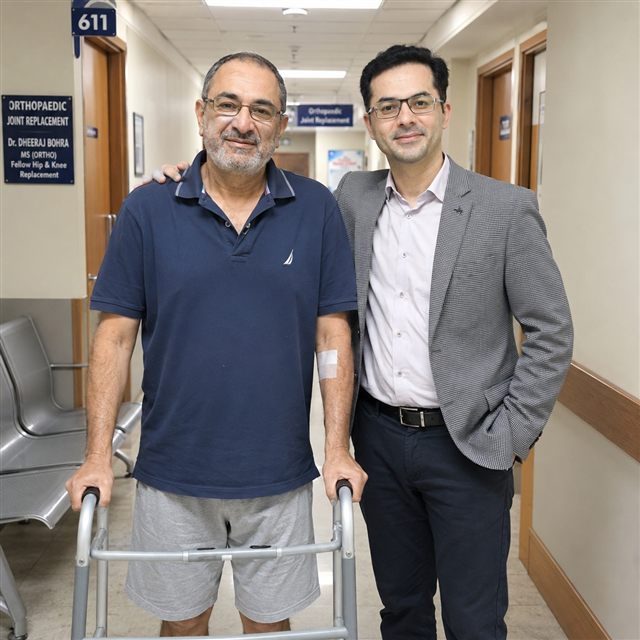
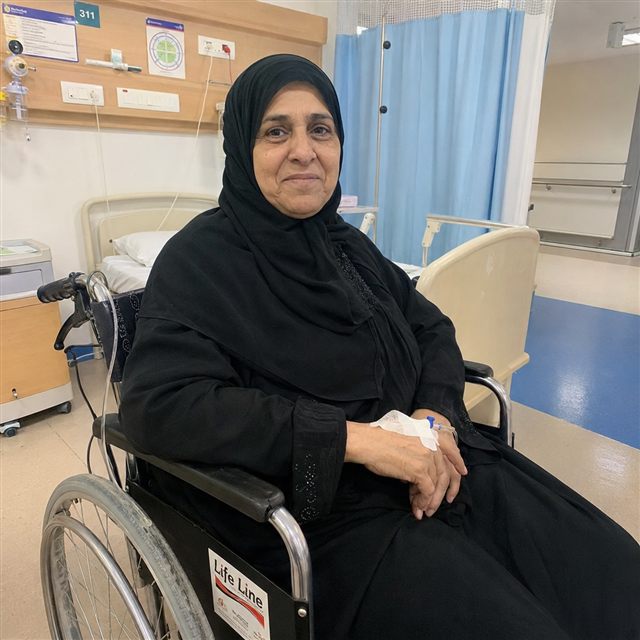
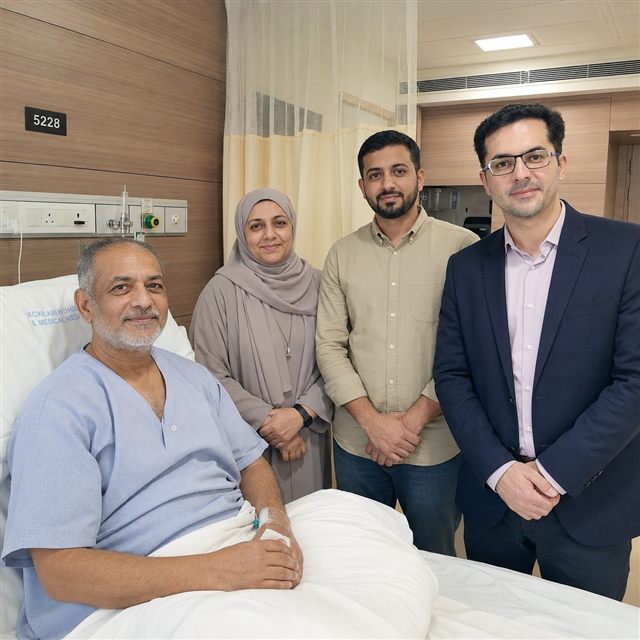
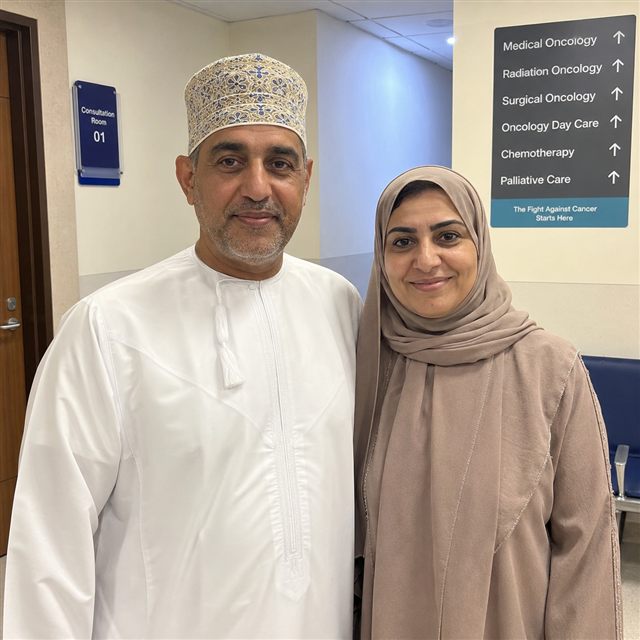
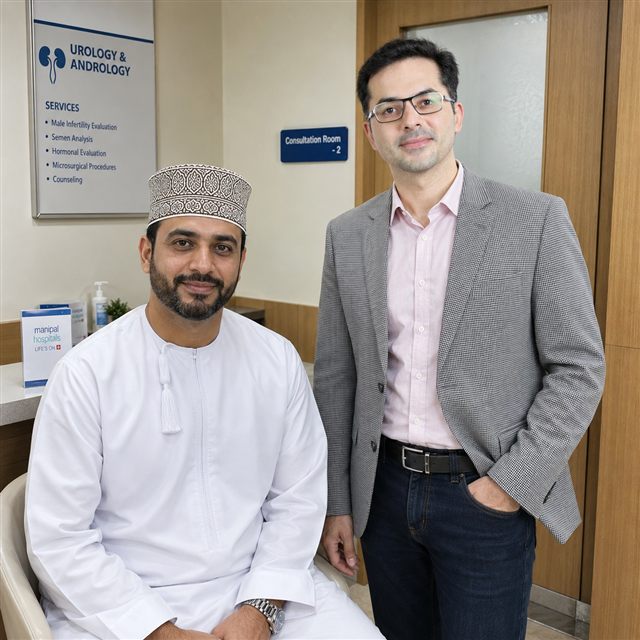
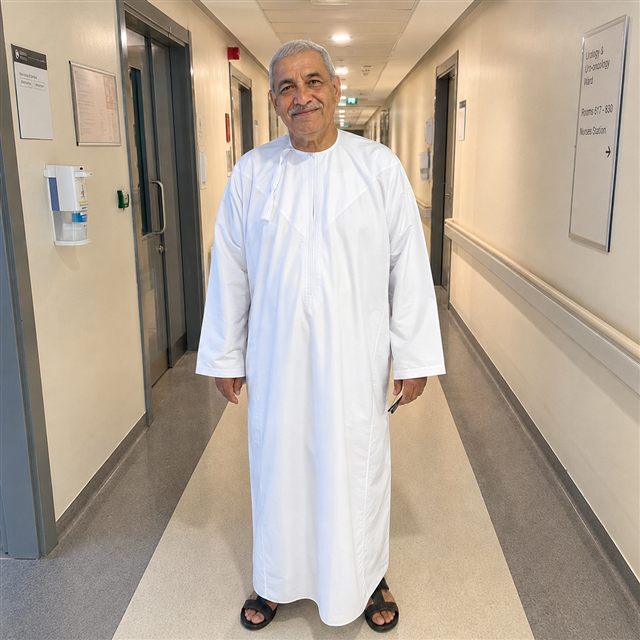
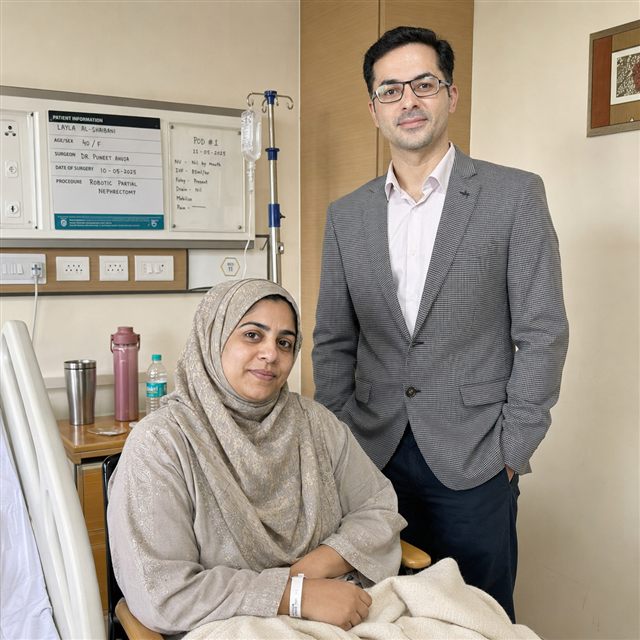
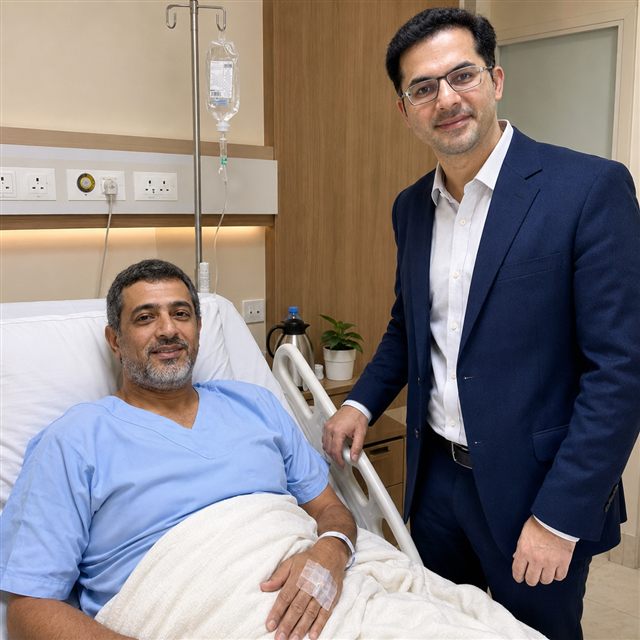
Patient Testimonials from Oman
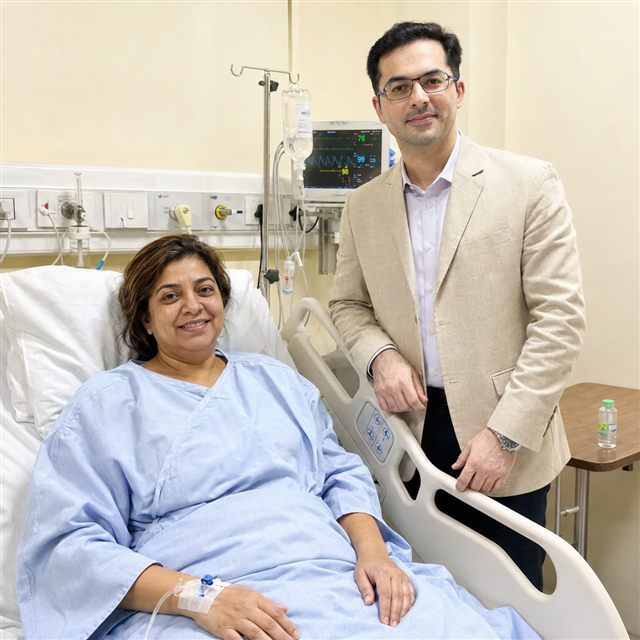
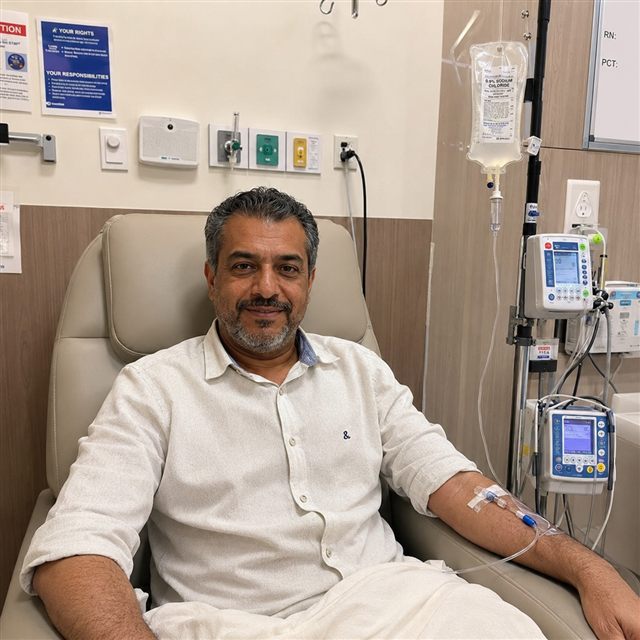
Ready to Take the First Step?
Share your Medical Reports with our Healthcare Managers Today and Get a FREE CONSULTATION, a Personalized Treatment Plan, and Complete Support from Arrival to Recovery.
Get Your Free ConsultationAreas We Serve
Indian Health Guru Consultants proudly assists patients from Oman and surrounding Middle Eastern countries in accessing advanced, affordable and trusted medical treatment in India. Our team provides complete support for medical opinions, hospital selection, treatment planning, visa assistance, travel coordination, accommodation and post-treatment follow-up.
We regularly serve patients from:
- Oman
- Turkey
- Iran
- Kuwait
- Jordan
- Syria
- Qatar
- Bahrain
- Yemen
- Iraq
- Saudi Arabia
- United Arab Emirates
No matter where you are located, our experienced team is committed to making your medical journey to India safe, smooth, transparent and stress-free from the first enquiry to your return home.
From Oman to India: Your Complete Patient Guide
- Weight Loss and Bariatric Surgery in India for Omanis: Cost & Guide
- Brain Tumor Surgery in India for Omanis: Cost & Guide
- Cancer Treatment in India for Omanis: Cost & Guide
- Cardiac Surgery in India for Omanis: Cost & Guide
- Breast Cancer Treatment in India for Omanis: Cost & Guide
- Neurosurgery in India for Omanis: Cost & Guide
- Spine Surgery in India for Omanis: Cost & Guide
- Bone Marrow Transplant in India for Omanis: Cost & Guide
- Kidney Transplant in India for Omanis: Cost & Guide
- Best Dentists and Clinics for Dental Surgery in India for Omani Patients
- Best Doctors and Hospitals for Blood Cancer Treatment in India for Omani Patients
- Best Bone Marrow Transplant Doctors and Hospitals in India for Omani Patients
- Best IVF and Fertility Doctors and Hospitals in India for Omani Couples
- Best Bariatric Surgeons and Hospitals for Weight Loss Surgery in India for Omani Patients
- Best Brain Tumor Surgery Doctors and Hospitals in India for Omani Patients
- Best Cardiac Surgeons and Hospitals in India for Omani Patients
- Best Colorectal Cancer Surgeons and Hospitals in India for Omani Patients
- Best Surgeons and Hospitals for Complex Joint Revision Surgery in India for Omani Patients