

Cardiac Surgery in India for Omanis: A Doctor’s Guide to Making the Right Decision
A practical guide to cardiac surgery in India for Omani patients, covering CABG, surgical techniques, graft choices, costs, recovery, surgeon experience and rehabilitation.
Few diagnoses focus the mind quite like hearing that your heart’s arteries are blocked and surgery is being discussed. Coronary artery disease is a significant health concern across the Gulf, driven in part by dietary patterns, high rates of diabetes, and family history, and it is one of the most common reasons I am contacted by Omani patients and families weighing where to have major heart surgery. Over 24 years of guiding Gulf patients through exactly this decision, I want to walk you through what genuinely matters when choosing where to have cardiac surgery. Oman’s hospitals, including Apollo Hospital Muscat, Badr Al Samaa, Aster Al Raffah, and Burjeel Medical Centre, provide cardiology and cardiac surgical care and are a reasonable starting point for diagnosis and initial consultation. This guide is written to help Omani patients understand, honestly and without sales pressure, what a bypass or other cardiac operation actually involves, and what to check carefully before deciding where to have it.
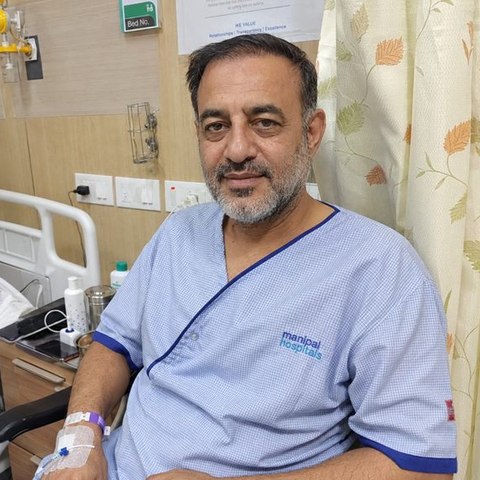
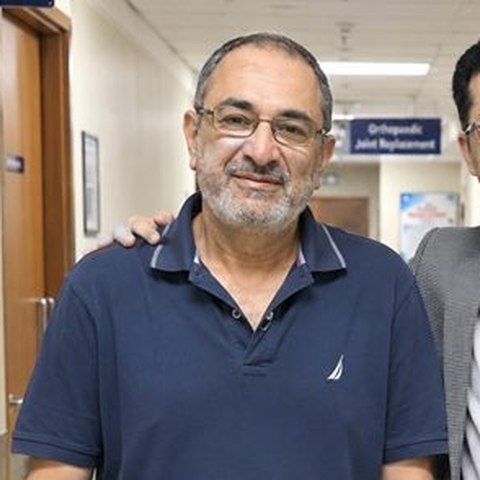
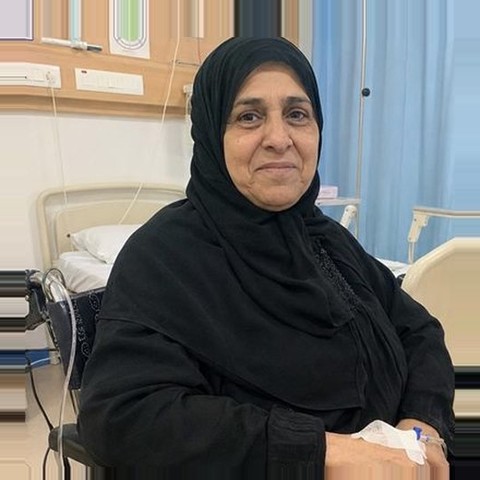
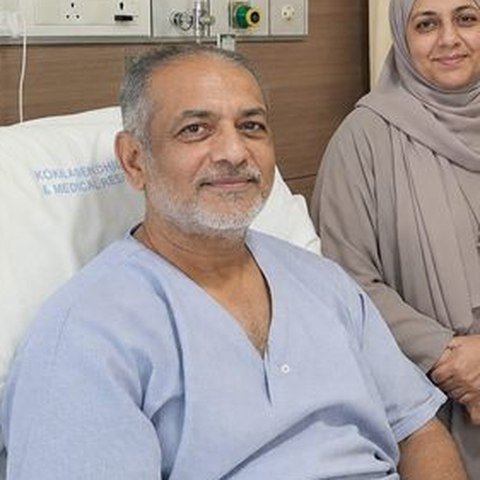
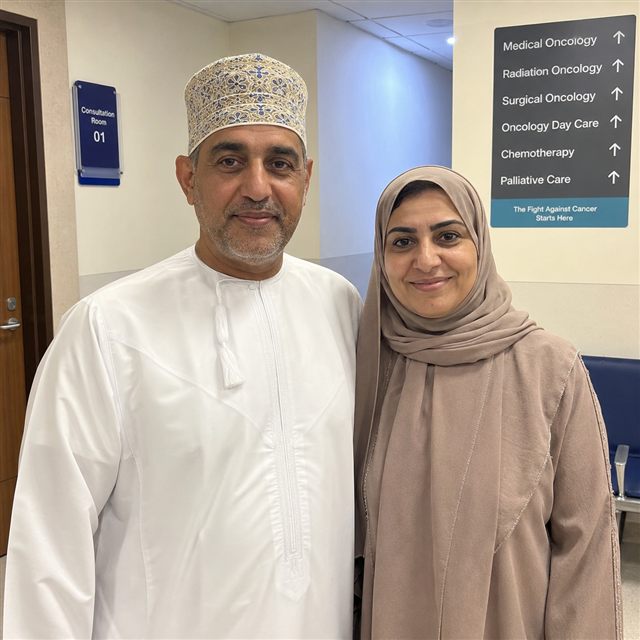
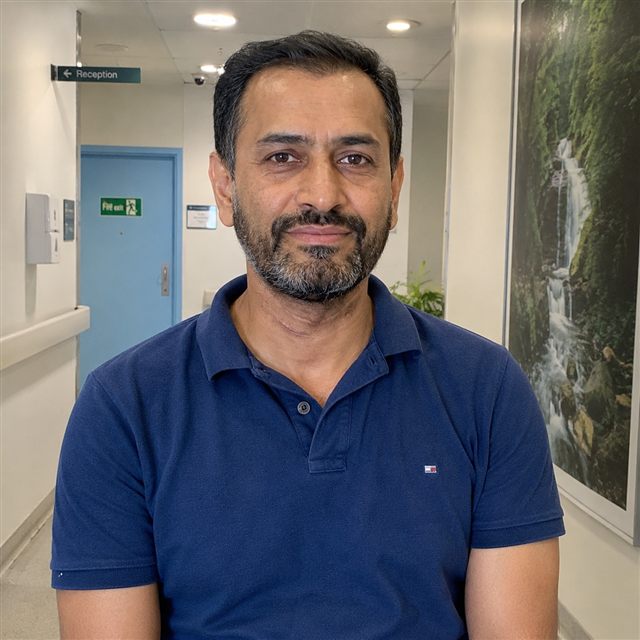
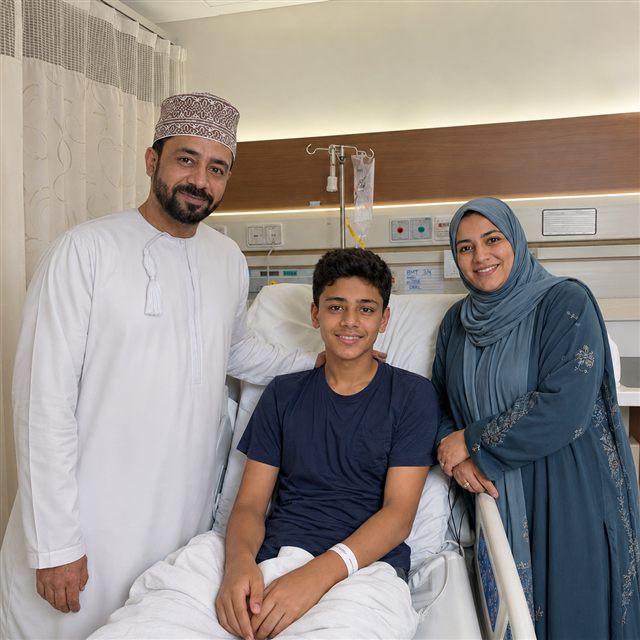
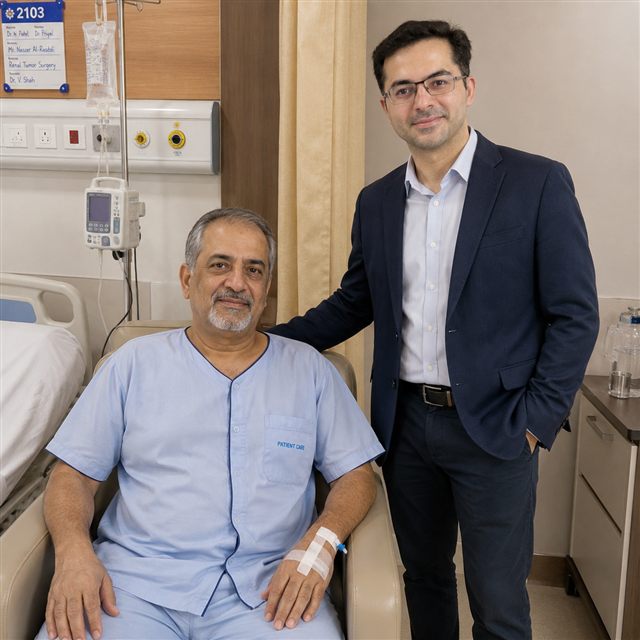
Healing Journeys of Omani Patients


Key Takeaways
- For many patients facing major cardiac surgery, the operation is coronary artery bypass grafting (CABG). It creates a new route around blocked coronary arteries using healthy blood vessels taken from elsewhere in the body, commonly from the chest, arm or leg.
- CABG can be performed using an on-pump technique, where a heart-lung machine temporarily takes over circulation, or an off-pump/OPCAB technique, where the heart continues beating during the bypass. The guide notes that Indian cardiac centres have substantial experience with both approaches.
- The source highlights that graft selection matters for long-term bypass durability. Arterial grafts, particularly the internal mammary artery, generally have better long-term patency than vein grafts when the patient’s anatomy allows their use.
- India performs more than 100,000 bypass procedures annually, according to the guide, with major cardiac programmes concentrated in Delhi, Chennai, Mumbai and Bengaluru. The guide stresses that surgeon and centre volume is particularly relevant when selecting a team for major heart surgery.
- India also provides access to minimally invasive and robotic-assisted approaches for selected patients, dedicated cardiac ICUs and teams experienced in international cardiac care. Omani patients may also have access to Arabic-speaking coordinators and pre-travel review of angiography and cardiac history.
- The guide does not imply that every Omani patient needs to travel for cardiac surgery. Its main recommendation is to compare the specific experience of the surgeon and centre, especially because cardiac surgery outcomes are closely associated with volume and team experience.
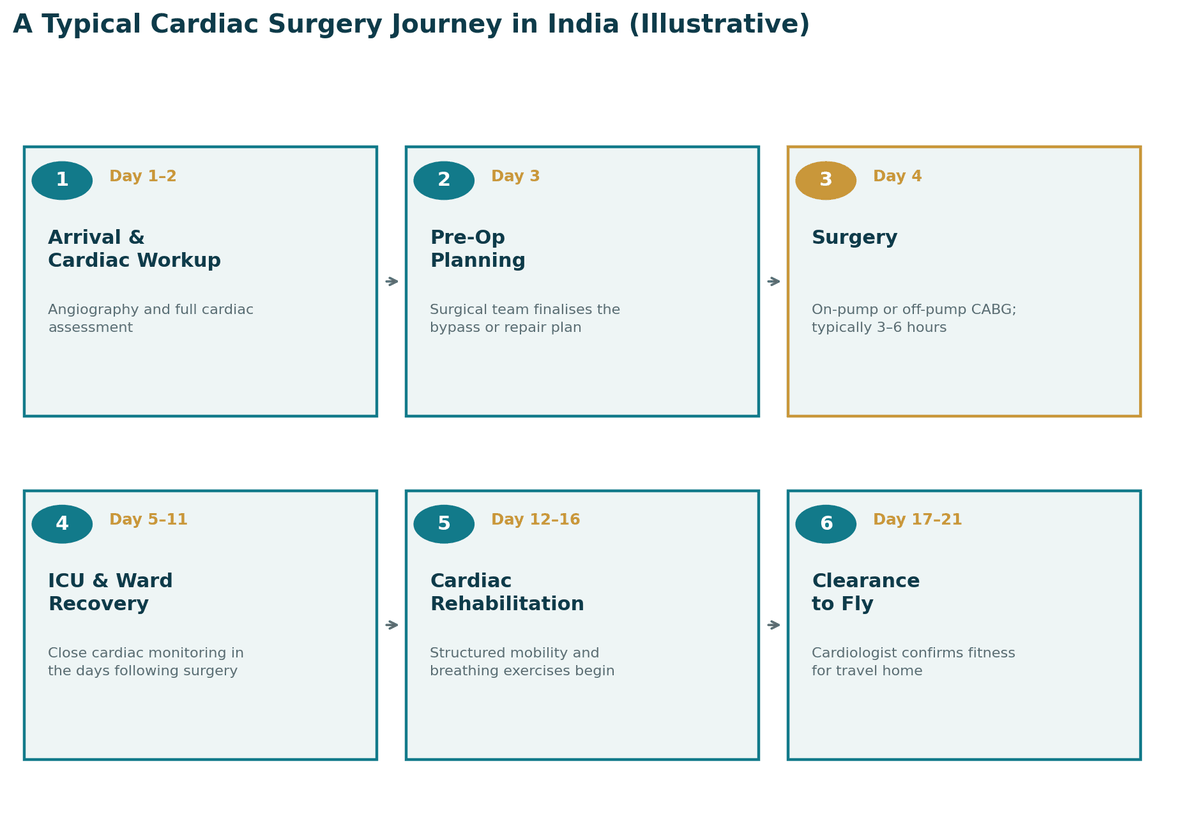
- The cardiac surgery journey shown on page 2 illustrates arrival and cardiac work-up on days 1–2, pre-operative planning on day 3, CABG around day 4, ICU and ward recovery during days 5–11, cardiac rehabilitation during days 12–16 and clearance to fly around days 17–21.
- The cost chart and table on page 3 benchmark coronary bypass surgery at US$4,000–12,000 in India, compared with US$30,000–50,000 in private Oman, US$25,000–55,000 in the UK private sector and US$70,000–150,000+ in the United States.
- The cost of surgery depends on the number of vessels being bypassed. The guide specifically warns against accepting a generic bypass quotation because single, double, triple and quadruple bypass procedures can differ substantially in complexity and cost.
- Combined procedures, such as bypass surgery performed alongside valve repair, can significantly increase the cost. Omani patients should therefore obtain a case-specific quotation after their angiography and cardiac records have been reviewed.
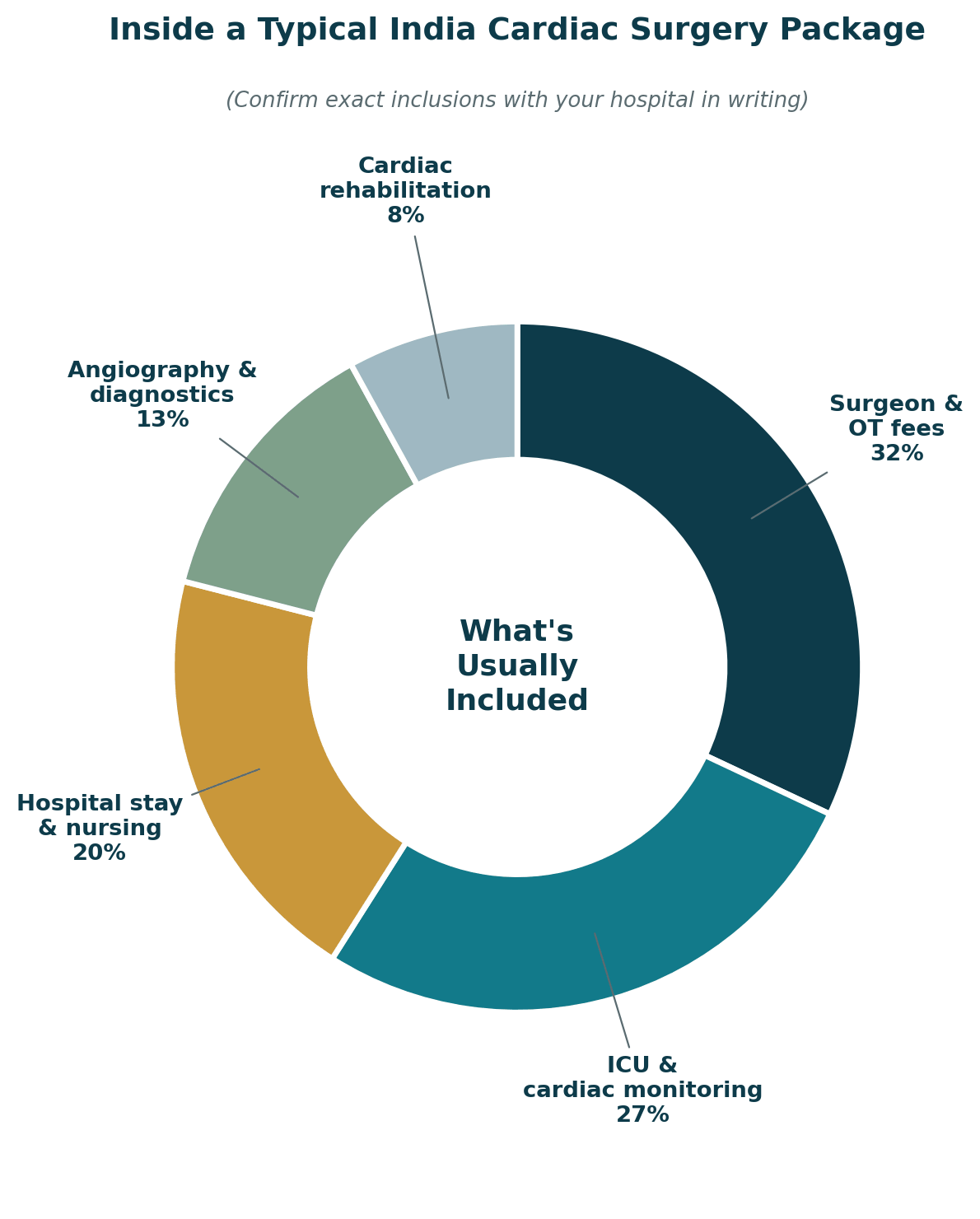
- The package diagram on page 4 illustrates cardiac surgery costs as surgeon and operating-theatre fees at 32%, ICU and cardiac monitoring at 27%, hospital stay and nursing at 20%, angiography and diagnostics at 13%, and cardiac rehabilitation at 8%.
- Cardiac rehabilitation is an important part of recovery rather than an optional extra. The guide recommends arranging a structured programme before leaving India and confirming how rehabilitation and monitoring will continue after the patient returns to Oman.
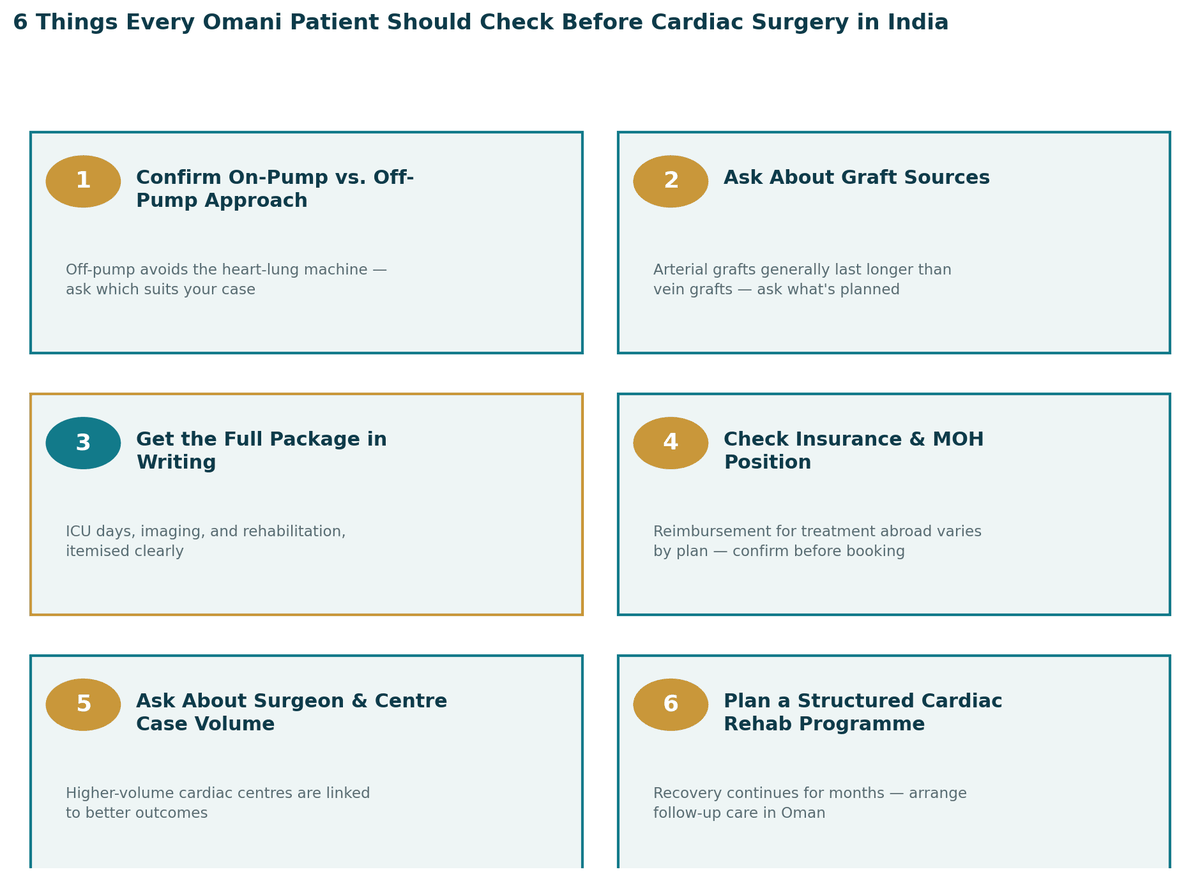
- The six-point checklist on page 5 recommends that Omani patients confirm the proposed surgical technique, ask about arterial versus vein grafts, obtain an itemised package, check insurance and Ministry of Health arrangements, assess the surgeon and centre’s annual case volume, and arrange structured rehabilitation in Oman.
Quick Facts
- Treatment
- Cardiac Surgery, primarily coronary artery bypass grafting (CABG)
- Primary Patients
- Omani patients considering major cardiac surgery in India
- Main Procedure
- Coronary artery bypass grafting
- Surgical Techniques
- On-pump CABG and off-pump/OPCAB
- Graft Sources
- Internal mammary artery, other arteries and veins from the leg
- Graft Consideration
- Arterial grafts generally have better long-term patency than vein grafts
- India Cardiac Volume
- More than 100,000 bypass procedures annually according to the guide
- India Cost
- US$4,000–12,000 for coronary bypass surgery
- Oman Private Cost
- US$30,000–50,000
- UK Private Cost
- US$25,000–55,000
- US Cost
- US$70,000–150,000+
- Illustrative Journey
- Work-up days 1–2, surgery around day 4 and clearance around days 17–21
- Package Breakdown
- Surgeon/OT 32%, ICU/monitoring 27%, hospital/nursing 20%, diagnostics 13%, rehabilitation 8%
- Key Cost Factor
- Number of vessels being bypassed and overall case complexity
- Combined Procedures
- Bypass with valve repair or another procedure can increase cost substantially
- Key Specialist
- Cardiac / Cardiothoracic Surgeon
- Main Cities
- Delhi, Chennai, Mumbai and Bengaluru
- Surgeon Check
- Ask for annual bypass volume of the specific surgeon
- Centre Check
- Review hospital’s cardiac surgery volume and team experience
- Insurance Check
- Confirm Omani insurance and Ministry of Health position before travel
- Rehabilitation
- Structured cardiac rehabilitation should continue after returning to Oman
- Second Opinion
- Send angiography and cardiac records for independent review before committing
- Author
- Dr. Dheeraj Bojwani
- Experience
- 24+ Years
In Brief
Cardiac Surgery in India for Omanis focuses primarily on coronary artery bypass grafting and the decisions that can meaningfully affect surgical planning and recovery. The guide explains on-pump and off-pump CABG, arterial and vein graft choices, the importance of surgeon and centre volume, and the availability of minimally invasive and robotic-assisted approaches for selected cases. India is benchmarked at US$4,000–12,000 for coronary bypass surgery compared with US$30,000–50,000 in private Oman. The illustrative pathway places surgery around day 4 and clearance to fly during days 17–21. Omani patients are advised to obtain a case-specific quotation after angiography review, understand exactly which grafts and surgical approach are planned, verify insurance and Ministry of Health arrangements, and establish a structured cardiac rehabilitation and follow-up plan in Oman.
Understanding What “Cardiac Surgery” Usually Means
For most patients facing this decision, the surgery in question is coronary artery bypass grafting, or CABG, which reroutes blood flow around blocked coronary arteries using a healthy blood vessel taken from elsewhere in the body — commonly the internal mammary artery in the chest, a vein from the leg, or an artery from the arm. The surgery can be performed traditionally, using a heart-lung machine to temporarily take over circulation while the heart is stopped (on-pump), or increasingly, on a beating heart without the machine (off-pump, or OPCAB) — a technique many Indian cardiac centres have particular expertise in.
The choice between arterial and vein grafts also matters more than many patients realise. Arterial grafts, particularly using the internal mammary artery, generally have better long-term patency (they stay open longer) than vein grafts, which is why many experienced surgeons now favour using more arterial grafts where a patient’s anatomy allows it. This is a legitimate question to raise directly with any surgeon proposing your operation.
What Makes India a Strong Option for Cardiac Surgery
India performs an extraordinary volume of cardiac surgery — over 100,000 bypass procedures annually across the country — concentrated in centres in Delhi, Chennai, Mumbai, and Bengaluru that rank among the highest-volume cardiac programmes anywhere in the world. This volume is directly relevant to outcomes, since cardiac surgery is one of the clearest examples in medicine where higher-volume centres and surgeons are associated with better results.
India also gives patients access to both on-pump and off-pump surgical techniques performed at genuine scale, minimally invasive and robotic-assisted approaches for suitable cases, and dedicated cardiac ICUs staffed by teams who manage this specific patient population daily. And because Indian hospitals have spent two decades building international cardiac care pathways for Gulf and African patients, Omani patients arrive to Arabic-speaking coordinators and a well-tested process for reviewing angiography and cardiac history before travel is even booked.
This does not mean every case needs to travel for surgery. It means that given how closely cardiac surgery outcomes track with surgical volume and team experience, a high-volume centre with a strong specific track record deserves serious consideration for a decision of this significance.
Cost Comparison: India vs. Oman vs. Western Countries
The figures below use coronary artery bypass grafting as a representative benchmark, since it remains the most common major cardiac surgery, in approximate US dollars, for a full package at an accredited private hospital.
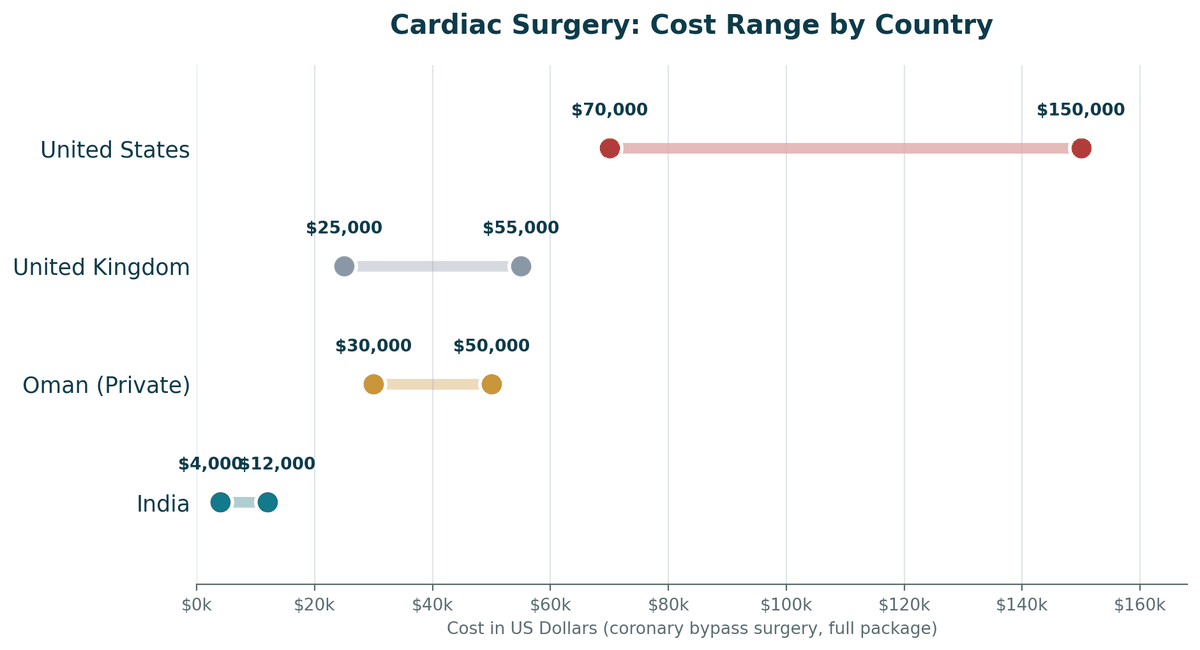
| Destination | Typical Cost (Coronary Bypass Surgery) | What This Usually Includes |
|---|---|---|
| India | US $4,000 – $12,000 | Surgeon and OT fees, ICU and ward stay, angiography, and standard nursing care |
| Oman (private) | US $30,000 – $50,000 | Surgeon fees, hospital stay, diagnostics; varies significantly by hospital tier and case complexity |
| United Kingdom (private) | US $25,000 – $55,000 | Surgery and hospital stay; extended follow-up often billed separately |
| United States | US $70,000 – $150,000+ | Highly variable by state and hospital; complications or extended ICU stays can push costs considerably higher |
A few honest caveats specific to cardiac surgery. First, the number of vessels being bypassed (single, double, triple, or quadruple) changes both the complexity and the cost meaningfully, so insist on a case-specific quote once your angiography has been reviewed, not a generic “bypass surgery” figure. Second, combined procedures — for instance, bypass surgery alongside valve repair — cost significantly more than an isolated bypass and should be quoted as such if your case involves more than one issue. Third, cardiac rehabilitation is not optional after this kind of surgery; ask specifically how a structured rehabilitation programme will continue once you are back home in Oman.
What a Typical Omani Patient Should Weigh Before Deciding Cardiac Surgery in India
Having guided patients through this exact decision for 24 years, here is what I encourage every Omani family to work through before committing to a hospital:
- Confirm whether on-pump or off-pump surgery is being proposed, and why. Send your angiography to an independent cardiac surgical team in India before committing. Ask which technique they recommend for your specific case and their reasoning.
- Ask specifically about graft sources. Understand whether arterial or vein grafts are planned, and why, since this affects the long-term durability of your bypass.
- Get the full package itemised in writing. ICU days, diagnostics, and cardiac rehabilitation sessions should each be clear, along with what happens if your recovery requires an extended stay.
- Check your insurance and Ministry of Health position. Some Omani insurance plans and employer health schemes offer partial reimbursement for treatment abroad; others do not cover it at all. Clarify this before you travel, not after.
- Ask about the surgeon’s and centre’s annual case volume. Cardiac surgery outcomes are closely linked to volume. Ask directly how many bypass procedures the specific surgeon and hospital perform each year.
- Arrange a structured cardiac rehabilitation plan before you leave India. Recovery continues for months after discharge. Confirm how your Indian team will coordinate with a cardiologist in Oman for ongoing monitoring.
A Final Note
Heart surgery carries a weight that few other operations do, and it is entirely reasonable to feel apprehensive about it, wherever it happens. What consistently separates a smooth recovery from a difficult one is not the country on the hospital’s letterhead, but the specific experience of the surgical team and the discipline of the rehabilitation that follows. Ask direct questions about both, and let the answers, not reassurance alone, guide your decision. Sending your angiography for a genuine second opinion, before committing to a specific hospital, is a sensible and low-risk first step.
Sources & Further Reading
- National Heart, Lung, and Blood Institute (NHLBI), National Institutes of Health — Coronary Artery Bypass Grafting (nhlbi.nih.gov)
- MedlinePlus, U.S. National Library of Medicine (NIH) — Heart Bypass Surgery (medlineplus.gov)
- American Heart Association (AHA), non-profit organization — Coronary Artery Bypass Graft Surgery (heart.org)
- NHS (UK National Health Service) — Coronary Artery Bypass Graft (nhs.uk)
- Society of Thoracic Surgeons (STS), non-profit professional association — Patient Resources (sts.org)
Frequently Asked Questions by Omani Patients about Cardiac Surgery in India
Is cardiac surgery in India an option for Omani patients?
Yes. The guide presents India as an option for major cardiac surgery, particularly where a high-volume cardiac centre and experienced surgeon are important considerations. It recommends comparing specific team experience rather than choosing based only on country.
How much does bypass surgery cost in India for Omani patients?
The guide estimates US$4,000–12,000 for coronary artery bypass surgery at an accredited private hospital. The final quotation depends on the number of vessels bypassed and the complexity of the case.
How does CABG cost in India compare with private Oman?
The source benchmarks CABG at US$30,000–50,000 in private Oman compared with US$4,000–12,000 in India. Omani patients should compare the exact package inclusions rather than headline prices alone.
Should an Omani patient choose on-pump or off-pump bypass surgery?
The appropriate technique depends on the individual case. The guide recommends sending angiography to an independent Indian cardiac team and asking why on-pump or off-pump surgery is being recommended for that patient.
Why should Omani patients ask about arterial grafts?
The guide explains that arterial grafts, particularly the internal mammary artery, generally have better long-term patency than vein grafts. Patients should ask the surgeon what grafts are planned and why they are appropriate for their anatomy.
How long might an Omani patient stay in India for bypass surgery?
The illustrative pathway shows cardiac work-up on days 1–2, surgery around day 4, ICU and ward recovery through day 11, rehabilitation during days 12–16 and clearance to fly around days 17–21. Actual timing depends on recovery.
What should an Omani patient check in the cardiac surgery quotation?
The quotation should clearly identify surgeon and OT fees, ICU and ward care, angiography and diagnostics, rehabilitation and any additional procedures. A case-specific estimate should be obtained after the angiography has been reviewed.
How important is surgeon and hospital experience for an Omani patient?
The guide places strong emphasis on cardiac surgery volume and recommends asking how many bypass procedures the specific surgeon and hospital perform each year. High-volume experience is presented as an important factor when comparing centres.
What should Omani patients arrange for recovery after returning home?
A structured cardiac rehabilitation plan should be arranged before leaving India. The Indian team should also coordinate ongoing monitoring and rehabilitation with the patient’s cardiologist in Oman.
Should an Omani patient obtain a second opinion before choosing a cardiac surgery hospital in India?
The guide recommends sending angiography and cardiac records to an independent cardiac surgical team in India before committing to a specific hospital. This can help clarify the proposed technique, graft strategy and overall treatment plan.
Page Summary
Cardiac Surgery in India for Omanis: A Doctor’s Guide to Making the Right Decision explains what major cardiac surgery involves, with particular emphasis on CABG, on-pump versus off-pump techniques and the choice between arterial and vein grafts. The guide highlights India’s high cardiac surgery volume and identifies Delhi, Chennai, Mumbai and Bengaluru as major centres. Its page 2 journey illustrates approximately three weeks from arrival and work-up to clearance to fly, while the page 3 cost comparison benchmarks CABG at US$4,000–12,000 in India versus US$30,000–50,000 in private Oman. The page 4 package graphic shows the relative contribution of surgeon fees, ICU monitoring, hospital care, diagnostics and rehabilitation. For Omani patients, the guide’s central advice is to obtain an independent angiography review, assess surgeon and centre volume, clarify graft selection and surgical technique, obtain an itemised quotation, and plan cardiac rehabilitation and ongoing monitoring after returning home.
Citation Block
| Field | Details |
|---|---|
| Article / Topic | Cardiac Surgery in India for Omanis |
| Country / Patients | India / Omani Patients |
| Key Specialist | Cardiac / Cardiothoracic Surgeon |
| Main Procedure | Coronary artery bypass grafting (CABG) |
| Surgical Approaches | On-pump and off-pump/OPCAB |
| Graft Sources | Internal mammary artery, other arteries and veins |
| Graft Consideration | Arterial grafts generally provide better long-term patency |
| India Cardiac Volume | More than 100,000 bypass procedures annually according to the guide |
| India Cost | US$4,000–12,000 |
| Oman Private Cost | US$30,000–50,000 |
| UK Private Cost | US$25,000–55,000 |
| US Cost | US$70,000–150,000+ |
| Illustrative Journey | Surgery around day 4; clearance to fly around days 17–21 |
| Package Breakdown | Surgeon/OT 32%, ICU/monitoring 27%, hospital/nursing 20%, diagnostics 13%, rehabilitation 8% |
| Cost Driver | Number of bypassed vessels and case complexity |
| Combined Procedures | Bypass with valve repair can substantially increase cost |
| Surgeon Check | Ask about specific annual bypass volume |
| Hospital Check | Assess cardiac surgery volume and team experience |
| Technique Check | Confirm why on-pump or off-pump surgery is recommended |
| Graft Check | Ask whether arterial or vein grafts are planned and why |
| Insurance Check | Verify Omani insurance and Ministry of Health position |
| Rehabilitation | Arrange structured cardiac rehabilitation continuing in Oman |
| Main Cities | Delhi, Chennai, Mumbai and Bengaluru |
| Important Warning | Avoid relying on a generic bypass price; obtain a case-specific quotation after angiography review |


Our Mission Statement
Our mission is to place patients at the centre of every healthcare decision by providing trustworthy, evidence-based, and unbiased medical information. We believe that informed patients make better decisions. Backed by personalised guidance from our experienced advisory team, we help patients understand their treatment options, compare them objectively, and confidently choose the path that best suits their medical needs and personal circumstances.
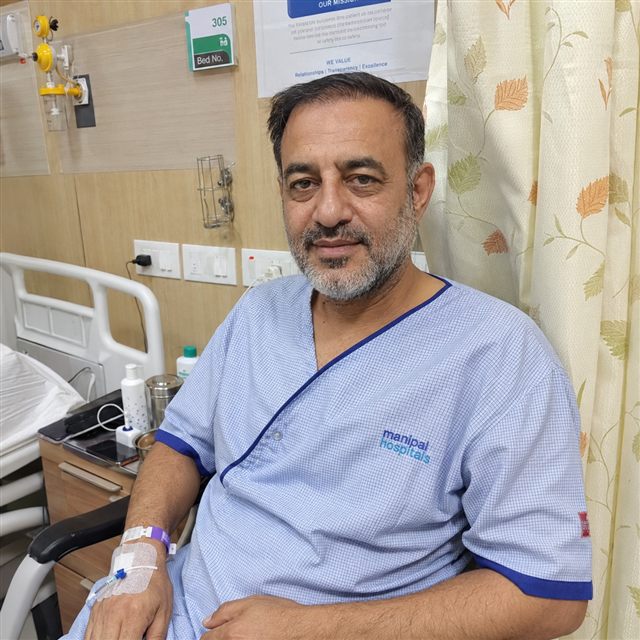
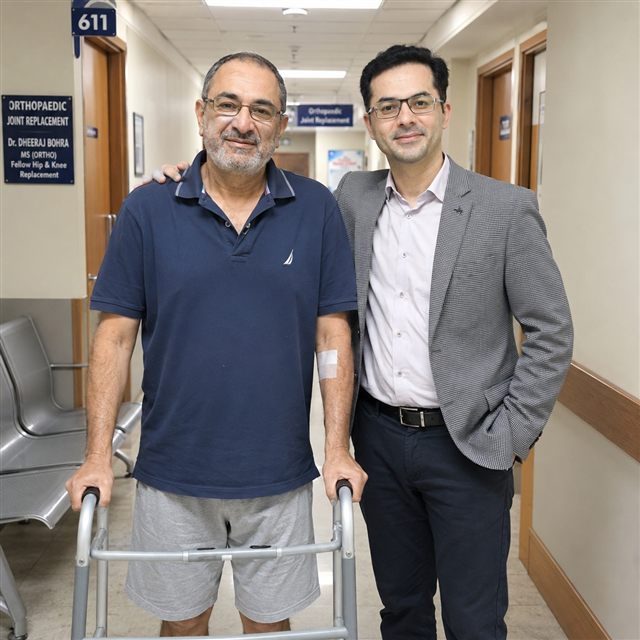
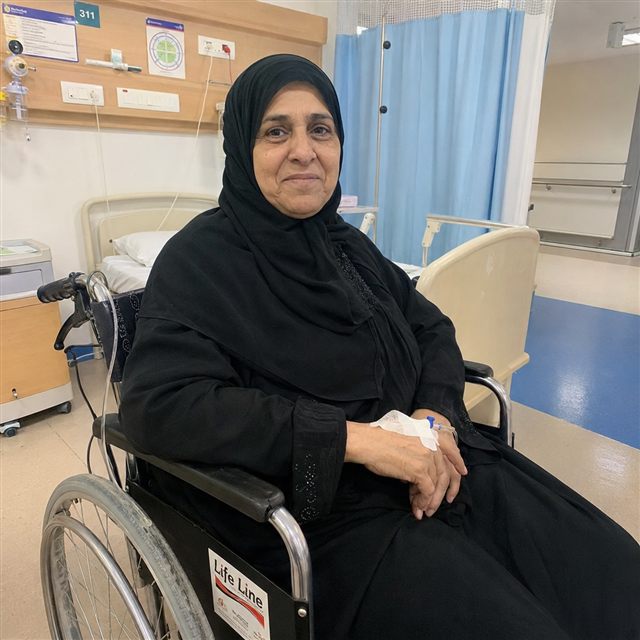
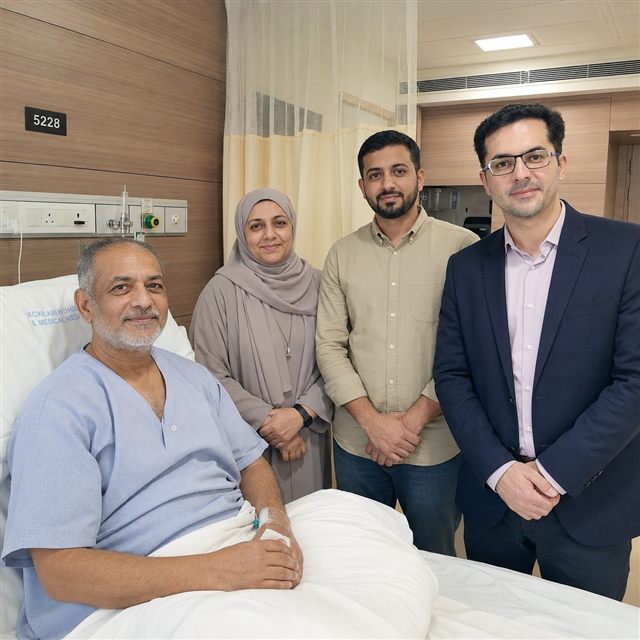
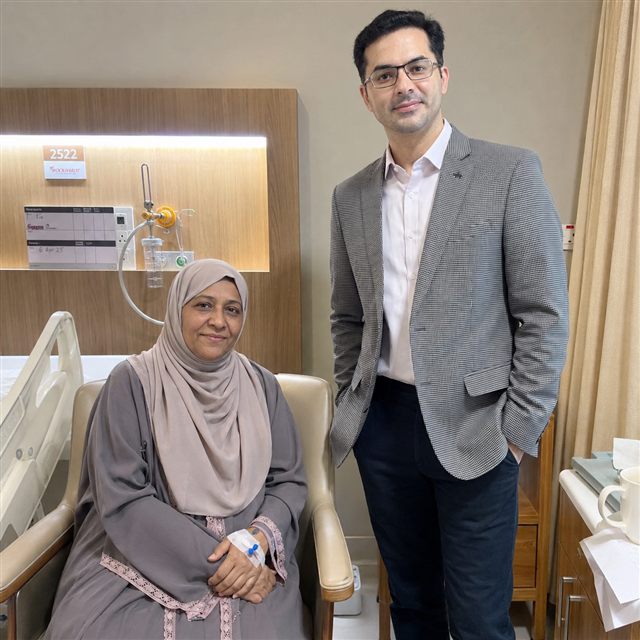
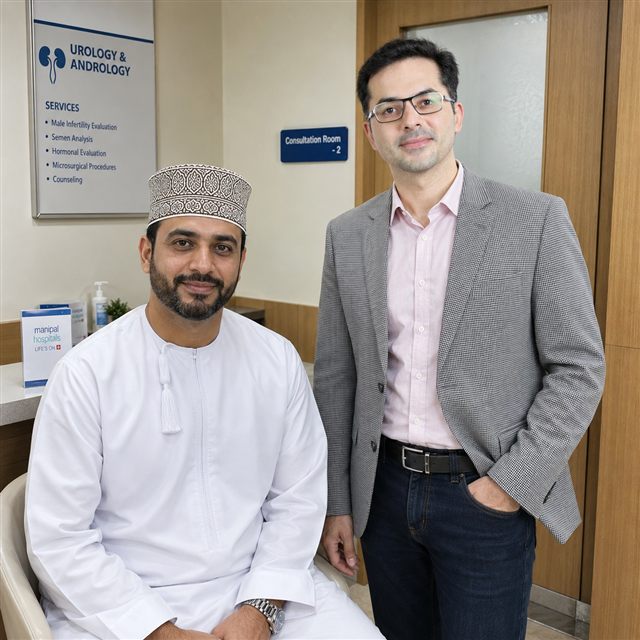
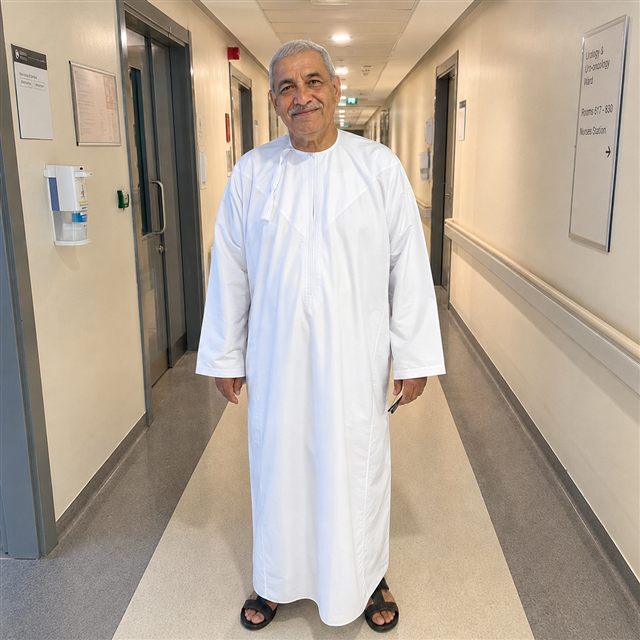
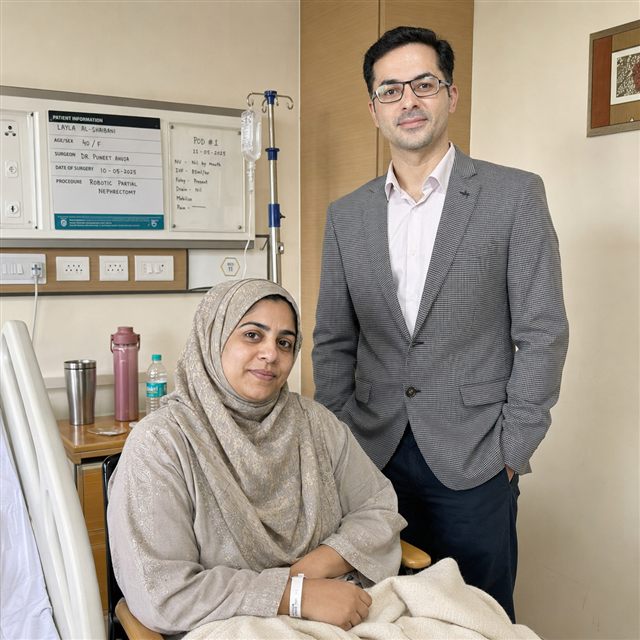
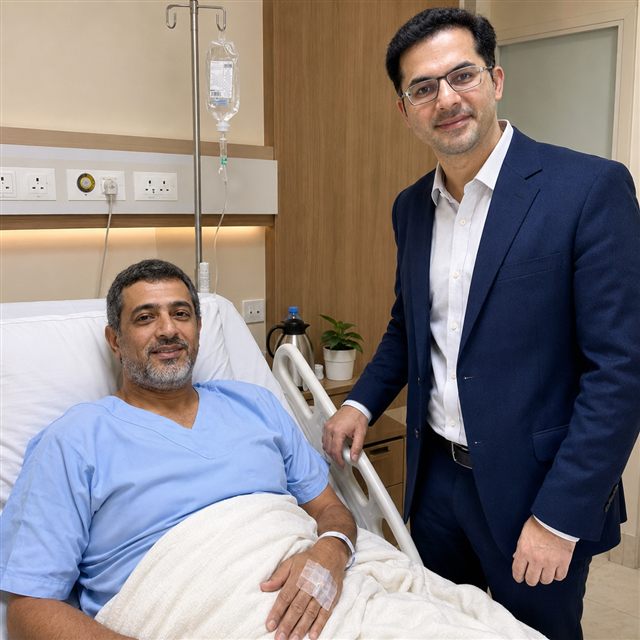
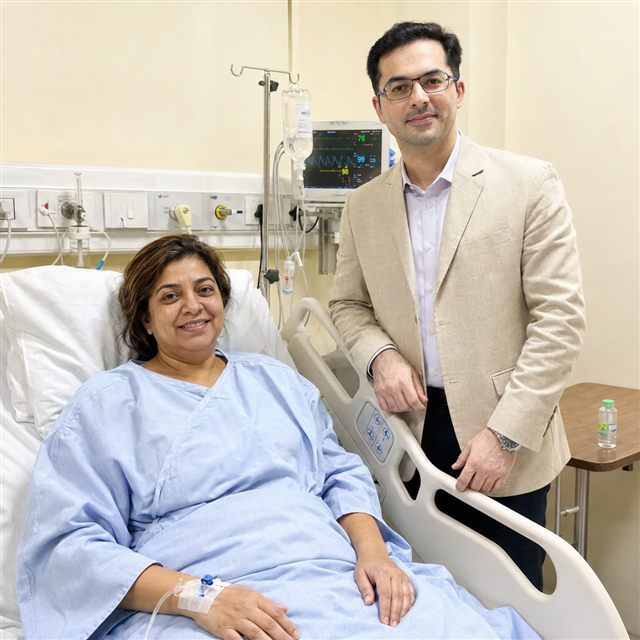
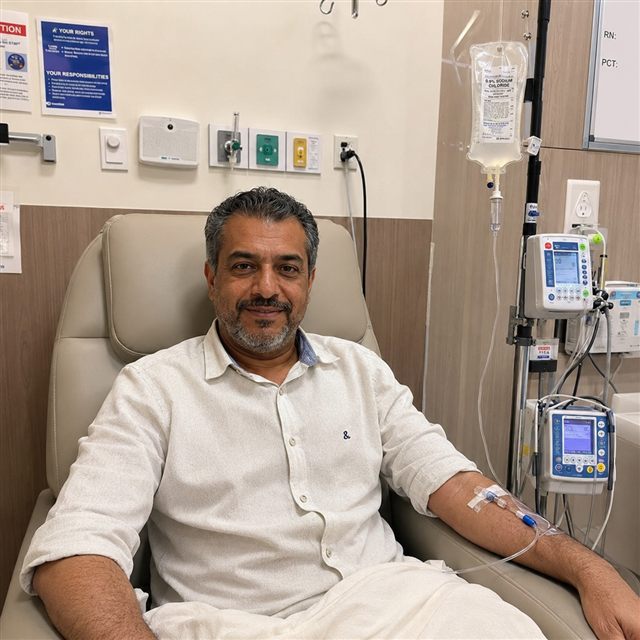
Patient Testimonials from Oman
Ready to Take the First Step?
Share your Medical Reports with our Healthcare Managers Today and Get a FREE CONSULTATION, a Personalized Treatment Plan, and Complete Support from Arrival to Recovery.
Get Your Free ConsultationAreas We Serve
Indian Health Guru Consultants proudly assists patients from Oman and surrounding Middle Eastern countries in accessing advanced, affordable and trusted medical treatment in India. Our team provides complete support for medical opinions, hospital selection, treatment planning, visa assistance, travel coordination, accommodation and post-treatment follow-up.
We regularly serve patients from:
- Oman
- Turkey
- Iran
- Kuwait
- Jordan
- Syria
- Qatar
- Bahrain
- Yemen
- Iraq
- Saudi Arabia
- United Arab Emirates
No matter where you are located, our experienced team is committed to making your medical journey to India safe, smooth, transparent and stress-free from the first enquiry to your return home.
From Oman to India: Your Complete Patient Guide
- Weight Loss and Bariatric Surgery in India for Omanis: Cost & Guide
- Brain Tumor Surgery in India for Omanis: Cost & Guide
- Cancer Treatment in India for Omanis: Cost & Guide
- Breast Cancer Treatment in India for Omanis: Cost & Guide
- Neurosurgery in India for Omanis: Cost & Guide
- Spine Surgery in India for Omanis: Cost & Guide
- Bone Marrow Transplant in India for Omanis: Cost & Guide
- Kidney Transplant in India for Omanis: Cost & Guide
- Best Dentists and Clinics for Dental Surgery in India for Omani Patients
- Best Doctors and Hospitals for Blood Cancer Treatment in India for Omani Patients
- Best Bone Marrow Transplant Doctors and Hospitals in India for Omani Patients
- Best IVF and Fertility Doctors and Hospitals in India for Omani Couples
- Best Bariatric Surgeons and Hospitals for Weight Loss Surgery in India for Omani Patients
- Best Brain Tumor Surgery Doctors and Hospitals in India for Omani Patients
- Best Cardiac Surgeons and Hospitals in India for Omani Patients
- Best Colorectal Cancer Surgeons and Hospitals in India for Omani Patients
- Best Surgeons and Hospitals for Complex Joint Revision Surgery in India for Omani Patients
- Hip Surgery in India for Omanis: Cost & Guide