

Bone Marrow Transplant Treatment in India for Omanis: A Doctor’s Guide to Making the Right Decision
A practical guide for Omani families considering bone marrow transplant treatment in India for thalassemia, aplastic anaemia and related inherited blood disorders, covering donor matching, costs, preparation and recovery.
Bone marrow transplant is often discussed in the context of cancer, but a substantial share of the transplants performed each year treat conditions that are not cancer at all. Thalassemia major, in particular, has meaningfully higher carrier rates across parts of the Gulf and Middle East than in many other regions, making it a condition Omani families encounter far more often than most Western populations. Over 24 years of advising Gulf families through non-malignant blood disorder treatment, I want to focus this guide specifically on that reality. Oman’s hospitals, including Apollo Hospital Muscat, Badr Al Samaa, Aster Al Raffah, and Burjeel Medical Centre, provide haematology consultation and are the right starting point for diagnosis, HLA typing, and staging. This guide is written to help Omani families understand, honestly and without sales pressure, what bone marrow transplant offers for thalassemia, aplastic anaemia, and related inherited blood disorders, and what to check carefully before pursuing it in India.
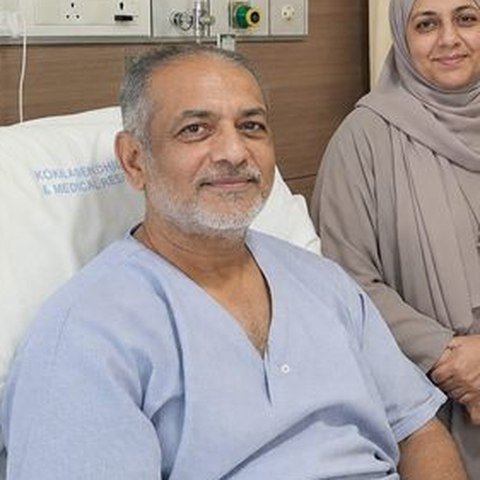
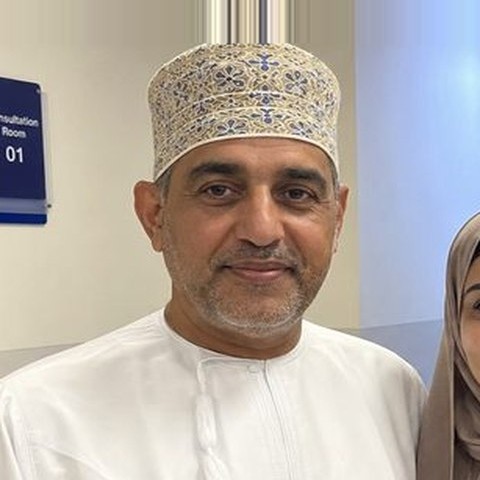
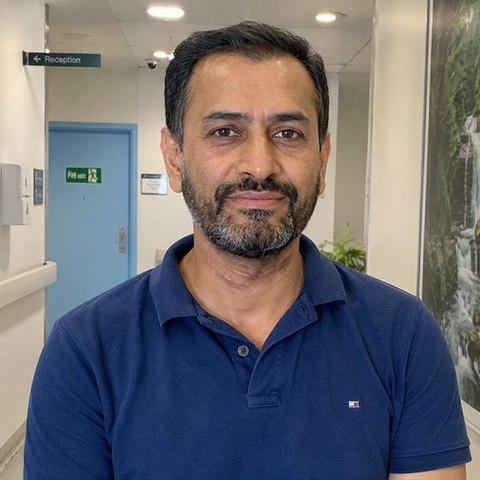
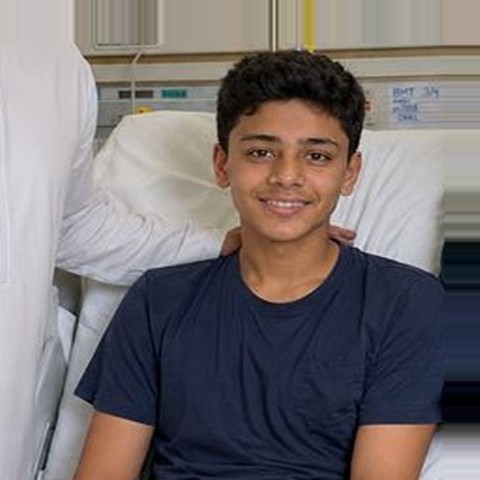
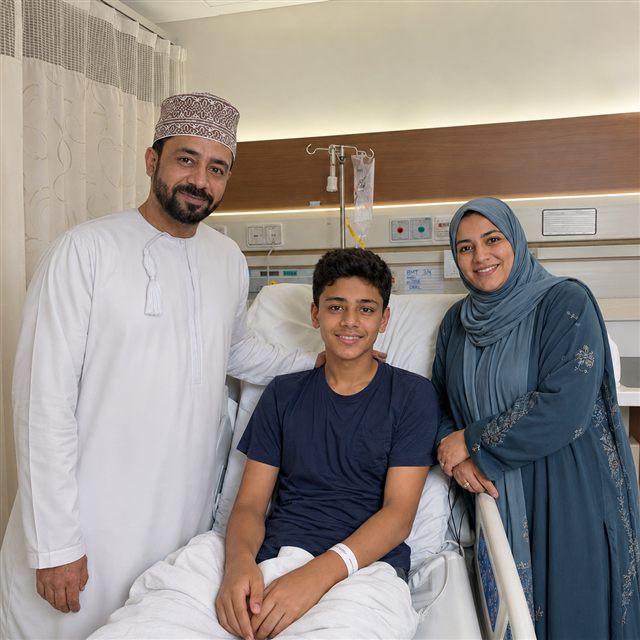
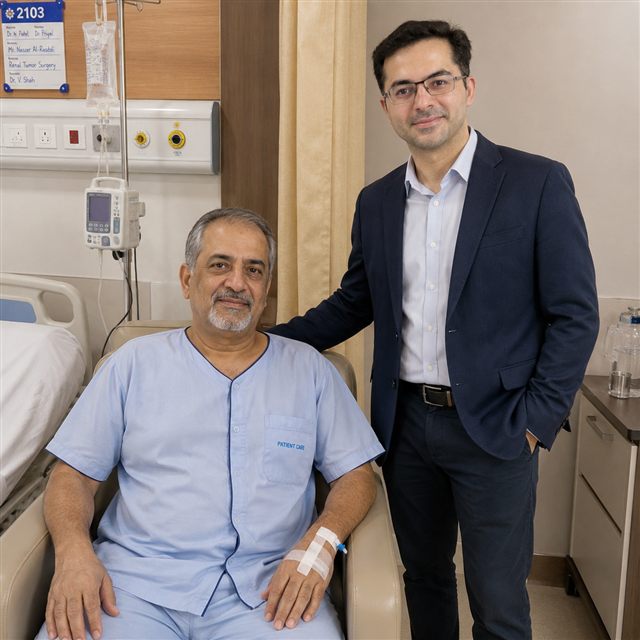
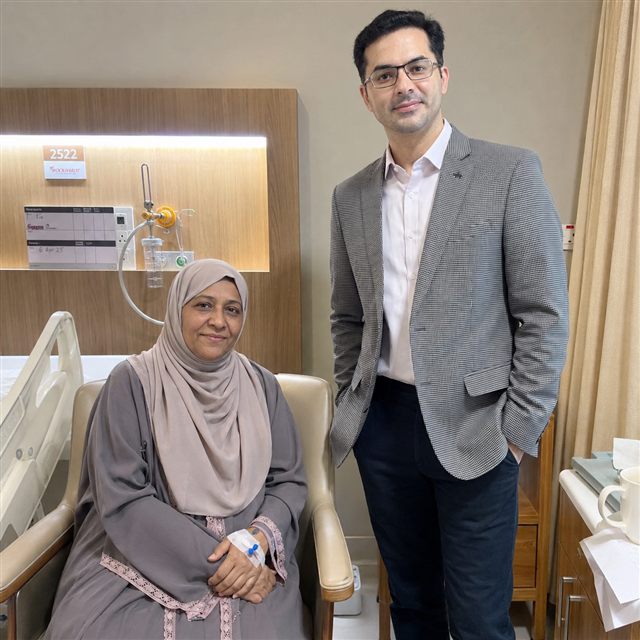
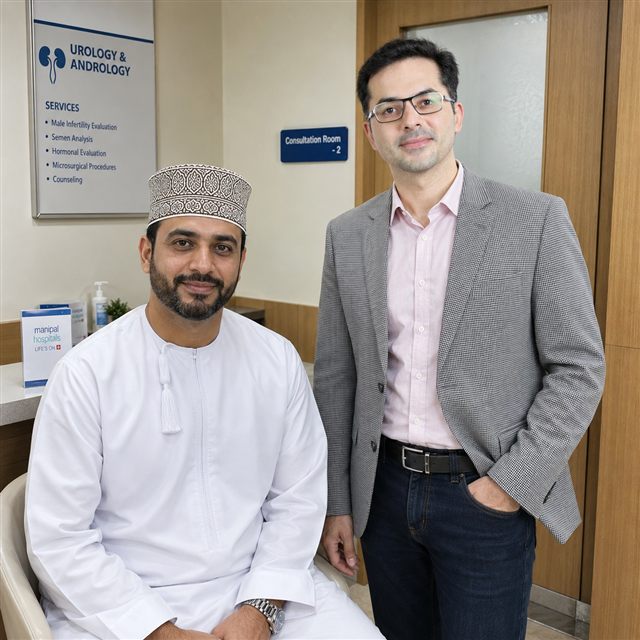
Healing Journeys of Omani Patients
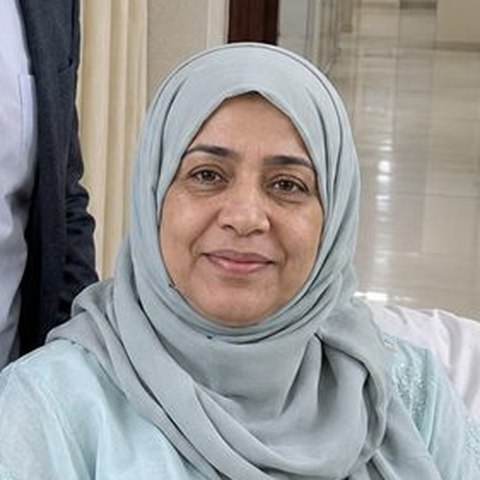
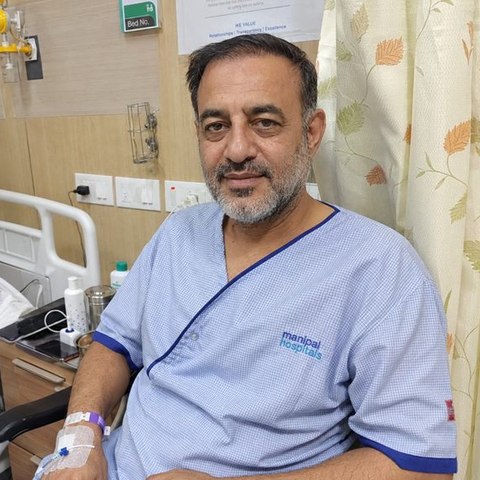
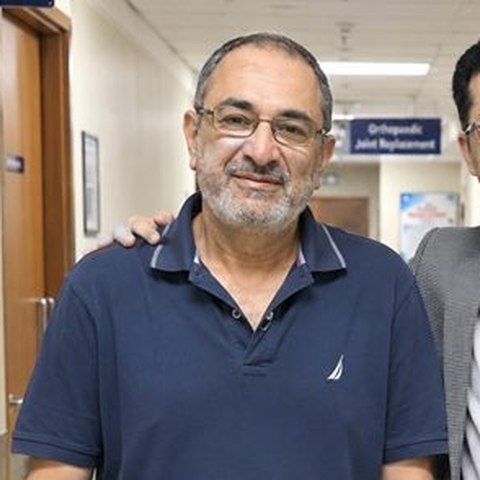
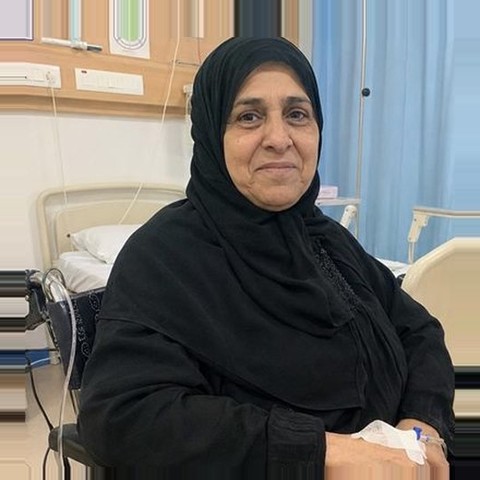
Key Takeaways
- Bone marrow transplantation is not limited to cancer treatment. The guide specifically focuses on non-malignant conditions, particularly thalassemia major and severe aplastic anaemia, where transplant can provide a potentially curative treatment rather than lifelong disease management.
- For thalassemia major, successful transplantation can eliminate the lifelong dependence on monthly blood transfusions and daily iron-chelation medication caused by transfusion-related iron overload. The guide describes this as a major potential benefit for appropriately selected patients.
- Donor matching and timing are critical. A fully HLA-matched sibling generally offers the best outcomes, and the guide notes that success rates can exceed 90% at experienced centres, particularly when thalassemia transplantation is performed before substantial iron overload or organ damage develops.
- When a matched sibling is unavailable, matched unrelated donor and haploidentical transplantation may remain options. However, these donor sources have different risks, protocols and considerations, so families should discuss the specific donor situation with an experienced transplant team before making a decision.
- India's major transplant centres in Delhi, Mumbai, Chennai and Bengaluru have substantial experience treating thalassemia and aplastic anaemia. The guide emphasises choosing disease-specific transplant expertise rather than judging a centre only by its overall cancer-transplant volume.
- Pre-transplant assessment is particularly important for thalassemia patients. The guide recommends evaluating liver iron content and cardiac function, because organ damage accumulated from years of transfusions can affect transplant risk, timing and the conditioning approach.
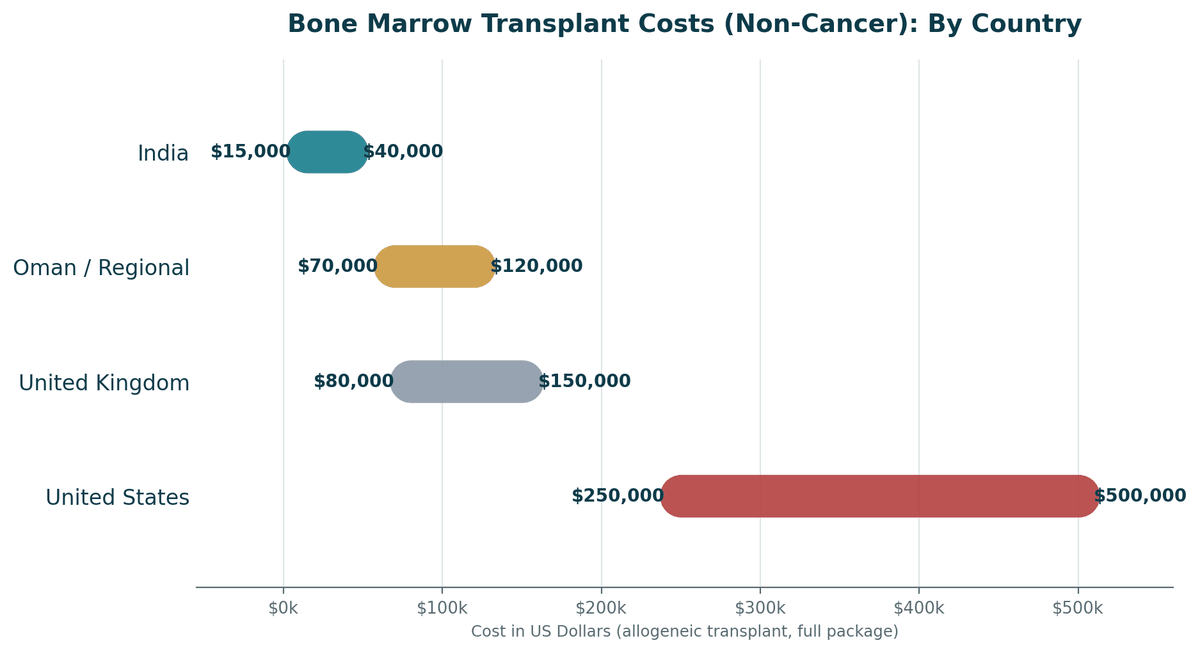
- The cost comparison chart on page 3 estimates a full allogeneic transplant package for a non-malignant condition at US$15,000–40,000 in India, compared with US$70,000–120,000 in Oman/regional pathways, US$80,000–150,000 in the UK private sector and US$250,000–500,000+ in the United States.
- The package illustration on page 4 shows the major components of a typical Indian BMT package: conditioning chemotherapy and transplant account for 34%, ICU/isolation stay 27%, HLA typing and donor testing 18%, transfusion support 12% and follow-up 9%.
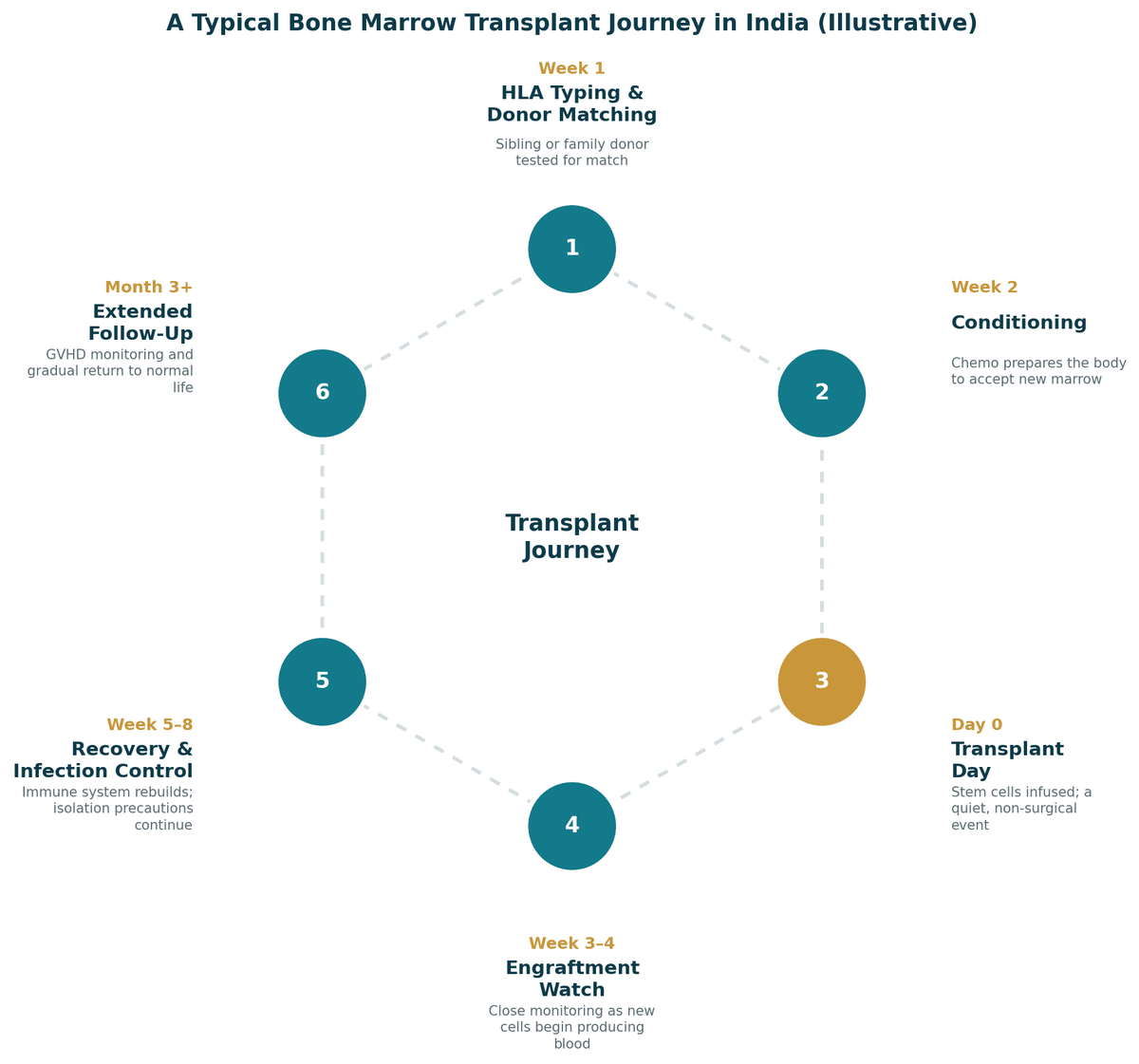
- The transplant journey illustrated on page 2 progresses from HLA typing and donor matching in week 1 to conditioning in week 2, transplant on day 0, engraftment monitoring during weeks 3–4, recovery and infection control during weeks 5–8, and extended follow-up from month 3 onward.
- The guide advises Omani families to plan for an extended stay because complete recovery through engraftment and early monitoring typically requires two to three months in India. Accommodation, family support, work leave and financial planning should therefore be considered before travel.
Quick Facts
- Treatment
- Bone Marrow Transplant Treatment and Surgery
- Primary Patients
- Omani patients and families seeking transplant care in India
- Main Conditions
- Thalassemia major, severe aplastic anaemia and related inherited blood disorders
- Potential Benefit
- A successful transplant can end lifelong transfusion and iron-chelation dependence in appropriately selected thalassemia patients
- Preferred Donor
- Fully HLA-matched sibling donor
- Reported Success
- Often exceeding 90% at experienced centres for appropriately selected matched-sibling cases
- Alternative Donors
- Matched unrelated and haploidentical donors may be considered when a matched sibling is unavailable
- India Cost
- US$15,000–40,000 for a full allogeneic transplant package for a non-malignant condition
- Oman / Regional Cost
- US$70,000–120,000
- UK Private Cost
- US$80,000–150,000
- US Cost
- US$250,000–500,000+
- Pre-Transplant Assessment
- HLA typing, liver iron assessment and cardiac/organ-function evaluation are important
- Typical Recovery
- Approximately 2–3 months for engraftment and early monitoring
- Key Specialist
- Haematologist / Bone Marrow Transplant Specialist
- Main Cities
- Delhi, Mumbai, Chennai and Bengaluru
- Package Check
- Confirm HLA typing, conditioning, transplant, ICU/isolation, transfusion support and follow-up
- Donor Check
- Confirm the exact HLA match before finalising treatment and cost
- Insurance Check
- Review Omani insurance and Ministry of Health reimbursement policies before travel
- Follow-Up
- Extended monitoring continues after transplant and should be coordinated with the treating team
- Author
- Dr. Dheeraj Bojwani
- Experience
- 24+ Years
In Brief
Bone marrow transplant treatment in India can offer a potentially curative pathway for appropriately selected Omani patients with thalassemia major, severe aplastic anaemia and related non-malignant blood disorders. The guide places particular emphasis on HLA donor matching, early assessment of iron overload and organ function, and disease-specific transplant experience. A full allogeneic transplant package is estimated at US$15,000–40,000 in India, while recovery through engraftment and early monitoring can require two to three months. Families should confirm donor status, pre-transplant assessment, the complete itemised package, insurance or Ministry of Health support and the transplant centre's experience with the exact diagnosis before travelling.
The Only Cure, Not Just a Treatment
For thalassemia major, and for severe aplastic anaemia, bone marrow transplant is not simply one option among several — it is the only currently available cure. Without transplant, thalassemia major requires lifelong monthly blood transfusions and daily iron chelation medication to manage the iron overload transfusions cause, a demanding routine that continues for the patient’s entire life. A successful transplant ends this dependency entirely, replacing the body’s defective blood-forming cells with healthy ones from a donor.
The best outcomes come from a fully HLA-matched sibling donor, and this is where family structure and timing matter enormously. If a family has a sibling who is a full match, and the transplant is performed relatively early — particularly for thalassemia, before significant iron overload or organ damage has occurred — success rates are genuinely excellent, often exceeding 90 percent at experienced centres. Where no matched sibling exists, matched unrelated donor or haploidentical transplants remain options, though with somewhat different risk profiles that deserve their own honest conversation with a treating team.
What Makes India a Strong Option for Non-Malignant BMT
India’s leading bone marrow transplant centres, concentrated in Delhi, Mumbai, Chennai, and Bengaluru, have treated exceptionally high volumes of thalassemia and aplastic anaemia patients specifically, reflecting India’s own significant domestic thalassemia population and decades of accumulated experience with these exact conditions. This is a genuinely important distinction from centres whose primary experience is in cancer-related transplants, since pre-transplant management of iron overload and disease-specific conditioning protocols differ meaningfully for thalassemia compared to leukemia.
India also gives families access to detailed pre-transplant assessment of iron overload and organ function, essential for determining a thalassemia patient’s readiness for transplant and for tailoring the conditioning regimen appropriately, alongside dedicated paediatric transplant units, since many thalassemia and aplastic anaemia patients are children. And because Indian hospitals have spent two decades building international haematology pathways for Gulf and African families, Omani families arrive to Arabic-speaking coordinators and a well-tested process for reviewing HLA typing and disease staging before travel is even booked.
This does not mean every diagnosis requires immediate transplant, or travel for one. It means that for thalassemia and aplastic anaemia specifically, a centre with deep, disease-specific transplant experience — not simply general oncology transplant volume — deserves serious consideration, given how much earlier, well-timed transplant improves the odds of a genuinely curative outcome.
Cost Comparison: India vs. Oman/Regional vs. Western Countries
The figures below represent a full allogeneic bone marrow transplant package for a non-malignant condition, in approximate US dollars, at an accredited private hospital.
| Destination | Typical Cost (Allogeneic Transplant) | What This Usually Includes |
|---|---|---|
| India | US $15,000 – $40,000 | HLA typing, conditioning, transplant, ICU/isolation stay, and standard follow-up |
| Oman / Regional | US $70,000 – $120,000 | Where accessible via other regional referral pathways; specialised and resource-intensive |
| United Kingdom (private) | US $80,000 – $150,000 | Conditioning, transplant, and hospital stay; extended follow-up often billed separately |
| United States | US $250,000 – $500,000+ | Highly variable by state and hospital; comprehensive costs including readmissions can exceed this range |
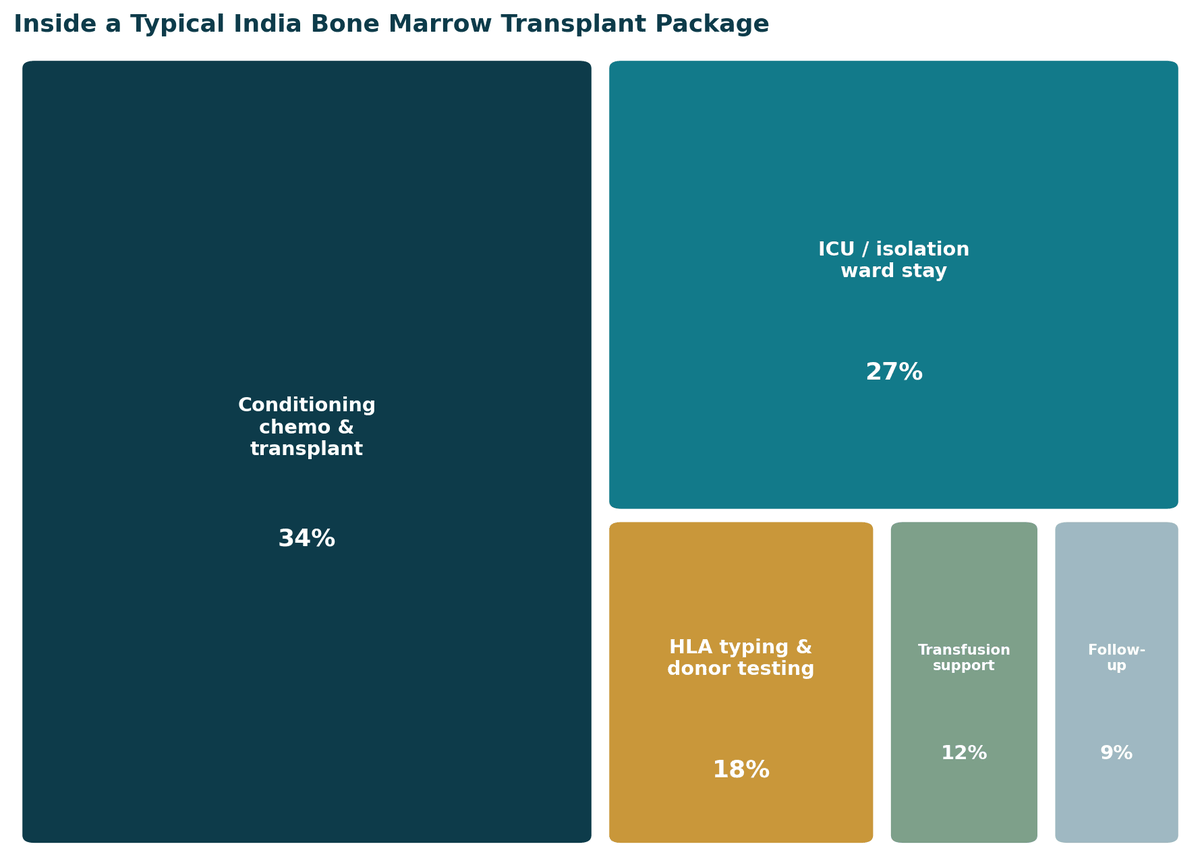
A few honest caveats specific to non-malignant BMT. First, for thalassemia patients, ask specifically about pre-transplant assessment of liver iron content and cardiac function, since significant existing organ damage from years of transfusion affects both transplant risk and the recommended approach, and should be evaluated before conditioning begins. Second, confirm your donor’s specific HLA match status before finalising any cost estimate, since a fully matched sibling, a matched unrelated donor, and a haploidentical donor involve meaningfully different search costs, protocols, and risk profiles. Third, budget for supportive blood and platelet transfusions during the early recovery period, which is a distinct cost line beyond the core transplant fee in every country.
What a Typical Omani Family Should Weigh Before Deciding BMT in India
Having guided families through this exact decision for 24 years, here is what I encourage every Omani family to work through before committing to a hospital:
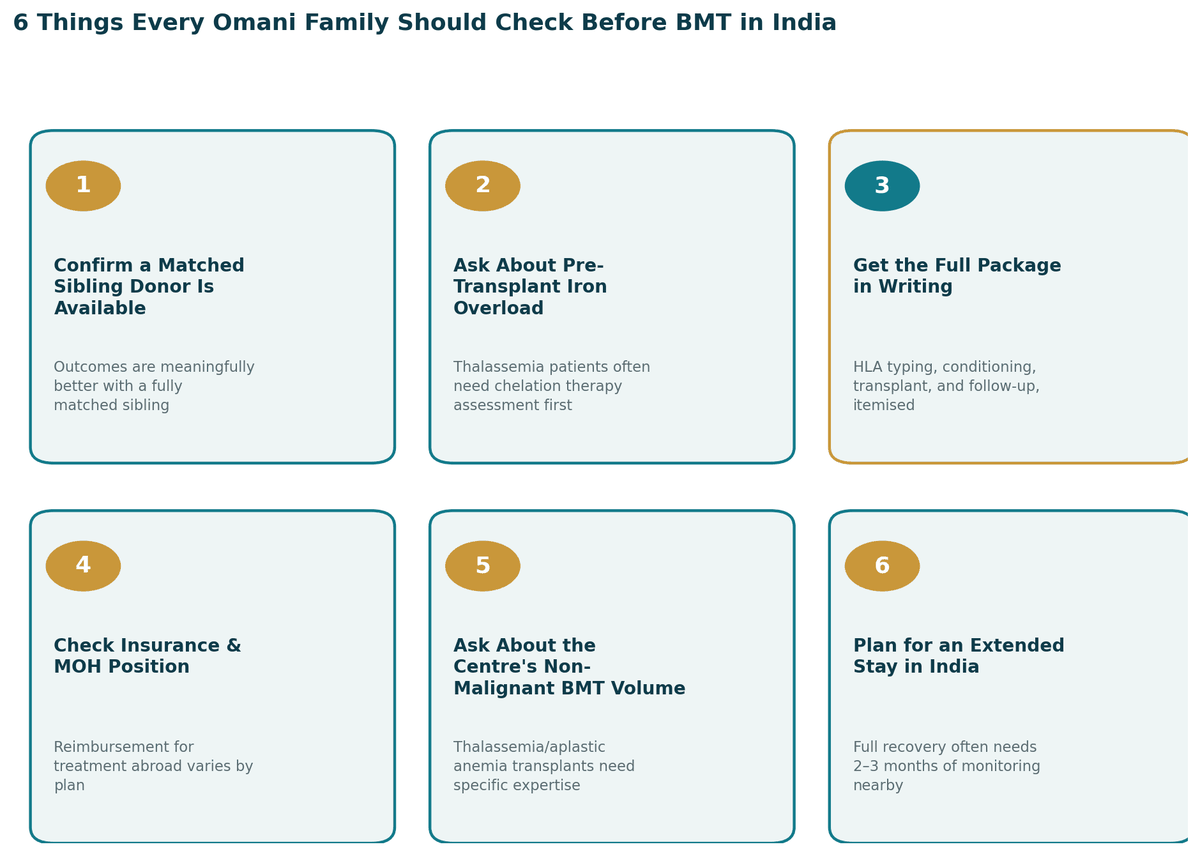
- Confirm whether a matched sibling donor is available. Send your family’s HLA typing results, where available, to an independent transplant team in India before committing. Outcomes are meaningfully better with a fully matched sibling than with alternative donor sources.
- Ask about pre-transplant iron overload assessment for thalassemia. Confirm liver and cardiac evaluation has been properly done, since this affects both transplant risk and timing.
- Get the full package itemised in writing. HLA typing, conditioning, transplant, and follow-up should each be clear, along with what transfusion support during recovery would add.
- Check your insurance and Ministry of Health position. Some Omani insurance plans and employer health schemes offer partial reimbursement for treatment abroad; others do not cover it at all. Clarify this before you travel, not after.
- Ask specifically about the centre’s experience with your exact condition. Thalassemia and aplastic anaemia transplant protocols differ from cancer-related transplants. Ask how many transplants for your specific diagnosis the centre performs each year.
- Plan realistically for an extended stay in India. Full recovery through the engraftment and early monitoring period typically requires two to three months. Plan accommodation, work leave, and family support accordingly.
A Hopeful Closing Word
Of everything covered in this series, non-malignant bone marrow transplant carries a particular kind of promise — not managing a lifelong condition, but genuinely ending it. For a family that has lived with the rhythm of monthly transfusions and daily medication, that possibility deserves careful, well-timed pursuit with a team who has treated this exact condition many times before, not simply general transplant experience. An early conversation with a transplant specialist about your family’s specific HLA situation is worth having as soon as the diagnosis allows, since timing genuinely affects outcomes here.
Sources & Further Reading
- National Heart, Lung, and Blood Institute (NHLBI), National Institutes of Health — Thalassemia (nhlbi.nih.gov)
- MedlinePlus, U.S. National Library of Medicine (NIH) — Bone Marrow Transplantation (medlineplus.gov)
- National Organization for Rare Disorders (NORD), non-profit organization — Aplastic Anemia (rarediseases.org)
- American Society for Transplantation and Cellular Therapy (ASTCT), non-profit professional association — Patient Resources (astctpatienteducation.org)
- NHS (UK National Health Service) — Bone Marrow and Stem Cell Transplants (nhs.uk)
Frequently Asked Questions by Omani Patients about Bone Marrow Transplant Treatment in India
Why might Omani patients consider bone marrow transplant treatment in India?
India has major transplant centres with substantial experience in thalassemia and aplastic anaemia. The guide highlights disease-specific expertise, pre-transplant assessment and established international patient pathways.
Is bone marrow transplant a cure for thalassemia major?
For appropriately selected patients, transplantation can be potentially curative and may end lifelong transfusion and iron-chelation dependence. Outcomes are particularly favourable with a well-matched sibling donor and timely treatment.
How important is an HLA-matched sibling for an Omani patient?
A fully HLA-matched sibling is generally the preferred donor and is associated with the best outcomes. Families should complete HLA testing before making final treatment decisions.
What if an Omani patient does not have a matched sibling?
Matched unrelated and haploidentical donors may be considered. However, the guide notes that these options have different risk profiles, protocols and donor-search considerations.
How much does bone marrow transplant cost in India for Omani patients?
The guide estimates US$15,000–40,000 for a full allogeneic transplant package for a non-malignant condition at an accredited private hospital. Additional supportive care or complex requirements may affect the final cost.
What pre-transplant tests are especially important for thalassemia?
The guide recommends assessing liver iron content and cardiac function because years of transfusions can cause organ damage that affects transplant risk, timing and conditioning.
How long should an Omani family plan to stay in India?
The guide recommends planning for an extended stay of approximately two to three months to cover engraftment and early monitoring. Accommodation and family support should be arranged accordingly.
Which Indian cities are highlighted for non-malignant BMT?
The guide identifies Delhi, Mumbai, Chennai and Bengaluru as major Indian centres with substantial experience in thalassemia and aplastic anaemia transplantation.
What should Omani families check in the transplant package?
They should confirm that HLA typing, conditioning, transplant, ICU/isolation care and follow-up are clearly itemised. Supportive blood and platelet transfusions should also be discussed as a separate potential cost.
Should Omani families check insurance coverage before travelling to India?
Yes. Some Omani insurance and employer health schemes may offer partial reimbursement for treatment abroad, while others may not. The guide recommends confirming insurance and Ministry of Health support before travel.
Page Summary
Bone Marrow Transplant Treatment in India for Omanis: A Doctor's Guide to Making the Right Decision focuses on transplant for non-malignant blood disorders, especially thalassemia major and severe aplastic anaemia. It explains donor matching, pre-transplant iron and organ assessment, Indian transplant expertise, 2026 cost comparisons, the typical transplant timeline and the practical issues Omani families should address before committing to treatment in India.
Citation Block
| Field | Details |
|---|---|
| Article / Topic | Bone Marrow Transplant Treatment in India |
| Country / Patients | India / Omani Patients |
| Key Specialist | Haematologist / Bone Marrow Transplant Specialist |
| Main Conditions | Thalassemia major, severe aplastic anaemia and related inherited disorders |
| Treatment Type | Allogeneic bone marrow transplant |
| Preferred Donor | Fully HLA-matched sibling |
| Success Potential | Often above 90% at experienced centres for appropriately selected matched-sibling cases |
| Alternative Donors | Matched unrelated or haploidentical donors |
| Pre-Transplant Check | HLA typing, liver iron content and cardiac function |
| India Cost | US$15,000–40,000 |
| Oman / Regional Cost | US$70,000–120,000 |
| UK Private Cost | US$80,000–150,000 |
| US Cost | US$250,000–500,000+ |
| Typical Recovery | Approximately 2–3 months |
| Package Components | HLA typing, conditioning, transplant, ICU/isolation stay and standard follow-up |
| Additional Cost | Supportive blood and platelet transfusions may be charged separately |
| Surgeon / Specialist Check | Ask for transplant volume for the exact diagnosis |
| Hospital Check | Choose an experienced centre with disease-specific transplant expertise |
| Insurance Check | Confirm Omani insurance and Ministry of Health reimbursement before travel |
| Follow-Up | Extended monitoring and coordination with the treating team |
| Important Warning | Do not finalise transplant before confirming donor match, organ assessment and the centre's specific experience |


Our Mission Statement
Our mission is to place patients at the centre of every healthcare decision by providing trustworthy, evidence-based, and unbiased medical information. We believe that informed patients make better decisions. Backed by personalised guidance from our experienced advisory team, we help patients understand their treatment options, compare them objectively, and confidently choose the path that best suits their medical needs and personal circumstances.
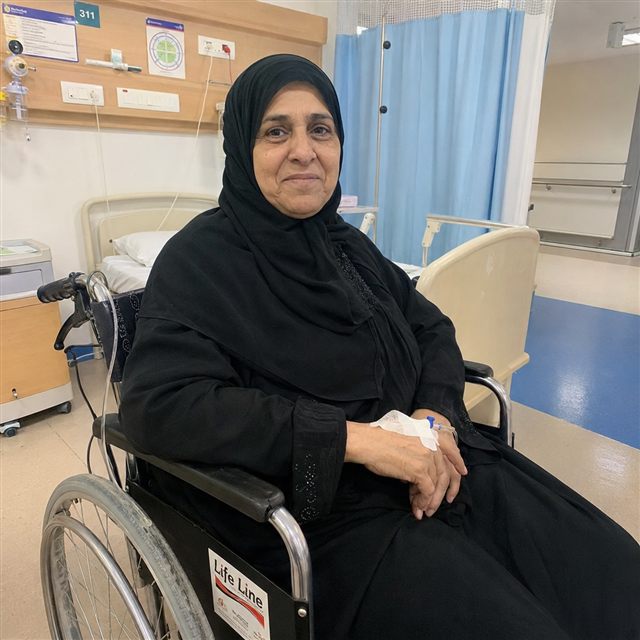
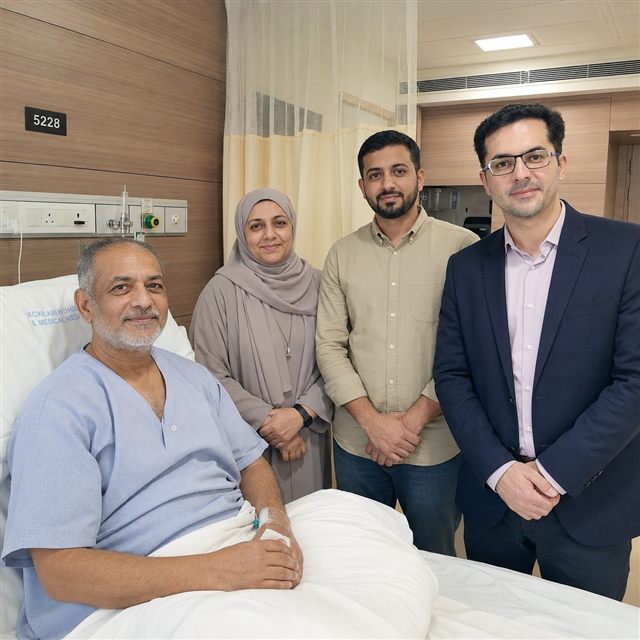
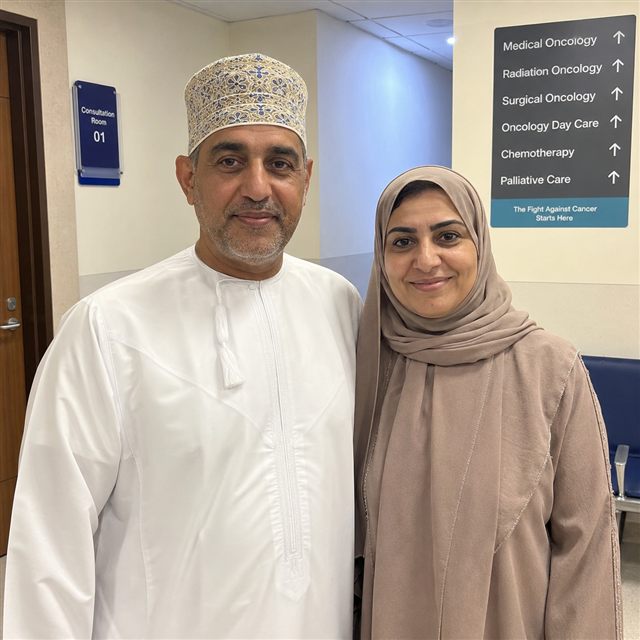
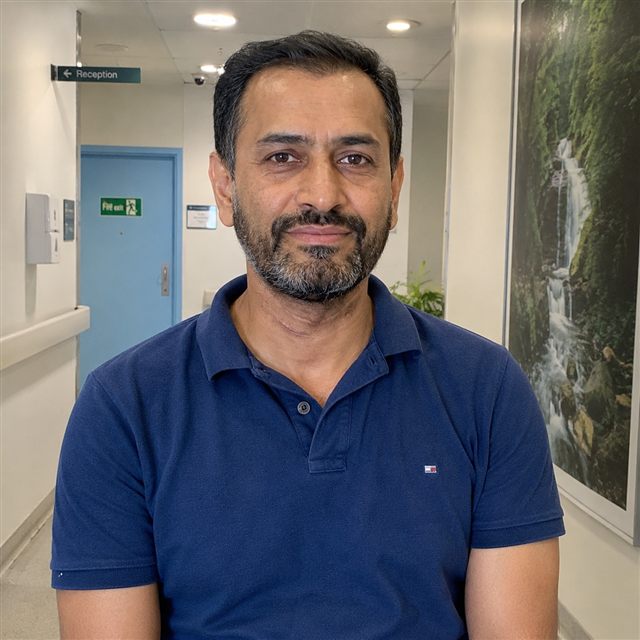
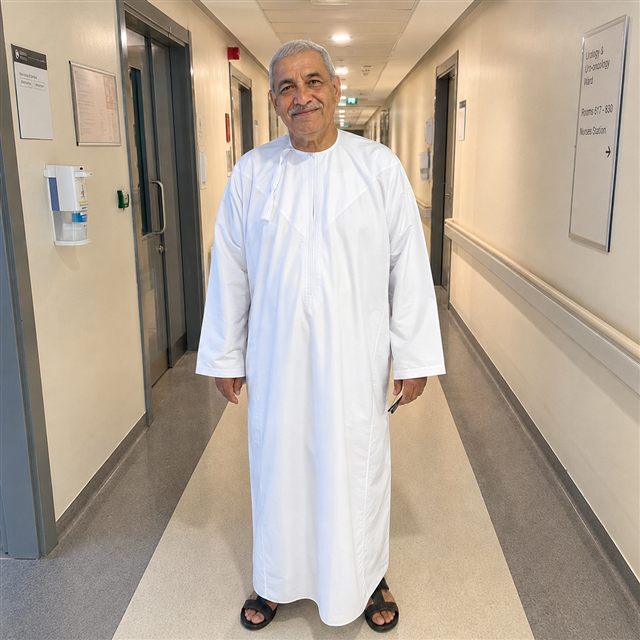
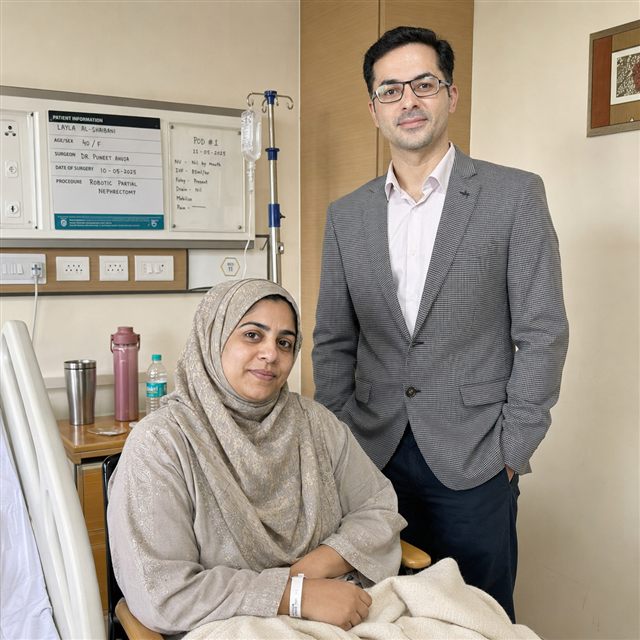
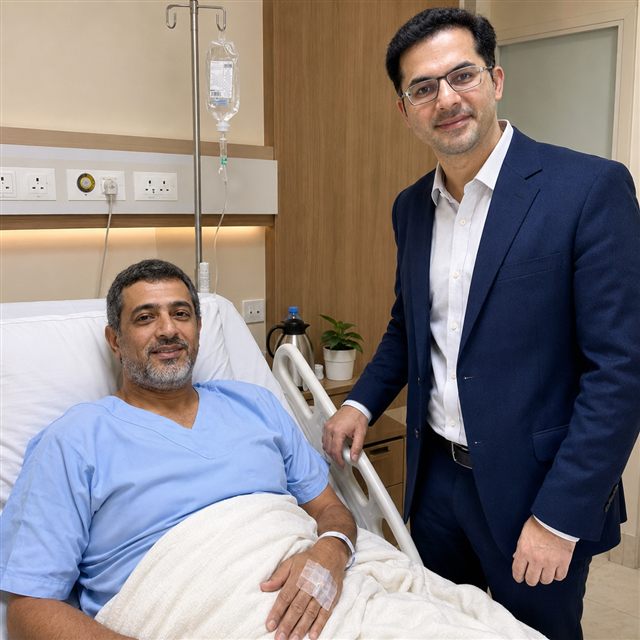
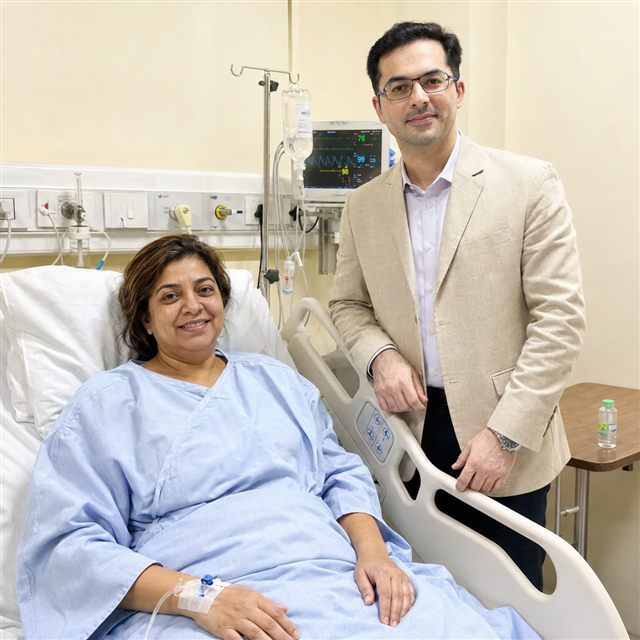
Patient Testimonials from Oman
Ready to Take the First Step?
Share your Medical Reports with our Healthcare Managers Today and Get a FREE CONSULTATION, a Personalized Treatment Plan, and Complete Support from Arrival to Recovery.
Get Your Free ConsultationAreas We Serve
Indian Health Guru Consultants proudly assists patients from Oman and surrounding Middle Eastern countries in accessing advanced, affordable and trusted medical treatment in India. Our team provides complete support for medical opinions, hospital selection, treatment planning, visa assistance, travel coordination, accommodation and post-treatment follow-up.
We regularly serve patients from:
- Oman
- Turkey
- Iran
- Kuwait
- Jordan
- Syria
- Qatar
- Bahrain
- Yemen
- Iraq
- Saudi Arabia
- United Arab Emirates
No matter where you are located, our experienced team is committed to making your medical journey to India safe, smooth, transparent and stress-free from the first enquiry to your return home.
From Oman to India: Your Complete Patient Guide
- Weight Loss and Bariatric Surgery in India for Omanis: Cost & Guide
- Brain Tumor Surgery in India for Omanis: Cost & Guide
- Cancer Treatment in India for Omanis: Cost & Guide
- Cardiac Surgery in India for Omanis: Cost & Guide
- Breast Cancer Treatment in India for Omanis: Cost & Guide
- Neurosurgery in India for Omanis: Cost & Guide
- Spine Surgery in India for Omanis: Cost & Guide
- Kidney Transplant in India for Omanis: Cost & Guide
- Best Dentists and Clinics for Dental Surgery in India for Omani Patients
- Best Doctors and Hospitals for Blood Cancer Treatment in India for Omani Patients
- Best Bone Marrow Transplant Doctors and Hospitals in India for Omani Patients
- Best IVF and Fertility Doctors and Hospitals in India for Omani Couples
- Best Bariatric Surgeons and Hospitals for Weight Loss Surgery in India for Omani Patients
- Best Brain Tumor Surgery Doctors and Hospitals in India for Omani Patients
- Best Cardiac Surgeons and Hospitals in India for Omani Patients
- Best Colorectal Cancer Surgeons and Hospitals in India for Omani Patients
- Best Surgeons and Hospitals for Complex Joint Revision Surgery in India for Omani Patients
- Hip Surgery in India for Omanis: Cost & Guide